Last updated 2026-07-23
TL;DR
Renters generally have the right to a habitable unit, notice before entry (often 24 hours), protection from discrimination, and protection from illegal lockouts. Exact rules depend on state law. California and Ohio both presume 24 hours' notice reasonable for landlord entry, but the details of what a landlord can inspect, demand, or do without a lease vary by statute.
What rights do renters have?
Every renter in the U.S. has a baseline set of rights, even if the lease never mentions them. The big ones: a livable, safe unit (habitability), quiet enjoyment of the space, protection from housing discrimination under the federal Fair Housing Act, and some form of notice before the landlord walks in. The Fair Housing Act bars discrimination based on race, color, religion, sex, national origin, familial status, or disability, which HUD lists as the seven protected classes [1]. Beyond that federal floor, almost everything gets decided at the state level. Security deposit caps, notice-to-enter windows, rules on rent increases, and even whether a landlord can charge a pet fee all vary by statute. The National Conference of State Legislatures tracks entry-notice laws state by state, and the range is wide, some states specify 24 hours, others just say "reasonable notice" with no number attached. This is why a renter-rights question rarely has one national answer. If you're a landlord reading a tenant complaint or an ordinance notice and want to know what applies to you, the honest first step is pulling your specific state's landlord-tenant code, not a national blog post. Two states, California and Ohio, both have detailed statutes we'll walk through below because they're good examples of how specific these rules get.
What rights do tenants have without a lease?
A tenant without a signed lease is not a trespasser and is not without rights. Once someone moves in with the landlord's consent and starts paying rent, the law generally treats that as a periodic tenancy, month to month in most cases, even with nothing in writing. Cornell Law School's Legal Information Institute describes a related concept, tenancy at will, as an arrangement that can be "terminated at any time by either party," which is the legal skeleton underneath a lot of no-lease rental situations. Practically, that means a tenant without a lease still gets habitability protections, still gets whatever entry-notice period their state requires, and still can't be evicted with a self-help lockout or utility shutoff. What changes without a lease is mostly the notice period for ending the tenancy. Instead of a lease term expiring, either side typically has to give a statutory notice period, often 30 days, before ending a month-to-month arrangement. The exact number depends on your state and sometimes your city. A landlord who inherited a tenant without paperwork (a handshake deal from a previous owner, a family member who never signed anything) should not treat the lack of a document as a lack of obligation. Courts tend to look at what actually happened, rent paid, keys handed over, more than what's on paper.
What is a landlord, and what is landlording?
A landlord is the person or entity that owns residential property and rents it to someone else in exchange for payment, with a legal obligation to keep the unit habitable and to follow state and local landlord-tenant law. "Landlording" is the informal, common term for the whole job: finding tenants, collecting rent, handling repairs, following notice rules, and keeping the property compliant with local codes. It sounds simple until you're doing it. Landlording covers screening applicants without violating fair housing law, handling security deposits correctly, scheduling repairs, responding to complaints, and increasingly, dealing with a city rental registration or licensing requirement that didn't exist when you bought the place. Cities that run mandatory rental licensing programs (a growing list, driven mostly by code enforcement and safety concerns) add inspection deadlines and paperwork on top of the state-level landlord-tenant obligations. For tax purposes, the IRS treats rental activity as reportable income and expense on Schedule E in most cases, which is one more reason "landlording" is a real job with real recordkeeping requirements, not a passive side hustle [2].
How do you become a landlord, and how do you actually be one?
Becoming a landlord starts before you own the property. Check your city's rental registration or licensing rules first, because a growing number of municipalities require landlords to register or license a unit before it can legally be rented at all, and some require a pre-rental inspection. Confirm the specific requirement with your city rental licensing office, since fees, forms, and deadlines differ from city to city and change over time. After that, the basic steps most new landlords go through: - Decide how you'll hold the property (personal name, LLC, or other entity) and talk to a tax professional about how rental income gets reported [2].
- Get landlord insurance, more than a homeowner's policy, since most homeowner policies exclude rented units.
- Write a lease that matches your state's landlord-tenant law (security deposit limits, entry notice, disclosures).
- Screen tenants using consistent, written criteria to stay compliant with the Fair Housing Act [1].
- Set up a system for collecting rent, tracking repair requests, and documenting move-in condition. Being a landlord day to day is mostly maintenance and paperwork, not glamour. You're the one who answers the call when the water heater fails at 11pm, and you're the one who has to prove, later, that you gave proper notice before you walked through the unit. If your city also runs an inspection or licensing program, that adds a whole second track of deadlines on top of your lease obligations. That's the exact gap our landlord guide and the $79 one-time City Rental License & Inspection Prep Packet are built to close, one covers the general playbook, the other gets your specific unit ready for a specific city's inspection checklist.
Who is responsible for a rental property walk-through inspection in California?
In California, the landlord is responsible for offering and conducting the move-out walk-through inspection, but the tenant has to request it. Under California Civil Code Section 1950.5, when a landlord intends to withhold any part of a security deposit at the end of a tenancy, the landlord must notify the tenant of the tenant's right to request an initial inspection before the tenant moves out. If the tenant requests it, the landlord (or an agent) does the walk-through, usually within two weeks of the move-out date, and gives the tenant an itemized list of anything that would trigger a deduction, plus a chance to fix it themselves before moving out. The practical effect: California landlords who skip offering this initial inspection risk losing their ability to make certain deposit deductions later, since the statute is designed to give tenants a fair warning and a chance to cure. The state's own consumer guide, "California Tenants," published by the Department of Consumer Affairs, walks through this process in plain language and is a solid free resource if you're a California landlord trying to get the sequence right [3]. This is separate from any city-level rental inspection program some California cities run for licensing purposes (fire, safety, occupancy). Those are administered by the city, not the tenant-initiated deposit walk-through under 1950.5. If your city has one, confirm the inspector, timeline, and fee with your city rental licensing office directly, since those programs are locally run and not standardized statewide.
What can a landlord look at during an inspection?
During a routine or move-related inspection, a landlord (or a city inspector, in a licensing program) can generally look at anything connected to habitability, safety, and lease compliance: smoke detectors, plumbing, electrical outlets, signs of pest infestation, unauthorized occupants, unauthorized pets, and property damage. What a landlord cannot do is treat an inspection as a general search of a tenant's belongings or personal space beyond what's reasonably necessary to check the condition of the unit. City rental licensing inspections tend to focus on a fixed checklist: working smoke and carbon monoxide detectors, secure handrails, functioning heat, no exposed wiring, proper egress from bedrooms, and no obvious code violations. These inspections are about the structure and systems, not about how tidy the tenant keeps things, though clutter that blocks an exit or a smoke detector can still get flagged. For a landlord-conducted inspection tied to a lease (routine check, showing the unit to prospective tenants, or a move-out walk-through), the scope is whatever the lease and state law allow, and it still has to happen within the notice rules covered next. A landlord who wanders through closets, drawers, or personal papers during what's supposed to be a maintenance check is inviting a complaint, and in some states, a claim for violation of quiet enjoyment.
How much notice does a landlord have to give before entering?
| California | 24 hours presumed reasonable (written notice typical) | Civil Code § 1954 | |
|---|---|---|---|
| Ohio | 24 hours presumed reasonable | Ohio Rev. Code § 5321.04 | |
| Other states | Varies, some require 24-48 hours, some just say "reasonable" | Check your state code; NCSL tracks this state by state | Emergencies (fire, flooding, a gas leak) are the standard exception in nearly every state's statute, no advance notice required. Outside of an emergency, a landlord who enters without proper notice is exposed to a tenant complaint, a lease dispute, or in some states a statutory penalty. If you manage units in more than one state or city, don't assume the notice period is the same everywhere. It usually isn't. |
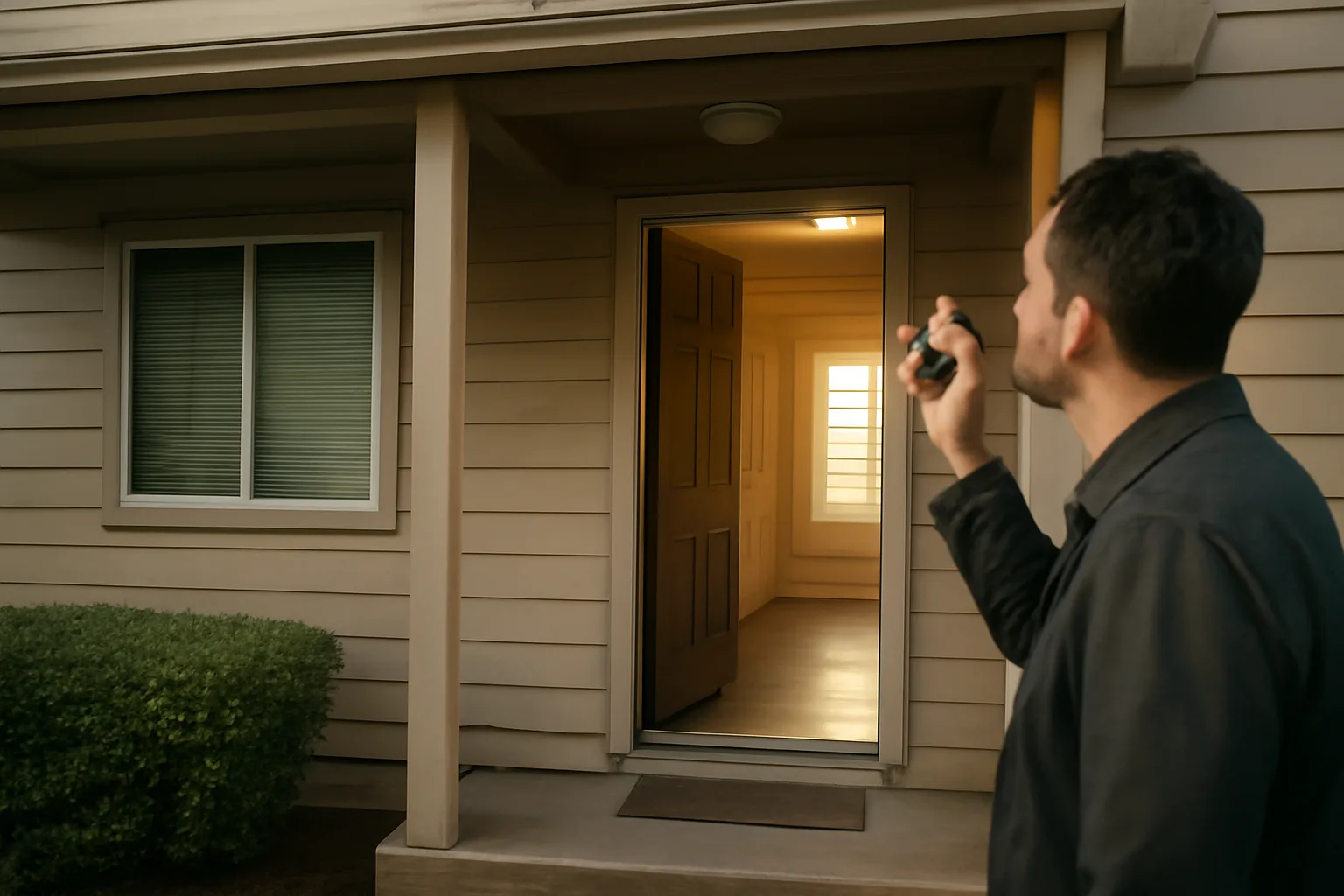
Most states require some form of advance notice before a landlord enters an occupied unit for a non-emergency reason, and 24 hours is the most common benchmark, though it's not universal. California's Civil Code Section 1954 states that landlords must give tenants reasonable notice, and that "twenty-four hours shall be presumed to be reasonable notice in the absence of evidence to the contrary". Ohio's landlord-tenant statute follows a similar pattern: Ohio Revised Code Section 5321.04 requires the landlord to give the tenant reasonable notice of intent to enter and to enter only at reasonable times, with 24 hours generally treated as the presumed reasonable window. Here's a quick comparison of the two states covered in this article, plus a reminder that this is not a national standard: | State | Notice period | Statute |
Why do landlords require renters insurance?
Landlords require renters insurance mainly to shift liability and personal-property risk off their own policy and onto the tenant's. A landlord's own insurance covers the building and the landlord's liability, but it does not cover a tenant's furniture, electronics, or clothing if there's a fire, burst pipe, or theft, and it generally doesn't cover a tenant's liability if the tenant causes damage or an injury to a guest. The Insurance Information Institute reports that the average annual cost of a renters insurance policy runs in the range of roughly $170 to $180 a year nationally, which is a small ask relative to the coverage it provides. A typical policy covers personal property, liability (if the tenant's dog bites a guest, for example), and additional living expenses if the unit becomes temporarily uninhabitable. For a landlord, requiring proof of renters insurance in the lease is a cheap way to reduce the odds of a dispute over "who pays for the tenant's ruined stuff" after a pipe bursts, and it can reduce the landlord's own liability exposure if the tenant's negligence causes a fire or injury that spreads beyond the unit. It's not a legal requirement in most places (a few subsidized housing programs and some cities do mandate it for certain unit types), it's a lease term landlords add voluntarily because the math favors them.
What can't a landlord do in Ohio?
Ohio law draws a hard line against "self-help" evictions and other retaliatory or forceful tactics. Under Ohio Revised Code Section 5321.03, a landlord cannot force a tenant out by removing doors or windows, changing the locks, removing the tenant's belongings, or shutting off utilities like water, electric, or gas, even if the tenant is behind on rent. The only lawful way to remove a tenant in Ohio is through the court eviction (forcible entry and detainer) process. Ohio landlords also can't retaliate against a tenant for exercising a legal right, filing a habitability complaint, joining a tenant union, or reporting a code violation. Ohio Revised Code Section 5321.02 specifically prohibits retaliatory conduct such as raising rent, decreasing services, or threatening eviction in response to a tenant's good-faith complaint. And under 5321.04, an Ohio landlord can't enter without reasonable notice (24 hours presumed reasonable, as covered above), and can't enter at unreasonable times even with notice. The Ohio Attorney General's office publishes a plain-language landlord-tenant guide that walks through these obligations if you want the fuller picture beyond these three sections [4]. Bottom line for Ohio landlords: skip the shortcuts. Cutting off utilities or changing locks to force someone out, even a tenant who genuinely owes rent, isn't a gray area under Ohio law. It's a statutory violation that can expose the landlord to damages.
How does renter-rights law connect to city rental licensing and inspections?
Renter rights (habitability, notice, non-discrimination) come mostly from state statutes. Rental licensing and inspection requirements come mostly from city ordinances, and the two systems overlap constantly. A city inspection program exists partly to enforce the same habitability standards that state landlord-tenant law already requires, just with a local inspector and a local fee attached. This is where a lot of landlords get tripped up. They know their state's notice-to-enter rule, but they miss that their city also requires a separate rental registration, a periodic inspection, or a license renewal with its own deadline and fine schedule. Confirm your specific city's rental licensing office for the current fee, inspection interval, and renewal deadline, since these details change and vary widely even within the same state. If you're staring down a first inspection notice, a renewal deadline, or a violation letter and don't know what the inspector is going to check or what paperwork you're missing, that's the exact gap the $79 one-time City Rental License & Inspection Prep Packet is built for, it maps out what a typical city inspection checklist covers so you're not guessing the week before the inspector shows up. It's not a substitute for calling your city office, but it's a faster starting point than reading an ordinance cold.
Frequently asked questions
What rights do tenants have without a lease?
A tenant paying rent with the landlord's consent, even with nothing signed, generally has a month-to-month tenancy under state law. That means habitability protections, the state's standard notice-to-enter period, and protection from illegal lockouts still apply. What usually changes without a lease is the notice period for ending the tenancy, often a 30-day notice instead of a lease expiring on its own.
How to become a landlord?
Check your city's rental registration or licensing rules first, then set up landlord insurance, a compliant lease, a tenant screening process that follows the Fair Housing Act, and a system for rent and maintenance records. If you're renting your first unit, confirm any pre-rental inspection requirement with your city rental licensing office before you list it.
What is landlording?
Landlording is the everyday work of owning and renting out residential property: screening tenants, collecting rent, handling repairs, following notice and habitability rules, and staying current on any city rental licensing or inspection requirement. It's a legal and financial responsibility, more than a source of passive income.
What is a landlord?
A landlord is the property owner (or their designated agent) who rents residential space to a tenant in exchange for payment, and who is legally obligated to maintain a habitable unit and follow state and local landlord-tenant law, including notice rules and, in many cities, a rental license or registration.
Who is responsible for a rental property walk-through inspection in California?
The landlord is responsible for conducting the walk-through, but the tenant has to request it. Under California Civil Code Section 1950.5, landlords must notify tenants of their right to an initial inspection before move-out, and if requested, the landlord provides an itemized list of deficiencies with a chance to fix them before the deposit is finalized.
What can a landlord look at during an inspection?
A landlord or city inspector can check habitability and safety items: smoke detectors, plumbing, electrical, pest issues, unauthorized occupants or pets, and general property condition. Inspections shouldn't extend to searching personal belongings or private papers beyond what's reasonably needed to assess the unit's condition.
How much notice does a landlord have to give before entering?
Most states require some advance notice, and 24 hours is the most common presumed-reasonable period, used in both California (Civil Code § 1954) and Ohio (Ohio Rev. Code § 5321.04). Some states specify a different number of hours or just say "reasonable notice" without a fixed figure, so check your specific state's statute.
Why do landlords require renters insurance?
Renters insurance covers the tenant's personal property and personal liability, which the landlord's own policy does not cover. It reduces disputes after fires, burst pipes, or theft, and can lower the landlord's liability exposure if a tenant's negligence causes damage. Average annual premiums run roughly $170 to $180 nationally.
What can't a landlord do in Ohio?
Ohio landlords can't lock a tenant out, remove doors or belongings, or shut off utilities to force someone out; only a court eviction is legal (Ohio Rev. Code § 5321.03). Landlords also can't retaliate against tenants for complaints (§ 5321.02) or enter without reasonable notice, presumed to be 24 hours (§ 5321.04).
Does a landlord need a reason to enter a rental unit?
Usually yes, for non-emergency entry, most states require a legitimate purpose, like repairs, inspections, or showing the unit, along with proper advance notice. Emergencies (fire, flooding, gas leaks) are the standard exception where no advance notice is required in nearly every state's statute.
Is renters insurance legally required?
In most places, no, it's not a government-mandated requirement, it's a lease term landlords add voluntarily. Some subsidized housing programs or specific city programs may require it for certain unit types, so check your lease and, if relevant, your local housing authority's rules.
How is city rental licensing different from state landlord-tenant law?
State landlord-tenant law sets baseline rights like habitability, entry notice, and deposit rules statewide. City rental licensing is a separate local requirement, registration, fees, and sometimes inspections, that a specific municipality imposes on top of state law. Requirements and fees vary by city, so confirm details with your city's rental licensing office directly.
Sources
- California Legislative Information, Civil Code Section 1954: 24 hours is presumed reasonable notice for landlord entry in California
- Ohio Laws, Ohio Revised Code Section 5321.03: Ohio landlords cannot use self-help eviction tactics like lockouts or utility shutoffs
- Internal Revenue Service, Topic no. 414 Rental Income and Expenses: rental income and expenses are reportable, typically on Schedule E
- Cornell Law School Legal Information Institute, tenancy at will: definition of a periodic/at-will tenancy that can exist without a written lease
- California Legislative Information: California law limits when and why a landlord may enter a rental unit, requiring reasonable notice, generally 24 hours.
- Ohio Revised Code: Ohio law outlines landlord obligations, including maintaining the premises in a habitable condition and other duties owed to tenants.
- Ohio Revised Code: Ohio law specifies tenant obligations, which inform what a landlord cannot require or do outside these bounds.
- U.S. Department of Housing and Urban Development: HUD outlines basic tenant rights renters have, including protections under federal housing law.
- Consumer Financial Protection Bureau: Explains what renters insurance covers and why landlords may require it as a condition of a lease.
- California Legislative Information: California Civil Code defines the rights and protections extended to hiring of residential property, including tenants without a formal lease.
- Cornell Law School Legal Information Institute: Federal statute governing housing assistance programs that intersect with local rental licensing and habitability standards.