Last updated 2026-07-25
TL;DR
California has no state law mandating repainting on a fixed schedule (like every 3 or 5 years). The real obligation comes from habitability law: walls need to be safe, weatherproofed, and free of peeling paint that creates a health hazard (lead dust especially). Some cities and lease norms push landlords to repaint between tenancies, but that's practice, not statute.
Does California law require landlords to repaint rental units on a schedule?
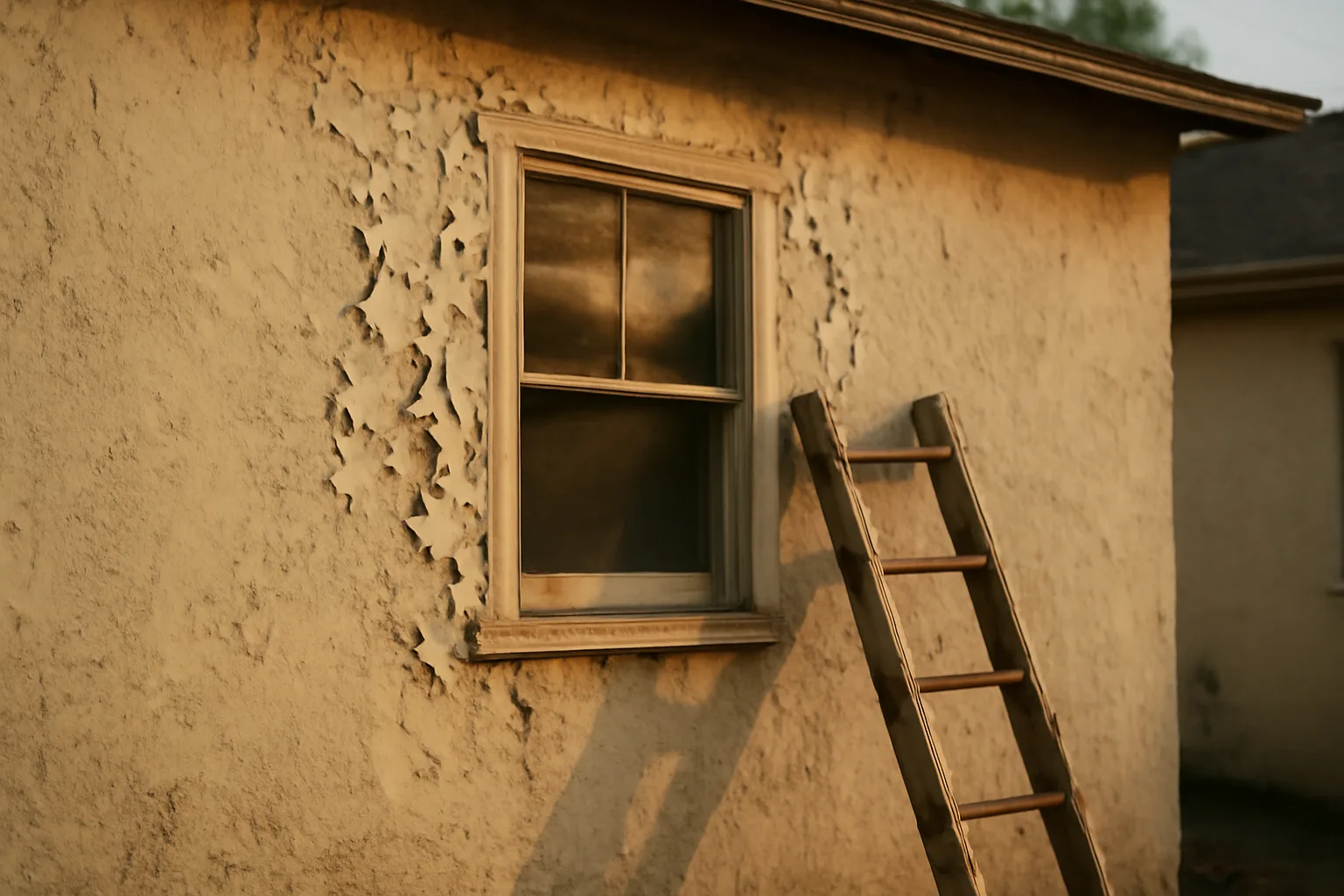
No. There is no California statute that says a landlord must repaint an apartment every X years. If you've seen a claim online that California requires repainting every 3 years or every tenant turnover, that's not backed by any state code section, and it doesn't match what the California Department of Consumer Affairs or the Civil Code actually say [1]. What California law does require is that the unit be "fit for human habitation," and that standard is where painting obligations actually come from. Civil Code Section 1941.1 lists the specific conditions that make a unit uninhabitable, including walls and floors that are not "in good repair" and buildings that lack effective waterproofing and weather protection [1]. Peeling, cracked, or flaking paint can trip that standard, especially if it's letting moisture in or exposing bare, damaged wall material. So the honest answer is: painting isn't the requirement, habitability is. Paint is just one of the ways you satisfy or fail that requirement. A wall that's dingy but intact and sealed is a cosmetic issue. A wall with paint peeling off in sheets, water damage underneath, or exposed drywall is a habitability issue, and in older buildings it may also be a lead hazard issue, which has its own federal rules layered on top.
What does California's habitability law actually say about walls and paint condition?
Civil Code Section 1941.1 is the core statute. It lists the conditions a rental unit must meet to be considered habitable, and among them: "floors, stairways, and railings maintained in good repair," and buildings and units that are "weatherproofed" and free of water intrusion [1]. Peeling paint on an exterior wall that's letting water in clearly fails this test. Peeling paint on an interior wall that's purely cosmetic, arguably doesn't, at least not under this section alone. Civil Code Section 1941 puts the general duty on landlords to keep the premises in that habitable condition throughout the tenancy, more than at move-in [2]. That means if paint starts failing mid-lease (moisture damage, mold under peeling paint, etc.), you likely have an ongoing duty to fix it, more than a move-in-only obligation. Separately, California's Health and Safety Code (Section 17920.3 and related sections used in local housing code enforcement) treats defective or deteriorated paint as a substandard housing condition in some circumstances, particularly when it creates a health or safety hazard [3]. Local building and health departments enforce these standards through code inspections, and a city inspector citing "deteriorated paint" as a violation is usually working off this kind of provision, or a local municipal code that mirrors it. Bottom line: there's no separate "paint law." Paint condition gets folded into general habitability and substandard housing law, and enforcement happens through the same channels as any other repair complaint, tenant complaint to code enforcement, health department referral, or a habitability lawsuit.
Do California landlords have to repaint between tenants?
Not by state law, no. But there's a very good practical reason most landlords do it anyway, and it has nothing to do with a paint statute. California's security deposit law (Civil Code Section 1950.5) lets a landlord deduct from a deposit for damage beyond "ordinary wear and tear," and specifically allows deductions for repainting only when the condition of the walls goes beyond normal fading or minor scuffs [4]. Courts and the standard guidance from the California Department of Consumer Affairs treat a repaint after a long tenancy (say, 5+ years) as something landlords generally can't charge the departing tenant for, because paint has a useful life and normal aging isn't damage [4][5]. That pushes many landlords to just repaint on their own dime between tenants, both to reset that depreciation clock and because a freshly painted unit rents faster and for more money. Some cities layer their own rules on top through local rental inspection or licensing ordinances. If your city requires a certificate of occupancy or rental inspection before a new tenant moves in, a code inspector might flag peeling or damaged paint as a condition to fix before you get your certificate, even if it wouldn't rise to a lawsuit-worthy habitability violation. Check your specific city's rental inspection checklist, because "paint in good repair" shows up on a lot of municipal inspection forms even without a state mandate behind it.
What are the lead paint rules for California rentals built before 1978?
This is the part of "painting requirements" that actually has hard, enforceable federal rules, and it applies nationwide, more than California. Under the federal Residential Lead-Based Paint Hazard Reduction Act and the associated EPA/HUD disclosure rule (24 CFR Part 35, Subpart A; 40 CFR Part 745), landlords renting out housing built before 1978 must give tenants an EPA-approved lead hazard information pamphlet, disclose any known lead-based paint or hazards, and include a specific lead warning statement in the lease [6]. This is a disclosure requirement, not a repainting mandate, but it matters because it's often the first place peeling paint becomes a legal problem. Separately, if you disturb more than 6 square feet of painted surface per interior room (or 20 square feet on exteriors) in a pre-1978 building during renovation, repair, or painting work, EPA's Renovation, Repair, and Painting (RRP) Rule requires that the work be done by an EPA lead-safe certified renovator, using lead-safe work practices [7]. This applies to a landlord's own maintenance crew or a contractor scraping and repainting a porch, more than big renovations. California adds its own layer through the California Department of Public Health's Childhood Lead Poisoning Prevention Branch, which can require lead hazard evaluation and abatement in specific circumstances, particularly where a child under 6 has an elevated blood lead level and the home is a suspected source [8]. If a local health department orders lead paint abatement, that's a different, much more serious process than routine repainting, and it usually involves licensed lead abatement contractors, clearance testing, and specific notice requirements to tenants.
What can trigger a forced repaint even without a state painting law?
A few real-world triggers push landlords into repainting whether or not any statute uses the word "paint": 1. A tenant habitability complaint to code enforcement, where an inspector documents peeling paint tied to moisture intrusion or exposed substrate, citing it under local housing code or Health and Safety Code substandard housing provisions [3]. 2. A city rental inspection or licensing program (common in mandatory rental-registration cities) where the inspection checklist includes paint condition as a pass/fail item. These vary a lot by city, some just check for peeling and flaking, others check paint condition on every wall and ceiling. Confirm with your city rental licensing office what their specific checklist covers, because there's no statewide standard form. 3. A lead hazard finding from a health department or a blood lead level report tied to your address, which can trigger a mandated abatement order under state lead poisoning prevention rules [8], separate from ordinary repainting. 4. A habitability lawsuit or rent withholding action, where a tenant argues under Civil Code 1941/1941.1 that deteriorated paint (usually combined with other defects like water damage or mold) makes the unit uninhabitable [1][2]. If you're prepping for any kind of city rental inspection, it's worth building your own pre-inspection checklist rather than guessing what an inspector will flag. That's exactly the kind of prep the City Rental License & Inspection Prep Packet is built for. It's a one-time $79 packet, not a subscription, and it walks you through the common inspection categories (including paint and wall condition) city rental programs actually check.
Who is responsible for the rental property walk-through inspection in California?
In California, move-in and move-out walk-through inspections are primarily a landlord-tenant matter governed by Civil Code Section 1950.5, not a government inspection. The landlord (or the landlord's agent) is responsible for offering the tenant an initial inspection before move-out, and for documenting the condition of the unit at both move-in and move-out, since that documentation is what determines what can legally be deducted from the security deposit [4]. Specifically, Civil Code 1950.5(f) gives the tenant the right to request an initial inspection within a reasonable time before the end of the tenancy, and requires the landlord to give at least 48 hours' written notice before that inspection (unless the tenant waives the notice) [4]. The landlord must give the tenant an itemized statement of any deficiencies found, so the tenant has a chance to fix them before move-out and avoid deposit deductions. That's separate from city-level rental inspections, which are a government function tied to rental licensing or registration ordinances in specific cities, not a statewide requirement. In those cities, a code enforcement officer or building inspector, not the landlord, conducts the official inspection, usually checking for habitability and safety items (smoke detectors, water heater strapping, electrical hazards, paint and wall condition, pest issues). Whether your city has this kind of program, and what it covers, depends entirely on local ordinance. Check with your city rental licensing office directly.
What can a landlord look at during a walk-through inspection?
During a routine move-in or move-out walk-through, a landlord can document the general condition of the unit: walls, floors, ceilings, paint, fixtures, appliances, windows, doors, plumbing, and cleanliness. This isn't a search of personal belongings; it's a condition inventory, ideally backed by photos or video and a signed checklist both parties keep a copy of. During the tenancy, California law limits when and why a landlord can enter at all. Civil Code Section 1954 requires "reasonable notice," which the statute defines as 24 hours in most circumstances, and restricts entry to specific purposes: emergencies, agreed repairs, showing the unit to prospective tenants or buyers, or when the tenant has abandoned the property [9]. A landlord can't use a routine "inspection" as a pretext to go through drawers or closets unrelated to habitability or lease compliance. For city-mandated rental inspections tied to a licensing program, the inspector generally checks safety and habitability items: smoke and carbon monoxide detectors, egress windows, electrical panel condition, water heater strapping, plumbing leaks, mold, pest evidence, paint condition, and structural issues. What exactly gets checked, and whether the landlord or a city inspector does the checking, depends on your specific city's ordinance. This is different from a landlord's own walk-through and follows whatever inspection checklist your city rental licensing office publishes.
How much notice does a landlord have to give before entering or inspecting?
In California, the default is 24 hours' notice for routine entry, under Civil Code Section 1954, and that notice generally must be given in a specific written or posted form during "normal business hours" unless the tenant agrees otherwise [9]. Emergencies are the exception; no notice is required if there's an immediate threat to health or safety, like a burst pipe or fire hazard. For the specific move-out inspection under the security deposit law, the requirement is at least 48 hours' written notice, per Civil Code Section 1950.5(f), unless the tenant waives that notice in writing [4]. This 48-hour rule applies specifically to that initial deposit-related walk-through, not to every entry. City-run rental inspections tied to licensing programs typically require their own separate notice period, which is set by local ordinance, not state law. Some cities require the landlord to schedule with tenants directly; others send notice straight from the city inspection office. There's no universal number here, confirm the specific notice period with your city's rental licensing or code enforcement office before you schedule anything.
What is landlording and what does a landlord actually do?
"Landlording" is the informal term for the practice of owning and managing rental property, everything from screening tenants and setting rent to handling repairs, habitability compliance, and evictions when necessary. It's not a licensed profession in most states (California doesn't require a landlord license to own rental property, though many cities require rental registration or licensing at the local level). A landlord, legally, is the party who owns or controls residential or commercial property and leases it to a tenant in exchange for rent, taking on the corresponding legal duties, habitability under Civil Code 1941/1941.1, proper deposit handling under 1950.5, notice requirements under 1954, and so on [1][2][4][9]. The tenant, in exchange, owes rent and reasonable care of the property. Because landlording spans legal compliance, basic maintenance, bookkeeping, and people management, most new landlords underestimate how much of the job is administrative: tracking notice periods, keeping inspection and repair records, and staying current on whatever city-specific licensing or registration rules apply. If your city requires a rental license or periodic inspection, that paperwork burden is usually the part new landlords get wrong first, not the actual property maintenance.
How do you become a landlord in California, step by step?
There's no state license required to become a residential landlord in California, but there are several practical and legal steps that function as the real "requirements": 1. Confirm the property is legal to rent (correct zoning, valid certificate of occupancy if required, no open code violations). 2. Check whether your city requires rental registration or a rental license. Many California cities, particularly those with rent control ordinances, require landlords to register units annually and pay a per-unit fee. This varies enormously by city; confirm with your specific city's rental licensing office. 3. Get the unit habitability-compliant under Civil Code 1941.1 before advertising it, working smoke/CO detectors, weatherproofing, functioning plumbing and heat, and paint/walls in good repair [1]. 4. If the building was constructed before 1978, prepare the federal lead paint disclosure packet (pamphlet plus lease addendum) required for every tenancy [6]. 5. Screen tenants under fair housing law (federal Fair Housing Act and California's Fair Employment and Housing Act, which adds protected categories beyond federal law, including source of income in most cases). 6. Set the security deposit within California's statutory limits, capped since July 1, 2024 at one month's rent for most landlords (with a narrow exception for small landlords with 2 or fewer units, capped at two months in specific circumstances) under Civil Code 1950.5, as amended by AB 12 [4][10]. 7. Draft a lease that matches state and local law, and keep records: move-in condition report, deposit receipt, disclosures signed. 8. Register for local business tax or rental license renewal on whatever schedule your city requires. Step 2 and step 8 are where the real variation lives. A landlord in a city with no rental registration program has almost none of this administrative burden; a landlord in a city with mandatory rental licensing and periodic inspections has an annual cycle of paperwork and inspection prep to manage.
What is a landlord, legally speaking?
Legally, a landlord (also called a lessor) is the owner of real property, or their authorized agent, who grants a tenant the right to occupy that property under a lease or rental agreement in exchange for rent. California law places specific duties on that role: maintaining habitability (Civil Code 1941, 1941.1), handling security deposits according to statute (1950.5), giving proper notice before entry (1954), and following statewide and local eviction procedures when ending a tenancy [1][2][4][9]. The legal definition doesn't require the landlord to be an individual; it can be an LLC, a trust, a property management company acting as agent, or a corporation. What matters legally is who holds the ownership or leasing authority and who's named on the lease as the party granting occupancy, because that's who bears the habitability and deposit obligations regardless of whether they personally do any of the maintenance work.
What rights do tenants have if there's no written lease?
A tenant without a written lease in California still has full legal protections; an oral or implied rental agreement (usually a month-to-month tenancy) carries the same habitability, deposit, and notice rights as a written one. Civil Code 1941 and 1941.1 don't require a written lease to apply, and courts treat an oral month-to-month agreement as valid and enforceable [1][2]. Without a written lease, the tenancy defaults to month-to-month under California law, which affects notice periods for ending the tenancy. A landlord generally must give 30 days' written notice to terminate a month-to-month tenancy where the tenant has lived there less than a year, and 60 days' notice where the tenant has lived there a year or more, under Civil Code Section 1946.1 [11]. The tenant still owes rent on whatever schedule was agreed (verbally or by pattern of payment), and the landlord still owes habitability, proper deposit handling if one was collected, and lawful entry notice. What a tenant loses without a written lease is clarity and proof: no documented rent amount, no documented rules about guests, subletting, pets, or maintenance responsibilities, and a much harder time proving what was actually agreed to if a dispute arises. That cuts both ways; it's just as risky for the landlord as it is for the tenant. If you're renting without a lease right now, put something in writing as soon as possible, even a short signed rent and terms letter closes most of that gap.
Why do landlords require renters insurance?
Landlords require renters insurance mainly to shift liability for the tenant's own belongings and personal liability away from the landlord's policy. A landlord's own property insurance covers the building and the landlord's business risk; it typically does not cover a tenant's personal property lost to fire, theft, or water damage, and it doesn't cover a tenant's liability if a tenant's guest gets hurt in the unit or the tenant accidentally causes damage (a kitchen fire, an overflowing bathtub that damages a downstairs unit). Requiring renters insurance is legal in California and is a standard, enforceable lease term; it isn't mandated by state law for private landlords, but nothing stops a landlord from making it a lease condition, and many do specifically to reduce disputes over who pays when a tenant's actions cause a covered loss. It also gives the tenant a resource to file a claim through instead of pushing every loss back onto the landlord's deposit or insurance.
What can't a landlord do (and why the Ohio comparison matters for California landlords)
If you're researching "what a landlord cannot do," the specific rules genuinely differ by state, and Ohio's landlord-tenant law (Ohio Revised Code Chapter 5321) is a different statute from California's Civil Code, so Ohio-specific rules (like Ohio's rules on 24-hour entry notice and Ohio's specific list of prohibited retaliatory acts) don't transfer to a California property [12]. A landlord operating in California is governed by California Civil Code, not Ohio Revised Code, even if the landlord also owns property in Ohio. That said, most states share the same broad categories of prohibited landlord conduct, even when the specific numbers differ: no discriminatory refusal to rent based on protected class, no self-help eviction (changing locks, shutting off utilities, removing a tenant's belongings without a court order), no retaliation against a tenant for making a habitability complaint, and no entry without proper notice except in emergencies. In California specifically, self-help eviction is addressed under Penal Code Section 418 and related civil remedies, and retaliation protections sit in Civil Code Section 1942.5 . If you own property in more than one state, treat each state's landlord-tenant code as a completely separate rulebook; assuming Ohio's rules (or any other state's) apply in California is a common and costly mistake.
Frequently asked questions
Does California require landlords to repaint every 3 years?
No. There's no state statute setting a fixed repainting schedule. The obligation comes from habitability law (Civil Code 1941.1), which requires walls in good repair and effective weatherproofing, not a specific repaint interval. Some landlords repaint every few years as a security deposit and marketing practice, not because a law requires it.
Can a landlord charge a tenant for repainting when they move out?
Only for damage beyond normal wear and tear. Under Civil Code Section 1950.5, ordinary fading or minor scuffing from years of normal living generally can't be charged to the tenant's deposit; landlords typically can't recoup a full repaint cost after a long-term tenancy where paint simply aged out its useful life [4].
Who is responsible for the rental property walk-through inspection in California?
The landlord (or their agent) is responsible for conducting and documenting move-in and move-out walk-through inspections under Civil Code 1950.5. Separate city-run rental inspections, where they exist, are conducted by a code enforcement or building inspector, not the landlord, under local ordinance rather than state law.
What is landlording?
Landlording is the everyday term for owning and managing rental property: screening tenants, collecting rent, maintaining habitability, handling deposits, and complying with state and local landlord-tenant law. It's not a licensed profession in California, though many cities require rental registration or licensing at the local level.
What is a landlord?
A landlord (or lessor) is the property owner or authorized agent who leases residential or commercial space to a tenant for rent. Legally, a landlord carries specific duties: habitability (Civil Code 1941/1941.1), lawful security deposit handling (1950.5), and proper notice before entry (1954).
What rights do tenants have without a written lease?
Full protection. An oral or implied month-to-month tenancy carries the same habitability and deposit rights as a written lease. Ending it requires 30 days' notice under a year of tenancy, or 60 days' notice for a year or more, under Civil Code Section 1946.1. Terms are just much harder to prove without something in writing.
How do you become a landlord in California?
There's no state license required. Confirm the property is habitability-compliant, check whether your city requires rental registration or licensing, prepare lead paint disclosures for pre-1978 buildings, follow fair housing screening rules, set a lawful deposit amount, and draft a lease that matches state and local law.
Why do landlords require renters insurance?
To shift liability for a tenant's personal property and personal liability off the landlord's own insurance. A landlord's policy typically doesn't cover a tenant's belongings or the tenant's liability for accidental damage or injuries. Requiring renters insurance is a legal, standard lease condition in California, though not a statewide legal mandate itself.
How much notice does a landlord have to give before entering a rental unit?
24 hours for routine entry under Civil Code Section 1954. The move-out deposit inspection specifically requires at least 48 hours' written notice under Civil Code 1950.5(f). City-run rental inspections may have their own separate notice periods set by local ordinance, so confirm with your city's rental office.
What can a landlord look at during an inspection?
General condition items: walls, paint, floors, ceilings, fixtures, appliances, plumbing, and safety equipment like smoke detectors. It's not a search of personal belongings. City-mandated inspections tied to rental licensing typically check habitability and safety items using a checklist set by local ordinance.
Do California's lead paint rules apply to every rental?
Federal lead paint disclosure rules apply only to housing built before 1978. Landlords of these units must give tenants an EPA-approved lead hazard pamphlet and a lease disclosure under 24 CFR Part 35 and 40 CFR Part 745. Renovation work disturbing paint in these units also triggers EPA's lead-safe work practice rules.
What can't a landlord do in Ohio, and does that apply in California?
Ohio's landlord obligations come from Ohio Revised Code Chapter 5321, a completely separate statute from California's Civil Code. Ohio-specific rules don't apply to California rentals. Both states prohibit self-help eviction and retaliation, but specific notice periods and remedies differ; check the correct state's code for property in that state.
Is there a security deposit limit in California?
Yes. As of July 1, 2024, most California landlords can charge no more than one month's rent as a security deposit, under Civil Code 1950.5 as amended by AB 12. A narrow exception allows small landlords owning 2 or fewer rental properties (with fewer than 25 total units) to charge up to two months' rent in specific cases [10].
Sources
- California Civil Code Section 1941.1: Defines habitability conditions including good repair of walls/floors and weatherproofing
- California Civil Code Section 1941: Landlord's ongoing duty to maintain habitable conditions throughout tenancy
- California Health and Safety Code Section 17920.3: Defines substandard housing conditions enforced by local code officials
- California Civil Code Section 1950.5: Security deposit rules, move-out inspection notice, and deductions for damage beyond ordinary wear and tear
- EPA, Real Estate Disclosures About Potential Lead Hazards (40 CFR Part 745): Federal disclosure requirement for lead-based paint in pre-1978 housing
- EPA, Renovation, Repair and Painting Program: Lead-safe work practice requirements for disturbing painted surfaces in pre-1978 housing
- California Civil Code Section 1954: 24-hour notice requirement and permitted reasons for landlord entry
- California Assembly Bill 12 (2023-2024), amending Civil Code 1950.5: Caps security deposits at one month's rent starting July 1, 2024, with small-landlord exception
- California Civil Code Section 1946.1: 30 or 60 day notice requirements to terminate a month-to-month tenancy
- Ohio Revised Code Chapter 5321: Ohio's separate landlord-tenant statute governing obligations in that state
- California Civil Code Section 1942.5: Prohibits landlord retaliation against tenants for habitability complaints
- California Penal Code Section 418: Addresses unlawful self-help eviction and forcible entry