Last updated 2026-07-26
TL;DR
Reddit landlord threads mostly land on $100,000 in liability coverage as the floor, with $300,000 common for larger properties or higher-risk cities. There's no state or federal minimum. The right number depends on your property's replacement cost exposure, your umbrella policy, and what your lease and local law let you require.
How much renters insurance should a landlord require?
The most common answer on landlord forums, including r/Landlord and r/realestateinvesting threads on this exact question, is $100,000 in personal liability coverage as a minimum, with proof of coverage required before move-in and again at each renewal. A meaningful chunk of experienced landlords push that to $300,000, especially if they own multifamily buildings where one unit's negligence (a grease fire, an overflowing tub) can damage neighboring units or common areas. There's no federal or state law setting a specific dollar minimum for landlord-required renters insurance. States that explicitly allow landlords to require it, like Virginia and Oklahoma, cap the practice by requiring reasonableness or by capping what a landlord can charge if a tenant doesn't get their own policy, but they don't dictate a specific coverage number. That means the $100,000 to $300,000 range you see repeated online is industry norm, not statute. A useful way to think about the number: it should cover a realistic worst-case liability event in your specific property, not the tenant's personal belongings (that's contents coverage, and it's the tenant's business how much of that they carry). If your building has four units above a slab, one bad kitchen fire could damage three neighboring apartments plus your structure. $100,000 might not touch that. If you own a single detached house with no shared walls, $100,000 in liability is probably plenty.
Why do landlords require renters insurance?
Landlords require renters insurance mainly to shift liability risk away from their own landlord policy and to make sure a tenant-caused loss (a kitchen fire, a bathtub overflow that soaks the unit below, a dog bite in the common hallway) has a funding source that isn't the landlord's deductible. A landlord's own dwelling policy typically covers the structure and the landlord's liability, but it usually doesn't cover a tenant's personal belongings, and insurers increasingly look at whether the landlord required tenant liability coverage when they price the landlord's own premium or process a claim. The Insurance Information Institute notes that renters insurance is inexpensive relative to the protection it provides, with average costs cited by industry surveys typically in the range of $15 to $30 per month for a standard policy, though this varies heavily by state, coverage limit, and provider [1]. There's also a practical reason: subrogation. If a tenant's negligence causes damage and the tenant has no insurance, the landlord (or the landlord's insurer) has to chase the tenant personally for reimbursement, which is slow, often uncollectible, and can mean months of vacancy and repair costs coming straight out of pocket. A liability policy on the tenant's side means there's an actual claims process instead of a lawsuit against someone with no assets.
Is it legal to require renters insurance as a lease condition?
Yes, in nearly every state a landlord can require tenants to carry renters insurance as a lease condition, as long as the requirement is disclosed in the lease and applied consistently to all tenants. A handful of states have passed statutes that specifically address this. Oklahoma, for example, allows landlords to require renters insurance and, if a tenant doesn't provide proof, allows the landlord to add the tenant to a policy and charge a reasonable fee, per Oklahoma Statutes Title 41 [2]. Most states don't have a statute either allowing or banning the practice, which means it falls under general contract law: if it's in the lease and doesn't violate a state's landlord-tenant code (rent control ordinances, habitability rules, fair housing law), it's enforceable. The catch is consistency. If you require it for some tenants and not others based on a protected class, you're exposed under the Fair Housing Act, not because of the insurance requirement itself but because of how you apply it [3]. A few cities and a couple of states have rent-stabilization or tenant-protection ordinances that limit what fees or conditions a landlord can add to a lease. If you're in a mandatory rental-licensing city, check your local ordinance text before assuming a renters-insurance clause is automatically fine; some jurisdictions treat it as an additional lease term that has to be disclosed at application, not added mid-lease.
What should a landlord's renters insurance clause actually require?
| Minimum liability limit | $100,000 (small single-family), $300,000 (multifamily or higher-risk cities) | |
|---|---|---|
| Landlord named as "interested party" or "additional insured" | Common on the declarations page request, not always granted by insurers | |
| Proof required | Certificate of insurance or declarations page at move-in and each renewal | |
| Lapse consequence | Written notice to cure within a set number of days, matching your state's notice-to-cure timeline | |
| Contents coverage | Landlord's business (not required); tenant's choice | Don't try to draft this yourself from a forum thread; have your lease reviewed by a landlord-tenant attorney in your state, since enforceability of the "add tenant to landlord's policy" fallback (allowed in Oklahoma, not universal) varies. This site doesn't draft lease clauses and isn't a law firm; treat this table as a starting point for a conversation with your attorney or property manager, not a plug-in clause. |
A workable clause names three things: a minimum liability limit, proof requirements, and what happens if the tenant lets the policy lapse. Below is a typical structure landlords use, though the specific numbers should match your own risk tolerance and any state limits. | Element | Common landlord practice |
How do I verify a tenant actually has renters insurance?
Ask for a certificate of insurance or the policy's declarations page, more than a verbal confirmation or a screenshot of an app home screen. The declarations page shows the policy number, effective dates, and liability limit, which is the only way to confirm the tenant actually meets your stated minimum. Many landlords set this up so the tenant's insurer sends a certificate of insurance directly, sometimes listing the landlord as an "interested party," which triggers a notice if the policy lapses or gets canceled. This isn't the same as being "additional insured," which gives the landlord actual coverage rights under the tenant's policy; most renters insurers won't add a landlord as additional insured the way commercial liability policies allow, so don't assume that protection exists unless your tenant's specific policy states it. Build a renewal check into your annual lease renewal process. A policy bought at move-in that lapses eight months later because the tenant forgot to pay a premium is worse than no requirement at all, because you (and the tenant) may think there's coverage that no longer exists.
How to become a landlord
Becoming a landlord starts with buying or converting a property into a rental, then meeting your city and state's legal requirements before you hand over keys. In most mandatory-licensing cities that means registering the rental unit with the city (sometimes called a rental license, a certificate of occupancy for rental use, or a rental registration), passing an initial inspection, and carrying landlord liability insurance, which is separate from your tenant's renters insurance. After that, you need a compliant lease (state-specific, covering security deposit limits, notice periods, and disclosures like lead paint for pre-1978 housing under federal law [4]), a process for screening tenants that complies with the Fair Housing Act, and a plan for handling maintenance requests and inspections going forward. Many first-time landlords underestimate the licensing step; cities like Chicago, Baltimore, and dozens of others require an annual or biennial rental license with its own fee and inspection cycle, and operating without one can trigger fines even if the property itself is in good condition. If you're setting up your first rental in a licensing city, working through your city's specific checklist (registration form, inspection scheduling, fee schedule) before you list the unit saves you from a stop-rent order or a violation notice a few weeks in. For a structured way to organize that paperwork, see the $79 Rental License & Inspection Prep Packet, which walks through what most cities ask for before your first inspection.
What is landlording, and what does the job actually involve?
"Landlording" is the everyday term for the ongoing work of owning and managing a rental property: collecting rent, handling repairs, keeping the unit compliant with local housing and safety codes, and managing the tenant relationship from move-in through move-out. It's distinct from real estate investing in general, because landlording is operational, more than financial; you're running a small service business, even if you only own one unit. Day to day, landlording means responding to maintenance requests within a reasonable time (many states set specific deadlines for habitability repairs, especially for things like no heat or no water), keeping records of rent payments and communications, and staying current on any local licensing renewal or re-inspection schedule. It also means understanding that a lease is a legal contract governed by state law, not a template you can edit however you want. The learning curve is steepest around code compliance and tenant rights, because those vary heavily by state and city. A landlord in a strict-enforcement city with mandatory rental licensing has a very different workload than one in a rural county with no registration requirement at all.
What is a landlord, exactly?
A landlord is the party who owns or controls a rental property and leases it to a tenant in exchange for rent, taking on legal responsibilities for habitability, repairs, and compliance with state and local housing law in return. The legal definition varies slightly by state statute, but the core elements are consistent: ownership or control of the property, a rental agreement (written or verbal, depending on the state), and an ongoing duty to maintain the premises in habitable condition. Most state landlord-tenant statutes define the landlord's core duties explicitly. For example, under California's Civil Code, a landlord has a duty to maintain rental units in a condition "fit for human occupation," and specific defects (no hot or cold running water, no functioning locks, and others) can trigger a tenant's legal remedies if not fixed [5]. A landlord who fails to meet these duties isn't automatically shielded by a lease clause disclaiming responsibility; most habitability duties can't be waived by contract.
What rights do tenants have without a lease?
A tenant without a written lease still has legal rights, because a rental relationship existing on a month-to-month or verbal basis is a tenancy at will (or periodic tenancy) under state law, not a rights-free arrangement. The tenant still has habitability protections, still gets required notice before eviction, and still can't be removed through "self-help" measures like changing the locks or shutting off utilities. The main practical difference is notice periods and terms. Without a written lease specifying otherwise, most states default a periodic tenancy to a month-to-month arrangement, meaning either party can end it with statutory notice, typically 30 days, though some states set different periods depending on how long the tenant has lived there. California, for instance, requires 60 days' notice to end a tenancy where the tenant has lived in the unit a year or more, and 30 days if under a year, under Civil Code Section 1946.1 [6]. A verbal or undocumented tenancy still requires proper legal eviction through the courts; a landlord can't just tell a tenant to leave and change the locks, even without a written lease. That's true in every state. For more on what protections exist regardless of paperwork, see tenants rights and renters rights.
How to be a landlord: the practical day-to-day version
Being a landlord day to day comes down to four repeating tasks: collecting rent on schedule, responding to maintenance and habitability issues quickly, keeping up with local licensing and inspection deadlines, and documenting everything in writing. The part new landlords underestimate most is the compliance calendar. If your city requires an annual rental license renewal, a biennial inspection, or a registration update whenever ownership or tenancy changes, missing that deadline is often what triggers the first fine, not anything wrong with the unit itself. Cities frequently issue notices with a 30-day cure window; missing that window is when penalties escalate. Set calendar reminders well before the renewal date, not on it. The second most common mistake is treating a lease violation, a habitability complaint, or a renters insurance lapse informally, over text or a phone call, instead of in writing. If a dispute ever escalates to a housing court hearing or a city hearing officer, verbal history won't hold up. Every notice you send a tenant, and every notice they send you, should exist in writing with a date on it.
How much notice does a landlord have to give (for entry, inspections, and non-renewal)?
Notice requirements vary by purpose and by state, and there's no single national number. For routine entry to a unit (repairs, inspections, showings), most states require 24 to 48 hours' advance notice; for example, California generally requires "reasonable notice," which the Civil Code presumes to be 24 hours in most circumstances [7]. Some states, like Arizona, specify at least two days' notice under their landlord-tenant statute [8]. For ending a month-to-month tenancy, notice is typically 30 days, though it climbs to 60 or 90 days in some states or under local rent-stabilization ordinances, and can be shorter in a handful of states for tenancies under a year. For non-renewal at lease end, the rules depend on whether local law requires "just cause" for non-renewal at all; many rent-stabilized cities do. Because these numbers vary so much by city and state, and because a mandatory-licensing city may layer its own inspection-notice rule on top of state law, confirm your specific notice period with your city rental licensing office or your state's landlord-tenant statute before sending any notice. Don't rely on a generic number from a forum thread for anything with legal consequences.
Who is responsible for a rental property walk-through inspection in California, and what can a landlord look at during an inspection?
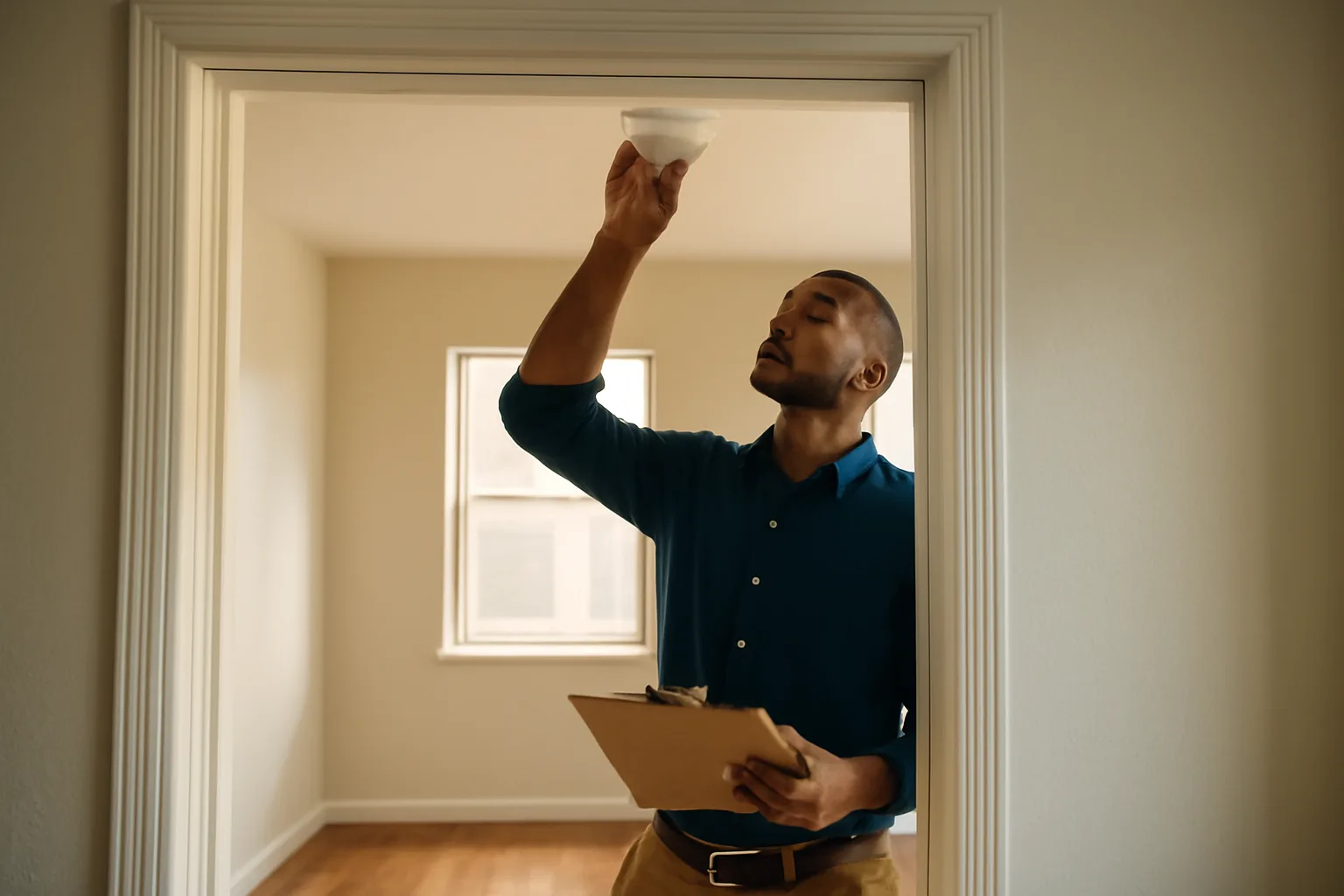
In California, the landlord is generally responsible for scheduling and conducting the move-in and move-out walk-through inspections, and state law gives the tenant a specific right connected to that process: under California Civil Code Section 1950.5, a landlord must, upon request, conduct an initial inspection before the tenant moves out (an "initial inspection" for security deposit purposes) and give the tenant an itemized list of deficiencies with a reasonable opportunity to fix them before move-out charges are finalized [9]. During a routine or city-mandated compliance inspection (as opposed to a security-deposit walk-through), a landlord or city inspector is typically allowed to look at life-safety items: smoke and carbon monoxide detectors, working locks, heating systems, plumbing for leaks, electrical hazards, and general structural condition. What a landlord generally cannot do during any inspection, in California or elsewhere, is search personal belongings, closets, or drawers beyond what's needed to assess the condition of the unit itself; the inspection is about the property's condition, not the tenant's possessions. City-mandated rental inspections (common in licensing municipalities) usually follow a published checklist from the local building or housing department, covering things like working smoke detectors, egress windows, water heater strapping, and pest evidence. If you're prepping for one of these in a licensing city, check your specific city's checklist ahead of time rather than assuming it matches a neighboring city's list.
What can a landlord not do in Ohio?
Under Ohio's Landlords and Tenants statute (Ohio Revised Code Chapter 5321), a landlord cannot shut off a tenant's utilities, change the locks, or remove the tenant's belongings to force them out; Ohio law requires landlords to use the formal eviction process through the courts for any removal . A landlord also cannot retaliate against a tenant for filing a legitimate code complaint or joining a tenant organization, and cannot enter a tenant's unit without reasonable notice except in a genuine emergency. Ohio law specifically requires landlords to give "reasonable notice" before entering an occupied unit, generally interpreted in practice as 24 hours except for emergencies, and the entry has to be at a reasonable time of day . A landlord in Ohio also can't waive the tenant's right to a habitable unit through a lease clause; certain tenant protections under ORC 5321 apply regardless of what the lease says. Ohio doesn't have a statewide rental licensing requirement, but individual cities (Cincinnati and others) run their own rental registration or inspection programs, so a landlord operating in an Ohio city should check that city's specific ordinance separately from the state statute.
Frequently asked questions
How much renters insurance liability coverage should I require as a landlord?
Most landlord forums and property managers land on $100,000 as a workable minimum for single-family or duplex rentals, with $300,000 common for multifamily buildings or higher-density cities. There's no legal minimum; the number should reflect a realistic worst-case damage scenario for your specific property, not a fixed industry rule.
Can a landlord legally require renters insurance?
Yes, in nearly every state, as long as it's written into the lease and applied to every tenant consistently. A few states, like Oklahoma, have specific statutes addressing it directly. Applying the requirement selectively based on a protected class can create fair housing liability regardless of the insurance clause itself.
What happens if a tenant lets their renters insurance lapse?
Most leases treat a lapse as a lease violation subject to a cure period, similar to any other lease breach, typically giving the tenant written notice and a set number of days to reinstate coverage before further action. The specific cure period depends on your state's notice-to-cure statute, so confirm it with a local landlord-tenant attorney.
Does renters insurance protect the landlord's building?
No. Renters insurance covers the tenant's personal belongings and personal liability; it doesn't cover the landlord's structure or the landlord's own liability. Landlords need their own dwelling and liability policy (often called landlord or rental property insurance) separate from anything the tenant carries.
How to become a landlord if I've never rented out a property before?
Start by confirming your city and state's rental licensing or registration requirements, since many cities require registration and an inspection before you can legally rent. Then get a compliant lease for your state, landlord liability insurance, and a tenant screening process that follows the Fair Housing Act.
What is the difference between landlording and property management?
Landlording is the ongoing work of owning and operating your own rental, including rent collection, repairs, and compliance. Property management is hiring a third party to do that work for you, usually for a fee around 8 to 12 percent of monthly rent, though rates vary by market and scope.
What rights do tenants have without a written lease?
A tenant without a lease still has full habitability protections and still requires proper legal eviction through the courts; landlords can't use self-help measures like changing locks. The tenancy is typically treated as month-to-month, meaning either party can end it with the state's standard notice period, often 30 days.
Why do landlords require renters insurance instead of just relying on their own policy?
A landlord's own policy usually doesn't cover the tenant's belongings and often doesn't fully cover liability from tenant-caused damage to neighboring units. Requiring tenant coverage shifts that specific risk and gives the landlord an actual claims path instead of having to sue an uninsured tenant directly.
How much notice does a landlord have to give before entering a unit?
Most states require 24 to 48 hours advance notice for non-emergency entry, though the exact number and what counts as "reasonable" varies by state statute. Some states, like Arizona, specify at least two days in their landlord-tenant code. Always confirm your specific state's requirement before entering.
What can a landlord look at during a routine rental inspection?
A landlord or city inspector typically checks life-safety and habitability items: smoke and carbon monoxide detectors, locks, heating and plumbing systems, electrical hazards, and structural condition. Inspections are about the unit's condition, not a search of personal belongings or private areas beyond what's needed to assess the property.
Who conducts the move-out walk-through inspection in California?
The landlord conducts it, but California Civil Code Section 1950.5 gives tenants the right to request an initial pre-move-out inspection, after which the landlord must provide an itemized list of deficiencies and a reasonable chance to fix them before final deposit deductions are made.
What can a landlord not do in Ohio specifically?
Under Ohio Revised Code Chapter 5321, a landlord cannot shut off utilities, change locks, or remove belongings to force a tenant out; eviction must go through the courts. Landlords also can't retaliate against tenants for code complaints and must give reasonable notice, generally 24 hours, before entering.
Sources
- Insurance Information Institute, Renters Insurance facts: Average renters insurance costs and typical coverage protection
- U.S. Department of Housing and Urban Development, Fair Housing Act overview: Consistent application of lease requirements is required to avoid fair housing violations
- EPA, Lead-Based Paint Disclosure Rule: Federal lead paint disclosure requirement for pre-1978 housing
- California Civil Code Section 1941.1: California's statutory definition of habitability defects a landlord must fix
- California Civil Code Section 1946.1: California notice period requirements to terminate a month-to-month tenancy
- California Civil Code Section 1954: California's reasonable notice requirement, presumed 24 hours, for landlord entry
- Arizona Residential Landlord and Tenant Act, ARS 33-1343: Arizona's statutory notice period of at least two days for landlord entry
- California Civil Code Section 1950.5: California tenant's right to an initial pre-move-out inspection and itemized deficiency list
- Ohio Revised Code Chapter 5321, Landlords and Tenants: Ohio's prohibitions on self-help eviction, retaliation, and requirement for reasonable entry notice