Last updated 2026-07-26
TL;DR
Becoming a landlord means more than buying property: most cities require you to register or license the unit, pass a habitability inspection, and follow state notice rules before entering. Tenants without a lease still have rights under state landlord-tenant law, including habitability protections and notice requirements before eviction.
how do you become a landlord?
You become a landlord the moment you rent out a property you own, whether that's a single room, an accessory dwelling unit, or a ten-unit building. Legally, though, most cities and states want you to do a few things first: register the rental with your local housing office, get a business license if your city requires one, and pass an initial inspection before you hand over keys. The honest first step is not finding a tenant. It's calling your city's rental licensing or housing department (search "[your city] rental registration" or "[your city] rental license") and asking what's required for your specific address. Requirements vary wildly. Some cities like Minneapolis require a rental license renewed every one to three years depending on inspection history [1]. Others have no license requirement at all, just a business tax registration. After you confirm what your city wants, the practical sequence looks like this: register the property, schedule and pass any required inspection, get your certificate of occupancy or rental license, then screen tenants and sign a lease. Skipping the licensing step to save time is the single most common mistake new landlords make, and it usually costs more later in back fees and fines than it would have cost to just do it first. Many states also require landlords to disclose specific things before a tenant moves in: lead paint disclosures for pre-1978 housing under federal law [2], and often local requirements like mold disclosures, security deposit handling rules, or utility responsibility statements. Get a checklist from your city before you list the unit.
what is landlording, exactly?
Landlording is the ongoing job of owning and managing a rental property: more than collecting rent, and handling maintenance, following habitability law, managing tenant relationships, and staying current on local licensing and inspection rules. It's part business, part compliance work, part customer service. A lot of new owners think landlording ends once the lease is signed. It doesn't. You're on the hook for repairs, for responding to complaints within a reasonable time, for keeping the unit meeting local housing code, and for renewing your rental license or registration on whatever schedule your city sets, often annually [1]. If you own property in a city with mandatory rental licensing, landlording also means keeping inspection paperwork organized, because inspectors will ask for it again at renewal. Some owners hire a property manager to handle the day-to-day landlording work. That doesn't get you out of licensing responsibility though. In most cities, the property owner (not the manager) is the one whose name is on the rental license and who faces fines if the license lapses.
what is a landlord, legally speaking?
A landlord is the person or entity that owns residential property and rents it to a tenant in exchange for payment, taking on legal obligations defined by state landlord-tenant law and, in many cities, local housing and licensing codes. The landlord's core legal duties almost always include maintaining habitable conditions, following notice rules before entry or eviction, and handling security deposits according to state law. State statutes define this relationship in detail. For example, Ohio's landlord-tenant law (Ohio Revised Code Chapter 5321) spells out landlord obligations to keep the property in "a fit and habitable condition" and to comply with building and housing codes that materially affect health and safety [3]. Every state has some version of this, though the specific wording and remedies differ. If you own the building but someone else manages it day to day, you're still the landlord in the legal sense in most states, meaning your name is the one liable for code violations and the one on the rental license application in licensed cities.
who is responsible for a rental property walk-through inspection in California?
In California, the landlord is responsible for conducting the move-in and move-out walk-through inspections, and state law gives tenants the right to request an initial move-out inspection before they leave. California Civil Code Section 1950.5 requires landlords to notify tenants of their right to an initial inspection and, if the tenant requests it, to conduct that inspection no earlier than two weeks before the tenancy ends [4]. The point of that initial inspection is to give the tenant a chance to fix any issues that might otherwise lead to a deposit deduction. The landlord has to give the tenant an itemized statement of what needs fixing or cleaning after that walk-through, per the same statute [4]. Separately, many California cities also require landlords to pass a rental housing inspection for licensing purposes (unrelated to tenant move-out), conducted by city inspectors rather than the landlord themselves. That's a different inspection with a different purpose: code compliance and habitability for licensing, not deposit accounting. Confirm with your city rental licensing office whether your city has this kind of program, since it's a local add-on, not a statewide requirement.
what can a landlord look at during an inspection?
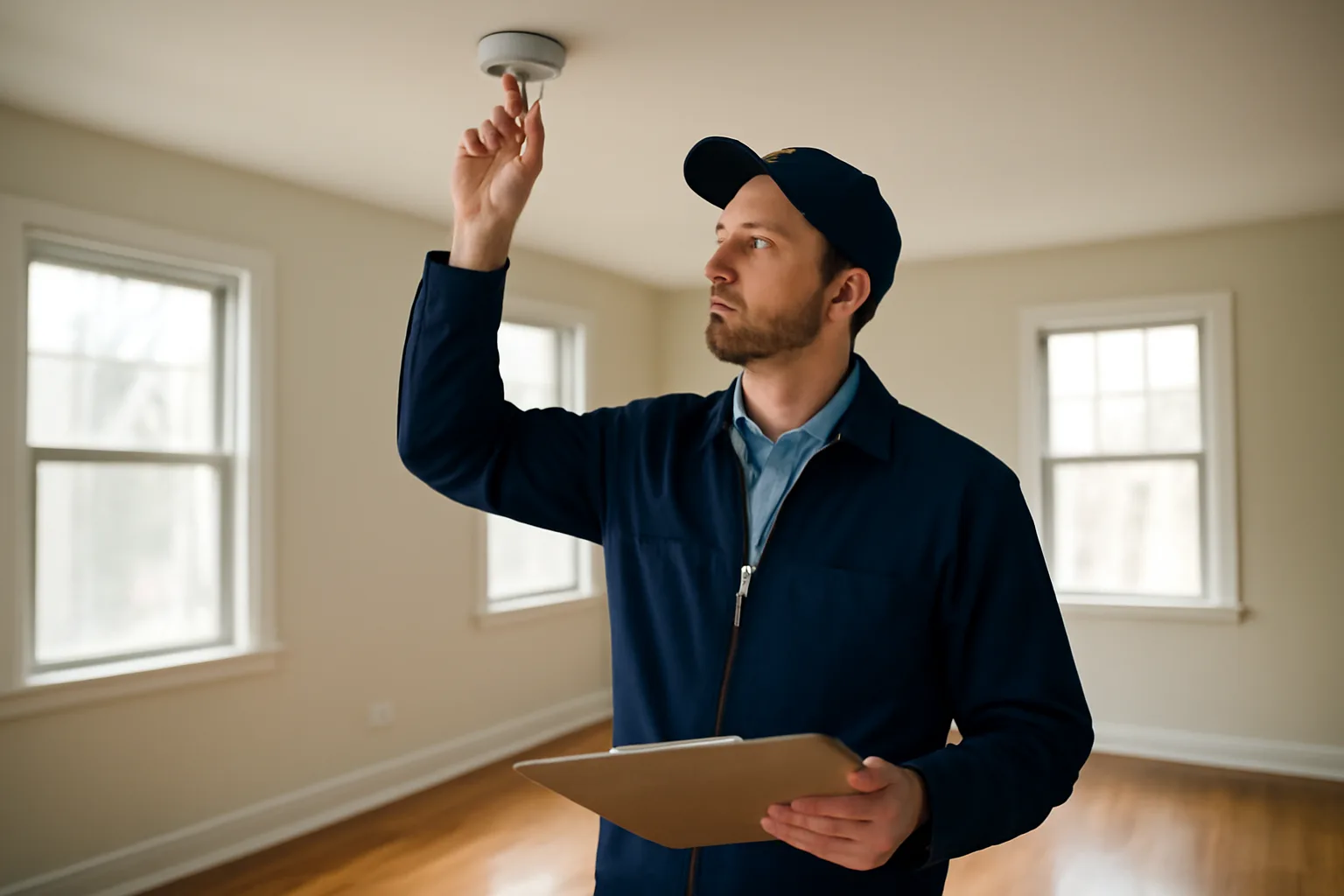
During a routine or licensing inspection, a landlord or city inspector can generally look at anything related to habitability and code compliance: smoke and carbon monoxide detectors, electrical outlets, plumbing fixtures, heating systems, window and door locks, signs of pest infestation, mold, and structural issues. They're not there to inspect your personal belongings or search for reasons to evict you. City rental licensing inspections typically check a defined list tied to the local housing code: working smoke alarms in every bedroom and hallway, functioning locks, no exposed wiring, adequate heat source, no active leaks, and clear egress from bedrooms. Some cities publish their inspection checklist in advance, which is worth requesting before your inspection date so you can fix obvious items yourself and skip a paid re-inspection fee. For tenant-requested walk-throughs (like the California move-out inspection above), the scope is narrower: it's about the condition of the unit relative to move-in condition, for deposit purposes, not a full code inspection. Landlords doing their own routine inspections during a tenancy still have to follow state notice-before-entry rules (see below); an inspection right doesn't override the tenant's right to notice.
how much notice does a landlord have to give before entering or inspecting?
Most states require landlords to give at least 24 to 48 hours notice before entering an occupied rental for non-emergency purposes, including routine inspections, though the exact number and the situations that qualify for entry vary by state. California requires "reasonable notice," which state law presumes to be 24 hours, under Civil Code Section 1954 [5]. Some states like Ohio require notice but don't specify a number of hours in the statute itself, though 24 hours is the commonly used and court-recognized standard in practice [3]. Emergencies are the standard exception: fire, flooding, gas leak, or another situation posing immediate danger lets a landlord enter without advance notice in virtually every state. Outside of emergencies, showing the unit to prospective tenants or buyers, doing agreed-upon repairs, and conducting the kind of habitability inspection your city requires for licensing all typically require standard advance notice. If you're a landlord in a city with mandatory rental inspections, don't assume the city inspector's visit exempts you from giving your tenant notice. In most jurisdictions, you as the landlord still have to notify the tenant that the inspector is coming, on the same notice schedule as any other entry, unless your local ordinance says otherwise. Confirm the specific hours required with your city rental licensing office and your state's landlord-tenant statute, since this is one of the areas with real state-to-state variation.
why do landlords require renters insurance?
Landlords require renters insurance mainly to shift financial risk: it covers the tenant's personal belongings and, more importantly for the landlord, it typically includes liability coverage if the tenant causes damage or an injury happens in the unit. The landlord's own property insurance covers the building structure, not the tenant's stuff, and usually doesn't cover a lawsuit stemming from the tenant's own negligence (a candle fire, a dog bite, a guest slipping on a wet floor the tenant failed to mop up). Requiring renters insurance is legal in most states as a lease condition, and it's become standard practice, especially for landlords who've been burned once by a tenant claim with no insurance behind it. Typical policies run somewhere in the range of $15 to $30 a month depending on coverage limits and location, though costs vary by insurer and state. A few states and cities regulate how landlords can require and verify renters insurance, so if you add this as a lease requirement, check whether your state has specific rules about proof of coverage, grace periods, or what happens if a tenant lets the policy lapse.
what rights do tenants have without a lease?
Tenants without a written lease still have real legal rights: state landlord-tenant law applies to oral or month-to-month tenancies just as it does to written leases, covering habitability, notice before eviction, and, in many states, notice before entry. What changes without a written lease is mainly the terms around length of tenancy and rent amount, which default to month-to-month under most state law unless another arrangement is proven. A landlord still can't just lock a tenant out or shut off utilities to force them out, even with no written lease, because self-help eviction is illegal in every state. The landlord has to go through the formal eviction process, which requires proper notice (the length varies by state and by the reason for eviction) and, if the tenant doesn't leave, a court filing. Ohio law is a useful example: Ohio Revised Code 5321.03 spells out that a landlord can't recover possession of the property except through court eviction proceedings, and can't use lockouts, utility shutoffs, or removal of tenant belongings as a substitute for legal eviction, regardless of whether there's a written lease [6]. Habitability duties also apply without a lease. If the unit lacks heat, has no working plumbing, or has a serious code violation, the tenant without a lease has largely the same right to push for repairs, and in many states to withhold rent or repair-and-deduct under specific procedures, as a tenant with a signed lease. The details of that remedy differ sharply by state, so check your specific state statute before acting.
what can a landlord not do in Ohio?
In Ohio, a landlord cannot shut off utilities, change the locks, remove a tenant's belongings, or otherwise force a tenant out without going through the formal court eviction process, per Ohio Revised Code 5321.15 [7]. This is often called the ban on "self-help eviction," and violating it can expose the landlord to the tenant's actual damages plus, under some circumstances, additional statutory penalties. Ohio landlords also can't retaliate against a tenant for exercising a legal right, like reporting a code violation or joining a tenant union; Ohio Revised Code 5321.02 specifically prohibits retaliatory conduct such as raising rent, decreasing services, or threatening eviction because a tenant complained to a government agency about a housing code violation [2]. Beyond that, Ohio landlords have to maintain the unit in compliance with building, housing, and health codes and keep it fit and habitable, per Ohio Revised Code 5321.04 [8]. That means a landlord can't simply ignore a serious repair request and hope it goes away; tenants have remedies including, in some cases, the right to deposit rent with a court (an escrow procedure) if the landlord fails to fix a documented problem after notice. Ohio also restricts what a landlord can charge or withhold from a security deposit without justification, and requires an itemized list of deductions if the landlord withholds more than $50 or 5% of the monthly rent (whichever is greater), per Ohio Revised Code 5321.16 [9].
how do I actually become a landlord, step by step?
Here's the realistic order of operations, adjusted for the fact that almost every city and state does this a little differently. First, confirm your local licensing and registration requirement by calling your city's rental housing or code enforcement office directly. Second, check your state's landlord-tenant statute for baseline rules on notice, deposits, and habitability, since local rules layer on top of, not instead of, state law. Third, get any required inspection done and licensed before you advertise the unit. Fourth, screen tenants under fair housing law (the federal Fair Housing Act prohibits discrimination based on race, color, religion, sex, national origin, disability, and familial status ). Fifth, sign a lease that matches your state's required disclosures and your local ordinance's requirements. A lot of first-time landlords underestimate step one and go straight to step four. That's backwards in any city with mandatory rental licensing, because operating an unlicensed rental can mean fines that stack up fast, sometimes by the day or by the month depending on the city's enforcement code, and can also mean a court won't let you collect rent or evict a nonpaying tenant until the license is in place, depending on your city's ordinance. If you're managing this process for the first time and want a structured way to track every document your city will ask for (lead paint disclosure, business license application, inspection checklist, prior inspection reports), a packet built specifically for rental license and inspection prep, like RentalPermitPath's $79 one-time City Rental License & Inspection Prep Packet, can save you from having to reconstruct the requirements list yourself city by city.
what should new landlords know about ongoing compliance?
Getting licensed once isn't the end of the job. Most cities with mandatory rental licensing require renewal, often annually, sometimes every two or three years, and many tie the renewal interval or fee to your past inspection results (fewer violations can mean a longer renewal cycle in some cities, more violations can mean more frequent, and sometimes more expensive, re-inspection) [1]. Keep a simple compliance calendar: license renewal date, next inspection window, insurance renewal, and any state-required disclosure updates. Missing a renewal deadline is one of the most common (and most avoidable) ways landlords rack up fines, and in many cities those fines apply per unit and per month of non-compliance, which adds up fast on a multi-unit building. If you're managing several small properties across different cities, this gets complicated quickly because every city's forms, fees, and inspection checklists are different. That's the exact problem RentalPermitPath's Prep Packet is built to solve: a $79 one-time packet that helps you organize what your specific city's rental license and inspection process will ask for, so you're not guessing at renewal time.
Frequently asked questions
How do you become a landlord with no experience?
Start by calling your city's rental licensing or housing office to learn local requirements before you list a unit. Then check your state's landlord-tenant statute for baseline rules on deposits, notice, and habitability. Get any required inspection and license done first, screen tenants under fair housing law, and use a lease that matches your state's disclosure requirements.
What is the difference between landlording and property management?
Landlording is the overall job of owning and being legally responsible for a rental, including licensing, habitability, and tenant relations. Property management is a service, sometimes hired out, that handles day-to-day tasks like rent collection and maintenance coordination. The property owner remains the legal landlord and license-holder even if a manager handles daily operations in most cities.
What is a landlord responsible for under state law?
Landlords are generally responsible for keeping the unit in a fit and habitable condition, complying with building and housing codes, following state notice rules before entry or eviction, and handling security deposits according to state law. Ohio Revised Code 5321.04, for example, requires landlords to maintain the premises in a habitable condition and comply with applicable housing codes.
Do tenants have rights if they never signed a lease?
Yes. State landlord-tenant law applies to oral and month-to-month tenancies, more than written leases. Tenants without a lease still have habitability rights, notice-before-eviction protections, and protection against illegal self-help eviction (lockouts, utility shutoffs). What mainly changes without a lease is the default tenancy length, usually month-to-month.
Who does a rental walk-through inspection in California, the landlord or the tenant?
The landlord conducts the walk-through, but California Civil Code 1950.5 gives the tenant the right to request an initial move-out inspection before the tenancy ends, so they can fix issues before facing deposit deductions. The landlord must give an itemized list of needed repairs or cleaning after that inspection if the tenant requested one.
What can a landlord check during a rental inspection?
A landlord or city inspector can check habitability and code items: smoke and CO detectors, electrical wiring, plumbing, heating, window and door locks, pest signs, and structural condition. City licensing inspections usually follow a published local checklist. They generally can't search personal belongings unrelated to the property's condition.
How much advance notice must a landlord give before entering a rental unit?
Most states set this at 24 to 48 hours for non-emergency entry, including routine inspections. California presumes 24 hours is reasonable notice under Civil Code 1954. Requirements vary by state and by the reason for entry, and emergencies (fire, flooding, gas leak) are typically exempt from advance notice rules entirely.
Why do landlords require tenants to carry renters insurance?
Mainly to cover liability: if a tenant's negligence causes a fire, injury, or other damage, renters insurance liability coverage can pay the claim instead of the landlord's insurer or the landlord directly. It also protects the tenant's own belongings. Typical monthly cost runs roughly $15 to $30 depending on coverage and location.
What can a landlord not do in Ohio?
Ohio landlords can't use self-help eviction (changing locks, shutting off utilities, removing belongings) instead of going through court, per Ohio Revised Code 5321.15. They also can't retaliate against a tenant for reporting a code violation (ORC 5321.02) and must keep the unit in compliance with housing codes (ORC 5321.04).
What happens if a landlord operates a rental without a required license?
Consequences vary by city but often include daily or monthly fines, a hold on the landlord's ability to file eviction for nonpayment until the property is licensed, and sometimes a requirement to refund rent collected during the unlicensed period. Confirm the specific penalty structure with your city's rental licensing office, since ordinances differ significantly.
Is renters insurance legally required for a tenant in most states?
No state mandates renters insurance as a matter of law, but landlords can lawfully require it as a lease condition in nearly every state. Some cities and states regulate how proof of coverage must be verified or what happens if a policy lapses, so check local rules before adding this as a lease requirement.
How often do landlords need to renew a rental license?
It depends entirely on the city; common renewal cycles run one to three years, and some cities tie the renewal length to your prior inspection record, with fewer violations earning a longer renewal window. Confirm the exact cycle and fee with your specific city's rental licensing office, since there's no national standard.
Sources
- U.S. EPA, Lead-Based Paint Disclosure Rule: Federal law requires lead paint disclosure for pre-1978 housing before a lease is signed
- Ohio Revised Code 5321.04: Ohio landlords must keep the premises fit and habitable and comply with applicable building and housing codes
- California Civil Code Section 1950.5: California tenants have the right to request an initial move-out inspection, conducted no earlier than two weeks before tenancy ends
- California Civil Code Section 1954: California law presumes 24 hours is reasonable notice before landlord entry
- Ohio Revised Code 5321.03: Ohio landlords must use court eviction proceedings rather than self-help remedies to recover possession
- Ohio Revised Code 5321.15: Ohio landlords are prohibited from utility shutoffs, lockouts, or removing tenant belongings as a substitute for legal eviction
- Ohio Revised Code 5321.02: Ohio law prohibits landlord retaliation against tenants who report housing code violations
- Ohio Revised Code 5321.16: Ohio requires an itemized deduction list if a landlord withholds more than $50 or 5% of monthly rent from a security deposit
- U.S. Department of Housing and Urban Development, Fair Housing Act overview: The federal Fair Housing Act prohibits rental discrimination based on race, color, religion, sex, national origin, disability, and familial status