Last updated 2026-07-25
TL;DR
No, a landlord generally cannot inspect a rented unit every month without a real reason. Most states require inspections to be for a legitimate purpose (repairs, safety checks, showing the unit) with advance notice, usually 24 to 48 hours. Monthly "just checking in" visits without cause can count as harassment or violate the tenant's right to quiet enjoyment.
Can a landlord do monthly inspections?
In almost every state, no. Landlords have a legal right to enter for specific reasons (repairs, showing the unit to prospective tenants or buyers, emergencies, and sometimes for verifying lease compliance) but not simply to check on the property every 30 days out of habit. California Civil Code Section 1954 lists the lawful reasons a landlord can enter: to make necessary or agreed repairs, show the unit to prospective tenants or buyers, in case of emergency, when the tenant has abandoned the unit, or under court order [1]. A pattern of monthly entries without one of these reasons is exactly the kind of thing tenant attorneys flag as harassment or a violation of the covenant of quiet enjoyment. That said, a few situations legitimately involve monthly or near-monthly contact. Some cities with mandatory rental licensing require periodic habitability inspections as a condition of the license (often annual, sometimes tied to a complaint or a change in occupancy) rather than a landlord-initiated monthly walk-through. Government-subsidized housing programs are different: Housing Choice Voucher units, for instance, get inspected by the local public housing authority under HUD's Housing Quality Standards, and re-inspections can happen more often if problems are found, but this is the housing authority inspecting, not the landlord dropping by every month [2]. If you're a landlord who wants routine peace of mind, the legal path is a lease clause allowing periodic inspections with proper notice (commonly quarterly or semi-annual, not monthly), used consistently and documented every time. Monthly, no-cause entry is the pattern most likely to get you a demand letter or a habitability/harassment claim.
How much notice does a landlord have to give before entering?
| California | 24 hours (reasonable notice) | Civil Code Sec. 1954 [1] | |
|---|---|---|---|
| Oregon | 24 hours, reasonable hours | ORS 90.322 [3] | |
| Arizona | 2 days | A.R.S. Sec. 33-1343 [4] | |
| Florida | 12 hours (for repairs) | Fla. Stat. Sec. 83.53 [5] | Emergencies are the standard exception everywhere: a burst pipe, fire, gas leak, or a report of someone in danger lets a landlord enter without advance notice. Outside emergencies, showing up on a schedule you invented ('the first Monday of every month') without matching one of the legal reasons for entry is where landlords get into trouble, notice or not. Always confirm the specific notice rule and any local add-on with your city rental licensing office, since some cities layer their own notice or posting requirements on top of state law for licensed rental units. |
Most states set 24 to 48 hours as the standard notice window for non-emergency entry, though the exact number and the required form of notice vary by state and sometimes by city ordinance. California requires "reasonable notice," which the statute defines as 24 hours in the absence of an agreement to the contrary, delivered in writing except in limited circumstances [1]. Many other states use similar language: Oregon's landlord-tenant statute (ORS 90.322) requires at least 24 hours' notice and limits entry to reasonable times, generally between 8 a.m. and 8 p.m. [3]. Some states, like Arizona, allow entry with at least two days' notice under A.R.S. Section 33-1343 [4]. A table helps compare the pattern across a few commonly-cited states: | State | Standard notice | Statute |
What can a landlord look at during an inspection?
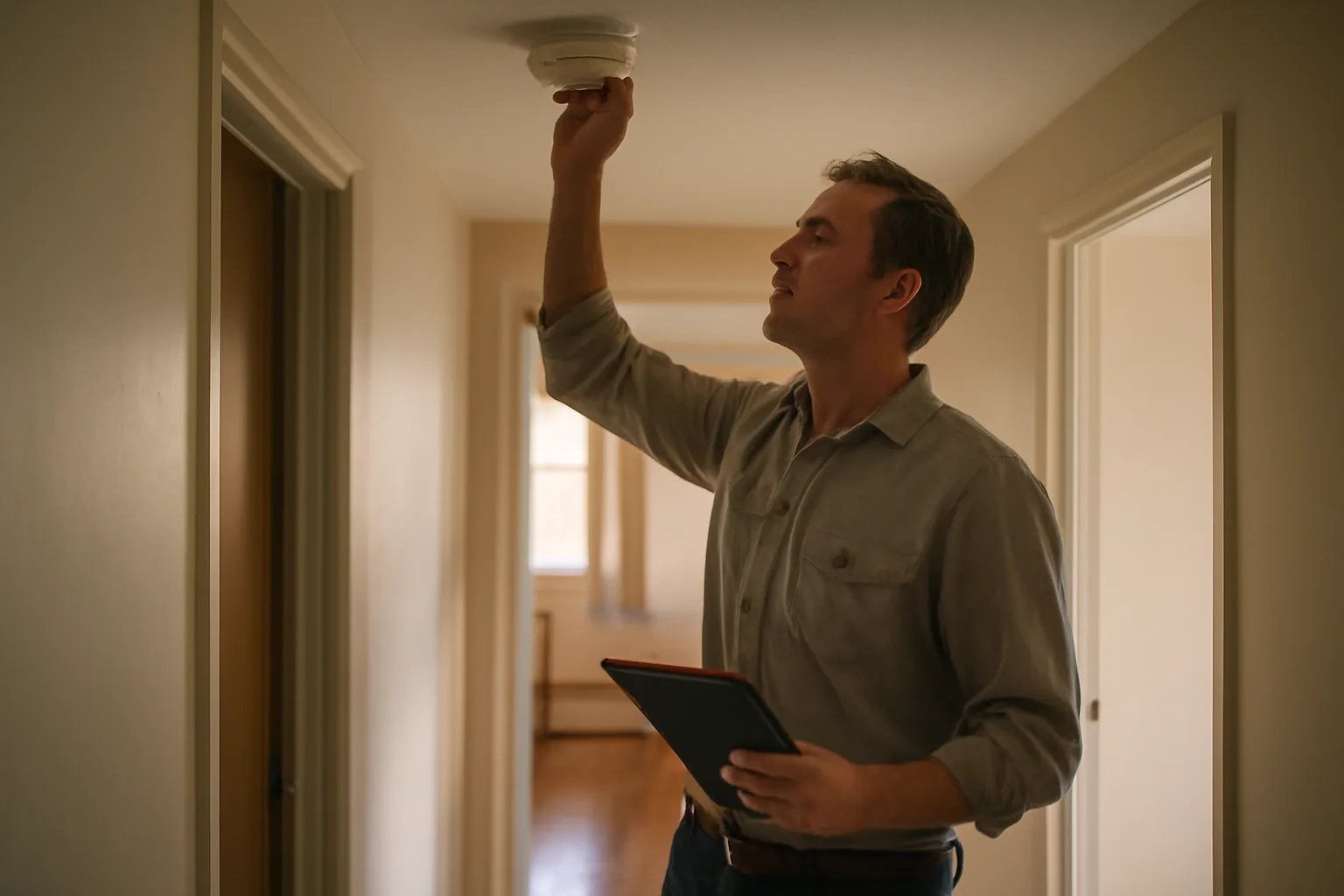
A landlord conducting a lawful inspection can generally check smoke and carbon monoxide detectors, look for water leaks or mold, check that major systems (heating, plumbing, electrical) are working, confirm no unauthorized occupants or pets are living there in violation of the lease, and note any damage beyond normal wear and tear. What a landlord generally cannot do is open closed drawers, closets, or containers looking for personal items, search for evidence unrelated to the lease (going through mail, financial documents, or personal belongings), or use the inspection as a pretext to harass a tenant, discourage a complaint, or retaliate for something like a habitability complaint or a fair housing inquiry. Most city rental inspection programs, the kind tied to a rental license or registration requirement, focus on the property's condition rather than the tenant's belongings: working smoke detectors, egress windows, no exposed wiring, functioning plumbing, no signs of infestation, adequate heat. These are usually done by a city inspector, not the landlord personally, and the scope is set by the local housing code rather than by the landlord's judgment call. If you're a landlord preparing for a city-mandated inspection tied to your rental license, the smart move is to walk the unit yourself first and fix the obvious stuff (dead detector batteries, loose handrails, missing outlet covers) before the city inspector shows up. A tenant rights guide for your specific city will usually list exactly what inspectors check, since the checklist is public in most licensing jurisdictions.
Who is responsible for a rental property walk-through inspection in California?
In California, the landlord is responsible for scheduling and conducting move-in and move-out walk-through inspections, but the tenant has a right to participate, and for the move-out inspection, a right to advance notice and a chance to fix issues before final deductions from the deposit. California Civil Code Section 1950.5 requires that if the landlord intends to make deductions from the security deposit for anything other than a few narrow exceptions, the landlord must, upon the tenant's request or as offered by the landlord, do an initial inspection before the tenant moves out and give the tenant a chance to remedy any issues found [6]. The tenant must get at least 48 hours' notice of the initial inspection and can waive it in writing. After the initial inspection, the landlord gives the tenant an itemized statement of any needed repairs or cleaning [6]. Outside the deposit-related walk-throughs, day-to-day habitability inspections in California follow the general entry rules in Civil Code 1954: reasonable notice (24 hours is the default), a lawful purpose, and reasonable hours. Local rent boards in cities like San Francisco, Oakland, and Los Angeles sometimes add extra procedural requirements on top of state law, so if you manage in one of those cities, check the local rent board's rules before scheduling a walk-through.
What a landlord cannot do in Ohio
Ohio law (Ohio Revised Code Section 5321.04) requires landlords to give "reasonable notice" of intent to enter and to enter only "at reasonable times," and separately Section 5321.05 says a landlord's right of access does not permit "repeated demands for entry otherwise lawful" that amount to harassment of the tenant [7]. Ohio courts and the statute treat 24 hours as reasonable notice in typical practice, though the statute itself doesn't hard-code a number the way California's does. What Ohio does spell out is the prohibited pattern: entering to harass, entering without notice outside emergencies, or using access as retaliation against a tenant who has complained to a health or building authority. Ohio Revised Code 5321.02 separately protects tenants from retaliatory conduct, including retaliatory entry or inspections, after certain protected actions like reporting a code violation [8]. Ohio landlords also can't shut off utilities, change the locks, or remove a tenant's belongings to force them out (self-help eviction is illegal under Ohio law and under most state landlord-tenant codes generally). If you're inspecting a unit in a city like Columbus or Cincinnati that has its own rental registration or point-of-sale inspection rule, that city ordinance sits on top of, not instead of, the state notice and harassment rules.
How to become a landlord
Becoming a landlord in the U.S. doesn't require a license from the state in most places, but it does usually require registering the rental with your city or county, following local building and safety codes, and, in a growing number of cities, obtaining a rental license or permit before you can legally rent the unit out. The basic steps most new landlords go through: buy or convert a property, confirm local zoning allows rental use, check whether your city requires rental registration or licensing (many mid-size and large cities do; smaller towns often don't), get any required inspection done, screen tenants under fair housing law, and draft a lease that complies with your state's landlord-tenant statute. HUD's fair housing rules apply regardless of city size: the Fair Housing Act prohibits discrimination based on race, color, national origin, religion, sex, familial status, and disability in the rental and sale of housing [9]. That applies whether you own one unit or a hundred. If your city has a mandatory licensing program (plenty of mid-size cities in Ohio, Pennsylvania, Michigan, and California do), the licensing office is usually the fastest way to get a straight answer on fees, inspection scheduling, and renewal timelines, since these programs vary block by block in ways a general guide can't predict.
What is landlording?
Landlording is the ongoing work of owning and managing rental property: collecting rent, maintaining the unit, handling repairs, screening and communicating with tenants, staying current on local and state landlord-tenant law, and (in licensed cities) keeping the rental registration or license current and passing required inspections. It's less about the initial purchase and more about the recurring obligations: responding to maintenance requests within the timeframe your state's habitability law expects, handling security deposits correctly at move-out, renewing a rental license before it lapses, and knowing when you legally can and can't enter the unit. Most of the legal risk in landlording isn't in the big decisions, it's in the small procedural ones done wrong repeatedly: entering without proper notice, mishandling a deposit deduction, ignoring a repair request until it becomes a habitability violation. Landlords with one or two units get tripped up by these more often than large property managers, mostly because nobody handed them a checklist.
What is a landlord?
A landlord is the owner (or the owner's authorized agent) who rents real property to a tenant in exchange for rent, under a lease or rental agreement, and who takes on the legal duties that come with that relationship: maintaining habitable conditions, respecting the tenant's right to quiet enjoyment, following state and local notice-of-entry rules, and complying with any local rental licensing or registration ordinance. Legally, the term covers everyone from an individual renting out a spare unit in a duplex to a corporate property management company running thousands of units. The obligations scale with the jurisdiction, not the size of the landlord: a one-unit landlord in a city with mandatory rental licensing owes tenants and the city the same basic disclosures and inspection compliance as a large landlord does.
What rights do tenants have without a lease?
A tenant without a written lease (a month-to-month or oral tenancy) still has almost all the same legal protections as a tenant with a signed lease: the right to habitable conditions, the right to advance notice before the landlord enters, the right to proper notice before eviction, and protection from retaliation and discrimination. What changes without a written lease is mostly the terms around ending the tenancy. Month-to-month tenants generally need to be given the notice period set by state law before the landlord can terminate, commonly 30 days, though some states require more for longer tenancies (California, for example, requires 60 days' notice to terminate a tenancy where the tenant has lived in the unit a year or more, under Civil Code Section 1946.1) . An oral or undocumented lease doesn't waive the tenant's habitability rights either. Every state has an implied warranty of habitability that applies regardless of whether there's a signed document, meaning the landlord still has to keep the unit safe and livable. For a broader look at what protections travel with a tenancy regardless of lease status, see tenants rights and renters rights.
Why do landlords require renters insurance?
Landlords require renters insurance mainly to shift liability risk off themselves: a landlord's own property insurance covers the building and the landlord's belongings, not the tenant's personal property, and it generally doesn't cover a tenant's liability if the tenant accidentally causes a fire, a water leak, or an injury to a guest. Renters insurance policies typically include personal liability coverage, often $100,000 or more depending on the policy, which protects both the tenant and, indirectly, the landlord if a tenant-caused incident leads to a lawsuit or a claim against the building. It's genuinely one of the cheaper risk-management tools available to a small landlord: national average renters insurance premiums run roughly $15 to $30 a month depending on coverage and location, according to industry rate surveys, though your city or state insurance department is the better source for a current local number. Requiring it is legal in every state as a standard lease condition, as long as it's applied consistently to all tenants and disclosed in the lease. It's not a substitute for the landlord's own liability and property insurance, but it closes a real gap.
How to be a landlord (day-to-day basics)
Being a landlord day to day comes down to a short list of recurring duties: keep the unit habitable, respond to repair requests promptly, follow your state's entry and notice rules, handle the security deposit by the book, and keep any required city rental registration or license current. The habitability duty is the one with the most legal teeth. Most states impose an implied warranty of habitability requiring the landlord to maintain things like working plumbing, heat, weatherproofing, and structural safety, and a failure to do so can lead to rent withholding, repair-and-deduct remedies, or a habitability lawsuit depending on the state. For landlords in cities with mandatory licensing, staying "in good standing" with the city adds a second layer on top of the lease relationship: renewing the license on time, passing the periodic inspection, and fixing any cited violations within the deadline the city sets (often 30 days for non-emergency violations, though this varies a lot by city). Missing a renewal deadline or ignoring a violation notice is one of the more common ways a small landlord ends up with fines that were entirely avoidable. This is where a packet built for your specific city's rental license and inspection requirements earns its keep. If you're staring down a licensing notice or an inspection deadline and don't want to hunt down every requirement yourself, the $79 City Rental License & Inspection Prep Packet walks through what your city's program typically checks for and how to prep the unit before the inspector shows up.
Frequently asked questions
Can a landlord inspect the property every month?
Generally no, not without a specific lawful reason each time (repairs, showings, emergencies, or a lease-compliance check backed by cause). Routine monthly entry with no stated purpose runs against most states' entry statutes and can be treated as harassment or a breach of quiet enjoyment, even with notice given.
How much notice does a landlord have to give before entering?
Most states require 24 to 48 hours' written notice for non-emergency entry. California defaults to 24 hours (Civil Code Sec. 1954), Arizona requires two days, and Florida allows 12 hours for repair-related entry. Emergencies (fire, flooding, gas leak) don't require advance notice in any state.
What can a landlord check during a rental inspection?
A landlord can check smoke and CO detectors, plumbing, heating, electrical systems, signs of leaks or pest problems, and lease compliance issues like unauthorized occupants. A landlord generally can't search closed drawers, closets, or personal belongings unrelated to the property's condition.
Who does the move-out walk-through inspection in California?
The landlord conducts it, but under Civil Code Sec. 1950.5, the tenant has the right to be present, must get at least 48 hours' notice, and gets an itemized list of needed repairs or cleaning before any final deposit deductions are made.
What is landlording?
Landlording is the ongoing work of owning and managing a rental: collecting rent, keeping the unit habitable, handling repairs and deposits, following entry and notice laws, and, in licensed cities, keeping the rental registration or license current and passing required inspections.
What rights does a tenant have without a signed lease?
Almost the same rights as with a written lease: habitability, notice before entry, notice before eviction, and protection from retaliation and discrimination. What mainly changes is the termination process, which follows state month-to-month notice rules (often 30 to 60 days).
Why do landlords require renters insurance?
Because a landlord's own insurance doesn't cover a tenant's belongings or liability for damage the tenant causes. Renters insurance, typically $15 to $30 a month, shifts that liability risk to the tenant's policy and gives the landlord a cleaner claims path if something goes wrong.
What can a landlord not do in Ohio?
Ohio law (ORC 5321.04 and 5321.05) bars entry without reasonable notice, entry at unreasonable times, and repeated demands for entry that amount to harassment. Ohio also bans retaliatory entry after a tenant reports a code violation, and self-help eviction (shutting off utilities, changing locks) is illegal.
Does a rental license require monthly inspections?
No city program known to require monthly inspections as standard practice. Most mandatory rental licensing cities inspect annually, biennially, or at tenant turnover, unless a specific complaint or violation triggers a follow-up inspection sooner. Confirm the actual cycle with your city rental licensing office.
Can a landlord add a monthly inspection clause to the lease?
A lease can include a periodic inspection clause, but courts and state statutes still require reasonable notice and a legitimate purpose for each entry. A clause claiming unlimited monthly access without notice is unlikely to override state entry-notice law and could be found unenforceable.
How to become a landlord if my city requires rental licensing?
Check with your city's rental licensing or code enforcement office before advertising the unit. Most licensing cities require registration, a fee, and a passed inspection before you can legally lease. Confirm the exact fee, forms, and inspection checklist with that city's office, since requirements vary widely.
What happens if a landlord enters without proper notice?
Consequences vary by state but can include the tenant suing for breach of quiet enjoyment, withholding rent, or in some states seeking statutory damages. Repeated no-notice entries can also support a harassment claim, particularly under statutes like Ohio's ORC 5321.05.
Sources
- California Legislative Information, Civil Code Section 1954: Lawful reasons and notice requirements for landlord entry in California
- Oregon State Legislature, ORS 90.322: Oregon requires 24 hours' notice and reasonable hours for landlord entry
- Arizona State Legislature, A.R.S. Section 33-1343: Arizona requires at least two days' notice for landlord entry
- Online Sunshine (Florida Legislature), Florida Statutes Section 83.53: Florida allows 12 hours' notice for repair-related landlord entry
- California Legislative Information, Civil Code Section 1950.5: California requires 48 hours' notice and an itemized statement for move-out deposit inspections
- Ohio Laws, Ohio Revised Code Section 5321.04 and 5321.05: Ohio requires reasonable notice and reasonable timing for entry and bars repeated demands amounting to harassment
- Ohio Laws, Ohio Revised Code Section 5321.02: Ohio protects tenants from retaliatory conduct including retaliatory entry after a code complaint
- HUD, Fair Housing Act overview: The Fair Housing Act prohibits discrimination based on race, color, national origin, religion, sex, familial status, and disability
- California Legislative Information, Civil Code Section 1946.1: California requires 60 days' notice to terminate a tenancy of one year or more