Last updated 2026-07-26
TL;DR
Becoming a landlord means more than buying property and finding a tenant. Most cities with rental licensing require registration, a passed inspection, and proof of insurance before you can legally collect rent. Requirements vary by city, so confirm specifics with your local rental licensing office before listing a unit.
how to become a landlord: the basic steps
Becoming a landlord is part paperwork, part risk management, and part customer service. There's no single national license for landlords in the U.S. Instead, requirements come from a mix of state landlord-tenant law, local business licensing, and, in a growing number of cities, mandatory rental registration or inspection ordinances. The realistic path looks like this: buy or convert the property, check your local zoning and rental licensing rules before you list it, register the unit with your city if required, get the property inspected if your city mandates it, screen tenants under fair housing law, sign a written lease, collect a legal security deposit, and set up a system for maintenance requests and notices. Skipping the registration or inspection step is the single most common mistake first-time landlords make, because many cities don't advertise the requirement until you get a violation notice. The U.S. Department of Housing and Urban Development explains that all rental housing, regardless of city licensing rules, is still subject to the federal Fair Housing Act, which bans discrimination based on race, color, national origin, religion, sex, familial status, and disability [1]. That layer applies no matter what your city's licensing office requires. If you're renting out your first unit in a city with a registration or inspection program, start by calling your city's rental licensing or code enforcement office directly. Fees, inspection cycles, and renewal timelines differ enormously by city, sometimes even by neighborhood within the same city, so treat any number you find online as a starting point to confirm, not a final answer.
what is landlording, exactly?
Landlording is the ongoing job of owning and managing a rental property, more than the one-time act of signing a lease. It includes finding and screening tenants, collecting rent, handling repairs, meeting local licensing and inspection requirements, and following state and local landlord-tenant law for notices, deposits, and evictions. People sometimes treat landlording as a passive investment. It isn't. Even with a property manager, the owner remains legally responsible for code violations, habitability complaints, and fair housing compliance. A landlord who ignores a rental registration deadline can face fines that stack up per unit per month in some cities, and unresolved violations can sometimes block a certificate of occupancy or a future sale. Good landlording is mostly about systems: a lease that matches your state's required disclosures, a documented move-in inspection, a clear process for repair requests, and a calendar that tracks license renewal and inspection dates before they lapse.
what is a landlord, legally speaking?
A landlord is the owner (or an authorized agent of the owner) of a residential or commercial property who rents that property to a tenant in exchange for rent, under a lease or rental agreement. Legally, the landlord holds the title, and the tenant holds a leasehold interest, meaning the right to possess and use the property for the lease term. Most state landlord-tenant statutes define "landlord" broadly enough to include property management companies acting on the owner's behalf, which matters for who gets served legal notices and who is liable for code violations. For example, Ohio's landlord-tenant law defines "landlord" as "the owner, lessor, or sublessor of residential premises... but does not include an owner-occupant of a residential unit in a duplex or a multiplex" [2]. Whether you self-manage a duplex or hire a management company for a ten-unit building, the licensing and inspection obligations in a mandatory-licensing city almost always attach to the property owner, not the manager. That means fines for a missed inspection land on you even if a property manager forgot to schedule it.
who is responsible for the rental property walk-through inspection in california?
In California, the landlord is responsible for arranging and paying for any rental property inspection, whether it's a routine habitability check, a move-in/move-out walk-through, or a city-mandated rental inspection under a local Rental Housing Inspection Program (RHIP). The landlord must also give proper notice before entering, generally at least 24 hours under California Civil Code Section 1954, except in emergencies [3]. California doesn't have one statewide rental licensing law. Instead, individual cities run their own programs. Los Angeles, for instance, requires most rental properties to register under the Systematic Code Enforcement Program (SCEP) and pay an annual per-unit inspection fee, with the Los Angeles Housing Department handling periodic inspections of common areas and, on a complaint basis, individual units [4]. Oakland, San Francisco, and several other California cities run comparable but separately administered programs, each with its own fee schedule and inspection cycle. Because requirements vary this much within one state, confirm the specific inspection authority, fee, and cycle with your city's rental housing or code enforcement office rather than assuming a neighboring city's rules apply to you.
what can a landlord look at during an inspection?
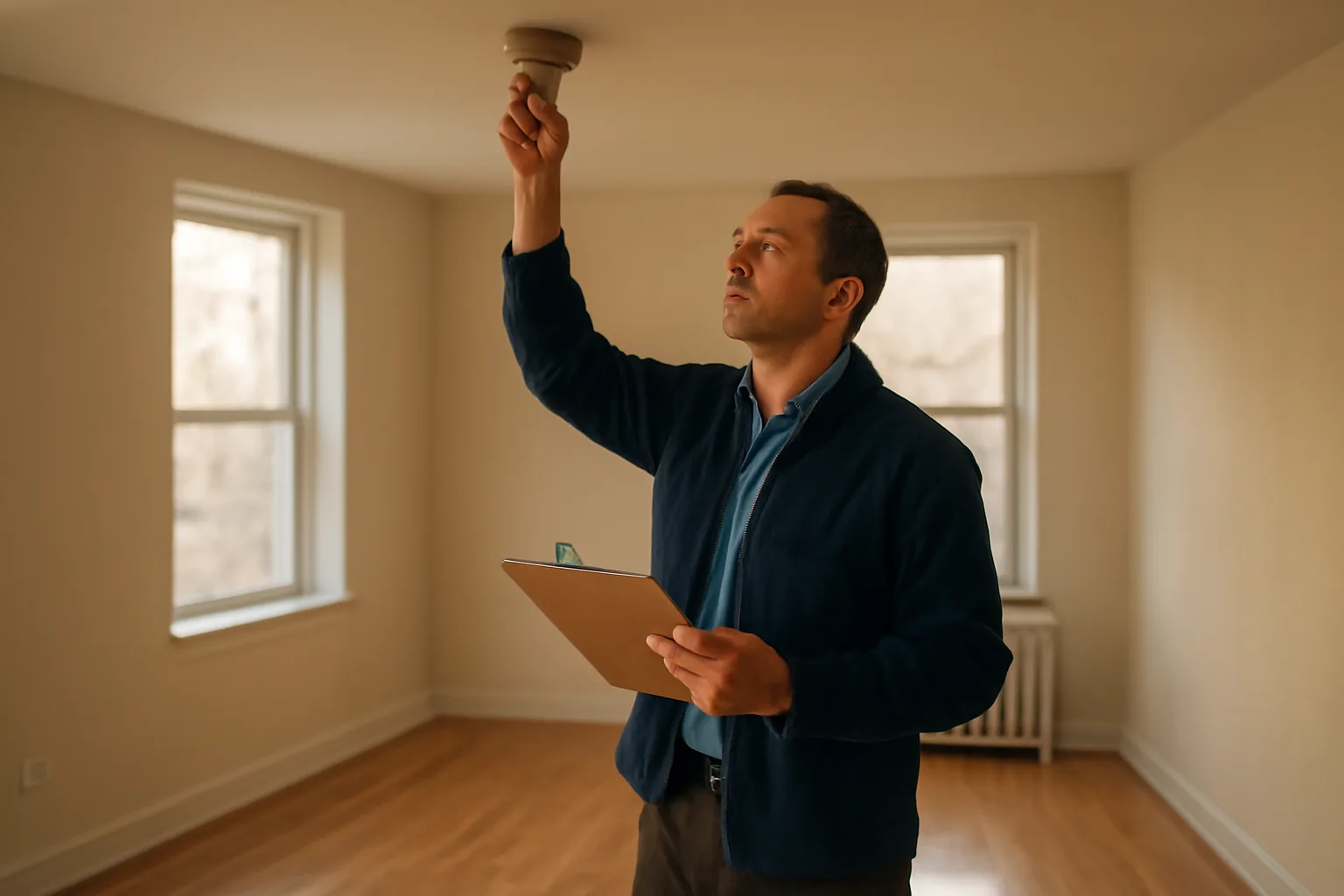
During a routine or move-in/move-out inspection, a landlord (or a city inspector, in mandatory-licensing jurisdictions) can generally check for habitability issues: working smoke and carbon monoxide detectors, functioning heat and hot water, no active leaks or mold, secure locks on exterior doors and windows, safe electrical wiring, pest infestations, and general structural safety. City rental inspectors typically also check compliance with local occupancy limits and confirm the unit matches what's registered. What a landlord generally cannot do during an inspection is search personal belongings, closets, or drawers unrelated to the condition of the unit, or use the inspection as pretext to harass a tenant or retaliate for a complaint. Most states require advance written notice before any non-emergency entry, commonly 24 to 48 hours, though the exact number varies by state and even by lease terms. City-mandated inspections under a rental licensing ordinance usually focus narrowly on code compliance items like smoke detectors, egress windows, handrails, and electrical panels, not on cosmetic condition or the tenant's housekeeping. If you're prepping for a first city inspection, walk the unit yourself first using your city's published checklist (most licensing offices publish one) so you're not caught off guard by a fail on something fixable in an afternoon, like a missing detector battery or a blocked fire exit.
what rights do tenants have without a lease?
Tenants without a written lease, sometimes called month-to-month or at-will tenants, still have real legal protections. In most states, a tenant paying rent regularly, even with no signed lease, is treated as a periodic tenant (usually month-to-month), entitled to the same habitability protections, the same notice requirements before entry, and the same eviction process protections as a tenant with a written lease. What changes without a lease is mainly the notice period for ending the tenancy. Many states require 30 days' written notice to end a month-to-month tenancy with no lease, though some states set 60 days once a tenant has lived there past a certain length of time, and local rent control ordinances can extend that further. A landlord still cannot lock out a tenant, shut off utilities, or remove belongings without going through the formal eviction process in the state's landlord-tenant court, lease or no lease. Tenants without a lease also keep habitability rights: the landlord still has to maintain the unit in livable condition, and most states' implied warranty of habitability applies regardless of whether there's a signed document. If you're a landlord operating without written leases (common with informal family arrangements or older tenancies), get something in writing going forward, because verbal terms are much harder to prove in an eviction case or a security deposit dispute.
why do landlords require renters insurance?
Landlords require renters insurance mainly to shift liability for the tenant's personal belongings and for injuries or damage the tenant causes, off the landlord's own policy. A landlord's property insurance covers the building itself, not the tenant's furniture, electronics, or clothing, and it typically doesn't cover a tenant's liability if their negligence (an overflowing bathtub, an unattended candle) damages the unit or a neighboring unit. Requiring renters insurance, commonly with a minimum liability coverage requirement (often $100,000, sometimes $300,000, depending on the lease), gives the landlord a policy to point to if a tenant's dog bites a guest or a kitchen fire spreads to an adjoining unit. It also protects the tenant: without their own policy, a tenant who loses belongings in a fire or burst pipe has no coverage at all, since the landlord's policy won't reimburse them. There's no federal or state law mandating that landlords require renters insurance in most jurisdictions; it's a lease clause landlords add voluntarily as risk management, not a licensing requirement. Some cities and larger apartment operators require proof of an active policy at move-in and at each renewal, and a few require the landlord to be named as an "additional interest" on the policy so they're notified if it lapses.
how much notice does a landlord have to give?
| Entry for repairs/showings | 24 to 48 hours | State law, lease terms | |
|---|---|---|---|
| End month-to-month tenancy | 30 to 60 days | State, tenancy length | |
| Rent increase | 30 to 60 days | State, local rent control | |
| Eviction for nonpayment | 3 to 14 days | State law | Because every state statute differs and local rent control can layer additional requirements, check your specific state's landlord-tenant statute before sending any notice, especially before an eviction filing. |
The notice a landlord must give depends on what's happening: entering the unit, ending a tenancy, or raising the rent, and the required amount varies by state. For entry to make repairs or show the unit, most states require 24 to 48 hours' advance notice, with exceptions for emergencies like a fire or burst pipe. California's Civil Code Section 1954 sets 24 hours as "reasonable notice" in most circumstances [3]. For ending a month-to-month tenancy, many states require 30 days' written notice, though several states step this up to 60 or even 90 days once the tenancy has run a year or more, and cities with rent stabilization ordinances sometimes add their own notice-period rules on top of state law. For rent increases, notice periods often mirror the termination notice rules in that state, commonly 30 to 60 days, but always confirm your specific state statute since the numbers genuinely differ and getting this wrong can void the increase or the termination entirely. | Notice type | Common range | Varies by |
what a landlord cannot do in ohio
Ohio landlord-tenant law, codified in Ohio Revised Code Chapter 5321, sets clear limits on landlord conduct. A landlord cannot shut off utilities, change the locks, or remove a tenant's belongings to force them out without going through the formal eviction process in court, commonly called "self-help eviction," and it's illegal even if the tenant is behind on rent [5]. Ohio landlords also cannot retaliate against a tenant for filing a legitimate code complaint or joining a tenant organization. Ohio Revised Code Section 5321.02 specifically prohibits a landlord from increasing rent, decreasing services, or threatening eviction in retaliation for a tenant reporting a housing code violation to authorities [6]. Ohio landlords must give reasonable notice, generally 24 hours, before entering an occupied unit for non-emergency purposes, under Ohio Revised Code Section 5321.04, which also requires landlords to keep the premises in a fit and habitable condition, comply with building and housing codes, and maintain common areas . A landlord who fails to maintain the unit under these standards can be sued by the tenant for damages, and in some cases the tenant can deposit rent with the court (rent escrow) rather than the landlord until repairs are made. Every state's landlord-tenant chapter differs on specifics like notice length and allowable deposit deductions, so if you're operating outside Ohio, look up your own state's equivalent chapter before assuming these rules transfer directly.
how to be a landlord who stays out of trouble with your city
The landlords who get hit hardest with fines aren't usually bad landlords, they're landlords who didn't know their city required registration or inspection at all. Mandatory rental licensing is now common in mid-size and large cities across the U.S., and the penalties for operating unregistered can be steep: unpaid license fees compounding, per-day fines during active violations, and in some cities, the inability to file an eviction until the unit is properly registered. The practical fix is boring but effective: call your city's rental registration or code enforcement office before you list a unit, not after you get a notice. Ask directly what's required (registration, a business license, a fire or housing inspection, a lead paint disclosure if the building predates 1978), what the fee is, and how often you have to renew or reinspect. If you already got a notice or a fine, the fastest path back to compliant is usually to register immediately, request the inspection, and fix any items flagged before the reinspection date. Cities are generally more lenient with landlords who self-report and fix issues promptly than with landlords who ignore repeated notices. If you'd rather not spend an afternoon hunting down your city's specific forms, fee schedule, and inspection checklist, the City Rental License & Inspection Prep Packet is a $79 one-time tool built to help you assemble the right documents and walk into your inspection prepared, city by city. It doesn't replace your city's own requirements or guarantee a passing inspection, but it saves the research time most first-time landlords underestimate.
what to do before your first city inspection
Before any city-mandated rental inspection, walk the unit yourself using a basic habitability checklist: working smoke detectors in every bedroom and on every level, carbon monoxide detectors near sleeping areas (required in many states now, including gas or fuel-burning appliance homes), secure handrails on any staircase with four or more steps, no exposed wiring, functioning heat, and no active leaks or visible mold. Check your specific city's published inspection checklist if one exists; many rental licensing offices post the exact items their inspectors check, which saves you from guessing. Common failure points across cities include missing or expired smoke detector batteries, blocked secondary exits, missing house numbers visible from the street, and unlicensed additional units (a finished basement rented separately without permits is a frequent violation). Schedule the inspection with enough lead time that a failed item doesn't blow past your renewal deadline; most cities charge a reinspection fee on top of the original fee if you fail the first round.
Frequently asked questions
How to become a landlord with no experience?
Start by learning your city's rental registration and inspection requirements before buying or listing a unit. Then study your state's landlord-tenant statute for notice periods, security deposit limits, and eviction procedure. Many first-time landlords also join a local landlord association for practical guidance, since state law and city ordinances vary enough that generic advice online can miss local requirements entirely.
Who is responsible for the rental property walk-through inspection in California?
The landlord is responsible for scheduling and paying for any rental inspection, whether it's a routine habitability check or a city-mandated program like Los Angeles's Systematic Code Enforcement Program [4]. Notice requirements for entry apply too, generally 24 hours under California Civil Code Section 1954 [3].
What is landlording?
Landlording is the full ongoing job of owning and managing rental property: screening tenants, collecting rent, handling maintenance, meeting local licensing and inspection rules, and following state landlord-tenant law on notices, deposits, and evictions. It's a continuous responsibility, not a one-time transaction, and the owner stays legally liable even with a hired property manager.
What is a landlord?
A landlord is the owner (or an authorized agent) of a property who rents it to a tenant under a lease, in exchange for rent. State statutes often define the term explicitly; Ohio's law, for example, defines "landlord" as the owner, lessor, or sublessor of residential premises, with narrow exceptions [2].
What rights do tenants have without a lease?
Tenants without a written lease generally become month-to-month tenants and keep the same habitability rights, entry notice protections, and formal eviction process protections as tenants with a signed lease. What changes is mainly the notice period to end the tenancy, commonly 30 days in many states, though this varies and local rent control can extend it.
How to be a landlord without breaking the law?
Register with your city if a rental licensing ordinance applies, keep the unit compliant with local housing code, give proper notice before entry (commonly 24 to 48 hours), never attempt a self-help eviction, and follow your state's security deposit and habitability rules exactly. When in doubt, call your city's code enforcement office directly.
Why do landlords require renters insurance?
Landlords require renters insurance to shift liability for the tenant's belongings and for damage or injuries the tenant causes off the landlord's own building policy, which doesn't cover tenant possessions or tenant-caused liability. It's a voluntary lease requirement in most places, not a legal mandate, though some cities and larger operators require proof of coverage at move-in.
How much notice does a landlord have to give before entering?
Most states require 24 to 48 hours' advance notice before a landlord enters an occupied unit for non-emergency purposes. California sets 24 hours as reasonable notice under Civil Code Section 1954 [3]. Emergencies (fire, flooding, gas leak) don't require advance notice in any state.
What can a landlord look at during an inspection?
A landlord or city inspector can check habitability and safety items: smoke and carbon monoxide detectors, heat and hot water function, leaks or mold, secure locks, exposed wiring, pest issues, and occupancy compliance. They generally cannot search personal belongings or use the inspection to harass or retaliate against a tenant.
What can a landlord not do in Ohio?
Ohio landlords cannot shut off utilities, change locks, or remove belongings to force a tenant out without a court eviction (self-help eviction is illegal), and they cannot retaliate against a tenant for reporting a code violation, under Ohio Revised Code Section 5321.02 [6]. They must also give reasonable entry notice and maintain the unit in habitable condition under Section 5321.04 [7].
Do all cities require a rental license?
No. Rental licensing, registration, or inspection requirements are set city by city (sometimes county by county), not nationally or even statewide in most states. Whether you need one, and what it costs, depends entirely on your specific city, so confirm directly with your local rental licensing or code enforcement office.
What happens if I rent out a unit without required city registration?
Penalties vary by city but commonly include fines that accrue per day or per month of noncompliance, back-payment of license fees, and in some cities, a block on filing an eviction until the unit is registered. Self-reporting and registering promptly once you learn about the requirement generally goes better than waiting for a notice.
Sources
- HUD, Fair Housing Act overview: Federal Fair Housing Act bans rental discrimination based on race, color, national origin, religion, sex, familial status, and disability.
- Ohio Revised Code Section 5321.01: Ohio law defines 'landlord' as the owner, lessor, or sublessor of residential premises, with an exception for owner-occupants of a duplex.
- California Civil Code Section 1954: California sets 24 hours as reasonable notice before landlord entry in most non-emergency circumstances.
- Ohio Revised Code Chapter 5321: Ohio landlord-tenant law prohibits self-help eviction, requiring landlords to use the formal court eviction process.
- Ohio Revised Code Section 5321.02: Ohio law prohibits landlords from retaliating against tenants who report housing code violations.
- Ohio Revised Code Section 5321.04: Ohio landlords must give reasonable notice before entry and must maintain the premises in a fit and habitable condition.