Last updated 2026-07-26
TL;DR
Auto rental inspection software just means a phone app or template that timestamps photos, logs conditions room by room, and stores the record for move-in, move-out, or a city compliance inspection. Most 1-10 unit landlords do fine with a free or low-cost checklist app; you don't need enterprise software unless you're managing dozens of doors.
What does "auto rental inspection software" actually mean for a small landlord?
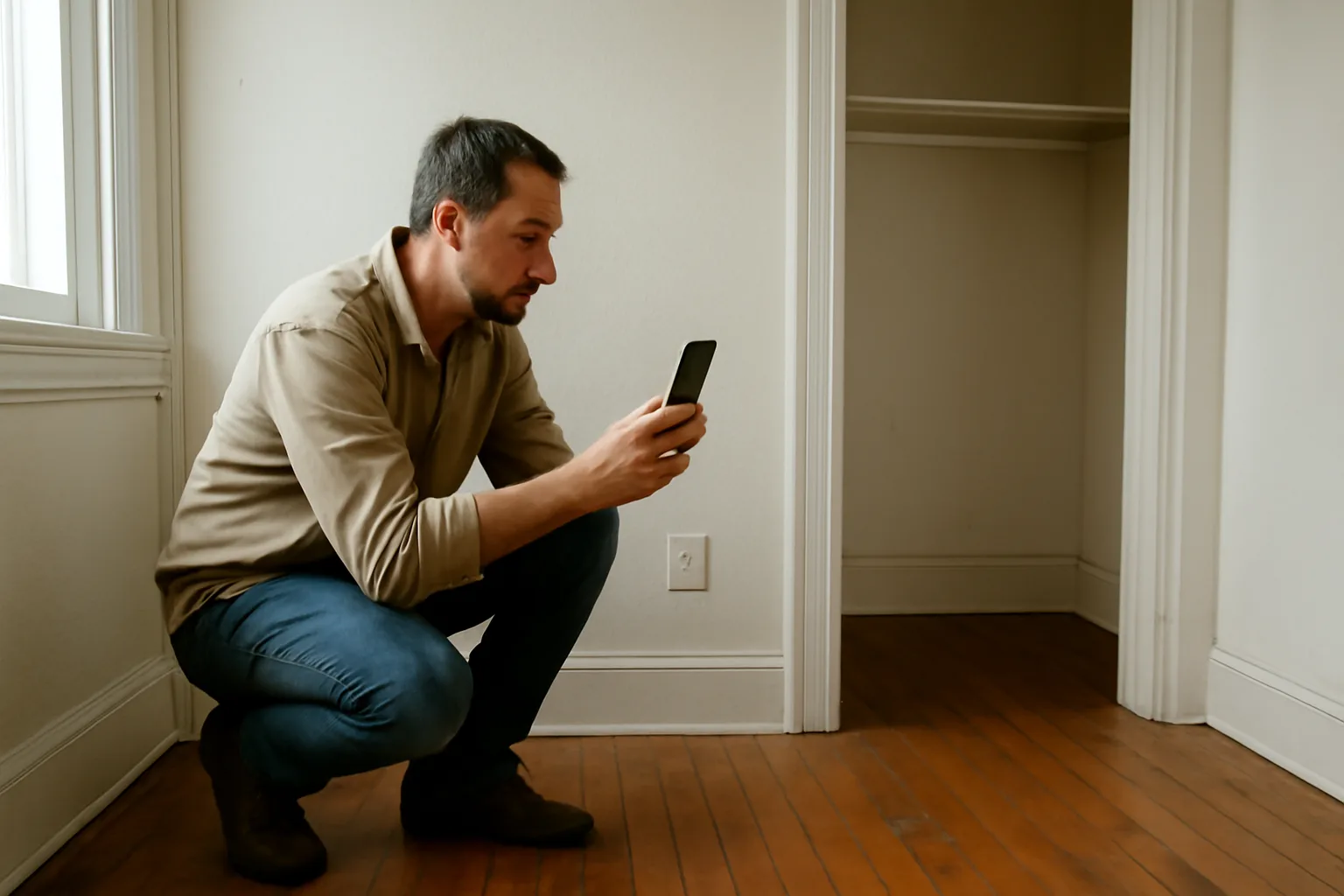
The phrase sounds like it belongs to a car rental company (and it partly does; Avis and Hertz both use fleet condition-check apps for damage documentation). But when a landlord with a duplex or a four-unit building searches this term, what they actually need is much simpler: a way to record the condition of a rental unit, with photos and timestamps, before a tenant moves in, after they move out, or ahead of a city rental inspection. That's it. You're not running a fleet of 200 cars. You're documenting one kitchen, one bathroom, some flooring, and maybe a furnace filter. The software category that fits is generally called "rental inspection app" or "move-in/move-out checklist app," and it ranges from a free PDF template to a $10 to $30 a month property management add-on. Don't let the enterprise-sounding name push you toward buying something built for a 500-vehicle rental lot. Most small landlords need three things: a repeatable checklist, photo timestamps, and a place to store the record for a few years in case a tenant disputes a deposit deduction or a city inspector asks for proof of a prior condition.
Do you actually need software, or will a checklist and your phone camera work?
For most landlords with 1 to 10 units, a checklist template plus your phone's camera is genuinely enough. The value software adds isn't the photo itself, your phone already does that, it's the automatic timestamp/geotag, the organized folder structure, and a exportable PDF you can hand a tenant or an inspector without digging through your camera roll. If you're self-managing one or two units, a free option (many property management sites offer downloadable move-in/move-out checklists, and some states publish their own) combined with a dated folder in your phone's photo app covers you. Confirm with your city rental licensing office whether they require a specific inspection form; some do, most don't. Where software starts to earn its cost: once you're juggling more than 3 or 4 units, or you have a co-signer/property manager who also needs access to the records, or you're in a city with mandatory periodic inspections (every 2, 3, or 5 years depending on the jurisdiction) and you want a paper trail that survives a staff turnover at city hall. At that point, $10 to $30 a month for something like a dedicated inspection app buys you organization, not magic.
What should good rental inspection software (or a good checklist) actually capture?
Whatever tool you use, paid or free, it needs to capture the same core information a court or a city inspector would want to see. Missing any of these is the most common reason a landlord loses a deposit dispute or fails a re-inspection. - Date and time of the inspection, ideally auto-generated, not hand-written
- Room-by-room condition notes (walls, flooring, fixtures, appliances) with a simple scale like good/fair/damaged
- Photos or short video walk-throughs tied to each room, more than a folder of unlabeled images
- Smoke and carbon monoxide detector test results and battery dates, since many state and local codes require working detectors and log entries
- Signatures or acknowledgment from both landlord and tenant where possible, especially for move-in condition reports
- A copy retained by both parties; many states require the landlord to provide the tenant a copy of the move-in inspection If a piece of software (or your paper form) doesn't make it easy to capture all six of these in under 20 minutes per unit, it's not saving you time, it's adding a step.
What is landlording, and what is a landlord?
A landlord is the owner (or the owner's authorized agent) of a residential rental property who leases that property to a tenant in exchange for rent. "Landlording" is the informal industry term for the day-to-day work of running that arrangement: collecting rent, handling repairs, screening tenants, managing lease renewals, and staying compliant with local registration or licensing rules. It's not a licensed profession in most states the way real estate agents or contractors are licensed. You don't need a landlord license to own a rental property in general. What you often do need, in a growing number of cities, is a rental registration or rental license specific to that address, renewed annually or biennially, sometimes tied to a mandatory inspection. Confirm with your city rental licensing office whether your address falls under one of these programs; enforcement has expanded a lot over the last 10 years as cities try to track substandard housing stock.
How to become a landlord: the real steps
Becoming a landlord isn't a licensing process, it's a business and legal setup process. The honest checklist looks like this: 1. Buy or already own a property you intend to rent out (single-family, condo, or small multi-unit). 2. Check local zoning: some cities restrict short-term or even long-term rentals in certain zones, or cap the number of unrelated occupants. 3. Register the rental with your city or county if required. Many mid-size and large cities now mandate a rental registration or license before you can legally lease the unit; fees and renewal cycles vary widely by jurisdiction, so confirm with your city rental licensing office. 4. Get a landlord/rental dwelling insurance policy, distinct from a standard homeowner's policy, since most homeowner policies exclude tenant-occupied risk. 5. Understand your state's security deposit limits and return-deadline rules; these differ by state (some cap deposits at one or two months' rent, others have no cap at all). 6. Draft or obtain a compliant lease. This is one place many first-time landlords underpay for help; a bad lease clause can cost far more than a lawyer's fee to fix later. 7. Screen tenants consistently and legally under the Fair Housing Act, 42 U.S.C. § 3601 et seq., which bars discrimination based on race, color, religion, sex, national origin, familial status, or disability [1]. 8. Set up rent collection, maintenance response, and record-keeping systems before your first tenant moves in, not after. Most of this is one-time setup work. The recurring part, and where landlords get tripped up year after year, is step 3: staying current on local registration renewals and inspection deadlines.
Who is responsible for a rental property walk-through inspection in California?
In California, the landlord is responsible for offering a move-in inspection and, separately, for offering an initial move-out inspection before the tenant vacates. California Civil Code § 1950.5(f) requires that upon termination of tenancy, the landlord "shall notify the tenant in writing of his or her option to request an initial inspection" conducted no earlier than two weeks before the end of the tenancy [2]. At that inspection, the landlord (or their agent) walks the unit with the tenant, if the tenant accepts the offer, and must give the tenant an itemized statement of anticipated repairs or cleaning that could lead to deposit deductions. The tenant then has an opportunity to fix those items themselves before move-out to avoid the charge. California doesn't mandate a specific inspection form or app; the requirement is about the process (written notice, timing, itemized statement) rather than a specific piece of software. Landlords in California commonly document this walk-through with photos and a signed checklist precisely because § 1950.5 disputes often come down to "what did the unit look like on day one versus day of move-out," and a timestamped photo record settles that argument fast.
What can a landlord look at during an inspection?
A landlord conducting a routine or move-in/move-out inspection can generally look at the physical condition of the unit: walls, floors, ceilings, windows, doors, plumbing fixtures, appliances included in the lease, smoke/CO detectors, and evidence of pest issues or unauthorized alterations (like an extra lock or a wall knocked through). What a landlord generally cannot do during a routine inspection is search through a tenant's personal belongings, closets full of personal items, drawers, or private files, unless there's a specific safety issue (a gas smell, visible water damage behind a closed door) that justifies opening it. Most state laws require the inspection to be for a legitimate purpose, like verifying the unit's condition or making a repair, not general snooping. City-mandated rental inspections (the kind tied to a rental license renewal) are usually narrower still: an inspector is checking code compliance items like working smoke detectors, functioning heat, no exposed wiring, adequate egress from bedrooms, and no obvious structural hazards. They're not there to evaluate how clean your tenant keeps their dishes. If you're prepping for one of these, the tenant and tenant and tenants rights resources cover what tenants can expect from that process on their end.
How much notice does a landlord have to give before an inspection?
This is one of the most state-specific rules in landlord-tenant law, and there's no single national number. California requires "reasonable notice," and Civil Code § 1954 defines 24 hours as presumptively reasonable for entry to make repairs or show the unit, absent an emergency [3]. Many other states use a similar 24-hour standard, but some use 48 hours, and a handful don't specify a number at all, just "reasonable notice." For city-mandated rental license inspections, the notice period is set by the municipal code or the inspection department's own policy, and it's often longer than the routine-entry notice, sometimes 7 to 14 days, to give the landlord time to schedule tenant access and make any needed repairs first. Confirm with your city rental licensing office for the specific notice window that applies to your renewal or complaint-based inspection. Emergencies are the standard exception everywhere: if there's a burst pipe, a gas leak, or a fire, no advance notice is required in any state framework we're aware of.
What rights do tenants have without a lease?
A tenant without a written lease, sometimes called a month-to-month or oral tenancy, still has real legal protections in every state. The absence of a written lease doesn't mean the absence of a landlord-tenant relationship; it just means the terms default to state law rather than a signed contract. Tenants without a lease generally still have the right to: a habitable unit (working plumbing, heat, structural safety), advance notice before the landlord can terminate the tenancy or raise rent (commonly 30 days for month-to-month tenancies, though some states and some rent-stabilized cities require more), protection from retaliatory or discriminatory eviction, and the same security deposit return rules that apply to leased tenants in that state. What they generally don't have without a lease is a fixed term of guaranteed occupancy; a landlord can typically end a month-to-month tenancy with proper notice and no stated cause (subject to any local just-cause eviction ordinance, which some cities do have). For more on this, see tenant rights and renters rights.
Why do landlords require renters insurance?
Landlords require renters insurance mainly to shift liability risk off the property owner's policy and onto the tenant's own coverage. A landlord's dwelling insurance policy covers the building and the landlord's own liability; it typically does not cover a tenant's personal belongings, and it may not fully cover a liability claim that originates from the tenant's own actions (their dog bites a visitor, their candle starts a small fire, their bathtub overflows into the unit below). Renters insurance, which usually runs somewhere in the range of $15 to $30 a month depending on coverage and location, gives the tenant personal property coverage and liability coverage, and it gives the landlord a second layer of protection: if the tenant causes damage, the tenant's insurer is the first place a claim goes, not necessarily the landlord's own policy or the landlord's pocket. Many landlords now write a renters insurance requirement directly into the lease and ask for proof of a policy naming the landlord as an "interested party" so they're notified if the policy lapses. This isn't universal or legally mandated in most states, but it's become a common and reasonable lease condition.
What can a landlord not do in Ohio?
Ohio landlord-tenant law is built around Ohio Revised Code Chapter 5321, and it spells out several things a landlord cannot do. A landlord in Ohio cannot shut off utilities, change the locks, or remove a tenant's belongings to force them out without going through the court eviction process; this is generally referred to as a "self-help eviction" and it's prohibited under Ohio law [4]. Under ORC § 5321.04, an Ohio landlord must keep the premises in a fit and habitable condition, comply with building and housing codes, and make repairs to keep the unit safe, and cannot avoid these duties through a lease clause [5]. A landlord also cannot retaliate against a tenant for reporting a code violation or joining a tenant organization; ORC § 5321.02 specifically bars retaliatory conduct like raising rent or threatening eviction in response to a tenant's good-faith complaint [6]. Ohio also restricts entry: under ORC § 5321.04(A)(8), landlords generally must give reasonable notice, at least 24 hours in most interpretations of the statute's "reasonable" standard, before entering, except in an emergency. And a landlord cannot discriminate in violation of the federal Fair Housing Act protections layered on top of state law [1].
How does auto rental inspection software connect to your city's rental license renewal?
If your city requires a rental license or registration, chances are your renewal cycle includes some kind of inspection, whether that's a city inspector's visit, a self-certification checklist, or a third-party inspection report you submit. The photo-and-checklist habit you build for tenant move-ins and move-outs is the same muscle you need for that renewal. A landlord who already has dated, room-by-room photos from the last tenant turnover walks into a city inspection with far less scrambling. You already know if the smoke detector in the second bedroom needs a battery, because you photographed it three months ago during move-out. You already know the water heater's age and condition. None of that requires expensive software; it requires the habit of documenting condition every time you touch the unit. This is genuinely where a lot of landlords waste money: buying a $50-a-month enterprise inspection platform built for property managers running hundreds of units, when what they actually needed was a consistent folder structure and a $79 one-time packet that maps out exactly what their specific city's rental inspection checks for before the inspector shows up. If you want that kind of city-specific prep without guessing, the City Rental License & Inspection Prep Packet is built for exactly this: a one-time $79 tool rather than a recurring subscription.
Frequently asked questions
Is there dedicated software just for rental property inspections, separate from car rental inspection apps?
Yes. Search terms overlap because both use "vehicle inspection" style logic, but rental property tools are usually marketed as move-in/move-out checklist apps or tenant inspection apps, distinct from fleet damage-check software used by companies like Avis or Hertz. For 1-10 unit landlords, a simple checklist app or template is usually enough; you don't need fleet-grade software.
How to become a landlord if I only own one rental property?
Confirm zoning allows a rental at your address, check whether your city requires rental registration or licensing, get landlord/dwelling insurance, learn your state's security deposit and notice rules, use a compliant written lease, and screen tenants consistently under the Fair Housing Act, 42 U.S.C. § 3601. That's the full core process; no license is needed just to own a rental.
Who is responsible for a rental property walk-through inspection in California?
The landlord is responsible for offering the move-in inspection and, at move-out, for offering an initial inspection under California Civil Code § 1950.5(f), conducted no earlier than two weeks before the tenancy ends, with a written itemized statement of anticipated deductions given to the tenant.
What is the difference between landlording and being a landlord?
"Landlord" describes the legal role, the owner or authorized agent who leases property to a tenant. "Landlording" is the informal term for the ongoing work: rent collection, maintenance, screening, and staying compliant with local licensing or registration rules. Landlording is a job; landlord is a status.
What rights do tenants have without a lease?
Tenants without a written lease still have habitability rights, notice requirements before rent increases or termination (commonly 30 days for month-to-month tenancies), protection from retaliatory or discriminatory eviction, and standard security deposit return rules under state law. They generally lack a guaranteed fixed term of occupancy.
Why do landlords require renters insurance if they already have their own policy?
A landlord's dwelling policy typically doesn't cover a tenant's personal belongings or liability arising from the tenant's own actions. Renters insurance, usually $15 to $30 a month, shifts that liability to the tenant's insurer first, protecting both the tenant's belongings and the landlord's exposure.
How much notice does a landlord have to give before entering for an inspection?
It varies by state. California treats 24 hours as reasonable notice under Civil Code § 1954 for non-emergency entry. Many states use a similar 24-hour standard, some use 48 hours, and city-mandated license inspections can require longer notice windows set by local code. Confirm with your city rental licensing office for the specific figure.
What can a landlord look at during a routine inspection?
Structural and mechanical condition items: walls, floors, plumbing, appliances, smoke and CO detectors, signs of pests, and unauthorized alterations. A landlord generally cannot search personal belongings, closets, or private drawers without a specific safety justification tied to the inspection's legitimate purpose.
What can a landlord not do in Ohio specifically?
Ohio landlords cannot perform self-help evictions (shutting off utilities, changing locks, removing belongings without a court order), cannot skip required maintenance duties under ORC § 5321.04, cannot retaliate against tenants for code complaints under ORC § 5321.02, and must give reasonable entry notice, generally treated as at least 24 hours.
Do I need to buy software to pass my city's rental inspection?
No software purchase is required by any city we're aware of; inspections check physical conditions, not your record-keeping tool. Software or a checklist just helps you track and prove condition over time. What actually determines your pass/fail is the unit meeting your specific city's code requirements, which you should confirm with your city rental licensing office.
What's the cheapest way to document a rental inspection without paid software?
Use your phone's camera with a dated folder per unit per visit, plus a free downloadable move-in/move-out checklist template (many state housing agencies and property management sites offer these). This covers the core needs, timestamped photos and a written condition record, at zero cost for most 1-4 unit landlords.
Can a landlord charge a tenant for normal wear and tear found during an inspection?
Generally no. Most states, including California under Civil Code § 1950.5, distinguish between damage caused by the tenant and ordinary wear and tear from normal living, and only allow deposit deductions for the former, plus unpaid rent and needed cleaning beyond normal use.
Sources
- U.S. Department of Justice, Fair Housing Act overview: Federal Fair Housing Act bars discrimination based on race, color, religion, sex, national origin, familial status, or disability in housing
- California Legislative Information, Civil Code Section 1950.5: California landlords must offer an initial move-out inspection no earlier than two weeks before tenancy ends, with written notice and itemized statement
- California Legislative Information, Civil Code Section 1954: 24 hours' notice is treated as reasonable notice for landlord entry to make repairs or show a unit in California
- Ohio Legislative Service Commission, Ohio Revised Code 5321.03 (self-help eviction remedies): Ohio law prohibits landlords from using self-help remedies like lockouts or utility shutoffs instead of court eviction process
- Ohio Legislative Service Commission, Ohio Revised Code 5321.04: Ohio landlords must keep rental premises in a fit and habitable condition and comply with applicable building and housing codes
- Ohio Legislative Service Commission, Ohio Revised Code 5321.02: Ohio law prohibits landlord retaliation against tenants for good-faith code complaints or joining a tenant organization