Last updated 2026-07-26
TL;DR
In most states, landlords must handle pest control under the implied warranty of habitability, especially for infestations tied to the building (rodents, bed bugs, cockroaches in shared walls). Tenants can be on the hook if their own housekeeping caused the problem. Lease language matters a lot, but it can't override state health and safety code minimums.
are landlords required to do pest control?
Yes, in the large majority of states, landlords have to address pest infestations as part of keeping a rental unit fit to live in. This comes from the implied warranty of habitability, a legal doctrine that exists in some form in nearly every state, either through statute or court decisions. It says a landlord can't rent out a place that's unsafe or unfit, and a serious rodent or insect infestation usually counts. The catch is that "required" doesn't mean "always the landlord's fault or expense." Responsibility often splits based on when the infestation started, whether it's isolated to one unit or building-wide, and whether tenant behavior caused it. A single roach sighting in a clean apartment is a very different case than an entire building with a cockroach problem traced to a trash chute nobody services. Some states spell this out directly in statute. New York City's housing maintenance code, for instance, requires owners of multiple dwellings to keep the building free of vermin, rodents, and insects and to exterminate when infestation is found, with limited exceptions [1]. California's habitability statute lists "effective waterproofing" and "buildings free from vermin" among the conditions a landlord must maintain [2]. These aren't vague good-practice suggestions. They're enforceable code sections that a tenant can point to in a habitability complaint or withholding-rent case.
what does the warranty of habitability actually require for pests?
The warranty of habitability is a legal rule, implied in every residential lease whether it's written down or not, that a rental has to meet basic health and safety standards. Pest infestation is one of the classic examples courts and statutes use when defining what breaks that warranty. California Civil Code section 1941.1 lists specific conditions that make a unit untenantable if missing, and "buildings, grounds and appurtenances at the time of the commencement of the lease... in every part clean, sanitary and free from all accumulations of debris, filth, rubbish, garbage, rodents, and vermin" is part of the standard drawn from Civil Code 1941.1 and related health and safety code sections [2]. New York's Multiple Dwelling Law and NYC Housing Maintenance Code section 27-2017 require owners to keep premises free of insects and rodents and to exterminate as needed, and failure to do so is a violation subject to a Department of Housing Preservation and Development inspection and fine [1]. HUD's Housing Choice Voucher (Section 8) program uses Housing Quality Standards that also address pests. Under 24 CFR 982.401, a unit must be free of "severe" infestation to pass initial inspection, and ongoing infestation problems can affect a unit's ability to keep passing HQS inspections tied to voucher payments [3]. What this means in practice: if a tenant reports bed bugs, mice, or roaches and it's not obviously their own doing, you're expected to respond, usually by hiring licensed pest control, within a reasonable time. "Reasonable" isn't defined by a universal clock. Some cities set specific response windows in their housing codes; check your local rental registration or housing code office for anything more specific than state law.
who pays for pest control, landlord or tenant?
This is the part landlords actually argue about, and the honest answer is: it depends on the lease, the state, and the facts of the infestation. A lot of leases include a clause saying the tenant is responsible for pest control inside their unit, or that the tenant must reimburse the landlord if the exterminator finds evidence the infestation was caused by tenant conduct (food left out, unsanitary conditions, unauthorized pets). These clauses are enforceable in many states as long as they don't try to waive the landlord's baseline habitability duty entirely. A lease can't say "tenant is responsible for all pest control regardless of cause" and expect that to hold up if the real source is a structural gap letting rodents in from outside, because that's a building defect, not a tenant hygiene issue. Bed bugs get their own body of law in some cities because they're notoriously hard to pin on one party. New York City requires landlords of buildings with three or more units to file an annual bed bug infestation history report with HPD and to provide it to prospective tenants before they sign a lease [4]. San Francisco and a handful of other cities have similar bed bug disclosure or treatment ordinances. If your city has one, it usually spells out cost allocation more precisely than state law does. Here's a simple framework landlords use, though it's not a substitute for reading your actual lease and local code: if the infestation affects multiple units or comes from a shared structural source (walls, pipes, a shared basement), it's almost always the landlord's cost. If it's isolated to one unit and traceable to that tenant's housekeeping, many leases and some state laws let the landlord bill the tenant or deduct from the security deposit.
what can a landlord look at during an inspection?
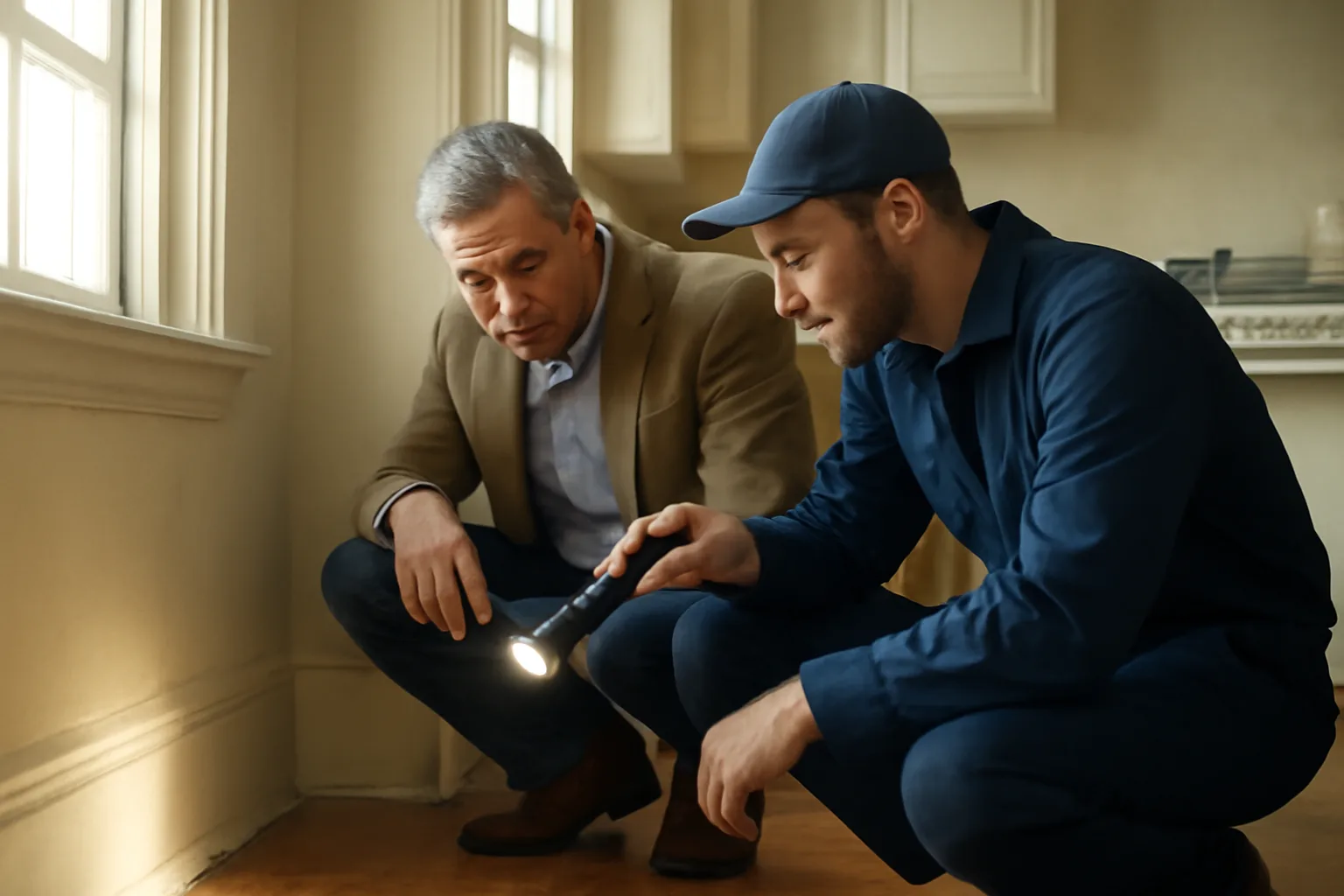
A landlord (or the landlord's licensed pest control contractor) doing a habitability or pest inspection can generally look at anything reasonably connected to the health, safety, and condition of the unit: signs of infestation, water damage, mold, smoke detector function, structural hazards, and general cleanliness that could contribute to pest problems. What a landlord generally can't do is use an inspection as a pretext to search through a tenant's belongings, photograph personal items unnecessarily, or show up without proper notice except in a genuine emergency. Most states require advance written notice before a non-emergency entry, commonly 24 to 48 hours, and the visit has to happen during reasonable hours. California requires "reasonable notice," which the statute presumes to be 24 hours for most purposes, under Civil Code section 1954 [5]. For pest-specific inspections, the landlord or exterminator typically checks: kitchen and bathroom plumbing areas, baseboards and corners for droppings or shed exoskeletons, any food storage practices, cracks or gaps in walls and around pipes, and outdoor areas immediately next to the building where rodents or insects might be entering. If the inspection reveals unsanitary conditions caused by the tenant, document it in writing and with photos or video, because that record matters if you later try to allocate the treatment cost to the tenant.
who is responsible for rental property walk-through inspection in california?
In California, the landlord is responsible for scheduling and conducting habitability-related inspections, but the tenant has real rights around notice and access. California Civil Code section 1950.5 requires landlords to offer an initial move-out inspection (sometimes called a pre-move-out inspection) if the tenancy is ending, giving the tenant a chance to fix issues before final deposit deductions are calculated [6]. For routine or pest-related inspections during an active tenancy, Civil Code section 1954 sets the notice and entry rules: the landlord can enter to make repairs, show the unit, or in cases of emergency, but must give reasonable notice (presumed 24 hours) except in emergencies or when the tenant agrees to a shorter window [5]. The landlord doesn't need the tenant physically present, but the tenant has the right to know it's happening and roughly when. A lot of California cities layer additional inspection requirements on top of state law through Rent Registry or proactive rental inspection programs (Los Angeles's Systematic Code Enforcement Program is one well-known example). Those programs typically require periodic city inspector visits, separate from any landlord-initiated pest inspection, and carry their own notice rules and fee schedules. If your city has one of these programs, confirm the notice period and inspection scope with your city rental licensing office, since it can differ from the state Civil Code default.
how much notice does a landlord have to give before entering for pest control?
Most states require 24 to 48 hours written notice before a landlord or pest control technician enters a unit for a non-emergency reason, including routine pest treatment. California presumes 24 hours is reasonable under Civil Code 1954 [5]. Other states set their own numbers by statute; for example, several states use 24 hours as the default while a handful require 48 hours notice for entry. Emergencies are the exception. If there's an active pest problem creating an immediate health hazard, or the landlord reasonably believes there's a risk to other tenants or the building, some states allow entry without the standard notice period, though this exception gets applied narrowly and shouldn't be used routinely just because pest control is inconvenient to schedule. A practical note: pest control notice requirements are one of the more commonly cited violations in tenant complaints, because landlords sometimes assume 24-hour notice only applies to "repairs" and forget it also covers exterminator visits. Treat any pest control visit like a maintenance entry for notice purposes, and put it in writing (text message with read receipt, email, or a notice slipped under the door with a photo taken as proof of delivery) rather than relying on a verbal heads-up.
what a landlord cannot do in ohio (related to pest control and inspections)
Ohio Revised Code 5321.04 lays out landlord obligations directly, including a duty to keep the premises in a "fit and habitable condition" and to comply with health and safety codes materially affecting health and safety [7]. Under this statute, a landlord in Ohio cannot ignore a legitimate pest infestation report and treat it as solely the tenant's problem if the source is structural or building-wide. Ohio law also restricts landlord entry. Ohio Revised Code 5321.05 requires tenants to allow landlord entry for inspection, repairs, or pest control, but the landlord has to give reasonable notice and can only enter at reasonable times [8]. A landlord in Ohio cannot enter without notice except in a genuine emergency, cannot use entry as harassment, and cannot retaliate against a tenant for reporting a pest problem or code violation. Ohio Revised Code 5321.02 specifically prohibits retaliatory conduct such as raising rent, decreasing services, or threatening eviction because a tenant complained to a government agency about a health or safety violation . So the short version for Ohio landlords: you can't refuse to address a legitimate infestation, you can't skip proper notice before entering to treat it, and you can't punish a tenant for reporting one.
why do landlords require renters insurance, and does it cover pests?
Landlords often require renters insurance as a lease condition to shift liability for the tenant's personal property and personal liability claims away from the landlord's own policy. It's not primarily about pest control, but it comes up in the same conversation because a bed bug or infestation dispute sometimes leads to a tenant claiming damaged furniture or clothing. Here's the honest answer: most standard renters insurance policies exclude pest and vermin damage entirely. Insurance Information Institute guidance on renters insurance describes coverage for personal property against named perils like fire, theft, and certain water damage, but infestation-related damage (bed bugs, rodents, termites) is a common and standard exclusion across the industry . So requiring renters insurance protects a landlord from liability exposure on things like a tenant's guest getting injured, or a kitchen fire the tenant started, but it does very little for pest-related disputes specifically. Don't count on tenant insurance to make a pest problem someone else's cost; it almost never works that way.
what is landlording, and what is a landlord?
A landlord is the owner (or the owner's authorized agent) who leases residential or commercial property to a tenant in exchange for rent. Landlording is the practical, ongoing work of running that relationship: collecting rent, handling maintenance and repair requests, staying current on local licensing or registration rules, managing lease renewals and turnovers, and responding to code enforcement or inspection requirements. For a 1 to 10 unit landlord, in a city with mandatory rental registration or licensing, landlording also includes tracking city-specific deadlines: annual license renewal, inspection scheduling, fee payments, and correcting any violations flagged during an inspection (pest issues are a very common flagged item in these programs). It's less romantic than "owning real estate" sounds and more like running a small compliance-heavy service business, because that's functionally what it is.
how to become a landlord, and how to be a landlord day to day
Becoming a landlord starts with acquiring rental property (buying, inheriting, or converting an owned property to a rental) and then meeting your city and state's legal requirements before you can lawfully rent it out. That typically includes: registering the rental with your city if required, obtaining a rental license if your municipality mandates one, passing an initial inspection if your program requires it, and understanding your state's landlord-tenant statute on habitability, security deposits, and entry notice. Day-to-day, "how to be a landlord" comes down to a short list of recurring responsibilities: responding to maintenance and pest requests promptly (many states expect action within a matter of days for serious habitability issues, not weeks), giving proper notice before entry, keeping the property compliant with local housing and health codes, renewing any required license or registration on schedule, and documenting everything (photos, dated notices, repair records) in case a dispute or inspection comes up later. If your city requires rental licensing or periodic inspection, getting organized before your first renewal or inspection date saves a lot of stress. That's the specific gap our $79 City Rental License & Inspection Prep Packet is built for: a structured way to pull together the documents, notices, and checklist items cities commonly ask for, so you're not scrambling the week before an inspector shows up.
what rights do tenants have without a lease?
A tenant without a written lease, sometimes called a month-to-month or oral tenancy, still has legal rights under state landlord-tenant law. The absence of a written lease doesn't strip away the implied warranty of habitability, protection from illegal lockout or self-help eviction, the right to proper notice before entry, or the right to proper notice before the tenancy ends. Most states require a specific notice period to end a month-to-month tenancy, commonly 30 days, though some states or cities require more (60 or 90 days in certain rent-controlled or just-cause eviction jurisdictions). A landlord can't simply change the locks or shut off utilities to force a tenant out, even without a written lease; that's illegal self-help eviction in essentially every U.S. state, and it can expose the landlord to statutory damages, more than an inconvenienced tenant. On pest control specifically, a tenant without a written lease has exactly the same habitability protection as one with a signed lease, because the warranty of habitability comes from state law and doesn't depend on lease paperwork existing at all.
Frequently asked questions
Are landlords legally required to do pest control?
In most states, yes, under the implied warranty of habitability, which requires landlords to keep rentals free of serious infestation. Exact statutory language varies by state; some, like New York City and California, spell out pest-free conditions directly in housing code or civil code [1][2]. Isolated, tenant-caused infestations can sometimes shift cost to the tenant.
Can a landlord make a tenant pay for pest control?
Yes, if the lease says so and the infestation is traceable to tenant conduct, not a building defect. Many leases include a clause allowing this. Landlords generally can't shift cost for building-wide or structural-source infestations (shared walls, exterior gaps) onto one tenant, even with a lease clause.
How fast does a landlord have to respond to a pest complaint?
There's no single national deadline. Some cities set specific response windows in local housing code; absent that, courts generally expect a landlord to act within a reasonable time given the severity, often days rather than weeks for serious infestations. Check your city's rental housing code for specific deadlines.
Do landlords have to pay for bed bug treatment?
Often yes, especially in cities with bed bug ordinances. New York City requires landlords of buildings with three or more units to keep and disclose bed bug infestation history to prospective tenants [4]. Cost allocation between landlord and tenant for treatment varies by lease and local law; check your city's specific bed bug ordinance if one exists.
What is the warranty of habitability?
It's an implied legal duty, existing in nearly every U.S. state through statute or case law, requiring landlords to keep rental units safe and livable regardless of what the lease says. Pest infestation, along with issues like heat, water, and structural safety, is a standard example of a habitability violation.
How much notice does a landlord have to give before entering for pest control?
Typically 24 to 48 hours, depending on the state. California presumes 24 hours reasonable under Civil Code 1954 [5]. Ohio requires reasonable notice at reasonable times under Ohio Revised Code 5321.05 [8]. Emergencies are a narrow exception in most states.
What can a landlord look at during a pest inspection?
Anything reasonably connected to infestation evidence: baseboards, cracks, plumbing areas, food storage, and signs of droppings or shed skins. A landlord shouldn't use the visit to search personal belongings unrelated to the pest issue or ignore standard entry notice rules.
Who is responsible for rental property walk-through inspections in California?
The landlord schedules and conducts them, but must give reasonable notice under Civil Code 1954, generally presumed to be 24 hours [5]. For move-out inspections, Civil Code 1950.5 gives tenants the right to an initial walk-through before final deposit deductions [6].
What a landlord cannot do in Ohio regarding pests and entry?
Under Ohio Revised Code 5321.04, a landlord can't ignore a legitimate infestation affecting habitability [7]. Under 5321.05, a landlord can't enter without reasonable notice except in an emergency [8]. Under 5321.02, a landlord can't retaliate against a tenant for reporting a pest or code violation [9].
Does renters insurance cover pest damage?
Usually not. Standard renters insurance policies commonly exclude infestation and vermin damage as a matter of course, per Insurance Information Institute guidance on typical renters coverage [10]. Landlords require renters insurance mainly for liability and property protection, not pest disputes.
What rights do tenants have without a written lease?
The same habitability, entry-notice, and anti-retaliation protections as tenants with a written lease, since those rights come from state statute, not lease paperwork. Ending an oral or month-to-month tenancy still requires proper notice, commonly 30 days in many states, sometimes more locally.
What is landlording?
Landlording is the ongoing, practical work of operating a rental property: collecting rent, handling repairs and pest issues, staying current with local licensing or registration requirements, and managing lease terms and tenant relationships. It's the day-to-day operational side of being a landlord, more than the ownership itself.
How do I become a landlord?
Acquire rental property, then meet your city and state's legal requirements before renting it: registering with the city if required, obtaining any mandatory rental license, passing an initial inspection if applicable, and understanding your state's habitability, deposit, and entry-notice laws before signing a lease.
Sources
- California Civil Code section 1941.1: California habitability standard requires buildings free from vermin as a condition of tenantability
- HUD, Housing Quality Standards, 24 CFR 982.401: HUD Housing Quality Standards require units be free of severe infestation to pass Section 8 inspection
- California Civil Code section 1954: California presumes 24 hours notice reasonable before landlord entry for repairs or inspection
- California Civil Code section 1950.5: California requires landlords to offer an initial move-out inspection before final security deposit deductions
- Ohio Revised Code 5321.04: Ohio landlords must keep premises in a fit and habitable condition and comply with health and safety codes
- Ohio Revised Code 5321.05: Ohio landlords must give reasonable notice and enter at reasonable times, including for pest control
- Ohio Revised Code 5321.02: Ohio prohibits landlord retaliation against tenants who report health or safety code violations
- Insurance Information Institute, renters insurance overview: Standard renters insurance policies commonly exclude infestation and vermin damage from coverage