Last updated 2026-07-26
TL;DR
Rental inspectors mainly check smoke and CO alarms, egress windows, electrical panels, plumbing leaks, water heater safety, pest evidence, and structural hazards like broken stairs or peeling paint (a lead concern in pre-1978 units). Most cities give 24 to 48 hours notice for routine inspections. Fix anything unsafe first; cosmetic issues rarely fail an inspection.
What does a rental inspector actually check?
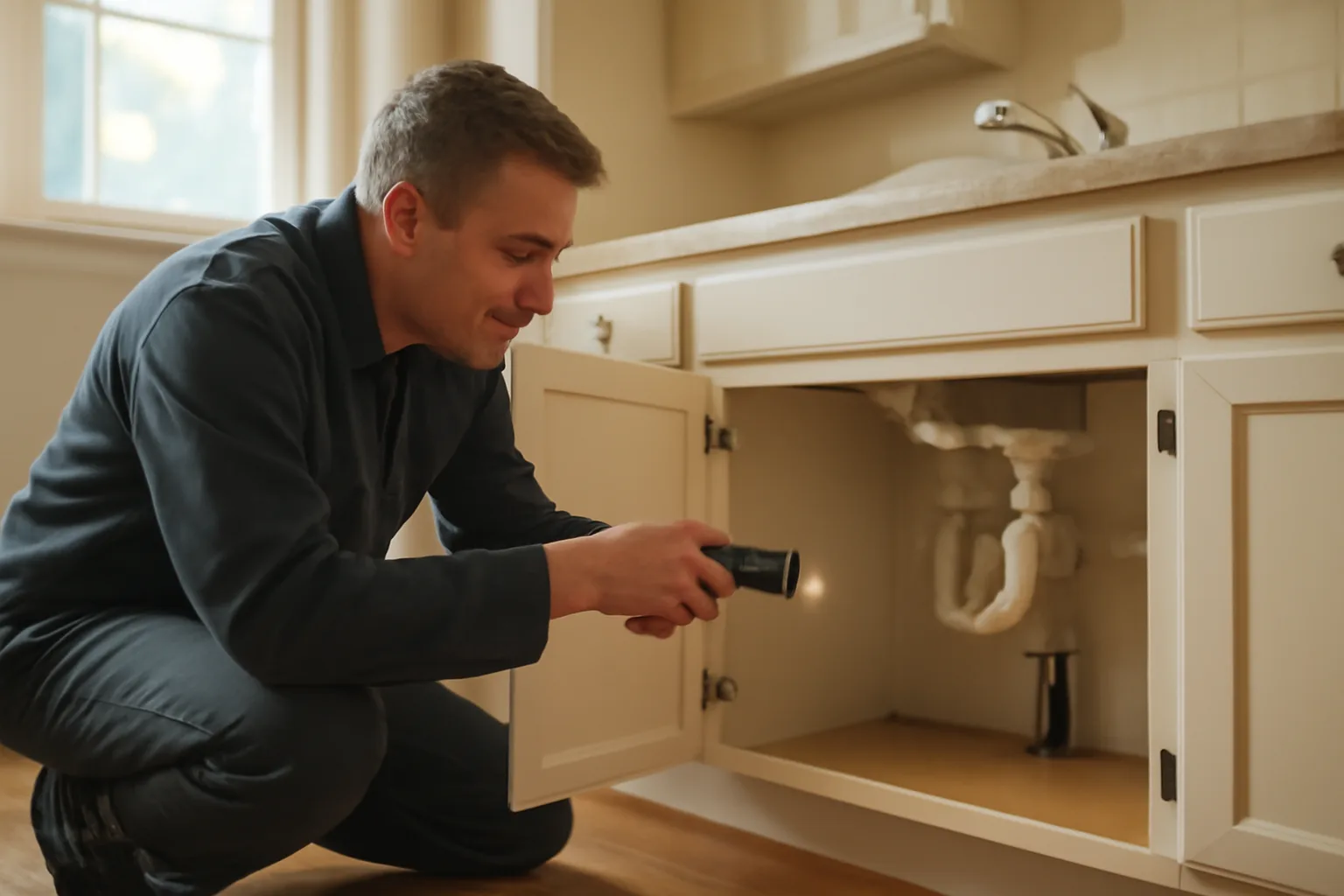
Rental inspectors are working off a checklist tied to your local housing code. It's not a white-glove cleanliness audit. Most of it maps to a handful of categories: life safety, structural soundness, plumbing and electrical function, and basic sanitation. Inspectors care whether things work and whether they're dangerous, not whether your baseboards are dusty. Expect them to test every smoke alarm and carbon monoxide detector in the unit. Many cities now require interconnected smoke alarms in each bedroom and on every level, following the guidance in NFPA 72, the National Fire Alarm and Signaling Code [1]. They'll check that every bedroom has a functioning egress window or door, that stairwells have secure handrails, and that the electrical panel isn't obviously overloaded or missing a cover. Plumbing gets checked for active leaks, working hot water, and proper drainage. Inspectors look under sinks, behind toilets, and near water heaters for staining or corrosion. If your property was built before 1978, expect questions about lead-based paint condition, since HUD and EPA rules require disclosure and safe work practices around deteriorated paint in older housing [2]. Most inspectors also do a quick pest check (droppings, chew marks, evidence of bed bugs) and confirm the unit has working heat sufficient for the season. Some cities specify a minimum indoor temperature, often somewhere around 68°F during heating season, though the exact number varies by ordinance, so confirm with your city rental licensing office. If you want a structured way to walk your own unit before the inspector shows up, our rental-packet-builder packet includes a pre-inspection checklist built around the categories most cities actually cite for.
Who is responsible for a rental property walk-through inspection in California?
In California, the landlord is generally responsible for arranging and paying for any mandatory rental inspection required by a city's rental housing inspection program (sometimes called Proactive Rental Inspection or Systematic Code Enforcement). The property owner has to schedule access, be present or have an agent present, and fix any violations cited. Separately, California Civil Code Section 1950.5 governs move-in and move-out walk-through inspections tied to security deposits. The law gives tenants the right to request an initial inspection before move-out, with the landlord required to give at least 48 hours written notice of that inspection unless the tenant waives it [3]. This is a different animal from a city code-compliance inspection, but landlords often conflate the two, so it helps to know which one you're dealing with. Cities like Los Angeles, Oakland, and San Diego each run their own rental inspection programs with different cycles (often every three to five years) and different fee schedules. There's no single statewide rental inspection law in California outside the deposit-related walk-through rules. The mandatory licensing or inspection requirement itself always comes from the local ordinance, not state law. Confirm your specific inspection cycle and fee with your city rental licensing office.
What is landlording, and what does it actually involve day to day?
Landlording is the ongoing work of owning and managing a rental property: collecting rent, maintaining the unit, handling repairs, screening tenants, and staying compliant with local housing codes. It's part maintenance job, part bookkeeping, part light legal work. A landlord's actual weekly workload usually breaks into four buckets: physical upkeep (repairs, seasonal maintenance, inspection prep), financial tracking (rent collection, expense records, tax documentation), tenant communication (lease renewals, notices, complaint response), and compliance (business licenses, rental registration, safety inspections). The mix shifts depending on whether you self-manage or hire a property manager, but even with a manager, the owner is still the one legally on the hook for code violations in most cities. A lot of new landlords underestimate the compliance side specifically. Cities with mandatory rental licensing (think Chicago, Minneapolis, Los Angeles, and hundreds of smaller municipalities) require landlords to register the unit, pay a fee, and pass a periodic inspection before they can legally rent it out. Skipping this isn't a paperwork technicality. Many ordinances allow fines per unit per violation, and some let the city bar rent collection until the property is registered.
What is a landlord?
A landlord is the legal owner (or their authorized agent) of a residential property who rents that property to a tenant in exchange for payment, usually under a lease or rental agreement. The landlord holds the title or a leasehold interest and is legally responsible for maintaining the property in habitable condition. That habitability obligation isn't just custom, it's often written into state law. Most states have an implied warranty of habitability, meaning a landlord must provide a unit that's fit to live in even if the lease is silent on maintenance. Courts have enforced this warranty for decades since the foundational case Javins v. First National Realty Corp. (1970), which established that residential leases carry an implied promise of habitability comparable to a warranty in a sale of goods [4]. A landlord's legal duties generally include: keeping structural elements sound, providing working plumbing and heat, maintaining common areas, and complying with local housing and safety codes. Failing any of these can expose a landlord to rent withholding, repair-and-deduct remedies, or code enforcement fines depending on the jurisdiction.
How do you become a landlord, step by step?
Becoming a landlord legally involves more than buying a property and putting up a listing. Here's the realistic sequence most first-time landlords go through. 1. Buy or inherit a property zoned for residential rental use, and confirm the zoning actually allows the unit type you plan to rent (some cities restrict accessory units or short conversions). 2. Check whether your city requires rental registration or a rental license before you can legally lease the unit. Many cities require this before the first tenant moves in, not after. 3. Get the property inspection-ready: working smoke and CO alarms, no major plumbing or electrical hazards, functioning heat, and (for pre-1978 units) a lead paint disclosure ready to hand tenants, as required under the federal Lead-Based Paint Disclosure Rule at 40 CFR Part 745 [5]. 4. Set up landlord insurance (a dwelling fire or landlord policy, different from a homeowner's policy) and decide your renters insurance policy for tenants. 5. Draft a lease that complies with your state's landlord-tenant statute, covering deposit limits, notice periods, and disclosures required in your state. 6. Screen tenants consistently and in compliance with the Fair Housing Act, which bars discrimination based on race, color, national origin, religion, sex, familial status, or disability [6]. 7. Register for any required rental license, pay the fee, and schedule your first inspection if your city mandates one. Most of the actual friction new landlords hit is at steps 2 and 7. Cities vary wildly on what they require and how often they re-inspect, so this is worth confirming directly with your city rental licensing office before you list the unit.
What can a landlord look at during an inspection?
| Smoke/CO alarms, egress windows | Personal belongings in drawers/closets | |
|---|---|---|
| Electrical panel, visible wiring | Contents of locked boxes or safes | |
| Plumbing fixtures, water heater | Private paperwork left on a desk | |
| HVAC system, filters, vents | Medicine cabinets (unless leak-related) | |
| Walls, ceilings, flooring condition | Tenant's personal photos or mail | |
| Pest evidence, mold, moisture | Anything unrelated to habitability | If you're doing your own pre-inspection walkthrough before the city arrives, stick to the same boundaries. It keeps you on solid legal ground and it's just good practice for the tenant relationship. |
During a routine or code-compliance inspection, a landlord (or the city inspector) can look at anything related to the physical condition and safety of the unit: smoke detectors, electrical outlets and panels, plumbing fixtures, water heater, HVAC, windows and doors, flooring, walls, ceilings, and evidence of pests or moisture damage. This is standard and expected. What a landlord generally can't do is search through a tenant's personal belongings, closets, or private storage under the pretense of a safety inspection. The inspection is about the condition of the structure and its systems, not an excuse to go through drawers or read mail left on a counter. Most state landlord-tenant statutes require the inspection purpose to be stated in the entry notice, and going beyond that stated purpose can expose the landlord to a claim of unreasonable entry. Here's a rough breakdown of what's fair game versus off-limits during a standard maintenance or code inspection: | Fair game to inspect | Generally off-limits |
How much notice does a landlord have to give before an inspection?
Notice requirements vary by state, but 24 hours is the most common baseline for routine, non-emergency entry, including inspections. California's Civil Code Section 1954 specifies that landlords must give "reasonable notice," and the statute states that 24 hours is presumed reasonable absent evidence otherwise [7]. Many other states have adopted a similar 24-hour standard, either by statute or by strong custom, though the specific number and required delivery method (written, posted, verbal) differ by state. Some states require more. A few require 48 hours for certain kinds of entry, and a handful don't specify a number at all, just "reasonable notice," which pushes the practical standard toward whatever a local court would consider fair given the circumstances. Emergency situations are the exception everywhere. If there's an active leak, fire, gas smell, or similar hazard, landlords generally can enter without advance notice under every state's law, because the emergency exception exists specifically to protect life and property. City-mandated rental license inspections are a separate notice question from the tenant-entry notice question. The city inspector's notice to the landlord (how far ahead they schedule the inspection) is usually spelled out in the local rental licensing ordinance, and it's often two to four weeks out for a scheduled cyclical inspection, though this varies widely. Confirm your city's specific notice window with your city rental licensing office, since this is exactly the kind of detail that differs building department to building department.
Why do landlords require renters insurance?
Landlords require renters insurance mainly to shift liability for a tenant's personal property loss and personal liability claims away from the landlord's own policy. A standard landlord or dwelling policy covers the building structure, not the tenant's belongings, and it typically doesn't cover a tenant's liability if a guest gets hurt in the unit. Renters insurance is genuinely cheap relative to what it covers. The Insurance Information Institute reports that the average cost of a renters insurance policy nationally runs around $15 to $30 per month for roughly $20,000 to $40,000 in personal property and liability coverage, though the exact number depends on location, coverage limits, and the insurer [8]. That's a low bar for tenants to clear. The other reason is fire and water damage liability. If a tenant's negligence causes a kitchen fire or a bathtub overflow that damages the unit below, the landlord's own policy may cover the structure, but the insurer can pursue subrogation against the tenant if the tenant caused the damage. A renters policy with liability coverage protects the tenant from that exposure and reduces the odds the landlord ends up in a messy claim dispute or lawsuit over who pays. Requiring renters insurance is legal in nearly every state as a lease condition, though a landlord can't force a tenant to buy it through the landlord specifically (that can run into insurance regulation issues in some states). The lease just needs to specify a minimum coverage amount and require proof before move-in.
What rights do tenants have without a lease?
Tenants without a written lease, sometimes called month-to-month or at-will tenants, still have real legal rights. The absence of a written lease doesn't strip away tenant protections; it just changes which default rules apply, usually the ones set by state statute rather than by contract terms. Without a lease, a tenant generally still has: the right to habitable housing under the implied warranty of habitability [4], the right to advance notice before the landlord can terminate the tenancy (commonly 30 days for month-to-month tenancies, though some states require more depending on how long the tenant has lived there), protection from illegal lockouts or utility shutoffs used to force them out, and protection from retaliation for reporting code violations. A tenancy without a written lease is usually treated as a month-to-month tenancy under state law, meaning either party can end it with proper notice, but the landlord still can't just change the locks or remove belongings without going through the legal eviction process in that state. Self-help eviction (lockouts, utility shutoffs, removing doors) is illegal in essentially every state, lease or no lease. Rent amount, due date, and rules about guests or pets become murkier without a lease since there's no written agreement to point to, which is exactly why oral or informal tenancies tend to produce more disputes. Both sides end up relying on state statute defaults and whatever can be proven through payment records or texts. That's a genuinely worse position for both landlord and tenant than having terms in writing.
What can a landlord not do in Ohio?
Ohio's landlord-tenant law, codified at Ohio Revised Code Chapter 5321, spells out specific things a landlord cannot do. The statute requires landlords to maintain the premises in a fit and habitable condition and prohibits several retaliatory or self-help actions. Ohio landlords cannot shut off utilities, change the locks, or remove a tenant's belongings to force them out, a practice generally referred to as self-help eviction. Ohio Revised Code 5321.15 specifically prohibits a landlord from recovering possession by "willfully diminish[ing] services" or by using self-help remedies instead of the formal eviction process through the courts [9]. Ohio landlords also cannot retaliate against a tenant for reporting a code violation, joining a tenant union, or otherwise asserting rights under Chapter 5321. Section 5321.02 protects tenants from retaliatory rent increases or lease terminations when the tenant has complained to a government agency about a housing code violation, complained directly to the landlord, or organized with other tenants [10]. Ohio law also requires landlords to give reasonable notice before entering the unit except in emergencies, and it caps the practical scope of that entry to inspection, repair, or showing purposes rather than unrestricted access. Under Ohio Revised Code 5321.04, landlords must keep common areas safe, keep the unit's plumbing and electrical systems in good working order, and supply running water and reasonable heat, without cutting off any of that as a bargaining chip in a dispute [11].
How do you actually prep for a rental license inspection?
Prep starts with the same list an inspector will use, just done a week or two early so you have time to fix what fails. Walk every room with a flashlight, not your phone light, because a flashlight shows shadows behind appliances and under sinks that a phone light washes out. Start with life safety. Replace batteries or units on smoke and CO alarms even if they seem to work. Test every GFCI outlet in kitchens and bathrooms by pressing the test button. Check that every bedroom window opens fully and isn't painted shut, since a non-functioning egress window is one of the most common fail points in city inspections. Move to plumbing. Run every faucet and flush every toilet, checking for slow drains, running toilets, or water pooling under sinks. Check the water heater for a properly installed temperature-pressure relief valve and a discharge pipe that terminates near the floor, a common overlooked item. Check the exterior too if your ordinance covers it: peeling exterior paint (a lead concern on pre-1978 buildings), loose handrails, cracked steps, and broken gutters. A lot of inspection failures aren't inside the unit at all. They're the porch stair that's been wobbly for two years. Finally, get your paperwork in order. Bring your rental license or registration certificate, your lead paint disclosure if applicable, and any prior inspection reports showing corrected violations. If you want a structured version of this walkthrough plus a document checklist built around common city inspection categories, our $79 City Rental License & Inspection Prep Packet is a one-time purchase built for exactly this moment, right before your inspection deadline hits.
What happens if your rental fails inspection?
Most cities don't shut you down on the first failed inspection. Instead, you typically get a written notice of violation listing each item, a deadline to fix it (often 30 days, though this varies significantly by city and violation type), and a re-inspection scheduled after that window. Fines usually only kick in if you miss the correction deadline or if the violation is a safety hazard the city considers urgent (no working smoke detectors, no heat in winter, active gas leak). Fine schedules are set locally, and they range enormously, from under $100 for a first minor violation in some smaller cities to several hundred dollars per violation per day in larger ones with aggressive code enforcement. There's no honest single number here; confirm your city's specific fine schedule with your city rental licensing office before you assume the worst or the best. Repeat failures are where things get serious. Many cities escalate to placing a hold on the rental license renewal, barring new tenant move-ins, or in extreme cases referring the property to housing court. If your unit gets flagged as uninhabitable, some cities can order tenants relocated and bill the owner for relocation costs, which is a far more expensive outcome than just fixing the loose handrail the first time.
Frequently asked questions
How do you become a landlord if you've never rented out a property before?
Start by confirming your property's zoning allows rental use, then check if your city requires rental registration or licensing before tenants move in. Get the unit inspection-ready (smoke alarms, no major hazards), set up landlord insurance, and draft a lease compliant with your state's landlord-tenant statute before advertising the unit.
Who is responsible for a rental property walk-through inspection in California?
The landlord is responsible for scheduling and passing any mandatory city rental inspection. Separately, California Civil Code 1950.5 gives tenants the right to request a move-out walk-through with 48 hours notice, tied to security deposit disputes, which is a different process from a city code inspection.
What is landlording?
Landlording is the ongoing work of owning and managing rental property: collecting rent, handling repairs, screening tenants, and staying compliant with local rental registration, licensing, and inspection requirements. It combines maintenance, bookkeeping, and legal compliance responsibilities.
What is a landlord, legally speaking?
A landlord is the property owner or authorized agent who leases residential property to a tenant. Under the implied warranty of habitability, established in cases like Javins v. First National Realty Corp. (1970), landlords must keep the unit fit to live in regardless of what the lease says.
What rights do tenants have without a lease?
Tenants without a written lease still get habitability protections, notice before termination (often 30 days for month-to-month tenancies), and protection from illegal lockouts or retaliatory eviction. The tenancy defaults to whatever your state's landlord-tenant statute specifies for unwritten agreements.
Why do landlords require renters insurance?
Renters insurance shifts liability for a tenant's belongings and personal liability claims off the landlord's policy. It costs roughly $15 to $30 per month according to the Insurance Information Institute, making it a low-cost way to reduce disputes over fire, water damage, or injury claims.
How much notice does a landlord have to give before entering for an inspection?
Most states treat 24 hours as the standard for reasonable notice, including California under Civil Code 1954. Some states require 48 hours or don't specify a number at all. Emergency situations (leaks, gas smell, fire) allow entry without advance notice everywhere.
What can a landlord look at during an inspection?
Inspectors and landlords can check smoke alarms, electrical panels, plumbing, HVAC, windows, and structural condition. They generally cannot search personal belongings, closets, or private paperwork unrelated to the unit's physical condition, since that goes beyond the stated purpose of a habitability inspection.
What can a landlord not do in Ohio?
Ohio landlords cannot use self-help eviction (shutting off utilities, changing locks, removing belongings) under Ohio Revised Code 5321.15. They also cannot retaliate against tenants for reporting code violations under ORC 5321.02, and must maintain plumbing, electrical, heat, and common area safety under ORC 5321.04.
What fails a rental inspection most often?
The most common fail points are non-functioning smoke or CO alarms, bedroom windows that don't open (egress failures), GFCI outlets that don't trip, active plumbing leaks, and exterior hazards like loose handrails or cracked steps. Most of these are cheap to fix if caught before the inspection.
Does a landlord have to give notice for a city rental license inspection?
Yes, though the notice window comes from the local ordinance, not a universal rule. Many cities schedule cyclical inspections two to four weeks in advance and mail or email the date to the property owner. Confirm the specific window with your city rental licensing office.
What happens if a rental property fails inspection?
You typically get a written violation notice with a correction deadline, often around 30 days, followed by a re-inspection. Fines and license holds usually only apply if you miss that deadline or the violation is an urgent safety hazard like no heat or no working smoke detectors.
Is peeling paint a rental inspection violation?
It can be, especially in units built before 1978, where deteriorated paint raises lead hazard concerns under EPA and HUD disclosure rules. Even in newer units, peeling exterior paint can be cited as a maintenance violation depending on your city's housing code.
Can a landlord charge a fee for a rental inspection?
Cities charge the rental licensing or inspection fee, not the landlord charging the tenant directly for it, though landlords often factor that cost into rent pricing. Fee amounts vary enormously by city, so confirm the current fee with your city rental licensing office.
Sources
- NFPA, NFPA 72 National Fire Alarm and Signaling Code: Interconnected smoke alarm requirements referenced by many local housing codes
- EPA, Lead-Based Paint Renovation, Repair and Painting Program: Lead-based paint safe work and disclosure requirements for pre-1978 housing
- California Legislative Information, Civil Code Section 1950.5: Tenant right to request initial move-out inspection with 48 hours notice
- Javins v. First National Realty Corp., 428 F.2d 1071 (D.C. Cir. 1970): Foundational case establishing the implied warranty of habitability in residential leases
- EPA/HUD, Lead-Based Paint Disclosure Rule, 40 CFR Part 745: Federal requirement to disclose known lead-based paint hazards in pre-1978 housing
- HUD, Fair Housing Act protected classes: Federal protected classes landlords cannot discriminate against in tenant screening
- California Legislative Information, Civil Code Section 1954: 24 hours presumed reasonable notice standard for landlord entry in California
- Insurance Information Institute, Renters Insurance facts and statistics: Average renters insurance costs roughly $15 to $30 per month
- Ohio Revised Code Section 5321.15: Prohibition on self-help eviction remedies by Ohio landlords
- Ohio Revised Code Section 5321.02: Protection from retaliatory lease termination or rent increase for tenants reporting violations
- Ohio Revised Code Section 5321.04: Ohio landlord obligations to maintain plumbing, electrical, heat, and common area safety