Last updated 2026-07-26
TL;DR
To legally rent property, you generally need to register or license the unit with your city, keep it habitable, follow state-specific notice and entry rules, and often require renters insurance. There's no federal landlord license. Requirements are set state by state and, in over 200 U.S. cities, by local rental registration or inspection ordinances.
What is a landlord, exactly?
A landlord is anyone who owns residential property and rents it to another person (a tenant) in exchange for payment, usually under a lease or rental agreement. That's it legally. You don't need a certification, a degree, or a trade license to call yourself a landlord the way you would to be a real estate agent or contractor. What you do take on is a bundle of legal duties the moment you accept rent from someone living in your unit. Landlord-tenant law in every state imposes an implied "warranty of habitability," meaning the unit has to be fit to live in whether your lease mentions it or not. California's version is spelled out in Civil Code Section 1941, which requires landlords to maintain rental units in a condition "fit for the occupation of human beings" [1]. So the honest answer to "what is a landlord" is: an unlicensed business owner with statutory tenant-protection obligations attached to a physical address. The paperwork burden comes not from being a landlord in general, but from your specific city or county's rental registration, licensing, or inspection ordinance, if one exists where you own property.
What is landlording, and what does the job actually involve?
"Landlording" is the day-to-day work of operating a rental: screening and choosing tenants, collecting rent, handling repairs, managing move-in and move-out, keeping the property compliant with local codes, and dealing with turnover. It's part bookkeeping, part maintenance coordination, part legal compliance. Most of the actual time cost isn't glamorous. It's answering a maintenance text at 9pm, chasing a late payment, or figuring out why your city sent a notice about an expired rental certificate. HUD's Office of Policy Development and Research estimates the U.S. has roughly 48.2 million rental units, the large majority owned by individual investors rather than large companies [2], so most landlording in America is done by people managing one to a handful of properties, not corporate portfolios. Landlording also means administrative tracking: lease renewal dates, security deposit deadlines (many states cap the return window at 14 to 30 days after move-out), habitability repair timelines, and, in licensing cities, renewal and inspection dates that trigger fines if missed.
How to become a landlord: what's actually required
There's no single national process. Becoming a landlord is a mix of ownership, registration, insurance, and compliance steps, and which ones apply to you depends entirely on where the property sits. Here's the realistic sequence: 1. Own or control a residential property you intend to rent (buy it, inherit it, or convert a primary residence). 2. Check whether your city or county requires rental registration, a rental license, or a certificate of occupancy for rental use. Cities like Los Angeles require registration under the Rent Escrow Account Program for older buildings and a business tax registration certificate for any rental [3]. Many mid-size cities (think Rockford, IL, or Toledo, OH) run their own rental licensing programs with annual fees, often in the [confirm with your city rental licensing office] range. 3. Get the unit inspected if your ordinance requires it before you can legally rent, or on a recurring cycle (often every 1 to 3 years). 4. Set up landlord liability insurance (separate from a standard homeowners policy) and decide whether to require tenant renters insurance. 5. Draft or obtain a compliant lease that matches your state's required disclosures (lead paint disclosure is federally mandated for pre-1978 housing under 42 U.S.C. Section 4852d [4]). 6. Screen tenants consistent with the Fair Housing Act, which bars discrimination based on race, color, national origin, religion, sex, familial status, or disability [5]. 7. Register with your state or city for any required business license or landlord registration (some states, like Illinois, require nothing at the state level; some cities require registration even for a single rented room). If your property is in a city with mandatory rental licensing, that ordinance is usually the binding requirement, more so than any generic "how to become a landlord" checklist you'll find online. Start with your specific city guide rather than a national guide.
Who is responsible for a rental property walk-through inspection in California?
In California, responsibility for move-in and move-out walk-through inspections is split by statute. Civil Code Section 1950.5 gives tenants the right to request an initial move-out inspection before they leave, and requires the landlord to give at least 48 hours' written notice of the date and time if that inspection happens [6]. The landlord (or their agent) conducts the inspection and must provide the tenant an itemized statement of proposed repairs or cleaning that would justify deductions from the security deposit. The tenant then gets the chance to fix issues themselves before move-out to avoid the deduction. This is separate from any city-mandated rental housing inspection (like those under local Rental Housing Inspection Programs), which is conducted by a city code enforcement officer, not the landlord, and checks for code compliance rather than deposit-related damage. So two different "inspections" exist in California and get confused constantly: the landlord-tenant move-out walkthrough (landlord's job, tenant-requested) and the municipal habitability/code inspection (city's job, often scheduled on a cycle). Confirm which one your notice refers to before assuming it's a compliance violation.
What rights do tenants have without a lease?
Tenants without a written lease aren't unprotected. Once someone pays rent and occupies a unit, they typically become a "month-to-month" or "tenant at will" under state law, with most of the same protections as a written-lease tenant. That includes the right to habitable housing, protection from illegal lockouts or utility shutoffs (self-help eviction is illegal in nearly every state), the right to proper notice before eviction, and, in many states, the same notice period for rent increases or lease termination as if a lease existed. For example, California requires 30 days' written notice to terminate a month-to-month tenancy under a year, and 60 days if the tenancy has run a year or more, per Civil Code Section 1946.1 [7]. What a no-lease tenant loses is certainty: rent amount, term length, and specific rules can be changed by the landlord with proper notice, since there's no fixed contract locking those terms in. But eviction still has to go through the courts. A landlord cannot simply change the locks or remove belongings because there's no signed lease.
Why do landlords require renters insurance?
Landlords require renters insurance mainly to shift liability, not because it's mandated by most state law. A tenant's renters insurance policy typically covers their personal belongings and provides liability coverage if the tenant accidentally causes damage (a kitchen fire, an overflowing tub) or if a guest is injured in the unit. Without it, a landlord's own property insurance may cover the building's damage, but the landlord is often left chasing the tenant directly (or their own policy's subrogation process) for losses caused by tenant negligence, and the tenant has no coverage at all for their own damaged belongings. That gap is exactly what pushes so many landlords to make renters insurance a lease requirement rather than a suggestion. A few states and cities have started requiring it outright. Oklahoma law, for instance, allows landlords to require tenants carry renters insurance or pay into a landlord-provided liability policy program, detailed in the Oklahoma Landlord Tenant Act [8]. Most places leave it up to the landlord's lease terms, which is why you'll see it required in the large majority of professionally managed leases even where no law forces it.
How much notice does a landlord have to give before entering or ending a tenancy?
| Entry for repairs/inspection | 24 to 48 hours | Cal. Civ. Code Section 1954 [9] | |
|---|---|---|---|
| Month-to-month termination (under 1 year) | 30 days | Cal. Civ. Code Section 1946.1 [7] | |
| Month-to-month termination (1+ years) | 60 days | Cal. Civ. Code Section 1946.1 [7] | |
| Rent increase over 10% | 90 days (CA) | Cal. Civ. Code Section 827 | Because these numbers genuinely differ by state and even by city ordinance, don't rely on a generic notice template. Check your specific state statute or your city's tenant protection page before sending any notice. |
Notice requirements split into two very different categories: notice to enter the unit, and notice to end or change the tenancy. Both vary a lot by state, and neither is standardized nationally. Entry notice: California requires "reasonable notice," which the statute presumes to be 24 hours in writing for non-emergency entry, under Civil Code Section 1954 [9]. Many other states use similar 24-to-48-hour windows, but some (like Arizona, at 48 hours under A.R.S. Section 33-1343) differ, and a few states have no statutory entry notice requirement at all, leaving it to lease terms and general reasonableness. Tenancy termination or rent increase notice: this is usually tied to tenancy length. A common pattern is 30 days for tenancies under a year, 60 days for a year or longer, though plenty of states use a flat 30-day rule regardless of tenancy length. Local rent control ordinances can extend this further; some California cities under the Tenant Protection Act require additional "just cause" documentation for termination after 12 months of tenancy [7]. | Notice type | Common range | Example statute |
What can a landlord look at during an inspection?
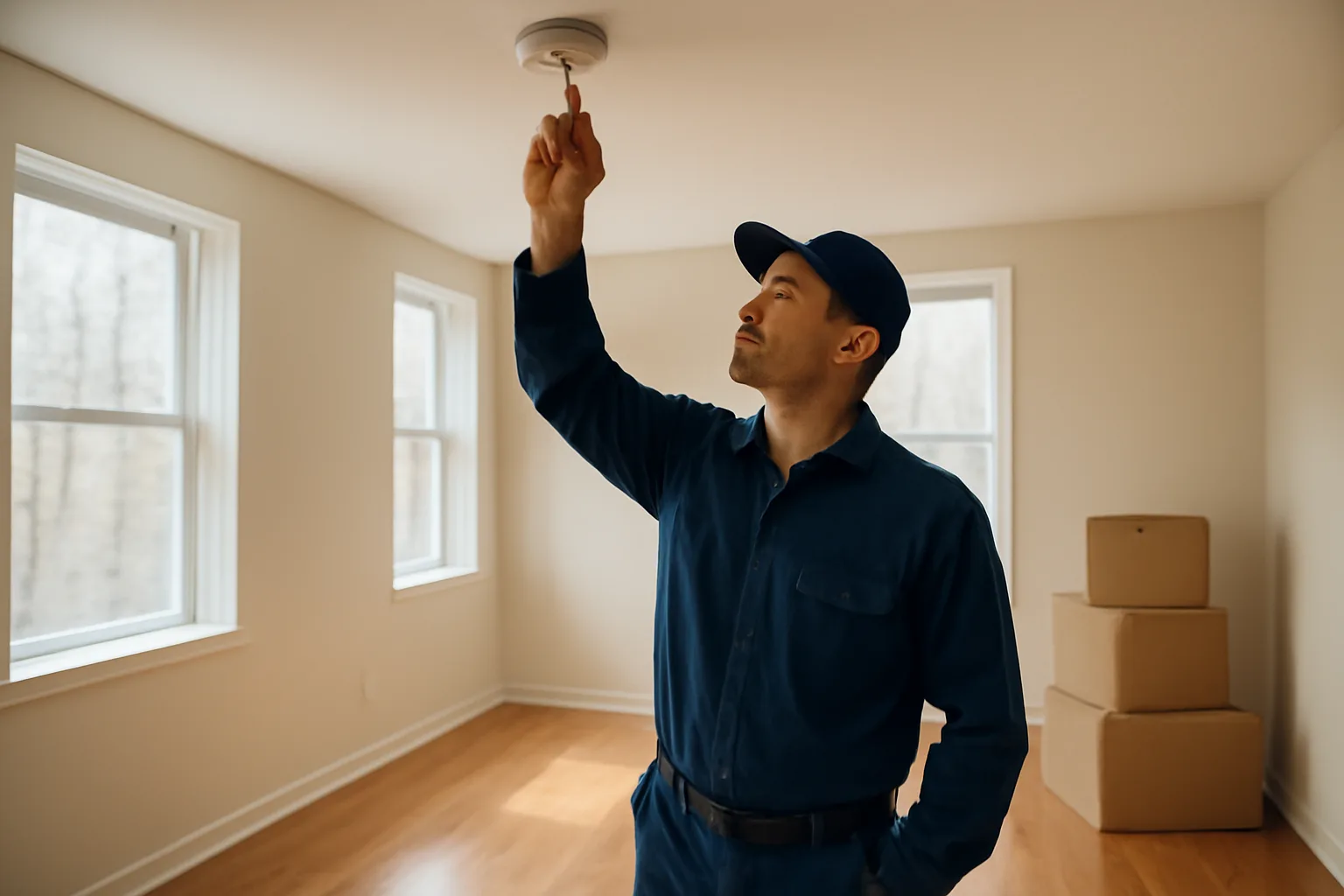
A landlord's inspection rights (and a city inspector's, which is a different thing) are limited to what's reasonably connected to the purpose of the inspection: habitability, safety, code compliance, or damage assessment. Neither has a blanket right to search personal belongings or unrelated areas. For a routine landlord inspection (checking for maintenance issues, verifying lease compliance, or a standard walk-through), landlords can typically look at: working smoke and carbon monoxide detectors, HVAC and plumbing function, visible signs of pest infestation or water damage, unauthorized occupants or pets, and general property condition. They generally cannot open closed drawers, closets used for personal storage, or go through belongings without specific cause (like investigating a suspected lease violation with proper legal process). For a municipal rental inspection under a licensing ordinance, city inspectors usually check items tied to the local housing code: functioning smoke/CO detectors, egress windows in bedrooms, electrical panel condition, water heater temperature-pressure relief valves, handrails on stairs, and pest or mold evidence. These inspections are about code compliance, not tenant behavior, and the inspector generally needs the tenant's or landlord's consent to enter, or a warrant if either refuses in a mandatory-inspection jurisdiction. If your city sent an inspection notice tied to a rental license renewal, the checklist is usually published on the city's building or code enforcement department page. It's worth pulling that specific list rather than guessing, since violations for things like a missing GFCI outlet or a blocked egress window are the most common reasons landlords fail a first inspection and get a re-inspection fee.
What can a landlord not do in Ohio?
Ohio landlord-tenant law, codified mainly in Ohio Revised Code Chapter 5321, spells out a specific list of prohibited landlord actions. Ohio law states a landlord "shall not recover or take possession of the dwelling unit by action or otherwise, including recovery or taking possession by force," outside the formal eviction process, under R.C. 5321.15 [10]. That means self-help eviction (changing locks, removing doors, shutting off utilities to force a tenant out) is illegal in Ohio, full stop. Ohio landlords also cannot retaliate against a tenant for legally exercising rights, such as filing a housing code complaint or joining a tenant union, under R.C. 5321.02 . Retaliation includes raising rent, decreasing services, or threatening eviction within a short period after the tenant's protected action; courts often look at timing closely here. Other things an Ohio landlord cannot legally do: enter the unit without reasonable notice (Ohio's standard is 24 hours under R.C. 5321.04 for non-emergency entry), discriminate in violation of the Fair Housing Act [5], keep a security deposit without an itemized list of deductions when required, or refuse to maintain the unit in compliance with health and safety codes under R.C. 5321.04's landlord obligations . If you own in Ohio, read Chapter 5321 directly rather than relying on a summary; it's a relatively short, readable statute.
Do you need a license to be a landlord?
Not at the state level, in most states. There's no equivalent of a real estate broker's license required just to rent out property you own. What does require a license, permit, or registration in a growing number of places is the act of operating a rental unit within specific city or county limits. Over 200 U.S. cities and several entire states (like Rhode Island, which requires certain landlords to register with the Department of Business Regulation) run mandatory rental registration, licensing, or inspection programs. The name varies: "rental license," "certificate of occupancy for rental use," "rental registration," or "crime-free housing certification." The common thread is a city ordinance, not a state professional-licensing law, and fees typically run somewhere in the [confirm with your city rental licensing office] range per unit, often renewed annually or every few years. Missing one of these local requirements is where landlords actually get fined, more often than for anything related to lease drafting or tenant screening. Cities enforce rental licensing through code inspectors, utility hookup requirements (some cities won't let you set up water service to a rental without proof of registration), and complaint-driven audits. If you got a notice, an inspection deadline, or a fine letter, it's almost certainly tied to one of these local ordinances rather than any state-level "landlord license."
What paperwork should you keep as a landlord?
Beyond the lease itself, landlords in licensing jurisdictions generally need to keep: proof of rental registration or license (and its renewal date), inspection reports and any correction notices, security deposit itemizations sent to past tenants, lead paint disclosure forms for pre-1978 buildings signed by the tenant per the federal disclosure rule [4], and proof of any required insurance. Many cities also require a local point-of-contact registration, meaning you have to list a local agent or manager if you live outside the city or state, so code enforcement has someone to serve notices to. Missing this is a surprisingly common violation basis; landlords who bought a property remotely and never updated the registered contact often get hit with a default judgment or escalated fine because notices went to an old address. Organizing this paperwork before your city's inspection or renewal deadline is most of the battle. If you're staring at a first-time license application or an inspection notice and don't know which documents your specific city wants, our $79 City Rental License & Inspection Prep Packet walks through the standard document set most rental licensing offices ask for, so you're not guessing at the counter.
What happens if you skip registration or licensing?
Consequences vary by city, but they're rarely trivial. Common penalties include daily fines that accumulate until you register (some cities charge per day past the deadline), inability to legally collect rent or evict a tenant until the property is registered (several states, including California cities under local ordinances, bar unlawful detainer actions on unregistered units), and, in the more aggressive jurisdictions, referral to a housing court or vacant property registry. Some cities will also block utility transfers or business license renewals tied to the property until back rental license fees and inspection deficiencies are cleared. That's the scenario landlords usually don't see coming: you go to sell the property or refinance, and the title search or municipal lien search turns up an unpaid rental licensing fee going back years, sometimes with penalty interest attached. If you already got a violation notice, the fastest path is usually calling the city office named on the notice directly and asking for the specific cure period and fee schedule; ordinances differ enough city to city that a general answer isn't reliable here. Confirm the exact numbers with your city rental licensing office rather than assuming a neighboring city's rules apply.
Frequently asked questions
How do I become a landlord for the first time?
Buy or convert a property for rental use, check your city and state for any rental registration, licensing, or inspection requirements, get landlord liability insurance, prepare a lease compliant with your state's disclosure laws (including federal lead paint disclosure for pre-1978 units), and screen tenants under Fair Housing Act rules. There's no license required at the federal level; local rules vary widely.
Who is responsible for a move-out walk-through inspection in California?
The landlord (or their agent) conducts the move-out walk-through if the tenant requests one, giving at least 48 hours' written notice under California Civil Code Section 1950.5. This is separate from any city code-compliance inspection, which a municipal inspector conducts, not the landlord.
What is landlording as a job or business?
Landlording is the ongoing work of operating rental property: tenant screening, rent collection, maintenance, lease compliance, and keeping up with local registration or inspection deadlines. It's largely administrative and reactive rather than a fixed schedule of tasks, and most U.S. rental units are run by individual owners rather than companies.
What is the legal definition of a landlord?
A landlord is a person or entity that owns residential property and rents it to a tenant under a lease or rental agreement, taking on statutory duties like maintaining habitability and following legal eviction procedures. No license is required by definition, though local ordinances may require registration to operate legally.
What rights does a tenant have if there's no written lease?
A tenant without a written lease still has the right to habitable housing, protection from illegal lockout or self-help eviction, and a legally required notice period before termination, similar to a leased tenant. What changes is flexibility: rent and terms can shift with proper notice since no fixed contract exists.
Why do landlords require tenants to carry renters insurance?
Landlords require renters insurance mainly to cover tenant-caused damage and personal injury liability that the landlord's own property insurance won't cover, and to protect the tenant's belongings, which the landlord's policy never covers. It's usually a lease requirement rather than a state law, though a few states allow landlords to mandate it or offer an alternative liability program.
How much notice does a landlord have to give before entering the unit?
Most states require 24 to 48 hours' written notice for non-emergency entry. California presumes 24 hours is reasonable under Civil Code Section 1954; Arizona requires 48 hours under A.R.S. Section 33-1343. Check your specific state statute, since a few states have no fixed statutory notice requirement.
What can a landlord check during a rental inspection?
A landlord or city inspector can generally check smoke and carbon monoxide detectors, plumbing and electrical function, signs of pest infestation or water damage, egress windows, and general safety code items. Neither can search personal belongings or closed storage without specific legal cause.
What can't a landlord do in Ohio?
Ohio landlords cannot force a tenant out through self-help eviction (like changing locks or shutting off utilities) under Ohio Revised Code Section 5321.15, cannot retaliate against tenants for exercising legal rights under R.C. 5321.02, and must give reasonable entry notice and maintain the unit under R.C. 5321.04.
Do you need a state license to rent out a house?
Most states don't require a landlord license to rent property you own. Many cities do require local rental registration, a rental license, or a certificate tied to housing code compliance, with fees and renewal cycles set by that specific city, not the state.
What happens if I never registered my rental with the city?
Consequences depend on the city but often include accumulating daily fines, inability to file eviction until the unit is registered, and liens or blocked transactions discovered later during a sale or refinance. Contact the office named on any notice directly to get the specific cure period and fee.
Is a lease required to legally rent to someone?
No. Oral or implied month-to-month tenancies are legal in every state once a tenant moves in and pays rent, and they carry most of the same landlord obligations as written leases, including habitability duty and required notice before termination. A written lease is strongly recommended for clarity, but it isn't a legal requirement to have a valid tenancy.
Sources
- California Legislative Information, Civil Code Section 1941: California landlords must maintain rentals fit for human occupation
- HUD Office of Policy Development and Research, American Housing Survey data summary: U.S. has roughly 48 million rental units, mostly owned by individual investors
- U.S. Code, 42 U.S.C. Section 4852d, Disclosure of information concerning lead-based paint hazards: Federal law requires lead paint disclosure for pre-1978 rental housing
- HUD, Fair Housing Act overview: Fair Housing Act bars discrimination based on race, color, religion, sex, national origin, familial status, disability
- California Legislative Information, Civil Code Section 1950.5: California tenants can request a move-out inspection with 48 hours notice given by the landlord
- California Legislative Information, Civil Code Section 1946.1: California requires 30 or 60 days notice to terminate month-to-month tenancy depending on length of tenancy
- California Legislative Information, Civil Code Section 1954: California presumes 24 hours notice is reasonable for landlord entry
- Ohio Revised Code Section 5321.15: Ohio law prohibits landlords from taking possession of a unit outside formal legal process, including by force
- Ohio Revised Code Section 5321.02: Ohio law prohibits landlord retaliation against tenants exercising legal rights
- Ohio Revised Code Section 5321.04: Ohio landlords must give reasonable entry notice and maintain units per health and safety code