Last updated 2026-07-26
TL;DR
A city rental inspection is a government check of a rental unit's health and safety condition, usually tied to a rental registration or license program. An inspector looks at smoke detectors, electrical, plumbing, heat, exits, and general habitability. Cities require this before issuing or renewing a rental license, and failing items usually means a re-inspection deadline, not an automatic fine.
what is a city rental inspection, exactly
A city rental inspection is a visit from a code enforcement officer, fire marshal, or housing inspector to confirm your rental unit meets the local housing or property maintenance code. It's not optional in the roughly hundreds of U.S. cities that run rental licensing or registration programs. No license, no legal tenant. Most programs borrow language from the International Property Maintenance Code (IPMC), which cities adopt and amend locally. The IPMC states its purpose is "to protect the public health, safety and welfare" by setting minimum standards for existing structures, including light, ventilation, sanitation, and structural and electrical safety [1]. Your city's actual ordinance is a local variant, so the checklist you get is specific to your city, not a national standard. The inspection is different from a home inspection you'd get before buying a house. A home inspection looks broadly at anything that could affect value or future repairs. A rental compliance inspection is narrower. It checks for code violations that make a unit unsafe or unfit to occupy, things like a missing smoke detector, blocked exit, exposed wiring, or non-functioning heat. Cities run these programs because rental housing turns over tenants more often than owner-occupied housing, and a city has less visibility into a unit's condition once a landlord stops living there. Minneapolis, for example, requires a rental license for any property not occupied by the owner, with inspections tied to the license cycle [2]. Chicago requires registration of most rental units under its Residential Landlord and Tenant Ordinance framework, with related inspection triggers for tenant complaints [3].
why do cities require rental inspections
Cities require rental inspections to catch unsafe conditions before someone gets hurt, and to give tenants a way to report problems without doing the inspection themselves. It's a public health and safety tool, not a revenue grab, though license fees do fund the inspector's salary in most programs. The legal basis usually traces back to a city's general police power to protect health and safety, exercised through a housing code. Many codes descend from model codes like the IPMC or the earlier BOCA National Property Maintenance Code. HUD has also pushed jurisdictions toward proactive rental inspection as a strategy for maintaining housing quality, particularly in cities with older housing stock and higher rental shares [4]. There's a real data gap here worth naming honestly. There is no single national count of how many U.S. cities run mandatory rental inspection programs, and academic tracking is thin. What's documented is that the practice is common in older industrial and Rust Belt cities (Cleveland, Rockford, Minneapolis, Toledo) and less common in newer Sun Belt metros that grew up around single-family zoning. If you're not sure your city has a program, confirm with your city rental licensing office before assuming you're exempt. For a landlord, the practical reason to care is simpler than public policy: an unlicensed rental unit can mean fines, an inability to collect rent in court in some jurisdictions, or a stop-rent order until you comply.
what does a rental inspection actually check
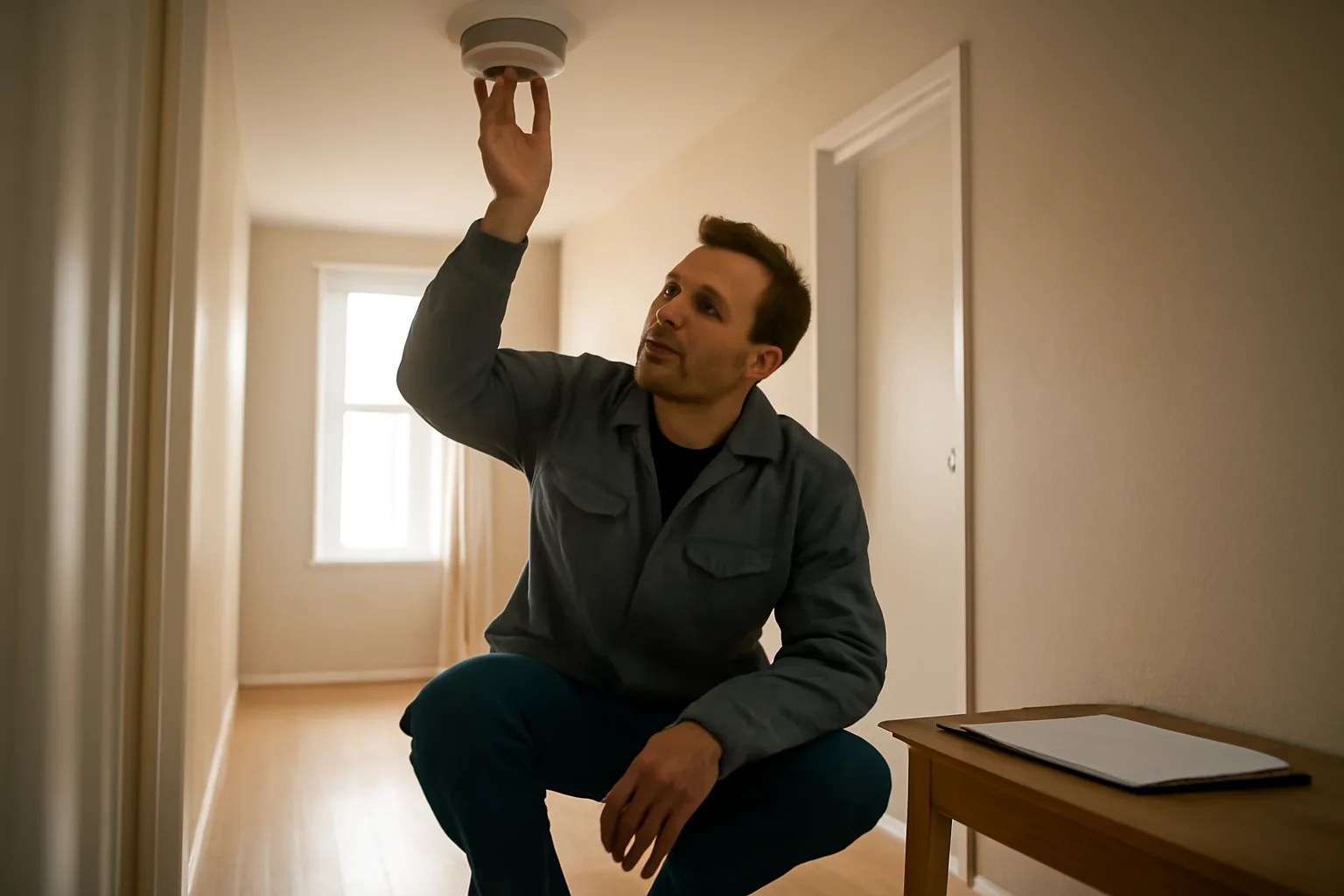
An inspector is looking at life-safety items first, then general maintenance and code compliance. The exact checklist varies by city ordinance, but most programs converge on a similar core list. Common items on a rental inspection checklist: - Working smoke alarms in each bedroom and on each level, and carbon monoxide alarms near fuel-burning appliances or attached garages
- Two means of egress from sleeping rooms (a window that opens to the required size, or a second door)
- Electrical panel condition, no exposed wiring, working outlets, GFCI in kitchens and bathrooms
- Working heat source, some cities set a minimum indoor temperature (Minneapolis requires 68 degrees Fahrenheit in habitable rooms during the heating season) [2]
- Plumbing: no active leaks, functioning hot water, proper venting
- Structural: stairs and railings intact, no rotted decking, secure foundation
- Pest and sanitation: no evidence of infestation, working trash disposal
- Exterior: peeling paint (especially relevant for pre-1978 buildings under federal lead rules), broken windows, unsecured doors An inspector generally has the right to look at anything covered by the applicable housing code section, but not necessarily every room in an occupied unit uninvited. In owner-occupied inspections tied to licensing, the landlord usually has to grant access or schedule the visit; tenants sometimes have the right to be present or to refuse entry absent a warrant, depending on the jurisdiction's inspection ordinance and any Fourth Amendment carve-outs the city has built in. If you want a structured way to walk your own unit before the city does, our $79 rental packet builder includes a pre-inspection checklist built around the most common line items cities cite.
who is responsible for a rental property walk-through inspection in california
In California, the landlord is responsible for arranging and cooperating with any city-mandated rental inspection, but state law also creates a separate walk-through right tied to move-in and move-out for security deposit purposes, which is a different thing entirely. Under California Civil Code Section 1950.5(f), a landlord must, upon request from the tenant, conduct an initial inspection before the tenant moves out, give the tenant an itemized list of deficiencies, and give the tenant a chance to fix them before the final move-out inspection determines deposit deductions [5]. That's a tenant-initiated, deposit-related walk-through, separate from a city code inspection. Separately, cities like Los Angeles run their own Systematic Code Enforcement Program (SCEP), which requires periodic inspections of rental units and bills owners an annual per-unit fee to fund it [6]. Under SCEP, the landlord (or their designated agent, often a property manager) is responsible for scheduling access, being present or providing access, and remedying any violations found. Tenants aren't required to fix anything found in a city inspection; that responsibility sits with the owner. So the short answer: for a city compliance inspection, the landlord is responsible for access and repairs. For a move-out walk-through, the responsibility is shared, with the landlord required to offer the pre-move-out inspection if the tenant asks for it.
how much notice does a landlord have to give before an inspection
Notice periods depend on the reason for entry and your state's statute, and they're usually different for a routine city inspection versus a landlord-initiated visit. Most states set a default notice period, commonly 24 hours, for a landlord entering to inspect, repair, or show the unit. California Civil Code Section 1954 requires "reasonable notice," and specifies that 24 hours is presumed reasonable in the absence of contrary evidence, for entries to make repairs or show the property [7]. Ohio Revised Code Section 5321.04 similarly requires landlords to give tenants "reasonable notice" of intent to enter, and defines 24 hours as reasonable notice in most circumstances, except for emergencies [8]. For a city inspection specifically, the notice mechanics can be different. Some cities notify the landlord directly with a scheduled date weeks in advance (common for licensing renewal inspections). The landlord then has to notify the tenant per their state's normal entry notice rules, unless the local ordinance sets its own separate tenant-notice requirement. A few cities allow inspectors to enter common areas or vacant units with less notice, but occupied private units almost always require the standard notice period. If your ordinance doesn't specify, use your state's default landlord entry notice statute as the floor, and confirm your specific city's inspection scheduling notice with your city rental licensing office.
what can a landlord look at during an inspection
A landlord conducting their own periodic inspection (separate from the city's) can generally look at anything related to the condition of the property and lease compliance, but the scope should stay tied to a legitimate purpose like safety, maintenance, or verifying no lease violations. Typical, defensible things to check: smoke and CO detector function, HVAC filters and vents, signs of water damage or mold, window and door operation, unauthorized occupants or pets, unauthorized subletting, and general housekeeping that could create a fire or pest hazard. What a landlord generally should not do is search through personal belongings, closets, drawers, or private papers that have nothing to do with property condition. That's overreach even where the entry itself is legal. During a city inspector's visit, the scope is narrower and defined by the ordinance. It's about code compliance, not lease enforcement. The inspector isn't there to check if the tenant has an unauthorized roommate; they're there to check smoke alarms, electrical, structural, and sanitation items tied to the housing code. If you're a landlord and want to do a practice run before the city shows up, walk the unit using the same categories: egress, alarms, electrical, plumbing, heat, structure, pests. Document with photos and dates. That paper trail helps if a violation notice gets disputed later, and it's the kind of file our rental packet builder is built to organize.
what a landlord cannot do in ohio
Ohio law puts specific limits on landlord conduct, mostly under Ohio Revised Code Chapter 5321, the Landlords and Tenants Act. A landlord in Ohio cannot enter the rental unit without reasonable notice (24 hours is treated as reasonable under most circumstances) except in a genuine emergency [8]. A landlord in Ohio also cannot shut off utilities, change the locks, or remove the tenant's belongings to force them out; that's a self-help eviction and Ohio law requires landlords to go through the court eviction (forcible entry and detainer) process instead. ORC 5321.15 specifically prohibits a landlord from using force, threats, utility shutoff, or seizing possessions to remove a tenant without a court order . A landlord also cannot retaliate against a tenant for exercising legal rights, such as reporting a code violation to a city inspector or joining a tenant union. ORC 5321.02 limits a landlord's ability to raise rent, decrease services, or terminate a tenancy in retaliation for a tenant's good-faith complaint . That protection matters directly for this topic: if a tenant reports a habitability problem that triggers a city inspection, the landlord cannot legally respond by evicting or raising rent on that tenant in retaliation. Finally, a landlord cannot ignore their own maintenance duties under ORC 5321.04, which requires keeping the premises in a fit and habitable condition, complying with building and housing codes, keeping common areas safe, and maintaining electrical, plumbing, heating, and other systems in good working order [8]. That statute is functionally the state-level backbone that city rental inspection ordinances build on top of.
what rights do tenants have without a lease
A tenant without a written lease still has real legal rights; the absence of a signed lease doesn't waive tenant protections. Most states treat an unwritten rental arrangement as a month-to-month tenancy, governed by state landlord-tenant statute rather than a private contract. Under a month-to-month tenancy, the tenant still has a right to a habitable unit, the same notice-before-entry protections as a leased tenant, protection from retaliatory eviction, and the right to proper notice before the tenancy is ended. In Ohio, for example, ORC 5321.04's habitability duties apply regardless of whether there's a written lease [8]. In California, Civil Code 1954's entry notice rules likewise aren't contingent on having signed paperwork [7]. What mostly changes without a lease is duration and termination mechanics: a month-to-month tenant can typically be asked to leave with 30 days' notice (sometimes 60 or 90 depending on tenancy length and local rules), rather than being bound to, or protected by, a fixed term. Security deposit rules, discrimination protections under the federal Fair Housing Act, and code compliance obligations on the landlord's side all still apply. For a broader look at what protections exist across situations, see our guides on tenants rights and renters rights.
what is landlording and what is a landlord
A landlord is the owner (or an authorized agent of the owner) of real property who rents that property to another person, the tenant, in exchange for rent. Landlording is the informal term for the ongoing work of managing that rental relationship: collecting rent, maintaining the property, handling repairs, following notice and entry rules, and staying compliant with local licensing and code requirements. Legally, a landlord's core obligations in nearly every state include keeping the unit habitable, complying with applicable building and housing codes, and returning security deposits properly and on time. Ohio's ORC 5321.04 spells this out plainly, requiring landlords to "comply with the requirements of all applicable building, housing, health, and safety codes" and keep the premises "in a fit and habitable condition" [8]. Most states have a comparable statute. Practically, landlording day-to-day means things like screening tenants under fair housing law, writing and enforcing a lease, scheduling maintenance, budgeting for capital repairs, tracking rental license or registration renewal dates, and being available (or having a property manager) for emergency repair calls. It's part legal compliance and part small business operations. If you're new to this and want the fuller picture of what the job involves across an entire tenancy, our landlord and landlord landlords guides walk through the lifecycle in more detail.
how to become a landlord and how to be a landlord (getting compliant, more than owning property)
Becoming a landlord legally means more than buying a property and finding a tenant. In a city with mandatory rental licensing, you generally need to register the property, pass or schedule an inspection, and often designate a local contact or agent before you can legally collect rent. A rough sequence that applies in most licensing cities: 1. Confirm whether your city requires rental registration or a license; check with your city rental licensing office since thresholds vary (some cities exempt owner-occupied duplexes, for example). 2. Register the property and pay the application fee, which commonly runs somewhere between $50 and a few hundred dollars per unit depending on the city, though some larger cities charge more. 3. Schedule and pass the initial inspection, or correct cited violations and pass a re-inspection. 4. Get your license or registration certificate, and calendar the renewal date, typically annual or biennial. 5. Screen tenants consistent with the federal Fair Housing Act and your state's tenant screening rules, then sign a lease. 6. Collect a security deposit within your state's legal limits and handle it per your state's deposit statute. 7. Maintain the unit on an ongoing basis so you're not scrambling before the next inspection cycle. Being a landlord well, on an ongoing basis, mostly comes down to responsiveness and paperwork discipline: answering repair requests quickly, documenting everything, giving proper notice before entry, and not letting your license or inspection paperwork lapse. A lapsed license is one of the more common, and most avoidable, violations cities cite.
why do landlords require renters insurance
Landlords require renters insurance mainly to shift liability for the tenant's personal property and personal liability away from the landlord's own policy. A landlord's property insurance covers the building and the landlord's own liability; it typically doesn't cover a tenant's furniture, electronics, or clothing if there's a fire, burst pipe, or theft. Renters insurance also usually includes liability coverage, which matters if a tenant's negligence (leaving a stove on, an unattended bathtub overflow) damages the unit or a neighboring unit. Without renters insurance, a landlord may end up as the only insured party in a dispute, or find their own claims history and premiums affected by tenant-caused losses that a renters policy would have absorbed instead. Many landlords require it as a lease condition rather than a legal mandate; there's no federal law requiring renters insurance, though some cities' rental licensing programs or specific lease addenda make proof of a policy a condition of tenancy. Typical renters insurance policies are inexpensive relative to the protection. National estimates commonly put average annual premiums somewhere in the $150 to $300 range, though this varies by state, coverage limit, and insurer, so treat any specific number as a range, not a guarantee. Requiring it is a landlord's private lease decision, separate from the city inspection process covered in this article, but it often comes up in the same conversation when a new landlord is building out their lease and screening package.
what happens after a city rental inspection finds violations
Most cities give you a correction period, not an automatic fine, when an inspector finds a code violation. The inspector typically issues a written notice listing each cited item, the code section violated, and a deadline to fix it, often somewhere between 10 and 60 days depending on the severity and the city's ordinance. Minor items (a missing smoke detector battery, a burned-out exterior light) usually get a short correction window and a re-inspection at no extra cost, or a small re-inspection fee. Serious life-safety items (no working smoke alarms at all, blocked egress, exposed live wiring) can trigger a much shorter deadline, sometimes immediate, and in extreme cases a vacate order until fixed. If you miss the correction deadline, most ordinances allow escalating consequences: a formal violation notice, a fine (commonly ranging from under $100 to several hundred dollars per violation per day in repeat cases, varying enormously by city), and eventually license suspension or revocation. A revoked or suspended rental license can mean you're not legally allowed to collect rent or start new tenancies until you're back in compliance, and in some cities it can complicate eviction filings too. The fastest way through a violation notice is usually just to fix the item and document it with a photo and date, then request the re-inspection promptly rather than letting the deadline lapse. Keeping your license, inspection, and correction paperwork organized in one place is exactly the kind of prep our $79 rental packet builder is meant to help with; it's not a substitute for legal advice, but it does keep the dates and documents from slipping through the cracks.
Frequently asked questions
What is a city rental inspection in simple terms?
It's a visit from a local code or housing inspector to confirm a rental unit meets minimum health and safety standards, usually smoke alarms, electrical, plumbing, heat, and safe exits. Cities tie it to rental licensing or registration, so passing it is usually a condition of being allowed to legally rent the unit.
Who is responsible for a rental property walk-through inspection in California?
The landlord is responsible for scheduling and passing city-mandated code inspections, like those under Los Angeles's Systematic Code Enforcement Program. Separately, California Civil Code 1950.5(f) gives tenants the right to request a pre-move-out walk-through for deposit purposes, which the landlord must accommodate if asked.
What is landlording?
Landlording is the ongoing work of owning and managing rental property: maintaining the unit, collecting rent, following entry-notice and habitability laws, and keeping licensing or registration paperwork current. It's part legal compliance, part small business management.
What is a landlord, legally?
A landlord is the property owner, or an authorized agent acting for the owner, who rents real property to a tenant for payment. Most states impose statutory duties on landlords, including habitability and code compliance, regardless of what the lease says.
What rights do tenants have without a lease?
A tenant without a written lease is usually treated as a month-to-month tenant under state law, keeping habitability rights, entry-notice protections, and retaliation protections. What mainly changes is the shorter, more flexible notice period needed to end the tenancy compared to a fixed-term lease.
How do I become a landlord in a city with mandatory rental licensing?
Register the rental property with your city, pay the application fee, schedule and pass the required inspection (or fix cited items and pass a re-inspection), then get your license and calendar the renewal date. Confirm exact steps and fees with your city rental licensing office, since programs vary widely.
Why do landlords require renters insurance if it's not legally mandated?
Renters insurance covers a tenant's personal belongings and adds liability coverage for tenant-caused damage, protecting the landlord from disputes over losses their own property policy won't cover. It's typically a lease condition rather than a state or federal legal requirement.
How much notice does a landlord have to give before entering for an inspection?
Most states default to 24 hours as "reasonable notice" for landlord entry, including California (Civil Code 1954) and Ohio (ORC 5321.04). A city-scheduled licensing inspection may have its own separate scheduling timeline, but the landlord still generally has to give the tenant the state's standard notice before entering.
What can a landlord look at during an inspection?
A landlord's own periodic inspection can reasonably cover smoke and CO detectors, HVAC condition, water damage, unauthorized occupants, and general lease compliance, but shouldn't extend to searching personal belongings. A city inspector's scope is narrower and limited to code compliance items like electrical, plumbing, egress, and structural safety.
What can a landlord not do in Ohio?
Under Ohio Revised Code Chapter 5321, a landlord cannot enter without reasonable notice except in an emergency, cannot shut off utilities or change locks to force a tenant out, and cannot retaliate against a tenant for reporting a code violation or exercising other legal rights.
How often do rental units get inspected under a city licensing program?
It varies by city and sometimes by the unit's compliance history. Common cycles are annual or biennial (every two years), with some cities extending the interval for properties with a clean inspection record and shortening it for properties with repeat violations.
What happens if my rental fails the city inspection?
You'll typically get a written notice listing each violation and a correction deadline, often 10 to 60 days depending on severity. Fix the items, document them, and request a re-inspection; missing the deadline can lead to fines or, eventually, license suspension.
Does a city rental inspection check the inside of the unit or just the exterior?
Most programs cover the interior, since core life-safety items (smoke alarms, electrical panels, heat, plumbing) are inside the unit. Some cities also do periodic exterior-only sweeps for issues like peeling paint or unsafe structures, separate from the full interior licensing inspection.
Sources
- International Code Council, International Property Maintenance Code (2021), Section 101.2 Scope: Purpose of property maintenance codes is to protect public health, safety, and welfare through minimum standards for existing structures
- Minneapolis City Code, Chapter 244, Maintenance Requirements for Existing Rental Housing: Minneapolis rental licensing requirements and minimum heat standard of 68 degrees Fahrenheit
- U.S. Department of Housing and Urban Development, Office of Policy Development and Research, "Rental Housing Inspection Programs": HUD guidance on proactive rental inspection as a housing quality strategy for local jurisdictions
- California Civil Code Section 1950.5(f): Tenant right to request a pre-move-out inspection and itemized list of deficiencies before deposit deductions
- California Civil Code Section 1954: California requires reasonable notice, presumed to be 24 hours, before landlord entry for repairs or inspection
- Ohio Revised Code Section 5321.04: Ohio landlord duties: habitability, code compliance, reasonable entry notice of 24 hours except emergencies
- Ohio Revised Code Section 5321.15: Ohio prohibits landlord self-help eviction: utility shutoff, lockouts, or seizing tenant possessions without court order
- Ohio Revised Code Section 5321.02: Ohio prohibits landlord retaliation against tenants for exercising legal rights, including reporting code violations