Last updated 2026-07-26
TL;DR
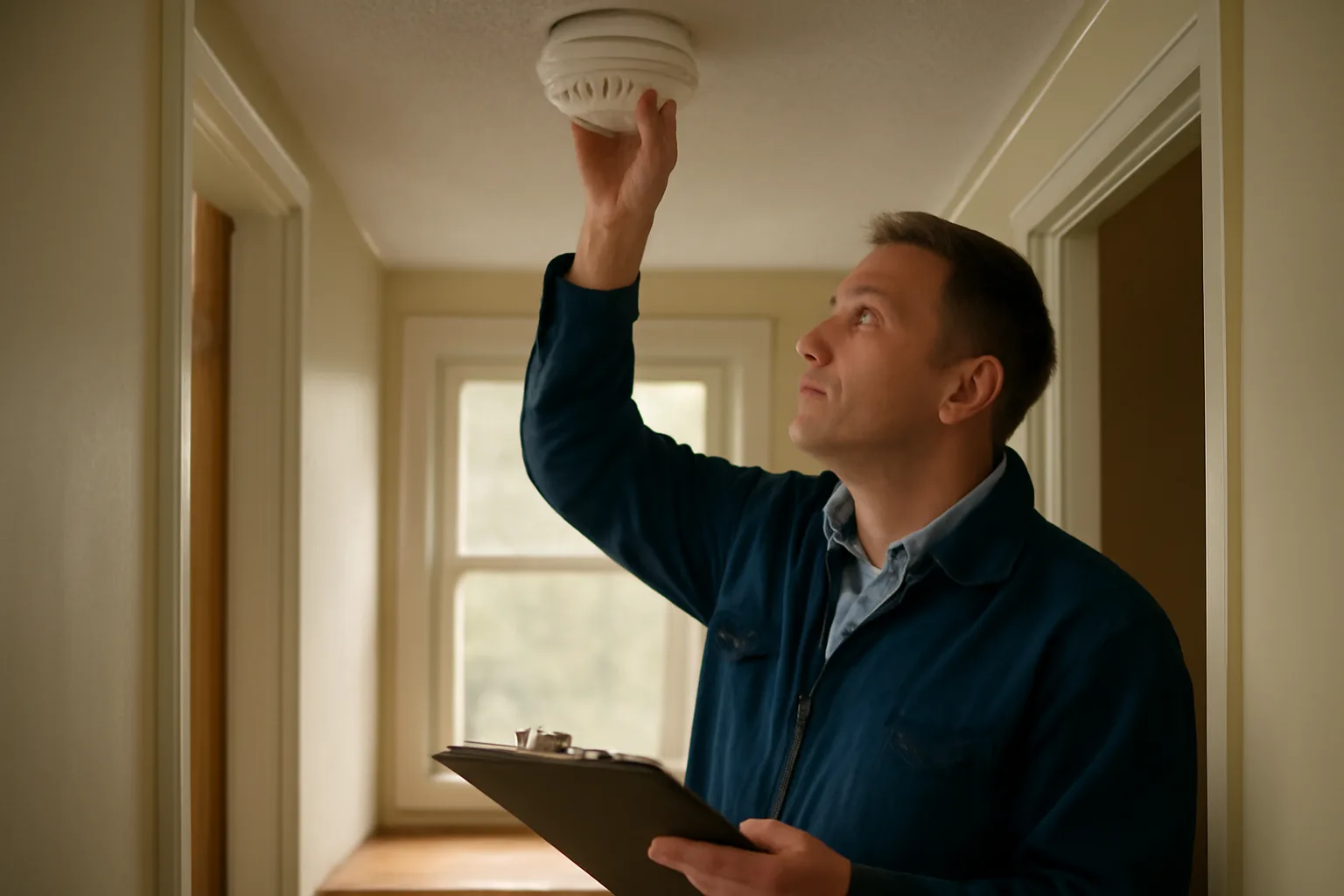
Rental inspections mostly check life-safety items: working smoke and CO alarms, secondary exits from bedrooms, no exposed wiring, a properly vented water heater, functioning plumbing, and no active pest or mold problems. Inspectors also look for peeling lead paint in pre-1978 units and basic structural issues like broken stair railings or blocked exits.
what do rental inspections actually look for?
Most city rental inspections focus on the same handful of things, no matter which municipality is running the program. Inspectors are checking whether the unit is safe to live in, not whether it's pretty. That means smoke alarms and carbon monoxide alarms in the right spots, a second way out of every bedroom, no exposed or DIY electrical wiring, working heat, hot water, and plumbing, and no obvious pest infestation or mold. Many cities use a checklist based on the International Property Maintenance Code (IPMC), which is adopted in some form by hundreds of jurisdictions. The IPMC requires that "every sleeping room shall have not less than one operable window or exterior door approved for emergency egress or rescue" [1]. That single line explains why so many inspectors walk straight to the bedroom windows first. Beyond life safety, inspectors also note things like missing handrails on stairs with four or more risers, broken or missing window screens (in cities that require them), water damage or active leaks, and unsanitary conditions in common areas. If you've gotten a notice for an upcoming inspection, the fastest way to know exactly what your city checks is to pull their actual checklist form, since programs range from a two-page form to a 40-item document depending on the city. For a general primer on what running rental property involves before you get to inspection day, see what is landlording.
what's on the typical rental inspection checklist?
| Smoke and CO alarms | Present in every bedroom, hallway outside bedrooms, and one per floor; tested for function | |
|---|---|---|
| Egress | Every bedroom has a window or door meeting minimum size for emergency exit | |
| Electrical | No exposed wiring, no overloaded outlets, GFCI outlets near water sources in newer code cycles | |
| Plumbing | No active leaks, working hot water, proper drainage, no cross-connections | |
| Heating | Permanent heat source that can maintain a minimum temperature (often 68 degrees F in occupied rooms) | |
| Structural | Stable stairs and railings, no rotted decking, secure foundation, no major cracks | |
| Pests and sanitation | No active infestation, garbage properly contained, no accumulated debris | |
| Windows and doors | Locks function, screens present where required, no broken glass | |
| Lead paint (pre-1978) | Peeling or chipping paint, especially on friction surfaces like windows and doors | The exact list, and which items are pass/fail versus advisory, varies by city. Some cities inspect the exterior too: peeling paint on siding, broken gutters, overgrown vegetation blocking exits, or unregistered vehicles in the yard. If your city's notice references a specific code section, that section is your real answer key, more reliable than any generic list. |
Here's the pattern that shows up across most mandatory rental inspection programs, based on IPMC structure and common municipal checklists: | Category | What gets checked |
who is responsible for a rental property walk-through inspection in California?
In California, there's no single statewide mandatory rental inspection law. Inspection and licensing requirements are set city by city, so responsibility depends on the local program. Some cities, like Los Angeles under its Systematic Code Enforcement Program (SCEP), require the property owner to register the unit and pay an inspection fee, and a city inspector (not the landlord) performs the walk-through [2]. For the specific walk-through that happens at move-in or move-out for security deposit purposes, California Civil Code Section 1950.5 gives tenants the right to request an initial inspection before move-out, and the landlord (or landlord's agent) conducts that walk-through, giving the tenant an itemized list of deficiencies with at least 48 hours notice of the inspection date if done at that stage [3]. So the answer splits two ways: for code-compliance inspections tied to a rental license, the city inspector does the walk-through. For the pre-move-out deposit inspection, the landlord or their agent does it, with the tenant invited to attend. Don't confuse the two. A city inspector isn't going to itemize carpet stains for your security deposit, and a landlord's pre-move-out walk-through won't satisfy a rental licensing requirement. If you're outside California, check whether your city runs a similar program before assuming state law covers it. See our guide on tenant rights for how these inspection rights interact with tenant protections generally.
what can a landlord look at during an inspection?
During a routine or code-compliance inspection, a landlord (or the city inspector accompanying them) can look at anything related to habitability and code compliance: smoke alarms, electrical panels, under sinks for leaks, water heater straps and venting, window locks, and general condition of walls, floors, and ceilings. Inspectors typically walk every room, including closets and utility areas, since egress and electrical issues often hide there. What a landlord generally should not do is treat an inspection as a search of personal belongings. Looking inside a tenant's closet to check for a working light fixture is normal. Going through drawers or personal property is not, and most state landlord-tenant statutes limit entry to the stated purpose (inspection, repair, showing) with reasonable advance notice. Many states set entry notice at 24 hours, though it varies: California requires "reasonable notice," which the state presumes is 24 hours in most circumstances [3], while other states specify 24 or 48 hours by statute. Check your own state's landlord-tenant law before scheduling any inspection, since acting outside the legal notice window can itself become a violation, separate from anything found during the inspection. For licensing inspections specifically, the inspector's authority comes from the municipal code that created the rental license program, not from the lease. That's worth knowing if a tenant refuses entry: your recourse is usually through the city's code enforcement process, not a self-help entry.
how much notice does a landlord have to give before an inspection?
Most states require at least 24 hours of advance notice before a landlord enters an occupied unit for a non-emergency inspection or repair, though a few states specify longer. California presumes 24 hours is reasonable notice under Civil Code Section 1954, and requires the notice to state the date, time, and purpose of entry [4]. Florida's landlord-tenant statute similarly authorizes entry "upon reasonable notice" and specifies that 12 hours' notice is presumed reasonable for the purpose of repairs [5]. Here's the catch: your city's rental licensing inspection may have its own notice rule layered on top of the state landlord-tenant statute. A city might mail a scheduled inspection date 30 days out, then expect the landlord to independently give the tenant proper notice under state law before the inspector shows up. Missing that second notice step is a common landlord mistake, since satisfying the city's letter doesn't automatically satisfy the tenant's statutory notice right. Emergencies are the general exception. If there's a burst pipe, a gas smell, or another safety issue, most statutes allow landlords to enter without advance notice. Write the notice down and keep a copy. A text message with date, time, and purpose is usually enough, but a paper trail matters if a tenant later disputes whether proper notice was given.
what is landlording, and what is a landlord?
A landlord is the owner of a residential property (or a property manager acting on the owner's behalf) who rents units to tenants under a lease agreement. "Landlording" describes the whole set of responsibilities that come with that role: collecting rent, maintaining the property, handling repairs, following state and local landlord-tenant law, and keeping the unit compliant with any local rental registration or licensing ordinance. It's not a passive role, even for a single-unit owner. Landlords are generally required to keep the unit "habitable," meaning it meets basic health and safety standards. This duty, often called the implied warranty of habitability, exists in some form in most states and typically covers things like working plumbing, heat, and structural safety, whether or not the lease mentions it specifically. Cities with mandatory rental licensing add another layer on top of state habitability law: registration with the city, payment of a licensing fee, and a periodic inspection tied to the code your city enforces. Skipping that step doesn't just risk a fine, it can also affect your ability to legally collect rent or evict in some jurisdictions, depending on local ordinance language. If you're new to this and trying to figure out what applies to your specific property, start with landlord landlords and cross-reference against your city's actual rental registration office, since requirements vary widely even within the same state.
how do you become a landlord, and how do you actually run the job well?
Becoming a landlord legally usually means a few concrete steps: buying or already owning residential property, deciding whether to manage it yourself or hire a property manager, understanding your state's landlord-tenant law, and, in mandatory-licensing cities, registering the rental with the city and passing any required inspection before you can legally rent it out. There's no license or exam required to become a landlord in most of the U.S., unlike being a real estate agent. But many cities require you to obtain a rental license or business license specifically for renting out residential units, separate from any general business license. Miss that step and you're renting illegally under the local ordinance, even if you own the property outright and have a signed lease. Running it well comes down to a short list of habits: screen tenants consistently (and legally, following Fair Housing Act rules on protected classes [6]), use a written lease every time, keep maintenance requests documented, budget for repairs before they become emergencies, and track your city's registration renewal date so you're not caught off guard by a violation notice. Many landlords with 1 to 10 units treat this as a part-time job on top of a full-time career. That's fine, but it means building a simple system: a shared calendar for renewal and inspection dates, a folder (digital or paper) for every unit's registration and inspection history, and a habit of walking the property yourself once or twice a year even outside a formal inspection cycle.
why do landlords require renters insurance?
Landlords require renters insurance mainly to shift liability away from the landlord's own policy and to make sure the tenant, not the landlord, is financially responsible for the tenant's own belongings and for damage the tenant causes. A landlord's property insurance covers the building itself; it typically does not cover a tenant's furniture, electronics, or personal property lost to fire, theft, or water damage. Requiring renters insurance also protects the landlord if a tenant's negligence causes damage to the unit or injures someone else, since many renters policies include liability coverage. If a tenant's candle starts a fire that damages a neighboring unit, the tenant's liability coverage (not the landlord's) is often the first line of financial protection. Most states allow landlords to require renters insurance as a lease condition, though a handful of local jurisdictions restrict how much a landlord can require or dictate specific minimum coverage amounts. Check your state and city rules, since requiring insurance without following local disclosure rules can itself create a dispute. The requirement usually needs to be spelled out in the written lease, along with any minimum coverage amount and a requirement to name the landlord as an "interested party" on the policy so the landlord is notified if it lapses.
what rights do tenants have without a lease?
A tenant without a written lease, sometimes called a tenant-at-will or a month-to-month tenant, still has legal rights under state landlord-tenant law. These rights don't disappear just because there's no signed paper. In most states, an oral agreement to pay rent in exchange for occupying a unit creates a tenancy, typically treated as month-to-month, and the tenant is entitled to the same basic habitability protections as someone with a written lease. Without a written lease, a tenant generally still has the right to: proper notice before eviction (usually 30 days for month-to-month tenancies, though this varies by state and by how long the tenant has lived there), the right to a habitable unit, protection from illegal lockouts or utility shutoffs, and in many states, the same entry-notice protections as a leased tenant. What a tenant without a lease usually does not have is a fixed term of guaranteed occupancy. A landlord can typically end a month-to-month tenancy with proper notice and without cause (subject to any local just-cause eviction ordinance, which some cities do have). That's the real practical difference: no lease usually means more flexibility for both sides to end the arrangement, not fewer protections while it's active. For more detail on what a landlord can and can't do once a tenancy exists, whether or not there's a written lease, see tenants rights and renters rights.
what can't a landlord do in Ohio?
Ohio landlord-tenant law, primarily Ohio Revised Code Chapter 5321, spells out specific things a landlord cannot do. A landlord cannot enter the rental unit without giving the tenant "reasonable notice" of the intent to enter and entering only at reasonable times, except in emergencies [7]. Ohio courts and the statute generally treat 24 hours as reasonable notice, though the statute itself doesn't fix an exact number of hours. Ohio law also prohibits landlords from shutting off utilities, changing locks, or removing a tenant's belongings to force them out, a practice sometimes called a "self-help eviction." Ohio Revised Code 5321.15 specifically bars a landlord from using "force, threat of force, or engaging in any conduct which prevents the tenant from having access to and possession of the tenant's residential premises" outside of a court-ordered eviction process [8]. A landlord in Ohio also cannot retaliate against a tenant for complaining to a government agency about a code violation, joining a tenant union, or asserting a legal right under the lease or state law; ORC 5321.02 specifically protects tenants from retaliatory eviction, rent increases, or service reductions in these situations [6]. Finally, under ORC 5321.04, an Ohio landlord must keep the premises in a fit and habitable condition and comply with the building, housing, and health codes that apply, meaning ignoring a known code violation isn't just a lease issue, it's a statutory duty [9]. Every state has its own version of these rules, so if you operate outside Ohio, look up your own state's landlord-tenant chapter rather than assuming these specifics transfer directly.
what fails most often on a rental inspection?
Across most municipal inspection programs, a small set of issues account for the bulk of failed inspections: missing or non-functional smoke alarms, blocked or undersized bedroom egress (often from window air conditioning units permanently blocking the only window), exposed electrical wiring or missing outlet covers, water heater issues (no temperature/pressure relief valve discharge pipe, no seismic strapping in some states), and active plumbing leaks under sinks. Peeling or chipping paint in pre-1978 housing is another frequent fail, since HUD's Lead Safe Housing Rule and the EPA's Renovation, Repair, and Painting rule create specific obligations for pre-1978 units regardless of city inspection programs . If your property was built before 1978 and has any deteriorated paint, get it addressed before the inspector shows up, not after. Here's a rough ranking based on common municipal checklist categories (not a scientific study, just the pattern that shows up repeatedly in city code enforcement reports and IPMC-based checklists): 1. Smoke/CO alarm issues (missing, dead battery, wrong location) 2. Egress window or door blocked, painted shut, or undersized 3. Electrical hazards (exposed wiring, missing GFCI where required) 4. Water heater venting or relief valve problems 5. Active leaks or moisture damage 6. Peeling paint (pre-1978 units) 7. Broken or missing handrails on stairs 8. Pest evidence Fixing items 1 through 3 before your inspection date costs very little (a nine-volt battery and a $20 electrical outlet cover) and eliminates the most common reasons for a failed inspection or reinspection fee.
how do you prepare for a rental license inspection?
Start with your city's actual checklist, not a generic one. Call or check the website for your local rental licensing office (department names vary: code enforcement, building and safety, housing inspections) and ask for the exact form the inspector will use. Many cities post this as a downloadable PDF. Then walk the unit yourself using that checklist, ideally with the tenant present or at least with proper notice given. Test every smoke and CO alarm. Open every bedroom window to confirm it isn't painted shut or blocked by furniture or an AC unit that can't be removed quickly. Check under every sink for slow leaks. Look at the water heater for a properly routed relief valve discharge pipe and, in states that require it, seismic strapping. Document what you find and fix, with photos and dates. If your city allows a pre-inspection or self-certification option, some do, use it. It's often cheaper to fix a problem yourself than to pay a reinspection fee, and reinspection fees in many cities run from roughly $50 to a few hundred dollars depending on the jurisdiction (confirm with your city rental licensing office, since fee schedules change and vary widely). If you manage multiple units across different cities, or you're doing this for the first time and want a structured way to organize registration paperwork, inspection checklists, and renewal dates by city, that's exactly the gap our $79 one-time City Rental License & Inspection Prep Packet is built to fill. It's not a substitute for your city's own checklist, but it gives you a repeatable system so you're not reinventing the process every time a notice arrives.
what happens if a rental unit fails inspection?
Most cities don't shut down a rental on a first failed inspection. Instead, the inspector issues a written notice of violation listing each item that failed, along with a deadline (commonly 30 to 60 days, though this varies significantly by city and by the severity of the issue) to fix it and schedule a reinspection. Minor items, like a missing smoke alarm battery, are usually easy fixes with no separate fee. Bigger items, like a structural issue or a serious electrical hazard, may require a licensed contractor and could push you past the initial deadline, in which case most cities allow you to request an extension if you show good-faith progress. Ignoring the notice is the expensive path. Continued non-compliance typically escalates to daily fines, referral to a housing court or administrative hearing, and in serious or repeated cases, an order that the unit can't be legally rented until it passes. Some cities also publish a list of properties with unresolved violations, which is a bad look for anyone trying to rent the unit in the meantime. If you get a failed inspection notice, the fastest path is usually: read the notice carefully for the specific code section cited, fix what you can immediately, and call the inspector's office directly to ask what's needed to close out anything you're unsure about. Inspectors deal with confused first-time landlords constantly; asking a direct question is normal, not a red flag.
Frequently asked questions
How to become a landlord?
You become a landlord by owning residential rental property and renting it to tenants under a lease, which requires no license in most places, though many cities require rental registration or a rental license before you can legally rent the unit. Learn your state's landlord-tenant law and your city's registration rules first.
Who is responsible for a rental property walk-through inspection in California?
For city rental licensing programs, a municipal code inspector conducts the walk-through. For the separate pre-move-out deposit inspection under California Civil Code Section 1950.5, the landlord or their agent conducts it, with the tenant invited to attend and given an itemized list of deficiencies.
What is landlording?
Landlording is the full set of responsibilities that come with owning and renting out residential property: collecting rent, maintaining habitability, handling repairs, following landlord-tenant law, and keeping the unit compliant with any local rental registration or inspection ordinance.
What is a landlord?
A landlord is the owner of residential rental property (or their designated property manager) who leases units to tenants in exchange for rent, taking on legal duties like maintaining habitability and following state and local landlord-tenant statutes.
What rights do tenants have without a lease?
Tenants without a written lease, typically treated as month-to-month tenants, still keep core legal protections: the right to habitable conditions, proper eviction notice (often 30 days), protection from illegal lockouts, and in most states the same entry-notice rights as a leased tenant.
How to be a landlord?
Being a landlord day-to-day means screening tenants consistently and legally, using a written lease, keeping repair records, budgeting for maintenance, and tracking your city's rental license renewal and inspection dates so you're never caught by surprise on a compliance deadline.
Why do landlords require renters insurance?
Landlords require renters insurance so tenants, not the landlord's property policy, cover the tenant's own belongings and any liability the tenant causes, like a kitchen fire or a burst hose. It shifts financial risk off the landlord's insurance and onto the tenant's policy.
How much notice does a landlord have to give before entering for an inspection?
Most states require at least 24 hours notice for non-emergency entry; California presumes 24 hours reasonable under Civil Code Section 1954, while Florida presumes 12 hours reasonable for repairs. City rental inspection programs may add their own separate notice steps on top of state law.
What can a landlord look at during an inspection?
A landlord or city inspector can check anything tied to habitability and code compliance: smoke alarms, electrical panels, plumbing under sinks, water heater venting, window locks, and general structural condition. They should not search personal belongings like drawers or closets beyond checking fixtures.
What can't a landlord do in Ohio?
Under Ohio Revised Code Chapter 5321, a landlord can't enter without reasonable notice, can't use force or lockouts to remove a tenant outside a court eviction, can't retaliate against tenants for code complaints, and must keep the unit in compliance with applicable housing codes.
Do all cities require rental inspections?
No. Rental licensing and inspection requirements are set locally, not nationally, and vary widely even within the same state. Some cities inspect every unit on a fixed cycle, others only inspect on complaint or tenant turnover. Confirm requirements with your specific city rental licensing office.
What's the difference between a rental license inspection and a move-in/move-out inspection?
A rental license inspection is done by a city code inspector to confirm the unit meets local housing code, tied to your license or registration. A move-in/move-out inspection is done by the landlord (or agent) with the tenant, mainly to document condition for security deposit purposes.
How long do I have to fix a failed rental inspection?
It varies by city, but many programs give roughly 30 to 60 days to correct violations before a reinspection, with possible extensions for major repairs shown to be in progress. Confirm the exact deadline stated on your specific violation notice, since it controls over general estimates.
Sources
- International Code Council, International Property Maintenance Code, Section 702.2 (Means of Egress): Every sleeping room must have at least one operable emergency egress window or door
- California Legislative Information, Civil Code Section 1950.5: Tenants can request an initial move-out inspection with at least 48 hours notice given by the landlord
- California Legislative Information, Civil Code Section 1954: California presumes 24 hours notice is reasonable for landlord entry, and requires stating date, time and purpose
- Online Sunshine, Florida Statutes Section 83.53: Florida presumes 12 hours notice is reasonable for landlord entry to make repairs
- U.S. Department of Housing and Urban Development, Fair Housing Act overview: Federal Fair Housing Act rules govern tenant screening on the basis of protected classes
- Ohio Legislature, Ohio Revised Code 5321.04: Ohio landlords must give reasonable notice and enter only at reasonable times, with emergency exceptions
- Ohio Legislature, Ohio Revised Code 5321.15: Ohio law bars landlords from using force or blocking access to force a tenant out outside of court eviction
- Ohio Legislature, Ohio Revised Code 5321.02: Ohio law protects tenants from retaliatory eviction or rent increases for reporting code violations
- U.S. Environmental Protection Agency, Renovation, Repair and Painting Program: Pre-1978 housing is subject to federal lead paint renovation and disclosure rules