Last updated 2026-07-26
TL;DR
Landlord legal requirements come from three layers: federal law (fair housing, lead paint disclosure), state law (habitability, deposit limits, notice periods), and city ordinances (rental registration, licensing, inspections). There's no single national rulebook. You have to check your state's landlord-tenant statute and your city's rental licensing office separately, because both apply at once.
What is a landlord, legally speaking?
A landlord is the party who owns or controls a rental property and grants another person (the tenant) the right to occupy it in exchange for rent, usually under a lease or rental agreement. Legally, that relationship creates obligations that exist whether or not anyone signed a formal contract. State landlord-tenant statutes define the term and attach duties to it automatically once you take rent money in exchange for housing. This matters because a lot of first-time landlords think the legal relationship starts with a written lease. It doesn't. If you let a cousin move into your basement apartment and she pays you $600 a month, you're a landlord under most state laws, lease or no lease. Verbal agreements to rent property are generally enforceable, and courts in most states treat month-to-month tenancy as valid even without paper. What is landlording, then, as a practice rather than a legal status? It's the ongoing job of maintaining the unit, collecting rent, handling repairs, managing turnover, and staying compliant with whatever registration or licensing rules your city has adopted. Being a landlord is a legal status. Landlording is the day-to-day work of doing it without getting sued or fined.
How do you become a landlord, step by step?
Becoming a landlord legally involves more than buying a property and putting up a listing. The basic sequence looks like this in most jurisdictions: 1. Confirm the property is zoned and permitted for rental use. Some single-family zones restrict rentals or cap the number of unrelated occupants. 2. Register the rental with your city or county if required. Many cities, including large ones like Los Angeles under its Rent Stabilization Ordinance program, require registration within a set window after you start renting. 3. Get a rental license or business license if your city requires one. This is separate from state business licensing and usually renews annually. 4. Schedule and pass a habitability or safety inspection if your city mandates one before occupancy or at renewal. 5. Set up compliant lease terms: security deposit limits, disclosure requirements (lead paint for pre-1978 housing under federal law), and required notices. 6. Screen tenants under the Fair Housing Act, which bars discrimination based on race, color, national origin, religion, sex, familial status, and disability [1]. 7. Collect rent and manage the tenancy according to your state's notice and entry rules. Skipping step 2 or 3 is the most common mistake we see. Landlords buy a rental, get a tenant in fast, and only find out about a registration requirement when a code enforcement letter shows up. Cities like Baltimore, Minneapolis, and Sacramento have all pursued unlicensed rental cases, and fines for operating without a required license commonly run into the hundreds of dollars per unit, sometimes per day of violation, though the exact number depends entirely on your local ordinance. Confirm with your city rental licensing office before you accept your first tenant.
What legal requirements apply to every landlord, regardless of city?
A few obligations apply almost everywhere in the U.S. because they come from federal law or near-universal state doctrine, not local ordinance. Fair housing. The federal Fair Housing Act, 42 U.S.C. §3601 et seq., prohibits discrimination in rental housing based on race, color, national origin, religion, sex, familial status, and disability [1]. Many states and cities add protected classes on top of this, like source of income, sexual orientation, or age. Lead paint disclosure. If your rental was built before 1978, federal law under 42 U.S.C. §4852d and the EPA's Lead-Based Paint Disclosure Rule requires you to disclose known lead hazards and give tenants an EPA pamphlet before they sign a lease [2]. Implied warranty of habitability. Most states recognize, either by statute or case law, that a landlord must keep the unit fit for human habitation: working plumbing, heat, electrical systems, and structural safety. This duty generally can't be waived in the lease. Security deposit handling. Most states cap the deposit amount (commonly one to two months' rent) and require it be returned within a set window, often 14 to 30 days after move-out, sometimes with an itemized list of deductions. The exact cap and timeline vary by state, so check your state statute rather than assuming a number. Notice for entry and termination. Nearly every state requires some advance notice before a landlord enters an occupied unit for non-emergency reasons, and before ending a tenancy or raising rent significantly. On top of all that sits city-level rental licensing, registration, and inspection, which is where this site focuses. If your city requires a rental license, that's a fourth layer stacked on top of federal and state law, not a replacement for it.
How much notice does a landlord have to give?
Notice periods depend entirely on what kind of notice it is and what state you're in, so there's no single national number. Here's the general shape: Entry notice: most states that specify a number require 24 to 48 hours' notice before a landlord enters an occupied unit for repairs or inspection, except in emergencies. California, for example, generally requires 24 hours' written notice for entry under Civil Code §1954 [3]. Rent increase notice: for month-to-month tenancies, many states require 30 days' notice for a rent increase, extending to 60 or 90 days for larger increases in some states (California requires 90 days' notice for increases over 10% under Civil Code §827) [4]. Lease termination or non-renewal: typically 30 to 60 days for month-to-month tenants, though state law varies and just-cause eviction cities (many in California, Oregon, and parts of New Jersey) require a specific legal reason plus notice. Eviction notice for non-payment: often 3 to 14 days depending on the state, before a landlord can file in court. Don't guess on this one. Pull your specific state's residential landlord-tenant act and check the current notice periods before you send anything, because getting this wrong can void an eviction filing or expose you to a habitability or retaliation claim.
Who is responsible for a rental property walk-through inspection in California?
In California, the landlord is responsible for offering an initial move-out inspection before the tenant vacates, under California Civil Code §1950.5(f) [5]. This is often called the "initial inspection" and it happens roughly two weeks before the tenant moves out, giving the tenant a chance to fix issues before the final deposit deduction happens. The statute states that the landlord "shall notify the tenant in writing of his or her option to request an initial inspection... and of his or her right to be present at the inspection" [5]. If the tenant requests it, the landlord conducts the walk-through, gives the tenant an itemized statement of deficiencies, and gives the tenant time to fix them before move-out. A second inspection happens after move-out to determine the actual security deposit deductions. This is separate from a city rental inspection program (like a habitability or systematic code inspection that some California cities run for licensed rental units), which is conducted by a city inspector, not the landlord, and follows local ordinance rather than Civil Code §1950.5. If your city has a proactive rental inspection program, check with your local building or housing department for who schedules that inspection. It's not automatically the landlord's job to do that walk-through themselves; a code enforcement officer usually does.
What can a landlord look at during an inspection?
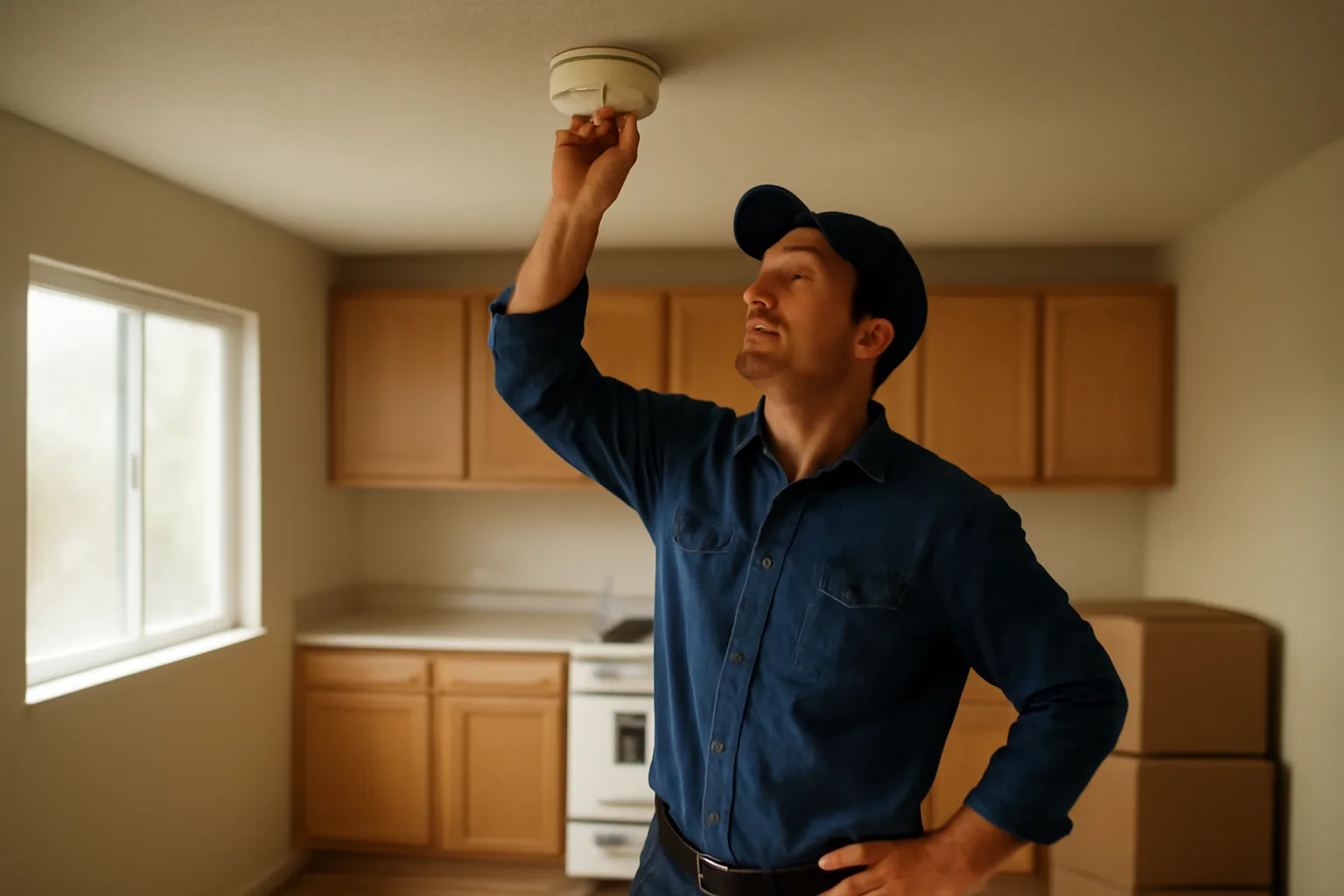
During a routine or move-in/move-out inspection, a landlord (or their inspector) can generally check anything related to the condition and safety of the unit: working smoke and carbon monoxide detectors, plumbing leaks, electrical outlets, HVAC function, window and door locks, signs of pest infestation, mold, and general wear versus damage. This applies to both landlord-conducted walk-throughs and government rental inspections tied to a license. What a landlord generally cannot do is search through a tenant's personal belongings, open closed drawers or containers unrelated to the property's condition, or use an inspection as pretext to harass a tenant or retaliate for a complaint. Some state statutes explicitly limit inspection purposes to verifying the condition of the unit, checking for needed repairs, or showing the unit to prospective tenants or buyers, not general surveillance. For a city-mandated rental license inspection, the inspector typically checks life-safety items tied to your local housing or building code: smoke detector placement and function, egress window sizes in bedrooms, handrail and stair condition, water heater strapping (common in California under the seismic safety code), electrical panel labeling, and exterior conditions like peeling paint or trip hazards. Each city's checklist differs. If you want a structured way to prep for whatever your city's inspector is going to look at, that's exactly the gap a rental packet builder tool is meant to fill, since city checklists rarely match each other and generic landlord advice skips the local detail.
What rights do tenants have without a lease?
Tenants without a written lease still have real legal rights in every state. A verbal agreement to pay rent for a place to live creates a tenancy, usually classified as month-to-month, and that tenancy carries the same basic protections as a written lease: the right to habitable housing, the right to advance notice before entry, and the right to proper notice before eviction. Without a written lease, a few things default to state law rather than negotiated terms. The tenancy is typically presumed month-to-month, meaning either party can end it with standard notice (commonly 30 days, though this varies by state and by how long the tenant has lived there). Rent amount and due date are whatever was actually agreed to and paid, which can get messy to prove without documentation. Security deposit rules still apply in states that require them, even with no lease document. What a landlord can't do just because there's no lease: skip fair housing compliance, retaliate against a tenant for complaining about conditions, enter without required notice, or evict without following the state's legal eviction process (a landlord almost never can just change the locks or remove belongings without a court order, a practice known as "self-help eviction" that's illegal in the large majority of states). No lease doesn't mean no rules. It just means the default state rules apply instead of negotiated ones.
Why do landlords require renters insurance?
Landlords require renters insurance mainly to shift liability and personal property risk away from the landlord's own policy. A landlord's insurance covers the building and the landlord's own liability, not the tenant's furniture, electronics, or personal injury claims that originate from the tenant's own negligence (like leaving a stove on). Requiring renters insurance, often with a minimum liability coverage amount (commonly $100,000 to $300,000 is asked for, though there's no legal standard number and it's purely a lease term the landlord sets), gives the landlord a source of recovery if the tenant causes damage, like an apartment fire or a bathtub overflow that damages the unit below. It also protects the tenant, since without it, the tenant's own belongings and any liability they cause are uninsured. There's no federal or state law requiring renters insurance across the board; it's a lease clause a landlord chooses to include, and it's enforceable as long as it's disclosed in the lease and applied consistently (singling out tenants in a protected class for the requirement while waiving it for others would raise a fair housing problem). Some subsidized housing programs and certain state public housing authorities do require it as a condition of the program, but that's specific to those programs, not general law.
What can a landlord not do in Ohio?
Ohio's landlord-tenant law is codified in Ohio Revised Code Chapter 5321, and it lays out specific things a landlord cannot do. A landlord cannot enter the rental unit without reasonable notice, generally interpreted as 24 hours, except in an emergency, under ORC §5321.04 [6]. A landlord cannot shut off utilities, change the locks, or remove the tenant's belongings to force them out; Ohio law requires landlords to use the formal eviction process (forcible entry and detainer action) through the courts rather than self-help remedies. Ohio law also states a landlord "shall not retaliate against a tenant" by increasing rent, decreasing services, or threatening eviction because the tenant complained to a government agency about a building or health code violation, or joined a tenants' union, under ORC §5321.02 [7]. A landlord in Ohio cannot fail to maintain the premises in a fit and habitable condition, keep common areas safe, or maintain electrical, plumbing, and heating systems in good working order, since those are affirmative landlord duties under ORC §5321.04. Ohio also caps what a landlord can do with security deposits: under ORC §5321.16, if a landlord wrongfully withholds a deposit, the tenant can recover damages equal to the amount wrongfully withheld plus reasonable attorney fees [8]. Ohio doesn't have a statewide rental licensing requirement, but individual cities (Cleveland Heights and Youngstown, for example, have run rental registration programs) can impose their own registration or inspection rules on top of state law, so a landlord operating in Ohio still needs to check both ORC 5321 and their specific city's ordinance.
How does city rental licensing fit into all of this?
Federal and state law set the floor. City rental licensing, registration, and inspection programs sit on top of that floor and vary enormously from one city to the next. Some cities, like Baltimore, require every rental unit to be licensed annually and pass a lead risk reduction certification if built before 1978 . Some, like Los Angeles under the Systematic Code Enforcement Program (SCEP), assess an annual per-unit inspection fee and inspect properties on a rotating cycle set by the Housing Department . Others have no licensing program at all beyond a general business license. Because this varies so much, a landlord's actual legal checklist depends heavily on address. A duplex in Minneapolis has different registration and inspection rules than a duplex in a rural county 40 miles away with no rental ordinance whatsoever. The safest approach: start with your state's landlord-tenant statute for the baseline duties (habitability, notice, deposits), then call or check your specific city's rental licensing or code enforcement office for local registration, licensing fee, and inspection cycle requirements. Confirm with your city rental licensing office directly, since fee amounts and inspection intervals change and this article can't reliably state a number that's true everywhere. This is the part most new landlords underestimate. A property can be perfectly legal under state landlord-tenant law and still be operating illegally under city code because it was never registered.
What does 'how to be a landlord' actually mean in practice, day to day?
Beyond the legal checklist, being a landlord day to day means: responding to maintenance requests within a reasonable time (some states set a specific number of days for essential repairs like heat or water, others just say "reasonable"), keeping records of rent payments and communications, budgeting for turnover costs between tenants, and staying current on renewal deadlines for any required rental license. It also means keeping paperwork that would hold up if a tenant disputes a deposit deduction or a city inspector asks for proof of a repair. Photos at move-in and move-out, dated maintenance requests, and a copy of whatever notice you sent for entry or rent increases are the kind of documentation that actually matters if something goes to a small claims hearing or a code enforcement appeal. A lot of the actual failure points for small landlords aren't dramatic, they're administrative: missing a license renewal date, failing to post a required disclosure, or not having proof that a required notice went out on time. That's a big part of why a structured document, checklist, and packet workflow is worth building once rather than reinventing every renewal cycle. If you're managing this across a few units in a city with a real licensing and inspection program, a City Rental License & Inspection Prep Packet built for your city's specific requirements (a $79 one-time cost) can save you from the paperwork gaps that turn into fines.
Frequently asked questions
How to become a landlord legally?
Confirm the property's zoning allows rental use, register with your city if required, get any local rental license, pass required inspections, comply with federal fair housing law and lead paint disclosure rules, and follow your state's habitability, deposit, and notice statutes. The exact registration and licensing steps depend entirely on your city, so check with your local rental licensing office before renting.
Who is responsible for a rental property walk-through inspection in California?
The landlord is responsible for offering an initial move-out walk-through inspection under California Civil Code §1950.5(f), which lets the tenant fix deficiencies before the final deposit deduction. Separately, city rental inspection programs (where they exist) are conducted by city code inspectors, not the landlord.
What is landlording?
Landlording is the ongoing practice of managing a rental property: collecting rent, handling repairs and maintenance, managing tenant turnover, staying compliant with lease terms, and meeting whatever registration, licensing, or inspection requirements apply in that state and city.
What is a landlord under the law?
A landlord is the owner or controller of rental property who grants another party the right to occupy it in exchange for rent. State landlord-tenant statutes attach specific duties (habitability, notice, deposit handling) to anyone in that role, whether or not there's a written lease.
What rights do tenants have without a lease?
Tenants without a written lease still get habitability protections, notice before entry, notice before eviction, and fair housing protections under state and federal law. The tenancy typically defaults to month-to-month, and a landlord still can't use self-help eviction (like changing locks) without going through court.
How to be a landlord without breaking the law?
Follow your state's landlord-tenant act for deposits, notice, and habitability; register or license the rental if your city requires it; comply with federal fair housing law; give required disclosures like lead paint notices for pre-1978 units; and keep documentation of repairs, notices, and inspections in case of a dispute.
Why do landlords require renters insurance?
Landlords require renters insurance to cover the tenant's personal property and liability for damage the tenant causes, since the landlord's own policy typically doesn't cover a tenant's belongings or tenant-caused injury claims. It's a lease term, not a legal mandate, in most jurisdictions.
How much notice does a landlord have to give before entering?
Most states require 24 to 48 hours' advance notice before a landlord enters an occupied unit for non-emergency reasons. California requires 24 hours' written notice under Civil Code §1954. Check your specific state statute, since some set a different number or don't specify one at all.
How much notice does a landlord have to give to end a tenancy?
For month-to-month tenancies, most states require 30 to 60 days' written notice, though some cities with just-cause eviction rules require a specific legal reason plus notice. Fixed-term leases typically end automatically at term expiration without additional notice, unless the lease or local law says otherwise.
What can a landlord look at during an inspection?
A landlord or inspector can check the unit's condition and safety: smoke detectors, plumbing, electrical systems, HVAC, locks, pest signs, and structural issues. They generally can't search personal belongings or use an inspection as pretext for harassment or retaliation against a tenant.
What can a landlord not do in Ohio?
Under Ohio Revised Code Chapter 5321, a landlord in Ohio can't enter without reasonable notice (generally 24 hours), can't use self-help eviction like shutting off utilities or changing locks, can't retaliate against a tenant for reporting code violations, and can't wrongfully withhold a security deposit without owing damages plus attorney fees.
Does every city require a rental license?
No. Rental licensing, registration, and inspection requirements are set city by city (sometimes county by county), and plenty of cities have no program at all. Cities that do require licensing, like Baltimore or parts of Los Angeles, set their own fees, renewal cycles, and inspection standards, so you have to check locally.
What happens if a landlord operates without a required rental license?
Penalties vary by city but commonly include fines per unit or per day of violation, inability to collect rent or pursue eviction until the property is licensed (some cities bar unlicensed landlords from filing eviction cases), and required back-payment of licensing fees. Confirm your city's specific penalty structure with its rental licensing office.
Sources
- U.S. Department of Justice, Fair Housing Act: Federal Fair Housing Act prohibits discrimination based on race, color, national origin, religion, sex, familial status, and disability
- EPA, Real Estate Disclosures About Potential Lead Hazards: Federal law requires lead paint disclosure for pre-1978 housing before lease signing
- California Civil Code Section 1954: California requires 24 hours' notice before landlord entry into an occupied unit
- California Civil Code Section 827: California requires 90 days' notice for rent increases over 10%
- California Civil Code Section 1950.5: California landlords must offer an initial move-out inspection and notify tenants in writing of that right
- Ohio Revised Code Section 5321.04: Ohio landlords must give reasonable notice before entry and maintain habitable conditions
- Ohio Revised Code Section 5321.02: Ohio law prohibits landlord retaliation against tenants who report code violations
- Ohio Revised Code Section 5321.16: Ohio tenants can recover wrongfully withheld deposit amounts plus attorney fees