Last updated 2026-07-26
TL;DR
Most rental licenses cost between $25 and $500 per unit per year, though some cities charge flat fees and others scale by unit count or building age. Chicago charges no separate rental license fee but requires registration; Los Angeles charges $87.86 per unit annually under its rental program. Always confirm the exact number with your city rental licensing office, since fees change yearly.
How much does a rental license actually cost?
| Los Angeles, CA | Per unit, annual | $87.86/unit/year [1] | |
|---|---|---|---|
| Philadelphia, PA | Per property, 2-year license | $75/2 years [2] | |
| St. Paul, MN | Per unit, tiered by inspection category | ~$50-$150 [3] | |
| Chicago, IL | Registration (no separate license fee) | Registration only, no per-unit license fee [4] | These four cities alone show the range. Don't assume your city matches any of them. |
There's no single national number, because rental licensing is a local program, not a federal or even usually a state one. Fees typically range from $25 to $500 per unit per year, depending on the city, whether inspections are bundled in, and how many units you own. Some cities charge a flat per-property fee. Others charge per unit, so a 4-unit building pays four times what a single-family rental pays. A few charge a base fee plus an add-on for each additional unit over a threshold. Los Angeles, for example, charges $87.86 per unit per year under its Systematic Code Enforcement Program (SCEP), which functions as the city's rental registration and inspection fee [1]. Philadelphia charges $75 for a rental license that covers a single dwelling unit or building for two years, plus an inspection requirement tied to the city's lead-safe certification rules for pre-1978 housing [2]. St. Paul, Minnesota charges registration and license fees that vary by number of units and inspection cycle, with base fees generally in the $50 to $150 range depending on category [3]. The honest answer for your specific city: confirm with your city rental licensing office. Fee schedules get revised almost every year, and a number that was accurate in 2023 can be stale by 2026. | City (example) | Fee structure | Typical range |
What makes a rental license expensive or cheap in a given city?
A few factors drive the price more than anything else: whether inspections are included, how often you have to renew, and whether the fee is flat or scales with unit count. Cities that fold a physical inspection into the license fee tend to charge more, because the fee is covering an inspector's time, more than a paperwork review. Philadelphia's rental license process, for instance, is tied to lead-safe certification requirements for older housing stock, which adds cost and complexity beyond a basic registration [2]. Renewal frequency matters too. A city that charges $100 every year costs you more over five years than a city that charges $300 every three years, even though the sticker price looks scarier. Do the math per year, not per renewal cycle, when you compare cities or budget your own portfolio. Unit count is the other big lever. If you own a duplex in a city that charges per unit, you're paying double what a single-family landlord pays, even though your total time and paperwork burden isn't twice as much. Some cities cap the per-property fee once you hit a certain unit count precisely because of this. Ask your city's rental registration office whether such a cap exists before you assume you know your total bill.
Are there late fees or penalties if I miss the rental license deadline?
Yes. In most cities these penalties are steeper than the license fee itself. Operating without a required rental license is often treated as a code violation, more than an administrative lapse, and fines can run from $100 to over $1,000 per violation depending on the city and how many notices you've ignored. Some cities also bar you from filing an eviction action while your rental license is expired or never obtained. That's the penalty that actually hurts. You can't legally proceed against a nonpaying tenant until you're compliant, and by the time you fix the paperwork, you've lost weeks or months of legal standing on top of the fine. If you got a violation notice, don't panic and don't ignore it either. Contact your city's rental licensing office first, ask what the reinstatement path looks like, and find out whether they'll waive or reduce penalties for a first-time lapse if you come into compliance promptly. Many cities will.
How to become a landlord: what do you actually need to set up first?
Becoming a landlord means more than buying a property and finding a tenant. At minimum you need to handle: property ownership or authorized management, compliance with your city's rental registration or licensing rules if they exist, a written lease that meets your state's landlord-tenant law, insurance appropriate to a rental (not a standard homeowner policy), and a system for handling security deposits, repairs, and rent collection. Start with your city's website and search for "rental registration" or "rental license." A growing number of U.S. cities require one or both before you can legally rent out a unit, and operating without it can block you from evicting a nonpaying tenant later, more than cost you a fine. Next, check your state's landlord-tenant statute for baseline rules on security deposits, notice periods, and habitability. These vary a lot state to state. Ohio's landlord-tenant law, for instance, is codified in Ohio Revised Code Chapter 5321, which spells out landlord obligations around repairs, security deposits, and tenant remedies [5]. Finally, budget for the recurring costs: license renewal fees, inspection fees, insurance, and any required repairs the inspection turns up. New landlords often budget only for the mortgage and taxes and get surprised by the compliance layer on top.
What is landlording, and what is a landlord, exactly?
Landlording is the ongoing work of owning and managing rental property: collecting rent, maintaining the unit, following your city and state's legal requirements, and dealing with tenants directly or through a property manager. It's a mix of legal compliance, basic maintenance coordination, and communication. A landlord, in plain terms, is the person or entity that owns a rental property and leases it to a tenant in exchange for rent. Legally, most states define "landlord" broadly enough to include anyone who has the right to possession of the property and rents it out, whether that's an individual, an LLC, or a property management company acting on an owner's behalf. The legal side matters because it's the landlord, not the property manager or leasing agent, who typically holds responsibility for rental license compliance in cities that require one. If you hire a manager, confirm in writing who is filing the registration and paying the license fee. Cities generally hold the property owner responsible even if a manager dropped the ball.
Who is responsible for a rental property walk-through inspection in California?
In California, the landlord is generally responsible for coordinating and scheduling any required rental inspection, whether it's a city-mandated systematic code enforcement inspection or a move-in/move-out walk-through with a tenant. Cities with proactive rental inspection programs, like Los Angeles's SCEP, send inspection notices to the registered property owner, and it's the owner's job to be present or arrange access [1]. Separately, California law requires landlords to offer tenants a joint pre-move-out inspection if the landlord intends to withhold any part of the security deposit. Under California Civil Code Section 1950.5, the landlord must give the tenant reasonable notice of the right to request this inspection, conducted no earlier than two weeks before the tenancy ends, and must provide an itemized statement of anticipated deductions after that walk-through [6]. So there are really two different "inspections" landlords in California deal with: the city compliance inspection (tied to rental licensing programs like SCEP) and the move-out deposit inspection (tied to state law under Civil Code 1950.5). Both are the landlord's responsibility to schedule and document, not the tenant's.
What can a landlord look at during an inspection?
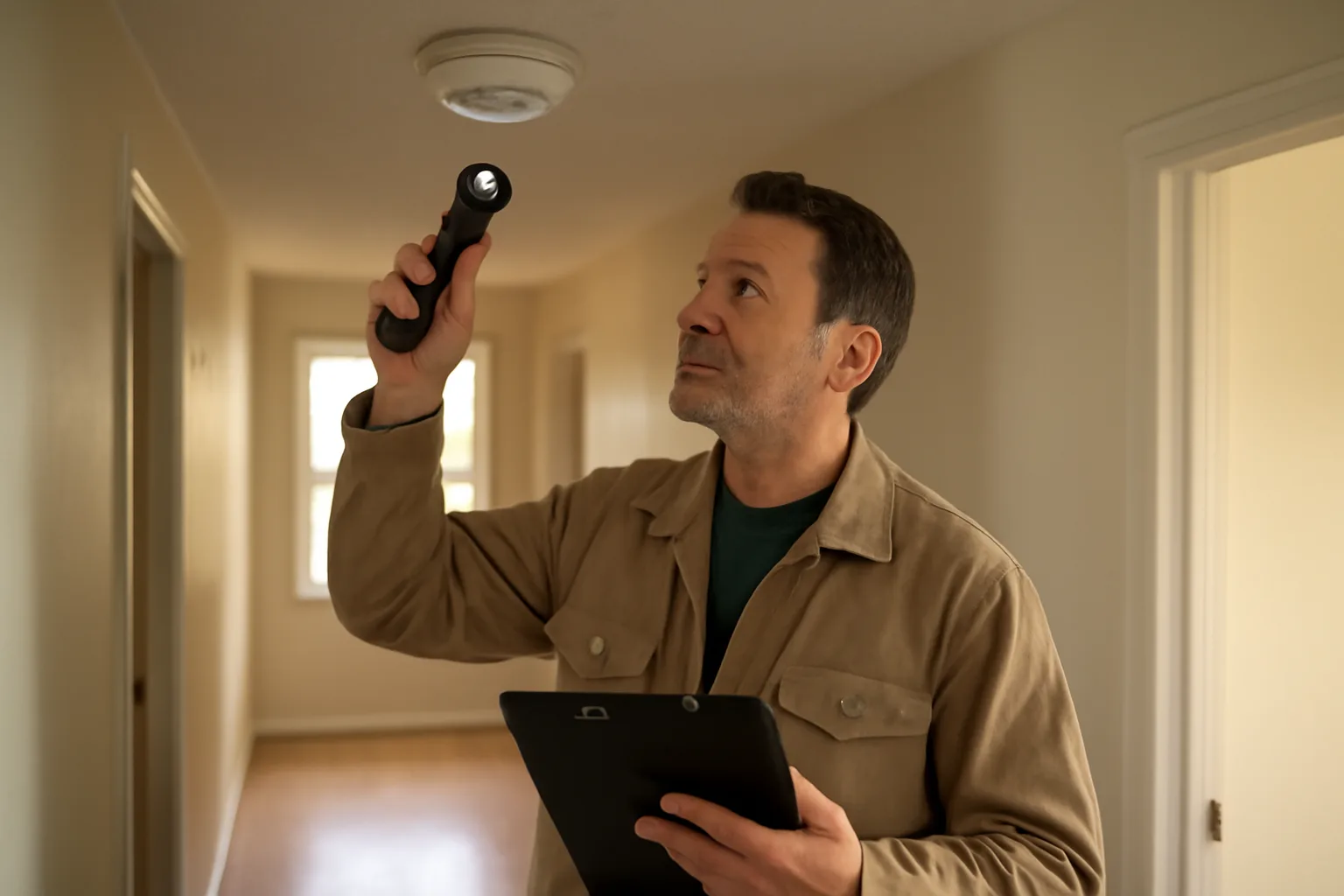
A rental inspection, whether it's a city code inspection or your own periodic walk-through, generally covers habitability and safety items: smoke and carbon monoxide detectors, electrical outlets and panels, plumbing leaks, heating systems, window and door locks, signs of pest infestation, mold, and structural issues like unsafe stairs or railings. What a landlord generally cannot do, even during a legitimate inspection, is search through a tenant's personal belongings, closets, or drawers beyond what's needed to check a fixture or system. An inspection is about the condition of the property, not an excuse to look through the tenant's things. Most states require landlords to give notice before entering an occupied unit for an inspection, even a routine one. This notice period is usually 24 to 48 hours depending on the state; check your specific state's statute since there's no single national rule. City-mandated rental license inspections often require notifying the tenant separately from any lease-based entry notice requirement, so read the inspection notice from the city carefully rather than assuming your standard lease entry clause covers it. If you're prepping for a city rental license inspection specifically, walking your own unit ahead of time using the same checklist the inspector will use catches most fixable problems before they turn into a failed inspection and a re-inspection fee. That's the exact gap a City Rental License & Inspection Prep Packet is built to close: a one-time $79 packet that walks you through what inspectors in mandatory-licensing cities typically check, so you're not guessing.
How much notice does a landlord have to give before entering or ending a tenancy?
For routine entry, most states require landlords to give some form of advance notice, commonly 24 to 48 hours, though the exact number and whether it must be in writing varies by state statute. Some states specify 24 hours as the standard reasonable notice period for entry to inspect, repair, or show the unit. For ending a tenancy, notice requirements depend on the type of tenancy and the reason. A month-to-month tenancy typically requires 30 days' notice to terminate without cause in many states, though some require 60 or even 90 days once a tenant has lived there past a certain length of time. For nonpayment of rent, notice periods are usually much shorter, often 3 to 14 days depending on the state, before a landlord can file for eviction. There's no single number that applies everywhere. Ohio Revised Code 5321.04 lays out specific landlord obligations, and separate provisions in that chapter govern notice for entry and termination that differ from, say, California's or Minnesota's rules [5]. Always check your own state's landlord-tenant statute directly rather than relying on a generic multi-state guide, because getting notice periods wrong can invalidate an eviction filing entirely.
What rights do tenants have without a written lease?
A tenant without a written lease still has legal rights. Most states treat an unwritten rental arrangement as a month-to-month tenancy, and the tenant still gets the protections of the state's landlord-tenant statute: the right to a habitable unit, the right to advance notice before the landlord enters, and the right to proper notice before eviction. What a tenant without a lease usually gives up is certainty about specific terms: exact rent amount changes, fixed lease length, and any special conditions that would normally be spelled out in writing. Rent amount and payment history (bank records, receipts, texts) become the practical evidence of the terms both parties agreed to. Landlords should not assume an oral or no-lease arrangement means fewer obligations. It usually means the opposite. Without written terms to point to, courts lean on the state's default statutory rules, which tend to favor tenant protections like standard notice periods and habitability requirements. If you're renting month-to-month without paper, put your rent terms and any rules in writing anyway, even a simple dated letter both parties sign, so you're not relying purely on memory later.
Why do landlords require renters insurance?
Landlords require renters insurance mainly to shift liability and personal property risk away from the landlord's own policy. A landlord's insurance covers the building structure, not the tenant's belongings, and it generally doesn't cover a tenant's liability if the tenant's negligence (an unattended candle, an overflowing bathtub) damages the unit or a neighboring one. Renters insurance is typically cheap, often in the range of $15 to $30 a month depending on coverage and location, which is part of why many landlords now require proof of a policy as a lease condition. It protects the tenant's own possessions from fire, theft, or water damage, and it gives the landlord a place to point when a tenant-caused incident creates damage or a liability claim. Requiring it is legal in the vast majority of states as a standard lease condition, as long as it's applied consistently and disclosed at lease signing. It's one of the lowest-cost risk management moves a landlord can make, and it's worth writing into your lease template from day one rather than adding it later.
What can't a landlord do in Ohio specifically?
Ohio Revised Code Chapter 5321 sets out specific landlord obligations and prohibitions. Under ORC 5321.04, a landlord must keep the premises in a fit and habitable condition, comply with building and housing codes, and maintain electrical, plumbing, heating, and other essential services [5]. Ohio law also restricts a landlord's ability to shut off utilities, change locks, or remove a tenant's belongings as a way of forcing them out, sometimes called "self-help eviction." These retaliatory or self-help tactics are illegal; a landlord who wants a tenant out must go through the court eviction process, not lock the tenant out or cut off power. Ohio also limits retaliatory conduct: a landlord generally cannot raise rent, decrease services, or start eviction proceedings specifically because a tenant complained to a health or safety agency or joined a tenant organization, under the retaliation protections built into ORC Chapter 5321 [5]. If you're a landlord in Ohio dealing with a difficult tenant situation, the safe path is always the formal eviction process through the courts, not any self-help shortcut, however tempting it feels after months of nonpayment.
How do you budget for rental license costs across a multi-unit portfolio?
Add up the license fee, the renewal cycle, and any inspection or re-inspection fees, then divide by the number of years the license covers to get a real annual cost per unit. A $75 license good for two years is really $37.50 a year, not $75 a year, and that distinction matters when you're comparing markets or deciding whether to expand your portfolio into a new city. Build in a buffer for re-inspection fees. Many cities charge $50 to $150 for a follow-up inspection if your unit fails the first one, and first-time landlords fail more often than they expect, usually on small fixable things: missing smoke detector covers, a loose handrail, or an expired fire extinguisher tag. If you own property in more than one city, keep a simple spreadsheet with each city's license fee, renewal date, and inspection cycle. Rental licensing rules and fees change often enough that what you paid last cycle isn't a safe assumption for this one. For landlords managing this across several cities or gearing up for a first inspection, a structured City Rental License & Inspection Prep Packet ($79, one-time) can save more in avoided re-inspection fees and fines than it costs, though it's not a substitute for confirming your specific city's current fee schedule directly with its rental licensing office.
Frequently asked questions
How much does a rental license typically cost per unit?
Most cities charge somewhere between $25 and $500 per unit per year, though many bundle multi-year renewals or flat per-property fees instead. Los Angeles charges $87.86 per unit annually under SCEP [1]. Always confirm your specific city's current fee with its rental licensing office, since schedules change yearly.
Do all cities require a rental license?
No. Rental licensing is a local, not federal or universal state, requirement. Many mid-size and large U.S. cities have adopted mandatory rental registration or licensing programs, but plenty of smaller municipalities and unincorporated areas have none at all. Check your specific city and county government websites directly.
What happens if I rent without a required license?
Consequences vary by city but commonly include fines ranging from roughly $100 to over $1,000 per violation, and in many cities you're barred from filing an eviction against a tenant until you obtain the license. Contact your city's rental licensing office promptly if you've received a notice.
How to become a landlord if I've never rented property before?
Start by confirming your city's rental registration or licensing requirements, then get a lease that complies with your state's landlord-tenant statute, secure appropriate landlord insurance, and set up a system for rent collection, maintenance requests, and security deposit handling. Budget for license fees and inspection costs from day one.
Who is responsible for a rental property walk-through inspection in California?
The landlord is responsible for scheduling both city-mandated compliance inspections (like under Los Angeles's SCEP program) and the state-required pre-move-out inspection under California Civil Code Section 1950.5, which lets a tenant request a joint walk-through before move-out if the landlord plans to withhold deposit funds [6].
What is landlording?
Landlording is the day-to-day work of owning and managing rental property: collecting rent, maintaining the unit, complying with city and state landlord-tenant rules, and communicating with tenants. It includes both hands-on maintenance coordination and the legal/administrative side, like license renewals and lease compliance.
What is a landlord, legally speaking?
A landlord is the person or entity with the legal right to possession of a rental property who leases it to a tenant for rent. This can be an individual owner, an LLC, or a property management company acting on an owner's behalf; most states define the term broadly enough to cover all three.
What rights do tenants have without a written lease?
A tenant without a written lease typically has a month-to-month tenancy and still keeps standard statutory protections: habitability, advance notice before entry, and required notice before eviction. What's missing is written proof of specific terms like rent amount or special conditions, so payment records become the key evidence.
Why do landlords require renters insurance?
Renters insurance covers a tenant's personal belongings and liability, which a landlord's own building policy doesn't cover. It's typically $15 to $30 a month, and requiring it as a lease condition shifts risk away from the landlord when a tenant's negligence causes damage or a liability claim.
How much notice does a landlord have to give before entering a unit?
Most states require 24 to 48 hours' advance notice before a landlord enters an occupied rental for non-emergency reasons like inspections or repairs. The exact number, and whether it must be written, depends on your state's specific landlord-tenant statute, so check that directly rather than assuming a national standard.
What can a landlord look at during an inspection?
A landlord or inspector can examine safety and habitability items: smoke and CO detectors, electrical systems, plumbing, heating, locks, pest issues, and structural safety. What they generally cannot do is search through a tenant's personal belongings or drawers beyond what's needed to check a fixture.
What can't a landlord do in Ohio?
Under Ohio Revised Code Chapter 5321, a landlord cannot shut off utilities, change locks, or remove belongings to force a tenant out (illegal self-help eviction), and cannot retaliate against a tenant for filing a health or safety complaint. Landlords must use the formal court eviction process instead [5].
Is a rental license the same as rental registration?
Not always. Some cities use "registration" for a simple listing requirement with no fee or inspection, and reserve "license" for a program that includes fees and periodic inspections. Chicago, for instance, requires registration but doesn't charge a separate rental license fee the way Los Angeles or Philadelphia do [1][2][4].
Sources
- City of Los Angeles Housing Department, Systematic Code Enforcement Program (SCEP) Fee Information: Los Angeles charges $87.86 per unit per year under its SCEP rental inspection program
- City of Philadelphia, Rental License requirements, Code Section 9-3902: Philadelphia's rental license costs $75 and covers a two-year period, with lead-safe certification tied in for older housing
- City of St. Paul, Department of Safety and Inspections, Fee Schedule: St. Paul charges tiered rental registration and license fees that vary by unit count and inspection category
- Municipal Code of Chicago, Chapter 13-72, Registration of Residential Rental Property: Chicago requires rental property registration without a separate per-unit license fee
- Ohio Revised Code Section 5321.04, Landlord obligations: Ohio landlords must maintain habitability, comply with housing codes, and cannot use self-help eviction tactics or retaliate against tenants
- California Civil Code Section 1950.5, Security deposits and pre-move-out inspection: California landlords must offer tenants a joint pre-move-out inspection if planning to withhold part of the security deposit