Last updated 2026-07-26
TL;DR
Becoming a landlord means registering or licensing your rental with the city, passing any required inspection, screening tenants legally, and following state notice rules for entry and rent increases. Requirements vary by city and state, so always confirm specifics with your local rental licensing office before you list a unit.
what is a landlord, exactly?
A landlord is the owner (or an owner's authorized agent) who rents real property to someone else in exchange for regular payment, under a lease or rental agreement. That's it. You don't need a special title or degree. If you own a property and someone else pays you to live in it, you're a landlord under the law, whether you own one unit or fifty. Most states define "landlord" in their landlord-tenant statutes, usually paired with the definition of "tenant" and "rental agreement." California's Civil Code, for example, treats the landlord as the party granting the right to possess a dwelling in exchange for rent [1]. The label carries real legal weight: it triggers habitability duties, security deposit rules, and (in a growing number of cities) licensing requirements before you're even allowed to collect rent. If you're renting out a spare room, an ADU, or a single-family house you inherited, you're still a landlord in the legal sense, even if it doesn't feel like a business yet.
what is landlording, and is it actually a full-time job?
Landlording is the ongoing work of owning and managing rental property: finding tenants, collecting rent, handling repairs, following local and state law, and dealing with turnover. For a single unit, it's a part-time responsibility that still demands attention every month. For ten units, it starts to look like a real job, even if you keep a day job on top of it. The unglamorous truth is that most of landlording is paperwork and phone calls, not glamorous property flips. You're tracking lease renewal dates, sending notices, saving receipts for repairs, and making sure your rental registration or license doesn't lapse. Skip that last part and you can end up with fines that dwarf whatever the license fee would have cost you. If you're managing property in a city with mandatory rental licensing or inspection, landlording also means staying ahead of your city's inspection cycle. Miss a scheduled inspection or let a registration expire, and many cities issue notices of violation with escalating daily fines until you comply. Confirm your city's specific fine schedule and inspection interval with your local rental licensing office, since they vary a lot by jurisdiction and change over time.
how to become a landlord: the actual steps
Becoming a landlord is less about qualifications and more about compliance. Here's the order that saves you the most headaches: 1. Check zoning and rental eligibility. Confirm your property is zoned for the kind of rental you're planning (single-family, duplex, ADU, short-term). Some cities restrict rentals in owner-occupied zones or cap the number of rental units per block. 2. Register or license the rental with your city. A rising number of U.S. cities require landlords to register the property or obtain a rental license before renting it out, often tied to a fee and sometimes an inspection. Confirm the exact requirement, fee amount, and renewal cycle with your city's rental licensing or code enforcement office, since these details differ by city and change often. 3. Get the property inspection-ready. Working smoke detectors, functioning locks, no exposed wiring, adequate egress from bedrooms. Many cities use a checklist based loosely on the International Property Maintenance Code [2]. 4. Set up landlord insurance. Standard homeowner's insurance usually doesn't cover a rented unit properly; you need a landlord or dwelling-fire policy. 5. Draft a lease that matches your state's rules. Security deposit limits, notice periods, and required disclosures (lead paint, mold, bed bugs, in some states) vary by state. 6. Screen tenants consistently and legally. Apply the same criteria to every applicant to stay compliant with the Fair Housing Act, which bars discrimination based on race, color, national origin, religion, sex, familial status, or disability [3]. 7. Collect the deposit and first month's rent, and issue receipts. 8. Keep records. Inspection reports, repair invoices, lease copies, notices sent. If a dispute ever goes to a housing court or a fine gets appealed, your paper trail is what saves you. If your city requires a rental license, treat step 2 as the gate you walk through before anything else, not an afterthought you handle after you've already got a tenant in place. Some cities won't let you enforce a lease or collect rent legally until the property is licensed.
who is responsible for a rental property walk-through inspection in California?
In California, the landlord is responsible for offering an initial inspection before a tenant moves out, if the landlord intends to withhold any part of the security deposit for repairs. California Civil Code Section 1950.5 requires the landlord to notify the tenant of the right to request this pre-move-out inspection, and if the tenant requests it, the landlord must conduct it within a reasonable time before the end of the tenancy [1]. The landlord (or the landlord's employee, since the code allows an agent to do it) walks the unit with the tenant present, if the tenant chooses to attend, and provides an itemized statement of anything that would justify a deposit deduction. The tenant then gets a chance to fix those issues themselves before move-out to avoid the charge. This is separate from routine habitability inspections a city might require for licensing purposes, which are usually done by a code enforcement officer or a licensed inspector under municipal rental inspection programs, not by the landlord personally. Don't confuse the two: the pre-move-out walk-through is a California statutory tenant right tied to deposit deductions, while a city rental inspection is a compliance check tied to your license or registration.
what can a landlord look at during an inspection?
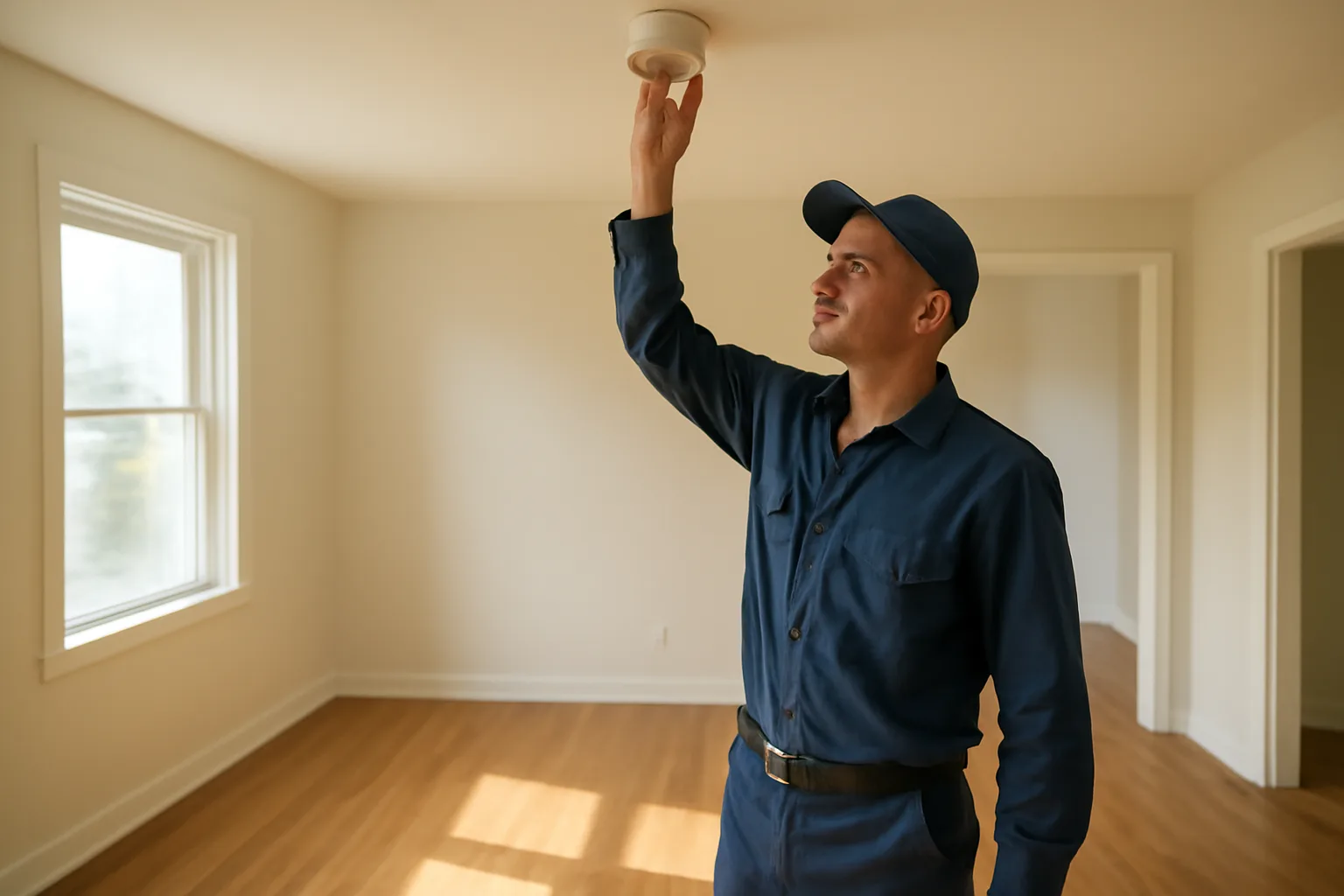
A landlord conducting a routine or move-out inspection can generally check for damage beyond normal wear and tear, safety hazards, unauthorized alterations, and lease violations (like an undisclosed pet or occupant). This includes checking smoke detectors, testing faucets and drains, checking walls and floors for damage, and confirming appliances work. What a landlord generally cannot do is search through personal belongings, go through drawers or closets unrelated to the inspection's purpose, or use the visit as a pretext to harass a tenant. Most states require the landlord to give advance notice before entering an occupied unit for a non-emergency inspection, commonly 24 to 48 hours depending on the state [4]. For city-mandated rental licensing inspections, the inspector is typically checking a defined list: working smoke and carbon monoxide detectors, functioning locks on exterior doors, adequate heat, no exposed electrical wiring, proper egress windows in bedrooms, and no obvious structural hazards. Many of these checklists trace back to the International Property Maintenance Code, which cities adopt and modify locally [2]. If you want to walk into that inspection without surprises, building your own pre-inspection checklist based on your city's actual code (not a generic list) is worth the hour it takes. This is exactly the kind of prep the $79 City Rental License & Inspection Prep Packet is built to shortcut: a checklist and document set matched to what inspectors in mandatory-licensing cities actually look for.
how much notice does a landlord have to give before entering or ending a tenancy?
| Entry for non-emergency repair/inspection | 24 to 48 hours | Arizona Rev. Stat. 33-1343 [5] | |
|---|---|---|---|
| End month-to-month tenancy (under 1 year) | 30 days | California Civil Code 1946.1 [1] | |
| End month-to-month tenancy (over 1 year) | 60 days | California Civil Code 1946.1 [1] | |
| Rent increase over 10% | 60 days | California Civil Code 827 [1] | Don't rely on this table for anything outside California and Arizona; every state sets its own numbers, and some cities layer additional rules on top through local rent control or just-cause eviction ordinances. |
Notice requirements split into two categories: notice to enter the unit, and notice to end or change a tenancy. Both vary significantly by state, so treat any number below as a starting point, not a nationwide rule. For entry, many states require 24 hours' written or verbal notice before a non-emergency entry, though some states (like Arizona, under A.R.S. 33-1343) specify at least two days [5]. Emergencies (fire, flooding, gas leak) don't require advance notice in any state. For ending a month-to-month tenancy, most states require 30 days' notice from either party, though some jurisdictions require 60 days if the tenant has lived there over a year (California is one example, under Civil Code Section 1946.1) [1]. For raising rent on a month-to-month tenant, many states also require 30 days' notice for increases under 10%, and 60 days for larger increases, again using California's statute as one example of this pattern [1]. Here's a rough comparison of common notice periods, though you must confirm your own state's exact figure since these change and vary widely: | Notice type | Typical range | Example source |
why do landlords require renters insurance?
Landlords require renters insurance mainly to shift liability and personal property risk away from themselves. A landlord's own insurance policy covers the building structure, not the tenant's furniture, electronics, or clothing, and it typically doesn't cover a tenant's liability if they accidentally cause a fire or a guest gets injured in the unit. Requiring renters insurance (often with a minimum liability coverage amount, commonly $100,000) means if a tenant's negligence causes damage, their policy pays first, not the landlord's. It also protects the tenant: without it, a tenant who loses everything in a fire has no way to replace their belongings, and that often turns into a dispute with the landlord over who's at fault. There's no federal law requiring renters insurance, but landlords are generally free to require it as a lease condition in most states, as long as the requirement is applied consistently to all tenants (to avoid fair housing issues). Some states and cities do restrict how landlords can require it or what fees they can charge for tenants who don't carry it, so check local rules before you write it into a lease.
what rights do tenants have without a lease?
A tenant without a written lease still has rights. If rent is being paid and accepted regularly, most states treat this as an implied month-to-month tenancy, governed by the same landlord-tenant statutes that apply to written leases. The lack of a signed document doesn't strip a tenant of habitability rights, protection from illegal lockouts, or the right to proper notice before eviction. Without a written lease, a tenant still generally has the right to: a habitable unit with working plumbing, heat, and no serious safety hazards; protection from retaliatory eviction for complaining about conditions; the standard notice period for ending the tenancy (usually the same 30-day rule that applies to any month-to-month tenant); and protection from a landlord changing the locks or removing belongings without a court order (a self-help eviction, which is illegal in every state). What a tenant without a lease usually doesn't have is a fixed term or protection from a rent increase with proper notice, since month-to-month terms can change more easily than a fixed-term lease. If you're a landlord renting without a written lease, understand that you haven't avoided landlord-tenant law, you've just made the terms harder to prove in a dispute. Written leases exist mostly to protect you, more than the tenant. For anyone trying to sort out what changes with or without a written agreement, it helps to read up on tenant rights and how they apply regardless of lease status.
what a landlord cannot do in Ohio
Ohio law (Ohio Revised Code Chapter 5321) sets specific limits on what a landlord can and can't do. A landlord in Ohio cannot shut off utilities, change the locks, or remove a tenant's belongings to force them out, a practice known as a self-help eviction; that requires a court order through the standard eviction (forcible entry and detainer) process [6]. A landlord in Ohio also cannot enter the rental unit without giving reasonable notice, generally interpreted as 24 hours except in an emergency, and cannot enter at unreasonable times. Ohio Revised Code 5321.04 requires the landlord to maintain the premises in a fit and habitable condition, meaning a landlord can't simply ignore serious repair requests like a broken furnace in winter or a plumbing failure [6]. Ohio law also prohibits retaliatory conduct: a landlord cannot raise rent, decrease services, or attempt to evict a tenant specifically because the tenant complained to a code enforcement agency or joined a tenant organization, under Ohio Revised Code 5321.02 [7]. And a landlord in Ohio cannot discriminate in violation of the federal Fair Housing Act or Ohio's own civil rights protections when screening or renting to applicants [3]. Ohio doesn't cap security deposits by statute the way some states do, but it does require the landlord to return the deposit (or an itemized list of deductions) within 30 days of the tenant vacating, under Ohio Revised Code 5321.16 [6].
how to be a landlord without getting blindsided by your city's rules
The single biggest mistake new landlords make isn't a bad tenant screening decision. It's assuming their city doesn't have a rental licensing program because nobody mentioned it when they bought the property. Hundreds of U.S. cities now require some form of rental registration, licensing, or periodic inspection, and the penalties for skipping it range from a modest late fee to daily accruing fines that can run into thousands of dollars if a violation notice gets ignored long enough. Here's the practical version of "how to be a landlord" that keeps you out of that mess: First, call your city's code enforcement or rental licensing office (not a real estate agent, not a property management forum) and ask directly: does this property need a rental license or registration, is there an inspection requirement, and what's the renewal cycle? Get this in writing if you can. Second, budget for the license fee and any inspection prep as a real cost of doing business, the same way you'd budget for property tax. These fees vary widely, commonly ranging from under $50 to a few hundred dollars per unit per year depending on the city, so confirm the actual number with your city rather than assuming a flat rate. Third, treat every notice from your city seriously and immediately, even ones that look like routine mail. A missed inspection date or an unrenewed license is the kind of thing that quietly turns into a stop-rent order or a fine in some cities. Fourth, build a simple compliance calendar: license renewal date, inspection window, lease renewal dates, insurance renewal. Landlords with two or three properties in different cities especially benefit from this, since every city runs its own cycle and none of them send friendly reminders.
Frequently asked questions
Do I need a license to rent out one house?
It depends entirely on your city. Many municipalities require rental registration or licensing even for a single unit, sometimes with an inspection. Some don't require anything at all. Call your city's code enforcement or rental licensing office directly and ask, since assuming you're exempt is the most common costly mistake new landlords make.
What happens if I rent without a required license?
Penalties vary by city but often include fines, an order to stop renting the unit, and sometimes inability to legally evict a nonpaying tenant or collect rent until the property is licensed. Some cities issue escalating daily fines for unlicensed rentals. Confirm your city's specific penalty schedule with its rental licensing office before you list a property.
Can a landlord require renters insurance as a lease condition?
Yes, in most states a landlord can require renters insurance as a lease term, as long as it's applied consistently to every tenant. There's no federal law requiring it, but some cities and states limit how landlords enforce the requirement or what they can charge tenants who decline. Check your local rules before adding it to a lease.
How much notice does a landlord need to give before entering a unit?
Most states require 24 to 48 hours' notice before a non-emergency entry. Arizona requires at least two days under A.R.S. 33-1343. Emergencies like fire or flooding don't require advance notice anywhere. Always check your specific state's landlord-tenant statute since the exact hours vary.
Does a tenant have rights if there's no written lease?
Yes. A tenant paying rent regularly without a written lease is generally treated as a month-to-month tenant under state law, with the same habitability rights, protection from illegal lockouts, and standard notice requirements as a tenant with a signed lease. Verbal agreements don't remove statutory protections.
What can a landlord look at during a walk-through inspection?
A landlord can check for damage beyond normal wear and tear, safety hazards, unauthorized pets or occupants, and lease compliance issues. They generally cannot search personal belongings unrelated to the inspection or use the visit to harass a tenant. City licensing inspections typically check smoke detectors, locks, heat, and electrical safety.
Who does the pre-move-out inspection in California?
The landlord (or their authorized agent) conducts it, after offering the tenant the right to request one under California Civil Code Section 1950.5. The tenant can attend and gets a written list of anything that would justify a deposit deduction, with a chance to fix it before moving out.
What can't a landlord do in Ohio?
Under Ohio Revised Code Chapter 5321, a landlord cannot shut off utilities or change locks to force a tenant out, cannot enter without reasonable notice, cannot ignore habitability repairs, and cannot retaliate against a tenant for filing a code complaint or joining a tenant group.
Is being a landlord a full-time job?
For one or two units, usually not, but it still demands monthly attention to rent collection, maintenance, and compliance deadlines. For five or more units, many owners find it becomes close to full-time work, especially once you factor in tenant turnover, repairs, and any city licensing or inspection cycle.
How do I start becoming a landlord?
Check zoning, register or license the property with your city if required, get it inspection-ready, secure landlord insurance, write a lease compliant with your state's laws, and screen tenants consistently under the Fair Housing Act. Confirm every city-specific requirement directly with your local rental licensing office.
Why do some cities require rental inspections?
Cities use mandatory rental inspection programs to enforce baseline habitability and safety standards, especially in areas with older housing stock or a high share of renter-occupied units. Programs are usually built on a locally adopted version of the International Property Maintenance Code, checking things like smoke detectors, egress windows, and electrical safety.
Can a landlord raise rent without notice?
No. Nearly every state requires advance written notice before a rent increase on a month-to-month tenancy, commonly 30 days for smaller increases and up to 60 days for larger ones (California requires 60 days for increases over 10%, under Civil Code Section 827). Fixed-term leases can't have rent raised mid-term at all unless the lease allows it.
Sources
- California Legislative Information, Civil Code Section 1950.5: California landlord's duty to offer a pre-move-out inspection and itemize deposit deductions
- International Code Council, International Property Maintenance Code: Basis for common rental habitability inspection checklists used by cities
- U.S. Dept. of Housing and Urban Development, Fair Housing Act overview: Federal protected classes landlords cannot discriminate against in tenant screening
- American Bar Association, Landlord Right of Entry state summaries: State variation in notice requirements before landlord entry
- Arizona State Legislature, A.R.S. 33-1343: Arizona's two-day notice requirement before landlord entry
- Ohio Legislature, Ohio Revised Code Chapter 5321: Ohio landlord obligations on habitability, entry notice, self-help eviction ban, and deposit return timeline
- Ohio Legislature, Ohio Revised Code Section 5321.02: Ohio's prohibition on retaliatory landlord conduct against tenants who file complaints