Last updated 2026-07-26
TL;DR
Becoming a landlord means more than buying a property and finding a tenant. Most cities require rental registration or licensing, some require inspections before you can rent legally, and every state gives tenants baseline rights even without a written lease. Start with your city's rental licensing office before you list a unit.
how to become a landlord: the actual steps
Becoming a landlord is part paperwork, part legal homework, and part ongoing management. There's no single license that makes you "a landlord" nationally. What you actually need depends on where the property sits, because landlord-tenant law is state law and rental licensing is usually a city or county program layered on top. The realistic sequence looks like this. First, confirm the property is zoned for rental use and check whether your city runs a mandatory rental registration, licensing, or inspection program (many mid-size and large cities do; plenty of small towns don't). Second, get your finances and insurance in order, including landlord (dwelling) insurance, more than a homeowner's policy. Third, register or license the unit if your city requires it, which usually means an application, a fee, and sometimes a scheduled inspection before you get a certificate of occupancy or rental permit. Fourth, learn your state's landlord-tenant statute, specifically the sections on notice periods, security deposits, habitability, and entry rights. Fifth, screen tenants consistently and in writing, using the same criteria for everyone, because the federal Fair Housing Act bars discrimination based on race, color, national origin, religion, sex, familial status, or disability in the sale or rental of housing [1]. A lot of new landlords skip step two or three because it feels like red tape. It isn't optional in a licensing city. Renting a unit without required registration can trigger fines that run from roughly $100 up into four figures per violation, depending on the city, and some cities bar you from collecting rent or filing an eviction until the unit is properly licensed. Confirm the specific fee schedule and penalty structure with your city rental licensing office before you sign a lease. If you're managing this solo for the first time, a rental license and inspection prep checklist built for your city's process saves real time, because the paperwork format varies a lot between a small city's one-page form and a big city's full inspection packet.
what is landlording, exactly?
Landlording is the ongoing business of owning residential (or commercial) property and renting it to tenants in exchange for rent, while handling the legal duties that come with that relationship. It covers everything from setting rent and screening applicants to maintaining habitability, handling repairs, managing deposits, and following eviction procedure if things go wrong. The term gets used loosely to describe both the legal role (landlord as the party in a lease) and the day-to-day work (collecting rent, fielding maintenance calls, doing move-in and move-out inspections). Some owners self-manage, which is landlording in the fullest sense. Others hire a property manager, who does the hands-on landlording work under the owner's authority but doesn't become the legal landlord unless the lease says so. Landlording isn't passive income in the way it gets marketed. Habitability duties are real and enforceable. Most states impose an implied warranty of habitability, meaning the landlord has to keep the unit fit to live in (working plumbing, heat, structural safety) regardless of what the lease says [2]. Ignore that duty and tenants can withhold rent, repair-and-deduct, or sue, depending on state law.
what is a landlord?
A landlord is the owner (or an authorized agent of the owner) of real property who rents that property to another party, the tenant, under a lease or rental agreement, in exchange for rent. Legally, the landlord holds the title or leasehold interest and grants the tenant a right to possess and use the property for an agreed period. Being a landlord comes with statutory duties that exist independent of anything written in the lease. Depending on the state, those duties typically include keeping the property habitable, giving proper notice before entry, returning security deposits within a set timeframe, and following formal eviction procedure rather than self-help remedies like changing locks or shutting off utilities. Many states explicitly ban lockouts and utility shutoffs as a way to force a tenant out; doing it anyway can expose the landlord to statutory damages. A landlord can be an individual, a couple, an LLC, a trust, or a corporation. Small landlords (1 to 10 units) are the group most likely to get tripped up by city rental licensing rules, because the compliance burden per unit is the same whether you own 1 door or 100, but the cost and hassle land harder on a smaller portfolio.
who is responsible for rental property walk-through inspections in california?
In California, the landlord is responsible for offering an initial move-in and, more specifically, a pre-move-out walk-through inspection to the tenant, but the tenant has the right to accept or decline it. California Civil Code Section 1950.5 requires that if a landlord intends to make deductions from a security deposit, they must, at the tenant's request, do an inspection prior to move-out and give the tenant an itemized statement of anticipated repairs or cleaning so the tenant has a chance to fix issues themselves [3]. The statute puts the initiating duty on the landlord: the landlord must notify the tenant in writing of their right to request the inspection, at a reasonable time, no earlier than two weeks before the end of the tenancy. If the tenant requests it, the landlord (or their agent) does the walk-through with the tenant present if the tenant wants to attend, and provides an itemized list of the items to be cleaned or repaired to avoid deposit deductions. This is separate from the general habitability inspections that some California cities run under local rental inspection or Rental Housing Inspection Program ordinances (Los Angeles's Systematic Code Enforcement Program is one well-known example). Those city-level inspections are usually conducted by code enforcement or building and safety staff, not by the landlord personally, though the landlord has to grant access and often pays an inspection fee as part of registering the rental. Confirm your city's specific program name and inspection cadence with your local rental licensing or code enforcement office, since it varies a lot between California cities.
how do you become a landlord if you've never rented a unit before?
Start smaller than you think you need to. Buy or convert one unit, get it right, and then scale. New landlords who take on multiple units at once often get the compliance side wrong first, not the tenant relationship. Before you list anything, pull your city's rental registration or licensing requirements. Search "[your city] + rental registration" or "[your city] + rental license" and go to the .gov page directly; third-party sites often have outdated fee numbers. Many cities require registration even for a single-family rental you inherited or moved out of, more than multi-unit buildings. Next, get landlord insurance quotes before closing, not after. A standard homeowner's policy usually excludes rental use, and insurers can deny a claim if they find out the property was rented without notifying them. Then learn your state's specific numbers cold: security deposit limits and return deadlines, notice periods for entry and for rent increases, and the eviction notice period for nonpayment versus lease violation. These numbers differ by state and sometimes by city, so don't assume the rule from a landlord forum applies where your property sits. If your city requires a pre-rental inspection, get it done before you have a signed lease and a move-in date on the calendar. Scheduling an inspection with a tenant already waiting to move in is how landlords end up paying for extra weeks of a hotel stay or a broken lease promise.
what rights do tenants have without a signed lease?
A tenant without a written lease still has legal rights. Occupying a unit and paying rent (or having an agreement to do so) creates a tenancy, usually a month-to-month periodic tenancy, governed by state landlord-tenant law even with nothing in writing. At a minimum, tenants without a lease typically retain the right to: habitable housing meeting local health and safety codes; advance written notice before the landlord can enter (commonly 24 to 48 hours in states that specify a number, though some states just say "reasonable notice"); protection from illegal lockouts, utility shutoffs, or other self-help eviction; proper written notice before the landlord can terminate the tenancy or raise the rent, typically 30 days for month-to-month tenancies under 1 year and sometimes 60 days for longer tenancies in some states; and the same fair housing protections as any tenant, since the Fair Housing Act doesn't require a written lease to apply [1]. What a tenant without a lease usually does not have is a fixed term. Either party can generally end a month-to-month tenancy with proper notice, whereas a signed fixed-term lease locks in the term for both sides (barring a breach). Also, without a written lease, provisions like pet policies, subletting rules, or specific maintenance responsibilities default to state law and local ordinance rather than anything negotiated, which can cut either way depending on what the state's default rule says.
how much notice does a landlord have to give?
It depends on what the notice is for, and it depends heavily on the state. There is no single national number. For entry to the unit (repairs, showings, inspections), many states specify 24 hours' notice, though a handful require 48 hours and some just require "reasonable" notice without a fixed number. California, for example, presumes 24 hours' written notice is reasonable for most non-emergency entries under Civil Code Section 1954 [4]. For ending a month-to-month tenancy or raising rent, 30 days' notice is common for tenancies under a year, with some states requiring 60 or even 90 days for longer-term tenants or larger rent increases. California requires 60 days' notice to terminate a periodic tenancy where the tenant has lived in the unit a year or more, and 30 days if less than a year, under Civil Code Section 1946.1 [5]. For eviction after a lease violation or nonpayment, notice periods run anywhere from 3 to 30 days depending on the state and the reason (nonpayment notices tend to be shorter than lease-violation notices). Emergency entry (fire, flood, a genuine safety hazard) generally doesn't require advance notice at all under most state statutes. Because this varies so much, don't rely on a generic number. Pull your specific state's residential landlord-tenant statute or check with your state's attorney general consumer protection office, and confirm any added local notice rules with your city rental licensing office.
what can a landlord look at during an inspection?
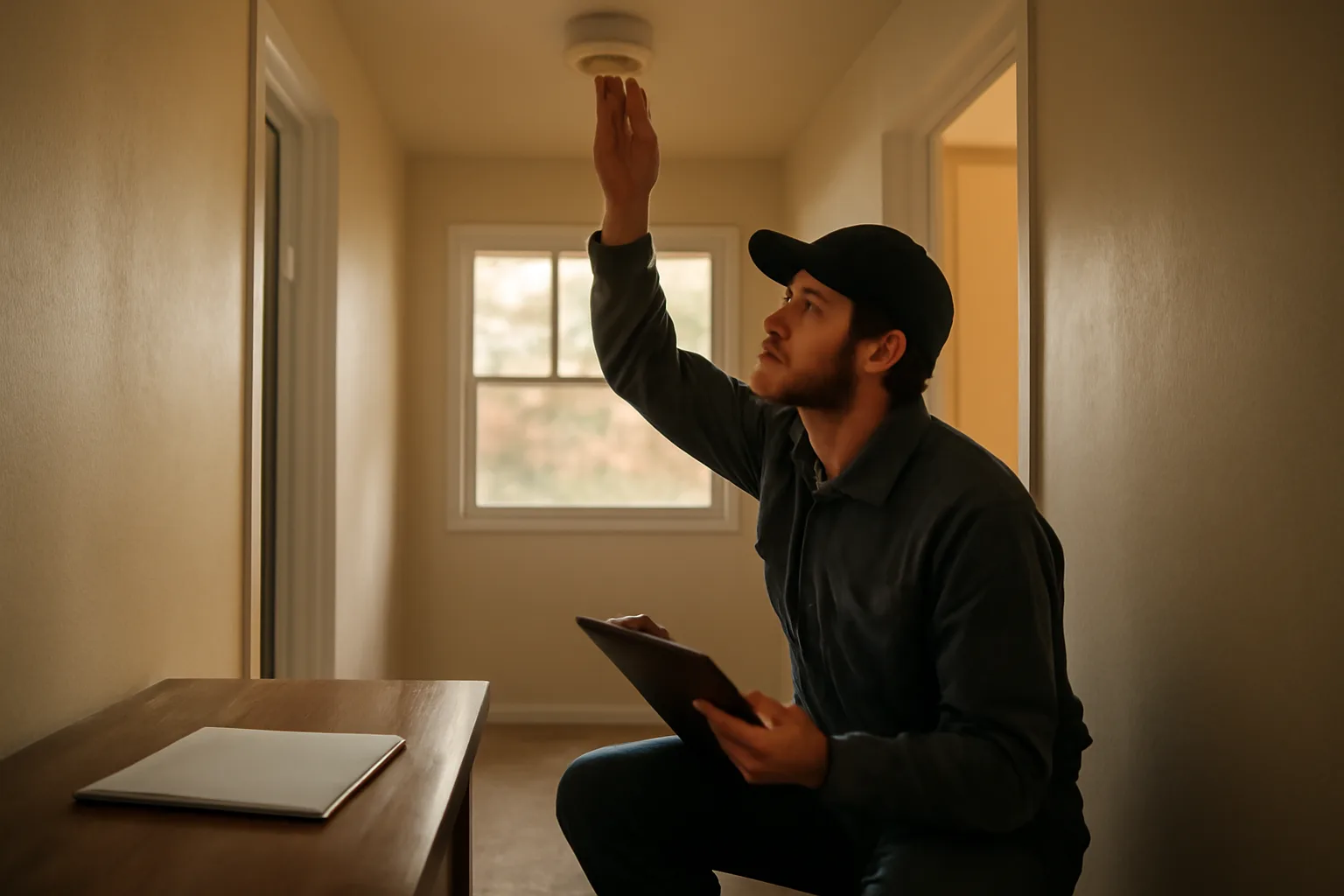
A landlord doing a routine or move-out inspection can generally check the condition of the unit itself: walls, floors, ceilings, fixtures, appliances, plumbing, electrical, doors, windows, smoke and carbon monoxide detectors, and any landlord-owned furnishings or equipment. The purpose is verifying condition and habitability, not searching the tenant's belongings. What a landlord typically cannot do is open drawers, closets, or containers to inspect the tenant's personal property, search for evidence of a lease violation unrelated to the stated purpose of the visit, or use an inspection as cover to harass a tenant or retaliate for a complaint. Many states require the landlord to state the purpose of entry in the notice, and the inspection should stay within that stated purpose. For a city-mandated rental inspection (the kind tied to a licensing or registration program rather than a lease), the inspector generally checks code compliance items: working smoke and CO detectors, safe electrical panels, no exposed wiring, functioning heat, no active leaks or mold, secure railings and stairs, proper egress from bedrooms, and pest-free conditions. These inspectors work for the city, not the landlord, and they typically have authority to write up code violations with a repair deadline attached. Before any inspection, city-mandated or routine, a landlord should walk the unit themselves first. A pre-inspection checklist that mirrors what your city's inspector actually checks (rather than a generic list) catches the small stuff, loose handrails, dead smoke detector batteries, a missing address number, before it becomes a documented violation with a re-inspection fee attached.
why do landlords require renters insurance?
Landlords require renters insurance mainly to shift liability and property-loss risk away from the landlord's own policy and onto the tenant's. A landlord's dwelling policy covers the building structure and the landlord's own property; it generally does not cover a tenant's belongings or a tenant's liability if, say, they cause a kitchen fire or a guest gets hurt in their unit. Requiring renters insurance, commonly with a minimum liability limit (often $100,000, sometimes $300,000, though this varies by lease and by city), gives the landlord a source of recovery if the tenant's negligence causes damage or an injury claim, instead of the landlord's insurer (or the landlord directly) eating the cost. It also protects the tenant: without it, a tenant whose belongings are destroyed in a fire or burst pipe has no coverage at all unless the landlord's negligence is proven, which is a much harder and slower path than filing a renters insurance claim. Renters insurance is also cheap relative to what it covers. Nationally, average renters insurance premiums have generally run in the range of roughly $15 to $30 a month depending on coverage amount, location, and insurer, though rates have risen with broader property insurance trends in recent years; check a current quote rather than relying on an old number, since this shifts year to year and by state. A landlord can generally require renters insurance as a lease condition in most states, as long as it's applied consistently to all tenants and doesn't violate any local rent control or tenant protection ordinance that restricts added lease conditions. A few cities and some subsidized housing programs restrict or regulate this requirement, so check local rules before making it a strict lease term.
what a landlord cannot do in ohio
Ohio's landlord-tenant law is set out in Ohio Revised Code Chapter 5321, and it draws clear lines around what a landlord cannot do, even if the lease says otherwise. A landlord in Ohio cannot shut off utilities, change the locks, or remove a tenant's belongings to force them out instead of filing a formal eviction (forcible entry and detainer) action; Ohio courts treat these as illegal "self-help" evictions. A landlord cannot retaliate against a tenant for complaining to a government agency about a code violation, joining a tenant union, or asserting a legal right, and Ohio Revised Code Section 5321.02 specifically prohibits retaliatory conduct like raising rent, decreasing services, or threatening eviction in response to a tenant's good-faith complaint [6]. A landlord cannot enter the rental unit without reasonable notice except in an emergency; Ohio Revised Code Section 5321.04 requires the landlord to give "reasonable notice" and enter "at reasonable times," which Ohio courts and most practical guidance treat as at least 24 hours in non-emergency situations [7]. A landlord cannot ignore the duty to keep the unit in a fit and habitable condition, since Section 5321.04 also requires landlords to comply with building and housing codes materially affecting health and safety, make repairs, and keep common areas safe [7]. A landlord cannot withhold a security deposit without an itemized, written list of deductions if the deposit exceeds a certain threshold, and Ohio Revised Code Section 5321.16 requires the deposit (minus lawful deductions) to be returned within 30 days of termination of the rental agreement and delivery of possession . Miss that window without a valid itemized deduction and the tenant can sue for double the amount wrongfully withheld, plus attorney's fees, under the same section.
do rental license or registration rules apply if the unit isn't in a big city?
Sometimes, yes. Rental licensing isn't just a big-city thing anymore. Plenty of mid-size and small municipalities run mandatory rental registration or licensing programs, often triggered by complaints about substandard housing or a push for better code enforcement. The program details vary enormously: some cities charge a flat annual registration fee with no inspection at all, some require an inspection only on tenant turnover, and some inspect on a fixed multi-year cycle regardless of turnover. Fees commonly range from under $50 a year for a single-family rental in a small town up to a few hundred dollars per unit in cities with more active inspection programs, though you should treat any number you read online as a starting estimate and confirm the actual current fee with your city rental licensing office directly, since these change often and vary a lot by unit count and property type. If you own a rental and you're not sure whether your city has a program, don't assume it doesn't. Search your city's official website for "rental registration," "rental license," or "certificate of occupancy for rental," or call the city clerk or code enforcement department directly. Operating unregistered in a city that requires it is one of the most common and most avoidable violations small landlords get hit with, often discovered only when a tenant complaint brings an inspector to the door.
how do you actually get through a rental inspection without violations?
Treat the inspection like a test you can study for, because in most cities, you can. Code enforcement departments generally publish, or will tell you over the phone, the exact checklist their inspectors use. Get that list before the inspection date, not after. Common fail points across most city rental inspection programs: missing or expired smoke detectors and carbon monoxide detectors, exposed or amateur electrical wiring, peeling paint in pre-1978 housing (which can also trigger federal lead disclosure obligations under 40 CFR Part 745 ), broken or missing handrails on stairs with more than a few steps, inadequate egress from bedrooms (windows too small or too high for emergency exit), pest evidence, and water damage or active leaks. Walk the unit yourself using the city's own checklist a week or two before the scheduled inspection. Fix what you can fix cheaply (batteries, caulk, a loose railing bracket) and get quotes fast on anything bigger, because most cities give you a re-inspection window with a fee attached (often somewhere in the range of $50 to $150, though this varies a lot by city) rather than an automatic fine on the first miss. This is exactly the kind of process where a packaged checklist and document set saves a first-time landlord real money and stress. RentalPermitPath's $79 one-time City Rental License & Inspection Prep Packet walks through the common inspection categories and paperwork most cities ask for, so you're not guessing at what "code compliant smoke detector placement" actually means at 9pm the night before an inspector shows up.
where to go from here
Rental licensing and landlord-tenant law both live at the state and local level, which means the honest answer to almost every specific question here is "it depends on your city and state, confirm with the office that runs the program." That's not a dodge, it's how the law is actually structured in the U.S. If you're just getting started, read your state's landlord-tenant statute once, front to back, even the boring parts. It's usually one chapter, not a hundred pages, and it answers most of the notice-period and deposit questions that trip up new landlords. Then call your city's rental licensing or code enforcement office and ask directly whether your specific property type and unit count triggers registration or inspection. For a broader sense of tenant-side obligations and what renters can expect from you, tenant rights and renters rights guides are worth a look, since understanding the tenant's side of a rule usually clarifies why the landlord-side rule exists in the first place. If you want the compliance side handled once and filed away, RentalPermitPath's $79 City Rental License & Inspection Prep Packet is built for exactly this: a one-time reference packet for your city's registration and inspection requirements, not a subscription, not legal advice. This article, and RentalPermitPath generally, isn't a substitute for advice from a licensed attorney in your state on a specific dispute.
Frequently asked questions
How do you become a landlord for the first time?
Confirm zoning allows rental use, check if your city requires rental registration or licensing, get landlord insurance, learn your state's landlord-tenant statute (notice periods, deposit rules, habitability duties), and register or license the unit before signing a lease. Screen every applicant with the same written criteria to stay compliant with the Fair Housing Act.
Who is responsible for the pre-move-out walk-through inspection in California?
The landlord must offer it. California Civil Code Section 1950.5 requires landlords to notify tenants of their right to request a pre-move-out inspection, then conduct it if requested and give an itemized list of anticipated deposit deductions so the tenant can fix issues first.
What is landlording?
Landlording is the ongoing work of owning rental property and managing the tenant relationship: setting rent, screening applicants, maintaining habitability, handling deposits, and following legal eviction procedure. It's a legal role with statutory duties, more than passive property ownership.
What is a landlord, legally speaking?
A landlord is the property owner or an authorized agent who rents real property to a tenant in exchange for rent under a lease or rental agreement. Landlords hold statutory duties, habitability, notice before entry, timely deposit return, that apply regardless of lease language.
What rights does a tenant have without a signed lease?
A tenant without a written lease still has a legal tenancy (usually month-to-month) with rights to habitable housing, advance notice before entry, protection from illegal lockouts or utility shutoffs, notice before termination or rent increase, and full Fair Housing Act protections.
How much notice does a landlord have to give before entering?
It varies by state; many require 24 hours' notice for non-emergency entry, some require 48, and a few just say "reasonable notice." California presumes 24 hours reasonable under Civil Code Section 1954. Check your specific state statute, since there's no single national rule.
How much notice does a landlord have to give to end a month-to-month tenancy?
Commonly 30 days for tenancies under a year, with some states requiring 60 or 90 days for longer tenancies or bigger rent increases. California requires 60 days if the tenant has lived there a year or more, 30 days if less, under Civil Code Section 1946.1.
What can a landlord look at during a routine inspection?
A landlord can check the unit's condition: appliances, plumbing, electrical, smoke and CO detectors, structural elements, and landlord-owned fixtures. A landlord generally cannot search drawers, closets, or personal belongings, or use an inspection to look for anything outside the stated purpose of the visit.
Why do landlords require renters insurance?
Renters insurance shifts liability for a tenant's negligence and covers the tenant's own belongings, which a landlord's dwelling policy doesn't cover. It protects both sides: the landlord from liability claims tied to the tenant's actions, and the tenant from losing everything with no coverage in a fire or leak.
What can a landlord not do in Ohio?
Under Ohio Revised Code Chapter 5321, a landlord cannot shut off utilities or change locks instead of filing formal eviction, cannot retaliate against a tenant for a good-faith complaint, cannot enter without reasonable notice outside emergencies, and must return deposits within 30 days with an itemized deduction list.
Do small landlords with just 1 or 2 units need a rental license?
Often yes. Many cities' rental registration or licensing rules apply to any rental unit regardless of portfolio size, including a single inherited house or a converted basement apartment. Confirm with your specific city rental licensing office rather than assuming small owners are exempt.
What happens if you rent a unit without required city registration or a license?
Consequences vary by city but often include fines (commonly ranging from roughly $100 to several hundred dollars per violation or per day), inability to file an eviction until the unit is licensed, and sometimes a court order barring rent collection until compliance. Confirm your city's specific penalty structure.
How is landlording different from property management?
Landlording is the legal role and the ongoing responsibilities of owning and renting property. Property management is the hands-on service, often hired out, that performs day-to-day landlording tasks (rent collection, maintenance, tenant communication) on the owner's behalf without becoming the legal landlord.
Sources
- U.S. Department of Housing and Urban Development, Fair Housing Act overview: Fair Housing Act bars discrimination based on race, color, national origin, religion, sex, familial status, or disability in housing
- California Legislative Information, Civil Code Section 1950.5: Landlord must offer a pre-move-out inspection and provide itemized deduction list on tenant request
- California Legislative Information, Civil Code Section 1954: 24 hours' written notice is presumed reasonable for landlord entry in California
- California Legislative Information, Civil Code Section 1946.1: 60 days' notice required to terminate a periodic tenancy of one year or more, 30 days if less
- Ohio Legislature, Ohio Revised Code Section 5321.02: Ohio law prohibits landlord retaliation against tenants for good-faith complaints or asserting legal rights
- Ohio Legislature, Ohio Revised Code Section 5321.04: Ohio landlords must give reasonable notice before entry and maintain the unit in compliance with health and safety codes
- Ohio Legislature, Ohio Revised Code Section 5321.16: Ohio landlords must return security deposits within 30 days with itemized deductions or face double damages