Last updated 2026-07-26
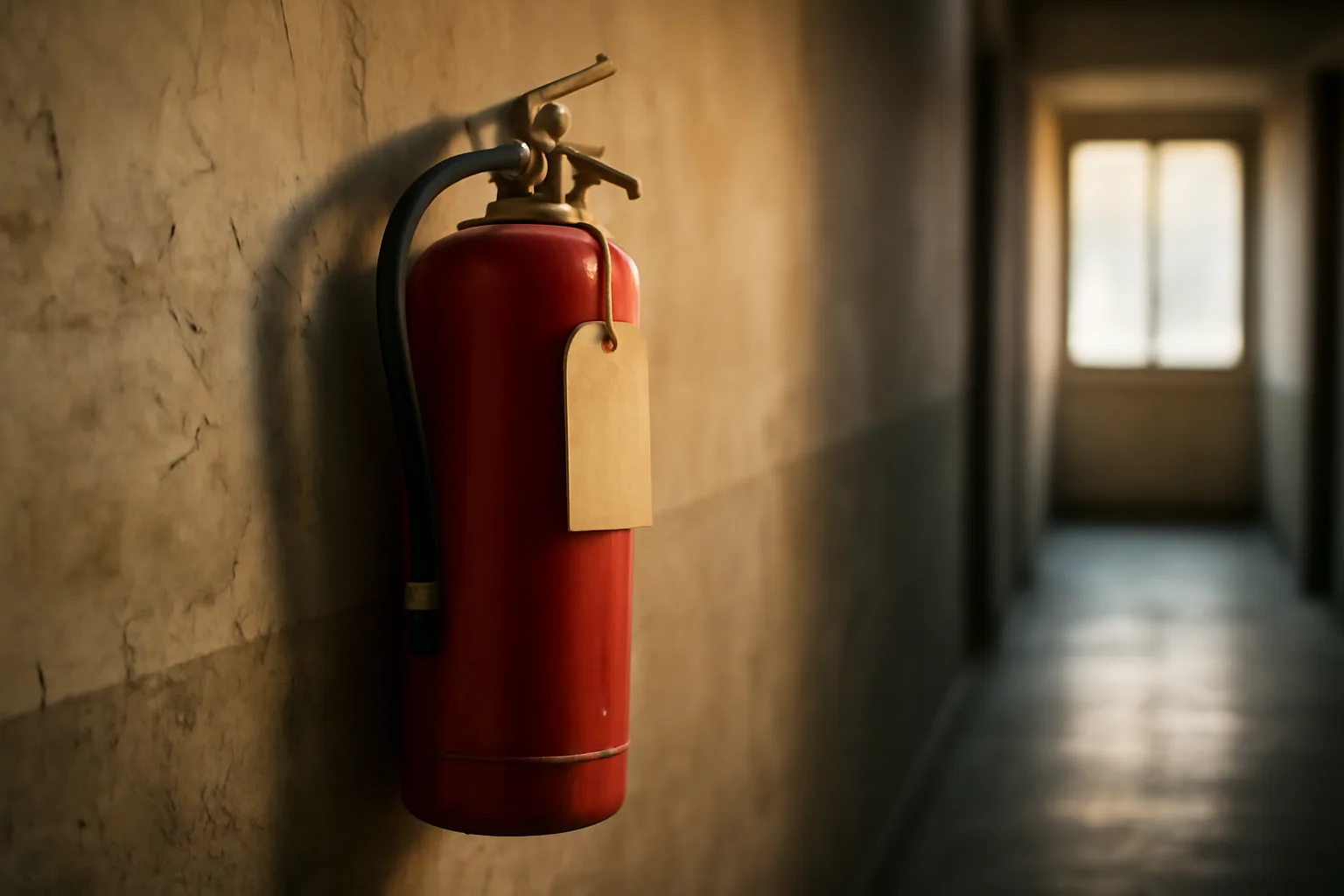
TL;DR
Massachusetts requires fire extinguishers in common areas of most residential buildings with three or more units, under 527 CMR 1.00 (the State Fire Code). Whether one is required inside each individual unit depends on building type, local amendments, and sometimes the sanitary code. Landlords should confirm requirements with their local fire department, since enforcement and interpretation vary by city.
Does Massachusetts law require landlords to provide fire extinguishers?
Yes, but the requirement is narrower than most landlords assume. Massachusetts enforces fire extinguisher rules through the State Building Code and the State Fire Code (527 CMR 1.00), which adopts NFPA 1, the Uniform Fire Code, with state amendments [1]. The Fire Code requires portable fire extinguishers in common areas of most multi-family buildings, things like hallways, stairwells, laundry rooms, and boiler or utility rooms. It does not automatically require one inside every individual rented unit in every building type. The practical answer landlords need: if you own a two-family or three-family house, check with your local fire department before assuming you're exempt. Many Massachusetts cities and towns adopt local amendments that go further than the state minimum, and some fire departments interpret "common area" requirements to include shared basements or garages even in small multi-families. If you're prepping for a rental inspection, this is exactly the kind of detail that trips people up, and it's one of the checks we build into the City Rental License & Inspection Prep Packet at rentalpermitpath.com. The Massachusetts State Sanitary Code (105 CMR 410.00), which governs minimum standards of fitness for human habitation, is a separate set of rules from the Fire Code. It addresses things like heating, hot water, and structural safety, but it does not independently mandate fire extinguishers inside units the way some people assume [2]. Fire extinguisher requirements come from the Fire Code and from local fire department enforcement, not from the sanitary code. Bottom line: assume common areas need an extinguisher if you have three or more units, confirm with your local fire prevention office whether your specific building and unit count trigger additional requirements, and don't rely on general internet advice over your city's actual fire marshal. For city-specific licensing and inspection prep beyond fire safety, see our tenant rights and tenants rights guides for how these rules interact with local rental registration ordinances.
What does the Massachusetts State Fire Code actually say about extinguishers?
527 CMR 1.00 adopts NFPA 1 (Uniform Fire Code) with Massachusetts-specific amendments, and NFPA 1 in turn references NFPA 10, the Standard for Portable Fire Extinguishers, for placement, sizing, and maintenance rules [1][3]. NFPA 10 sets travel distance and rating requirements based on occupancy hazard classification, generally requiring an extinguisher within 75 feet of travel distance for light hazard occupancies like typical apartment common areas [3]. In practice, this means: - Common hallways, stairwells, and laundry areas in apartment buildings need extinguishers placed so no point requires more than about 75 feet of travel to reach one.
- Boiler rooms, mechanical rooms, and storage areas often need a specifically rated extinguisher (commonly a 2A:10B:C multipurpose dry chemical unit) because of the fire hazard class.
- Extinguishers need annual professional inspection tags and monthly visual checks under NFPA 10 [3]. What the code does not clearly mandate, statewide, is an extinguisher inside every individual apartment or rental unit. That's a common point of confusion. Some cities require it locally, some fire departments recommend it strongly during inspections without a hard citation to issue, and some landlords just do it anyway because it's cheap insurance against a much worse outcome. If you manage a two- or three-family house in Massachusetts, that's often small enough to fall outside the strictest multi-family fire code provisions that target larger buildings, but local fire departments still have authority to require compliance measures under 527 CMR 1.00's general enforcement provisions [1]. Don't assume small equals exempt.
Do individual apartment units need their own fire extinguisher?
Not automatically under state code, though many landlords provide one anyway and some local fire departments require it during rental inspections. There's no single statewide statute that says "every unit must have a 5-lb ABC extinguisher inside it," the way some states or model codes phrase it for certain building classes. Where it gets required in practice: - New construction or substantial renovation triggers the current building code, and design plans reviewed by a local building or fire official may specify in-unit extinguishers depending on occupancy classification.
- Some cities' local ordinances or rental registration/licensing rules add extinguisher requirements as a condition of the rental permit itself, separate from the state Fire Code.
- Owner-occupied two- and three-family homes sometimes get a lighter enforcement touch, but sole discretion sits with the local fire inspector, not with an online guide. A lot of experienced landlords put a small extinguisher in every kitchen regardless of whether it's technically mandated. Kitchen fires are the single most common cause of residential fires nationally, and a $20-$40 extinguisher is cheap compared to even a small grease fire getting out of hand. The U.S. Fire Administration's national data consistently shows cooking as the leading cause of reported home fires [4]. That's a landlord judgment call, not a legal requirement in most Massachusetts towns, but it's one worth making anyway.
What size and type of fire extinguisher does Massachusetts require?
| Common hallway/stairwell (light hazard) | 2A:10B:C, within ~75 ft travel distance | Standard ABC dry chemical, 5 lb | |
|---|---|---|---|
| Boiler/mechanical room | Higher rating per hazard class, often 4A or higher | Larger ABC unit, 10 lb | |
| Individual kitchen (voluntary or locally required) | No statewide minimum; commonly 2A:10B:C or K-class near cooking | 5 lb ABC or kitchen fire extinguisher | |
| Laundry room (shared) | 2A:10B:C typical | Standard ABC dry chemical | All figures on required ratings and travel distance come from NFPA 10 as referenced by 527 CMR 1.00; always confirm the specific number your local fire department will cite, because amendments and local interpretation vary [1][3]. Maintenance matters as much as placement. NFPA 10 requires monthly visual inspections (which owners or managers can do themselves) and annual maintenance inspections by a certified fire extinguisher company, with a tag documenting the date [3]. An expired or untagged extinguisher can be treated as noncompliant even where one is present, so don't assume "I bought one once" satisfies the rule forever. |
Where extinguishers are required, NFPA 10 (referenced by the Massachusetts Fire Code) sets minimum ratings by hazard classification, and for typical residential light-hazard occupancies the common minimum is a 2A:10B:C rated unit [3]. That's the standard multipurpose dry chemical extinguisher you see in most hardware stores, rated for ordinary combustibles (wood, paper, cloth), flammable liquids, and electrical fires. | Location | Typical minimum requirement | Common product |
What happens if a landlord doesn't have required fire extinguishers?
Local fire departments enforce the Fire Code, and violations typically show up during a rental inspection, a complaint-driven visit, or after an incident. Massachusetts gives local fire departments and the Department of Fire Services enforcement authority under M.G.L. Chapter 148, and violations of 527 CMR 1.00 can result in a written order to correct, fines, or in serious cases a hearing before local licensing authority [1][5]. Fines vary significantly by city, since 527 CMR sets the substantive rule but enforcement mechanics and penalty schedules are largely local. Some Massachusetts cities charge non-criminal disposition fines in the range of $50 to $300 per violation for fire code issues found during inspection, escalating for repeat offenses, but you should confirm with your city's fire prevention office or building department for the actual number, since this is not set uniformly statewide. A missing common-area extinguisher discovered during a routine multi-family inspection is usually a fixable, non-emergency violation: buy the unit, get it installed and tagged, and you're generally back in compliance within days. It becomes a much bigger problem if it's discovered after an actual fire, where insurance claims and liability exposure change entirely. Massachusetts courts have found landlords can carry liability exposure for failing to maintain required fire safety equipment when that failure contributes to injury or property loss, though outcomes depend heavily on case-specific facts and are not something a general article can predict for your property. If you're gearing up for a city rental inspection and want a structured way to check fire code items alongside your registration paperwork, that's the kind of prep our $79 City Rental License & Inspection Prep Packet is built for. It's not a substitute for your local fire marshal's sign-off, but it helps you walk in prepared instead of guessing.
Are smoke and carbon monoxide detectors required too?
Yes, and these requirements are much more explicitly mandated statewide than fire extinguishers. Massachusetts General Law Chapter 148, Section 26F requires smoke detectors in most residential buildings, with specific rules by building type and age, enforced by local fire departments [6]. Massachusetts also requires carbon monoxide detectors in residential buildings with fossil-fuel burning equipment or attached garages, under M.G.L. Chapter 148, Section 26F1/2, commonly called "Nicole's Law" [7]. Both of these are far more consistently enforced at the individual-unit level than fire extinguishers are. Landlords should treat smoke and CO detector compliance as the higher-priority, better-documented legal requirement, and fire extinguishers as the secondary item that matters most in common areas and is often locally variable for individual units. A quick compliance checklist landlords commonly need for a rental inspection: - Working smoke detectors in required locations (bedrooms, hallways outside bedrooms, per unit and per floor requirements) [6]
- Working carbon monoxide detectors where fossil fuel equipment or an attached garage is present [7]
- Fire extinguisher(s) in common areas for buildings with 3+ units, tagged and current [1][3]
- Egress windows and clear exit paths
- Working locks and deadbolts per local sanitary code requirements
What can a landlord look at during an inspection?
A rental or fire safety inspection typically covers life-safety systems and code compliance items, not a landlord's general property judgment calls. Inspectors look at smoke and CO detector placement and function, fire extinguisher presence and tags where required, electrical panel and outlet condition, heating system safety, egress windows and paths, handrails and stairs, and any obvious sanitary code violations under 105 CMR 410.00 like pest issues, water damage, or inadequate heat [2]. Inspectors generally do not have authority to inspect a tenant's personal belongings, search for unrelated code violations unrelated to safety, or use a routine fire/rental inspection as a pretext for something else. If you're the landlord scheduling the inspection, you can walk through common areas and mechanical spaces freely, but access to occupied units for inspection purposes typically requires proper notice to tenants under state law and local ordinance, more than landlord discretion. This question comes up a lot when readers are dealing with a different state's process too. If you're researching who's responsible for a rental walkthrough inspection in California, that's a separate framework entirely; California's inspection responsibilities and notice rules run through different state and local codes than Massachusetts's Fire Code and Sanitary Code system, so don't assume the two states line up.
How much notice does a landlord have to give before an inspection?
In Massachusetts, the general standard under case law and common lease practice is "reasonable notice," and 24 hours is the number most landlords and courts treat as a practical baseline, though it's not written as a single bright-line statute covering every inspection scenario. Massachusetts's implied covenant of quiet enjoyment (M.G.L. Chapter 186, Section 14) protects tenants from unreasonable landlord intrusion, and courts have found that entering without reasonable notice or for improper purposes can violate that covenant [8]. For city-mandated rental inspections tied to a licensing or registration program, the notice requirement is often set by the local ordinance itself, and many Massachusetts cities specify something like 48 or 72 hours of advance notice for an official inspection appointment. Confirm the exact number with your city's inspectional services or rental licensing office, since this varies city by city and isn't set at the state level for licensing-driven inspections specifically. Emergencies are the one clear exception. If there's a genuine safety emergency, like a gas leak, fire, or flooding, a landlord (or fire department) doesn't need advance notice to enter and address it.
How do fire extinguisher rules interact with rental licensing and registration?
Many Massachusetts cities layer a local rental registration or licensing ordinance on top of the state Fire Code and Sanitary Code, and the local ordinance sometimes references fire safety equipment as a condition of getting or keeping your rental license. Boston, for example, requires an inspection as part of its rental registration and licensing process, and fire safety items get checked alongside sanitary code items during that visit; confirm current fee amounts and cycle length with Boston's Inspectional Services Department page for accuracy, since fees change. The overlap means a landlord can pass the state Fire Code minimum and still fail a local inspection if the city ordinance adds extra requirements, like requiring an extinguisher inside every unit regardless of building size. This is genuinely one of the more confusing parts of Massachusetts rental compliance: three different layers (state Fire Code, state Sanitary Code, and local ordinance) can all apply to the same building with different specifics. If you own in a city with a formal rental registration or licensing requirement, treat the local ordinance as the highest bar you need to clear, since it usually incorporates or exceeds the state minimums. Don't rely on "I checked the state code" as your only due diligence.
Who is responsible for a rental property walk-through inspection in California?
This is a different state's framework, but it's a common comparison search, so worth addressing directly. In California, move-in and move-out walk-through inspection responsibilities sit with the landlord, and California Civil Code Section 1950.5 specifically gives tenants the right to request an initial move-out inspection before the final move-out, so the landlord can identify repair items the tenant could fix to avoid deductions from the security deposit [9]. The landlord (or their agent) conducts the inspection and must give the tenant at least 48 hours' written notice of the scheduled time, unless the tenant waives that notice [9]. This is a security deposit and habitability process, distinct from a fire-safety or rental-licensing inspection, and it doesn't map directly onto Massachusetts's fire extinguisher or Sanitary Code system. If you're researching both states because you own property in each, treat them as genuinely separate compliance frameworks rather than trying to find one unified rule.
What is landlording, and what is a landlord, exactly?
A landlord is the owner (or authorized agent of the owner) of residential or commercial property who rents that property to a tenant in exchange for payment, typically under a lease or rental agreement. "Landlording" is the informal, widely used term for the day-to-day work of owning and managing rental property: screening tenants, collecting rent, handling repairs, meeting code requirements like the ones covered in this article, and managing the legal relationship with tenants. It's not a licensed profession in most states the way being a real estate agent or contractor is, but many cities require landlords to register or license their rental units specifically (which is the whole reason mandatory rental licensing programs like the ones covered across rentalpermitpath.com's city guides exist). Someone can be a landlord with one unit or two hundred; the legal responsibilities scale with local ordinance thresholds, not with how someone identifies. For a broader look at what the role actually involves month to month, see our guide on landlord landlords responsibilities and how they connect to local licensing rules.
How do you become a landlord, and how do you actually do it well?
Becoming a landlord legally requires owning rental property (or having authority to lease it on an owner's behalf) and complying with your state's landlord-tenant law plus any local rental registration, licensing, or inspection ordinance. There's no license exam required in most U.S. states just to rent out a unit you own, but a growing number of cities require a rental registration or license before you can legally lease the unit at all, Massachusetts cities like Boston, Cambridge, and Somerville among them (confirm current requirements with each city's inspectional services or rental licensing office, since program details change). Practically, becoming a competent landlord (more than a legal one) means a few concrete steps: understand your state's security deposit law, know your local notice-to-enter rules, get familiar with the Sanitary Code or your state's equivalent habitability standard, set up a system for handling repair requests promptly, and get proper landlord insurance (a standard homeowner's policy usually doesn't cover a rented unit correctly). A lot of new landlords underestimate the local licensing piece specifically. If your city requires rental registration and you skip it, some cities can bar you from collecting rent or evicting a tenant for nonpayment until you're registered, which is a much worse position than the registration fee itself. Check our tenant and tenant guide and your city's specific licensing page before you list a unit.
Why do landlords require renters insurance, and what rights do tenants have without a lease?
Landlords require renters insurance mainly to shift liability and personal property risk away from themselves. A landlord's own property insurance covers the building structure, not a tenant's belongings, and it typically doesn't cover a tenant's liability if, say, the tenant's negligence causes a fire or a guest is injured in the unit. Requiring renters insurance (often with a modest liability minimum, commonly $100,000, though this varies by lease and landlord) reduces the landlord's exposure if something goes wrong that traces back to the tenant's actions rather than a building defect. Tenants without a written lease still have real rights in nearly every state, though the specifics vary. In Massachusetts, a tenant without a written lease is generally a tenant-at-will, which means the tenancy continues month to month and either party can end it with proper notice (commonly one full rental period, so 30 days for a month-to-month tenancy, though state specifics vary) [8]. A tenant-at-will still has the same habitability protections under the Sanitary Code, the same protection against illegal lockout or utility shutoff, and the same protection against retaliatory eviction as a tenant with a signed lease. Landlords sometimes assume no written lease means no rules apply. That's wrong in essentially every U.S. jurisdiction. The absence of a lease document changes notice periods and default terms; it doesn't remove tenant protections.
What can't a landlord do in Ohio, and how does that compare to Massachusetts?
Ohio law, under Ohio Revised Code Chapter 5321 (the Ohio Landlords and Tenants Act), prohibits a landlord from certain actions that Massachusetts also generally prohibits, though the specific statutory language differs. Ohio landlords cannot shut off utilities to force a tenant out, cannot lock a tenant out without a court order, cannot retaliate against a tenant for reporting a code violation, and must maintain the property in a fit and habitable condition, keeping all common areas safe and clean and keeping electrical, plumbing, and heating systems in good working order . Massachusetts has parallel protections through different statutes: illegal lockout and utility shutoff are addressed under M.G.L. Chapter 186, Section 14, and habitability is addressed through the State Sanitary Code (105 CMR 410.00) [2][8]. The mechanics differ (different notice periods, different penalty structures, different court procedures) but the underlying principle across nearly every U.S. state is the same: a landlord cannot use self-help eviction tactics like lockouts or utility shutoffs, and must maintain basic habitability regardless of what state the property sits in. If you own property in more than one state, don't assume rules transfer. Ohio's specific notice periods, fine structures, and enforcement mechanisms under RCO 5321 are not the same numbers you'd use in Massachusetts.
Frequently asked questions
Do Massachusetts landlords have to put a fire extinguisher in every rental unit?
Not automatically under state law. The Massachusetts Fire Code (527 CMR 1.00) generally requires extinguishers in common areas of buildings with three or more units. Whether an individual unit needs one depends on building type, local ordinance, and your city's fire department interpretation, so confirm directly with your local fire prevention office.
What size fire extinguisher does Massachusetts require in apartment buildings?
Where required, NFPA 10 (referenced by the state Fire Code) sets a common minimum rating of 2A:10B:C for light-hazard occupancies like apartment hallways, which is a standard multipurpose dry chemical extinguisher. Higher-hazard areas like boiler rooms often need a larger rated unit. Confirm your building's specific requirement with your local fire department.
How often do fire extinguishers need to be inspected in a rental property?
NFPA 10, referenced by Massachusetts's Fire Code, requires monthly visual inspections (which an owner or manager can do) and an annual professional maintenance inspection with a dated tag. An extinguisher without a current tag can be treated as noncompliant even if it's physically present.
What happens if a landlord fails a fire code inspection in Massachusetts?
Typically the local fire department issues a written order to correct within a set timeframe. Fines for uncorrected violations vary by city, often in the range of roughly $50 to $300 per violation for a first offense, escalating for repeats, but exact amounts depend entirely on local ordinance, so confirm with your city's fire prevention office.
Are smoke detectors required in Massachusetts rental units?
Yes. Massachusetts General Law Chapter 148, Section 26F requires smoke detectors in most residential buildings, with requirements varying by building age and type, enforced by local fire departments. This is a more explicit and consistently enforced statewide requirement than fire extinguishers.
Are carbon monoxide detectors required in Massachusetts rentals?
Yes, under M.G.L. Chapter 148, Section 26F1/2 (often called Nicole's Law), residential buildings with fossil-fuel burning equipment or an attached garage must have working carbon monoxide detectors. This applies regardless of whether the unit is owner-occupied or rented.
How much notice must a Massachusetts landlord give before an inspection?
There's no single statewide statute setting an exact number for every situation; courts generally expect reasonable notice, often treated as 24 hours in practice. Cities running rental licensing inspections frequently specify their own notice period (48 or 72 hours is common), so check your local ordinance directly.
What can a landlord look at during a rental inspection?
Inspectors typically check smoke and CO detectors, fire extinguishers in common areas, electrical and heating systems, egress paths, stairs and handrails, and sanitary code items like pests or water damage. They generally can't search personal belongings or use the inspection as a pretext unrelated to safety or code compliance.
Who is responsible for a move-in/move-out walk-through inspection in California?
The landlord is responsible for conducting it. California Civil Code Section 1950.5 gives tenants the right to request an initial move-out inspection before the final one, with at least 48 hours' written notice from the landlord, so repair issues can be addressed before deposit deductions happen.
What rights does a tenant have without a signed lease?
In most states, including Massachusetts, a tenant without a written lease is generally a tenant-at-will with month-to-month status. They still keep habitability protections, protection from illegal lockout or utility shutoff, and protection from retaliatory eviction, the same as a tenant with a signed lease.
Why do landlords require renters insurance?
Mainly to shift liability and personal property risk. A landlord's building insurance doesn't cover a tenant's belongings or the tenant's liability if their actions cause damage or injury. Requiring renters insurance, often with a liability minimum, reduces the landlord's own financial exposure.
What can't a landlord do in Ohio?
Under Ohio Revised Code Chapter 5321, landlords cannot shut off utilities to force a tenant out, cannot lock a tenant out without a court order, cannot retaliate against a tenant for reporting code violations, and must keep the property in fit, habitable condition with working essential systems.
Is a fire extinguisher required by the Massachusetts Sanitary Code?
Not specifically. The State Sanitary Code (105 CMR 410.00) covers habitability basics like heat, hot water, and structural safety, but fire extinguisher requirements come from the separate State Fire Code (527 CMR 1.00) and local fire department enforcement, not from the Sanitary Code itself.
Sources
- Massachusetts Department of Fire Services, 527 CMR 1.00 Massachusetts Comprehensive Fire Safety Code: Massachusetts adopts NFPA 1 with state amendments as its Fire Code, governing fire extinguisher requirements
- Massachusetts Executive Office of Health and Human Services, 105 CMR 410.00 State Sanitary Code: State Sanitary Code sets minimum habitability standards separate from fire extinguisher requirements
- National Fire Protection Association, NFPA 10 Standard for Portable Fire Extinguishers: NFPA 10 sets placement, rating, and maintenance requirements for portable fire extinguishers referenced by the Massachusetts Fire Code
- Massachusetts General Laws Chapter 148: Chapter 148 gives local fire departments and the Department of Fire Services enforcement authority over fire safety violations
- Massachusetts General Laws Chapter 148, Section 26F: Massachusetts requires smoke detectors in most residential buildings under Section 26F
- Massachusetts General Laws Chapter 148, Section 26F1/2: Massachusetts requires carbon monoxide detectors in residences with fossil-fuel equipment or attached garages under Nicole's Law
- Massachusetts General Laws Chapter 186, Section 14: Massachusetts law protects tenants against illegal lockout, utility shutoff, and unreasonable landlord intrusion under the covenant of quiet enjoyment
- California Civil Code Section 1950.5: California law gives tenants the right to an initial move-out inspection with 48 hours notice from the landlord
- Ohio Revised Code Chapter 5321, Landlords and Tenants: Ohio law prohibits landlords from utility shutoffs and lockouts without court order and requires habitable conditions