Last updated 2026-07-26
TL;DR
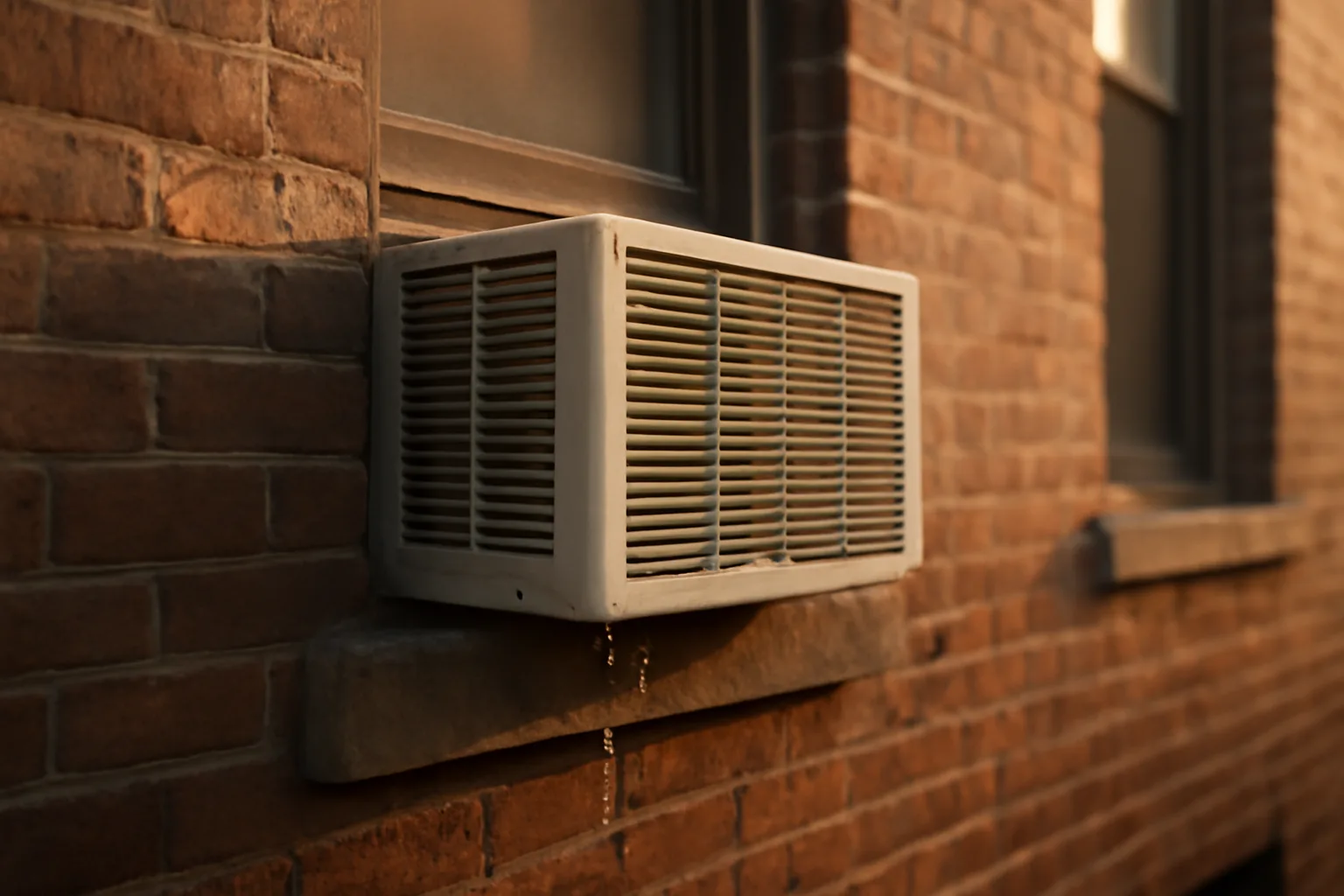
No. Illinois has no state law forcing landlords to provide air conditioning. The Illinois heating law (65 ILCS 5/11-20-1 et seq. framework for municipalities and local codes) covers heat, not cooling. Some cities and leases set their own AC rules, so check your municipal code and your lease before assuming you're off the hook entirely.
Are landlords required to provide air conditioning in Illinois?
No statewide statute in Illinois requires a landlord to supply air conditioning in a rental unit. Illinois law focuses heavily on heat during cold months, not cooling during hot ones. The Illinois Municipal Code gives cities the power to set minimum heating standards for buildings, and most major Illinois cities have exercised that power. Cooling is a different story entirely. Chicago's own building rules, for example, set minimum heat requirements in the municipal code but do not mandate air conditioning for standard residential rentals [1]. If you own a rental in Springfield, Peoria, Rockford, or a smaller Illinois town, the answer is the same at the state level: no AC mandate. But you still need to check your specific city's property maintenance code. Some municipalities have added their own cooling language, especially for elder care facilities, licensed group housing, or newer construction with central air already installed as a permanent fixture. That last point matters more than people think. If a unit already has central air conditioning built into it when you rent it out, most local housing codes require you to keep that existing equipment in working order, even if you weren't required to install it in the first place. That's a maintenance obligation, not a mandate to add AC where none exists. If you're managing property in a city with mandatory rental licensing or inspection, don't assume AC is off your list until you've actually read the ordinance. Some cities fold cooling equipment checks into broader habitability or licensing inspections. A City Rental License & Inspection Prep Packet can help you sort out what your specific city checks before an inspector shows up, but the packet doesn't replace reading your actual local code.
What Illinois law actually says about heat versus air conditioning
Illinois state law treats heat as a life-safety issue and cooling as a comfort issue, and that distinction drives everything. The Illinois Municipal Code (65 ILCS 5/11-20-1) authorizes municipalities to regulate heating equipment in buildings, and most Illinois cities with rental codes set a minimum indoor temperature requirement, often somewhere around 65 to 68 degrees Fahrenheit during the heating season, though the exact number and season dates vary by city ordinance . There is no equivalent state framework for maximum indoor temperatures or mandatory cooling. This isn't unique to Illinois. Most states never built cooling into their landlord-tenant law because historically, AC was viewed as a discretionary amenity, not a safety necessity, unlike heat, which has a documented history of tenant deaths in unheated units during Midwest winters. That said, extreme heat is a real health risk too. The CDC has documented that extreme heat contributes to a large share of weather-related deaths in the U.S. each year, and heat-related illness disproportionately affects older adults and people without reliable cooling access [2]. Some Illinois advocacy groups have pushed for cooling mandates similar to heat mandates, but as of this writing, no statewide Illinois law requires landlords to provide or maintain air conditioning as a baseline habitability item. If your city's ordinance is silent on cooling, that silence generally means it's not required. But read the actual text, more than the summary on a city website. Cities update codes and sometimes bury cooling provisions inside larger property maintenance sections.
Does Chicago require landlords to provide air conditioning?
No, Chicago does not require landlords to install air conditioning in standard residential rental units under its municipal code. Chicago's heating requirements are detailed and enforced, with minimum temperature standards during the heating season, but the city's residential landlord-tenant framework does not impose a parallel cooling mandate for typical apartments [1]. Where Chicago does step in is with existing equipment. If a unit comes with a working air conditioner, whether window units provided by a previous owner or built-in central air, you're generally expected to maintain it in functioning condition as part of basic habitability once it's part of the unit's equipment. Removing a functioning AC unit and leaving a tenant with nothing, especially if it was advertised or included in the lease, can create a breach of the lease agreement even without a specific city ordinance forcing you to add cooling. Some senior housing, licensed care facilities, and certain subsidized housing programs do have their own cooling requirements layered on top of city code, tied to HUD guidelines or state licensing rules for care facilities. If you're renting a unit under a Section 8 or public housing program, check your local housing authority's specific standards, because HUD's Housing Quality Standards for federally assisted housing, set out at 24 CFR 982.401, cover the condition of building components and equipment and can go beyond baseline city code [3].
What can landlords in Illinois be required to do about heat during summer?
Nothing at the state level specifically about summer cooling, but plenty about summer heat if your building has central air already installed. The obligation isn't "provide cooling," it's "don't let installed systems fail and ignore it." If a rental unit has central air conditioning as a fixture, most Illinois cities treat a broken AC system the same way they'd treat a broken furnace: as a habitability issue you're required to fix within a reasonable time once you're notified. What counts as "reasonable" varies. Some cities specify timelines in their property maintenance code, others rely on the general standard from the Illinois Residential Tenants' Right to Repair Act, which allows tenants to make minor repairs and deduct the cost from rent if the landlord fails to fix a condition that materially affects health and safety after proper written notice, generally capped at the lesser of $500 or half a month's rent under that act [1]. Window units are trickier. If a tenant installed their own window AC unit, you generally have no repair obligation for that unit unless your lease says otherwise. If you supplied window units as part of the rental (common in older Chicago walk-ups), you likely do have a maintenance responsibility for those units for as long as they're part of what you're renting out. The safest move is spelling this out in the lease itself: whether AC is provided, whether it's the tenant's responsibility to install a window unit, and who pays for repairs. Silence in the lease just means more arguments later.
How to become a landlord in Illinois
Becoming a landlord in Illinois doesn't require a state license, but it does require registering with your city if that city runs a rental registration or licensing program, plus following Illinois landlord-tenant statutes and local building codes. The first real step is confirming whether your city requires rental registration at all; Chicago, for example, requires landlords to register rental units and provide tenants with a summary of the Residential Landlord and Tenant Ordinance [4]. Beyond registration, practical steps include getting proper landlord insurance (different from a standard homeowner's policy), setting up a separate bank account for security deposits if your city mandates it, and understanding your local security deposit law. Illinois has a specific Security Deposit Return Act requiring landlords in certain circumstances to return deposits within 30 to 45 days along with an itemized statement of deductions, depending on whether deductions are claimed [5]. You'll also want a written lease. Illinois doesn't require a written lease for it to be legally binding, but a written lease protects you far more than an oral agreement does when disputes come up. Finally, check whether your city requires a rental inspection before you can legally lease a unit. Many Illinois municipalities with rental licensing programs (again, confirm with your city rental licensing office for the specific list of requirements and fees) require an initial inspection covering things like smoke detectors, egress windows, electrical safety, and working heating equipment before issuing a license.
What is landlording and what does a landlord actually do?
Landlording is the ongoing work of owning and managing a rental property so it stays safe, occupied, and legally compliant. It's more than collecting rent. It includes screening tenants, maintaining the property, handling repair requests, staying current on local ordinances, managing lease renewals, and keeping records for tax and legal purposes. A landlord, in the plainest legal sense, is the party who owns or controls a rental property and leases it to a tenant in exchange for rent, taking on responsibilities for habitability and maintenance defined by state and local law. In Illinois, that includes complying with the Illinois heating standards enforced through municipal codes, following the Security Deposit Return Act where it applies, and meeting any local rental licensing or inspection requirements [5]. Good landlording, practically speaking, is mostly about being organized and responsive. Tenants who feel ignored file complaints. Complaints trigger inspections. Inspections that go badly trigger fines. It's a chain reaction, and most of it starts with slow response times on maintenance requests, not with malicious neglect. If you're brand new to this, read up on tenant rights in your specific city before you sign your first lease. What's standard in one Illinois city can be a violation in another.
What rights do tenants have without a lease in Illinois?
Tenants without a written lease in Illinois still have legal rights. Illinois recognizes oral leases and month-to-month tenancies as valid, and tenants without a written agreement retain the same basic protections around habitability, notice for termination, and security deposit handling that written-lease tenants have. Without a written lease, the tenancy is generally treated as a month-to-month periodic tenancy if rent is paid monthly. To end a month-to-month tenancy in Illinois, a landlord generally must give at least 30 days' written notice before the end of a rental period, under general Illinois landlord-tenant practice reflected in most municipal ordinances and the common law periodic tenancy framework; check your specific city's notice requirements since some, like Chicago, have their own notice rules layered on top [4]. A tenant without a lease still cannot be locked out, have utilities shut off, or have belongings removed by a landlord as a way to force them out. That's illegal self-help eviction in Illinois regardless of whether there's a written lease. Landlords must go through the court eviction process even against tenants with no written agreement. Rent amount, if not specified anywhere in writing, becomes a factual question based on what's been paid and accepted historically. This is exactly the kind of dispute a written lease avoids, which is a strong argument for never renting without one even to family or friends.
Who is responsible for a rental property walk-through inspection?
This depends heavily on the state and the type of inspection, but generally the landlord (or their property manager) is responsible for arranging and conducting the move-in and move-out walk-through inspection, with the tenant present to document the unit's condition jointly. This applies whether you're in Illinois, California, or anywhere else; the responsibility to document condition typically falls on the party who will later need to prove what damage existed and when. In California specifically, state law gives tenants a right to request a pre-move-out inspection. California Civil Code Section 1950.5 requires that if a landlord intends to make deductions from a security deposit, the tenant has a right to request an initial inspection before move-out, giving the tenant a chance to fix issues themselves and avoid deductions, and the landlord must give at least 48 hours' notice before that inspection unless the tenant waives it [6]. The landlord conducts the inspection, but the tenant has the right to be present and to receive an itemized statement of what needs fixing. Illinois doesn't have an identical statewide pre-move-out inspection right, but conducting a documented walk-through, ideally with photos and a signed condition checklist from both parties, is still the practical standard for protecting yourself in any state before a security deposit dispute reaches small claims court. For rental licensing inspections (different from tenant move-in/move-out walk-throughs), it's typically a city building inspector or code enforcement officer who conducts the inspection, and the property owner or their designated agent is responsible for scheduling it and being present, per most municipal rental licensing ordinances (confirm with your city rental licensing office for the specific process).
What can a landlord look at during an inspection?
During a routine or licensing inspection, a landlord (or their inspector) can generally check anything related to the unit's safety, functioning systems, and code compliance: smoke detectors, carbon monoxide detectors, electrical outlets and panels, plumbing fixtures, HVAC and heating equipment, window and door locks, egress routes, and visible signs of pest infestation or water damage. What a landlord generally cannot do during an inspection is search through a tenant's personal belongings, closets, drawers, or private storage without a specific and reasonable purpose tied to the inspection itself, and cannot use a routine inspection as a pretext to harass a tenant or retaliate for a prior complaint. Most states, including Illinois, require landlords to give reasonable advance notice, commonly 24 to 48 hours, before entering an occupied unit for a non-emergency inspection, though the exact notice period is often set by city ordinance rather than one single statewide statute. For rental licensing inspections specifically, a city inspector typically checks the items your municipal rental code lists as minimum habitability standards: working heat, functioning smoke and CO detectors, proper egress windows in bedrooms, no exposed wiring, and no serious structural hazards. Air conditioning is rarely on that list unless it's already installed equipment that's required to be kept functional. If you want to walk into an inspection knowing exactly what your city checks rather than guessing, a City Rental License & Inspection Prep Packet organizes the common categories cities inspect so you can pre-check your unit yourself first. It's a prep tool, not a guarantee you'll pass; every city's actual checklist differs and only your city rental licensing office has the authoritative version.
Why do landlords require renters insurance?
Landlords require renters insurance mainly to shift liability for a tenant's personal property loss and personal liability claims away from the landlord's own policy. A landlord's property insurance covers the building structure; it does not cover a tenant's furniture, electronics, or clothing if there's a fire, burst pipe, or theft. Without renters insurance, tenants sometimes assume (incorrectly) that the landlord's policy covers their belongings, and when it doesn't, the fallout often becomes the landlord's problem anyway through complaints, disputes, or even lawsuits over who was responsible for what. Renters insurance typically also includes liability coverage, which protects the tenant, and indirectly the landlord, if the tenant accidentally causes damage to the unit or injures a guest. That liability layer can be the difference between a covered claim and an uninsured tenant who can't pay for damage they caused. Many landlords require proof of renters insurance as a lease condition specifically because it reduces the odds of the landlord eating the cost of tenant-caused losses. It's a low-cost requirement for tenants, generally in the range of $15 to $30 a month depending on coverage and location, and it meaningfully reduces landlord financial exposure.
How much notice does a landlord have to give before entry or ending a tenancy?
Notice requirements in Illinois vary by purpose and by whether your city has its own ordinance layered on top of state default rules. For ending a month-to-month tenancy, Illinois law generally requires at least 30 days' written notice before the end of the rental period for tenancies under one year, though longer tenancies or lease violations can carry different notice periods, and some cities like Chicago have specific notice rules under their local landlord-tenant ordinance that can require longer notice for certain terminations [4]. For routine entry to inspect, repair, or show a unit, most Illinois municipal ordinances or standard lease language require 24 to 48 hours' advance notice, though Illinois doesn't have one single statewide statute setting this number for all rental situations the way some states do. Check your city's specific property maintenance or landlord-tenant ordinance, and check your own lease language, since many leases specify a notice period that becomes binding once both parties sign. For non-renewal or rent increases on a month-to-month tenancy, the same general 30-day notice standard usually applies, but always verify against your specific city's ordinance before sending anything, since notice period mistakes are one of the most common ways an eviction case gets thrown out in court.
What can a landlord not do in Ohio (and how does it compare to Illinois)?
Ohio landlord-tenant law, under Ohio Revised Code Chapter 5321, prohibits landlords from several specific actions that mirror protections found in Illinois and most other states. A landlord in Ohio cannot shut off utilities, change locks, or remove a tenant's belongings as a way to force them out without going through the formal eviction process; this is illegal self-help eviction under Ohio Revised Code 5321.15, which explicitly bars landlords from using "self-help" measures like changing locks or removing doors, windows, or utility services to force a tenant out . Ohio law also requires landlords to maintain the premises in a fit and habitable condition, keep common areas safe, and comply with building and housing codes, obligations set out under ORC 5321.04 . Ohio also caps how landlords can handle abandoned property in some circumstances and restricts retaliatory conduct against tenants who report code violations or join tenant organizations. Illinois has a similar patchwork approach: no single statewide landlord-tenant code covering everything, but a mix of specific statutes (Security Deposit Return Act, Residential Tenants' Right to Repair Act) plus strong municipal ordinances in cities like Chicago that fill in most of the detail. Neither Ohio nor Illinois has a statewide air conditioning mandate for landlords; both states focus their mandatory maintenance obligations on heat, safety systems, and general habitability rather than cooling.
What should landlords actually do if a tenant asks about AC?
If a tenant asks whether you're required to provide air conditioning, the honest answer in Illinois is almost always no, unless your specific city ordinance says otherwise or your lease already promises it. The better move is to check three things before responding: your city's property maintenance code, whether the unit already has installed cooling equipment, and what your lease actually says about HVAC and cooling. If you already advertised the unit with central air or window units, or the lease lists air conditioning as an included amenity, you've created a contractual obligation to maintain that system even though no state law forced you to install it in the first place. That's a much stronger obligation than anything a statute creates. If a tenant is asking because of a genuine heat safety concern, particularly for an elderly tenant, a tenant with a documented medical condition, or a unit with unusually poor ventilation, it's worth thinking about liability beyond the strict legal minimum. Nobody wants a heat-related medical emergency in a unit they own, and a $150 window unit is a lot cheaper than a lawsuit or a bad inspection referral triggered by a tenant complaint to code enforcement. Document whatever you decide in writing, whether that's a lease addendum about who owns and maintains a window unit, or a simple email confirming you're not obligated to add cooling but you're willing to allow the tenant to install their own unit under specific conditions (proper electrical circuit, no structural modification to windows, etc.).
Frequently asked questions
Is air conditioning considered a habitability requirement in Illinois?
No. Illinois habitability law and most municipal housing codes focus on heat, safe electrical and plumbing systems, working smoke detectors, and structural safety. Air conditioning generally is not classified as a required habitability item under Illinois state law or in most city ordinances, including Chicago's.
Can a landlord in Illinois remove a working air conditioner from a unit?
If the AC was advertised, included in the lease, or already installed when the tenant moved in, removing it without replacing it likely breaches the lease agreement, even without a specific state law banning removal. Check your lease terms and city ordinance before removing any installed cooling equipment mid-tenancy.
Does Chicago's heat law also cover air conditioning?
No. Chicago's minimum heat standards apply during the cold-weather heating season and require landlords to maintain specific indoor temperatures. There's no parallel Chicago ordinance requiring maximum summer temperatures or mandatory cooling for standard residential units [1].
What temperature is a landlord required to maintain in Illinois in winter?
Requirements vary by city since Illinois delegates heating minimums to municipalities under 65 ILCS 5/11-20-1. Many Illinois cities set minimum indoor temperatures somewhere around 65 to 68 degrees Fahrenheit during the official heating season, but you should confirm the exact number and dates with your specific city's property maintenance code.
Can a tenant withhold rent in Illinois if the AC breaks?
Generally no, unless the AC is a fixture already included in the lease and the landlord failed to repair it after written notice. Illinois's Residential Tenants' Right to Repair Act allows limited repair-and-deduct remedies capped at the lesser of $500 or half a month's rent, but this applies to conditions materially affecting health and safety, not simple comfort issues [4].
How to become a landlord in Illinois?
Confirm your city's rental registration or licensing requirements, get proper landlord insurance, understand the Illinois Security Deposit Return Act, use a written lease, and schedule any required initial rental inspection with your city before leasing the unit. There's no state landlord license, but local registration is common.
What rights do tenants have without a lease in Illinois?
Tenants without a written lease in Illinois still get standard protections: no illegal lockouts or utility shutoffs, security deposit protections, and generally at least 30 days' notice to end a month-to-month tenancy. The tenancy is treated as month-to-month if rent is paid monthly without a written term.
Who is responsible for a rental property walk-through inspection?
The landlord or property manager typically arranges and conducts move-in and move-out walk-throughs, ideally with the tenant present. In California, tenants have a statutory right to request a pre-move-out inspection under Civil Code Section 1950.5, with at least 48 hours' notice given by the landlord [7].
Why do landlords require renters insurance?
Renters insurance covers a tenant's personal property and adds liability coverage, protecting both the tenant and indirectly the landlord if the tenant causes accidental damage or a guest is injured. It shifts financial risk away from disputes over the landlord's own property policy, which never covers tenant belongings.
How much notice does a landlord have to give before entering a rental unit?
Illinois doesn't set one single statewide number for all situations, but most city ordinances and standard leases require 24 to 48 hours' advance notice for non-emergency entry. Check your specific city's landlord-tenant ordinance and your lease, since the requirement can vary by municipality.
What can a landlord not do in Ohio?
Ohio Revised Code 5321.15 bars landlords from self-help evictions: no changing locks, shutting off utilities, or removing doors or windows to force a tenant out without going through court. Ohio law under ORC 5321.04 also requires maintaining habitable, code-compliant premises [8][9].
Does a rental licensing inspection check for air conditioning in Illinois cities?
Usually not, unless the unit already has installed cooling equipment that falls under general maintenance requirements. Most rental licensing checklists focus on heat, smoke and CO detectors, egress, and electrical safety. Confirm the exact checklist with your city rental licensing office since programs vary.
Sources
- Municipal Code of Chicago, Chapter 5-12 (Residential Landlord and Tenant Ordinance): Chicago sets minimum heat standards for rental units but does not mandate air conditioning for standard residential rentals
- CDC, Extreme Heat and Your Health: Extreme heat contributes to a large share of weather-related deaths annually in the U.S. and disproportionately affects vulnerable populations
- HUD Housing Quality Standards, 24 CFR 982.401: Federally assisted housing programs like Section 8 apply Housing Quality Standards that can include working mechanical systems and equipment condition
- California Legislature, Civil Code Section 1950.5: California tenants have a right to request a pre-move-out inspection with at least 48 hours' notice from the landlord
- Ohio Revised Code Section 5321.15: Ohio law bars landlords from self-help evictions including lockouts, utility shutoffs, and removing doors or windows to force a tenant out
- Ohio Revised Code Section 5321.04: Ohio law requires landlords to maintain rental premises in a fit and habitable condition and comply with housing codes