Last updated 2026-07-26
TL;DR
In most states with any natural gas, oil heat, or attached garage, yes: landlords must install carbon monoxide detectors, usually near sleeping areas and on every floor with a fuel-burning appliance. Rules vary by state and sometimes by city, so check your specific state statute and local rental code before you assume you're covered.
are landlords required to install carbon monoxide detectors
Yes, in the large majority of states, if the rental unit has a fuel-burning appliance (gas furnace, gas water heater, gas stove, oil heat, wood or pellet stove) or an attached garage. As of recent counts, roughly 26 states plus the District of Columbia have some statutory requirement for carbon monoxide (CO) alarms in residential rentals, and several more require them only in new construction or after a permit is pulled [1]. There is no single federal law forcing landlords to install CO detectors. The federal government leans on the Consumer Product Safety Commission (CPSC) for guidance and on HUD for public housing rules, but the actual mandate for private rentals comes from state statute or a local municipal code, not Washington [2]. That's why the answer to "am I required to install one" always starts with "which state, and sometimes which city, is the property in." A few states with no statewide law still have cities that require CO alarms through local building or rental licensing codes. Chicago, for example, requires carbon monoxide detectors in every dwelling unit within 40 feet of a room used for sleeping, under its municipal code [3]. So even if your state statute is silent, check your city's rental registration or licensing ordinance separately.
which states legally require carbon monoxide detectors in rentals
State requirements cluster into three groups: states requiring CO alarms in essentially all residential rentals with a fuel source, states requiring them only in new construction, and states with no statewide mandate at all (leaving it to cities or to fire code adoption). Massachusetts is one of the strictest. State law (105 CMR 955.000, enforced by the Board of Fire Prevention Regulations) requires CO detectors in almost every residential building, rental or owner-occupied, with narrow exceptions, and requires proof of compliance before a certificate of occupancy or transfer [4]. New York requires CO detectors in all residential rental buildings under the state's General Business Law and Multiple Dwelling Law provisions, with a c. 2010 amendment (Amanda's Law) that extended the requirement broadly across dwelling types [5]. California requires CO devices in all dwelling units intended for human occupancy under Health and Safety Code Section 17926, and that duty falls on the property owner. States without a statewide statutory mandate (as of this writing, this changes almost every legislative session) still often require CO alarms through the International Residential Code or International Fire Code as adopted locally, which many cities have adopted wholesale. Because this list shifts, don't rely on a general internet claim: search "[your state] carbon monoxide detector law rental" plus the word "statute," and read the actual code section, not a summary blog.
where exactly does a landlord have to put the carbon monoxide detector
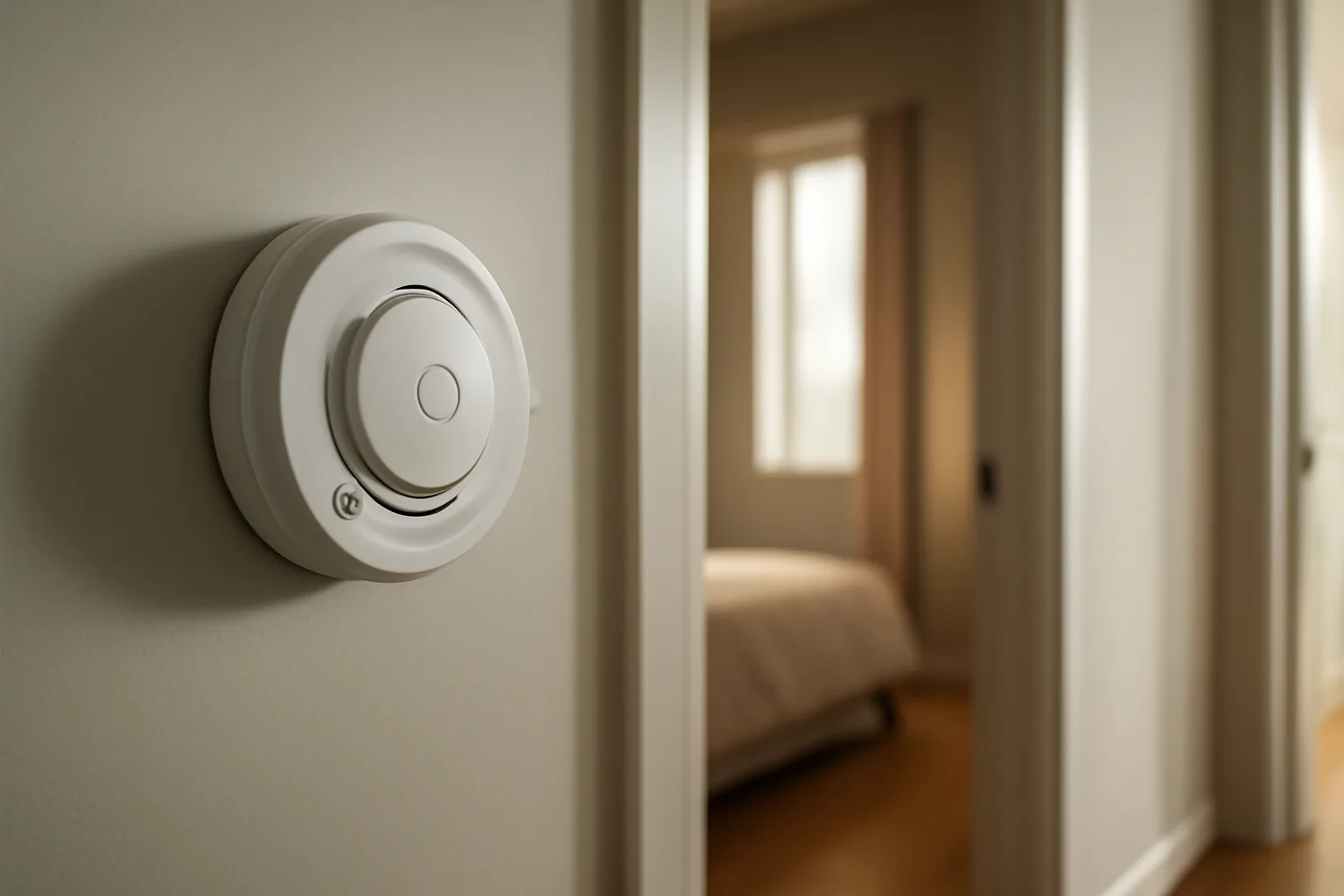
Placement rules generally require one CO alarm on every level of the unit, including basements, and one within a set distance of each sleeping room, typically 15 feet outside the bedroom door under model code language used in many states [3] [4]. If the unit has an attached garage or any fuel-burning appliance in a specific room, some codes require an additional alarm in or near that room. Most model codes and manufacturer guidance say don't put CO alarms directly next to a fuel-burning appliance (this causes false alarms) and don't mount them right next to a window or exterior door where outdoor air can dilute the reading before it reaches the sensor. The CPSC's general consumer guidance recommends installing CO alarms on every level of the home and outside each sleeping area, which matches most state rental statutes [2]. A practical compliance list for a small landlord with 1 to 10 units:
- One CO alarm per floor, including finished basements
- One CO alarm within the code-specified distance of each sleeping area (commonly 15 feet, confirm with your state statute)
- Additional unit near any attached garage entry door
- Additional unit in or adjacent to a room with a fuel-burning furnace, boiler, or water heater if your state code requires it Check your specific state statute for the exact distance and count, because "one per floor" in Massachusetts and "one per sleeping area" in another state are not automatically the same install.
what type of carbon monoxide detector satisfies the law
Most state statutes require a UL 2034-listed carbon monoxide alarm, either battery-powered, hardwired, or plug-in with battery backup, and several states now require sealed 10-year battery units specifically, following the same trend that pushed smoke alarm law updates [4] [6]. Combination smoke/CO alarms are allowed in most jurisdictions as long as each function meets its own listing standard. Massachusetts law is specific: it requires the alarm to be UL-listed and, depending on building type, hardwired with battery backup in certain occupancies [4]. Don't assume a decade-old plug-in unit from a hardware store clearance bin satisfies a 2024 state code; alarms have a service life, usually 5 to 10 years depending on the model, printed on the unit itself, and an expired alarm is functionally the same as no alarm in an inspector's eyes. If you're prepping multiple units for a city rental inspection at once, buying combination smoke/CO alarms in bulk (often $20 to $40 per unit at hardware stores) is usually cheaper per-unit than buying two separate devices, and it cuts your install time roughly in half.
who pays for and installs the carbon monoxide detector, landlord or tenant
The landlord pays for and installs the initial units in essentially every state with a statute on this. Ongoing battery maintenance responsibility is where states split: some, like Massachusetts, put ongoing maintenance and battery replacement on the landlord unless there's a specific lease provision shifting it to the tenant with proper notice; others allow the landlord to require tenants to test and replace batteries during tenancy, with landlord responsible only for supplying a working alarm at move-in [4]. Because this varies, put your state's specific rule in your lease in plain language (not as legal advice, just so both parties know who's expected to swap a 9-volt battery on a chirping unit at 2 a.m.). If your state requires 10-year sealed battery units, this argument mostly disappears since there's nothing for the tenant to replace during a normal tenancy. As a landlord managing your own move-in process (see what is landlording if you're new to this and want the full rundown of the job), documenting that the CO alarm was tested and working at move-in, with a signed move-in checklist, is your best protection if a tenant later disables or removes a unit.
what happens if a landlord doesn't install a carbon monoxide detector
Consequences range from a routine code violation notice with a cure period, to a fine per unit per day, to real liability exposure if someone is hurt or dies from CO poisoning in a unit that was missing a legally required alarm. New York's Multiple Dwelling Law violations for missing safety devices can carry civil penalties assessed per unit, and repeat or willful violations escalate [5]. Massachusetts violations of 105 CMR 955.000 are enforced by local fire departments and can block a certificate of occupancy or a property transfer until corrected [4]. Beyond the statutory fine, a missing or non-functional CO alarm is a common factual issue in landlord liability lawsuits after a CO poisoning incident, because it goes directly to whether the landlord met a legal duty of care. Carbon monoxide poisoning sends an estimated several thousand people in the U.S. to emergency departments each year, and CDC data has attributed hundreds of unintentional CO poisoning deaths annually (non-fire related) [7]. That's the actual stakes behind the fine amount, more than paperwork. If your city has a rental licensing or inspection program (see our city guides for what these typically require), a missing CO alarm is one of the most common items that fails a rental inspection outright, alongside missing smoke alarms and blocked egress. Inspectors check for this first because it's fast to verify and it's a life-safety item, not a cosmetic one.
how to become a landlord and where CO detector rules fit in
Becoming a landlord, in practical terms, means buying or converting a property to a rental, registering it with your city or county if required, getting it inspected if your jurisdiction mandates that, and signing your first lease. CO detector compliance is one small but non-negotiable piece of that process, usually verified either through self-certification on a rental license application or through an actual inspector walkthrough before your license is issued. A rough sequence: confirm zoning allows rental use, register the property with your city's rental licensing office if one exists, install required life-safety equipment (smoke alarms, CO alarms, fire extinguishers if required), schedule and pass any mandatory inspection, get your rental license or certificate, then screen tenants and sign a lease. Many first-time landlords underestimate how much city-specific paperwork this involves. If you're stacking a first rental license application, a CO/smoke alarm install, and an inspection date all in the same month, a $79 one-time City Rental License & Inspection Prep Packet is built exactly for that crunch: it walks you through what your specific city's inspection checklist usually covers so you're not guessing at 9 p.m. the night before an inspector shows up.
what is landlording and what does the job actually involve
Landlording is the ongoing work of owning and managing a rental property: maintaining the unit, handling repairs, collecting rent, following state and local landlord-tenant law, keeping required safety equipment (like CO and smoke alarms) functional, and managing the tenant relationship from move-in through move-out. It's part maintenance job, part bookkeeping, part legal compliance, and part conflict resolution. For a 1 to 10 unit landlord, most of this is done without a property manager, which means you're personally responsible for knowing your state's habitability statute, your city's registration rules if any exist, and basic safety code items like CO alarm placement. This is also where a lot of new landlords get tripped up: they treat the lease and the rent collection as "the job" and don't realize that ongoing safety equipment compliance is a legal duty that doesn't end at move-in. Our landlord overview covers the broader responsibilities if you want the full list beyond just CO alarms.
what rights do tenants have without a lease, and does that change the CO alarm requirement
No. A tenant without a written lease, sometimes called a tenant-at-will or a month-to-month oral tenancy depending on the state, still has the same statutory right to a habitable unit and to any state-required life safety equipment, including carbon monoxide alarms, as a tenant with a full written lease. State CO alarm statutes attach to the dwelling unit and the landlord's ownership of it, not to the existence of a signed lease document [4]. What does typically change without a lease is notice period for rent increases or termination, which reverts to state default rules (often 30 days for month-to-month tenancies, though some states require more for longer tenancies). But habitability and safety equipment obligations don't disappear just because nothing was signed. See our tenant rights and tenants rights guides for the fuller breakdown of what an unwritten tenancy actually protects.
who is responsible for a rental property walk-through inspection in California
In California, the landlord is responsible for conducting a documented walk-through inspection before the tenant moves out if the tenant requests one, under California Civil Code Section 1950.5(f), which gives the tenant the right to request an initial inspection prior to move-out termination, with the landlord required to notify the tenant of the results and give a chance to fix deficiencies before final deductions from the security deposit [8]. Separately, many California cities with rental inspection or Rent Registry programs (San Francisco, Los Angeles, and others) have their own municipal habitability inspection requirements, distinct from the security deposit walk-through, that are conducted by a city inspector rather than the landlord. Confirm with your specific city's rental licensing or housing department for what its program actually requires, since "California requires an inspection" and "my specific California city requires an inspection" are two different claims. For the state-mandated move-out walk-through specifically, the landlord (or the landlord's authorized agent) does the inspection, and California Civil Code 1950.5(f) requires at least 48 hours' notice before entering for that purpose, in writing, unless the tenant waives that notice [8].
what can a landlord look at during an inspection
During a routine or move-out inspection, a landlord can generally look at the general condition of the unit: walls, floors, fixtures, appliances, smoke and CO alarms, plumbing fixtures, and evidence of damage beyond normal wear and tear. A landlord conducting a habitability or safety inspection is not generally entitled to search through personal belongings, drawers, or closets beyond what's needed to assess the condition of the space itself. Most states require advance written notice before a non-emergency entry for inspection purposes, commonly 24 hours, though this varies (California's Civil Code 1954 sets 24 hours as "reasonable notice" in most circumstances) [9]. A city rental license inspection is different in scope: a municipal inspector is typically checking for code compliance items specifically, life-safety equipment (smoke alarms, CO alarms, fire extinguishers where required), egress windows, working plumbing, electrical hazards, and structural issues, not general cleanliness. If you want a sense of what a specific city's rental inspection checklist actually covers item by item, check that city's rental licensing office directly, since checklists differ meaningfully between, say, a small Midwest city rental registration program and a coastal city's rent-controlled unit inspection program.
why do landlords require renters insurance, and does it cover CO issues
Landlords require renters insurance mainly to shift liability for the tenant's personal belongings and for tenant-caused damage or injury claims away from the landlord's own policy. A landlord's own property insurance covers the building and the landlord's fixtures, not the tenant's furniture, electronics, or clothing, and it generally doesn't cover a tenant's liability if the tenant's negligence causes a fire or other loss. Renters insurance also often includes liability coverage that can help if a guest of the tenant is injured in the unit, which reduces the odds that dispute lands entirely on the landlord's insurance. On CO specifically, a landlord's obligation to install and maintain a functioning detector exists independent of whether the tenant carries renters insurance, since that's a statutory safety duty, not an insurance question. Requiring renters insurance is a reasonable landlord practice but it isn't a substitute for actually installing the CO alarm your state requires.
how much notice does a landlord have to give before entering, including for a CO alarm check
Most states require some form of advance written notice before a landlord enters an occupied unit for a non-emergency purpose, including a routine CO alarm test or a scheduled inspection. The most common notice period cited in state statutes and lease templates is 24 hours, though several states specify other windows, and a smaller number have no explicit statutory notice requirement at all (which doesn't mean walk in unannounced is a good idea, legally or relationship-wise). California's Civil Code Section 1954 treats 24 hours' written notice as presumptively reasonable for routine entry purposes like repairs or inspection [9]. Emergency entry, including a legitimate CO alarm going off or a suspected gas leak, is generally exempted from advance notice requirements in essentially every state, because the safety emergency itself justifies immediate entry. Check your specific state's landlord-tenant statute for the exact notice period and any required delivery method (written notice posted on the door versus mailed versus texted, which some states now explicitly allow), since this is one of the more frequently updated areas of landlord-tenant law state by state.
what a landlord cannot do in Ohio
Ohio landlord-tenant law (Ohio Revised Code Chapter 5321) prohibits a landlord from retaliating against a tenant for exercising a legal right, such as reporting a code violation or requesting repairs, and prohibits self-help eviction, meaning a landlord cannot change the locks, shut off utilities, or remove a tenant's belongings without going through the court eviction process . Ohio law also requires the landlord to maintain the unit in a fit and habitable condition and to comply with local building, housing, and health codes, which is where CO and smoke alarm requirements typically live at the city level in Ohio, since Ohio doesn't have a single blanket statewide CO alarm statute for all rentals the way Massachusetts or New York do. ORC 5321.04 lists the landlord's specific statutory duties, including keeping all electrical, plumbing, and heating fixtures in good working order and keeping common areas safe . A landlord in Ohio also cannot enter the unit without reasonable notice (ORC 5321.05 addresses tenant obligations and references the landlord's right of access, and Ohio case law and standard lease practice treat 24 hours as reasonable notice in most circumstances) except in an emergency. Specific Ohio cities, including Cleveland and Columbus, have their own rental registration and inspection programs that layer additional requirements, including specific fire and CO alarm provisions, on top of the state floor. Confirm with your specific Ohio city's rental licensing or code enforcement office for what's actually required in your building type.
Frequently asked questions
Are landlords legally required to install carbon monoxide detectors?
In most U.S. states, yes, if the rental has a fuel-burning appliance or attached garage. Roughly 26 states plus DC have a statutory CO alarm requirement for residential rentals [1]. Requirements vary on placement, alarm type, and who maintains it after move-in, so check your specific state statute and city rental code.
What states do not require carbon monoxide detectors in rentals?
This list changes as legislatures act, so don't rely on a static answer. Some states have no blanket statutory mandate and instead rely on cities adopting the International Fire Code or Residential Code locally. Always search your specific state's current statute rather than trusting a general summary, since these laws get updated frequently.
Where does a carbon monoxide detector need to be installed in a rental unit?
Most codes require one CO alarm on every level of the unit, including the basement, plus one within a set distance (commonly 15 feet) of each sleeping area. Units with an attached garage or a fuel-burning appliance often need an additional alarm near that specific space. Confirm your state's exact distance requirement.
Who pays for carbon monoxide detectors, the landlord or the tenant?
The landlord pays for and installs the initial CO alarms in essentially every state with a statute on this. Ongoing battery maintenance responsibility varies: some states put it on the landlord throughout tenancy, others allow the landlord to shift battery replacement duty to the tenant with proper lease language.
What happens if a landlord doesn't install a required CO detector?
Consequences range from a code violation notice with a cure period to a per-unit fine, blocked certificate of occupancy, or liability in a lawsuit if someone is harmed. New York and Massachusetts both enforce civil penalties for missing safety devices, and a missing CO alarm often fails a rental license inspection outright [4][5].
How do I become a landlord?
Confirm zoning allows rental use, register the property with your city if a rental licensing program exists, install required safety equipment like smoke and CO alarms, pass any mandatory inspection, get your license, then screen tenants and sign a lease. Requirements vary heavily by city, so check your local rental licensing office first.
Who is responsible for a rental property walk-through inspection in California?
The landlord conducts the move-out walk-through inspection if the tenant requests one, under California Civil Code Section 1950.5(f), giving the tenant a chance to fix issues before deposit deductions [9]. Separately, some California cities run their own municipal rental inspection programs conducted by a city inspector.
What is landlording?
Landlording is the ongoing work of owning and managing a rental property: maintenance, rent collection, tenant relations, and legal compliance including safety equipment like CO alarms. It's a continuous responsibility that starts at move-in and doesn't end until the property is sold or taken off the rental market.
What is a landlord?
A landlord is the owner (or their authorized agent) of a residential or commercial property who leases it to a tenant in exchange for rent. Legally, a landlord takes on specific statutory duties, including habitability, safety equipment compliance, and following notice-of-entry rules, that vary by state.
What rights do tenants have without a signed lease?
A tenant without a written lease still has the same right to a habitable unit and required safety equipment, including CO alarms, as a tenant with one, since those duties attach to the dwelling, not the paperwork. What changes is usually notice period defaults for rent changes or termination, which revert to state statutory minimums.
Why do landlords require renters insurance?
Renters insurance shifts liability for the tenant's belongings and tenant-caused injury or damage claims away from the landlord's own policy, since a landlord's property insurance generally doesn't cover a tenant's personal property or liability. It's a smart landlord practice but doesn't replace the landlord's own duty to install required safety equipment like CO alarms.
How much notice does a landlord have to give before entering a rental unit?
Most states require 24 hours' written notice for non-emergency entry, including a routine CO alarm check, though the exact period and delivery method vary by state statute. Emergency entry, such as responding to a CO alarm going off, is generally exempt from advance notice requirements everywhere.
What can a landlord look at during a rental inspection?
A landlord can generally assess the general condition of the unit: walls, appliances, plumbing, smoke and CO alarms, and evidence of damage beyond normal wear. A landlord isn't generally entitled to search personal belongings or closets beyond what's needed to check the space's condition.
What can't a landlord do in Ohio?
Under Ohio Revised Code Chapter 5321, a landlord cannot retaliate against a tenant for reporting a code violation, cannot use self-help eviction (changing locks, shutting off utilities), and must keep the unit's electrical, plumbing, and heating systems in working order [11]. Ohio cities layer additional safety and CO alarm rules on top of the state floor.
Sources
- National Conference of State Legislatures, Carbon Monoxide Detectors State Statutes: roughly 26 states plus DC have a statutory carbon monoxide alarm requirement for residential dwellings
- U.S. Consumer Product Safety Commission, Carbon Monoxide Information Center: CPSC recommends CO alarms on every level of the home and outside each sleeping area
- Massachusetts 105 CMR 955.000, Board of Fire Prevention Regulations: Massachusetts requires UL-listed carbon monoxide alarms in nearly all residential buildings, enforced before certificate of occupancy or transfer
- New York State, Amanda's Law and Multiple Dwelling Law carbon monoxide requirements: New York requires carbon monoxide detectors in residential dwellings under the Multiple Dwelling Law
- California Health and Safety Code Section 17926: California requires carbon monoxide devices in all dwelling units intended for human occupancy, with the duty on the property owner
- Centers for Disease Control and Prevention, Carbon Monoxide Poisoning Data and Statistics: CDC data attributes several hundred unintentional, non-fire carbon monoxide poisoning deaths annually in the U.S.
- California Civil Code Section 1950.5: California landlords must conduct an initial move-out inspection if requested by the tenant and give notice of deficiencies before deposit deductions
- California Civil Code Section 1954: California treats 24 hours' written notice as reasonable for landlord entry for repairs or inspection
- Ohio Revised Code Chapter 5321, Landlord and Tenant: Ohio law prohibits landlord retaliation and self-help eviction and requires landlords to maintain electrical, plumbing, and heating systems in good working order