Last updated 2026-07-26
TL;DR
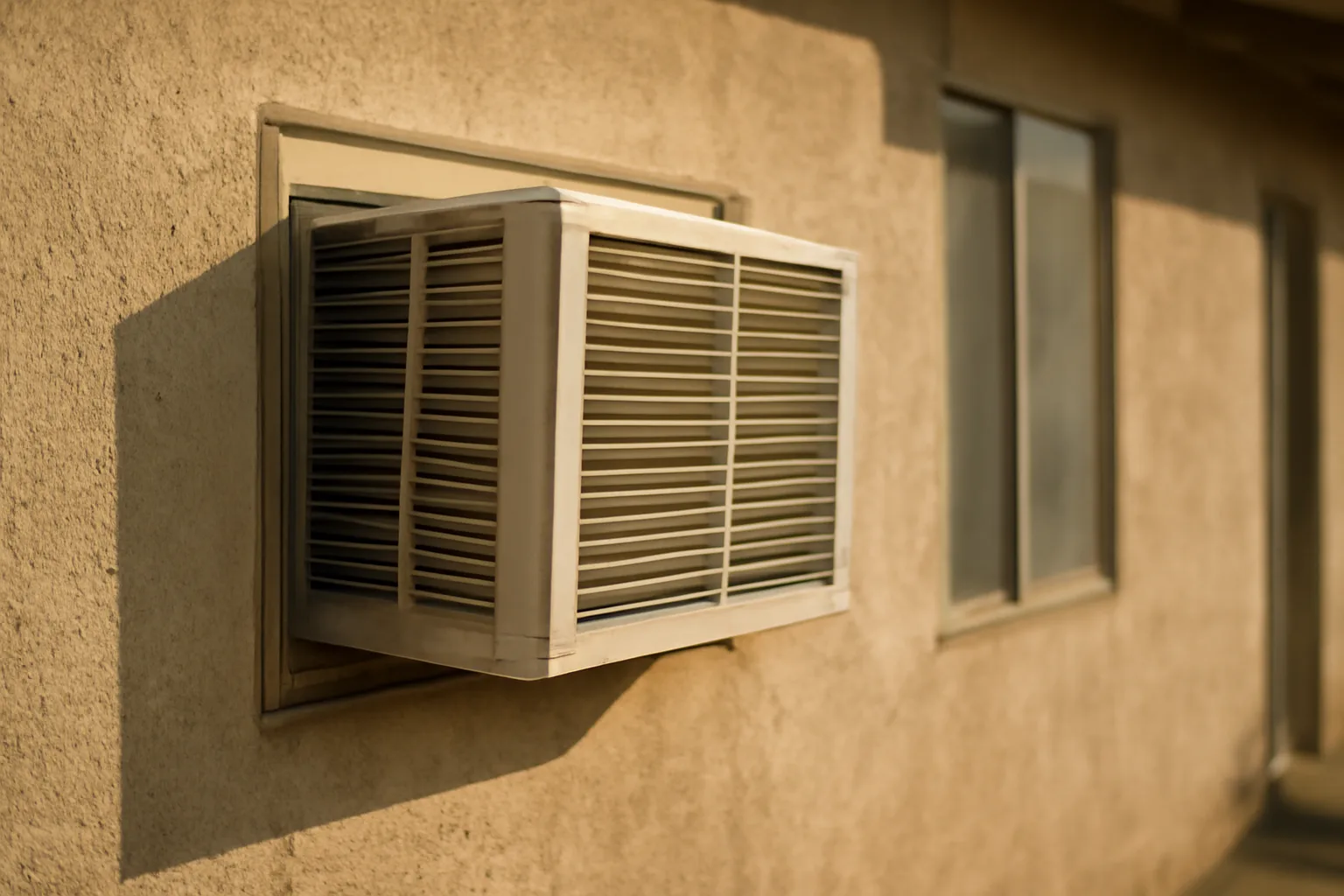
California has no statewide law requiring landlords to provide air conditioning in rental units. Landlords must provide working heating [1], but cooling is different. Some cities (like Palm Springs and parts of the Coachella Valley) have local heat-safety rules, and California's 2024 indoor heat rules for workplaces don't cover rental housing directly. Check your city's rental code before assuming you're off the hook.
Are landlords in California required to provide air conditioning?
No. There's no California state statute that requires a landlord to install or provide air conditioning in a residential rental unit. California Civil Code Section 1941.1 lists the conditions that make a dwelling "untenantable," and a working heating system is on that list. Air conditioning is not [1]. That surprises a lot of people, especially landlords renting property in the Central Valley or the desert cities, where summer temperatures routinely hit 105°F or higher. The law was written around a habitability standard, and heat has historically been treated as a health and safety issue while cooling has been treated as a comfort issue. That distinction is getting more scrutiny as heat waves get worse, but the statute hasn't changed. So if your lease doesn't mention air conditioning and your unit doesn't have a working AC unit, you're generally not violating state habitability law by leaving it that way. If you already installed a window unit, central air, or a mini-split system, though, a different rule kicks in: once it's there, you likely have to keep it working. More on that below. A few cities have layered on their own rules, and some counties issue heat advisories that create practical (if not always legal) pressure on landlords. We'll get into which places have real ordinances further down.
What does California law actually require for heating?
California Civil Code Section 1941.1(a)(4) requires rental units to have "heating facilities that conformed with applicable law at the time of installation, maintained in good working order." [1] This is a hard requirement, not a suggestion. If your unit's heater is broken and can't keep the space habitable, you're looking at a habitability violation, potential rent withholding by the tenant, or a repair-and-deduct claim under Civil Code Section 1942 [2]. Heating is different from cooling for a simple historical reason: extreme cold plus no heat kills people fast, and building codes since the mid-20th century have treated heat as basic infrastructure. Cooling got left out of that framework, even though heat-related deaths in California have climbed. The California Department of Public Health has tracked heat-related illness and death increases tied to extreme heat events, and researchers at UCLA's Center for Healthy Climate Solutions have flagged indoor heat exposure as an under-addressed housing hazard. Bottom line: you must provide functioning heat. You do not have to provide functioning cooling, unless a local ordinance or your own lease says otherwise.
If my unit already has air conditioning, do I have to fix it?
Yes, generally. Once air conditioning is a fixture that came with the unit at move-in (built into the lease, disclosed, or just physically installed and functioning), most attorneys and tenant-rights groups treat it as part of the "habitable condition" the tenant is renting, under the implied warranty of habitability described in Civil Code Section 1941 [3]. If it breaks, you're expected to repair it in a reasonable time, the same as you would a broken stove or a leaking faucet that was there when the tenant moved in. This isn't the same legal category as heat, which is mandatory regardless of what came with the unit. It's more like: if you provide an amenity, you can't just let it stay broken indefinitely, because you've made it part of what the tenant is paying rent for. Leases sometimes address this directly by saying AC is provided "as is" or that repairs are the tenant's responsibility past a certain point, but courts are generally skeptical of lease language that tries to waive habitability protections entirely. Practical advice: if you've got a rental with central air or window units, budget for repairs like you would any other system. A dead AC in a heat wave is exactly the kind of thing that generates an angry call to code enforcement, a bad review, or a small claims filing over reduced rent.
Do any California cities require air conditioning in rental units?
A handful do, or come close to it, usually in the hottest parts of the state. Palm Springs and some other Coachella Valley cities have looked at heat-related tenant protections given how extreme desert summers get. Check with your specific city's rental housing or code enforcement office, because these rules shift and aren't always labeled "air conditioning requirement" in the code index. More commonly, cities regulate cooling indirectly: through maximum indoor temperature standards for habitability, through rules that treat AC as a required repair once installed, or through emergency heat-wave ordinances that kick in during declared heat emergencies. Los Angeles and other large cities have cooling center programs and heat emergency plans, but those are public health responses, not landlord mandates written into the housing code. If you own rental property in a city with mandatory rental licensing or registration (a growing number of California cities require this), your city's rental packet often spells out exactly what's expected for both heating and cooling as part of the inspection checklist. That's a good place to look before you assume state law is the only rule that applies to you.
What about California's new indoor heat rules for workers?
In 2024, California's Division of Occupational Safety and Health (Cal/OSHA) adopted an indoor heat illness prevention standard requiring many indoor workplaces to take action when indoor temperatures reach 82°F, with additional control measures required at 87°F [4]. This is a workplace safety rule under Title 8 of the California Code of Regulations, Section 3396, and it applies to employers and employees, not to residential landlord-tenant relationships. A lot of people see headlines about this rule and assume it means rental units now need AC. It doesn't. If you run a business out of a rental unit with employees on site (a licensed daycare, a small workshop), the Cal/OSHA rule might apply to that business operation, but it doesn't create a duty for you as a residential landlord to cool a tenant's apartment. This distinction matters because it's a common point of confusion, and misreading it could lead you to either over-invest in AC you're not required to provide, or under-prepare for a local ordinance that actually does apply to your rental.
Can a tenant withhold rent or break a lease over lack of AC?
Generally, no, if the unit never had AC and your lease doesn't promise it. California's habitability protections under Civil Code Sections 1941 and 1942 are built around defects that make a unit unsafe or unlivable, and courts have generally not extended that to "no air conditioning" absent extreme circumstances or a specific local law [1] [2]. Where it gets murkier: extreme heat events combined with other factors (poor ventilation, a disabled or elderly tenant with a documented medical need, an AC unit that was working and then breaks) can shift the analysis. A tenant with a documented disability that requires cooling as a reasonable accommodation under the Fair Housing Act or California's Fair Employment and Housing Act (FEHA) can have a legitimate claim even in a state without a general AC mandate. The U.S. Department of Housing and Urban Development has published guidance treating reasonable accommodation requests, including for medical equipment or environmental modifications, as generally required unless they impose an undue financial or administrative burden [4]. If a tenant asks for AC as a disability accommodation, don't just say no because "California doesn't require it." That's a different legal lane, and it's worth a short consult with a landlord-tenant attorney before you respond in writing.
What is landlording, and what is a landlord, legally speaking?
A landlord is the owner (or an owner's authorized agent) who rents real property to a tenant in exchange for rent, under a lease or rental agreement. "Landlording" is the informal term for the ongoing work of managing that relationship: collecting rent, handling repairs, following habitability law, managing move-in and move-out, and staying current on local licensing or registration rules. In California, the landlord-tenant relationship is governed mostly by the state Civil Code (habitability, security deposits, entry notice) plus whatever your specific city or county adds through rental registration ordinances, rent control, or just-cause eviction rules. Some cities require a rental license or registration number before you can legally rent a unit at all, separate from your state-level obligations. If you're new to this, the core landlord duties boil down to a short list: keep the unit habitable, give proper notice before entry, return deposits correctly and on time, follow just-cause eviction rules where they apply, and follow any local licensing or inspection requirements. Get those five things right and you'll avoid the vast majority of landlord-tenant disputes.
How do you become a landlord in California?
There's no state license required just to rent out a property in California, but there are several steps that function like one in practice. First, you need clear title to the property or legal authority to rent it (as an owner, property manager, or authorized agent). Second, check whether your city requires rental registration or a rental license; many California cities, including parts of Los Angeles, Oakland, and Berkeley, require this before you can legally collect rent. Third, budget for a habitability-compliant unit: working heat, working plumbing, smoke and carbon monoxide detectors as required under California Health and Safety Code Sections 13113.7 and 17926, and no substandard conditions under Health and Safety Code Section 17920.3. Fourth, decide your lease terms, security deposit amount (capped at one month's rent for most tenancies as of AB 12, effective July 1, 2024, per California Civil Code Section 1950.5 [5]), and screening criteria consistent with fair housing law. Fifth, if you're renting in a city with a mandatory rental inspection program, get on the inspection schedule early. Many cities require initial inspection before you can rent, and re-inspection on a cycle (often every 2 to 4 years, though this varies a lot by city). For a step-by-step way to organize all this paperwork by city, tenant rights resources and city-specific checklists help, and our $79 one-time City Rental License & Inspection Prep Packet is built specifically to walk landlords through what a given city's licensing office will check.
Who is responsible for the rental property walk-through inspection in California?
It depends on the type of inspection. For move-in and move-out inspections, California Civil Code Section 1950.5(f) gives tenants the right to request an initial inspection before move-out, with the landlord required to give at least 48 hours' written notice of that inspection and provide an itemized list of deficiencies the tenant could fix to avoid deposit deductions [6]. The landlord (or their property manager) conducts this inspection, and the tenant has the right to be present. For government rental licensing or Section 8 Housing Choice Voucher inspections, a city or county inspector, or in the case of Section 8, a local Public Housing Authority inspector, conducts the walk-through against a specific code checklist (often based on Housing Quality Standards or the local municipal code). The landlord doesn't do these inspections; they schedule them, prepare the unit, and are present to answer questions and address any cited violations. For day-to-day maintenance or repair-related entry, the landlord conducts the inspection but must give reasonable notice, generally 24 hours in writing, under Civil Code Section 1954, except in emergencies [7]. Reasonable notice for a routine inspection walk-through is typically that same 24-hour standard, though cities with their own rental inspection ordinances sometimes specify their own notice period, so check the local code.
What can a landlord look at during an inspection?
For a standard maintenance or licensing inspection, a landlord (or city inspector) can generally check: working smoke and carbon monoxide detectors, functioning heating, plumbing and water heater condition, electrical safety (exposed wiring, overloaded outlets), structural issues (holes, mold, pest infestation), window and door locks, and general cleanliness that could indicate a health or safety issue. Under Civil Code Section 1954, a landlord's right to enter for repairs, inspection, or showing the unit is limited to those stated purposes; it's not a general right to search the tenant's belongings [7]. A landlord cannot use an inspection as a pretext to go through personal belongings, drawers, or closets beyond what's needed to check the condition of the unit itself. City rental inspectors, similarly, are checking the unit against a code compliance list (California's Health and Safety Code Section 17920.3 defines "substandard" conditions like inadequate sanitation, structural hazards, and faulty weather protection), not evaluating the tenant's housekeeping or personal property [8]. If your city requires periodic rental inspections as part of a licensing program, ask for the specific checklist in advance. Most cities publish one, and knowing what the inspector will look at (grounding on outlets, GFCI near water sources, handrail height, window egress in bedrooms) lets you fix small things before the inspector shows up instead of getting written up and having to schedule a costly re-inspection.
How much notice does a landlord have to give before entering?
In California, the standard is 24 hours' written notice for non-emergency entry, under Civil Code Section 1954, whether the reason is repairs, an inspection, or showing the unit to prospective tenants or buyers [7]. The notice needs to state the date, approximate time, and purpose of entry, and entry has to happen during normal business hours unless the tenant agrees otherwise. Exception: no notice is required for a genuine emergency (a burst pipe, a fire, a gas leak) where immediate entry is necessary to protect the property or occupants. Also, if the tenant is present and gives verbal consent to entry at a different time, that overrides the standard notice requirement for that specific visit. Move-out pre-inspections have their own notice rule: 48 hours' written notice under Civil Code Section 1950.5(f), specifically tied to the tenant's right to request an inspection before their security deposit is finalized [6]. Some cities layer additional notice requirements on top of the state minimum as part of their rental licensing ordinance, so a 24-hour standard is the floor, not necessarily the ceiling, everywhere in California.
Why do landlords require renters insurance?
Landlords require renters insurance mainly to shift liability and reduce their own financial exposure when something goes wrong in the tenant's unit. A landlord's own property insurance covers the building and the landlord's own property; it generally does not cover a tenant's personal belongings if there's a fire, burst pipe, or theft, and it often doesn't cover a tenant's liability if the tenant accidentally causes damage or someone gets hurt in the unit. Renters insurance typically covers the tenant's personal property, provides liability coverage if the tenant is found responsible for injury to a guest or damage to the unit (like an overflowing bathtub that damages the unit below), and sometimes covers additional living expenses if the unit becomes temporarily uninhabitable. For landlords, requiring it as a lease condition is a low-cost way to reduce disputes over who pays for what after an incident, and it's legal in California to require it as a lease term as long as it's applied consistently and doesn't function as a way to discriminate against protected classes. Most policies run in the range of roughly $15 to $30 a month depending on coverage amount and location, according to industry data commonly cited by the Insurance Information Institute, though actual rates vary by insurer and unit.
What rights do tenants have without a lease in California?
A tenant without a written lease in California still has real legal protections; verbal or "month-to-month" tenancies are common and legally recognized under Civil Code Section 1946 [9]. Without a fixed-term lease, the tenancy is generally treated as month-to-month, which means either party can end it with proper notice, but the tenant still keeps every habitability protection under Civil Code Sections 1941 and 1941.1, the same security deposit protections under Section 1950.5, and the same entry notice rights under Section 1954. Termination notice for a month-to-month tenancy without a lease is generally 30 days if the tenant has lived there less than a year, and 60 days if a year or more, under Civil Code Section 1946.1 . In cities and, since 2020, statewide under the Tenant Protection Act (Civil Code Section 1946.2), many tenancies also require "just cause" for termination after 12 months of occupancy, meaning a landlord generally can't just decide not to renew without a legally recognized reason . So the absence of a written lease does not mean the absence of rights. It mostly changes the term length and notice mechanics, not the underlying habitability, privacy, and deposit protections.
What can't a landlord do (and does Ohio's rule apply here)?
If you're researching California landlord obligations and also see "what a landlord cannot do in Ohio" as a related search, know that Ohio law is separate and doesn't apply to California rentals; Ohio's landlord-tenant rules come from Ohio Revised Code Chapter 5321, not California's Civil Code. Don't rely on Ohio guidance for a California property, and vice versa; the specific notice periods, deposit rules, and habitability standards differ meaningfully between the two states. Within California, a landlord generally cannot: enter without proper notice except in an emergency, retaliate against a tenant for reporting habitability violations (Civil Code Section 1942.5), discriminate based on protected characteristics under the Fair Employment and Housing Act, shut off utilities or change locks to force a tenant out (a "self-help eviction," which is illegal statewide), or terminate a covered tenancy without just cause after 12 months under the statewide Tenant Protection Act . A landlord also can't ignore a documented habitability defect indefinitely; tenants have remedies including repair-and-deduct (Civil Code Section 1942), rent withholding in some circumstances, and reporting to local code enforcement, which can trigger fines against the landlord under the local municipal code.
How can landlords prepare for a city rental inspection or licensing review?
Start with your city's specific rental registration or licensing office; that's the only reliable source for local fees, inspection cycles, and deadlines, since these vary widely and change often. Some cities charge a flat annual fee in the range of roughly $30 to $150 per unit, others scale by number of units or building age; confirm with your city rental licensing office rather than assuming a number from a different city applies to you. Before any inspection, walk your own unit against a basic safety checklist: smoke detectors in every bedroom and hallway (required under Health and Safety Code Section 13113.7), a carbon monoxide detector if there's any gas appliance or attached garage (Health and Safety Code Section 17926), working heat, no exposed wiring, secure handrails, and window screens where required. Fix small items before the inspector arrives; a five-dollar smoke detector battery is a lot cheaper than a re-inspection fee. If you manage rentals across more than one city, or you're taking on your first rental license application, organizing the paperwork by city saves real time. That's the specific problem our $79 one-time City Rental License & Inspection Prep Packet is built to solve: it gives you a structured way to track what each city's office wants before the inspector shows up, instead of hunting through a municipal code PDF the week of your deadline.
Frequently asked questions
Are landlords in California required to provide air conditioning?
No. California's habitability law (Civil Code Section 1941.1) requires working heat but doesn't list air conditioning as a required amenity. If your unit already has AC installed and functioning at move-in, you generally have to maintain it, but you're not required to add cooling to a unit that never had it, unless a specific city ordinance says otherwise.
Is there a maximum indoor temperature landlords must maintain in California?
There's no general statewide maximum indoor temperature law for residential rentals. Cal/OSHA's indoor heat rule (82°F trigger, 87°F for added controls) applies to workplaces under Title 8, Section 3396 of the California Code of Regulations, not to residential tenancies, so it doesn't set a legal ceiling for apartment temperatures.
Do I have to fix my rental's air conditioning if it breaks?
Generally yes, if the AC was present and working when the tenant moved in. Courts treat that as part of the unit's habitable condition under the implied warranty of habitability (Civil Code Section 1941). You're expected to repair it within a reasonable time, similar to any other appliance or system that came with the unit.
How to become a landlord in California?
You need legal ownership or authority to rent the property, a habitability-compliant unit (working heat, smoke/CO detectors, no substandard conditions), and compliance with any city-level rental registration or licensing rules, which vary by city. Check your specific city's rental licensing office for local fees and inspection requirements before listing the unit.
Who is responsible for the rental property walk-through inspection in California?
It depends on the type. Landlords conduct move-in/move-out inspections and routine maintenance visits with proper notice. City or county code enforcement inspectors, or Public Housing Authority inspectors for Section 8 units, conduct government licensing or voucher inspections against their own checklist.
What is landlording?
Landlording is the ongoing work of owning and managing rental property: collecting rent, maintaining habitability, handling tenant communication, following entry-notice and deposit laws, and keeping up with local rental licensing or registration requirements. It's the practical, day-to-day side of being a landlord, more than the legal title.
What is a landlord?
A landlord is the property owner (or their authorized agent, like a property manager) who rents residential or commercial property to a tenant in exchange for rent under a lease or rental agreement. Landlords carry legal duties around habitability, privacy, and fair housing that vary by state and city.
What rights do tenants have without a lease in California?
A tenant without a written lease still keeps full habitability, deposit, and entry-notice protections under California's Civil Code. The tenancy is treated as month-to-month, requiring 30 or 60 days' notice to terminate depending on tenancy length (Civil Code Section 1946.1), and many tenancies also require just cause after 12 months.
Why do landlords require renters insurance?
Landlords require it because their own property insurance doesn't cover a tenant's belongings or the tenant's liability for accidental damage or injury. Requiring renters insurance as a lease condition shifts that financial risk to the tenant's policy instead of leaving disputes to be sorted out after the fact.
How much notice does a landlord have to give before entering in California?
24 hours' written notice for non-emergency entry, under Civil Code Section 1954, stating the date, approximate time, and purpose. Move-out pre-inspections require 48 hours' notice under Civil Code Section 1950.5(f). No notice is required for genuine emergencies.
What can a landlord look at during an inspection?
A landlord or inspector can check habitability items: smoke/CO detectors, heating, plumbing, electrical safety, structural condition, and pest or mold issues. Under Civil Code Section 1954, entry is limited to the stated purpose (repair, inspection, showing), not a general search of personal belongings.
What can a landlord not do in Ohio?
Ohio landlord rules come from Ohio Revised Code Chapter 5321, a completely separate law from California's Civil Code. If you're a California landlord, Ohio's rules don't apply to your property; check Ohio's specific statute if you own rental property there instead.
Does a California city ever require landlords to provide AC?
A small number of cities in extremely hot regions, like parts of the Coachella Valley, have looked at heat-related rental protections, but this isn't universal across California. Confirm with your specific city's rental licensing or code enforcement office rather than assuming state law is the only rule that applies.
Sources
- California Legislative Information, Civil Code Section 1941.1: Habitability requires working heating facilities; AC is not listed as a required condition
- California Legislative Information, Civil Code Section 1942: Tenant repair-and-deduct remedy for habitability defects
- California Legislative Information, Civil Code Section 1941: Implied warranty of habitability requiring landlord to keep premises fit for occupation
- California Legislative Information, Civil Code Section 1950.5: Security deposit rules, cap on deposits, and move-out inspection notice requirement
- California Legislative Information, Civil Code Section 1954: 24-hour notice requirement for landlord entry except emergencies
- California Legislative Information, Health and Safety Code Section 17920.3: Definition of substandard housing conditions used in code enforcement inspections
- California Legislative Information, Civil Code Section 1946: Month-to-month tenancy default and notice rules absent a fixed lease term
- California Legislative Information, Civil Code Section 1946.1: 30-day or 60-day notice requirement for ending month-to-month tenancy depending on occupancy length
- California Legislative Information, Civil Code Section 1946.2 (Tenant Protection Act): Statewide just-cause eviction requirement after 12 months of tenancy