Last updated 2026-07-26
TL;DR
A rental inspection checklist covers structural safety, working smoke and CO detectors, plumbing, electrical outlets, HVAC function, pest evidence, and exterior hazards. Most states require 24 to 48 hours notice before a landlord enters. Cities with mandatory rental licensing add their own inspection checklist, usually tied to a permit renewal cycle every 1 to 3 years.
What should be on an apartment rental inspection checklist?
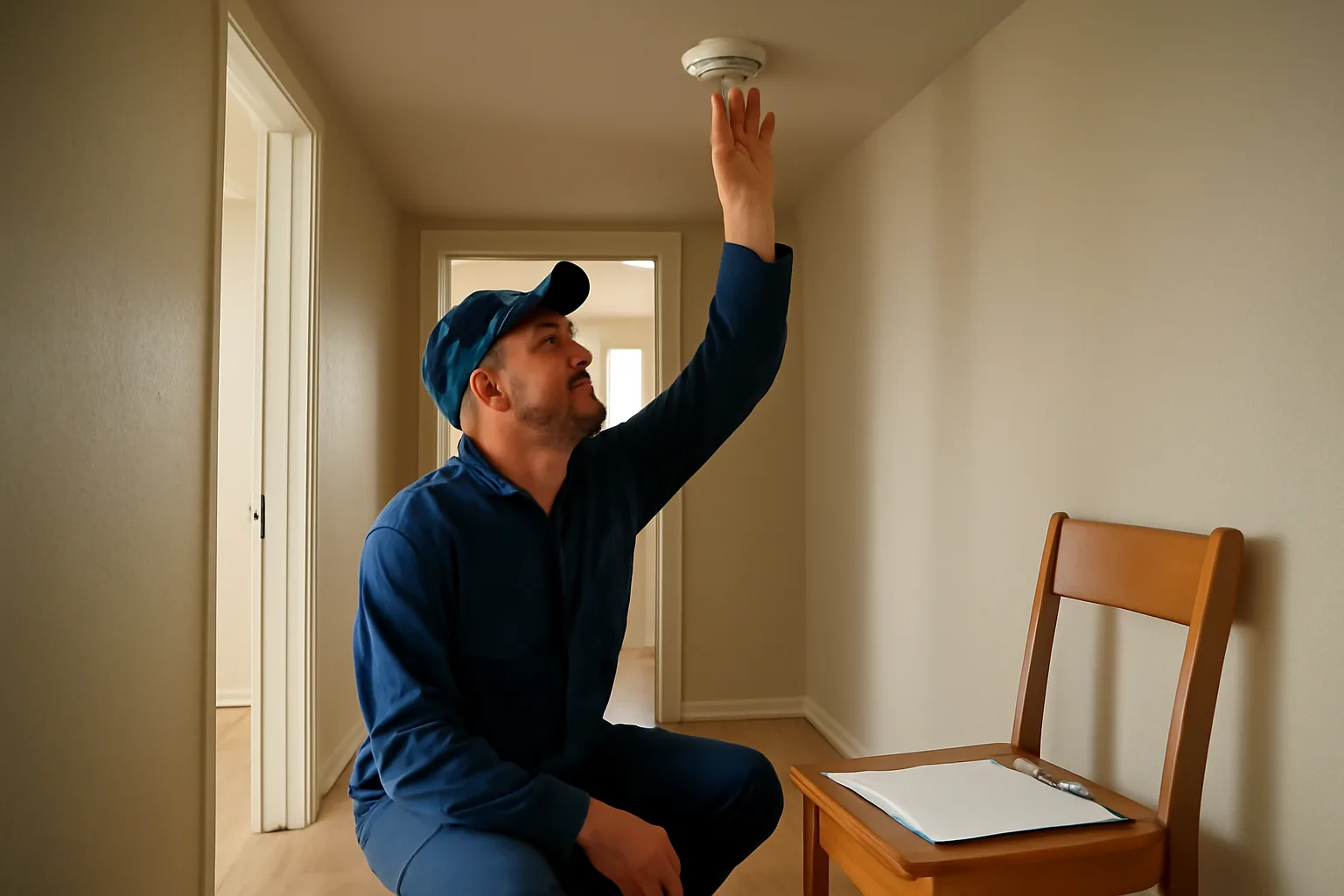
A solid apartment rental inspection checklist covers five buckets: safety systems, structure, mechanical systems, pest and moisture evidence, and exterior condition. If you're a landlord doing your own pre-lease or annual walkthrough, or prepping for a city rental inspector, the list is basically the same. The inspector or the landlord is checking whether the unit is safe to live in and whether it matches what the lease and local code say it should be. Safety systems come first because they're what kills people when they fail. Smoke alarms in every bedroom and on every level, a carbon monoxide detector near sleeping areas if there's any fuel-burning appliance or attached garage, working locks on all exterior doors, and a second means of egress from bedrooms (a window that actually opens, not one painted shut). The National Fire Protection Association reports that smoke alarms were missing or failed to operate in almost half of home fire deaths where the report specified alarm status [1]. Structure means the floors don't sag, the ceiling isn't stained from a roof leak, stair railings are solid, and windows aren't cracked or painted shut. Mechanical systems means the furnace or heat source actually produces heat, the water heater doesn't leak or show rust at the base, outlets near water sources have GFCI protection, and there's hot and cold running water at every fixture. Pest and moisture evidence is droppings, gnaw marks, standing water, or visible mold. Exterior condition covers the roof, gutters, exterior stairs, railings, and whether the address number is visible from the street (a surprisingly common citation item in cities like Minneapolis and Milwaukee). If your city requires a rental license, your local checklist is almost certainly longer and more specific than any generic list online. Confirm with your city rental licensing office for the exact form inspectors use, since items like minimum ceiling height, egress window dimensions, or handrail height vary by code edition adopted.
What can a landlord look at during an inspection?
A landlord can look at the general condition and function of the unit: appliances, plumbing, electrical, flooring, walls, windows, doors, smoke detectors, and signs of damage or unauthorized alterations. A landlord is generally not entitled to search through a tenant's personal belongings, drawers, or closets just because they're inside doing an inspection. The legal basis for entry itself, separate from what's checked once inside, comes from state landlord-tenant statutes. California, for example, allows entry to make necessary repairs, show the unit to prospective tenants or buyers, or to inspect, but requires it during normal business hours and with proper notice except in emergencies [2]. Most inspection checklists focus on visible, functional conditions rather than personal property, and a landlord who goes through drawers or opens closed containers is inviting a privacy complaint on top of whatever the inspection was for. Practically, a landlord doing an interior inspection should check: every smoke and CO alarm (test the button, confirm it's more than plugged in without a battery backup), every window opens and locks, no active leaks under sinks or around the water heater, HVAC turns on and produces heat or cool air, outlets aren't overloaded or scorched, and there's no visible mold or pest activity. Take dated photos of everything, good and bad. That photo record protects you if a tenant later claims a condition existed before move-in that actually happened on their watch, and it protects the tenant if you try to charge for pre-existing damage at move-out.
Who is responsible for a rental property walk-through inspection in California?
In California, the landlord is responsible for offering a joint move-out inspection if the tenant requests one, and for documenting unit condition at move-in, but the tenant shares responsibility for participating and for reporting habitability problems during the tenancy. California Civil Code Section 1950.5 requires that if a landlord intends to withhold any part of the security deposit for repairs or cleaning, the landlord must, upon request, give the tenant a reasonable opportunity to remedy issues identified in a pre-move-out inspection before final deductions are made [3]. The statute puts the initiation duty on the landlord: the landlord must notify the tenant in writing of the right to request an initial inspection, conducted no earlier than two weeks before the end of the tenancy [3]. If the tenant requests it, the landlord must give at least 48 hours written notice of the date and time, unless the tenant waives that notice [3]. After that inspection, the landlord gives the tenant an itemized statement of deficiencies and, again, a reasonable chance to fix them before move-out. Separate from move-out inspections, some California cities with proactive rental inspection programs (like Los Angeles's Systematic Code Enforcement Program) send a city inspector, not the landlord, to check habitability. That inspector's job is code compliance, not deposit accounting. The landlord is still responsible for scheduling access, paying any program fee, and fixing whatever the inspector flags. Confirm with your city rental licensing office whether your municipality runs its own proactive inspection cycle on top of the state move-out rules.
How much notice does a landlord have to give before an inspection?
Most states require 24 to 48 hours advance notice before a landlord enters an occupied unit for a non-emergency inspection, though the exact number and required form of notice varies by state. California generally requires 24 hours notice in writing, presumed reasonable unless the tenant shows otherwise [2]. For the specific move-out inspection under Civil Code 1950.5, the notice requirement is 48 hours unless waived by the tenant [3]. Other states set their own numbers. Some require only "reasonable notice" without a fixed hour count, which is vaguer and more likely to end up disputed. A city rental inspection tied to a licensing cycle is a separate notice track: the inspecting agency usually mails or emails a scheduled date weeks in advance, and rescheduling policies vary by city. Emergencies are the standard exception everywhere: a burst pipe, a gas smell, a fire, anything threatening immediate harm to people or the property lets the landlord enter without advance notice. Outside of emergencies, showing up unannounced, even for a five-minute check, is the single fastest way to turn a compliant tenant into one who files a harassment or privacy complaint. Put your notice policy in writing, deliver it the way your state statute specifies (many require actual written notice, not a text message, though some states now recognize electronic notice if the lease allows it), and keep a copy.
What is a landlord and what does landlording actually involve?
A landlord is the owner, or an authorized agent of the owner, of residential property who rents that property to a tenant in exchange for regular payment, usually under a lease. Landlording is the day-to-day work of running that rental: collecting rent, handling repairs, screening tenants, following state and local landlord-tenant law, and, in mandatory-licensing cities, keeping the rental registered and passing periodic inspections. On paper it sounds simple. In practice, landlording means being on call for maintenance requests, understanding your state's notice and entry rules, tracking lease renewal and rent increase timing, filing whatever registration or license renewal your city requires, and budgeting for the fact that furnaces, water heaters, and roofs don't last forever. HUD's landlord resources describe fair housing compliance, habitability standards, and lease enforcement as core parts of this role, since a landlord who violates fair housing law or ignores a habitability complaint is exposed to real liability regardless of intent [4]. Small landlords, meaning people with 1 to 10 units, usually do this alongside a full-time job. That's the audience where a missed license renewal or a failed inspection notice turns into a real financial hit, because there's no property management staff catching it early. If you're new to this, read up on landlord landlords responsibilities before you sign your first lease, not after your first inspection notice arrives.
How do you become a landlord and what's required to be one?
Becoming a landlord legally requires owning or having authority over residential property, complying with your state's landlord-tenant statute, and, in many cities, registering the rental with a local licensing office before you can legally lease it. There's no license required to be a landlord in most of the U.S. at the state level, but a growing number of cities require a rental license, registration, or periodic inspection regardless of how many units you own. The practical steps: confirm your property is zoned for rental use, check whether your city or county requires rental registration or licensing (cities like Minneapolis, Los Angeles, and dozens of others do), get landlord liability insurance, understand your state's security deposit limits and return deadlines, learn your state's required disclosures (lead paint disclosure is federally required for pre-1978 housing under 42 U.S.C. 4852d, enforced by HUD and EPA), and set up a lease that matches state law. Most new landlords underestimate the local licensing piece. It's easy to find state law online; it's much harder to find out that your specific city requires a $150 rental license renewal every two years with a mandatory inspection, because that information lives on a city website, not a state one. Confirm with your city rental licensing office before you list the unit, not after a neighbor complaint triggers an inspector's visit.
What is landlording, exactly, versus just owning a rental?
Landlording is the active management of a rental property: setting rent, screening and selecting tenants, maintaining the unit, enforcing the lease, and complying with ongoing legal obligations. Owning a rental is just holding title. You can own a rental and pay someone else to do the landlording (a property manager), but if you're doing it yourself, landlording is the actual job. The job breaks into four repeating cycles: leasing (marketing, screening, signing), maintenance (repairs, inspections, capital replacements), compliance (state law, local ordinances, licensing renewals), and money (rent collection, security deposit accounting, taxes). Miss any one of these consistently and you end up with vacancy losses, code violations, or a lawsuit. For small landlords, the compliance cycle is the one that sneaks up. State law you learn once and mostly reuse. City rental licensing requirements change more often, get updated with new fee schedules, and vary block to block if you own in more than one municipality. This is exactly the gap our $79 City Rental License & Inspection Prep Packet is built to close: a structured way to track what your specific city requires for registration, renewal, and inspection prep, instead of guessing based on what your landlord friend in a different city tells you.
What rights do tenants have without a signed lease?
A tenant without a signed lease still has legal rights, typically as a month-to-month tenant under state law, including the right to habitable housing, protection from illegal lockouts, and required notice before eviction or rent increases. No lease doesn't mean no rights. Once someone moves in and pays rent, most states treat that as creating a tenancy, usually month-to-month, governed by the same habitability and eviction procedures as a written lease. Habitability is the big one. Every state has some version of an implied warranty of habitability, meaning the landlord must provide a unit that's safe and livable (working plumbing, heat, structural safety) whether or not that's written down anywhere. HUD's tenant rights overview and state statutes both treat this as automatic, not contract-dependent [4]. Without a written lease, notice periods for ending the tenancy usually default to whatever the state sets for month-to-month tenancies, commonly 30 days, though some states use different periods for landlord-initiated versus tenant-initiated notice. Eviction still requires legal process; a landlord can't just change the locks or shut off utilities to force someone out, and doing so is illegal self-help eviction in essentially every state. Read more on tenants rights and tenant rights for how this plays out state by state, and check renters rights for tenant-facing detail on habitability complaints.
Why do landlords require renters insurance?
Landlords require renters insurance mainly to shift liability for the tenant's personal property loss and personal liability claims away from the landlord's own policy. A landlord's property insurance covers the building and the landlord's own fixtures and appliances; it does not cover a tenant's furniture, electronics, or clothing if there's a fire, burst pipe, or theft. Without renters insurance, a tenant who loses everything in a fire has no coverage, and some tenants in that position try to argue the landlord should pay for it anyway. Renters insurance also typically includes liability coverage, which matters if the tenant's dog bites a visitor, or the tenant accidentally causes a kitchen fire that damages a neighboring unit. That liability coverage can protect the landlord from being the only deep pocket left standing in a lawsuit. Many landlord insurance carriers and industry groups recommend requiring it precisely for this reason, and some mortgage or umbrella policies for landlords are priced assuming tenants carry their own coverage. Cost is usually not the tenant's objection once they understand the math: renters insurance typically runs in the range of a modest monthly premium, far less than replacing a bedroom's worth of belongings out of pocket. Requiring it in the lease is legal in nearly every state as long as it's applied consistently to all tenants, which matters for fair housing compliance.
What can't a landlord do in Ohio?
In Ohio, a landlord cannot enter a rental unit without reasonable notice, cannot shut off utilities or change locks to force a tenant out, cannot retaliate against a tenant for exercising legal rights, and cannot ignore basic health and safety repair obligations. Ohio Revised Code 5321.04 lays out the landlord's specific duties, including keeping the premises in a fit and habitable condition, maintaining electrical, plumbing, and heating systems in good working order, and complying with building, housing, and health codes that materially affect health and safety [5]. On entry, Ohio Revised Code 5321.04(A)(8) requires the landlord to give reasonable notice of intent to enter and to enter only at reasonable times, with entry allowed to inspect, make repairs, or show the unit to prospective tenants or buyers [5]. Ohio courts and tenant guides generally treat 24 hours as the practical standard for reasonable notice, though the statute itself doesn't specify an exact hour count the way California's does. Ohio Revised Code 5321.02 separately prohibits retaliation: a landlord cannot terminate a tenancy, refuse to renew, or increase rent in response to a tenant complaining to a government agency about a code violation, joining a tenant union, or asserting rights under the landlord-tenant chapter [6]. Ohio also prohibits illegal self-help eviction; a landlord who locks out a tenant, removes their belongings, or shuts off utilities without a court order can be sued for actual damages, and the tenant can recover attorney fees under some circumstances under the same chapter.
How does a licensing-city inspection differ from a routine landlord walkthrough?
A licensing-city inspection is a code-compliance visit by a city official tied to a rental license or registration requirement, while a routine landlord walkthrough is a voluntary check the landlord does on their own schedule. The city inspection carries legal consequences (fines, license denial, or a re-inspection fee) if it fails; a landlord's own walkthrough doesn't, unless it uncovers something that later becomes a habitability dispute. Cities that require rental licensing generally set an inspection cycle, commonly every 1 to 3 years, though some cities inspect only on a complaint basis or at change of tenancy. The specific interval, fee, and checklist form differ by city and change periodically as codes are updated, so there's no single national number to quote here. What's consistent is the pattern: register the rental, pay a fee, schedule or wait for the inspection, get a list of violations if any exist, fix them within a stated correction period, and get re-inspected if required. The smart move for a landlord in one of these cities is running your own pre-inspection walkthrough using the same checklist categories (smoke/CO alarms, egress windows, plumbing, electrical, exterior) a few weeks before the city visit. Anything you catch and fix yourself costs you a hardware store trip. Anything the inspector catches costs you a violation notice, a correction deadline, and sometimes a re-inspection fee. Confirm with your city rental licensing office for your exact cycle length and fee before you assume it matches a neighboring city's rules.
What happens if your rental fails an inspection or gets a violation notice?
If a rental fails inspection, the city typically issues a written notice listing each violation, a deadline to fix it (often 30 to 60 days but set by local ordinance), and sometimes a re-inspection fee to confirm the fix. Ignoring the notice is the expensive mistake. Cities that run rental licensing programs generally have escalating consequences: a warning becomes a fine, an unpaid fine becomes a lien on the property, and a licensing agency can suspend or revoke a rental license for a property that stays out of compliance, which can make it illegal to keep renting the unit until it's resolved. The first move after a violation notice is reading it carefully rather than reacting. Note the exact code section cited, more than the plain-language description, since the code section tells you the actual legal standard you have to meet. Fix what's genuinely broken. If something seems wrong (cited for a smoke alarm that you know works, for instance), most cities have an appeal or reinspection request process, and it's worth using it rather than assuming the notice is final. Budget for the reinspection fee if your city charges one; it's typically far smaller than the license suspension risk if you blow the deadline. And if you're managing this for the first time, having a structured way to track your city's specific renewal dates, checklist items, and fee schedule saves real time. That's the gap our $79 City Rental License & Inspection Prep Packet is built to fill, organizing what your specific city requires so a violation notice doesn't become a repeat problem next cycle.
Frequently asked questions
How do you become a landlord if you've never rented out property before?
Buy or already own residential property, check zoning and any city rental registration or licensing requirement, get landlord liability insurance, learn your state's security deposit and disclosure rules (including the federal lead paint disclosure for pre-1978 units), and use a lease that matches your state's landlord-tenant statute. No state license is required in most places, but many cities require registration before you can legally rent.
Who is responsible for the rental walk-through inspection in California?
The landlord must offer, in writing, the tenant's right to request an initial move-out inspection at least two weeks before the tenancy ends, and must give 48 hours notice of the scheduled date under California Civil Code 1950.5. The tenant decides whether to request it and can waive the notice period.
What is landlording?
Landlording is the active work of running a rental property: screening and leasing to tenants, handling repairs and inspections, collecting rent, and complying with state and local landlord-tenant law, including any city rental license or registration renewal.
What is a landlord, legally speaking?
A landlord is the owner, or an authorized agent of the owner, of residential real property who leases it to a tenant for payment, subject to the landlord-tenant statute of the state where the property sits.
What rights do tenants have without a signed lease?
A tenant without a written lease still gets habitability protections, protection from illegal lockouts and self-help eviction, and notice before the tenancy ends, typically under a month-to-month default set by state law. Paying rent and being allowed to occupy the unit generally creates a legal tenancy even without paperwork.
How to be a landlord day to day, once you have a tenant in place?
Respond to maintenance requests promptly, keep the unit meeting habitability standards, follow your state's notice rules before entering, document unit condition at move-in and move-out, keep security deposit funds handled the way your state law requires, and renew any city rental license or registration on schedule.
Why do landlords require renters insurance?
It shifts the cost of the tenant's personal property loss (fire, theft, water damage) away from the landlord and gives the tenant liability coverage for accidents, like a guest injury, that could otherwise expose the landlord to a lawsuit. It's inexpensive relative to the liability it covers.
How much notice does a landlord have to give before entering?
Most states set 24 to 48 hours as reasonable notice for non-emergency entry, though the exact figure and whether it must be written varies by state statute. Emergencies (fire, flooding, gas leak) don't require advance notice anywhere. Check your specific state's landlord-tenant statute for the exact requirement.
What can a landlord look at during an inspection?
A landlord can check the unit's general condition and function: smoke and CO alarms, plumbing, electrical, HVAC, windows and doors, and signs of damage, pests, or unauthorized alterations. A landlord generally shouldn't search personal belongings, drawers, or closed containers as part of a routine inspection.
What can't a landlord do in Ohio?
Under Ohio Revised Code 5321.04 and 5321.02, a landlord can't enter without reasonable notice, can't ignore habitability duties like heat, plumbing, and electrical repairs, can't retaliate against a tenant for filing a code complaint, and can't force a tenant out through illegal lockouts or utility shutoffs.
How often do cities with rental licensing require inspections?
It varies widely: some cities inspect every 1 to 3 years on a fixed cycle, others only inspect at change of tenancy or after a complaint. There's no single national standard, so confirm with your specific city rental licensing office for the actual cycle and fee that applies to your property.
What happens if a rental fails a city inspection?
The city typically issues a written violation notice with a correction deadline, often 30 to 60 days depending on local ordinance, and may charge a reinspection fee to confirm the fix. Unresolved violations can lead to fines, liens, or suspension of the rental license, so acting before the deadline matters.
Do I need a professional inspector to prep for a city rental inspection?
Not usually. Most landlords can run their own pre-inspection walkthrough using the same categories a city inspector checks (alarms, egress, plumbing, electrical, exterior condition) and fix obvious issues themselves. A professional inspector adds cost but can help if you're unfamiliar with your city's specific code requirements.
Sources
- National Fire Protection Association, Smoke Alarms in U.S. Home Fires report: Smoke alarms were missing or failed to operate in a large share of home fire deaths where alarm status was reported
- California Civil Code Section 1954: California landlords may enter to make repairs or show the unit, during normal business hours, with proper notice except in emergencies
- California Civil Code Section 1950.5: Landlords must offer an initial move-out inspection with 48 hours notice and a chance to fix noted deficiencies before final deposit deductions
- U.S. Department of Housing and Urban Development, Tenant Rights and Resources: Habitability standards and fair housing compliance are core landlord obligations regardless of lease terms
- Ohio Revised Code Section 5321.04: Ohio landlords must maintain habitable conditions, keep systems in working order, and give reasonable notice before entry
- Ohio Revised Code Section 5321.02: Ohio law prohibits landlord retaliation against tenants who report code violations or assert legal rights