Last updated 2026-07-25
TL;DR
A landlord can inspect for safety hazards, maintenance issues, lease violations, and move-in/move-out condition, but almost every state requires advance notice (commonly 24 or 48 hours) except in emergencies. Landlords generally cannot search personal belongings, show up unannounced for routine checks, or use inspections to harass a tenant.
What is a landlord allowed to inspect during a routine visit?
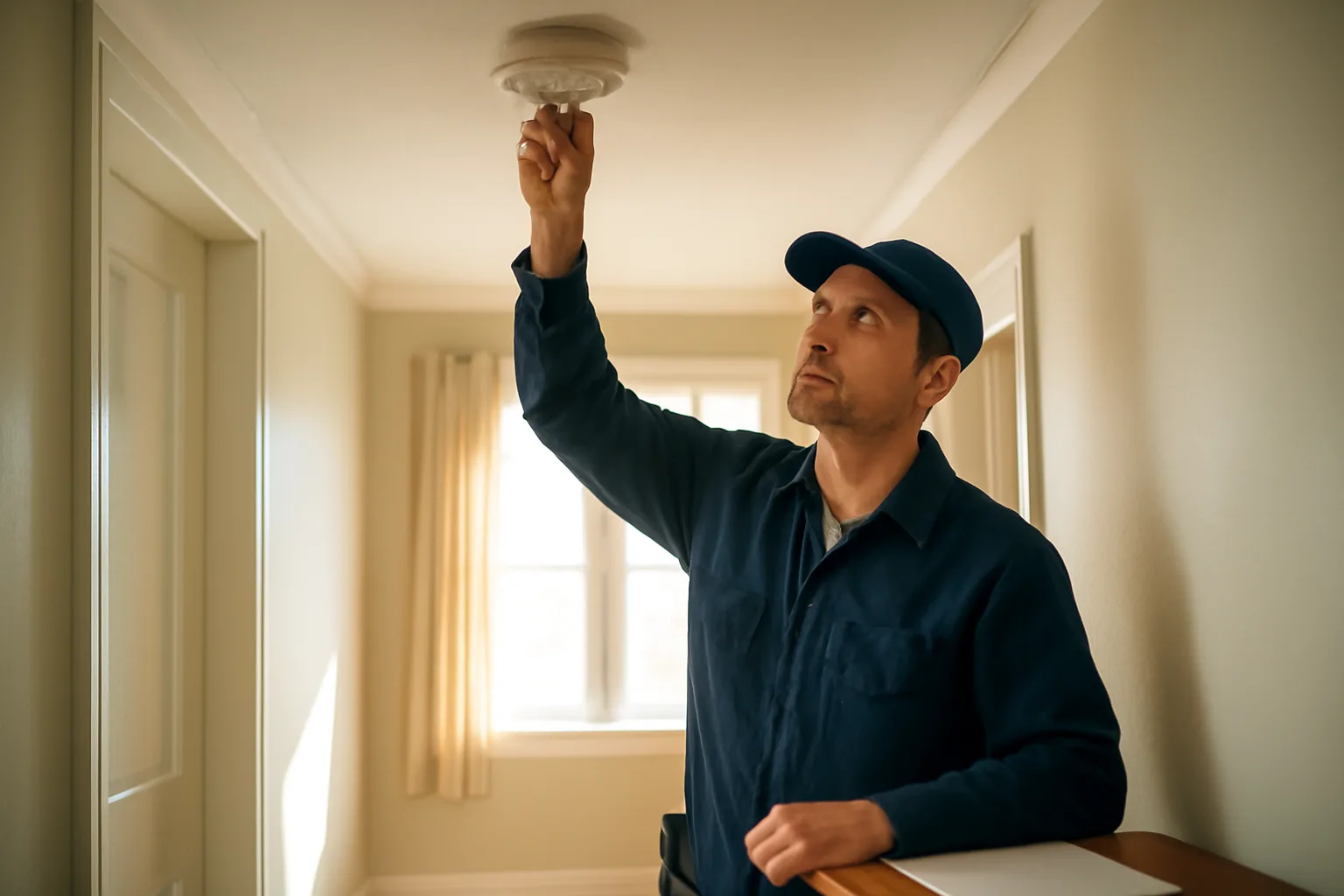
A landlord can look at anything connected to the physical condition of the unit and whether the tenant is following the lease. That means checking smoke detectors and carbon monoxide alarms, looking for water damage or mold, checking that appliances work, confirming there's no unauthorized pet or unauthorized occupant, and looking for obvious safety hazards like blocked exits or exposed wiring. What a landlord generally cannot do is open drawers, closets full of personal items, or containers just to look through someone's stuff. The inspection has to relate to the property, not the tenant's personal life. If your city requires a rental license or registration, the inspector (sometimes a city employee, sometimes the landlord walking through with a checklist) is usually verifying specific code items: working locks, functioning heat, egress windows in bedrooms, GFCI outlets near water, and proper handrails on stairs. Confirm with your city rental licensing office exactly what their inspection checklist covers, because city-mandated inspections often go beyond what a private landlord would otherwise check on their own. Most state landlord-tenant statutes frame the right to enter around specific purposes: making repairs, showing the unit to prospective tenants or buyers, or checking that the tenant is complying with the lease. California's Civil Code, for example, lists the lawful reasons for entry and requires "reasonable notice in writing" that in most cases is presumed to be 24 hours [1].
How much notice does a landlord have to give before an inspection?
| California | 24 hours presumed reasonable | Civil Code 1954 [1] |
|---|---|---|
| Florida | 12 hours presumed reasonable (repairs) | Fla. Stat. 83.53 [2] |
| Texas | No statutory minimum; lease governs | Property Code Ch. 92 [3] |
| Ohio | No statewide notice statute; 24 hours common practice | ORC 5321.04 [4] |
Most states require 24 to 48 hours of written or verbal notice before a non-emergency entry, though the exact number and format varies a lot by state. California presumes 24 hours is reasonable notice for entry, delivered in writing, personally, or left at the residence [1]. Florida's landlord-tenant law says notice "shall be reasonable, and 12 hours notice shall be presumed reasonable" for maintenance-related entry, which is notably shorter than most states [2]. Other states, like New York, don't set a statewide statutory notice period the way California does, though many local ordinances and standard lease language use 24 hours as the norm. Some cities layer their own rules on top of state law for rental-registration inspections, sometimes giving tenants 7 to 30 days notice before a scheduled city inspection so they have time to prepare or be present. Emergencies are the big exception everywhere. If there's a fire, a burst pipe actively flooding the unit, a gas leak, or another situation threatening health, safety, or the property itself, a landlord (or the fire department) can enter without any advance notice at all. Outside of an emergency, showing up unannounced for a routine check is the single most common landlord-tenant friction point around inspections, and it's usually where landlords get themselves into legal trouble. | State | Notice for routine entry | Source |
Who is responsible for the rental property walk-through inspection in California?
In California, the landlord (or the landlord's authorized agent, like a property manager) is legally responsible for giving proper notice and conducting move-in and move-out inspections, but California law also gives tenants a right to request a joint walk-through before they move out. Under Civil Code Section 1950.5, if a landlord plans to withhold any part of a security deposit, the tenant has the right to request an initial inspection before vacating, and the landlord must give at least 48 hours written notice of that inspection date and time [1]. During that pre-move-out walk-through, the landlord has to tell the tenant what needs fixing or cleaning so the tenant has a chance to address it and avoid deductions. Some California cities with rental registration programs, like Los Angeles' Rent Stabilization Ordinance program, add their own habitability inspection layer on top of this, separate from the security deposit walk-through. If your unit is registered under a city program, check with your city rental licensing office about whether city inspectors, more than the landlord, will be doing a separate compliance check. The security deposit portion of this is codified: California Civil Code 1950.5(f) requires the landlord to provide an itemized statement of deductions within 21 days after the tenant moves out [1].
What can a landlord look at during an inspection?
A landlord can reasonably look at the condition of walls, floors, ceilings, plumbing fixtures, electrical outlets, windows and window locks, smoke and CO detectors, HVAC equipment, and any area affected by a maintenance request. They can also visually confirm lease compliance: is there an unauthorized pet, does the unit look like more people are living there than listed on the lease, is there obvious property damage. What's off-limits is anything unrelated to habitability or lease terms. A landlord doing a maintenance inspection has no legitimate reason to go through medicine cabinet contents, read mail sitting on a counter, look inside a locked safe, or photograph personal items just because they're visible. Some tenants ask if a landlord can take pictures during an inspection: generally yes, for documenting the unit's condition, but photos should focus on the property, not the tenant's belongings or the tenant themselves. City rental inspectors checking for license compliance typically use a standardized checklist covering: working smoke detectors on every level, secondary means of egress from bedrooms, functioning heat source, no exposed wiring, handrails on stairs with more than a few steps, and no evidence of pest infestation. That's a narrower, code-focused list compared to what a landlord might personally want to check (cleanliness, unauthorized occupants, wear and tear). If you're prepping for a first city inspection, our City Rental License & Inspection Prep Packet walks through the most common checklist items city inspectors flag, city by city, for a one-time $79 fee. It won't guarantee you pass, since every city's checklist differs, but it saves the guesswork of not knowing what's coming.
What a landlord cannot do in Ohio
Ohio's landlord-tenant law, Ohio Revised Code Section 5321.04, spells out landlord obligations and, by extension, limits. A landlord in Ohio cannot enter the rental unit without giving "reasonable notice" and without entering "at reasonable times," and can only enter for purposes tied to inspection, repairs, alterations, supplying services, or showing the unit to prospective tenants, purchasers, or contractors [4]. Ohio law also prohibits retaliatory conduct: a landlord cannot raise rent, decrease services, or threaten eviction because a tenant complained to a health or safety agency, or because the tenant joined a tenants' union. That's under ORC 5321.02 [5]. And under ORC 5321.15, an Ohio landlord cannot shut off utilities, change the locks, or remove a tenant's belongings to force them out, commonly called "self-help eviction." That has to go through the court eviction process instead [6]. Ohio doesn't set a specific number of hours for notice the way California or Florida do, which surprises a lot of landlords and tenants alike. "Reasonable notice" and "reasonable time" are the statutory standard, and most Ohio leases and property managers use 24 hours as their working definition, but that's a practice norm, not a hard statutory number. If a dispute goes to court, a judge decides what counted as reasonable under the specific facts.
What rights do tenants have without a lease?
Tenants without a written lease, often called month-to-month or at-will tenants, still have the same basic legal protections as tenants with a signed lease. The habitability requirement, the notice-before-entry rules, the protection against retaliatory eviction, and the security deposit rules in most states all apply regardless of whether there's paper documenting the tenancy. What changes without a written lease is mostly around termination and rent changes. A month-to-month tenancy generally can be ended by either party with proper notice, commonly 30 days, though some states or cities (especially those with rent stabilization or just-cause eviction rules) require longer notice or a specific legal reason. Verbal leases are legally enforceable in most states for month-to-month arrangements, though proving the specific terms of a verbal agreement in a dispute is obviously harder than pointing to a signed document. A tenant without a lease still has to be given proper notice before a non-emergency entry. The absence of a written lease doesn't strip away a tenant's statutory protections against illegal lockouts, utility shutoffs, or unannounced inspections. Landlords sometimes assume no written lease means fewer rules; that's a mistake that shows up in court records fairly often, since state statutes (not the lease itself) create most of these tenant protections.
Why do landlords require renters insurance?
Landlords require renters insurance mainly to shift liability and reduce financial risk when something goes wrong that isn't the landlord's fault, like a tenant's grease fire, an overflowing bathtub that damages the unit below, or a guest getting injured inside the tenant's apartment. A landlord's own property insurance covers the building and the landlord's liability, but it typically doesn't cover a tenant's personal belongings or liability claims arising from the tenant's own actions. Requiring renters insurance, often in the range of $15 to $30 a month for a basic policy according to insurance industry estimates, is a low-cost way for a landlord to make sure there's a funding source if a tenant causes damage or an injury happens inside the unit. It also protects the tenant: without it, a tenant who loses everything in an apartment fire has no coverage for replacing their belongings, since the landlord's building insurance won't pay for a tenant's furniture or electronics. Most states allow landlords to require renters insurance as a lease condition, as long as it's disclosed before signing and applied consistently to all tenants (singling out specific tenants could raise fair housing concerns). It's not a legal requirement nationwide, it's a landlord choice, but it's become close to standard practice in larger professionally managed buildings.
How to become a landlord (and what it actually takes)
Becoming a landlord starts with buying or already owning a property you intend to rent out, then registering it if your city or state requires rental licensing, getting proper insurance, and understanding your state and local landlord-tenant law before you hand over a key. There's no license required nationally to be a landlord the way there is for, say, a real estate agent, but a growing number of cities require a rental license, registration, or periodic inspection before you can legally lease a unit. The practical steps: confirm zoning allows the rental use, get landlord liability insurance (different from a standard homeowner's policy), check whether your city requires rental registration or licensing, set up a way to screen tenants consistent with fair housing law, and prepare a lease that matches your state's required disclosures (lead paint disclosure for pre-1978 housing is a federal requirement under 24 CFR 35.92, for instance [7]). A lot of new landlords underestimate the city compliance layer. Cities like Baltimore, Minneapolis, and dozens of others require every rental unit to be registered, and many require a passed inspection before the license is issued or renewed. Skipping this step is one of the more expensive mistakes a first-time landlord makes, since fines for operating without a required rental license can run from roughly $100 to over $1,000 depending on the city and how long the violation has gone unaddressed. Confirm with your city rental licensing office what their specific registration and inspection requirements are before you list a unit.
What is landlording, and what is a landlord?
A landlord is the owner (or their authorized agent) of a property who rents that property to someone else, called a tenant, in exchange for rent. Landlording is the general term for the ongoing work of managing that arrangement: collecting rent, handling repairs, dealing with turnover, staying compliant with local law, and managing the tenant relationship. It's a mix of physical property management and legal compliance work. A landlord with one rental unit and a landlord with fifty units are both doing landlording, but the scale of paperwork, inspection requirements, and liability exposure changes a lot as the number of units grows. Landlords with even a single unit in a city with mandatory rental licensing face many of the same registration, notice, and inspection obligations as much larger operators, just at a smaller scale. Some states and cities also define "landlord" or "lessor" formally in statute for legal purposes: Ohio Revised Code 5321.01, for instance, defines "landlord" as the owner, lessor, or sublessor of residential premises, and defines the reciprocal obligations that come with that role [4]. For readers just starting out, our overview on what a landlord is and does and our page on tenant and landlord rights generally are good next reads.
How to be a landlord day-to-day: the compliance basics
Being a landlord day-to-day mostly comes down to four repeating tasks: collecting rent on schedule, responding to maintenance requests fast enough to meet your state's habitability standard, giving proper notice before entering the unit, and keeping up with any local licensing or registration renewal deadlines. Most habitability statutes require landlords to keep the unit in a condition fit for human habitation, covering things like working plumbing, heat, and structural safety. Courts and code enforcement agencies generally treat unreasonable delay in fixing a serious habitability issue (no heat in winter, a broken lock, a sewage backup) as a violation even without a state-specified deadline; some states, like California, specify that the landlord must act within a reasonable time after notice, which courts often treat as roughly 30 days for non-urgent repairs and much faster for anything affecting health or safety [1]. On the licensing side, a lot of individual landlords get caught off guard by renewal cycles. A city rental license issued for one or two years can lapse quietly if you're not tracking the date, and being unlicensed when a tenant complaint or code inspection happens is often when fines start. Keeping a simple calendar reminder for license renewal, insurance renewal, and any required periodic inspection date is the cheapest risk management move a small landlord can make.
What can't a landlord do (beyond Ohio specifics)?
Across nearly every state, a landlord cannot lock a tenant out without a court order, cannot shut off utilities to force a move-out, cannot enter without proper notice except in genuine emergencies, and cannot retaliate against a tenant for filing a legitimate code complaint or requesting repairs. These are sometimes called "self-help eviction" bans, and violating them can expose a landlord to statutory damages, more than an ordinary lawsuit. A landlord also generally cannot discriminate based on race, color, religion, sex, national origin, disability, or familial status under the federal Fair Housing Act (42 U.S.C. 3601 et seq.) [8], and many states and cities add protected categories like source of income, sexual orientation, or age. A landlord cannot use inspections as a pretext for harassment either; using repeated, unnecessary entries to pressure a tenant to move out can be treated as a form of illegal retaliation or harassment in several state statutes. Finally, a landlord generally cannot keep a security deposit without an itemized reason, and most states cap how long a landlord has to return it (commonly 14 to 30 days after move-out, 21 days in California under Civil Code 1950.5(g) [1]). Failing to return a deposit properly can expose a landlord to penalties of two to three times the withheld amount in some states.
Frequently asked questions
What is a landlord allowed to inspect for during a routine check?
A landlord can check safety items (smoke detectors, locks, exposed wiring), maintenance issues (leaks, appliance function, HVAC), and lease compliance (unauthorized pets or occupants). They generally cannot search personal belongings, drawers, or containers unrelated to the unit's physical condition or lease terms.
How much notice does a landlord have to give before entering?
Most states require 24 to 48 hours notice for non-emergency entry. California presumes 24 hours reasonable (Civil Code 1954); Florida presumes 12 hours reasonable for repairs (Fla. Stat. 83.53). Ohio requires 'reasonable notice' without a set number of hours. Emergencies don't require advance notice anywhere.
Who does the walk-through inspection in California, the landlord or the city?
The landlord (or their agent) conducts the standard move-in/move-out and security deposit walk-throughs under Civil Code 1950.5. Separately, some California cities with rental registration programs, like Los Angeles, send their own inspectors for code compliance. Confirm with your city rental licensing office which type applies to your unit.
What is landlording?
Landlording is the ongoing work of owning and managing a rental property: collecting rent, handling repairs and maintenance, staying compliant with state and local landlord-tenant law, and managing the tenant relationship from move-in through move-out.
What is a landlord, legally speaking?
A landlord is the owner or authorized agent of residential property who leases it to a tenant for rent. Some states define the term by statute; Ohio Revised Code 5321.01 defines 'landlord' as the owner, lessor, or sublessor of residential premises.
What rights do tenants have without a signed lease?
Tenants without a written lease still get the same core protections as those with one: habitability standards, notice-before-entry rules, and protection from illegal lockouts or retaliatory eviction. What usually changes is the termination process, often a 30-day notice for month-to-month tenancies, and how hard it is to prove specific terms in a dispute.
How do I become a landlord?
Buy or own a rental property, confirm local zoning allows renting it, get landlord liability insurance, check whether your city requires rental registration or licensing, screen tenants consistent with fair housing law, and use a lease with required disclosures like federal lead paint notice for pre-1978 buildings.
Why do landlords require renters insurance?
It shifts liability for tenant-caused damage or injuries away from the landlord's own policy, since standard landlord insurance doesn't cover a tenant's belongings or tenant-caused liability. Basic renters policies often run $15 to $30 a month and also protect tenants' own possessions.
What can a landlord look at during an inspection versus what's off-limits?
On-limits: smoke detectors, plumbing, electrical, HVAC, structural condition, evidence of unauthorized pets or occupants. Off-limits: drawers, closets, personal papers, medicine cabinets, or anything unrelated to habitability or lease compliance. The inspection has to relate to the property, not the tenant's personal life.
What a landlord cannot do in Ohio specifically?
Under Ohio Revised Code 5321.04, a landlord can't enter without reasonable notice and a reasonable time, or for reasons unrelated to repairs, inspection, or showings. ORC 5321.02 bans retaliation for code complaints, and ORC 5321.15 bans self-help evictions like lockouts or utility shutoffs.
Can a landlord take photos during an inspection?
Generally yes, to document the unit's condition for maintenance or move-out records, but photos should focus on the property itself, not the tenant's personal belongings or the tenant. Using photos to document someone's personal life beyond the property raises privacy concerns in most states.
Can a landlord inspect without any notice at all?
Only in a genuine emergency, like a fire, active flooding, or a gas leak, where health, safety, or the property is at immediate risk. Outside emergencies, showing up unannounced for a routine check violates notice requirements in nearly every state's landlord-tenant law.
Sources
- California Civil Code Section 1954 and 1950.5: California presumes 24 hours written notice reasonable for landlord entry, and sets security deposit itemization and 21-day return rules
- Florida Statutes Section 83.53: Florida presumes 12 hours notice reasonable for landlord entry to make repairs
- Texas Property Code Chapter 92: Texas landlord-tenant law does not set a statutory minimum entry notice period
- Ohio Revised Code Section 5321.04: Ohio requires reasonable notice and reasonable timing for landlord entry, and defines allowed purposes for entry
- Ohio Revised Code Section 5321.02: Ohio prohibits landlord retaliation against tenants who file health or safety complaints
- Ohio Revised Code Section 5321.15: Ohio bans self-help evictions including lockouts and utility shutoffs
- HUD 24 CFR Part 35 Subpart H, Section 35.92: Federal law requires lead paint disclosure for housing built before 1978
- Fair Housing Act, 42 U.S.C. 3601 et seq.: Federal law prohibits housing discrimination based on race, color, religion, sex, national origin, disability, and familial status