Last updated 2026-07-25
TL;DR
Texas has no statute setting a specific number of hours or days for landlord entry notice into an occupied unit. Property Code Chapter 92 covers security devices, repairs, and lockouts, but entry notice is governed mostly by your lease terms and, in a few cities, local ordinance. Most landlords give 24 hours in writing as a practical standard.
Does Texas law set a required notice period for landlord entry?
No. Texas Property Code Chapter 92 (the Texas Landlord and Tenant statute covering residential tenancies) does not contain a general right-of-entry section that names a specific number of hours or days a landlord must give before entering an occupied rental unit [1]. That surprises a lot of landlords and tenants who assume Texas has a "24 hour rule" like several other states. It doesn't, at least not as a statewide statute. What Chapter 92 does cover in detail is security devices (Subchapter D), the landlord's duty to repair (Subchapter B), and rules around locks and lockouts (Section 92.0081) [1] [1]. Entry itself, meaning walking into a tenant's home while they're still living there, is left almost entirely to the lease contract. That means your notice obligation as a Texas landlord comes from three places: what you wrote into the lease, any local ordinance in the specific city where the property sits, and basic common-law and Texas Property Code protections against harassment or unreasonable interference with a tenant's use of the property. If your lease is silent on entry, you're in murkier territory. Courts generally read an implied duty of reasonable notice and reasonable timing into residential leases even without an explicit clause, but "reasonable" is not defined by statute in Texas the way it is in states like California (Civil Code 1954, 24 hours) [2] or Florida. Practically, that ambiguity is a reason to put a clear entry clause in every lease rather than relying on custom. A few Texas cities layer additional requirements on top of state law through rental registration or licensing ordinances, particularly around required inspections. If your property is in a city with mandatory rental licensing, check that city's specific inspection notice rules. They can require written notice with a set number of days before a compliance inspection, separate from ordinary landlord-initiated entry. Confirm with your city rental licensing office for the exact number, since it varies block to block across the state and changes over time.
How much notice does a landlord have to give before entering in Texas?
| Texas | None specified in Property Code Chapter 92 | Tex. Prop. Code Ch. 92 [1] | |
|---|---|---|---|
| California | 24 hours (written presumption reasonable) | Cal. Civil Code 1954 [2] | |
| Florida | 12 hours (typically) | Fla. Stat. 83.53 [4] | |
| Washington | 1 day (24 hours) | Wash. Rev. Code 59.18.150 [1] | If you own property in a city that also requires periodic rental inspections for licensing, that inspection notice is a separate animal from routine entry notice and often has its own timeline set by city ordinance, sometimes 7 to 10 days written notice before a scheduled compliance inspection. Confirm with your city rental licensing office for the exact figure where you operate. |
Since state law doesn't set a number, the honest answer is: whatever your lease says, and if the lease is silent, a court would likely expect something in the range of 24 hours' advance notice for non-emergency entry. That 24-hour figure isn't a Texas statute, it's the informal industry norm many Texas leases and property managers use because it matches the standard set by statute in other states and by HUD guidance for federally assisted housing [3]. The Texas Apartment Association's standard lease form, widely used across the state, typically includes a specific entry clause with notice language, and many independent landlords copy that approach into their own leases. If you don't currently have an entry clause, adding one that specifies a notice window (commonly 24 hours, sometimes 48) removes the ambiguity and protects you if a tenant later claims you entered without warning. Emergencies are the one clear exception nationwide and in Texas practice. A burst pipe, fire, gas leak, or immediate safety threat justifies entry without advance notice. That exception isn't spelled out in a specific Chapter 92 section either, but it's consistent with how Texas courts and every major property management authority treat emergency access. Here's a rough comparison of how Texas's silence compares to states that do legislate a number, so you can see why Texas landlords often default to borrowing the 24-hour standard: | State | Statutory notice requirement | Source |
What can a landlord look at during an inspection in Texas?
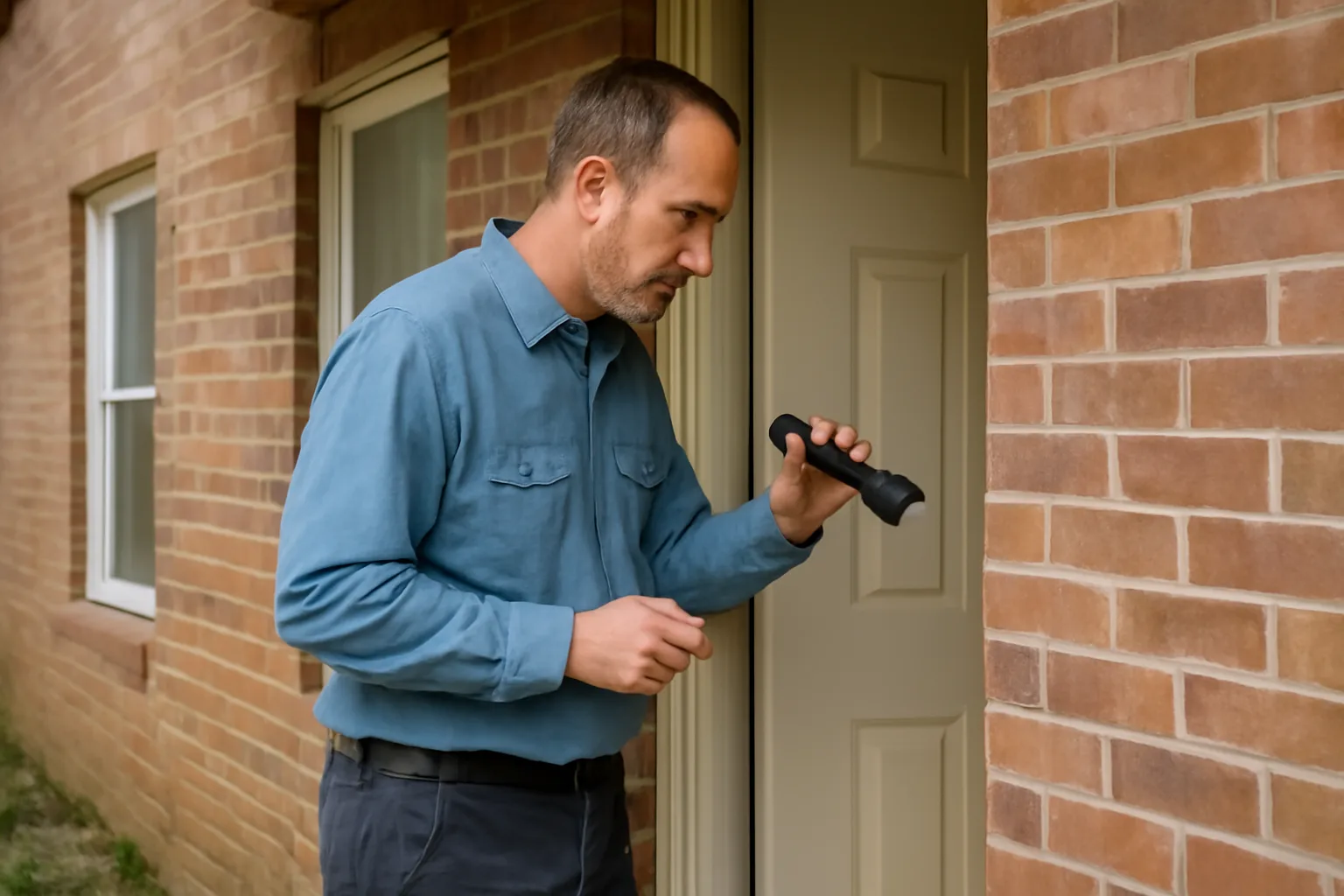
During a routine maintenance or safety inspection, a landlord can generally look at anything relevant to the condition and safety of the unit itself: smoke detectors, HVAC function, plumbing fixtures, electrical panels, signs of pest infestation, window and door locks, and any damage affecting habitability. Texas Property Code Section 92.052 establishes the landlord's duty to repair conditions that materially affect health and safety, which is the legal backbone for why inspections happen at all [1]. What a landlord generally should not do is search personal belongings, open closed drawers or containers, or use the inspection as a pretext to look through the tenant's possessions unrelated to the physical condition of the unit. That's not spelled out as a specific Chapter 92 prohibition, but it lines up with general Texas trespass and privacy principles, and it's the kind of behavior that gets landlords sued for harassment or invasion of privacy even where no specific statute names the act. If your city runs a mandatory rental inspection program tied to licensing, the inspector (often a city code enforcement officer, not the landlord) will typically check for the same core items: smoke and carbon monoxide detectors, exposed wiring, mold, structural issues, egress windows in bedrooms, and functioning locks. These inspections are usually scheduled with written notice and sometimes require the landlord or a representative to be present. The City Rental License & Inspection Prep Packet is built around exactly this kind of pre-inspection checklist work, since most violation notices trace back to two or three recurring issues (detectors, egress, and minor electrical) rather than anything exotic. A landlord who wants a smoother inspection walkthrough should test every smoke detector, check GFCI outlets in kitchens and bathrooms, and confirm every bedroom has a working, unobstructed window before the inspector or tenant walkthrough happens, not after.
What can a landlord look at during a tenant walkthrough versus a licensing inspection?
A tenant move-in or move-out walkthrough and a city licensing inspection serve different purposes and often involve different rules on who has to be there and what gets documented. The walkthrough (sometimes required by lease, sometimes just best practice) is about condition documentation for security deposit purposes. A city licensing inspection is about code compliance and is often a legal precondition for the landlord to keep renting the unit at all. During a move-in or move-out walkthrough, the landlord and tenant typically go room by room, noting existing damage, testing appliances, and photographing conditions. This protects both sides: the landlord has evidence for deposit deductions, and the tenant has evidence against being blamed for pre-existing wear. Texas Property Code Section 92.104 governs security deposit deductions and requires the landlord to provide an itemized list of deductions within 30 days of move-out, which is exactly why walkthrough documentation matters [1]. A licensing or code inspection, by contrast, is conducted by a city official (or sometimes a third-party inspector under contract with the city) checking against a specific code, not against the tenant's move-in condition. These are common in cities with mandatory rental registration programs, and the notice period, inspection scope, and appeal process for violations are set by that city's ordinance, not by state law. If you're unsure whether your city has this kind of program, check with your city rental licensing office directly, since Texas doesn't have a statewide rental licensing system, only a patchwork of city ordinances.
What rights do tenants have without a lease in Texas?
A tenant without a written lease, sometimes called a tenant at will or a month-to-month tenant by verbal agreement, still has real rights under Texas Property Code Chapter 92. The landlord's duty to repair conditions materially affecting health and safety under Section 92.052 applies regardless of whether there's a written lease [1]. Security deposit rules under Subchapter C apply too, as does the security device chapter (Subchapter D), which requires working locks and, in many cases, keyless bolting devices on exterior doors [1]. Without a written lease specifying notice periods, Texas law treats a tenancy as month-to-month absent other agreement, and terminating it generally requires notice equal to the rental period, commonly at least one full rental period's notice before either party ends the tenancy. The specifics can depend on how rent is paid and any oral agreement made. This is a general Texas landlord-tenant law principle rather than one specific numbered statute, so if you're relying on this, confirm the current interpretation with a Texas attorney or your local justice of the peace court, since eviction procedure (which is a separate process from entry notice) runs through the JP courts. A tenant without a lease does not lose protection against illegal lockouts. Section 92.0081 specifically prohibits a landlord from removing a door, changing locks to exclude a tenant, or removing personal property without a court order, and this applies to tenants at will just as it does to tenants under a signed lease [1]. For more general context on protections that exist independent of lease terms, see this site's guide on tenants rights.
Why do landlords require renters insurance in Texas?
Renters insurance protects the landlord indirectly by covering the tenant's personal property and liability, which reduces the odds that a fire, water damage, or injury claim ends up landing entirely on the landlord's own policy or out-of-pocket. Texas law does not require landlords to mandate renters insurance, but nothing stops a landlord from requiring it as a lease condition, and a large share of Texas leases (particularly from property management companies and larger portfolios) now do. The practical reason is straightforward: a landlord's own dwelling policy typically covers the structure, not the tenant's belongings, and it may not fully cover liability if a tenant's guest is injured due to something within the tenant's control (an unsecured pet, an overloaded extension cord, candles left burning). Requiring renters insurance shifts that liability exposure to the tenant's own carrier instead of triggering a claim against the landlord's policy, which can otherwise raise the landlord's premiums or trigger non-renewal. If you require renters insurance, the requirement and proof-of-coverage process belongs in the lease itself, along with a reasonable minimum liability coverage amount (commonly $100,000, sometimes $300,000, though this is a market norm, not a legal minimum set by Texas statute). This is a lease drafting decision, not something covered by Property Code Chapter 92 directly.
What is landlording, and what is a landlord, exactly?
A landlord is the owner of real property, or their authorized agent, who rents that property to another person (the tenant) in exchange for periodic payment, typically monthly rent, under a lease agreement. Under Texas Property Code Section 92.001, a "landlord" is defined as the owner, lessor, or sublessor of a dwelling, and it explicitly includes a management company or managing agent acting on the owner's behalf for duties like maintenance and security deposit handling [5]. "Landlording" is the informal term for the ongoing work of owning and operating rental property: screening tenants, drafting and enforcing leases, collecting rent, coordinating repairs, handling turnover, and staying current on the specific city and state rules that apply to your property. It's part landlord-tenant law compliance, part maintenance coordination, part bookkeeping, and increasingly, in cities with mandatory registration or licensing, part regulatory paperwork. The job looks very different depending on whether you self-manage one duplex or hire a property manager for a ten-unit portfolio, but the underlying legal responsibilities (habitability, security deposit handling, non-discriminatory tenant screening under the Fair Housing Act, and now in a growing number of Texas cities, rental license compliance) apply regardless of scale. For a broader look at what the role actually involves day to day, see landlord landlords.
How do you become a landlord in Texas, step by step?
Becoming a landlord in Texas starts with acquiring rental property, whether through purchase, inheritance, or converting a primary residence into a rental, and then meeting a short list of legal and practical requirements before you can lawfully rent it out. First, confirm the property complies with local building and safety codes, and check whether the city where the property sits requires rental registration or licensing. Texas has no statewide rental license, so this step depends entirely on your specific city; some cities (and this varies year to year, so confirm with your city rental licensing office) require an inspection and a registration fee before you can legally lease the unit. Second, set up the legal and financial groundwork: get landlord liability insurance (a standard homeowners policy usually won't cover a rental you no longer live in), open a separate account for security deposits if your city or lease structure calls for it, and decide on an LLC or personal ownership structure for liability purposes (a decision worth running past a Texas attorney or CPA rather than guessing). Third, write or adapt a lease that complies with Texas Property Code Chapter 92, covering security deposit handling (Subchapter C), repair obligations (Subchapter B), security devices (Subchapter D), and your entry notice policy, since state law won't fill that gap for you [1]. Fourth, screen tenants consistently and in compliance with the federal Fair Housing Act, which prohibits discrimination based on race, color, national origin, religion, sex, familial status, or disability [1]. Apply the same screening criteria to every applicant and document your reasons for denial. Fifth, if your city requires a rental license or registration, get the inspection scheduled and any required paperwork filed before you sign a lease, not after. Landlords who skip this step and get caught later often face back fees and sometimes fines layered on top of the original registration cost.
How do you actually be a landlord day to day, once you're licensed and leased up?
Being a landlord day to day is mostly about responsiveness and documentation. Texas Property Code Section 92.052 requires landlords to repair conditions that materially affect the physical health or safety of an ordinary tenant, and a tenant who gives proper written notice and the landlord doesn't act within a reasonable time can pursue remedies including repair-and-deduct under Section 92.0561 [1] [6]. That statute is the practical center of gravity for most landlord obligations. If a tenant reports a broken heater in January and you sit on it for three weeks, you're more than risking a bad tenant relationship, you're risking a specific statutory remedy against you. Beyond repairs, day-to-day landlording means handling rent collection and late fees consistently (Texas has no statewide cap on late fees, but courts have pushed back on fees that look punitive rather than compensatory), keeping security deposit funds traceable in case of a dispute, and responding to entry or access requests in a way that matches whatever notice clause you put in the lease. It also means keeping an eye on your city's rental registration or licensing calendar. Many licensing programs require annual or biennial renewal, sometimes with a re-inspection, and missing a renewal deadline is one of the more common ways landlords rack up avoidable fines. If you manage properties in a city that requires this kind of renewal, building a simple calendar reminder system (or using a structured prep packet built for the specific inspection categories your city checks) saves a lot of stress compared to reacting to a violation notice after the fact.
Who is responsible for the rental property walkthrough inspection, in Texas versus California?
In California, responsibility for the walkthrough inspection is explicitly addressed by statute: Civil Code Section 1950.5(f) gives the tenant the right to request an initial move-out inspection before the actual move-out date, and the landlord is required to give at least 48 hours' written notice of that inspection and provide the tenant an itemized statement of anything that needs fixing to avoid deductions [7]. That's a specific, codified process. Texas has no equivalent statute requiring a pre-move-out inspection walkthrough. The responsibility for conducting move-in and move-out inspections in Texas falls to whatever the lease specifies, and it's overwhelmingly a landlord-driven practice rather than a legal requirement. Most experienced Texas landlords do it anyway, because Section 92.104's requirement to itemize deposit deductions within 30 days is much easier to defend with photographic move-in and move-out documentation in hand [1]. So the short answer: in California, it's a shared, statutorily defined process with specific tenant rights baked in. In Texas, it's whatever the landlord sets up, and a landlord who skips it is taking on more legal risk in any deposit dispute, not less.
What can't a landlord do, and how does that compare to Ohio?
In Texas, a landlord cannot legally change the locks, remove doors, or remove a tenant's personal property to force them out without going through the courts. Section 92.0081 of the Property Code specifically restricts a landlord's ability to change or rekey locks to exclude a tenant except under narrow, specific conditions (such as after proper notice for nonpayment under a lease clause that meets statutory requirements), and any lockout has to follow the process laid out in that section, including immediately providing a new key on request in most circumstances [1]. Ohio law addresses similar ground differently. Ohio Revised Code Section 5321.15 explicitly prohibits a landlord from using "self-help" measures like changing locks, shutting off utilities, or removing a tenant's belongings to force them out, requiring the landlord to use the eviction process through the courts instead . The Ohio statute states plainly that a landlord "shall not initiate a nonjudicial move-out" and lists specific prohibited acts, which is more explicit and centralized than the more scattered protections found across the Texas Property Code. Both states land in the same place philosophically: no self-help evictions, no illegal lockouts, no seizing a tenant's stuff without a court order. But Ohio codifies it in one clear section, while Texas spreads similar protections across the security device statute and general landlord-tenant common law. If you're comparing landlord obligations across states for a multi-state portfolio, this is a good example of why you can't assume rules transfer directly. For more on tenant protections generally, see tenant rights and renters rights.
Where does this leave a Texas landlord writing an entry notice policy today?
Given that Texas Property Code Chapter 92 doesn't set a specific notice period, the most defensible approach is to put a clear, specific entry clause in every lease rather than relying on the vague "reasonable notice" standard courts might otherwise apply. A common, low-risk structure many Texas leases use: 24 hours' written notice for non-emergency entry (repairs, showings, inspections), stating the approximate time window, with an explicit emergency exception for situations threatening health, safety, or property damage. If the property is in a city with a mandatory rental licensing or registration program, layer the city's specific inspection notice requirement on top of your lease clause, since that's a separate and sometimes more rigid requirement tied to keeping your license in good standing. These programs and their notice periods vary by city and change over time, so confirm the current requirement with your city rental licensing office rather than relying on what a neighboring landlord tells you, or on what was true two years ago. This is also where a lot of landlords get tripped up on renewal timing, required documentation, and which specific code sections an inspector will check. The $79 City Rental License & Inspection Prep Packet is built to walk a landlord through exactly this kind of city-specific checklist ahead of a scheduled inspection, which is usually a cheaper fix than eating a re-inspection fee or a violation notice for something like a missing smoke detector or an unpermitted lock change. None of this is a substitute for reading your specific city's ordinance or talking to a Texas attorney about your specific lease, especially if you're dealing with an active dispute or a tenant who's already filed a complaint. Texas law leaves a lot of gaps for the lease to fill, and the landlords who do that filling carefully tend to have far fewer entry-related disputes than the ones who assume state law has it covered.
Frequently asked questions
How much notice does a landlord have to give before entering a rental in Texas?
Texas Property Code Chapter 92 does not set a specific number of hours or days for landlord entry notice. Most leases specify 24 hours in writing as the practical standard, borrowed from norms in other states, but this comes from the lease contract, not a Texas statute. Emergencies (fire, flooding, gas leaks) are a universal exception to any notice requirement.
Does Texas have a statewide rental licensing requirement for landlords?
No. Texas has no statewide rental license or registration system. Individual cities set their own rules, and many Texas cities have no rental licensing program at all while others (particularly larger cities) require registration, periodic inspection, or both. Confirm requirements with your specific city rental licensing office, since programs and fees vary and change.
What can a landlord look at during an inspection?
A landlord or inspector can check items tied to habitability and code compliance: smoke and carbon monoxide detectors, plumbing, electrical panels and outlets, HVAC function, window and door locks, and signs of pest infestation or structural damage. What they generally should not do is search personal belongings or drawers unrelated to the physical condition of the unit.
What rights do tenants have without a lease in Texas?
A Texas tenant without a written lease still has rights under Property Code Chapter 92, including the landlord's duty to repair conditions affecting health and safety (Section 92.052), security deposit protections, and protection against illegal lockouts under Section 92.0081. The tenancy is generally treated as month-to-month, and termination notice requirements depend on the rental period.
Why do landlords require renters insurance in Texas?
Requiring renters insurance shifts liability for a tenant's personal property and certain injury claims away from the landlord's own policy. Texas law doesn't mandate this, but it's common in leases because a landlord's dwelling policy typically doesn't cover a tenant's belongings or all liability scenarios tied to the tenant's own conduct.
What is landlording?
Landlording is the ongoing work of owning and operating rental property: screening tenants, handling leases and rent collection, coordinating repairs, managing turnover, and staying current on applicable state and city rules, including any local rental licensing or inspection requirements that apply to the property.
What is a landlord, legally speaking, in Texas?
Under Texas Property Code Section 92.001, a landlord is the owner, lessor, or sublessor of a dwelling. The definition explicitly includes a management company or managing agent acting on the owner's behalf for purposes like maintenance duties and security deposit handling, more than the titled property owner.
How do you become a landlord in Texas?
Acquire the property, confirm it meets local building and safety codes, check whether your city requires rental registration or licensing, get landlord liability insurance, write a Chapter 92-compliant lease covering repairs, deposits, and entry notice, and screen tenants consistently under the federal Fair Housing Act before signing a lease.
Who is responsible for the rental property walkthrough inspection in California versus Texas?
California law (Civil Code 1950.5(f)) gives tenants the right to request a pre-move-out inspection with at least 48 hours' notice from the landlord. Texas has no equivalent statute; walkthrough responsibility is whatever the lease specifies, though doing one protects the landlord when itemizing deposit deductions under Section 92.104.
What can't a landlord do in Ohio?
Ohio Revised Code Section 5321.15 prohibits landlords from using self-help measures like changing locks, shutting off utilities, or removing a tenant's belongings to force a move-out. Landlords must use the judicial eviction process instead. Texas has similar protections under Property Code Section 92.0081, though structured differently across the code.
Can a Texas landlord enter without any notice at all?
Only in genuine emergencies, like a fire, gas leak, or active flooding threatening the property. For routine entry (repairs, showings, inspections), a landlord should follow whatever notice period the lease specifies, commonly 24 hours in writing, since Texas statute doesn't set the number and courts expect reasonable advance notice.
Does a Texas city inspection require different notice than routine landlord entry?
Often, yes. Cities with mandatory rental licensing programs frequently set their own notice period for a scheduled compliance inspection, sometimes longer than the routine entry notice in your lease. That timeline is set by local ordinance, not state law, so confirm the specific number with your city's rental licensing office.
What happens if a Texas landlord enters without proper notice under the lease?
There's no specific statutory penalty in Chapter 92 for a notice violation the way there is for illegal lockouts, but repeated unauthorized entry can support a tenant claim for breach of the lease, harassment, or invasion of privacy under general Texas civil law. It also weakens the landlord's position in any later dispute.
Sources
- Texas Legislature, Property Code Chapter 92 (Residential Tenancies): Chapter 92 covers security devices, repairs, and lockouts but has no general statutory entry-notice-hours requirement
- California Civil Code Section 1954: California requires 24 hours' notice presumption for landlord entry
- Florida Statutes Section 83.53: Florida requires reasonable notice, commonly interpreted as 12 hours, for landlord entry
- Washington Revised Code 59.18.150: Washington requires at least one day's notice for landlord entry in most cases
- U.S. Department of Justice, Fair Housing Act overview: Federal Fair Housing Act prohibits discrimination in tenant screening based on protected classes
- California Civil Code Section 1950.5(f): California requires landlords to offer an initial move-out inspection with at least 48 hours' notice
- Ohio Revised Code Section 5321.15: Ohio prohibits landlord self-help measures like lockouts and utility shutoffs to force a tenant move-out