Last updated 2026-07-25
TL;DR
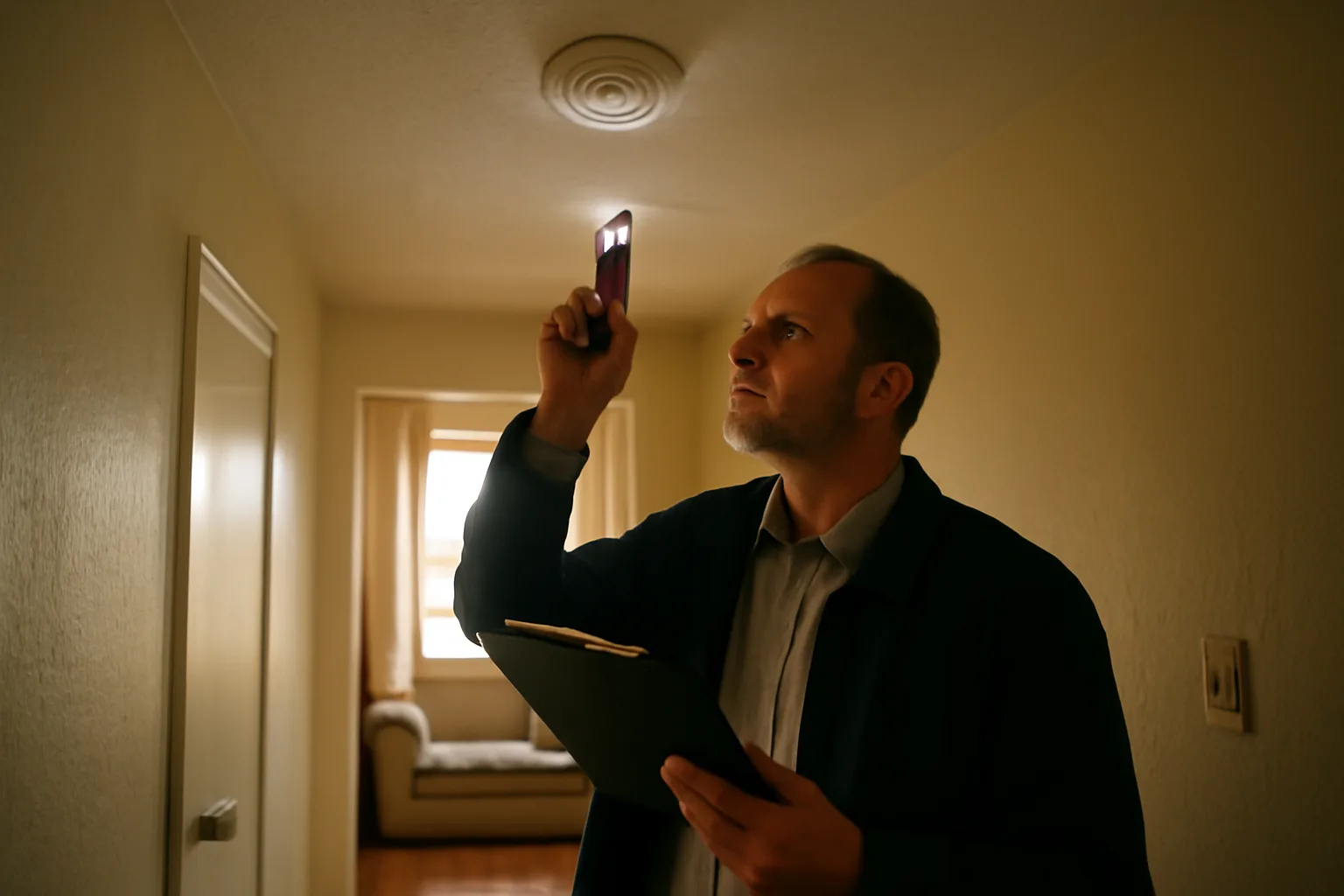
A tenant inspection list covers move-in/move-out condition, safety devices, and lease compliance items like unauthorized occupants or pets. Landlords generally must give advance notice (24 hours in California, per Civil Code 1954) and can only inspect for legitimate reasons like repairs, safety checks, or showing the unit, not to harass tenants.
What is a tenant inspection list, exactly?
A tenant inspection list is the set of items a landlord checks (or has a right to check) inside an occupied rental unit. It's different from a move-in or move-out condition report, though they overlap. Most cities with mandatory rental licensing require some version of a habitability inspection before issuing or renewing a license, and separately, landlords do periodic or as-needed walk-throughs to check on the unit's condition and confirm the tenant is following the lease. Think of it as three overlapping lists that people often lump together: the city's licensing inspection checklist (smoke detectors, egress windows, plumbing, electrical), the landlord's own condition-and-compliance walk-through (is the unit clean, is there unauthorized damage, is anyone living there who isn't on the lease), and the tenant's own move-in documentation (photos and notes protecting their security deposit). This article focuses mainly on the second and third, with pointers to how city licensing inspections fit in. If your city sent you a licensing notice or an inspection deadline and you're trying to figure out what your unit needs to pass, that's a related but separate question. A rental packet builder tool type resource (ours costs $79 one time) is built for that specific job: pulling together the documents and prep list a city inspector wants to see. This article is about the ongoing tenant-facing inspection, the one you do (or have the right to do) during a tenancy.
What can a landlord look at during an inspection?
| Safety devices | Smoke/CO detector battery and function | Disable or remove without notice |
|---|---|---|
| Structural/plumbing | Leaks, mold, window seals | Open walls without cause |
| Occupancy | Confirm names match lease | Demand ID checks beyond lease terms |
| Pets | Confirm compliance with pet clause | Search for personal items unrelated to pets |
| Cleanliness/hazard | Fire hazard clutter, hoarding conditions | Judge tenant's decor or lifestyle choices |
A landlord can generally inspect for safety hazards, property damage, unauthorized occupants or pets, evidence of lease violations, and the condition of appliances and fixtures the landlord owns. What a landlord cannot do is search personal belongings, go through drawers or closets unrelated to the inspection's purpose, or use the visit as a pretext to harass a tenant. A reasonable inspection checklist usually includes: smoke and carbon monoxide detector function, window and door locks, visible water damage or mold, HVAC filter and vent condition, plumbing leaks under sinks, electrical outlet and panel condition, evidence of pest activity, and general cleanliness that could create a habitability or fire hazard. Landlords in many states can also verify that the number of occupants matches the lease and that no unauthorized pet is present if the lease restricts pets. What's off-limits: opening a tenant's mail, searching for personal items unrelated to property condition, taking photos of the tenant's belongings beyond what's needed to document damage, or entering areas not necessary for the stated inspection purpose. California's landlord-tenant handbook from the state Department of Consumer Affairs describes the inspection right as tied to specific legitimate purposes, not general surveillance [1]. A quick reference table of common inspection categories: | Category | Landlord can check | Landlord generally cannot do |
How much notice does a landlord have to give before an inspection?
Notice periods vary by state, and this is one of the most misunderstood parts of landlord-tenant law. California requires "reasonable notice," which state law presumes to be 24 hours in writing, under Civil Code Section 1954 [2]. That statute lists the specific purposes that justify entry: to make repairs, show the unit to prospective tenants or buyers, or in an emergency (no notice required for emergencies). Other states set different defaults. Florida generally requires reasonable notice before entry, and Florida Statutes Section 83.53 states that a landlord may enter the dwelling unit "at any time for the protection or preservation of the premises" and otherwise must give the tenant reasonable notice of intent to enter, with 12 hours' notice presumed reasonable for the purpose of repair [3]. Some cities or states with just-cause eviction or tenant protection ordinances add stricter notice and frequency limits on top of the state floor, so always check your local rules alongside state law. A practical rule most experienced landlords follow: give at least 24 to 48 hours written notice, state the specific reason for entry, and offer a couple of time windows so the tenant can plan around work or childcare. That's not the legal minimum everywhere, but it avoids disputes and keeps the relationship functional. Showing up unannounced, even for something as simple as an HVAC filter swap, is the single most common trigger for a tenant complaint or a habitability retaliation claim.
Who is responsible for a rental property walk-through inspection in California?
In California, the landlord is responsible for scheduling and conducting the walk-through inspection, but state law gives the tenant specific rights around a pre-move-out inspection. Under California Civil Code Section 1950.5(f), a landlord must, upon the tenant's request, conduct an initial inspection before the tenant moves out and give the tenant an itemized list of anything that needs fixing or cleaning to avoid deposit deductions [4]. The statute is specific: this pre-move-out inspection has to happen no earlier than two weeks before the end of the tenancy, and the landlord must give at least 48 hours written notice of the date and time unless the tenant waives that notice. After the inspection, the landlord gives the tenant an itemized statement of deductions that would be made from the deposit, and the tenant gets the chance to fix those items before moving out. Separately, cities that require rental licensing (many California cities, including parts of Los Angeles County and various municipalities with a Rental Housing Inspection Program) may require the property owner, not the tenant, to arrange access for a city habitability inspector as a condition of the license. That's a landlord obligation. The tenant generally has to allow reasonable access but doesn't have to personally schedule anything with the city. If you're not sure whether your city runs this kind of program, confirm with your city rental licensing office, because the inspection cadence (annual, biennial, complaint-based) differs by jurisdiction.
What is landlording, and what is a landlord, exactly?
Landlording is the practice of owning and managing rental property, including finding tenants, collecting rent, maintaining habitability, handling repairs, and complying with local licensing and inspection rules. A landlord is the legal owner (or an authorized agent of the owner) who leases real property to a tenant in exchange for rent, and who takes on the legal duties that come with that, primarily keeping the unit habitable and respecting tenant rights under state and local law. The word covers a wide spread of people in practice: someone renting out a spare unit in a duplex, an LLC that owns fifty single-family homes, a property manager acting as the owner's agent. Legally, most state landlord-tenant statutes define "landlord" broadly to include anyone who has the right to possession of the premises and rents it to another, including agents, so property managers usually inherit the same disclosure and habitability duties as the owner. The core legal duty almost everywhere is the implied warranty of habitability, meaning the unit has to be fit to live in (working plumbing, heat, structural safety, no serious pest infestation) regardless of what the lease says. This duty exists independently of any city licensing program. A city rental license is a separate administrative requirement layered on top; failing to get one doesn't excuse a landlord from habitability duties, and having one doesn't automatically satisfy every habitability requirement in state law.
How to become a landlord (and how to actually be a good one)
Becoming a landlord legally usually means acquiring or already owning residential property, then meeting your city and state's registration, licensing, and tax requirements before you rent it out. There's no license required to simply own property, but the moment you accept rent from a tenant, a set of legal obligations kicks in regardless of whether your city requires a rental license. The practical steps: confirm your city or county requires rental registration or licensing (search "[your city] rental license" plus ".gov", or call the city clerk's office directly), get any required inspection scheduled before or shortly after your first tenant moves in, set up a separate bank account for security deposits if your state requires it, understand your state's habitability and repair-and-deduct rules, and get a landlord insurance policy (a standard homeowner's policy generally does not cover a rented unit). Being a good landlord day to day comes down to a short list of habits: respond to repair requests within a reasonable window (many states set 14 to 30 day cure periods for non-emergency repairs before a tenant can pursue remedies), document everything in writing, give proper notice before entry, and treat the security deposit like it's not your money until the lease says otherwise. None of that requires a real estate license. What it requires is knowing your local rules and following through, which is exactly where most first-time landlords get tripped up, not on some complicated legal theory but on missing a notice deadline or forgetting to register with the city before advertising the unit.
What rights do tenants have without a written lease?
Tenants without a written lease still have full legal rights under state landlord-tenant law, including habitability protections, notice requirements for entry, and notice requirements before eviction. A verbal or month-to-month arrangement is still a lease in the legal sense, it just isn't written down, and courts generally treat it as a periodic tenancy governed by whatever payment interval the tenant pays rent on (usually month-to-month). Without a written lease, a tenant is presumed to have a month-to-month tenancy in most states, which means the landlord can end the tenancy or change terms (like raising rent) by giving proper notice, typically 30 days for tenancies under a year and sometimes 60 days for longer tenancies (California requires 60 days notice to terminate a tenancy where the tenant has lived there a year or more, under Civil Code Section 1946.1) [5]. The tenant still gets the same habitability protections, the same limits on entry notice, and the same protection against retaliatory or discriminatory eviction that a written-lease tenant gets. What a tenant loses without a written lease is proof of specific terms: the exact rent amount, who's responsible for which utilities, pet policies, and so on become harder to establish if there's ever a dispute. That cuts both ways and hurts landlords too. If you're currently renting to someone without anything in writing, get a lease signed as soon as possible; it protects both parties and it's the single easiest way to avoid a dispute over unwritten expectations. Related reading on this: tenant rights and tenants rights cover state-by-state protections in more depth.
Why do landlords require renters insurance?
Landlords require renters insurance mainly to shift liability for a tenant's personal property loss and personal liability claims away from the landlord's own policy. A standard landlord (dwelling) insurance policy covers the building and the landlord's own liability, but it typically does not cover a tenant's furniture, electronics, or clothing if there's a fire, burst pipe, or theft, and it doesn't cover a tenant's liability if a guest gets hurt inside the unit. Requiring renters insurance (commonly a minimum of $100,000 in liability coverage, sometimes stated in the lease) also protects the landlord indirectly. If a tenant's negligence causes a fire that damages a neighboring unit, or a tenant's dog bites a guest, the tenant's renters insurance liability coverage is often the first line of defense before anyone comes after the landlord's policy. Many landlords also like that a renters insurance requirement functions as a light financial-responsibility screen, since a tenant who can maintain a modest monthly renters policy (often cited in the $15 to $30 per month range by insurance industry sources, though this varies by state and coverage amount) is demonstrating some baseline financial stability. Whether a landlord can legally require renters insurance as a lease condition depends on the state; most states allow it, but a few have specific rules about how it can be structured or enforced. This is a lease-term question, not something we're going to draft for you here, but it's worth confirming with a local attorney or your state's landlord-tenant statute before adding it as a strict lease condition with eviction consequences attached.
What can't a landlord do in Ohio?
In Ohio, a landlord cannot enter a tenant's unit without reasonable notice (Ohio law generally expects at least 24 hours notice absent an emergency), cannot shut off utilities or change locks to force a tenant out (self-help eviction is illegal), and cannot retaliate against a tenant for reporting a code violation or exercising a legal right. Ohio Revised Code Section 5321.04 lays out the landlord's specific duties, including maintaining the premises in a fit and habitable condition and keeping common areas safe [6]. Ohio's landlord-tenant law (Chapter 5321) also prohibits a landlord from retaliating against a tenant who has complained to a government agency about a building, housing, or health code violation, or who has joined a tenant union. Ohio Revised Code 5321.02 specifically bars a landlord from raising rent, decreasing services, or threatening eviction within a certain period after a tenant makes such a complaint, as a form of retaliation protection . Self-help eviction, meaning changing the locks, removing the tenant's belongings, or shutting off electricity or water to force someone out without going through the court eviction process, is illegal in Ohio and in nearly every state. If a landlord in Ohio wants a tenant out, the only lawful path is a formal eviction (forcible entry and detainer) action through the municipal or county court. Skipping that process exposes the landlord to damages, and Ohio courts have consistently sided with tenants in self-help eviction disputes going back decades under the state's Landlord-Tenant Act framework established in Chapter 5321.
How does a tenant inspection list differ from a city licensing inspection?
A tenant inspection list is something the landlord uses, mostly informally, to check on unit condition and lease compliance during a tenancy. A city licensing inspection is a formal, often mandatory, government process tied to a rental license number, usually done by a city code enforcement or housing inspector, and it checks against a specific municipal housing code, more than the landlord's own standards. City licensing inspections typically look for things like working smoke and carbon monoxide detectors (often required to be hardwired or have long-life sealed batteries depending on the city and state), adequate egress from bedrooms, no exposed wiring, functioning heat source, no active leaks, and pest-free conditions. Cities that run these programs (examples include long-running programs in cities like Minneapolis and various municipalities across New Jersey under state-mandated inspection cycles) usually require re-inspection or license renewal on a set cycle, often annually or every two to three years, though this varies enormously by city, so always confirm with your city rental licensing office directly for the specific cycle and fee. Here's where the two lists overlap and where landlords get confused: passing a city inspection doesn't mean the unit is fully habitable under state law forever, it just means it met code on inspection day. And a landlord's own tenant inspection checklist (checking for unauthorized pets, cleanliness, or damage) has nothing to do with the city's habitability code checklist. Landlords juggling both should keep them as separate documents. If you're prepping for a city licensing inspection specifically and want a structured way to organize what the inspector will actually check plus the paperwork they'll ask for, that's the exact gap a rental packet builder resource fills; it's a one-time $79 packet rather than something you pay for every renewal cycle.
What should a landlord's own tenant inspection checklist include?
A landlord's periodic tenant inspection checklist should cover safety, maintenance, and lease compliance, done on a predictable schedule (many landlords do this annually) with proper advance notice. Here's a practical version: Safety: test every smoke detector and CO detector, check fire extinguisher expiration if one is provided, confirm window locks and screens are intact, check that exterior doors latch and lock properly. Maintenance: check under every sink for slow leaks, run the water to check drainage speed, look at the water heater for rust or drips, check HVAC filter condition, look at ceiling corners and around windows for water staining or mold, test the garbage disposal if there is one. Lease compliance: confirm occupants match the lease, check for evidence of an unauthorized pet if the lease restricts pets, note any unauthorized alterations (holes, paint changes, removed fixtures), check smoke detector tampering (a surprisingly common finding, since some tenants disconnect them due to false alarms). Documentation: take dated photos of every room, note the date and who was present, give the tenant a copy of anything noted as a problem along with a reasonable timeline to fix it if it's a lease violation. Keep this inspection record separate from your move-in and move-out condition reports, and separate again from any city licensing inspection paperwork; mixing these into one document creates confusion if you ever need to reference a specific inspection in a dispute.
Frequently asked questions
How to become a landlord if I've never rented out property before?
Confirm whether your city or county requires rental registration or licensing before you advertise the unit, understand your state's habitability and security deposit laws, get landlord insurance (a homeowner's policy usually won't cover a rented unit), and prepare a written lease. No license is required to own property, but renting it out triggers legal duties immediately, regardless of local licensing rules.
Who is responsible for a rental property walk-through inspection in California?
The landlord schedules and conducts the walk-through, but California Civil Code 1950.5(f) gives tenants the right to request a pre-move-out inspection, done no earlier than two weeks before move-out with at least 48 hours notice, after which the landlord gives an itemized list of deficiencies the tenant can fix before losing deposit money over them.
What is landlording?
Landlording is the ongoing practice of owning and managing a rental property: finding tenants, collecting rent, handling repairs, keeping the unit habitable, and complying with state landlord-tenant law and any city rental licensing or inspection requirements. It's a mix of legal compliance and basic property management, not a licensed profession itself in most states.
What is a landlord, legally speaking?
A landlord is the owner of real property, or an authorized agent of the owner, who leases that property to a tenant for rent and takes on the resulting legal duties, mainly the implied warranty of habitability and compliance with entry-notice and eviction procedure rules under state law. Property managers acting on an owner's behalf are usually treated as landlords for legal purposes.
What rights do tenants have without a lease?
Tenants without a written lease still get full habitability protections, entry-notice rights, and protection from retaliatory or discriminatory eviction under state law. Courts generally treat an unwritten rental arrangement as a month-to-month periodic tenancy, meaning either side can end it with proper notice (commonly 30 or 60 days depending on tenancy length and state).
How to be a landlord without getting sued by your own tenant?
Follow your state's notice-of-entry rules exactly, respond to repair requests within the legal cure period (often 14 to 30 days for non-emergencies), never attempt a self-help eviction (changing locks or shutting off utilities), keep security deposits in compliance with state rules, and document every interaction in writing. Most landlord lawsuits trace back to a missed notice or an unlawful entry, not a complicated legal issue.
Why do landlords require renters insurance?
Because a landlord's own dwelling policy doesn't cover a tenant's personal belongings or the tenant's personal liability if someone gets hurt in the unit or the tenant's negligence causes damage. Requiring renters insurance, often with a minimum liability amount like $100,000, shifts that risk to the tenant's policy instead of the landlord's.
How much notice does a landlord have to give before entering the unit?
It depends on the state. California presumes 24 hours is reasonable notice under Civil Code 1954. Other states set different defaults or just require 'reasonable notice' without a fixed number of hours. Emergencies (fire, flood, gas leak) don't require advance notice anywhere. Confirm your specific state's statute since the range runs from about 12 to 48 hours.
What can a landlord look at during an inspection?
A landlord can check safety devices, plumbing and structural condition, evidence of damage, occupancy compliance, and pest or hazard conditions. A landlord generally cannot search personal belongings, go through drawers unrelated to the inspection's purpose, or use the visit to harass the tenant or check on unrelated lifestyle choices.
What can a landlord not do in Ohio?
An Ohio landlord cannot enter without reasonable notice, cannot perform a self-help eviction (changing locks or cutting utilities), and cannot retaliate against a tenant for reporting a code violation, under Ohio Revised Code Chapter 5321. Any eviction has to go through the formal court process; skipping it exposes the landlord to legal damages.
Does a landlord have to give notice before a city licensing inspection?
Usually yes, but the notice rule and who schedules it depends on the city's specific ordinance, not state entry-notice law necessarily. Some cities require the owner to schedule directly with the tenant, others coordinate through the city's inspection office. Confirm with your city rental licensing office for the specific notice period and process.
Can a tenant refuse a landlord's inspection?
A tenant generally cannot refuse a lawful inspection done for a legitimate purpose (repairs, safety check, city licensing compliance) with proper notice given under state law. A tenant can push back on unreasonable timing, excessive frequency, or an inspection that isn't tied to a legitimate purpose, and can document any pattern that looks like harassment.
What's the difference between a move-in checklist and a tenant inspection list?
A move-in checklist documents the unit's condition at the start of the tenancy, mainly to protect the security deposit later. A tenant inspection list is used periodically during the tenancy to check safety, maintenance, and lease compliance. They serve different purposes and should be kept as separate documents.
Sources
- California Civil Code Section 1954: California presumes 24 hours written notice is reasonable notice for landlord entry
- Florida Statutes Section 83.53: Florida requires reasonable notice before landlord entry into a rental unit, with 12 hours presumed reasonable for repairs
- California Civil Code Section 1950.5: Tenants can request a pre-move-out inspection with 48 hours notice, done no earlier than two weeks before move-out
- California Civil Code Section 1946.1: California requires 60 days notice to terminate a tenancy of one year or more
- Ohio Revised Code Section 5321.04: Ohio landlords must maintain premises in a fit and habitable condition and are subject to specific statutory duties
- Ohio Revised Code Section 5321.02: Ohio law bars landlords from retaliating against tenants who report code violations