Last updated 2026-07-25
TL;DR
A "renters license" usually means a rental license or rental registration a city requires of landlords, not tenants. It lets the city track ownership, collect a fee (often $25 to $300 per unit per year), and schedule inspections. Requirements vary by city; always confirm with your local rental licensing office before assuming a rule applies to you.
what is a renters license, exactly, and who has to get one
The phrase "renters license" is a little misleading. In almost every city that uses this term, the license is issued to the property owner or landlord, not the renter. Tenants don't apply for anything. What people usually mean is a rental license, rental registration, or certificate of occupancy for a rental unit, a permit the city requires before you can legally rent out a property. The basic idea is simple: the city wants to know who owns every rental unit in town, wants a local contact person on file, and often wants the right to inspect the unit periodically for safety issues. Cities like Minneapolis require a rental license for any property with one or more units not occupied by the owner [1]. Milwaukee requires registration of rental dwellings and inspection under its municipal code [2]. Los Angeles runs a Systematic Code Enforcement Program that charges an annual per-unit fee funding proactive inspections [3]. If you got a notice in the mail calling this a "renters license," it's almost certainly your city's rental license or registration program addressed to you as the property owner. Read the notice closely: it should name the actual ordinance or program, list a fee, and give a deadline. If it doesn't, call the office listed on the letter before you do anything else.
how to become a landlord: the practical steps most people skip
Becoming a landlord isn't just buying a property and putting up a listing. If you're in a city with mandatory rental licensing, skipping steps can cost you real money in fines and delayed rent. Here's a rough order of operations that works in most licensing cities: 1. Confirm the property is zoned for rental use and check whether your city caps the number of unrelated occupants per unit. 2. Register the property with your city's rental licensing office before you advertise it. Many cities require this before the first tenant moves in, not after. 3. Schedule and pass any required initial inspection. Some cities inspect every unit before issuing a license; others inspect on a rotating cycle (every 1 to 3 years is common). 4. Get a certificate of occupancy or rental license certificate if your city issues one separately from the license itself. 5. Set up a lease that meets your state's landlord-tenant law, collect security deposit under your state's limits and holding rules, and screen tenants under fair housing law. 6. Get landlord insurance (a landlord policy, not a standard homeowner's policy) before your first tenant moves in. 7. Renew your license and pay the annual fee on time. Missing a renewal deadline is one of the most common ways landlords rack up fines they didn't expect. A lot of first-time landlords learn about their city's licensing requirement only after they get a violation notice. If that's you right now, don't panic. Most cities have a path to get compliant, though you may owe a late fee or a penalty on top of the base license fee. Confirm the exact fee and grace period with your city rental licensing office; these numbers vary widely and change over time.
what is landlording, and what does the job actually involve
"Landlording" is the day-to-day work of owning and managing a rental property: setting rent, screening and selecting tenants, collecting rent, handling repairs, following state and local landlord-tenant law, and keeping the property safe and habitable. It's part business, part maintenance, part paperwork. The paperwork side is bigger than most new landlords expect, especially once a city licensing program is involved. You're now dealing with an annual registration fee, inspection scheduling, code compliance deadlines, and sometimes a requirement to post the license or certificate of occupancy inside the unit. Landlording also means understanding your state's implied warranty of habitability. Most states require landlords to keep rental units fit for human habitation, covering things like working plumbing, heat, and structural safety, regardless of what the lease says [4]. Cities layer their own inspection standards on top of that baseline, often checking for smoke and carbon monoxide detectors, exterior maintenance, and interior safety hazards.
what is a landlord, in plain legal terms
A landlord is the person or entity that owns rental real estate and rents it to a tenant in exchange for rent, under a lease or rental agreement. Legally, the landlord holds the title (or is authorized by the owner to manage it) and takes on specific duties defined by state law and, in licensing cities, local ordinance. Those duties generally include keeping the unit habitable, making required repairs within a reasonable time, following notice rules before entry or termination, and returning security deposits under state timelines and deduction rules. In licensing cities, the landlord is also the one who must hold the rental license, pass inspections, and pay related fees. If you own the property but a third party manages it day to day, cities generally still hold the property owner legally responsible for licensing compliance, even if a management company handles the paperwork.
who is responsible for a rental property walk-through inspection in california
In California, move-in and move-out walk-through inspections are primarily the landlord's responsibility to offer and document, though the process is built around protecting the tenant's security deposit. California Civil Code Section 1950.5 gives tenants the right to request an initial inspection before move-out, done at a time both parties agree on, so the tenant can fix any issues before the final deposit deduction inspection [5]. The landlord must give the tenant at least 48 hours' written notice before this initial inspection unless the tenant waives that notice, and the landlord must provide an itemized statement of anything they intend to deduct, giving the tenant a chance to remedy it themselves before move-out [5]. This is separate from a city's code compliance inspection under a rental licensing program. A city inspector checks for code violations (smoke detectors, safe wiring, no illegal units, and similar). A move-in/move-out walk-through is about documenting the unit's condition for deposit purposes. As the landlord, you're responsible for both if your city has a licensing program: schedule the city inspection when required, and separately offer the pre-move-out walk-through under Civil Code 1950.5 whenever a tenant is vacating.
what can a landlord look at during an inspection
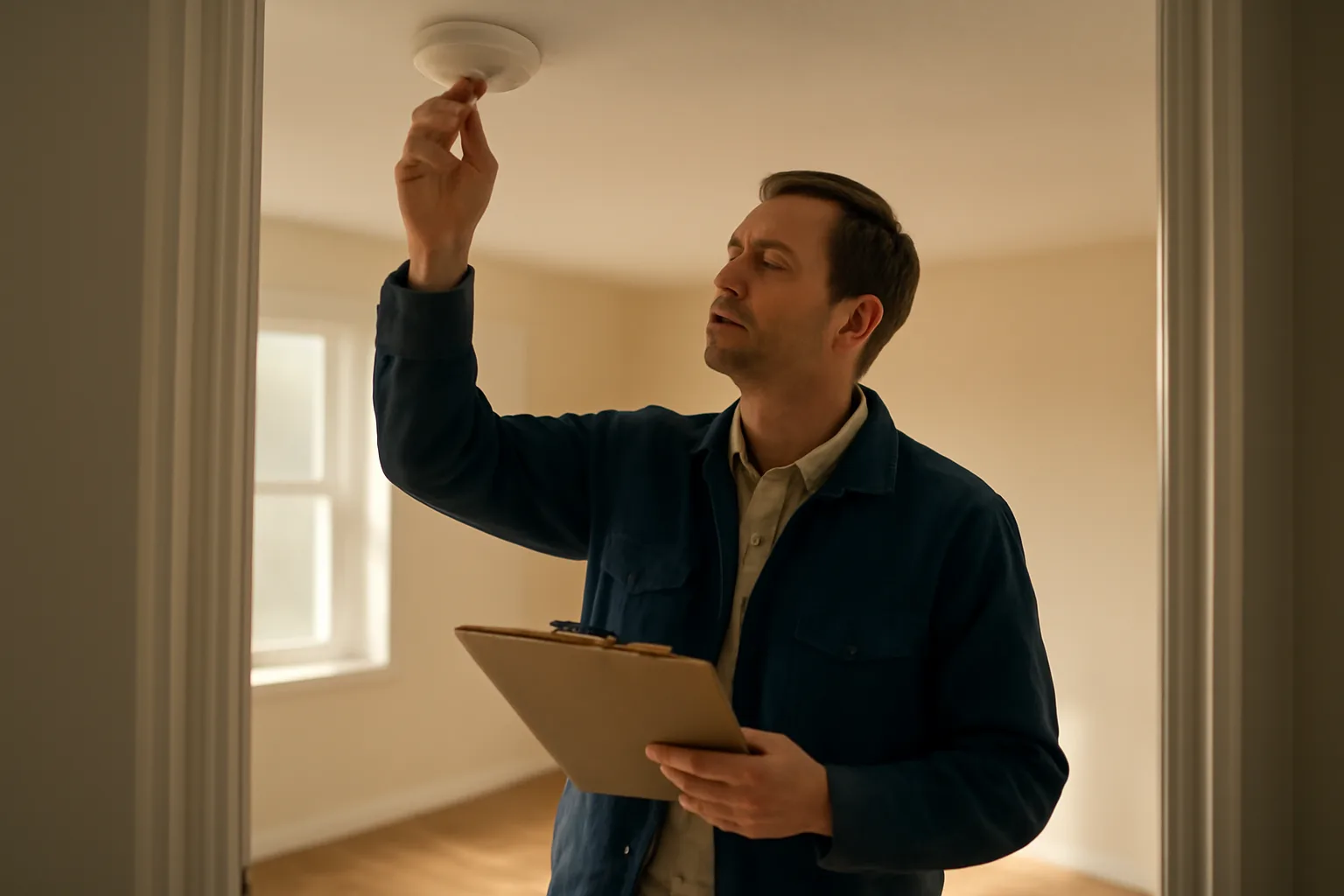
What an inspector or landlord can look at depends on which kind of inspection it is. City code compliance inspections (tied to a rental license) typically check: smoke and carbon monoxide detector placement and function, electrical panel condition, plumbing leaks, working heat, safe egress from bedrooms (window sizes, no blocked exits), handrails and stair condition, pest evidence, mold or moisture damage, and exterior items like peeling paint, broken steps, or unsecured railings. Some cities also check for unpermitted units or illegal occupancy. Milwaukee's rental inspection program, for example, is built around the city's health and building codes for basic safety items like these [2]. Routine landlord inspections between tenants, or periodic inspections during a tenancy, are generally limited by state entry-notice law and by the lease. A landlord can look at general condition and maintenance issues (checking for damage, unauthorized pets, unreported leaks) but cannot search a tenant's belongings, go through drawers or closets, or use an inspection as a pretext to harass a tenant. Most states require advance written notice before landlord entry (see the section below on notice requirements), and many limit inspections to reasonable purposes: repairs, safety checks, showing the unit to prospective tenants or buyers, or a court order.
how much notice does a landlord have to give before entering
Notice requirements before landlord entry are set by state law and vary by state, typically ranging from 24 to 48 hours for non-emergency entry. California requires "reasonable notice," which the statute presumes to be 24 hours in writing, before a landlord enters for repairs, inspection, or to show the unit, except in emergencies [6]. Other states set their own standard: many require 24 hours, some require 48 hours for specific purposes like showing the unit to prospective buyers. Emergency entry (fire, gas leak, burst pipe, imminent danger) generally doesn't require advance notice in any state, because the point of the rule is to prevent unnecessary intrusion, not to block emergency safety response. There is no single national standard, so the exact number of hours, whether notice must be written or can be verbal, and what counts as a valid reason for entry all depend on your state's landlord-tenant statute. If you manage property in more than one state, don't assume the rule from one applies in another; check your specific state's code before scheduling routine inspections.
why do landlords require renters insurance
Landlords require renters insurance mainly to shift liability and financial risk for the tenant's personal belongings and for injuries or damage the tenant causes, away from the landlord's own policy. A landlord's own insurance policy typically covers the building structure and the landlord's liability as property owner. It does not cover a tenant's furniture, electronics, or clothing if there's a fire, burst pipe, or theft. Without renters insurance, a tenant who loses everything in a fire may have no way to replace it, and may look to the landlord to cover the loss, even when the landlord's policy was never designed to do that. Renters insurance also typically includes liability coverage, which protects the tenant (and indirectly the landlord) if the tenant accidentally causes damage, like a kitchen fire that spreads to a neighboring unit, or if a guest is injured in the tenant's apartment. According to the Insurance Information Institute, renters insurance is relatively inexpensive on average, though the exact average premium varies by state and coverage amount and you should check current pricing rather than rely on an old figure [7]. Many landlords now require proof of an active renters insurance policy, sometimes naming the landlord as an "interested party" on the policy, as a lease condition. This is generally legal as long as it's disclosed in the lease and applied consistently to all tenants, avoiding any appearance of selective enforcement that could raise fair housing concerns.
what rights do tenants have without a lease
A tenant without a written lease still has legal rights. In most states, an oral or implied agreement to pay rent for a unit creates a tenancy, often a month-to-month tenancy, that carries the same basic legal protections as a written lease. Those protections generally include: the right to a habitable unit under the state's warranty of habitability, the right to advance written notice before the landlord can enter (same as with a written lease), the right to a formal eviction process rather than a lockout or utility shutoff, and the right to proper notice before the tenancy is terminated (commonly 30 days for month-to-month tenancies, though this varies by state and by how long the tenant has lived there). What a tenant without a lease usually loses is certainty: the landlord can typically raise rent or end a month-to-month tenancy with proper notice more easily than they could end a fixed-term lease early. But "no lease" does not mean "no rights." Self-help eviction (changing locks, shutting off utilities, removing a tenant's belongings without a court order) is illegal in nearly every state regardless of whether there's a written lease.
how to be a landlord without getting blindsided by local rules
The single biggest mistake new landlords make in licensing cities is assuming rental rules are the same everywhere. They're not. Some cities license per building, some per unit. Some inspect every unit annually, some every 2 to 3 years, some only on complaint or turnover. Fees range from under $30 per unit in smaller cities to several hundred dollars per unit in larger ones with proactive inspection programs like Los Angeles's SCEP [3]. A workable approach: - Call your city's rental licensing or code enforcement office directly and ask three questions: do I need a license for this specific address, what's the current fee, and when is my inspection or renewal due.
- Get the answer in writing (email is fine) so you have a record if a dispute comes up later.
- Put the renewal date on a calendar with a 60-day reminder, not a 2-week reminder. Many cities charge escalating late fees or refer chronic non-renewals to a hearing officer.
- Before your first inspection, walk the unit yourself with a basic checklist: working smoke and CO detectors in every required location, no exposed wiring, secure handrails, no significant leaks or mold, and a clear exit path from every bedroom. If you're managing several units across an ordinance you've never dealt with before, a structured prep checklist saves time versus figuring it out unit by unit from a city PDF. That's exactly the gap our $79 one-time City Rental License & Inspection Prep Packet is built to close: a structured way to organize what your specific city likely requires before your inspection date, so you walk in prepared instead of guessing. Check it out at /rental-packet-builder.
what a landlord cannot do in ohio
Ohio's landlord-tenant law (Ohio Revised Code Chapter 5321) sets out both landlord obligations and prohibited actions. A landlord in Ohio cannot use "self-help" measures to remove a tenant: no changing the locks, shutting off utilities, or removing the tenant's belongings without going through the formal eviction (forcible entry and detainer) process in court [8]. Ohio law also prohibits retaliatory conduct. Under ORC 5321.02, a landlord cannot terminate a tenancy, refuse to renew, increase rent, or decrease services in retaliation for a tenant complaining to a government agency about a building, housing, or safety code violation, or for a tenant asserting rights under the landlord-tenant statute . Ohio law also requires landlords to comply with statutory duties in ORC 5321.04, including keeping the unit in a fit and habitable condition, maintaining common areas in safe condition, and keeping electrical, plumbing, and heating systems in good working order . A landlord in Ohio generally cannot enter the unit without reasonable notice, except in an emergency, and cannot use entry as harassment. If you're a landlord in Ohio dealing with a specific dispute, the exact remedy (rent escrow, repair-and-deduct, or a tenant's right to terminate) depends on which section of Chapter 5321 applies to your situation, so read the relevant section directly or talk to an Ohio landlord-tenant attorney rather than relying on general guidance.
renters license vs. rental registration vs. certificate of occupancy: what's the difference
| Rental license | Formal permission from the city to operate a specific address as a rental, often tied to inspection results | Annual or biennial | |
|---|---|---|---|
| Rental registration | A simpler record-keeping requirement: owner name, contact info, unit count, sometimes no inspection required | Annual, sometimes one-time | |
| Certificate of occupancy (rental) | Confirms the unit legally meets code for occupancy, often issued after initial inspection or at tenant turnover | Varies; sometimes per-tenancy | Some cities require only one of these. Others stack all three. Minneapolis, for example, requires a rental license for most non-owner-occupied properties [1], while other cities separate a lighter registration requirement from a heavier licensing-plus-inspection requirement for larger buildings or higher-risk properties. Don't assume your city's program matches a neighboring city's program, even within the same state or metro area. Confirm the specific terminology and requirement with your city rental licensing office before you file anything. |
These three terms get used loosely and interchangeably by landlords, but cities sometimes treat them as separate requirements with separate fees and separate renewal cycles. | Term | What it usually means | Typical renewal |
Frequently asked questions
Does a tenant ever need a "renters license"?
No. In virtually every U.S. city, the license or registration requirement applies to the property owner/landlord, not the tenant. If you're a tenant and received a notice mentioning a rental license, it was likely sent to your landlord, or it's a scam; verify directly with your city's housing or code enforcement office.
What happens if a landlord operates without a required rental license?
Consequences vary by city but often include fines per violation, per-day penalties for continued non-compliance, and in some cities the inability to file an eviction case until the license is current. Some cities also bar rent collection enforcement in court while the property is unlicensed. Confirm your city's specific penalty schedule with its rental licensing office.
How often does a rental license need to be renewed?
Most cities require annual renewal, though some run on a 2 to 3 year inspection cycle even if the license itself renews yearly. The renewal fee and inspection frequency are set locally, so check your specific city's ordinance or licensing office rather than assuming a standard timeline.
Can a landlord require renters insurance as a lease condition?
Yes, in most states a landlord can require tenants to carry renters insurance as a lease condition, as long as it's disclosed in the lease and applied consistently to all tenants. It protects the tenant's belongings and adds liability coverage that a landlord's own policy doesn't provide.
What's the difference between a rental license and a certificate of occupancy?
A rental license is ongoing permission to operate a specific address as a rental, often renewed annually. A certificate of occupancy confirms the unit meets code for legal occupancy at a point in time, often issued after an initial inspection or at tenant turnover. Some cities require both; some require only one.
Do landlords have to give notice before a rental license inspection?
Most cities give advance written notice (commonly 1 to 4 weeks) before a scheduled licensing inspection, and separately, entry-notice law (often 24 to 48 hours) governs when a landlord can access the unit itself. The city inspection notice and the entry notice are usually two different requirements running in parallel.
What can void or delay a rental license renewal?
Common reasons include unpaid code violation fines, a failed inspection with unresolved repair items, an expired business license tied to the property, or a lapse in required landlord insurance. Each city sets its own list of renewal blockers, so check your city's specific renewal checklist.
Can a landlord inspect a unit without notice?
Generally no, except in a genuine emergency (fire, gas leak, flooding, or similar imminent danger). Nearly all states require advance notice, commonly 24 to 48 hours, before a landlord enters for a routine inspection, repair, or showing.
What rights does a tenant have if there's no written lease?
A tenant without a written lease still gets the state's implied warranty of habitability, the right to advance notice before landlord entry, the right to a formal court eviction process instead of a lockout, and standard notice (often 30 days) before a month-to-month tenancy ends. Oral agreements to pay rent create real legal tenancies in most states.
What is the difference between a landlord and a property manager?
A landlord owns the property (or is the named party on the lease with authority to rent it out) and holds the legal duties and licensing responsibility. A property manager is typically hired by the landlord to handle daily operations, but the licensing and legal liability generally still sits with the property owner in most cities.
Why would a city require a rental license instead of just a building permit?
A building permit covers construction or renovation work at a point in time. A rental license is an ongoing tool that lets a city track who's renting out units in town, collect a fee that funds code enforcement staff, and require periodic re-inspection over the life of the rental, more than at the time of construction.
What items commonly fail a rental inspection?
The most common fail items across cities are missing or non-functioning smoke and carbon monoxide detectors, exposed or unsafe wiring, plumbing leaks, blocked bedroom egress, missing handrails on stairs, and exterior issues like peeling paint or unsecured steps. Exact fail criteria depend on your city's adopted code, so check your city's inspection checklist directly.
Sources
- City of Milwaukee, Rental Property Registration and Inspection: Milwaukee requires registration and inspection of rental dwellings
- Cornell Law School Legal Information Institute, Implied Warranty of Habitability: Most states impose an implied warranty of habitability on landlords
- California Civil Code Section 1950.5: California law gives tenants the right to an initial move-out inspection with 48 hours' notice and an itemized deduction statement
- California Civil Code Section 1954: California presumes 24 hours' written notice is reasonable before landlord entry, with emergency exceptions
- Insurance Information Institute, Renters Insurance: Renters insurance is relatively inexpensive on average and typically covers personal belongings and liability
- Ohio Revised Code Section 5321.03: Ohio law restricts landlord self-help remedies like lockouts and utility shutoffs and requires the formal eviction process
- Ohio Revised Code Section 5321.02: Ohio law prohibits landlord retaliation against tenants who report code violations or assert legal rights
- Ohio Revised Code Section 5321.04: Ohio law requires landlords to maintain habitable conditions and keep electrical, plumbing, and heating systems in good working order