Last updated 2026-07-25
TL;DR
There's no standard requirement called "rental vehicle registration" for landlords. You're likely thinking of rental property registration (registering a unit with the city), a rental license, or possibly vehicle registration if you rent out cars. This article sorts out the terms and covers what new and small landlords actually need to know about licensing, inspections, and tenant rights.
What does "rental vehicle registration" actually mean for landlords?
If you searched for this phrase, you probably landed in the wrong parking lot, and that's fine, it happens. There is no nationwide or standard program called "rental vehicle registration" for residential landlords. Cities don't register vehicles as part of rental housing compliance. What you're likely after is one of three different things: rental property registration (a city requiring you to register a rental unit or building before renting it out), a rental license (a permit that lets you legally operate a rental in a mandatory-licensing city), or, less commonly, actual motor vehicle registration if you're renting out cars, trailers, or RVs as a side business, which is a completely different regulatory world governed by your state's DMV. This article focuses on the housing side, since that's almost certainly what brought you here. Cities like Los Angeles, Baltimore, and Minneapolis run rental registration or licensing programs that require landlords to file paperwork, pay a fee, and sometimes pass an inspection before they can legally rent out a unit [1][2]. If you own even one rental unit in one of these cities, you probably got a notice, a fine, or a deadline letter, and that's what pushed you to search for information. We'll cover the real registration and licensing landscape, then answer the broader landlord basics questions that tend to come up right alongside this: what landlording actually is, how to get started, tenant rights without a lease, renters insurance requirements, notice periods, and what happens during a walkthrough inspection.
What is a landlord and what is landlording, exactly?
A landlord is the owner (or an authorized agent of the owner) of real property who rents that property to another person, called a tenant, in exchange for payment. That's the legal core of it. Landlording is the ongoing work of managing that relationship and the property: collecting rent, handling repairs, following habitability laws, managing lease terms, and dealing with the local rules that govern rental housing in your city or state. Most states define "landlord" within their landlord-tenant statutes. For example, under the Uniform Residential Landlord and Tenant Act framework adopted in modified form by many states, a landlord is defined as the owner, lessor, or sublessor of a dwelling unit [3]. The exact wording varies by state, but the concept holds everywhere: if you own the unit and someone else pays you to live in it, you're the landlord, and you're on the hook for the legal duties that come with that role, whether or not you ever call yourself one. Landlording isn't a license or a certification. Nobody hands you a landlording credential. It's a role you take on the moment you accept rent for a property you own, and with it comes real legal exposure: habitability obligations, fair housing law, security deposit rules, and, in a growing number of cities, mandatory registration or licensing before you can rent at all.
How do you become a landlord (and is it legal to just start renting out a room or unit)?
Becoming a landlord doesn't require a test or a state license in most places, but it does require you to follow the rules that already apply to rental property in your area. Here's the realistic checklist: 1. Confirm the property is legally allowed to be rented. Check your local zoning and whether your city requires rental registration or licensing before you can advertise a unit (see the next section). 2. Understand your state's landlord-tenant law. Every state has a body of law covering security deposits, notice periods, habitability, and eviction procedure. HUD and most state attorneys general publish plain-language guides [4]. 3. Screen tenants consistently and legally. The Fair Housing Act bars discrimination based on race, color, national origin, religion, sex, familial status, or disability, and many states and cities add protected classes on top of that [5]. 4. Get the right insurance. A standard homeowner's policy usually doesn't cover a rented property properly; you generally need a landlord (dwelling) policy. 5. Set up a lease and a rent collection system, and know your state's rules on late fees, grace periods, and deposit limits. 6. Register or license the rental if your city requires it, and schedule any mandatory inspection before your first tenant moves in. If you're renting out a single room in your own home, some of these steps loosen up (owner-occupied duplexes and room rentals sometimes get exemptions from local licensing), but habitability and fair housing rules generally still apply. Confirm exemptions with your city rental licensing office rather than assuming you're in the clear.
Do cities really require you to register a rental property, and what's the difference from a license?
Yes, and this is almost certainly the real question behind "rental vehicle registration." A lot of cities and even some states require landlords to either register their rental units (file basic ownership and unit information with the city, sometimes for a small fee or free) or obtain a rental license (a more formal permit process that often includes a fee and a mandatory inspection before or shortly after you're licensed). Registration is usually lighter: you tell the city who owns the property, how many units it has, and how to reach you or your local agent. Licensing is heavier: you typically pay a per-unit or per-building fee, and the city has the authority to deny, suspend, or revoke your license if the property fails inspection or racks up code violations. Baltimore, for example, requires landlords to obtain a rental license for most residential rental units and renew it periodically, with fees and requirements set out in city code and the Baltimore Housing rental licensing program page [1]. Minneapolis requires a rental license for most rental properties under its rental licensing ordinance, with license categories and inspection cycles tied to property type and compliance history [2]. Los Angeles runs a Rent Registration program under the Rent Stabilization Ordinance for covered units, separate from any building permit or business license requirements [6]. Because every city sets its own fee schedule, renewal cycle, and inspection frequency, you should confirm the current fee and deadline with your city rental licensing office rather than trust a number you find secondhand. Fees commonly range from under $50 per unit in smaller programs to several hundred dollars per unit or building in larger cities, and that range shifts constantly as ordinances get amended. If you manage this process, once you have your city's exact requirements, it helps to keep every piece of paperwork organized in one place before an inspector shows up. That's the whole idea behind the $79 City Rental License & Inspection Prep Packet: a one-time flat fee to get your documentation, inspection checklist, and renewal tracking sorted so you're not scrambling when a notice arrives.
Who is responsible for a rental property walk-through inspection in California?
In California, the landlord is generally responsible for arranging and allowing habitability and move-in/move-out walkthrough inspections, and the law gives tenants specific rights around the process. California Civil Code Section 1950.5(f) requires landlords to offer tenants an initial inspection before the tenant moves out, specifically so the tenant can fix any deficiencies before the final deposit deduction happens [7]. The landlord must give at least 48 hours' written notice before that initial inspection and provide an itemized statement of what needs fixing if the tenant doesn't attend [7]. For rent-controlled or licensed rental units in specific California cities (Los Angeles, Oakland, and others with local rental registration or habitability programs), local housing or code enforcement inspectors, not the landlord, are responsible for compliance inspections tied to registration or licensing. The landlord's job in that scenario is to schedule access, prepare the unit, and correct any violations cited. So the short answer: for the standard move-out inspection, it's the landlord's legal responsibility to offer and conduct it under state law. For a city-mandated rental housing inspection tied to a license or registration program, it's a government inspector who does the actual inspection, and the landlord is responsible for compliance and access.
What can a landlord look at during an inspection?
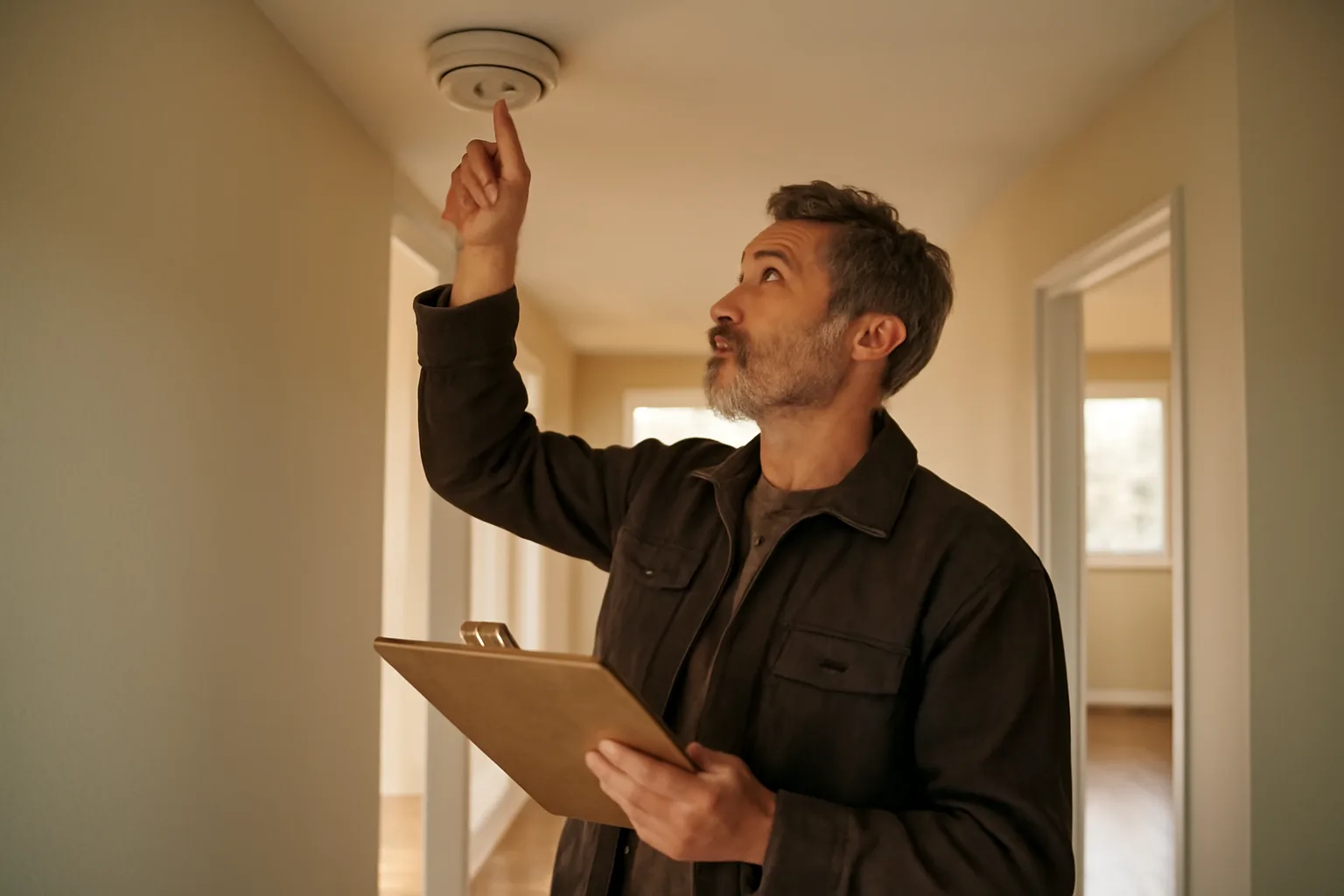
A landlord (or an inspector standing in for the city) can generally look at anything related to habitability, safety, and code compliance: smoke and carbon monoxide detectors, electrical outlets and panels, plumbing fixtures and signs of leaks, heating systems, window and door locks, evidence of pest infestation, mold or water damage, and general structural condition. Most local rental inspection checklists focus on these life-safety items specifically because that's what code enforcement cares about most. What a landlord generally should not do during a routine inspection is search through personal belongings, open drawers or closets beyond what's needed to check a smoke detector or outlet, or use the inspection as a pretext to look for evidence unrelated to property condition. Many states also require advance notice before any non-emergency entry; California, for instance, requires 24 hours' written notice for entry in most circumstances under Civil Code Section 1954, unless there's an emergency [8]. A practical rule: the inspection should stick to fixtures, systems, and code items, not personal property. If a city inspector cites a violation (a broken window latch, missing smoke detector, exposed wiring), that becomes the landlord's responsibility to fix, usually on a set timeline before a re-inspection or before the license renews.
How much notice does a landlord have to give before entering a rental unit?
Notice requirements vary by state, but 24 to 48 hours' written notice before non-emergency entry is the most common standard. California requires 24 hours' notice under Civil Code Section 1954, with a rebuttable presumption that 24 hours is reasonable [8]. Other states set their own defaults; some require 24 hours, others 48, and some just say "reasonable notice" without a specific number, which pushes the burden onto courts to decide case by case. Emergency entry is the main exception everywhere: if there's a fire, flood, gas leak, or similar immediate danger, landlords generally can enter without advance notice under every state's law, because the health and safety exception overrides the standard notice period. Because this varies so much by state and even by city ordinance on top of state law, don't rely on a number you saw for a different state. Check your specific state's landlord-tenant statute, or your state attorney general's tenant rights guide, before you show up unannounced.
What rights do tenants have if there's no written lease?
A tenant without a written lease still has real legal rights. In most states, an oral or implied rental agreement creates a month-to-month tenancy, and the tenant keeps the same habitability protections, discrimination protections, and notice-before-entry rights as a tenant with a signed lease. What changes without a written lease is mostly about termination and proof: without a document spelling out rent amount, due date, and terms, disputes come down to whatever can be proven (bank records, texts, witness testimony) plus the state's default rules for unwritten tenancies. HUD's tenant rights guidance and most state statutes treat a tenant paying rent regularly, with the landlord's knowledge and acceptance, as having a legitimate tenancy regardless of whether paper exists [4]. Landlords still owe that tenant a habitable unit, still owe proper notice before eviction (usually the same notice period as any month-to-month tenant in that state, often 30 days), and still can't discriminate under the Fair Housing Act [5]. If you're a landlord operating without written leases, that's a real liability gap, not a shortcut. Verbal agreements are enforceable in most states but are much harder to prove in a dispute. It's worth putting terms in writing even for a family member or friend renting from you, if only to protect yourself later.
Why do landlords require renters insurance?
Landlords require renters insurance mainly to shift liability and personal property risk away from the landlord's own policy. A landlord's dwelling insurance covers the building itself, not the tenant's belongings, and it typically doesn't cover a tenant's liability if the tenant accidentally causes a fire, a flood from an overflowing tub, or an injury to a guest inside the unit. Renters insurance (typically running somewhere in the range of $15 to $30 a month nationally, though this varies a lot by state and coverage level, per industry data from the Insurance Information Institute) covers the tenant's personal property and liability, which means if the tenant's negligence causes damage, their policy pays first instead of the landlord eating the cost or fighting it out through the tenant's limited assets . Many states allow landlords to require renters insurance as a lease condition, as long as the requirement is disclosed and applied consistently to all tenants (to avoid fair housing issues). It's not universally mandated by law, but it's become a standard practice, especially among landlords who self-manage one to ten units and can't absorb an uninsured loss the way a large property management company might.
What can't a landlord do in Ohio?
Ohio landlord-tenant law, codified mainly in Ohio Revised Code Chapter 5321, spells out several things a landlord cannot do. A landlord cannot shut off utilities, change the locks, or remove a tenant's belongings to force them out without going through the formal eviction process in court; that's commonly called "self-help eviction" and it's illegal in Ohio as in most states . Ohio Revised Code 5321.15 specifically prohibits a landlord from using force or threat of force, or excluding a tenant from the premises other than through proper legal process, to recover possession of the unit . A landlord in Ohio also cannot retaliate against a tenant for reporting code violations or exercising legal rights (Ohio Revised Code 5321.02 addresses retaliatory conduct protections), cannot discriminate based on protected classes under the Fair Housing Act, and cannot enter the unit without giving reasonable notice, generally interpreted around 24 hours in practice even though Ohio's statute doesn't fix an exact number the way California's does. Ohio Revised Code 5321.04 lays out the landlord's core duties: keeping the premises in a fit and habitable condition, complying with building and housing codes, and maintaining electrical, plumbing, heating, and sanitary systems in good working order . Security deposit handling is also regulated: Ohio Revised Code 5321.16 requires landlords to return a tenant's deposit, with an itemized list of any deductions, within 30 days of the tenant vacating . Miss that deadline without a valid reason, and a tenant can sue for the amount wrongfully withheld plus reasonable attorney's fees.
How does rental registration or licensing connect to inspections and fines?
In most mandatory-licensing cities, registration and inspection are linked. You register or apply for a license, the city schedules an inspection (sometimes before you can rent, sometimes on a recurring cycle like every one, two, or three years depending on the property's compliance history), and if the inspection turns up violations, you get a compliance deadline before the license is granted or renewed. Miss the registration deadline entirely, and many cities issue fines that stack up per unit, per month, or per violation, plus in some jurisdictions the ability to pursue eviction or collect rent can be legally blocked until the property is properly registered or licensed. That last point is the one that catches landlords off guard: some cities' ordinances make an unregistered rental's leases unenforceable or bar the landlord from filing an eviction case until the property is brought into compliance. Because every city sets its own fine schedule and enforcement mechanism, don't assume your city works the same way as one you read about online. Call your city's rental licensing or code enforcement office directly, ask for the current fee schedule and inspection checklist in writing, and get the renewal date on your calendar with real lead time before it comes due.
How do you actually prepare for a rental license inspection?
Preparation for a rental inspection comes down to working through a checklist before the inspector arrives, not scrambling the morning of. Test every smoke detector and carbon monoxide detector and replace batteries. Check every window and door lock. Look under sinks and around water heaters for leaks. Confirm the electrical panel is labeled and there's no exposed wiring. Check that handrails on stairs are secure. Clear any obvious pest evidence and address it before the inspection, not after a citation. Most cities publish their actual inspection checklist as a public document; ask your city rental licensing or code enforcement office for it directly rather than guessing based on a checklist from a different city, since the items and standards genuinely differ (some cities check for hardwired smoke detectors specifically, others accept battery-only units, for example). If you're managing this across multiple units or you're new to a specific city's licensing process, it's easy to lose track of renewal dates, required documents, and what's actually on the inspector's list. That's the gap the $79 City Rental License & Inspection Prep Packet is built to close: a one-time cost to get organized before the inspector's visit instead of paying reinspection fees or scrambling under deadline pressure. It's not a substitute for reading your city's actual ordinance, but it helps you track what you owe and when.
Frequently asked questions
Is there a national rental vehicle registration requirement for landlords?
No. There's no standard federal or nationwide program called "rental vehicle registration" for residential landlords. If you're renting out actual vehicles (cars, trailers, RVs) as a business, that falls under your state's DMV and commercial vehicle rules, which is separate from residential rental housing licensing entirely.
What is the difference between rental registration and a rental license?
Registration usually just means filing basic ownership and unit information with the city, often for free or a small fee. A rental license is a more formal permit, typically with a fee and inspection requirement, that the city can deny, suspend, or revoke if the property has code violations or the license lapses.
How do you become a landlord for the first time?
Confirm your property can legally be rented under local zoning and licensing rules, learn your state's landlord-tenant law on deposits and notice, screen tenants consistently under fair housing law, get landlord insurance, write a lease, and register or license the property if your city requires it before your first tenant moves in.
Who is responsible for a rental walk-through inspection in California?
Under California Civil Code Section 1950.5(f), the landlord must offer an initial move-out inspection with at least 48 hours' notice so tenants can fix issues before deposit deductions happen. For city-licensed rental units, a government code enforcement inspector handles compliance inspections, and the landlord is responsible for access and fixing cited violations.
What can a landlord look at during a rental inspection?
Landlords and inspectors can check smoke and carbon monoxide detectors, electrical and plumbing systems, heating, locks, signs of leaks or pest problems, and general structural safety. They generally shouldn't search personal belongings or drawers beyond what's needed to check a fixture; the inspection should stay focused on code and habitability items.
How much notice does a landlord have to give before entering a unit?
Most states require 24 to 48 hours' written notice for non-emergency entry. California sets 24 hours as a reasonable default under Civil Code Section 1954. Emergencies like fire or flooding are the main exception, allowing entry without advance notice. Check your specific state's statute since the exact number varies.
Why do landlords require renters insurance?
Renters insurance covers a tenant's personal belongings and liability, which a landlord's own dwelling policy doesn't cover. If a tenant's negligence causes a fire or water damage, the tenant's policy pays first instead of the landlord absorbing the loss or chasing reimbursement through the tenant directly.
What rights does a tenant have without a written lease?
A tenant without a written lease is usually treated as a month-to-month tenant under state law, keeping full habitability, notice, and fair housing protections. What's lost is documentation; disputes over rent amount or terms come down to whatever evidence exists, like bank records or texts, since there's no signed agreement to point to.
What can't a landlord do in Ohio?
Ohio landlords cannot use self-help eviction (changing locks, shutting off utilities, removing belongings) under Ohio Revised Code 5321.15. They also cannot retaliate against tenants for reporting code violations, discriminate under fair housing law, or keep a security deposit past 30 days without an itemized list of deductions under ORC 5321.16.
What is landlording as a general concept?
Landlording is the ongoing work of owning and managing rental property: collecting rent, maintaining habitability, following state and local landlord-tenant law, screening tenants legally, and handling registration, licensing, or inspection requirements set by your city. It's not a formal credential; it's the role and responsibilities that come with renting out property you own.
What happens if you don't register your rental property with the city?
Consequences vary by city but commonly include fines that accumulate per unit or per month of noncompliance, and in some jurisdictions the inability to legally collect rent or file an eviction until the property is registered. Confirm the specific consequence and fine schedule with your city's rental licensing or code enforcement office.
How often do cities require rental inspections?
It depends entirely on the city's ordinance; some inspect before initial licensing only, others require re-inspection every one, two, or three years, and some tie inspection frequency to a property's violation history. There's no national standard, so confirm the cycle with your specific city's rental licensing office.
Sources
- Uniform Law Commission, Uniform Residential Landlord and Tenant Act: Defines landlord as the owner, lessor, or sublessor of a dwelling unit under the model act adopted by many states
- HUD, Tenant Rights, Laws and Protections: Federal guidance on tenant rights and protections including for tenants without written leases
- HUD, Fair Housing Act Overview: Fair Housing Act bars discrimination based on race, color, national origin, religion, sex, familial status, or disability
- California Legislative Information, Civil Code Section 1950.5: Landlords must offer an initial move-out inspection with at least 48 hours' notice before deposit deductions
- California Legislative Information, Civil Code Section 1954: California requires 24 hours' notice before non-emergency landlord entry into a rental unit
- Ohio Legislature, Ohio Revised Code 5321.15: Ohio prohibits landlords from using force or exclusion to recover possession outside of formal legal eviction process
- Ohio Legislature, Ohio Revised Code 5321.04: Ohio landlords must keep rental premises in a fit and habitable condition and maintain required systems
- Ohio Legislature, Ohio Revised Code 5321.16: Ohio landlords must return security deposits with an itemized deduction list within 30 days of tenant move-out