Last updated 2026-07-26
TL;DR
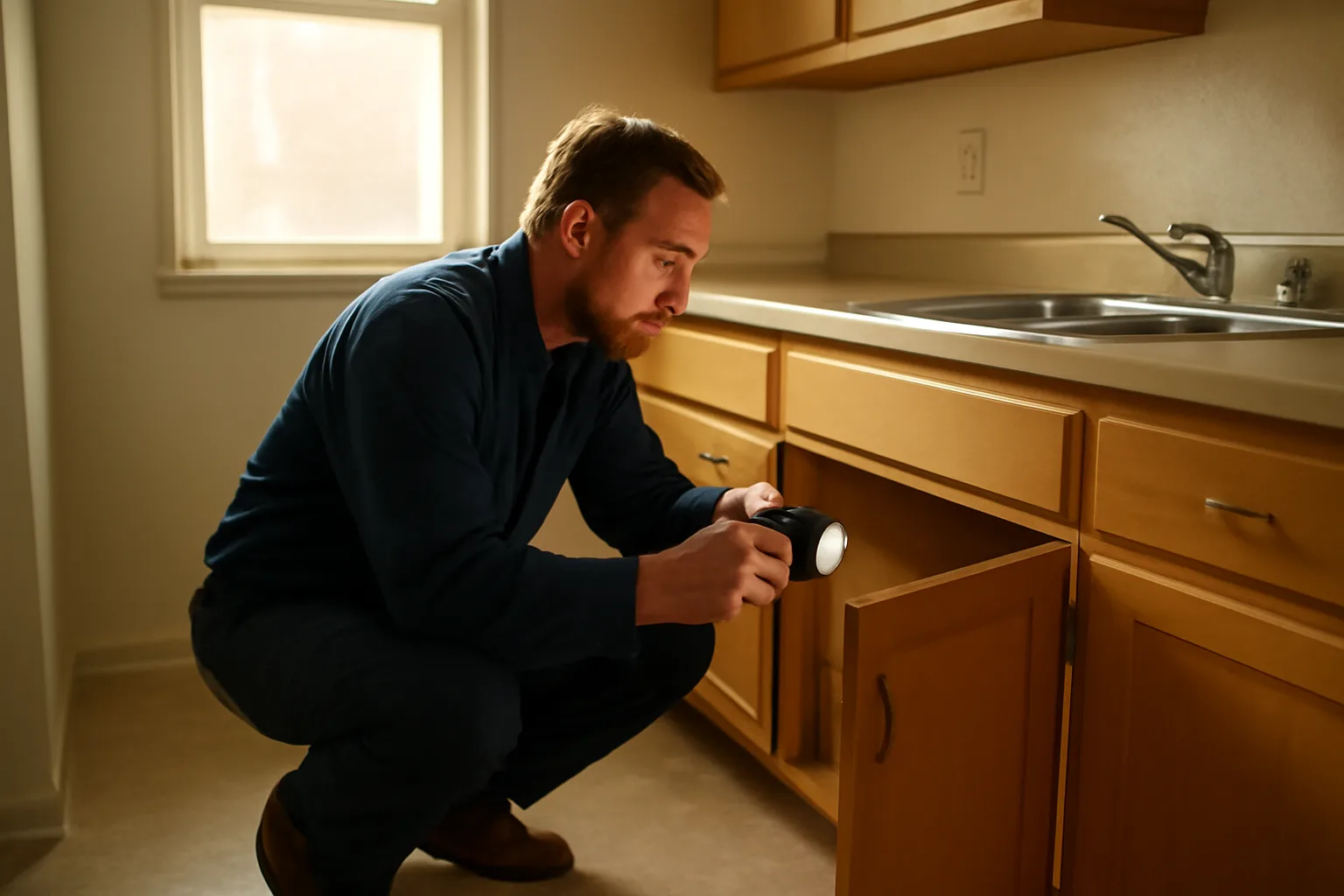
A rental property condition checklist documents every room's condition (walls, floors, fixtures, appliances, safety devices) before a tenant moves in, at move-out, and before city inspections. Use the same checklist every time, date and photograph each item, and have both landlord and tenant sign it. This protects security deposit claims and speeds up licensing inspections.
What is a rental property condition checklist and why do you need one
A rental property condition checklist is a room-by-room written record of the state of a unit, its fixtures, appliances, and safety devices, done at move-in, move-out, and often again before a city rental inspection. It's the single cheapest piece of documentation a landlord can create, and it's the one most new landlords skip until they get burned on a deposit dispute or a licensing inspection they weren't ready for. Most state security deposit statutes either require or strongly imply this kind of documentation. California, for example, requires landlords to give tenants the option of an initial inspection before move-out specifically so both sides can agree on what needs fixing before the final walkthrough (California Civil Code Section 1950.5) [1]. If you don't do a matching move-in and move-out checklist, you have no baseline to prove what damage the tenant caused versus what was already there. Separately, if your city requires a rental license or registration, the inspector doing your compliance inspection is checking a different (and usually longer) list: smoke detectors, egress windows, water heater venting, electrical panel condition, and so on. That's a code compliance checklist, not a condition checklist, but the two overlap enough that doing your own walkthrough first, using both lists, saves you from surprise fails and reinspection fees. If you're prepping for a city inspection specifically, our City Rental License & Inspection Prep Packet is a $79 one-time download built around the most common inspection line items across mandatory-licensing cities. It's not a substitute for your city's actual checklist, which you should always confirm directly with your rental licensing office, but it gives you a starting point so you're not building one from scratch.
What should be on a move-in and move-out condition checklist
| Kitchen | Countertops, cabinets, sink/faucet, stove/oven, refrigerator, dishwasher, flooring, ceiling/walls |
|---|---|
| Bathroom(s) | Toilet, tub/shower, vanity, mirror, exhaust fan, flooring, caulking/grout |
| Living/bedrooms | Walls, ceiling, flooring/carpet, windows and screens, closets, light fixtures, outlets |
| Doors/windows | Locks function, weatherstripping, screens present, glass not cracked |
A usable checklist covers every room, every fixture in that room, and a place to note condition plus photo reference. Skipping rooms (garages, basements, exterior) is the most common gap. Here's a baseline structure that works for a typical 1-3 bedroom rental unit: | Area | Items to check |
How to become a landlord
Becoming a landlord legally means more than buying a property and finding a tenant. In most places you need to: confirm zoning allows rental use, get a rental license or register the unit with your city or county if required, carry landlord (more than homeowner's) insurance, and know your state's security deposit and notice laws before you sign a lease. Step one is checking whether your city requires rental registration or licensing at all. Hundreds of U.S. cities do, including places like Los Angeles (Rent Registration under the Rent Stabilization Ordinance) and many mid-size cities that run annual or biennial inspection cycles. Requirements, fees, and inspection frequency vary enormously by city, so confirm with your city rental licensing office rather than assuming a neighboring city's rules apply to you. Step two is understanding your state's landlord-tenant code, particularly around deposits, entry notice, and habitability. Every state has one; some (like California's Civil Code Title 5) are dense, others are a few pages. Step three is practical: get a lease that matches your state's law, set up a way to collect rent and track maintenance requests, and decide upfront how you'll handle move-in and move-out documentation. Landlords who skip this last part are the ones who lose deposit disputes in small claims court, because the burden is often on the landlord to show what damage existed already versus what the tenant caused.
What is landlording and what is a landlord
A landlord is the owner (or their authorized agent) of a residential property who rents it to a tenant in exchange for rent, under a lease or rental agreement. Landlording is the ongoing work of managing that relationship: collecting rent, maintaining the property, handling repairs, following notice and entry rules, and complying with local licensing or inspection requirements. Legally, most states define "landlord" broadly enough to include property managers and authorized agents, more than the titleholder. That matters for inspections and violations: if your city cites the unit for a code violation, the citation typically goes to the responsible party of record, which is why many rental registration programs require you to list a local contact or agent, especially if you don't live near the property. Landlording day to day is mostly maintenance and communication, not paperwork, but the paperwork (leases, notices, inspection records, condition checklists) is what protects you when something goes wrong. A landlord who never documents anything is fine, right up until the first dispute. Then they have nothing to point to.
Who is responsible for a rental property walk-through inspection in California
In California, the landlord is responsible for offering an initial move-out inspection to the tenant, but the tenant decides whether to accept it. California Civil Code Section 1950.5(f) requires that "upon the termination of the tenancy, either party may request that an inspection of the premises take place before the termination of the tenancy" and if the tenant requests it, the landlord must give at least 48 hours' written notice of the date and time [1]. The purpose of this pre-move-out walkthrough is to let the tenant fix or clean things themselves before the final inspection, avoiding deposit deductions. The landlord must give the tenant an itemized statement after the initial inspection listing repairs or cleaning needed to avoid deductions, per the same statute [1]. After the tenant actually moves out, the landlord does the final inspection and has 21 calendar days to return the deposit along with an itemized statement of any deductions, also under Section 1950.5 [1]. This is separate from any rental housing inspection program a city might run. Many California cities, including Los Angeles, run their own Systematic Code Enforcement Program inspections on a cycle, which is a code compliance check, not a deposit-related walkthrough.
What rights do tenants have without a lease
A tenant without a written lease still has legal protections. Most states treat an oral or implied rental agreement as a month-to-month tenancy, and the tenant keeps the same basic rights: habitability, protection from illegal lockouts, the right to notice before entry, and the right to proper notice before eviction. What a tenant without a lease usually loses is certainty on lease-specific terms: fixed rent for a set term, specific rules about subletting, or agreed-upon fees that were never written down. Without a written document, disputes often come down to state default rules and whatever can be proven (texts, emails, canceled rent checks). Every state's landlord-tenant statute sets default rules for month-to-month tenancies, including how much notice is required to end the tenancy or raise rent. If you're renting without a lease, both sides are still bound by state law, just not by any custom terms you never bothered to write down. That's a bad spot for a landlord to be in when there's a dispute, since you can't point to anything beyond the statutory minimums. If you want to see how other renters describe their protections, our tenant rights and tenants rights guides cover state-by-state basics.
Why do landlords require renters insurance
Landlords require renters insurance mainly to shift liability for the tenant's personal property and personal liability claims away from the landlord's own policy. A standard landlord (dwelling) insurance policy covers the building, not the tenant's furniture, electronics, or clothing, and it typically doesn't cover a tenant's liability if a guest is injured inside the unit. Requiring renters insurance also protects the landlord if the tenant accidentally causes damage, say, a kitchen fire or an overflowed bathtub that damages a downstairs unit. Without renters insurance, the tenant may have no way to pay for that damage, and the landlord's own policy (or the landlord directly) ends up absorbing the loss or fighting it out. There's no federal law requiring renters insurance, and requirements are set by individual landlords or, in the case of multifamily buildings with a master policy, sometimes by the property management company. Some states and cities do allow landlords to require it as a lease condition, and many landlords now build proof-of-insurance into their lease-signing process the same way they'd require a security deposit.
How much notice does a landlord have to give before entering
Most states require 24 to 48 hours' written or verbal notice before a landlord enters an occupied rental unit for a non-emergency reason, but the exact number and the acceptable form of notice vary by state. California requires "reasonable notice," which the same Civil Code section presumes to be 24 hours, in writing, unless the parties agree otherwise (California Civil Code Section 1954) [2]. Emergencies are the standard exception nearly everywhere. If there's a fire, flooding, gas leak, or another situation threatening health or safety, landlords can enter without advance notice. Outside of emergencies, though, entry without proper notice can expose a landlord to a claim of trespass or violation of quiet enjoyment. City rental inspections are a separate notice question. Many mandatory-licensing cities require their own advance notice period, often 24 to 48 hours but sometimes longer for scheduled compliance inspections, and that notice requirement is usually spelled out in the city's rental licensing ordinance rather than the state landlord-tenant code. Always confirm your specific city's inspection notice period with the rental licensing office before scheduling, since it can differ from your state's general entry notice rule.
What can a landlord look at during an inspection
During a routine or move-out inspection, a landlord can generally look at the condition of the unit: walls, floors, ceilings, fixtures, appliances, plumbing, electrical outlets, windows, doors, and safety devices like smoke and carbon monoxide detectors. The purpose has to be legitimate: assessing condition, doing repairs, or confirming code compliance, not searching the tenant's belongings or monitoring their personal life. A landlord doing a habitability or condition inspection is generally not entitled to open closets to inventory personal property, search drawers, or otherwise go beyond what's necessary to assess the physical condition of the unit and its systems. The inspection is about the property, not the tenant's possessions. City rental licensing inspectors have a narrower and more specific list, usually built around building and housing code: functioning smoke and CO detectors, secure handrails, no exposed wiring, working heat, no active leaks, egress windows in bedrooms, and pest or mold issues. Many cities publish their actual inspection checklist as a public document. If yours does, get it directly from the rental licensing office and use it alongside your own condition checklist so nothing is a surprise on inspection day.
What a landlord cannot do in Ohio
In Ohio, a landlord cannot shut off utilities, change the locks, or remove a tenant's belongings to force them out, sometimes called "self-help eviction." Ohio Revised Code Section 5321.15 makes it unlawful for a landlord to seize the tenant's possessions or interrupt utility service to force a tenant to leave, and requires the landlord to go through the court eviction process instead [3]. Ohio also limits what a landlord can do around entry and habitability. Under Ohio Revised Code Section 5321.04, landlords must keep the premises in a fit and habitable condition, comply with building and housing codes, keep common areas safe, and maintain electrical, plumbing, and heating systems in good working order [4]. A landlord who lets these fall apart and ignores repair requests can face a tenant claim, rent escrow action, or code enforcement action, depending on the severity. Ohio Revised Code Section 5321.05 sets tenant obligations too (keeping the unit clean, using fixtures properly), and the statute pairs with 5321.04 to create mutual responsibilities. If a landlord tries to retaliate against a tenant for reporting a code violation, for example by raising rent or trying to evict shortly after a complaint, that can trigger Ohio's retaliation protections under Section 5321.02 [5]. Landlords in Ohio, and every state, should treat these as floor requirements, not suggestions. Violating them is often what turns a routine dispute into a court judgment against the landlord.
How condition checklists connect to city rental license inspections
A condition checklist and a city rental license inspection are not the same document, but they overlap enough that doing your own walkthrough first saves real money. If your unit fails a licensing inspection, most cities charge a reinspection fee, commonly in the $50 to $200 range depending on the city, on top of the delay to your license approval. Confirm the exact reinspection fee with your city rental licensing office, since it varies widely and changes over time. The smart approach is to walk the unit yourself using both lists: your standard move-in/move-out condition checklist (cosmetic and functional condition, room by room) and whatever inspection checklist your city publishes (code compliance items like smoke detectors, egress, electrical, and structural safety). Fix anything that fails either list before the inspector shows up. This is exactly the gap our $79 City Rental License & Inspection Prep Packet is built to close: a starting checklist structured around the most common inspection line items across mandatory-licensing cities, so a landlord with 1 to 10 units isn't building an inspection prep list from a blank page every renewal cycle. It doesn't replace your city's official checklist and it isn't a guarantee of passing (no service can promise that), but it means you walk in prepared instead of guessing.
How to document a rental walkthrough so it actually holds up
A condition checklist only protects you if it's dated, specific, and signed (or at least acknowledged) by both parties. A vague note like "kitchen fine" is nearly worthless in a deposit dispute. "Laminate flooring, no visible scratches or gaps, photo 4" holds up. Best practice, and what most tenant attorneys and legal aid groups recommend, is to photograph or video every room at move-in, timestamp the files, and have the tenant sign or initial the written checklist acknowledging it matches what they saw. Do the same thing at move-out, side by side with the move-in version, before deciding what (if anything) to deduct from the deposit. Keep copies for at least as long as your state's document retention expectations around deposit disputes, which is often tied to the statute of limitations for a written contract claim (commonly 3 to 6 years depending on the state, though this varies, so check your own state's rules rather than assuming). Digital storage (photos, PDFs, checklist scans) is cheap and makes this trivial to keep organized across multiple units.
Frequently asked questions
How to become a landlord?
Confirm your property's zoning allows rental use, check whether your city requires rental registration or licensing, get landlord insurance, and learn your state's security deposit, notice, and habitability rules before signing a lease. Then set up a system for rent collection, maintenance requests, and move-in/move-out condition documentation so you're not improvising when the first dispute or inspection happens.
Who is responsible for a rental property walk-through inspection in California?
The landlord must offer the tenant an initial move-out inspection if the tenant requests one, under California Civil Code Section 1950.5(f), with at least 48 hours' written notice. The landlord then does the final inspection after move-out and has 21 days to return the deposit with an itemized statement of any deductions.
What is landlording?
Landlording is the ongoing work of owning and managing a rental property: collecting rent, maintaining the unit, handling repair requests, following entry and notice rules, and complying with local rental licensing or inspection requirements. It's the day-to-day operational side of being a landlord, more than the legal ownership.
What is a landlord?
A landlord is the owner or authorized agent of a residential property who rents it to a tenant under a lease or rental agreement in exchange for rent. Most state laws also treat property managers acting on the owner's behalf as landlords for purposes of notice, entry, and code compliance responsibilities.
What rights do tenants have without a lease?
A tenant without a written lease usually has an oral or implied month-to-month tenancy and keeps core protections: habitability, protection from illegal lockouts, notice before entry, and proper notice before eviction under state law. What they lose is certainty on custom terms (fixed rent period, specific fees) that were never put in writing.
How to be a landlord day to day?
Day-to-day landlording means responding to maintenance requests promptly, following your state's notice-before-entry rules, keeping the unit habitable under your state's landlord-tenant code, documenting condition at move-in and move-out, and staying current on any city rental license renewal or inspection cycle your unit falls under.
Why do landlords require renters insurance?
Landlords require renters insurance to cover the tenant's personal property and personal liability, since a landlord's own dwelling policy typically doesn't cover a tenant's belongings or liability for guest injuries inside the unit. It also protects the landlord if the tenant accidentally causes damage, like a kitchen fire, that a standard landlord policy might not fully absorb.
How much notice does a landlord have to give before entering a unit?
Most states require 24 to 48 hours' notice for non-emergency entry. California presumes 24 hours' written notice is reasonable under Civil Code Section 1954. Emergencies (fire, flooding, gas leaks) are an exception almost everywhere. City rental inspections may have their own separate notice period set by local ordinance, so confirm with your city rental licensing office.
What can a landlord look at during an inspection?
A landlord can inspect the physical condition of the unit: walls, floors, fixtures, appliances, plumbing, electrical outlets, windows, and safety devices like smoke detectors. Landlords generally cannot search a tenant's personal belongings, open closets to inventory items, or use the inspection as a pretext to monitor the tenant.
What can a landlord not do in Ohio?
Under Ohio Revised Code Section 5321.15, a landlord cannot shut off utilities, change locks, or remove a tenant's belongings to force them out without going through the court eviction process. Ohio Revised Code Section 5321.04 also requires landlords to keep the unit habitable and code-compliant, and Section 5321.02 prohibits retaliation against tenants who report code violations.
What should a move-in condition checklist include?
A move-in checklist should cover every room (kitchen, bathrooms, bedrooms, living areas, exterior if applicable), listing the condition of walls, flooring, fixtures, appliances, windows, doors, and safety devices, with a place to note damage and reference dated photos. Both landlord and tenant should sign or initial it.
How long should a landlord keep condition checklists and inspection records?
Keep them at least as long as your state's statute of limitations for written contract disputes, commonly 3 to 6 years depending on the state, since deposit disputes are usually contract-based claims. Digital copies (photos, signed PDFs) are cheap to store indefinitely, so many landlords just keep everything for the life of the tenancy plus several years.
What happens if a rental unit fails a city licensing inspection?
Most cities require the landlord to fix the cited items and schedule a reinspection, often for an added fee commonly in the $50 to $200 range depending on the city. License approval is typically delayed until the reinspection passes. Confirm your specific city's reinspection fee and timeline with its rental licensing office.
Sources
- California Legislative Information, Civil Code Section 1950.5: California landlords must offer an initial move-out inspection on tenant request with 48 hours' notice, and return deposits within 21 days with an itemized statement.
- California Legislative Information, Civil Code Section 1954: California presumes 24 hours' written notice is reasonable before landlord entry for non-emergency purposes.
- Ohio Laws, Revised Code Section 5321.15: Ohio landlords cannot shut off utilities, change locks, or seize a tenant's possessions to force them out without a court eviction process.
- Ohio Laws, Revised Code Section 5321.04: Ohio landlords must keep rental premises in a fit and habitable condition and maintain electrical, plumbing, and heating systems.
- Ohio Laws, Revised Code Section 5321.02: Ohio law prohibits landlords from retaliating against tenants who report code violations.
- Ohio Laws, Revised Code Section 5321.05: Ohio law sets tenant obligations, including keeping the unit clean and using fixtures properly, that pair with the landlord's duties under Section 5321.04.