Last updated 2026-07-26
TL;DR
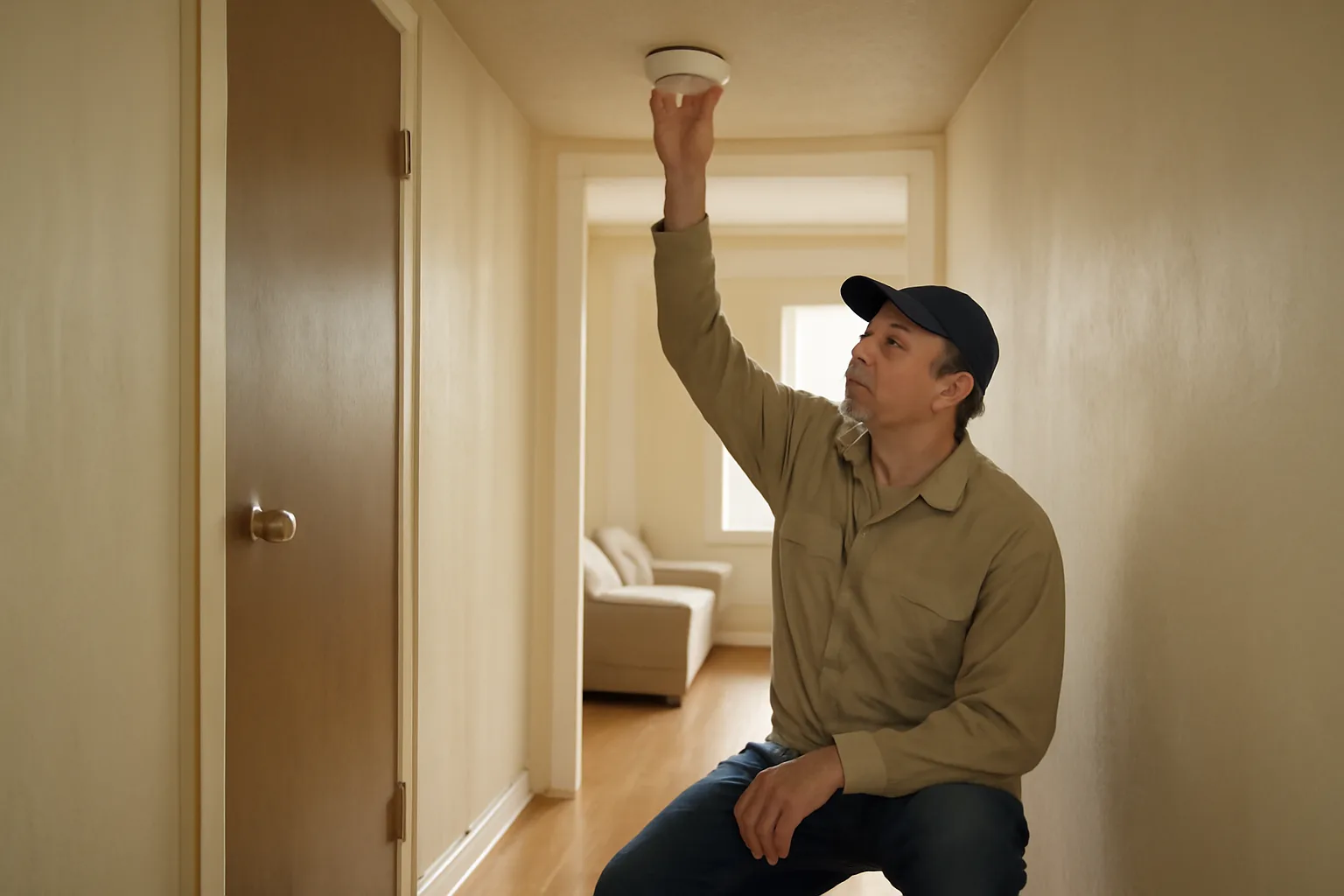
A rental inspector is a code enforcement official (city, county, or fire department) who checks that a rental unit meets local health, safety, and building codes before or during a rental license period. They typically look at smoke and CO alarms, egress windows, electrical panels, plumbing, and pest conditions. Most cities require 24 to 48 hours notice before entry, though rules vary by state and lease terms.
what is a rental inspector and what do they actually do?
A rental inspector is a government employee, usually working for a city's code enforcement, housing, or building department, whose job is to confirm a rental unit meets minimum health and safety standards before it can be legally rented out. Some cities call this person a housing inspector, property maintenance inspector, or code enforcement officer. The title varies, but the job is the same: walk the unit, check it against a written code, and either pass it, flag violations, or fail it outright. Most mandatory rental-licensing cities require this inspection on a cycle, commonly every one to three years, and again whenever a unit changes tenants in some jurisdictions. Minneapolis, for example, requires a Rental License and inspects most units on a cycle tied to the property's inspection history, with high-performing properties inspected less often [1]. Philadelphia requires a Rental License and, depending on the program, a lead-safe certification or a Housing Inspection License for certain properties [2]. The inspector isn't there to judge your decorating choices or nitpick cosmetic wear. They're checking a fixed list: smoke alarms, carbon monoxide detectors, electrical safety, plumbing, structural soundness, egress (can people get out in a fire), and sometimes pest or sanitation conditions. If you already know your city's checklist, half the anxiety of the visit goes away. If you don't know it yet, your city's rental licensing office almost always publishes the exact inspection checklist online or will mail it with your license renewal notice, so confirm with your city rental licensing office before the appointment.
what can a landlord look at during an inspection?
| Government rental inspector | Code compliance: smoke/CO alarms, electrical, plumbing, egress, structural | No |
|---|---|---|
| Landlord walk-through | Lease compliance, damage, unauthorized occupants/pets, safety hazards | No |
| Landlord for repairs | Access to fix a specific reported issue | Only what's needed for the repair |
For a landlord doing a periodic walk-through (as opposed to the government inspector's code inspection), what you can look at is generally limited to confirming the unit is being maintained and checking for lease violations or safety issues, not going through the tenant's belongings. You can look at the smoke detectors, check for water damage or mold, verify no unauthorized pets or occupants, and confirm no unsafe modifications (like blocked exits or overloaded circuits). You cannot search drawers, closets, or personal property beyond a visual check for damage or safety hazards. Many states cap what a landlord inspection can cover to 'reasonable purpose' language. California's Civil Code Section 1954, for instance, allows landlord entry to inspect the premises, make repairs, show the unit to prospective tenants or buyers, or in emergencies, but doesn't authorize going through personal belongings [3]. A government rental inspector's scope is different and broader within the unit's condition, but still not personal property. A city housing inspector checking for code compliance looks at things like: working smoke and CO alarms in required locations, GFCI outlets near water sources, no exposed wiring, functioning heat source, hot water at a safe temperature, no active leaks, proper egress from every sleeping room (a window large enough to climb out of, in most codes), handrails on stairs, and no obvious pest infestation. Some cities add specifics like window screen conditions, exterior paint condition (especially for lead paint era homes, pre-1978), or working locks on all exterior doors. Here's a rough comparison of what each party's inspection typically covers: | Inspector type | Typical scope | Can enter personal storage? |
how much notice does a landlord have to give before an inspection?
Most states require landlords to give tenants advance written notice before entering for a non-emergency inspection, typically 24 to 48 hours, though the exact number and the acceptable delivery method vary by state. California requires 'reasonable notice,' which the statute defines as 24 hours being presumed reasonable absent evidence to the contrary, under Civil Code Section 1954 [3]. Other states, like Texas, don't set a statutory minimum notice period for routine entry in the way California does, leaving it more dependent on lease terms and local reasonableness standards, so check your specific state's landlord-tenant statute. For a government rental inspector's visit, notice requirements are set by the city ordinance, not general landlord-tenant law, and they often run longer, sometimes 7 to 14 days by mail, because the city has to schedule an inspector and give the landlord (and sometimes the tenant) time to prepare. Confirm your specific city's notice period with your city rental licensing office, since it's genuinely one of the most city-specific numbers in this whole process. Emergency access (fire, flooding, gas leak) generally doesn't require advance notice under any state's law. That's a narrow exception, not a loophole to use for routine visits.
who is responsible for the rental property walk-through inspection in california?
In California, the landlord is generally responsible for arranging move-in and move-out walk-through inspections, and state law gives tenants a specific right to request an initial move-out inspection before they leave. Under California Civil Code Section 1950.5, a tenant has the right to request an inspection prior to termination of tenancy, and the landlord must give at least 48 hours written notice before that inspection and provide an itemized statement of anything that needs fixing to avoid deductions from the security deposit [4]. That's distinct from a city's mandatory rental inspection program, which some California cities run separately, like Los Angeles's Systematic Code Enforcement Program (SCEP), which inspects rental units on a periodic cycle under the city's rent stabilization ordinance framework [5]. So in California specifically, you might deal with three different 'inspections': the landlord-tenant move-out walk-through under Civil Code 1950.5, a routine landlord maintenance inspection under Civil Code 1954, and a city code inspection under a local rental registration ordinance. They have different notice rules and different purposes, so don't assume one covers the other. If you're a California landlord, the practical move is to keep these separate on your calendar and handle the move-out walk-through with its own 48-hour notice and written deficiency list, since skipping that step is one of the more common reasons landlords lose security deposit disputes in small claims court.
what is landlording and what is a landlord?
A landlord is a person or entity that owns real property and rents it to another party (the tenant) in exchange for payment, usually under a lease or rental agreement. Landlording is the informal term for the practice of managing that rental relationship: collecting rent, maintaining the property, handling repairs, following local and state landlord-tenant law, and dealing with turnover between tenants. It sounds simple until you're the one holding a violation notice from the city. In practice, landlording covers a wide set of ongoing duties: keeping the unit habitable (a legal standard called the 'implied warranty of habitability' recognized in most states' housing codes and case law), following fair housing law in tenant screening, handling security deposits according to state-specific rules on timing and itemization, and in mandatory-licensing cities, registering the property and passing periodic inspections. The federal Fair Housing Act prohibits discrimination in rental housing based on race, color, religion, sex, national origin, familial status, and disability, and it applies to virtually all landlords with more than a handful of exemptions for owner-occupied small buildings [6]. If you're new to landlording, learning that law before you list your first unit is worth more than any paint job or appliance upgrade you'll make. Landlording isn't passive income in the way it gets marketed. It's a part-time job with legal exposure, and the cities that require rental licensing and inspection exist specifically because some landlords treated it as passive and let units fall into disrepair.
how to become a landlord (and how to be a good one)
Becoming a landlord legally requires, at minimum: owning or having authority to rent the property, complying with your state's landlord-tenant statute, and in many cities, registering the rental with the local government and passing an inspection before you can legally collect rent. There's no license exam for landlording itself in most of the country (a few cities require a short course, and some require a local business license), but skipping the local registration step is where new landlords get burned with fines. The practical steps most first-time landlords need to work through: confirm whether your city or county requires a rental license or registration (search '[your city] rental registration' or call the housing department directly), get proper landlord insurance (a standard homeowner's policy usually doesn't cover a tenant-occupied property), understand your state's security deposit and notice-to-enter rules, and set up a lease that matches your state's required disclosures (lead paint disclosure is federally required for pre-1978 housing under 24 CFR Part 35 [7]). Being a good landlord, separate from just being a legal one, mostly comes down to responsiveness and documentation. Answer maintenance requests fast, especially anything touching heat, water, or safety. Keep a paper trail on repairs and communications. Do the walk-through inspections you're supposed to do, on the schedule you're supposed to do them, so nothing surprises you at renewal or at a city inspection. If your city already requires a rental license, working backward from that ordinance's inspection checklist is the fastest way to learn what 'good landlording' means in your specific jurisdiction, since it's literally the government's written definition of a habitable unit.
what rights do tenants have without a lease?
A tenant without a signed lease still has legal rights: courts generally treat an ongoing tenancy without a written lease as a month-to-month tenancy, governed by the state's default landlord-tenant statute, and the tenant retains the same habitability, notice, and eviction protections as someone with a written lease. No written lease doesn't mean no rights. It usually just means the tenancy defaults to month-to-month terms under state law. Without a written lease, a tenant typically still has the right to: a habitable unit (working plumbing, heat, no serious safety hazards), advance notice before the landlord enters (same as any tenant, under the state's entry notice statute), the required notice period before the landlord can terminate the tenancy (commonly 30 days for month-to-month tenancies, though some states and situations require more), and protection from retaliatory or discriminatory eviction under state law and the federal Fair Housing Act [6]. What a tenant without a lease usually loses is certainty. The terms of rent amount, who pays for what utility, and renewal rights become harder to prove without a document, and disputes often come down to text messages, canceled checks, or verbal agreement testimony. That ambiguity cuts both ways and burns landlords just as often as tenants. If you're a landlord who's been renting to someone without a signed lease, get one signed retroactively as soon as you can (dated from the actual move-in, with actual agreed terms), because an oral or implied month-to-month arrangement is legal in most states but is a bad position to be negotiating from if a dispute ever lands in front of a judge.
why do landlords require renters insurance?
Landlords require renters insurance mainly to shift liability, protect against fire and water damage claims caused by the tenant, and cover the tenant's own belongings so the landlord's policy isn't the tenant's only fallback if something goes wrong. The landlord's own property insurance covers the building structure, not the tenant's furniture, electronics, or clothes, and it doesn't necessarily cover a lawsuit if the tenant's negligence (like an unattended stove fire) damages a neighboring unit. Renters insurance is genuinely cheap relative to the protection it buys: national average costs commonly run in the range of $15 to $30 per month for a standard policy with liability and personal property coverage, though the exact number depends on coverage amount, location, and provider, and no single national figure applies everywhere. That low cost is part of why more cities and individual landlords require it as a lease condition; it's a small ask that meaningfully reduces the landlord's downside exposure. Requiring it also protects the tenant, even if that's not the landlord's main motive. If a tenant's laptop gets stolen or a pipe bursts and ruins their furniture, the landlord's insurance generally won't pay for that; it's the tenant's own policy that would. Framing the requirement that way, rather than as a pure landlord CYA move, tends to get less pushback during lease signing. Some states and cities are starting to formalize this. A growing number of jurisdictions allow landlords to require either renters insurance or participation in a landlord-offered damage waiver program as a lease condition, though the specific legal framework for requiring it (and any cap on what a landlord can charge if offering an alternative) varies by state, so check your state's statute before writing it into a lease.
what can't a landlord do in ohio?
In Ohio, a landlord cannot enter a rental unit without reasonable notice, retaliate against a tenant for exercising a legal right, discriminate based on a protected class, or shut off utilities or change the locks to force a tenant out (a practice called self-help eviction, which is illegal). Ohio Revised Code Section 5321.04 lays out the landlord's duties, and Section 5321.05 lays out tenant obligations, forming the core of the state's Landlord-Tenant Act [8]. Specifically, Ohio Revised Code 5321.04 requires landlords to keep the premises in a fit and habitable condition, comply with building and housing codes, keep common areas safe, maintain electrical, plumbing, sanitary, heating, and ventilating fixtures in good working order, and provide running water and reasonable amounts of hot water [8]. A landlord who ignores these duties can face a tenant's claim for damages or, in some cases, a court order (called a receivership action) turning management of the property over to someone else, which Ohio law specifically allows under certain habitability failures [8]. Ohio law also generally requires landlords to give reasonable notice, presumed to be 24 hours, before entering an occupied unit for a non-emergency purpose, per the entry provisions tied to the same landlord-tenant framework [8]. Locking a tenant out, removing their belongings, or shutting off utilities without a court-ordered eviction is illegal self-help and can expose the landlord to statutory damages. Ohio landlords also can't retaliate against tenants for complaining to a housing authority or asserting rights under Chapter 5321. Raising rent, threatening eviction, or reducing services in direct response to a legitimate tenant complaint is the kind of fact pattern that shows up in retaliation claims under this chapter.
how do you prepare a unit for a rental license inspection?
Preparing for a rental license inspection means working through your city's specific checklist item by item, well before the scheduled date, rather than doing a general cleanup and hoping for the best. Every city's checklist differs, but a few items show up almost everywhere: working smoke alarms in every bedroom and on every level, at least one carbon monoxide alarm near sleeping areas (required by an increasing number of state and local codes), no exposed or frayed wiring, a functioning primary heat source, and clear, unobstructed egress from every room used for sleeping. Common-sense prep that catches most landlords out: replacing dead smoke alarm batteries the morning of the inspection instead of testing them a week ahead, forgetting that a bedroom window painted shut counts as a failed egress point, and not realizing that a space heater as the sole heat source in a room usually fails code even if it technically works. Get a copy of your city's actual inspection checklist before you do anything else. Cities like Minneapolis and Philadelphia publish these publicly, and most other licensing cities will send it with your renewal notice or provide it if you call the housing department directly [1][2]. Walking the unit with that literal document in hand, room by room, catches far more than a general 'does this look okay' pass. If you manage multiple units across different cities, or you're licensing a rental for the first time and don't want to guess at what a specific city's inspector checks, a packet built around your specific city's actual checklist and deadlines saves the guesswork. That's the whole idea behind our $79 City Rental License & Inspection Prep Packet: it's built to match your specific city's ordinance instead of a generic national list.
what happens if a unit fails the rental inspection?
If a rental unit fails inspection, the city typically issues a written notice of violations with a required correction deadline (commonly 30 days, though ranges vary), and the landlord must fix the items and request a re-inspection before the rental license is issued or renewed. Failing the first pass isn't unusual and isn't the end of the world; most inspection programs are built around a correction-and-reinspection cycle, not a one-shot pass/fail. What is a real problem is ignoring the notice. Cities that require rental licensing generally have enforcement teeth: fines for renting without a valid license, fines per violation per day for uncorrected items, and in serious cases, an order prohibiting occupancy until the unit is brought into compliance. The specific fine schedule is set locally, so confirm exact dollar amounts and escalation timelines with your city rental licensing office rather than assuming a number from another city applies to yours. Repeat violations or unaddressed serious hazards (structural issues, no heat, active pest infestation) tend to trigger faster and harsher escalation than a single missing smoke alarm. Cities that track landlord compliance history, like Minneapolis's tiered inspection cycle tied to a property's inspection record, front-load consequences onto landlords with a pattern of problems rather than treating every failed item the same way [1]. The fastest path back to a passed inspection is usually documenting each fix with a photo and date, then requesting reinspection formally rather than assuming the city will just take your word for it. Most jurisdictions require a formal reinspection request and may charge a modest reinspection fee, so budget for that as a real cost, not an afterthought.
Frequently asked questions
How to become a landlord?
Becoming a landlord means owning rental property and complying with your state's landlord-tenant law, plus registering with your city if it requires rental licensing. There's no universal license exam, but most mandatory-licensing cities require registration, a code inspection, and a business license before you can legally rent the unit out. Confirm requirements with your specific city's rental licensing office.
Who is responsible for the rental property walk-through inspection in California?
The landlord is generally responsible for arranging it. California Civil Code Section 1950.5 gives tenants the right to request a move-out inspection, requiring the landlord to give 48 hours notice and an itemized list of deficiencies before the tenant leaves, separate from any city rental license inspection [4].
What is landlording?
Landlording is the practice of owning and managing rental property: collecting rent, maintaining habitability, following landlord-tenant law, handling tenant turnover, and in licensing cities, keeping the rental registered and inspection-ready. It's an ongoing legal and operational responsibility, not passive income.
What is a landlord?
A landlord is a property owner (or authorized agent) who rents real property to a tenant in exchange for payment, usually under a lease. Landlords carry legal duties under state landlord-tenant law, including habitability standards, notice-to-enter rules, and security deposit handling.
What rights do tenants have without a lease?
A tenant without a written lease is usually treated as a month-to-month tenant under state default law, retaining habitability rights, entry notice rights, required termination notice, and fair housing protections. Lacking a written lease mainly creates proof problems over rent amount and terms, not a loss of legal rights.
How to be a landlord?
Being a landlord means keeping the unit habitable, following your state's notice-to-enter and security deposit rules, treating applicants fairly under fair housing law, and if your city requires it, keeping the rental license current and passing periodic inspections. Responsiveness on repairs and clear documentation prevent most disputes.
Why do landlords require renters insurance?
Landlords require renters insurance to shift liability for tenant-caused damage (like a stove fire) and to make sure the tenant's own belongings are covered, since a landlord's building policy typically doesn't cover a tenant's furniture or electronics. Policies commonly cost around $15 to $30 a month, though pricing varies by coverage and location.
How much notice does a landlord have to give before entering?
Most states require 24 to 48 hours advance notice for non-emergency entry; California presumes 24 hours is reasonable under Civil Code Section 1954 [3]. Government rental license inspections often require longer notice, sometimes 7 to 14 days, set by local ordinance rather than state landlord-tenant law.
What can a landlord look at during an inspection?
A landlord's routine inspection can cover visible damage, safety hazards, unauthorized occupants or pets, and general lease compliance, but not a search of personal belongings like drawers or closets. A government rental inspector's scope is broader on code items (electrical, plumbing, smoke alarms) but still excludes personal property.
What can't a landlord do in Ohio?
Ohio landlords can't enter without reasonable notice, retaliate against tenants for asserting legal rights, discriminate based on protected class, or use self-help eviction tactics like changing locks or shutting off utilities. Ohio Revised Code Section 5321.04 requires landlords to maintain a fit, habitable unit with working electrical, plumbing, and heating systems [8].
What does a rental inspector check for smoke alarms?
A rental inspector typically checks that smoke alarms are present in every bedroom and on every level of the unit, are functional (tested on the spot in many inspections), and are placed per local fire code, often supplemented by a required carbon monoxide alarm near sleeping areas depending on the jurisdiction.
Can a tenant refuse a rental license inspection?
A tenant generally cannot refuse a properly noticed inspection tied to the landlord's legal obligations or a government rental license program, since most state statutes and local ordinances authorize entry with adequate notice for maintenance and code compliance purposes. Refusal can be treated as a lease violation in many jurisdictions.
How often do cities require rental license inspections?
It varies widely by city; common cycles run every 1 to 3 years, though some cities inspect more or less often based on a property's compliance history, like Minneapolis, which uses a tiered cycle where well-maintained properties get inspected less frequently [1]. Confirm your specific city's cycle with its rental licensing office.
Sources
- City of Minneapolis, Rental Licensing: Minneapolis inspects rental units on a cycle tied to the property's inspection history
- City of Philadelphia, Get a rental license: Philadelphia requires a Rental License and, for certain properties, lead-safe certification
- California Civil Code Section 1954: California landlords must give reasonable notice, presumed 24 hours, before entering for inspection or repairs
- California Civil Code Section 1950.5: California tenants can request a move-out inspection with 48 hours notice and an itemized deficiency list
- Los Angeles Housing Department, Systematic Code Enforcement Program: Los Angeles inspects rental units under SCEP on a periodic cycle
- U.S. Department of Housing and Urban Development, Fair Housing Act overview: The federal Fair Housing Act prohibits rental discrimination based on race, color, religion, sex, national origin, familial status, and disability
- EPA, Real Estate Disclosures About Potential Lead Hazards (24 CFR Part 35, Subpart A): Federal law requires lead paint disclosure for housing built before 1978
- Ohio Revised Code Section 5321.04: Ohio landlords must keep the premises fit and habitable, comply with housing codes, and maintain electrical, plumbing, and heating systems