Last updated 2026-07-25
TL;DR
A rental inspection checklist should cover smoke and CO alarms, electrical and plumbing systems, exits and egress windows, exterior structure, pest evidence, and lead paint condition in pre-1978 units. Most cities require 24 to 48 hours notice before entry. Inspectors check for code violations, not cleanliness, and landlords typically get 30 to 60 days to fix anything flagged.
What is a rental inspection checklist and why do you need one
A rental inspection checklist is a written list of items an inspector, or you, will check to confirm a rental unit meets local housing and safety code. If your city requires a rental license, registration, or periodic inspection program (common in places like Minneapolis, Cincinnati, or Toledo), you'll get a notice with a scheduled date and sometimes a copy of the actual checklist the inspector uses. Some cities post their inspection forms publicly. Others hand it to you at the door. Using a checklist before the official inspection is the single best way to avoid a failed inspection, a re-inspection fee, or a violation notice with a fine attached. Re-inspection fees vary by city; some charge nothing for the first re-check and $50 to $150 for each one after that. Confirm the specific number with your city rental licensing office, because it changes year to year and city to city. The rest of this article walks through what's actually on these lists, room by room and system by system, plus the legal and practical questions landlords ask most (notice requirements, tenant rights, what counts as landlording in the first place). If you want a structured way to organize this for a specific city's program, the City Rental License & Inspection Prep Packet is a $79 one-time tool built for exactly this.
What can a landlord look at during an inspection
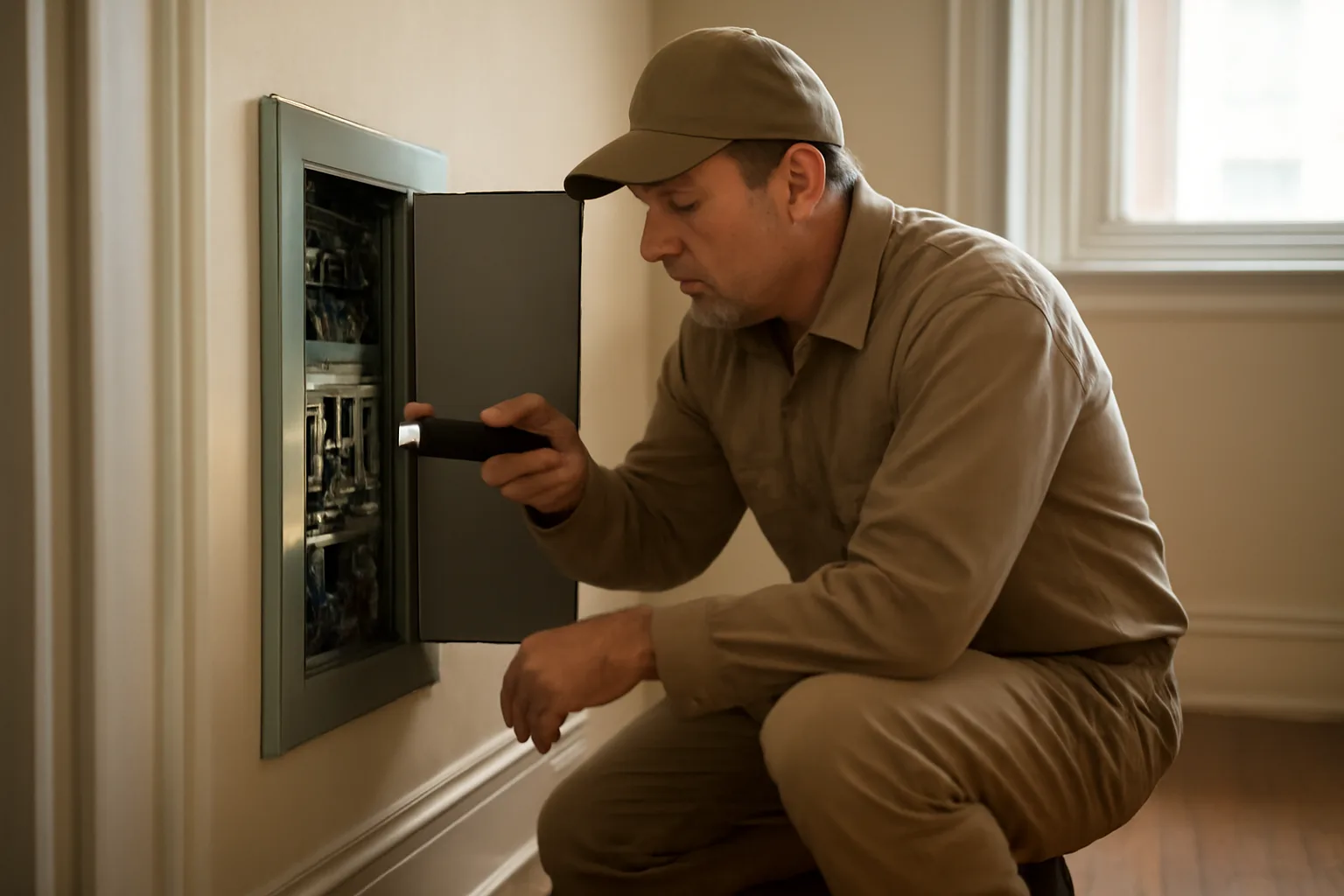
During a routine rental inspection, a landlord or inspector can check visible safety and maintenance conditions: smoke detectors, electrical outlets, plumbing, heating, structural integrity, and general habitability. They generally cannot search personal belongings, open closed drawers, or treat the visit as a search for evidence of lease violations unrelated to safety and condition. A typical inspection covers: - Smoke alarms and carbon monoxide detectors: present, functional, correctly placed (most codes require one per sleeping area and one per floor)
- Electrical: no exposed wiring, no overloaded outlets, GFCI outlets in kitchens and bathrooms where required
- Plumbing: no active leaks, working water heater, proper venting, functioning toilets and drains
- Heating: working furnace or heat source, especially in cities with minimum-temperature ordinances
- Windows and doors: they open, close, lock, and in bedrooms, meet egress size requirements
- Exterior: roof condition, gutters, foundation cracks, peeling exterior paint, railing stability on porches and stairs
- Pest evidence: droppings, nests, structural damage from rodents or insects
- Lead paint condition, particularly in units built before 1978 What inspectors generally do NOT do: rummage through tenant belongings, inspect closets or drawers for contents, or use the visit to check on lease compliance issues like unauthorized pets or occupants, unless that's specifically part of the code violation being investigated. The scope is safety and habitability, not tenant behavior.
Interior checklist: room by room what to check
Walk each room with fresh eyes, as if you were a stranger seeing it for the first time. Here's a workable room-by-room list landlords use before a scheduled inspection: Kitchen: working stove and oven, functioning refrigerator, no gas leaks, GFCI outlets near sinks, cabinet doors and drawers functional, no water damage under the sink. Bathrooms: working toilet, sink, and tub/shower, no active leaks, exhaust fan or window for ventilation, GFCI outlets, caulking intact around tub and toilet base. Bedrooms: at least one window that opens and meets egress size (many codes require a minimum opening of 20 inches wide by 24 inches high, with a net clear opening around 5.7 square feet per the International Residential Code egress standard) [1], working smoke alarm, no exposed wiring. Common areas / hallways: working light fixtures, no trip hazards, handrails on any stairs with more than a few steps, smoke alarms present. Basement/utility areas: water heater strapped or vented properly, no visible mold, sump pump (if present) functional, electrical panel accessible and labeled. Don't skip closets and under-sink cabinets. Inspectors sometimes open these looking for water damage or pest evidence, even if they're not digging through tenant belongings.
Exterior and structural checklist: what gets flagged most often
Exterior violations are some of the most common reasons a rental inspection fails, mostly because landlords focus indoors and forget the outside is part of the code too. Check for: - Peeling or flaking paint, especially on older homes (this is a lead paint trigger in pre-1978 properties)
- Loose, cracked, or missing siding
- Gutters and downspouts directing water away from the foundation
- Cracks in the foundation or steps
- Handrails on any exterior stairs, secure and at proper height (typically 34 to 38 inches per most model building codes)
- Roof condition: missing shingles, visible sagging
- Overgrown vegetation blocking exits, address numbers, or sidewalks
- Trash, debris, or junk vehicles in the yard (many cities cite this separately as a property maintenance violation)
- Working exterior lighting near entrances A lot of these are cheap fixes: a $20 can of paint, a $15 handrail bracket, an afternoon of yard work. The expensive ones (roof, foundation, siding) are exactly why doing a pre-inspection walk-through months ahead of your scheduled date matters. You don't want to discover a $6,000 roof problem three days before an inspector shows up.
How much notice does a landlord have to give before an inspection
Notice requirements vary by state and by whether the inspection is a routine city rental inspection or a landlord-initiated walk-through. Most states require 24 to 48 hours notice for non-emergency entry, though the exact language and required method (written, verbal, posted) differs. California requires "reasonable notice," which state law defines as presumptively 24 hours unless circumstances suggest otherwise, under California Civil Code Section 1954 [2]. Ohio's landlord-tenant statute similarly requires "reasonable notice of at least twenty-four hours" before entry, under Ohio Revised Code 5321.04 [3]. Some cities layer their own notice rules on top of state law for official rental license inspections, sometimes requiring 48 hours or written notice specifically, so check your city's ordinance in addition to state law. Emergencies (fire, flooding, gas leak) are the standard exception in nearly every state's statute: landlords can enter without advance notice when there's an immediate threat to life or property. Outside of emergencies, entering without proper notice can itself become a lease violation or fair housing complaint, so document your notice (email, text, or a posted notice with a photo) every time.
Who is responsible for a rental property walk-through inspection in California
In California, the landlord is responsible for arranging move-in and move-out walk-through inspections, but tenants have a right to request a joint pre-move-out inspection under California Civil Code Section 1950.5(f) [4]. The landlord must give at least 48 hours written notice before that inspection. The statute exists specifically so tenants get a chance to fix issues before move-out and avoid deductions from their security deposit. After the joint inspection, the landlord must provide an itemized statement of anything still needing repair or cleaning, and give the tenant a reasonable opportunity to address it before the final move-out. For routine rental licensing inspections tied to a city's rental registration program (not the move-out deposit inspection), the responsibility shifts: the landlord schedules and coordinates with the city inspector, and the tenant generally has to allow reasonable access per the same Civil Code Section 1954 notice rules. If a tenant refuses access despite proper notice, most California city programs let landlords document the refusal and reschedule, sometimes with the city's help enforcing access.
What a landlord cannot do in Ohio
Ohio landlords cannot enter a rental unit without reasonable notice (at least 24 hours) except in an emergency, cannot shut off utilities to force a tenant out, cannot change locks without court process, and cannot retaliate against a tenant for reporting code violations. These protections come from Ohio Revised Code Chapter 5321, the state's Landlord and Tenant Law [3]. Specifically, Ohio Revised Code 5321.04 lists landlord obligations, including maintaining the unit in a fit and habitable condition and complying with building, housing, and health codes. Ohio Revised Code 5321.02 prohibits retaliatory conduct, meaning a landlord can't raise rent, decrease services, or start eviction proceedings specifically because a tenant complained to a housing authority or joined a tenant union. Ohio law also bars "self-help" evictions. A landlord cannot physically remove a tenant, remove doors, shut off water or electricity, or lock a tenant out without going through the court eviction process, per Ohio Revised Code 5321.15 [5]. Violating this section can expose a landlord to actual damages, and courts have awarded tenants damages plus attorney fees in self-help eviction cases under this statute.
What rights do tenants have without a lease
A tenant without a written lease still has legal rights. In every state, an oral or month-to-month tenancy still creates a legal landlord-tenant relationship, and tenants keep protections around habitability, proper notice before entry, and proper notice before eviction, even with nothing in writing. Without a written lease, the tenancy typically defaults to month-to-month, and either party can end it by giving proper notice, usually 30 days, though some states and cities require more (60 or 90 days in certain jurisdictions, especially for longer-term tenants or in cities with just-cause eviction ordinances). The landlord still must maintain the unit to code, still owes the same notice-before-entry rules under state law, and still has to go through formal eviction court to remove a tenant, lease or no lease. What a tenant loses without a written lease is mostly proof: no lease means no agreed rent amount in writing, no agreed rules about pets, guests, or subletting, and disputes tend to come down to he-said-she-said. That's a real risk for both sides. If you're currently renting without a lease, put something in writing as soon as possible, even a simple month-to-month agreement, and keep records of rent payment and any communication about repairs or entry notices.
Why do landlords require renters insurance
Landlords require renters insurance mainly to shift liability risk for tenant belongings and certain damage/injury claims away from the landlord's own policy. A standard landlord (dwelling) insurance policy generally covers the building itself, not a tenant's personal property, and doesn't typically cover a tenant's liability if they cause a fire or a guest gets injured in their unit. Renters insurance is inexpensive relative to the protection it buys: the Insurance Information Institute has reported average national renters insurance premiums in the range of roughly $15 to $20 per month, though this varies by state, coverage amount, and provider [6]. Given that low cost, many landlords require it as a lease condition, and some rental licensing programs even ask landlords to confirm they require it as part of the application. Requiring it also reduces the odds a landlord gets pulled into a dispute over who pays when a tenant's belongings are damaged by a covered event, or when a tenant's negligence (an unattended stove, an overflowing tub) causes damage to a neighboring unit. It's not a guarantee against every claim, but it's cheap insurance for both sides of the relationship, literally.
What is landlording, and what is a landlord
A landlord is the owner (or authorized manager) of a rental property who leases it to a tenant in exchange for rent, taking on legal responsibilities for habitability, repairs, and compliance with local, state, and federal housing law. "Landlording" is the informal, widely used term for the day-to-day work of managing that role: collecting rent, screening tenants, handling repairs, staying current on code compliance, and managing the legal side of the relationship, from lease terms to notice requirements to eviction process if it comes to that. Being a landlord isn't just owning property and cashing rent checks. It comes with binding legal duties. The implied warranty of habitability, recognized in nearly all U.S. states in some form, requires landlords to keep rental units safe and livable, covering things like working plumbing, heat, and structural safety, regardless of what's in (or missing from) a lease. Many first-time landlords underestimate how much of the job is administrative: renewing a rental license, scheduling inspections, tracking notice deadlines, filing local registration paperwork. If your city has a rental registration or licensing requirement, that paperwork isn't optional, and missing a renewal deadline is one of the most common ways landlords rack up avoidable fines.
How to become a landlord and how to be a landlord day to day
Becoming a landlord starts with owning or controlling a rental property, then legally registering it if your city or state requires it, screening and leasing to a tenant, and setting up the systems to manage rent collection, maintenance requests, and compliance. There's no license required to be a landlord in most of the U.S. at the state level, but a growing number of cities require a rental license or registration specifically, and that's a separate, local requirement from anything at the state level. Practical steps for a first rental: 1. Confirm your city's rental registration or licensing requirement (search "[your city] rental license" plus your city's housing department page) 2. Get the unit inspection-ready using a checklist like the one in this article 3. Set a legal, market-appropriate rent and draft a lease that complies with your state's landlord-tenant law 4. Screen tenants consistently and in compliance with the federal Fair Housing Act, which prohibits discrimination based on race, color, religion, sex, national origin, familial status, or disability [7] 5. Set up a system for maintenance requests, rent tracking, and notice documentation Day to day, being a landlord means staying ahead of two kinds of deadlines: the tenant-facing ones (notice before entry, notice before rent increases, response time to repair requests) and the city-facing ones (license renewal, scheduled inspections, violation correction windows). Miss either category and you're looking at fines, a bad tenant relationship, or both. For a step-by-step look at what tenants can expect and demand from you, see tenants rights and renters rights.
How to build your own pre-inspection checklist
| Smoke/CO alarms | Present in every bedroom, hallway, and floor; battery or hardwired | Replace battery, install missing unit ($15-$40 each) | |
|---|---|---|---|
| Electrical | No exposed wiring, GFCI in wet areas, panel labeled | Electrician visit ($100-$300) | |
| Plumbing | No active leaks, water heater vented, adequate water pressure | Plumber repair, varies widely | |
| Heating | Functional furnace/heat source, meets minimum temp rules | Furnace service ($100-$250) | |
| Windows/doors | Open, close, lock; bedroom egress size met | Replace hardware, repair frame | |
| Exterior paint | No peeling, especially pre-1978 units | Scrape and repaint ($200-$1,000+ depending on size) | |
| Handrails | Secure, correct height on stairs (3+ steps) | Install bracket or new rail ($50-$200) | |
| Pest evidence | No droppings, nests, structural damage | Pest control service ($100-$300) | |
| Egress | Clear path to at least two exits per unit | Remove obstruction, unblock window | Confirm exact fee ranges and code specifics with your city rental licensing office, since these numbers shift by market and by code cycle. If you'd rather not build this from scratch for every property, the City Rental License & Inspection Prep Packet ($79, one time) organizes this by city so you're working from a checklist matched to your actual jurisdiction instead of a generic template. |
The fastest way to build a checklist that actually matches what your city's inspector will look for is to start from your city's own published rental inspection form, if one exists, and add anything your state's landlord-tenant statute requires on top of it. Here's a general-purpose base checklist you can adapt: | Category | What to check | Common fix if failed |
What happens after a failed inspection
A failed rental inspection typically results in a written violation notice listing each item that didn't pass, plus a correction deadline, most commonly 30 to 60 days depending on the severity of the issue and your city's ordinance. Life-safety issues (no smoke detectors, active gas leak, no heat in winter) often get much shorter deadlines, sometimes as little as 24 to 72 hours. After you fix the items, you schedule a re-inspection. Some cities do this for free the first time and charge a re-inspection fee ($50 to $150 is a common range, though it varies) for subsequent visits if you still haven't corrected everything. If violations go uncorrected past the deadline, cities can escalate to daily fines, hold your rental license renewal, or in serious repeat cases, take you to housing court. Document every repair with photos and receipts and dates. If a dispute comes up later, whether with the city or with a tenant, that paper trail is what protects you.
Frequently asked questions
What is a rental inspection checklist used for?
It's a written list of safety and condition items (smoke alarms, plumbing, electrical, exits, exterior condition) landlords use to prepare a unit before a scheduled city rental inspection, or before a tenant moves in or out. Using one ahead of time catches cheap fixes before they become official violations with fines attached.
How much notice does a landlord have to give before entering?
Most states require 24 to 48 hours notice for non-emergency entry. California presumes 24 hours is "reasonable notice" under Civil Code Section 1954. Ohio requires at least 24 hours under Revised Code 5321.04. Cities sometimes add stricter rules for official rental license inspections, so check local ordinance too.
What can a landlord look at during an inspection?
Landlords and inspectors can check visible safety and condition items: smoke alarms, electrical, plumbing, heating, windows, exits, and exterior structure. They generally cannot search closed drawers, closets' contents, or personal belongings unrelated to safety, and shouldn't use the visit to check on unrelated lease compliance.
What a landlord cannot do in Ohio?
Ohio landlords cannot enter without at least 24 hours notice except in an emergency, cannot shut off utilities or change locks to force a tenant out, and cannot retaliate against a tenant for reporting code violations. These rules come from Ohio Revised Code Chapter 5321, including the self-help eviction ban in Section 5321.15.
Who is responsible for a rental property walk-through inspection in California?
The landlord arranges and schedules walk-through inspections in California, including the pre-move-out joint inspection tenants can request under Civil Code Section 1950.5(f), which requires at least 48 hours written notice. For routine city licensing inspections, the landlord coordinates with the city while the tenant must allow reasonable access.
What rights do tenants have without a lease?
Tenants without a written lease still have full legal protections: habitability standards, notice-before-entry rules, and formal eviction process requirements all still apply. The tenancy typically defaults to month-to-month, and either side usually needs to give at least 30 days notice to end it, though some cities require more.
Why do landlords require renters insurance?
Renters insurance covers a tenant's personal belongings and certain liability claims (like a fire they cause) that a landlord's own dwelling policy usually doesn't cover. It's relatively cheap, often around $15-$20 a month per the Insurance Information Institute, so many landlords require it as a lease condition to reduce shared risk.
How do you become a landlord?
You become a landlord by owning or controlling a rental property, registering it with your city if required, screening and leasing to a tenant under a compliant lease, and setting up systems for rent collection, maintenance, and legal notice tracking. Most states don't license landlords, but many cities require rental registration or licensing.
What is landlording?
Landlording is the everyday work of owning and managing rental property: collecting rent, handling repairs, screening tenants, keeping up with local licensing and inspection requirements, and managing the legal side of the tenant relationship, including notice periods and habitability obligations.
What happens if you fail a rental inspection?
You typically get a written notice listing each violation and a correction deadline, often 30 to 60 days for standard issues and much shorter for life-safety issues. You then schedule a re-inspection, sometimes for a fee, and uncorrected violations can lead to daily fines or a held license renewal.
Do smoke detectors need to be in every bedroom?
Most modern fire and building codes require a smoke alarm in every bedroom, outside each sleeping area, and on every level of the home, which mirrors the standard behind NFPA 72 and most state fire codes. Confirm the exact placement rule with your city's fire or building department, since amendments vary.
Can a landlord inspect a rental without notice?
Only in a genuine emergency, like a fire, gas leak, or major flooding. Outside emergencies, entering without the notice required by state law (commonly 24 to 48 hours) can itself become a legal violation, even if the landlord's intent was reasonable.
What's the difference between a move-in inspection and a licensing inspection?
A move-in/move-out inspection documents the unit's condition for security deposit purposes, between landlord and tenant. A licensing inspection is done by a city official to confirm the property meets code as part of your rental license or registration requirement, and it can result in fines or license denial, more than deposit disputes.
How much do rental inspection re-inspection fees cost?
Fees vary widely by city; a common range is $50 to $150 per re-inspection after an initial free check, though some cities charge for every visit and others waive the first re-check entirely. Confirm the actual fee schedule with your specific city rental licensing office before assuming a number.
Sources
- International Code Council, International Residential Code, egress window requirements: Bedroom egress windows must meet minimum net clear opening requirements
- California Legislative Information, Civil Code Section 1954: California presumes 24 hours is reasonable notice before landlord entry
- Ohio Legislature, Revised Code Section 5321.04: Ohio requires landlords to maintain habitability and comply with housing codes, with at least 24 hours notice before entry
- California Legislative Information, Civil Code Section 1950.5: Tenants can request a joint pre-move-out inspection with 48 hours written notice
- Ohio Legislature, Revised Code Section 5321.15: Ohio bans self-help evictions including lockouts and utility shutoffs
- Insurance Information Institute, Facts + Statistics: Homeowners and renters insurance: Average renters insurance premiums are roughly $15 to $20 per month nationally
- U.S. Department of Housing and Urban Development, Fair Housing Act overview: Federal Fair Housing Act prohibits discrimination based on race, color, religion, sex, national origin, familial status, or disability
- Ohio Legislature, Revised Code Section 5321.02: Ohio law prohibits landlord retaliation against tenants who report code violations