Last updated 2026-07-26
TL;DR
A landlord owns rental property and is legally responsible for habitability, notice periods, and lawful inspections. Rules vary by state: notice ranges from 24 hours to 2 days in most states, and even tenants without a written lease have rights under state landlord-tenant law. This guide covers the basics, inspection limits, and state-specific quirks like Ohio and California.
what is a landlord, exactly?
A landlord is the person or entity that owns a rental property and rents it to someone else (the tenant) in exchange for money, usually under a lease or rental agreement. That's the plain definition. Legally, a landlord takes on obligations the moment money changes hands for occupancy, whether or not there's a signed lease sitting in a drawer somewhere. Most state landlord-tenant statutes define "landlord" broadly to include an owner, lessor, sublessor, or anyone who manages the property on the owner's behalf. California's Civil Code, for example, folds landlord duties into its broader habitability and lease statutes rather than one tidy definition section, but the obligations attach to whoever collects rent and controls the unit [1]. Being a landlord isn't just collecting a check. You're on the hook for things like keeping the unit habitable, following state-specific notice rules before you enter, handling security deposits correctly, and following eviction procedures to the letter if things go wrong. Skip a step and you can lose a court case even when you're clearly in the right on the underlying facts. If your city also requires rental registration, licensing, or inspection (a lot of them do now), you take on a second layer of duties on top of state landlord-tenant law. That's a different rulebook, and it's where a lot of small landlords get tripped up because nobody tells them it exists until a notice shows up in the mail.
what is landlording?
"Landlording" is the day-to-day work of owning and managing rental property: screening tenants, collecting rent, handling maintenance requests, doing inspections, keeping records, and staying compliant with local and state law. It's not a legal term, it's industry shorthand for the whole job. People use it loosely to mean everything from owning a single duplex to running a 200-unit portfolio. The core tasks don't change much with scale, though the paperwork and staffing do. A landlord with one rental unit still has to handle the same habitability standards, notice requirements, and deposit rules as someone with fifty units. The difference is that the one-unit landlord usually does it all personally, after their day job, which is exactly why small mistakes (a missed notice period, a security deposit sent five days late) happen more often at that scale. Good landlording, in practice, means documenting everything: move-in condition, repair requests, notices given, inspection results. If a dispute ever goes to a housing court or a small claims hearing, the landlord who kept a paper trail wins far more often than the one who relied on memory.
how to become a landlord: the actual steps
Becoming a landlord takes more than buying a property and putting up a listing. Here's the realistic sequence, in the order most first-time landlords actually go through it. 1. Confirm the property can legally be rented. Check zoning, any HOA restrictions, and whether your city requires a rental license or registration before you can lease the unit at all. A growing number of cities (Minneapolis, Cleveland, Sacramento, and dozens of others) require you to register or license a rental unit before you collect the first rent check. 2. Get the right insurance. A standard homeowners policy usually won't cover a property you don't live in; you generally need a landlord (dwelling) policy, and many mortgage lenders require it as a loan condition. 3. Set the lease terms and screen tenants under the Fair Housing Act, which prohibits discrimination based on race, color, national origin, religion, sex, familial status, and disability in housing transactions [2]. State and local laws often add protected classes on top of the federal list (source of income, sexual orientation, and others depending on your state). 4. Collect the security deposit within your state's legal limit, and hold it according to your state's rules (some states require a separate account, some cap the amount at one or two months' rent, some require interest). 5. Handle move-in inspection and documentation. Take photos, note existing damage, and get the tenant to sign off if your state or lease requires it. 6. Register with your city if required. This is the step people skip most often, usually because they don't know it exists until a violation notice shows up. If your city requires rental licensing, you'll typically need to file an application, pay a fee, and often pass an initial inspection before you're legally allowed to rent the unit. If you're dealing with your first rental license application or inspection deadline, our rental packet builder walks through the documents most cities ask for, for a flat $79 one-time fee, so you're not guessing what to bring to the inspection.
who is responsible for a rental property walk-through inspection in California?
In California, the landlord is responsible for initiating and conducting the walk-through inspection process, but the tenant has the right to be present. California Civil Code Section 1950.5(f) gives tenants the right to request an initial inspection before move-out, specifically so they can fix any deficiencies themselves and avoid deductions from the security deposit [3]. Here's how it actually works under the statute: the landlord must notify the tenant in writing of their right to request this pre-move-out inspection. If the tenant requests it, the landlord conducts the walk-through no earlier than two weeks before the tenancy ends, then gives the tenant an itemized statement of anything that needs fixing or cleaning to avoid deductions [3]. The landlord has to give at least 48 hours' written notice before the actual pre-move-out inspection, unless the tenant waives that notice [3]. Separately, ordinary in-tenancy inspections (checking on the unit's condition, doing repairs, showing the property to prospective buyers or tenants) are governed by California Civil Code Section 1954, which generally requires 24 hours' written notice before landlord entry, except in emergencies [4]. So to be precise: the landlord runs the inspection, but it's tenant-initiated for the move-out version, and the landlord must give proper notice either way. Local rental inspection programs (many California cities like Sacramento, Los Angeles, and Oakland run their own rental housing inspection programs for licensing purposes) add a third layer entirely, where a city inspector, not the landlord, may conduct the compliance check.
how much notice does a landlord have to give before entering?
| California | 24 hours (written) | Civil Code § 1954 [4] | |
|---|---|---|---|
| Ohio | 24 hours (reasonable) | Ohio Rev. Code § 5321.04 [5] | |
| Texas | No statutory minimum; lease governs | Texas Property Code Ch. 92 | |
| Florida | 12 hours notice, reasonable time | Fla. Stat. § 83.53 | |
| Washington | 2 days (48 hours) | Wash. Rev. Code § 59.18.150 | Emergencies are the universal exception. If there's a fire, flood, gas leak, or similarly urgent hazard, landlords in every state can enter without advance notice. Outside of emergencies, entering without proper notice can expose a landlord to a claim for violation of the tenant's right to quiet enjoyment, and in some states it's an explicit statutory violation with its own damages provision. A practical note: notice period and "reasonable time of day" are usually two separate requirements. Ohio's statute, for instance, requires both 24 hours notice and that entry happen "at reasonable times" [5]. Showing up at 11pm with proper 24-hour notice still isn't compliant in most states. |
Notice requirements vary by state, but the most common standard is 24 to 48 hours' written notice before entry for non-emergency purposes. There's no single federal rule; each state sets its own minimum, and a few states don't specify a number at all (they just require "reasonable notice"). Here's a sample of how this breaks down: | State | Standard notice for entry | Source |
what can a landlord look at during an inspection?
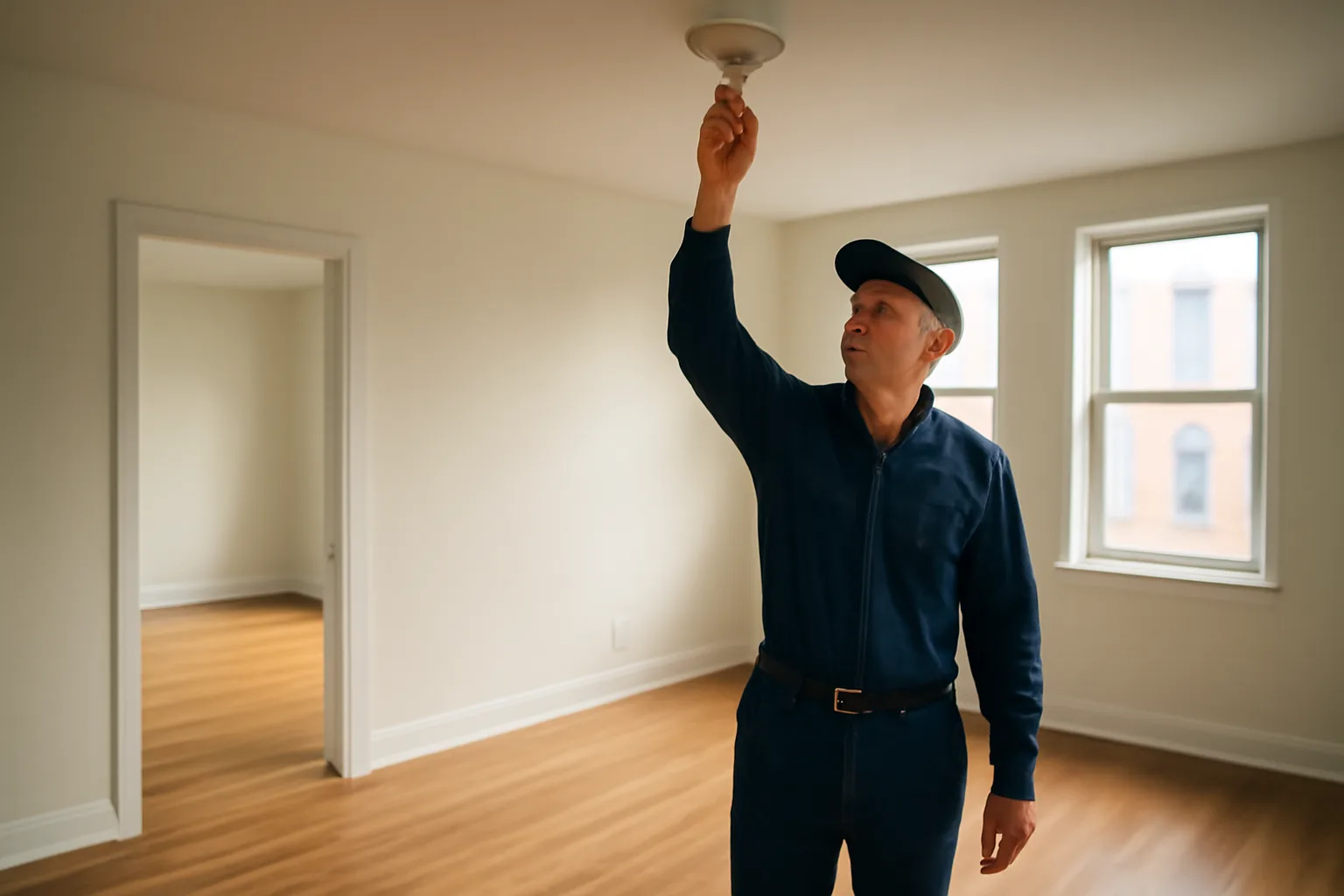
During a routine inspection, a landlord can generally check on the physical condition and safety of the unit: smoke detectors, plumbing, electrical, HVAC, signs of pest infestation, unauthorized occupants or pets, and whether the property is being maintained per the lease. A landlord cannot go through personal belongings, drawers, or closets beyond what's needed to verify a maintenance issue. The scope of a lawful inspection is generally tied to its stated purpose. If the notice says the inspection is to check the HVAC filter and smoke detectors, that's the legitimate scope; a landlord who uses that access to search through a tenant's personal papers or photograph unrelated items is stepping outside what the entry was for, and could face a claim for exceeding the lawful purpose of entry under most state statutes. For city rental licensing inspections specifically (the kind tied to your rental permit, not a private landlord walk-through), the inspector is usually checking a fixed list: smoke and carbon monoxide detectors, egress windows, electrical panel condition, water heater safety, handrails and stair conditions, pest evidence, and any code violations tied to the unit's certificate of occupancy. Cities publish these checklists in advance in most cases; if yours hasn't, ask your local rental licensing office for the inspection checklist before the appointment so you're not caught guessing. A landlord conducting a private walk-through (not a city inspection) generally cannot demand entry to inspect for something unrelated to habitability or lease compliance, like checking whether the tenant has a new partner living there, unless that ties to an unauthorized occupant clause in the lease itself.
what a landlord cannot do in Ohio
Ohio landlords cannot enter without giving reasonable notice (generally understood as 24 hours) except in emergencies, cannot shut off utilities or change locks to force a tenant out (self-help eviction is illegal), and cannot retaliate against a tenant for exercising a legal right like reporting a code violation. These protections come from Ohio Revised Code Chapter 5321, the Ohio Landlords and Tenants Act [5]. Specifically, Ohio Rev. Code § 5321.04 lays out landlord obligations including maintaining the premises in a habitable condition, keeping common areas safe, and providing running water, reasonable hot water, and heat [5]. The same chapter, at § 5321.02, prohibits retaliatory conduct: a landlord cannot terminate a tenancy, increase rent, or decrease services in retaliation for a tenant reporting a housing code violation to a government agency or joining a tenant union [6]. Ohio also bars landlords from evicting a tenant without going through the court process. Ohio Rev. Code Chapter 1923 governs forcible entry and detainer (Ohio's eviction procedure), and self-help evictions, meaning changing the locks, removing the tenant's belongings, or shutting off utilities to force someone out without a court order, are illegal and can expose the landlord to damages [7]. One more Ohio-specific wrinkle: unlike many states, Ohio law doesn't set a statutory cap on security deposits, but it does require the landlord to return the deposit (or an itemized list of deductions) within 30 days of the tenant vacating, under § 5321.16, and a landlord who wrongfully withholds a deposit can be liable for double the amount wrongfully withheld plus attorney's fees [8].
what rights do tenants have without a lease?
A tenant without a written lease still has legal rights. In most states, an oral agreement or even the simple act of paying rent and occupying a unit creates a month-to-month tenancy governed by state landlord-tenant law, with the same habitability, notice, and eviction protections as a tenant with a written lease. The key difference isn't rights, it's proof. Without a written lease, terms like rent amount, who pays for utilities, or pet policies can come down to a swearing match unless there's some other evidence (texts, canceled checks, email). Most state statutes of frauds require leases longer than one year to be in writing to be enforceable for that full term, but a month-to-month tenancy doesn't run into that problem because it renews in short increments. Without a lease, a landlord generally has to give the same statutory notice to terminate a month-to-month tenancy as they would with a written month-to-month lease, commonly 30 days, though some states and cities (particularly ones with just-cause eviction ordinances) require more, or restrict termination to specific reasons entirely. Habitability rights don't disappear without a lease either. The implied warranty of habitability, recognized in nearly every state's case law or statute, requires the landlord to keep the unit livable (working plumbing, heat, structural safety) regardless of whether there's a signed document. A tenant paying cash rent with a handshake deal still has the right to a safe, livable unit and to proper eviction procedure if the landlord wants them out.
why do landlords require renters insurance?
Landlords require renters insurance mainly to shift liability risk: if a tenant's negligence causes a fire, water damage, or injury to a guest, the tenant's policy (not the landlord's) covers the claim first. It also protects the tenant's own belongings, which a landlord's dwelling policy never covers. A landlord's own insurance policy covers the structure and the landlord's liability, but it generally excludes the tenant's personal property and often doesn't cover damage the tenant's own negligence causes to other units (think: a candle fire that spreads to a neighboring unit in a duplex). Requiring renters insurance, typically with a modest liability minimum like $100,000, pushes that risk onto a policy designed for it. There's also a practical claims-reduction angle: insurers and property managers have noted that buildings requiring renters insurance see fewer disputed damage claims, because the tenant's insurer handles the payout instead of it becoming a landlord-versus-tenant argument over the security deposit. Most states allow landlords to require renters insurance as a lease condition, as long as the requirement is disclosed and doesn't conflict with local law (a few cities regulate how landlords can enforce this, mostly around fee structures if the landlord offers a "master policy" the tenant can opt into instead). Requiring it is standard practice at this point, not a red flag, and reasonable tenants rarely push back since basic renters insurance policies typically run $15 to $30 a month depending on coverage and location.
how to be a landlord without getting blindsided by city rules
The biggest gap between "how to become a landlord" advice online and reality is that most of it ignores city-level rental licensing entirely. State landlord-tenant law is one layer. If your city requires rental registration or a rental license (increasingly common in mid-size and large cities across the country), that's a second, separate compliance system with its own fees, inspection cycles, and violation penalties. The pattern repeats across cities: register the unit (often annually or every two to three years), pay a fee, and pass an inspection covering basic safety items, smoke detectors, egress, electrical, structural condition. Miss the registration deadline and most cities issue an escalating fine, sometimes with the fine doubling for each renewal cycle missed. Confirm the specific fee schedule and renewal cycle with your city rental licensing office, since these numbers vary block by block, let alone city by city, and change often enough that any number printed here would be stale within a year. If you've just gotten a notice, a deadline, or a violation letter about your city's rental licensing program, the fastest path is usually: read the notice for the specific code section cited, call the office listed on it to confirm what's actually required (don't assume based on a neighboring city's rules), and get your documentation together before you call back. Our rental packet builder is built for exactly that moment: a $79 one-time packet that organizes the standard documents (lease copies, proof of insurance, inspection prep checklist, prior violation history) most city rental licensing offices ask landlords to have ready. For city-specific requirements, check our city guides hub, and for a plain breakdown of tenant protections that intersect with your licensing obligations, see our pages on tenants rights and renters rights.
landlord vs. property manager: what's the actual difference?
A landlord owns the property and holds legal responsibility for it; a property manager is hired (by the landlord) to handle day-to-day operations but doesn't own the unit and usually isn't personally liable the way an owner is. Some landlords do both jobs themselves. Others hire a property manager to handle everything from rent collection to maintenance calls. The legal responsibilities don't transfer just because you hire a manager. In most states, the owner remains liable for habitability violations, discrimination claims, and code compliance even if a property manager is the one who technically handles the unit day to day. A rental license, in cities that require one, is also typically issued to the owner (or sometimes a designated local agent), not the management company, so licensing violations usually land on the owner's record regardless of who's managing the property. For a single landlord with one to ten units, hiring a property manager is often not worth the cost (typically 8% to 12% of monthly rent) unless you're out of state, have a demanding day job, or have more than a handful of units. Doing your own inspections and licensing paperwork is genuinely manageable at that scale, and it keeps you closer to problems before they turn into violations.
Frequently asked questions
How to become a landlord with just one rental unit?
Confirm zoning and any city rental licensing requirement first, get landlord (dwelling) insurance, screen tenants under the Fair Housing Act, use a written lease, collect the deposit within your state's legal limit, and register with your city if required before collecting rent. Skipping the city registration step is the most common first-year mistake.
What is a landlord under the law?
A landlord is generally defined as the owner, lessor, or manager of a rental property who collects rent in exchange for occupancy rights, and who takes on statutory duties like maintaining habitability and following notice rules before entry, regardless of whether a written lease exists.
What is landlording, in plain terms?
Landlording is the day-to-day work of owning and operating rental property: screening tenants, collecting rent, doing repairs, handling inspections, and staying compliant with state and local law. It's an informal industry term, not a legal one, and applies whether you own one unit or fifty.
Who is responsible for a rental property walk-through inspection in California?
The landlord conducts the walk-through inspection, but California Civil Code § 1950.5(f) gives the tenant the right to request it before move-out. The landlord must give at least 48 hours' written notice before that pre-move-out walk-through, unless the tenant waives it.
How much notice does a landlord have to give before entering a rental unit?
Most states require 24 to 48 hours' written notice for non-emergency entry: California requires 24 hours (Civil Code § 1954), Ohio requires 24 hours plus a reasonable time of day (Ohio Rev. Code § 5321.04), and Washington requires 2 days. Some states, like Texas, leave it to the lease.
What can a landlord look at during an inspection?
A landlord can check items tied to the inspection's stated purpose: smoke detectors, plumbing, electrical, HVAC, pest evidence, and lease compliance like unauthorized occupants. A landlord generally cannot search personal belongings or use the inspection as cover to look for unrelated things.
What can't a landlord do in Ohio?
Ohio landlords cannot enter without reasonable notice (generally 24 hours), cannot shut off utilities or change locks to force a tenant out, and cannot retaliate against a tenant for reporting code violations, under Ohio Revised Code Chapter 5321 (the Ohio Landlords and Tenants Act).
What rights do tenants have without a signed lease?
Tenants without a written lease still get state landlord-tenant protections, including habitability rights and the notice period required to end a month-to-month tenancy (often 30 days). The main risk is proving specific terms like rent amount, since there's no written document to point to.
Why do landlords require renters insurance?
Landlords require renters insurance to shift liability for tenant-caused damage (fires, water leaks, injuries to guests) onto the tenant's policy instead of the landlord's, and because a landlord's own dwelling policy never covers the tenant's personal belongings.
How much does renters insurance typically cost a tenant?
Basic renters insurance typically runs $15 to $30 a month, depending on coverage limits, location, and deductible, making it a low-cost condition for landlords to require compared to the liability it shifts away from the property owner's policy.
Does a landlord need a rental license in every city?
No. Rental licensing requirements are set city by city, not federally or even always statewide. Many mid-size and large cities require registration, a fee, and periodic inspection, while many smaller towns have no such program. Always confirm directly with your city rental licensing office.
What happens if a landlord misses a rental registration deadline?
Most cities with rental licensing programs issue a fine for missed registration or renewal, and fines often escalate for repeat violations or continued non-compliance. Exact amounts vary widely by city; confirm the current fee schedule with your local rental licensing office rather than assuming a flat number.
Can a landlord require renters insurance as a lease condition?
Yes, in most states a landlord can require renters insurance as a condition of the lease, as long as it's disclosed upfront and doesn't conflict with local tenant protection ordinances. It's standard practice in most rental markets today.
Sources
- California Legislative Information, Civil Code: California habitability and lease obligations attach to whoever collects rent and controls the unit
- U.S. Department of Housing and Urban Development, Fair Housing Act overview: Fair Housing Act prohibits discrimination based on race, color, national origin, religion, sex, familial status, and disability
- California Civil Code Section 1950.5: Tenant right to request pre-move-out inspection with 48 hours notice, and itemized statement of deficiencies
- California Civil Code Section 1954: California requires 24 hours written notice before landlord entry except emergencies
- Ohio Revised Code Section 5321.04: Ohio landlord obligations including habitability, notice, and reasonable entry times
- Ohio Revised Code Section 5321.02: Ohio prohibits retaliatory conduct against tenants who report code violations
- Ohio Revised Code Chapter 1923: Ohio eviction (forcible entry and detainer) must go through court process; self-help eviction is illegal
- Ohio Revised Code Section 5321.16: Ohio landlords must return security deposit or itemized deductions within 30 days, with double damages for wrongful withholding