Last updated 2026-07-26
TL;DR
Property rental registration means telling your city government you rent out a unit, usually through an annual or one-time filing with a fee attached. Requirements vary wildly by city: some just want your name and address on file, others require a full inspection before you can legally rent. Check with your specific city rental licensing office before you assume anything.
what is property rental registration and do i actually need it
Property rental registration is a local government requirement that landlords report their rental units to a city or county office, usually before renting them out or on an annual renewal basis. It's different from a business license in most places, though some cities fold the two together. The short answer on whether you need it: probably, if you rent out property in an incorporated city. Hundreds of U.S. cities run mandatory rental registration or licensing programs, and the list keeps growing. Los Angeles requires registration under its Rent Stabilization Ordinance for covered units [1]. Chicago requires landlords to register under the Residential Landlord and Tenant Ordinance in some cases, and separately requires a Certificate of Registration through the Rental Property Registration Ordinance chapters of the municipal code administered by the city's Department of Buildings [2]. Minneapolis requires a rental license for every rental dwelling unit, full stop, with no exemption for owner-occupied duplexes past a certain unit count [3]. What almost nobody realizes until they get a notice in the mail: registration and licensing aren't always the same thing, and a city can require both. Registration is usually just paperwork and a fee. Licensing often adds a habitability inspection, proof of insurance, or a local agent requirement. If you got a violation notice or an inspection deadline letter, read it twice. It will tell you which program you're dealing with and what the actual deadline is, and that letter is more reliable than anything a blog post (including this one) can tell you about your specific city. If you own 1 to 10 units and just found out your city has one of these programs, don't panic and don't guess. Call the office listed on the notice. Ask them directly: what's the fee, what's the renewal cycle, is an inspection required this cycle or only at change of tenancy. Confirm with your city rental licensing office before you file anything, because a surprising number of cities have fee schedules that differ by unit count, building age, or whether the unit is owner-occupied.
how to become a landlord (the paperwork side, not the folklore)
Becoming a landlord legally involves three layers most people skip past in their head: property ownership or lawful control of the unit, compliance with local licensing or registration rules, and compliance with state landlord-tenant law for things like security deposits and notice periods. Owning a property doesn't automatically make you a legal landlord in the eyes of your city. If your municipality requires rental registration or a rental license, renting out a unit without it can expose you to fines, and in some cities, to a defense tenants can raise if you try to evict for nonpayment. Chicago's ordinance, for example, ties registration status to certain protections and remedies available to landlords in court [2]. Here's a realistic sequence for someone renting out their first unit: 1. Check if your city or county has a rental registration, rental license, or certificate of occupancy requirement. Call the building department or code enforcement office; don't rely on a search engine snippet. 2. Get a landlord-specific insurance policy (a standard homeowners policy usually doesn't cover a tenant-occupied unit properly). 3. Register or license the unit with your city, paying whatever fee applies. 4. Screen tenants under the Fair Housing Act's rules against discrimination based on race, color, national origin, religion, sex, familial status, and disability [4]. 5. Use a written lease that matches your state's landlord-tenant statute on deposits, notice, and habitability. 6. Keep the unit in a condition that would pass a habitability inspection, because many cities can inspect on complaint even without a scheduled program. Skipping step 1 is the most common expensive mistake. Landlords who've owned a rental for years sometimes get a violation notice out of nowhere because the city just started enforcing an ordinance that's been on the books for a decade. That happens more than you'd think; enforcement often lags behind the law itself, until a new administration or a budget shortfall makes code enforcement a priority again.
what is landlording, exactly
Landlording is the practical, day-to-day work of owning and managing rental property: collecting rent, maintaining the unit, handling repairs, screening tenants, and staying compliant with local and state law. It's not a legal term, it's industry shorthand for the job itself. People use "landlording" to distinguish the operational work from pure real estate investing. You can own rental property and hire a property manager to do all the landlording. Or you can be a hands-on owner who does the landlording yourself: showing units, fixing the garbage disposal, filing the annual rental registration renewal, responding to a tenant's maintenance request within whatever timeframe your state requires. The compliance side of landlording is what trips up small owners with 1 to 10 units. A property manager with 300 doors across a metro area has a compliance calendar built into their software. A landlord with three units in one city, and maybe a fourth in a neighboring suburb with a totally different registration system, does not. That's the exact situation where a rental registration renewal notice gets buried in email and turns into a late fee or a code violation six weeks later.
what is a landlord under the law
A landlord is the party who owns or leases out real property to a tenant in exchange for rent, and who holds the legal obligations that come with that role: maintaining habitability, respecting the tenant's right to quiet enjoyment, and following the notice and eviction procedures set out in state law. Most state landlord-tenant statutes define "landlord" broadly enough to include an owner's agent or property manager, more than the title holder. California's Civil Code, for instance, imposes habitability duties on the person who has the right to possession and control of the premises, which in practice means the owner or whoever is managing on the owner's behalf [5]. The legal definition matters for registration purposes too. Many cities require the registration or license to list the actual responsible party, sometimes called an "owner agent" or "local agent," who can be reached and who is legally answerable for code violations. If you live out of state and rent out a unit through a property manager, the registration usually needs the manager's name and local contact info, more than your mailing address three states away. Miss that detail and the registration can get rejected or flagged.
who is responsible for the rental property walk-through inspection in california
In California, the landlord (or their authorized agent) is responsible for conducting the pre-move-out walk-through inspection when a tenant requests one, and for giving the tenant an itemized list of deficiencies afterward. This comes from California Civil Code Section 1950.5, which governs security deposits [5]. The statute gives the tenant the right to request an initial inspection before they move out, so they get a chance to fix problems themselves and avoid deposit deductions. If the tenant requests it, the landlord must do the inspection "no earlier than two weeks before the expected termination or vacation date" and give the tenant a copy of an itemized statement specifying repairs or cleaning that would be deductions from the deposit [5]. The tenant has the right to be present. This is separate from a city-mandated rental housing inspection, which is a completely different animal. Cities like Los Angeles and Oakland run separate systematic habitability inspection programs tied to rental registration under their local housing codes, and those are done by city inspectors, not the landlord [1]. If you got a notice about a scheduled habitability inspection from your city, that's a code enforcement visit, not the Civil Code 1950.5 walk-through, and it has its own rules about notice and what happens if you fail.
what can a landlord look at during an inspection
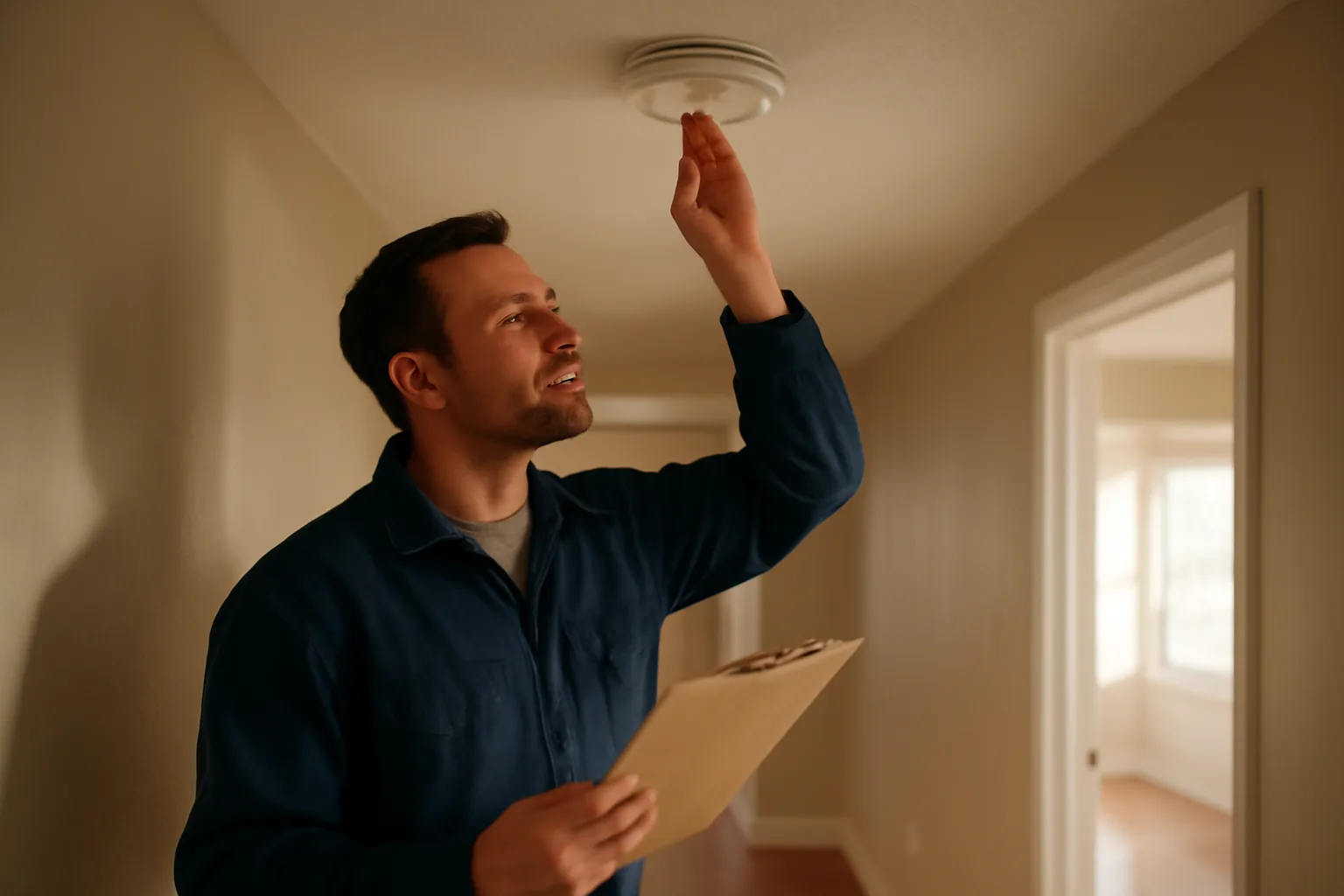
During a routine landlord inspection of an occupied unit (not a code enforcement inspection), a landlord can generally check on the physical condition of the unit: things like smoke detector function, visible water damage, HVAC operation, evidence of unauthorized pets or occupants, and general upkeep. What a landlord cannot do is use the inspection as a pretext to search through personal belongings or harass the tenant. The legal basis for entry itself, more than what you can look at once inside, comes from state law on landlord entry. California requires "reasonable notice," presumed to be 24 hours, and entry only during normal business hours for non-emergency purposes under Civil Code Section 1954 [6]. Most states have a similar structure even if the exact notice period differs. For a city-run rental housing inspection tied to registration or licensing, the inspector is typically checking code compliance items: working smoke and carbon monoxide detectors, adequate heat, no exposed wiring, no unpermitted units, and structural and sanitation basics. Some programs use a checklist tied to a local housing code standard, and the notice you receive before that kind of inspection should list what's being checked. If it doesn't, call the inspection office and ask before the date arrives. Showing up unprepared for a city habitability inspection is how a fixable issue like a missing smoke detector cover turns into a formal violation with a reinspection fee attached.
how much notice does a landlord have to give before entering
Notice requirements before landlord entry are set by state law, not federal law, and they range from no statutory minimum in some states to 48 hours in others. California and many other states presume 24 hours notice is reasonable for non-emergency entry; there's no federal standard [6]. Emergency entry (fire, flooding, a gas leak) generally doesn't require advance notice in any state, because the point of a notice rule is to protect a tenant's reasonable expectation of privacy, and that expectation doesn't survive an active emergency. This notice rule applies to routine landlord inspections, repairs, and showings. It generally does not apply to a city code enforcement inspector, who operates under separate authority and their own notice rules, which can be shorter or handled through the rental license application itself (some cities require the owner to consent to inspection as a condition of getting the license in the first place).
what rights do tenants have without a lease
A tenant without a written lease still has full legal rights under state landlord-tenant law: the right to habitable housing, the right to proper notice before eviction, and the right to the return of any security deposit under the same rules that apply to written leases. No lease usually just means the tenancy defaults to month-to-month. A verbal or implied lease (sometimes called a "tenancy at will" or holdover tenancy) is still a lease in the eyes of the law in most states. The absence of a signed document doesn't strip away statutory tenant protections; it just means the terms default to whatever the state's landlord-tenant code says for month-to-month tenancies, including the notice period required to end the tenancy. For landlords, this cuts both ways. Without a written lease, you also lose the ability to enforce specific terms you never wrote down, like a no-pets clause or a rule about guests staying more than 14 days. If you're renting without paper, you have less to point to if a dispute goes to court. It's one more reason why a written lease benefits the landlord as much as the tenant, even though tenants are the ones usually described as needing the protection.
why do landlords require renters insurance
Landlords require renters insurance mainly to shift liability for the tenant's personal property and personal liability away from the landlord's own policy. A landlord's insurance covers the building and the landlord's liability; it typically does not cover a tenant's furniture, electronics, or clothing if there's a fire, burst pipe, or theft. Renters insurance also protects the landlord indirectly. If a tenant's negligence causes damage (a stovetop fire, an overflowing bathtub that damages the unit below), the tenant's liability coverage under a renters policy can pay for that damage instead of the landlord's insurer, which keeps the landlord's own claims history clean and premiums lower. Requiring it is legal in nearly every state, and it's common practice for landlords with multiple units to make it a lease condition, verified with a certificate of insurance at move-in and renewal. Whether you can enforce it as a lease term depends on your state and your actual lease language, so check your state's landlord-tenant statute or a local attorney before making it a strict condition tied to eviction.
what a landlord cannot do in ohio
In Ohio, landlords cannot shut off utilities, change the locks, or remove a tenant's belongings to force them out; these are all forms of illegal "self-help" eviction and Ohio law requires landlords to go through the courts instead. This comes from Ohio Revised Code Chapter 5321, the state's Landlords and Tenants law [7]. Ohio law specifically requires landlords to comply with building, housing, health, and safety codes, keep common areas safe, maintain plumbing and heating in good working order, and provide running water and reasonable hot water [7]. A landlord who fails to do this can be sued by the tenant for the difference in value between the unit as warranted and its condition, or the tenant may be able to use certain repair-and-deduct remedies under the statute. Ohio also restricts retaliatory conduct. Ohio Revised Code Section 5321.02 prohibits a landlord from retaliating against a tenant (through eviction, rent increases, or reduced services) because the tenant complained to a government agency about a building or health code violation, or because the tenant joined a tenants' union . If you're a landlord in Ohio dealing with a difficult tenant who recently filed a code complaint, timing your next lease action carefully matters; a court can read a conveniently-timed nonrenewal as retaliation even if that's not your actual motive.
registration versus licensing versus inspection: how these actually differ
| Registration | Filing basic ownership and contact info with the city | Owning a rental unit in city limits | |
|---|---|---|---|
| Licensing | A permit to legally operate the rental, often renewed annually | Required in cities with active rental licensing programs | |
| Inspection | A physical check of the unit against local housing code | Required for initial license, renewal, tenant complaint, or vacancy | Some cities bundle all three into one annual process with one fee. Others separate them: you register once, then apply for a license every year, and get inspected only every few years or on a complaint basis. Landlord basics covers more on the day-to-day compliance side once you've got registration sorted. This is exactly the kind of city-specific detail that makes generic advice risky. A $79 one-time City Rental License & Inspection Prep Packet from the rental packet builder tool can help you organize what a specific city's program actually requires, but no packet or article replaces a call to your city's rental licensing office to confirm the current fee schedule and inspection cycle for your address. |
These three terms get used interchangeably by landlords, but cities usually treat them as separate steps with separate fees, and mixing them up is how deadlines get missed. | Term | What it usually means | Typical trigger |
what happens if you skip registration or miss a renewal
Skipping rental registration or letting a license lapse typically results in a fine, and in some cities, it can bar you from filing an eviction or collecting certain rents until you come into compliance. Chicago's ordinance ties registration to legal standing in landlord-tenant disputes in some circumstances [2]. Los Angeles imposes registration and fee obligations tied to its Rent Stabilization Ordinance, and noncompliance can affect a landlord's ability to raise rent or take certain actions against covered tenants [1]. Fines vary enormously by city and by whether it's a first offense or a repeat violation, so there's no honest single number to give here. Some cities charge a flat penalty per unit per month unregistered; others escalate through a hearing process before code enforcement. If you got a violation notice, the number on it is the number that matters, not a general estimate from an article like this one. The fastest fix, once you're behind, is usually to register or renew immediately rather than wait for a hearing date. Most cities reduce or waive penalties for landlords who come into compliance voluntarily before a scheduled enforcement hearing. Waiting rarely helps and often costs more.
how to actually get compliant this month, step by step
If you've got a notice in hand right now, here's the order that actually gets you compliant fastest: identify the exact program name on the notice, call the office listed, ask for the current fee and deadline, gather any required documents (proof of insurance, lead paint disclosure if the unit is older, a floor plan or unit count), and file before the stated deadline rather than after. Most rental registration and licensing applications ask for the same core information: owner name and mailing address, local agent contact if the owner is out of area, number of units, year built, and sometimes a certificate of insurance. Cities with inspection requirements will also ask you to schedule the inspection as part of the application, so don't wait until the last week of your deadline window; inspection slots fill up, especially near renewal season when everyone in the city is filing at once. If you manage more than one unit, or units across more than one city, keeping a simple compliance calendar (renewal date, fee amount, inspection date, contact name at the city office) saves real money over a few years. A missed renewal in a city with an escalating late fee schedule is one of the more avoidable costs a small landlord can rack up.
Frequently asked questions
How to become a landlord if I've never rented out property before?
Check your city's rental registration or licensing rules first, get landlord insurance, screen tenants under Fair Housing Act rules, use a written lease matching your state's landlord-tenant statute, and confirm your unit would pass a habitability inspection. Skipping the local registration step is the most common first mistake.
Who is responsible for the rental property walk-through inspection in California?
The landlord or their agent is responsible for conducting it, if the tenant requests one before moving out, under California Civil Code Section 1950.5. It must happen no earlier than two weeks before the tenant's move-out date, and the tenant gets an itemized list of proposed deposit deductions afterward.
What is landlording?
Landlording is the day-to-day work of owning and managing rental property: collecting rent, handling repairs, screening tenants, and staying compliant with local registration and state landlord-tenant law. It's industry slang, not a legal term, and it covers everything from hands-on management to hiring a property manager to do it for you.
What is a landlord?
A landlord is the person or entity that owns or leases out real property to a tenant for rent, holding legal duties like maintaining habitability and following state notice and eviction rules. Most state statutes also count an owner's agent or property manager as a landlord for legal purposes.
What rights do tenants have without a lease?
Tenants without a written lease still have full rights under state landlord-tenant law, including habitability, proper eviction notice, and security deposit protections. No lease usually just means a month-to-month tenancy governed by state default rules, not a loss of tenant protections.
Why do landlords require renters insurance?
Renters insurance shifts liability for the tenant's belongings and personal liability off the landlord's own policy, since a landlord's insurance generally doesn't cover a tenant's property. It also protects the landlord if tenant negligence causes damage, since the tenant's policy can pay instead of the landlord's insurer.
How much notice does a landlord have to give before entering a unit?
Notice rules are set by state law, not federal law. California presumes 24 hours is reasonable for non-emergency entry under Civil Code Section 1954, and many states use a similar standard, though exact periods vary. Emergency entry generally requires no advance notice in any state.
What can a landlord look at during an inspection?
During a routine occupied-unit inspection, a landlord can check things like smoke detector function, water damage, HVAC condition, and general upkeep, but not search personal belongings without cause. A separate city code enforcement inspection checks items like working detectors, adequate heat, and no unpermitted units.
What a landlord cannot do in Ohio?
Ohio landlords cannot shut off utilities, change locks, or remove belongings to force a tenant out; these are illegal self-help evictions under Ohio Revised Code Chapter 5321. Landlords also cannot retaliate against a tenant for filing a code complaint or joining a tenants' union under ORC 5321.02.
Is rental registration the same as a rental license?
Not usually. Registration is typically just filing ownership and contact info with a fee. Licensing often adds requirements like a habitability inspection, proof of insurance, or a local agent, and usually renews annually. Some cities combine both into one process, so check your specific city's program.
What happens if I never registered my rental property with the city?
Consequences vary by city, but commonly include fines, and in some cities, loss of standing to file an eviction or collect certain rent increases until the property is registered. If you got a notice, the fee and deadline listed on it are what apply, not a general estimate.
Does every city require rental registration or licensing?
No. Requirements are set city by city (sometimes county by county), and there's no federal or universal state rule. Some cities have no program at all, others require registration only, and others run full licensing with mandatory inspections. Always confirm with your specific city's rental licensing office.
Can a city inspect my rental property without my permission?
It depends on the city's ordinance and whether you've already agreed to inspection as a condition of a rental license. Routine housing code inspections generally need either consent, an administrative warrant, or an emergency justification; check your city's specific rental inspection ordinance for its notice and consent rules.
Sources
- Los Angeles Housing Department, Rent Stabilization Ordinance overview: Los Angeles requires registration of covered rental units under its Rent Stabilization Ordinance
- Chicago Municipal Code, Chapter 5-12, Residential Landlord and Tenant Ordinance: Chicago ties rental property registration to landlord-tenant obligations and legal standing
- U.S. Department of Housing and Urban Development, Fair Housing Act protected classes: Federal Fair Housing Act prohibits discrimination based on race, color, national origin, religion, sex, familial status, and disability
- California Legislature, Civil Code Section 1950.5: California landlords must conduct a pre-move-out inspection at tenant request no earlier than two weeks before termination and provide an itemized deficiency statement
- California Legislature, Civil Code Section 1954: California presumes 24 hours notice is reasonable for landlord entry into an occupied unit for non-emergency purposes
- Ohio Legislature, Ohio Revised Code Chapter 5321: Ohio law requires landlords to comply with housing and safety codes, maintain plumbing and heat, and prohibits self-help eviction methods like utility shutoffs or lockouts
- Ohio Legislature, Ohio Revised Code Section 5321.02: Ohio prohibits landlord retaliation against tenants who complain to government agencies about code violations or join a tenants' union