Last updated 2026-07-26
TL;DR
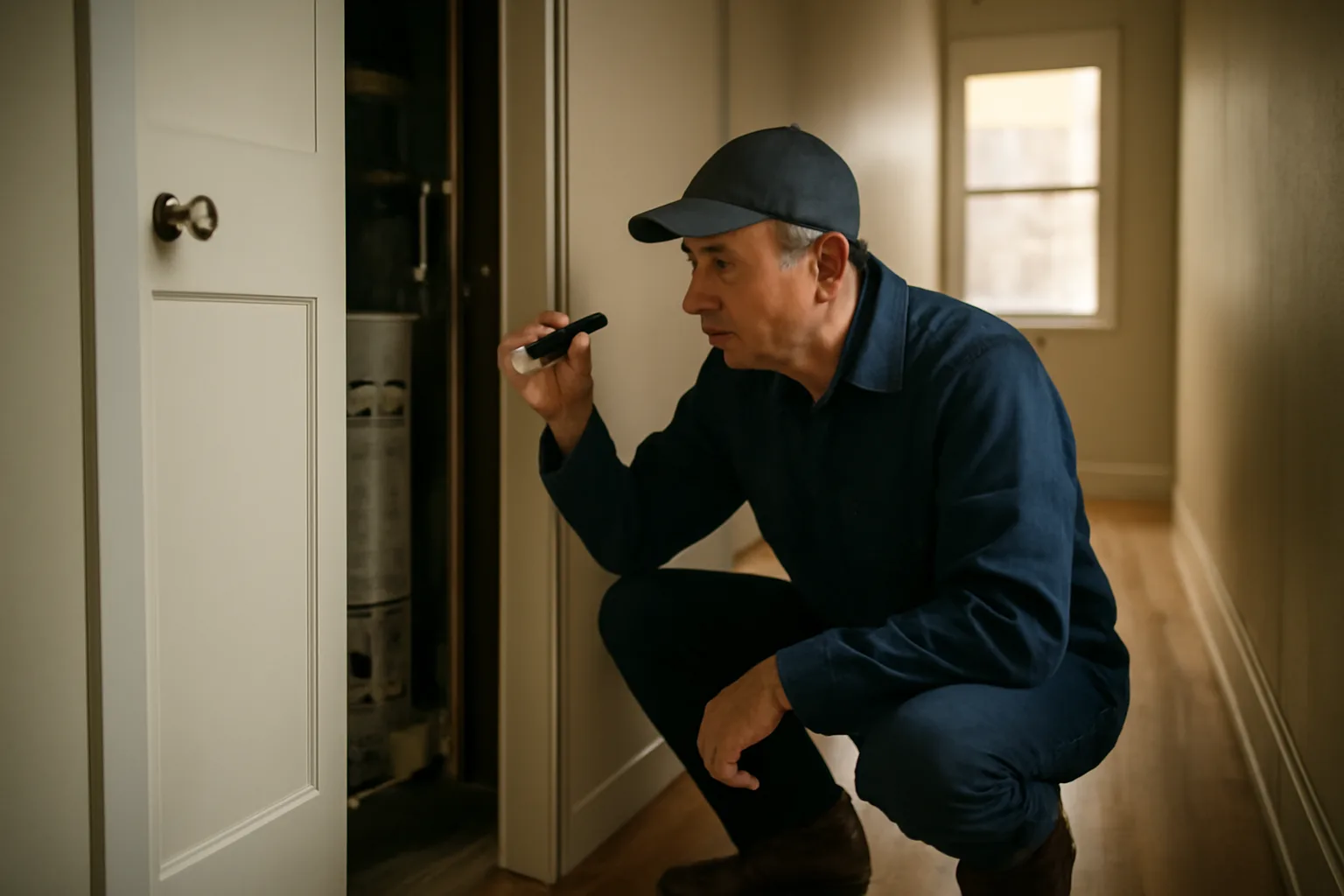
A periodic inspection report is a written record of what a landlord observed on a routine walk-through: unit condition, safety items, damage, and lease compliance. Most cities require reasonable advance notice (often 24 to 48 hours), and inspections should cover safety systems and maintenance, not a tenant's belongings or personal areas.
What is a periodic inspection report and why do landlords use one?
A periodic inspection report is a dated, written log of a routine visit to a rental unit. It records what the landlord (or an agent) saw: smoke detector status, signs of leaks or pests, HVAC filter condition, unauthorized occupants or pets, and general upkeep. It is not the same as a move-in or move-out condition report, though it uses a similar format. Landlords use these reports for three practical reasons. First, they create a paper trail if a maintenance issue turns into a bigger problem later (a small ceiling stain today, a mold claim in eight months). Second, many mandatory rental-licensing cities require proof of periodic inspection or self-certification as part of keeping a license current [1]. Third, a written record protects both sides if a tenant later disputes what condition the unit was in, or claims the landlord neglected a known issue. A basic template needs: property address and unit number, date and time of inspection, name of inspector, tenant present (yes/no), a checklist of systems (smoke/CO detectors, plumbing, electrical, windows/doors, appliances), a notes field for anything out of the ordinary, photos referenced by filename, and signature lines for both landlord and tenant if the tenant chooses to sign. Keep it to one page. Nobody fills out a five-page form consistently, and a form nobody uses is worse than no form. Download or build your own: keep a copy of every report for at least as long as your city's licensing renewal cycle, often one to three years depending on the jurisdiction. Check your specific city's rental inspection ordinance for retention requirements, since these vary and some municipalities specify how long records must be kept on file [2].
What should a periodic inspection report template include?
| Header | Property address, unit #, date, time, inspector name, tenant name | |
|---|---|---|
| Safety checklist | Smoke detectors (working/battery date), CO detectors, fire extinguisher if required, egress windows clear | |
| Systems checklist | Plumbing (leaks, water pressure), electrical (outlets, panel access), HVAC filter, water heater | |
| Condition notes | Walls, flooring, ceiling stains, pest evidence, mold, damage beyond normal wear | |
| Lease compliance notes | Unauthorized occupants, unregistered pets, unpermitted alterations (only if these are visible without searching) | |
| Photos | Reference numbers matching a photo folder, dated | |
| Signatures | Landlord/agent signature, tenant signature (optional, tenant can decline) | Keep the notes field factual. Write "water stain approximately 6 inches, ceiling above kitchen sink" instead of "looks like tenant caused water damage." Save the conclusions for later, once you've actually diagnosed the cause. A report that reads like an accusation is a report a tenant will contest, and in court, factual logs hold up better than editorialized ones. If your city has its own inspection checklist for licensing purposes, that form usually takes priority for compliance. Your internal periodic report can be simpler, since its job is landlord recordkeeping between official city inspections, not passing a code inspection. |
A useful template has four sections: identifying information, a systems checklist, a narrative notes field, and a signature block. Here's a reasonable structure you can adapt. | Section | What goes in it |
How much notice does a landlord have to give before an inspection?
Most states set a notice requirement somewhere between 24 and 48 hours for non-emergency entry, though the exact number and the required delivery method vary by state. California requires "reasonable notice," which state law presumes to be 24 hours absent circumstances indicating otherwise, and notice must be given in writing (Cal. Civ. Code § 1954) [3]. Many other states use a similar 24-hour standard, but some, like Delaware, set 48 hours (Del. Code tit. 25, § 5509) [4]. Entry generally has to be during "normal business hours" unless the tenant agrees otherwise, and it has to be for a legitimate purpose: repairs, showings, inspections, or emergencies. Emergencies (fire, flooding, gas leak) are typically the one exception where no advance notice is required at all. A few things trip landlords up here. Text message notice is fine in some states and not legally sufficient in others; check your state's specific statute rather than assuming a text counts as "written notice." Posting a notice on the door usually satisfies the writing requirement where texting might not. And notice of intent to enter is different from a 24-hour or 30/60-day notice to terminate tenancy, which is a separate legal concept entirely; don't confuse the two paperwork types. If your city requires periodic inspections as part of a rental license, the city's inspector still generally has to follow the same reasonable-notice principle for entering the tenant's space, unless your local ordinance specifies otherwise. Confirm with your city rental licensing office how city-scheduled inspections interact with your own separate landlord-initiated visits, since some ordinances require the landlord to coordinate access rather than the city inspector contacting the tenant directly.
What can a landlord look at during an inspection?
A landlord can look at anything reasonably visible and related to the condition of the property or lease compliance: walls, floors, ceilings, windows, appliances, smoke detectors, evidence of pests or water damage, and whether the number of occupants or pets matches the lease. A landlord generally cannot search closets, drawers, personal belongings, or areas that have nothing to do with property condition, and cannot use an inspection as a pretext to look through a tenant's things. The practical rule most attorneys and housing authorities use: the inspection is about the property, not the tenant's stuff. You can note that a window is painted shut. You can note a strong odor suggesting a leak inside a closet, which then justifies opening that closet to check the source. You generally should not open drawers, look through personal papers, or photograph a tenant's belongings unless directly relevant to a documented problem (like inspecting under a sink for a reported leak). If a periodic inspection is tied to a city rental license renewal, the city inspector typically checks items required by the local housing code: smoke and carbon monoxide detector function, safe electrical and plumbing systems, adequate egress, and absence of hazards like exposed wiring or structural damage. These inspections are about code compliance, not tenant behavior, and the inspector isn't there to catalog how tidy the tenant keeps things. A landlord doing a periodic walk-through separate from any city inspection should stick to the same standard: check systems and safety items, document condition, and leave personal spaces alone unless there's a specific, stated reason to look closer.
Who is responsible for a rental property walk-through inspection in California?
In California, the landlord (or their authorized agent) is responsible for conducting entry and inspections, and state law requires the landlord to give the tenant reasonable written notice, presumed to be 24 hours, before entering except in emergencies (Cal. Civ. Code § 1954) [3]. The landlord cannot delegate away the notice obligation just because a property manager or contractor is doing the actual walk-through; the same notice rules apply to whoever enters on the landlord's behalf. California also requires landlords to conduct a joint move-out inspection if the tenant requests one, giving the tenant a chance to fix issues before move-out charges are deducted from the security deposit (Cal. Civ. Code § 1950.5(f)) [5]. That's a specific, tenant-triggered inspection right, separate from routine periodic inspections. Some California cities layer on their own rental inspection or registration programs. Los Angeles, for example, runs the Systematic Code Enforcement Program (SCEP), which requires periodic inspections of most rental units in the city and charges an annual per-unit fee, currently in the range that the Los Angeles Housing Department publishes on its SCEP fee schedule; confirm the current amount with LAHD directly since these fees are adjusted periodically [6]. If your property sits inside one of these programs, city code inspectors, more than the landlord, become part of the periodic inspection picture, and the city's notice and access rules apply on top of the general state statute.
What a landlord cannot do in Ohio (and other states) during inspections and beyond
Ohio law requires a landlord to give tenants "reasonable notice" before entering, which Ohio courts and the statute generally treat as at least 24 hours, and entry must happen at reasonable times (Ohio Rev. Code § 5321.04) [7]. A landlord in Ohio cannot enter without notice except for genuine emergencies, cannot enter to harass a tenant, and cannot use inspection access as a way to retaliate against a tenant who filed a complaint. Ohio Revised Code § 5321.04 also sets out affirmative landlord duties: comply with building and housing codes, keep common areas safe, maintain electrical, plumbing, heating, and other systems in good working order, and provide running water and reasonable heat [7]. A landlord who ignores these while conducting only cosmetic periodic inspections isn't meeting the legal bar. Ohio Rev. Code § 5321.15 also prohibits certain landlord self-help actions: a landlord cannot lock a tenant out, remove the tenant's belongings, or shut off utilities to force a tenant out, even if rent is unpaid [8]. Eviction has to go through the court process. This matters for the inspection conversation because a periodic inspection is not a legal substitute for that process. If an inspection reveals a lease violation, the landlord still has to follow proper notice and, if needed, eviction procedure rather than taking matters into their own hands. Other states have their own specific limits worth knowing if you own units in more than one place. Notice periods, permissible entry times, and what counts as an emergency all vary, so if you operate across state lines, keep a one-page cheat sheet of each state's entry statute rather than assuming your home state's rule travels with you.
What rights do tenants have without a lease?
A tenant without a written lease, sometimes called a month-to-month or tenant-at-will, still has the same basic legal protections as a tenant with a signed lease: the right to a habitable unit, the right to advance notice before entry, and protection from illegal lockout or utility shutoff. What changes without a written lease is mainly the notice period required to end the tenancy and the difficulty of proving specific terms (like whether pets were allowed). Most states require 30 days' notice to terminate a month-to-month tenancy, though some vary by how long the tenant has lived there or by local rent control rules. A tenant paying rent and being accepted by the landlord has an implied tenancy, and courts generally treat this the same as an oral lease with month-to-month terms, subject to standard habitability and eviction protections. Without a written lease, disputes over specific terms, like whether a pet was permitted or who pays for what utility, come down to whatever can be proven: text messages, emails, cancelled rent checks, and consistent past practice. This is exactly why a written lease, even a short one, saves both sides trouble later. It's also why periodic inspection reports matter more, not less, in these situations: they become part of the documented history of the tenancy when there's no lease spelling everything out.
Why do landlords require renters insurance?
Landlords require renters insurance mainly to shift liability and reduce their own financial exposure. A landlord's own property insurance covers the building and the landlord's belongings; it typically does not cover a tenant's personal property or a tenant's liability if the tenant causes damage (a kitchen fire, an overflowing tub that damages the unit below). Renters insurance usually covers three things: the tenant's personal belongings, liability if the tenant's negligence damages the property or injures someone, and additional living expenses if the tenant has to relocate temporarily after a covered loss. According to the Insurance Information Institute, the average annual cost of a renters insurance policy nationally runs in the range of a few hundred dollars a year (roughly $170 to $200 based on III's published national average figures, though costs vary widely by state and coverage amount) . That's a small cost relative to what it protects against. From the landlord's side, requiring renters insurance as a lease condition reduces the odds of an expensive dispute over who pays when a tenant's actions cause a covered loss. It won't stop every lawsuit, but it puts a real insurance company between the landlord and a tenant's negligence claim instead of just the landlord's own policy or personal assets.
What is landlording, and what is a landlord?
A landlord is a person or entity that owns rental property and leases it to someone else (a tenant) in exchange for rent. "Landlording" is the informal industry term for the actual practice of managing that relationship: collecting rent, handling repairs, screening tenants, following notice and eviction law, and keeping the property compliant with local codes. Landlording isn't just owning property; it's actively running a small business, even if you own a single unit. That means bookkeeping (rent ledgers, security deposit accounting), legal compliance (habitability, fair housing, notice requirements), physical maintenance, and tenant communication. Landlords who treat it purely as passive income tend to get surprised by the paperwork side: license renewals, inspection scheduling, and fair housing rules they didn't know applied to them. The federal Fair Housing Act (42 U.S.C. § 3601 et seq.) prohibits discrimination based on race, color, national origin, religion, sex, familial status, or disability in housing transactions, including rentals . This applies to landlords with even a single unit in most cases, with narrow exceptions like certain owner-occupied buildings with four or fewer units. Any landlord, new or experienced, needs at least a working knowledge of this law before screening a single applicant.
How to become a landlord: a realistic starting checklist
Becoming a landlord starts before you own the property and continues well past closing. Here's the realistic sequence, skipping the fluff. 1. Confirm the property's zoning and any local rental licensing requirement before you buy or convert it into a rental. Many cities require a rental license or registration before you can legally lease a unit at all, and some require inspection before the first tenant moves in. 2. Get landlord-specific insurance (a landlord policy, sometimes called a dwelling fire policy or DP-3), not a standard homeowners policy, since standard homeowners coverage often excludes tenant-occupied risk. 3. Learn your state's security deposit law: maximum amount allowed, deadline to return it (commonly 14 to 30 days after move-out depending on the state), and whether it has to sit in a separate account. 4. Set up a lease that matches your state's required disclosures (lead paint disclosure for pre-1978 housing is federally required under 24 CFR Part 35, for example) . 5. Learn your city's rental licensing and inspection cycle if one exists. Many mandatory-licensing cities require registration renewal annually or every two to three years, plus a periodic inspection, sometimes self-certified and sometimes conducted by a city inspector. Confirm with your city rental licensing office for your specific renewal cycle and fee, since these details differ by city and change over time. 6. Screen tenants consistently, using the same criteria for every applicant, and keep records showing you did. Consistency is your best fair-housing defense if a rejected applicant ever complains. If your city is one of the many with a formal rental license and periodic inspection requirement, getting the paperwork organized ahead of the inspector's visit saves real time and reduces the odds of a re-inspection fee. A packet built specifically around your city's checklist, application, and required disclosures, like the $79 one-time City Rental License & Inspection Prep Packet, exists mainly to save that back-and-forth for first-time or newly-licensing landlords. See /rental-packet-builder if you want a starting point rather than building every form from scratch.
How to be a landlord day-to-day: the ongoing responsibilities
Being a landlord day-to-day comes down to five recurring jobs: collecting rent on schedule, responding to maintenance requests promptly, keeping the unit habitable, following notice law for entry and lease changes, and staying current on local licensing and inspection deadlines. Habitability is a legal floor, not a suggestion. Most states impose an implied warranty of habitability, meaning the landlord has to keep the unit fit to live in: working plumbing, heat, electrical, and structural safety, regardless of what the lease says. Ohio's version of this duty is spelled out directly in Ohio Rev. Code § 5321.04 [7], and most other states have a parallel statute or a court-created doctrine that does the same thing. Maintenance response time matters more than most new landlords expect. A slow response to a heat outage or a leak isn't just a tenant relations problem; it can be the basis for a rent withholding claim, a repair-and-deduct claim, or in serious cases a code violation citation if a city inspector finds the same unresolved issue during a periodic inspection. Staying on top of your renewal calendar is the boring but essential part. Missing a rental license renewal deadline in a mandatory-licensing city commonly triggers a fine, and continuing to collect rent on an unlicensed unit can, in some cities, affect a landlord's ability to evict for nonpayment until the license is current. Confirm your specific city's renewal deadline and late fee with your local rental licensing office well before the date, not after a notice arrives.
How periodic inspections fit into a city rental licensing program
Cities with mandatory rental licensing generally build periodic inspection into the renewal cycle in one of three ways: a city inspector visits on a set schedule (often every one to three years), the landlord self-certifies compliance using a city checklist, or inspection happens on complaint or turnover only. Which model your city uses changes how much of the periodic inspection report burden falls on you versus the city. Where self-certification is allowed, your own periodic inspection report becomes the documentation the city expects you to have on file if audited. That's the scenario where a clean, consistent one-page template earns its keep: if your city licensing office ever asks for proof of ongoing maintenance checks, you want a folder of dated, signed reports, not a scramble to remember what you looked at eighteen months ago. Where a city inspector visits directly, your internal periodic report still matters, because it flags problems before the city inspector finds them. A landlord who catches a failed smoke detector on their own quarterly walk-through and fixes it before the city visit avoids a violation notice entirely. That's really the whole value proposition of doing periodic inspections at all: catch it before it becomes a fine. If you're setting up a periodic inspection habit for the first time, or you're staring at a violation notice trying to figure out what your city actually requires next, it helps to see the city's specific checklist, application form, and fee schedule side by side rather than piecing it together from a general web search. That's the gap the $79 City Rental License & Inspection Prep Packet is built to close, but even without it, the core discipline is the same: one page, every visit, dated and filed.
Frequently asked questions
How often should a landlord do a periodic inspection?
There's no single national standard; it depends on your city's ordinance if one exists, and otherwise on your own risk tolerance. Many landlords without a city requirement do a walk-through every six to twelve months. Cities with mandatory licensing often set their own cycle, commonly one to three years; confirm with your city rental licensing office for the exact schedule.
Can a tenant refuse a periodic inspection?
A tenant generally cannot refuse a lawful inspection conducted with proper notice for a legitimate purpose, but they can push back on unreasonable timing or insufficient notice. If a tenant repeatedly refuses reasonable, properly noticed entry, that itself can become a lease violation, though the specific remedy depends on state law.
Is a periodic inspection report legally required?
Not universally. It's not required by most state landlord-tenant law directly, but many cities with rental licensing programs require proof of periodic inspection, self-certification, or a completed inspection checklist as part of license renewal. Check your specific city's rental licensing ordinance to see if a written report is mandatory there.
What's the difference between a move-in inspection and a periodic inspection?
A move-in (or move-out) inspection documents the unit's condition at the start or end of a tenancy, usually to support security deposit deductions. A periodic inspection happens during an ongoing tenancy to check maintenance, safety systems, and lease compliance while the tenant is still living there.
Can a landlord take photos during an inspection?
Yes, a landlord can photograph the property's condition, damage, or safety issues as part of documenting the inspection. Photos should focus on the property itself (walls, fixtures, systems) rather than a tenant's personal belongings, and should be dated and kept with the written report.
What happens if a landlord fails a city rental inspection?
Typically the city issues a violation notice with a deadline to fix the cited items, sometimes with a re-inspection fee. Repeated failures or unresolved violations can lead to fines, license suspension, or in serious cases the unit being deemed unfit for occupancy. Confirm the specific consequences and fee amounts with your city's rental licensing office.
Do landlords have to give tenants a copy of the inspection report?
Most states don't require it by default, though some cities' licensing ordinances require the landlord to share results of a city-conducted inspection with the tenant, especially if violations were found. Sharing your own periodic inspection notes with tenants isn't required in most places, but many landlords do it anyway as good practice.
What can a landlord not do in Ohio regarding tenant privacy?
An Ohio landlord cannot enter without reasonable notice except in emergencies, cannot use entry to harass a tenant, and cannot lock a tenant out or shut off utilities to force them out, all under Ohio Rev. Code §§ 5321.04 and 5321.15. Entry must be at reasonable times and for a legitimate purpose.
What rights do tenants have if there's no written lease?
A tenant without a written lease still has the right to a habitable unit, advance notice before entry, and protection from illegal lockout or utility shutoff. The tenancy is generally treated as month-to-month, and ending it usually requires the standard notice period for a month-to-month tenancy in that state, commonly 30 days.
Why do landlords require renters insurance?
Landlords require it mainly to protect against tenant negligence, like a kitchen fire or a bathtub overflow that damages the unit or a neighbor's unit. A landlord's own property policy doesn't cover a tenant's belongings or liability, so requiring renters insurance shifts that risk to the tenant's own policy instead.
Who is responsible for a rental walk-through inspection in California?
The landlord or their authorized agent is responsible, and California law requires reasonable written notice, presumed to be 24 hours, before entry except in emergencies, under Cal. Civ. Code § 1954. Some California cities, like Los Angeles under its SCEP program, add their own periodic inspection requirements on top of state law.
What should go in a periodic inspection report template?
A basic template needs the property address and unit number, date and inspector name, a safety and systems checklist (smoke detectors, plumbing, electrical, HVAC), a notes field for anything unusual, references to dated photos, and signature lines for landlord and tenant. Keep it to one page for consistency.
Sources
- California Civil Code Section 1954: California requires reasonable written notice, presumed 24 hours, before landlord entry except emergencies
- Delaware Code Title 25, Section 5509: Delaware requires 48 hours notice before landlord entry into a rental unit
- California Civil Code Section 1950.5: California landlords must offer a joint move-out inspection at the tenant's request before deducting from a security deposit
- Ohio Revised Code Section 5321.04: Ohio requires reasonable notice before entry and sets landlord duties to maintain habitability
- Ohio Revised Code Section 5321.15: Ohio prohibits landlord self-help eviction actions like lockouts and utility shutoffs
- Insurance Information Institute, Facts + Statistics: Renters Insurance: Average annual cost of renters insurance nationally is a few hundred dollars per year
- U.S. Department of Justice, Fair Housing Act Overview (42 U.S.C. § 3601 et seq.): The Fair Housing Act prohibits discrimination in rental housing based on protected classes
- HUD/EPA, Lead Disclosure Rule, 24 CFR Part 35: Federal law requires lead paint disclosure for rental housing built before 1978