Last updated 2026-07-25
TL;DR
When an occupational license application asks landlords to indicate the address of the rental, it means the city wants the physical location of the property being rented out, not your home or mailing address. Cities use this to link your license to a specific unit, trigger inspection scheduling, and confirm the property is registered separately from any other business address you hold.
what does it mean when an occupational license asks for the address of the rental
Most cities that require occupational licenses for rental activity treat renting out property as a business, even if you only have one unit. The application form usually has a line for your business address and a separate line for the address of the rental (sometimes called the "business location" or "premises address"). That second field is asking where the actual rental unit sits, street number, unit number if it's a multi-unit building, the whole thing. This matters because an occupational license for a rental isn't really about you as a person. It's tied to the property. If you own three rental houses in the same city, many jurisdictions expect you to hold a separate license (or a separate line item under one license) for each address, because each property gets its own inspection schedule, its own compliance history, and sometimes its own fee. Cincinnati's rental registration program, for example, is structured per property, not per owner, because the city tracks violations and inspections at the unit level [1]. If you fill in your own home address instead of the rental's address, the city's system may schedule the wrong property for inspection, mail violation notices to the wrong place, or reject the application outright because the address doesn't match county tax records. That's the single most common paperwork mistake first-time landlord-licensees make.
why do cities require a separate occupational or rental license at all
Cities that mandate rental licensing do it to keep a current registry of who owns what, who to contact when there's a problem, and which units are due for safety inspection. It's a public health and safety framework more than a tax grab, though the fees do fund the inspection staff. Some cities fold this into a general "occupational license" that covers any business activity, including renting property. Louisville, Kentucky, for instance, requires an occupational license tax registration for anyone conducting business, including rental of real estate, within Louisville Metro [2]. Other cities run a rental-specific registration program that has nothing to do with occupational licensing in the traditional sense; it exists purely to track rental housing stock. Either way, the address field is doing the same job: telling the city exactly which building the license, the fee, and the inspection cycle attach to. If your city's form is labeled "occupational license" but you're only renting out a single house, don't assume it doesn't apply to you. A lot of landlords with 1-2 units get an ordinance notice, or worse, a fine, because they figured occupational licenses were for storefronts and restaurants. Check your specific city's rental licensing office before you assume you're exempt.
what happens if i put the wrong address on the application
Best case, the clerk catches it and asks you to resubmit. Worst case, your license gets issued for the wrong property, your inspection gets scheduled at an address where nobody's expecting an inspector, and you rack up a missed-inspection fine for a unit that was never actually toured. A mismatch between the address on your license application and the address on file with the county assessor is one of the more common reasons licensing offices bounce applications back. If you're licensing a unit inside a duplex or a converted multi-family building, be specific: include the unit letter or number, more than the street address. Some cities require you to list each unit separately even within the same building, because inspection frequency and violation history are tracked per unit, not per structure. If you've already gotten a notice referencing an address you don't recognize as correct, don't just call and argue over the phone. Ask in writing (email works) for the property record the city has on file, compare it to your deed or tax bill, and get the correction documented before your inspection date arrives.
how to become a landlord the right way, licensing included
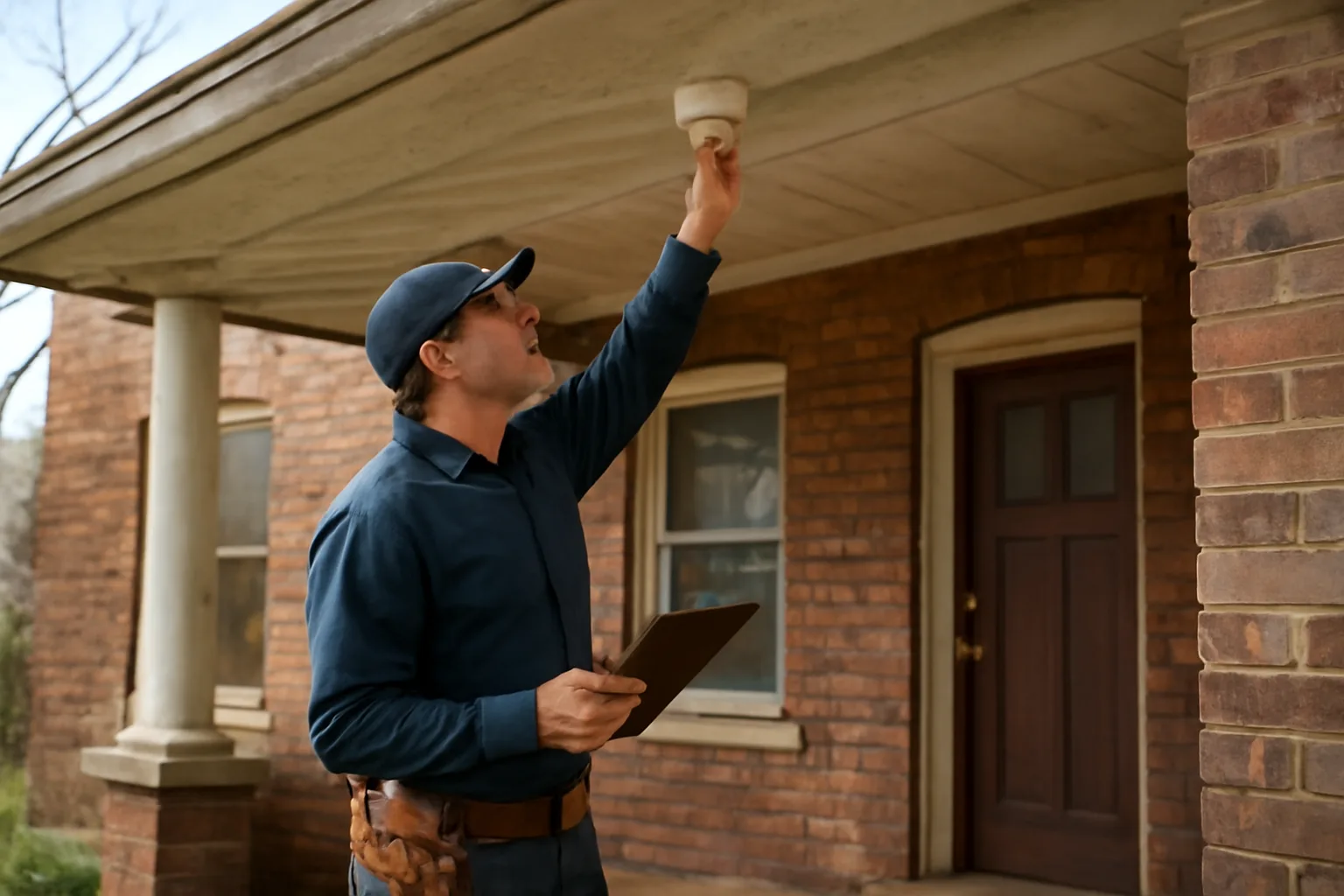
Becoming a landlord isn't just buying a property and putting up a listing. There's a sequence, and skipping steps is exactly how people end up staring at an ordinance violation notice six months in. First, confirm your city or county requires rental registration, licensing, or inspection before you ever list the unit. A growing number of mid-size and large cities do; Rockford, Illinois, Cincinnati, Ohio, and Baltimore, Maryland, all run mandatory rental licensing or registration programs, and each has its own fee schedule and inspection interval [1][3]. Second, get the property inspection-ready: working smoke and carbon monoxide detectors, secure locks, no obvious code violations like exposed wiring or broken stair rails. Third, file your registration or license application with the correct address for that specific unit, pay the fee, and get on the inspection calendar if one applies. Only after that should you screen tenants, sign a lease, and collect a security deposit. Landlords who rent first and license later are the ones who get hit with back fees, because most ordinances allow the city to charge for every month you operated unlicensed, more than from the date they caught you.
what is landlording and what is a landlord
A landlord is the owner (or the owner's authorized agent) of real property who rents that property to someone else, the tenant, in exchange for rent. That's the whole legal definition at its core: you own or control the unit, someone else pays to live in it or use it, and you're the one responsible for keeping it habitable and following the lease terms and local law. Landlording is the ongoing work of managing that relationship. It's more than collecting rent. It's handling repair requests, keeping up with local licensing and inspection deadlines, managing security deposits according to state rules, responding to tenant complaints, and staying current on notice requirements before you can enter a unit or end a tenancy. States regulate a lot of this through their residential landlord-tenant acts; most are built on some version of the Uniform Residential Landlord and Tenant Act framework, though states differ significantly on notice periods, deposit limits, and habitability standards. If you own 1 to 10 units, you're doing the same job as a large property management company, just without the staff. That means you personally are on the hook for every licensing deadline, every inspection prep item, and every notice requirement. There's no compliance department to catch your mistakes.
who is responsible for a rental property walk-through inspection in california
In California, the landlord is generally responsible for coordinating and being present (or having an agent present) for any required rental inspection, whether that's a city-mandated proactive rental inspection program or a move-in/move-out walk-through with a tenant. California doesn't have a single statewide rental licensing law, but many cities run their own proactive rental inspection programs under local ordinance, Los Angeles's Systematic Code Enforcement Program (SCEP) is one well-known example, inspecting rental units on a roughly four-year cycle and charging an annual per-unit fee that funds the program [4]. For those inspections, the city's building and safety inspector conducts the walk-through, but it's the landlord's job to schedule access, make sure the unit is prepared, and correct any violations noted. Separately, California Civil Code Section 1950.5 governs the move-out inspection tied to security deposit return: tenants have the right to request an initial inspection before move-out so they can fix any deficiencies themselves before the final deposit deduction is calculated [5]. That inspection, if requested, is typically conducted jointly by the landlord (or their agent) and the tenant, with the landlord giving the tenant a written, itemized statement of proposed deductions.
what can a landlord look at during an inspection
| City licensing/code inspection | Smoke/CO detectors, egress, electrical, plumbing, structural safety, pest/mold | |
|---|---|---|
| Landlord periodic inspection | Lease compliance, unauthorized pets/occupants, damage, general condition | |
| Move-out inspection (CA) | Damage beyond normal wear, deposit deduction documentation [5] | Whatever the inspection type, proper notice is almost always required before entry, see the notice section below. |
It depends on whose inspection it is. A city rental-licensing inspector is generally checking for code compliance: working smoke and carbon monoxide detectors, functioning heat, no exposed electrical hazards, secure windows and doors, adequate egress, plumbing that works, no significant mold or pest infestation, and structural safety items like stair rails and guardrails. These are habitability and safety items, not a review of how clean the tenant keeps the place. A landlord's own periodic inspection (in states or cities where that's allowed with proper notice) is usually narrower in scope: checking for lease violations, unauthorized occupants or pets, obvious property damage, and general upkeep. Landlords generally cannot use an inspection as a pretext to search through a tenant's personal belongings, closets, or drawers unless there's a specific health or safety reason tied to the visit. Here's a rough comparison of what shows up on each type of inspection checklist: | Inspection type | Typical focus |
how much notice does a landlord have to give before entering
This varies by state, and it's one of the most frequently violated tenant-rights rules simply because landlords don't check their specific state's number before showing up. California requires "reasonable notice," which the statute defines as presumptively 24 hours for non-emergency entry, delivered in writing (Civil Code Section 1954) [6]. Many other states use 24 hours as their standard too, but not all: some use 48 hours, and a handful don't specify an exact number, just "reasonable" notice, which invites disputes if it ever gets contested. Emergencies are the one broad exception nearly every state recognizes: a burst pipe, a gas leak, a fire, anything threatening life or property lets a landlord enter without advance notice. Routine inspections, repairs, and showings to prospective tenants or buyers require the standard notice period, given in writing (or per whatever method your state's statute specifies) and for a reasonable time of day. If your city's rental license requires periodic inspections, that doesn't override state entry-notice law. You still have to give tenants the state-required notice before the inspector shows up, the city license doesn't grant a landlord or its inspector free entry rights.
why do landlords require renters insurance
Landlords require renters insurance mainly to shift financial risk for the tenant's own belongings and liability away from the landlord's policy. A standard landlord (dwelling) insurance policy covers the building structure and the landlord's own property; it does not cover a tenant's furniture, electronics, or clothing if there's a fire, burst pipe, or theft. Requiring renters insurance also protects the landlord if the tenant's negligence causes damage, say, a tenant leaves a candle burning and starts a fire that spreads to a neighboring unit. Renters insurance liability coverage can pick up that cost instead of it becoming a dispute over the landlord's own policy or a lawsuit against the landlord personally. There's no federal law requiring it, but landlords are generally free to make it a lease condition in most states, and plenty of small landlords do, because a typical renters policy costs relatively little (commonly cited estimates run somewhere in the range of $15 to $30 a month depending on coverage and location, though this varies enough by market that you should treat any specific number as a rough guide, not a quote) and it meaningfully reduces the landlord's exposure to disputes over who pays for damage.
what rights do tenants have without a lease
A tenant without a written lease isn't without rights. If someone is paying rent and living in a unit with the landlord's knowledge, most states treat that as a month-to-month tenancy at will, governed by state landlord-tenant law even without a signed document. That means the tenant still generally has the right to a habitable unit, protection from illegal lockouts or utility shutoffs, the state's standard notice period before entry, and a formal eviction process (not a self-help eviction) if the landlord wants them out. What changes without a written lease is mostly the specifics: rent amount and due date default to whatever's been the actual practice, and the tenancy typically requires only the state's standard notice to terminate (often 30 days for month-to-month, though some states use different intervals) rather than being locked into a fixed term. Landlords sometimes assume no lease means no rules. That's backwards. No lease usually means default state law fills in every gap, and state law tends to favor procedural protections for tenants specifically because there's no written agreement to point to. If you're renting without a lease, at minimum put rent amount, due date, and notice-to-vacate terms in writing somewhere, even an email, to avoid a pure he-said-she-said dispute later. For more on what a lease-less tenancy actually protects, see tenant rights and tenants rights.
what a landlord cannot do in ohio
Ohio landlord-tenant law, primarily Ohio Revised Code Chapter 5321, sets out specific things a landlord cannot do, and violating them can expose the landlord to the tenant recovering damages or even the lease being void. A landlord in Ohio cannot shut off utilities, change the locks, or remove a tenant's belongings to force them out without going through the formal eviction process, this is generally referred to as a prohibition on "self-help" eviction. Ohio law also requires landlords to maintain the unit in a fit and habitable condition, comply with building, health, and safety codes, and keep common areas safe (ORC 5321.04) . A landlord who fails to do so can be sued by the tenant for the cost of repairs or, in some cases, rent escrow through the local court. Ohio also restricts retaliatory conduct: a landlord generally cannot raise rent, decrease services, or start eviction proceedings specifically because a tenant complained to a health or building authority or joined a tenants' organization (ORC 5321.02) . And for security deposits, Ohio law (ORC 5321.16) requires landlords to return the deposit, or an itemized list of deductions, within 30 days of the tenant vacating . Cities with their own rental licensing ordinances, Cincinnati among them, layer additional local requirements (registration, inspection) on top of these statewide protections [1].
how does the occupational license address requirement connect to inspection scheduling
This is the part that trips people up most: the address you list on your occupational or rental license application often becomes the trigger for your inspection cycle, more than a record-keeping detail. Many cities schedule inspections in batches by geographic area, by license renewal date, or by a rotating cycle number tied to the property address on file. If you list the wrong address, or you list your mailing address instead of the rental's physical address, the city's system may never generate an inspection notice for the actual rental unit at all, which sounds like good news until you realize it usually means the city eventually flags the property as unlicensed or uninspected and issues a violation retroactively, sometimes with back fees for every period missed. Getting this right the first time saves a genuine headache. If you're managing this process for the first time, or you've got multiple units across different addresses, it helps to have a checklist that walks through what each city's application actually wants field by field, because the terminology ("business location," "premises address," "rental address") isn't standardized and the consequences of a mismatch aren't always obvious until you're already fighting a notice. The $79 City Rental License & Inspection Prep Packet is built around exactly this kind of city-by-city variation, walking landlords through the address, fee, and inspection-prep fields most application forms actually ask for.
how to be a landlord day to day once you're licensed
Getting licensed is the front door. Staying compliant is the ongoing job, and it's mostly a matter of calendar discipline rather than anything complicated. Track your renewal date. Most rental licenses aren't permanent; they run annually or biennially, and missing a renewal deadline often triggers a late fee on top of the original license fee, or in some cities, a lapse that has to be treated as a brand-new application. Track your inspection cycle, some cities inspect every unit every year, others every two to four years, and a failed inspection usually comes with a reinspection fee and a short compliance window, commonly somewhere around 30 days, though the exact window is set by each city's own ordinance, so confirm with your city rental licensing office rather than assuming a number. Keep your tenant communications documented (entry notices, repair requests, lease renewals), keep your security deposit handling square with state law, and keep a simple file per property: license number, renewal date, last inspection date, and any open violations. Landlords with 1-10 units rarely fail because the rules are too hard. They fail because nobody's tracking five different deadlines across five different units, and something slips. If you're just starting out and want the fundamentals in one place, landlord landlords and landlord cover the baseline responsibilities that apply regardless of which city's licensing form you're filling out.
Frequently asked questions
What address should I put on an occupational license application for my rental property?
Put the physical address of the rental unit itself, including the unit number if it's part of a multi-unit building, not your home address or a P.O. box. The city uses this address to link the license to that specific property for inspection scheduling and code enforcement records.
Do I need a separate occupational license for each rental property I own?
In most cities that require it, yes. Rental licensing programs are typically structured per property or per unit, not per owner, because inspection schedules and violation histories are tracked at the unit level. Confirm with your specific city rental licensing office for their exact structure.
How to become a landlord if I've never rented out property before?
Check whether your city or county requires rental registration or licensing before you list the unit, get the property inspection-ready (working smoke/CO detectors, secure locks, no code violations), then file your license or registration application with the correct rental address before you begin screening tenants.
Who is responsible for a rental property walk-through inspection in California?
The landlord is responsible for scheduling access and preparing the unit for city-mandated inspections, like Los Angeles's Systematic Code Enforcement Program, and for coordinating a joint move-out inspection with the tenant if the tenant requests one under Civil Code Section 1950.5.
What is landlording?
Landlording is the ongoing work of owning and managing rental property: handling repairs, following licensing and inspection deadlines, managing deposits under state law, giving proper entry notice, and responding to tenant issues. It's more than collecting rent; it's an ongoing compliance and maintenance job.
What is a landlord?
A landlord is the owner or authorized agent of real property who rents it to a tenant in exchange for rent. The landlord is generally responsible for habitability, following local licensing rules, giving proper notice, and complying with state landlord-tenant statutes.
What rights do tenants have without a lease?
A tenant paying rent without a written lease generally has a month-to-month tenancy under state law, with rights to habitability, protection from illegal lockouts, the state's standard entry-notice period, and a formal eviction process. Default state law fills in most terms a written lease would normally specify.
Why do landlords require renters insurance?
Renters insurance covers the tenant's own belongings and liability, which a landlord's dwelling policy doesn't cover. Requiring it protects landlords from disputes over tenant-caused damage or losses and shifts that financial risk to the tenant's own policy instead of the landlord's.
How much notice does a landlord have to give before entering a rental unit?
It depends on the state. California presumes 24 hours' written notice is reasonable under Civil Code Section 1954. Many other states use similar periods, some use 48 hours, and a few just require 'reasonable' notice without a fixed number. Emergencies are generally exempt from advance notice.
What can a landlord look at during an inspection?
A city code inspection checks safety items: smoke/CO detectors, electrical, plumbing, egress, and structural safety. A landlord's own periodic inspection typically checks for lease violations, unauthorized occupants or pets, and property damage, not a search through personal belongings.
What can a landlord not do in Ohio?
Under Ohio Revised Code Chapter 5321, an Ohio landlord cannot use self-help eviction (shutting off utilities, changing locks), cannot retaliate against a tenant for complaining to a housing authority, must keep the unit habitable and code-compliant, and must return security deposits or itemized deductions within 30 days.
What happens if I list the wrong address on my rental license application?
The city may bounce the application back, schedule an inspection at the wrong location, or fail to generate any inspection notice at all, which can later result in a violation for an unlicensed or uninspected property. Correcting the address in writing as soon as you notice the error is the safest fix.
Is a rental license the same thing as an occupational license?
Sometimes. Some cities fold rental activity into a general occupational license required for any business conducted in the city, like Louisville's occupational license tax registration. Other cities run a rental-specific registration or licensing program that has nothing to do with a general occupational license. Check your city's specific program name.
Sources
- Louisville Metro Revenue Commission, Occupational License Requirements: Louisville requires occupational license tax registration for anyone conducting business, including rental of real estate, within Louisville Metro
- California Civil Code Section 1950.5: California tenants may request an initial move-out inspection before the final security deposit deduction is calculated
- California Civil Code Section 1954: California presumes 24 hours' written notice is reasonable for landlord entry into a rental unit
- Ohio Revised Code Section 5321.04: Ohio landlords must maintain the unit in a fit and habitable condition and comply with applicable building, health, and safety codes
- Ohio Revised Code Section 5321.02: Ohio law prohibits landlords from retaliatory conduct against tenants who complain to a health or building authority or join a tenants' organization
- Ohio Revised Code Section 5321.16: Ohio landlords must return a tenant's security deposit or an itemized list of deductions within 30 days of the tenant vacating