Last updated 2026-07-26
TL;DR
A landlord business license is a local requirement (separate from a state real estate license) that lets you legally rent out property in cities with rental registration or licensing ordinances. Fees typically run $20 to $250+ per unit per year, and many cities pair the license with a mandatory inspection. Rules vary by city, so you have to check your local rental licensing office directly.
what is a landlord business license
A landlord business license (sometimes called a rental license, rental registration, or certificate of occupancy for rental use) is a local permit that says a city knows you're renting out a property and that the property meets some baseline standard. It is not the same thing as a real estate broker's license. You don't need a state license to rent out your own property in almost any state. What you might need is a city-level or county-level rental license, and whether you need one depends entirely on where the property sits. The legal mechanism is usually a municipal ordinance, not a state law. Chicago requires owners of most rental buildings to register with the city under its Residential Landlord and Tenant Ordinance framework and pay a fee tied to unit count [1]. Los Angeles requires owners of properties covered by the Rent Stabilization Ordinance to register each unit annually with the Housing Department, currently around $86.55 per unit for the primary fee, split between owner and tenant in most cases [2]. Baltimore requires a rental license for any dwelling unit not occupied by the owner, renewed every two years, with fees that scale by number of units [3]. Each city writes its own rules, sets its own fees, and enforces on its own schedule, so there's no single national answer to what a landlord business license costs or requires. Some places layer a general business license on top of the rental-specific one. If your city taxes business activity broadly, a rental property might trigger that general license too, separate from any housing-department rental registration. Read your city's actual ordinance text, more than a summary page, because "landlord license," "rental registration," and "certificate of compliance" sometimes mean three different things in the same city with three different renewal cycles.
how to become a landlord
Becoming a landlord legally has four practical layers: buying or converting the property, meeting any local licensing or registration requirement, passing whatever inspection your city demands, and understanding the landlord-tenant law that governs how you screen, lease to, and eventually evict tenants. Start with zoning. Not every residential parcel allows rental use, especially for accessory dwelling units, converted garages, or short-term rentals. Call your city's planning or zoning department before you list anything. Next, check whether your city or county requires rental registration or a rental license. This is where most first-time landlords get caught off guard, because the requirement often isn't advertised anywhere obvious. It shows up as a notice in the mail, a fine after a tenant complaint, or a hold on a certificate of occupancy. Search "[your city name] rental registration" or "[your city name] rental license" directly on the city's own .gov or .us domain, since third-party sites often have stale fee numbers. Then budget for inspection. Many rental licensing programs require a walkthrough before the first license is issued and again at renewal (annually, biennially, or every three years depending on the city). Expect the inspector to check smoke and carbon monoxide detectors, egress windows in bedrooms, water heater venting and pressure relief valves, electrical panel condition, and visible pest or mold issues. Finally, learn your state's landlord-tenant statute before you sign a lease. Security deposit limits, notice periods, and habitability standards are set at the state level even when licensing is set at the city level, so you're dealing with two separate bodies of law at once.
who is responsible for a rental property walk through inspection in california
In California, the property owner (landlord) is responsible for arranging and passing any required rental inspection, whether that's a city-mandated periodic rental inspection program or a pre-move-out walkthrough with a tenant. These are two different kinds of inspections and California law treats them differently. For city rental inspection programs (sometimes called Rental Housing Inspection Programs or Proactive Rental Inspection programs), the landlord has to register the unit, pay any fee, and get the property ready for a code inspector, usually checking for state Housing Code violations under California Health and Safety Code sections on habitability. Los Angeles runs its Systematic Code Enforcement Program (SCEP), inspecting every rental unit at least once every four years and charging an annual per-unit fee currently set at $58.53 (as a component of the broader per-unit registration fee) [4]. Oakland, San Jose, and San Francisco run comparable proactive inspection programs with their own fee schedules; confirm the current number with your city rental licensing office because these fees adjust most years. For the separate pre-move-out inspection, California Civil Code Section 1950.5(f) gives tenants the right to request an initial inspection before vacating, so the landlord can identify deductions from the security deposit in advance and give the tenant a chance to fix them [5]. The landlord (or an agent) conducts that walkthrough, and the tenant has the right to be present. The landlord has to give the tenant at least 48 hours' written notice before that inspection under the same section. So the short version: the landlord bears responsibility either way, both for scheduling city code inspections and for conducting or arranging the security-deposit walkthrough, but the legal basis and the notice rules differ.
what is landlording
Landlording is the ongoing work of owning and operating rental property: marketing vacancies, screening applicants, signing leases, collecting rent, handling repairs, managing move-in and move-out inspections, and staying current on the local and state law that governs all of it. It's a mix of light property management and light legal compliance, done either by the owner directly or delegated to a property manager. The day-to-day list is longer than most new landlords expect. You're fielding maintenance calls, tracking lease renewal dates, keeping security deposit funds separate if your state requires it (several states, including New York, mandate deposits go into a separate trust or escrow-type account [6]), renewing any rental license or registration before it lapses, and documenting the condition of the unit at every turnover so deposit disputes don't turn into small claims court. Most of landlording is not glamorous. It's paperwork, phone calls, and knowing which forms are due when. The financial upside can be real, but the operational overhead is constant, especially in cities with active rental licensing and inspection programs where a missed renewal deadline turns into a fine notice in your mailbox.
what is a landlord
A landlord is the person or entity that owns residential or commercial property and rents it to another party (the tenant) in exchange for rent, under a lease or rental agreement. Legally, a landlord holds the property title (or a master lease, in the case of a sublease arrangement) and takes on the state and local duties that come with that role: maintaining habitable conditions, following notice and eviction procedures, and complying with any local licensing or registration ordinance. A landlord can be an individual owner, a married couple holding title jointly, an LLC, a trust, or a larger real estate company. The legal duties generally attach to whoever holds title or is named as the property owner on the license or registration, regardless of how small the operation is. Owning a single duplex and renting out one side still makes you a landlord under most city ordinances, and most rental licensing rules apply the same way to a one-unit owner-occupied duplex as to a ten-unit apartment building, though some cities carve out owner-occupied small properties. Check your specific ordinance text for any owner-occupancy exemption before assuming you're exempt.
what rights do tenants have without a lease
Tenants without a written lease still have real legal protections. In every state, a tenant who pays rent and occupies a unit, even with no signed lease at all, is generally treated as a tenant-at-will or a month-to-month tenant under state landlord-tenant law, and that status carries habitability rights, notice-before-entry rights, and eviction procedure protections just like a written lease would. The habitability duty doesn't depend on paperwork. California's implied warranty of habitability, for example, comes from case law (Green v. Superior Court, 1974) and statute, not from lease language, so a landlord owes it whether or not there's a signed lease [7]. Most states have an equivalent doctrine, sometimes codified, sometimes from case law. Notice requirements also apply without a lease. A landlord generally still has to give proper written notice to end a month-to-month tenancy, following whatever your state sets as the standard (commonly 30 days, sometimes 60 or 90 depending on tenancy length and state; see the notice section below). A landlord can't just change the locks or shut off utilities to force someone out, even an undocumented month-to-month tenant; that's illegal self-help eviction in essentially every state, and it can expose the landlord to statutory penalties. What a tenant without a lease usually doesn't have is the specific terms a written lease would have spelled out, rent amount stability beyond what's required by notice for a rent increase, and clarity on things like pet policies or subletting. Those become guesswork or default-to-state-law scenarios without a written agreement, which is part of why using a proper lease matters even for a one-unit landlord.
how to be a landlord (day-to-day practices that keep you out of trouble)
Being a landlord well comes down to a short list of habits repeated consistently: document everything, respond to repair requests fast, keep money separate and traceable, and never skip a legally required notice. Document the move-in condition with photos or video, dated, before the tenant gets keys. Do the same at move-out. This single habit resolves more security deposit disputes than anything else, because most disputes are just disagreements about what the unit looked like on day one. Respond to habitability complaints (no heat, no hot water, active leaks, pest infestations) quickly. Many states set specific timelines once a landlord is on notice of a problem; delay can expose you to rent withholding, repair-and-deduct claims, or in serious cases a habitability lawsuit. Keep security deposits in whatever form your state requires (separate account, interest-bearing account, or just properly tracked and returned within the statutory deadline, commonly 14 to 30 days after move-out depending on the state). Stay current on your city's licensing and inspection calendar. If you're managing a property in one of the growing number of mandatory rental-licensing cities, missing a renewal date is one of the most common ways landlords end up with a fine notice for something that would have been a simple form and fee if handled on time.
why do landlords require renters insurance
Landlords require renters insurance mainly to shift liability for the tenant's personal property and personal liability off the landlord's own policy and onto the tenant's. A landlord's property insurance covers the building itself, not the tenant's furniture, electronics, or clothing, and it generally doesn't cover a tenant's liability if the tenant's dog bites a guest or the tenant's candle starts a fire that damages a neighbor's unit. Renters insurance is cheap relative to the protection it buys. The Insurance Information Institute reports the average cost of a renters insurance policy nationally runs in roughly the $15 to $30 per month range depending on coverage amount and location [8]. Given that low cost, requiring it as a lease condition is a common and generally enforceable risk-management move, not a way to squeeze extra money from tenants. Requiring renters insurance also protects the landlord indirectly. If a tenant's negligence causes a fire, and the tenant has no insurance and no assets, the landlord's insurer may have a harder time recovering costs through subrogation, and the landlord may be stuck eating losses that the building policy doesn't fully cover (like the tenant's claim that the landlord was also negligent). A landlord requiring renters insurance as a standard lease term is protecting themselves from exactly that gap. One caveat: whether you can require it, and how you enforce it, is a lease term question, not a licensing question, and it varies by state and even by local ordinance. This isn't legal advice on drafting that clause; check your state's landlord-tenant statute or an attorney before adding it.
how much notice does a landlord have to give (entry, rent increases, and lease termination)
| Entry for repairs/inspection | 24 to 48 hours | Cal. Civ. Code 1954 [9] | |
|---|---|---|---|
| End month-to-month tenancy | 30 to 60 days | Cal. Civ. Code 1946.1 [9] | |
| Rent increase under 10% | 30 days | Cal. Civ. Code 827 [10] | |
| Rent increase over 10% | 90 days | Cal. Civ. Code 827 [10] | |
| Pre-move-out deposit walkthrough | 48 hours | Cal. Civ. Code 1950.5(f) [5] | These are California figures used as a working example because they're well documented; your state's numbers will differ, sometimes significantly. Always pull your own state's statute before sending a notice. |
Notice requirements depend on what the notice is for, and they're set state by state, so there is no single national number. Here's the general shape, with the understanding that you have to confirm your specific state's statute before acting. For entry to the unit for repairs or inspection, California requires "reasonable notice," which the Civil Code presumes to be 24 hours in writing, under Civil Code Section 1954 [9]. Many states use a similar 24-hour or 48-hour standard, but the exact number and whether it has to be written varies. For ending a month-to-month tenancy, 30 days' written notice is the most common baseline nationally, though several states require more for longer tenancies. California requires 60 days' notice if the tenant has occupied the unit for a year or more, and 30 days if less than a year, under Civil Code Section 1946.1 [9]. For rent increases on month-to-month tenants, California requires 30 days' notice for increases up to 10% of the lowest rent charged in the prior 12 months, and 90 days' notice for larger increases, under the same statutory framework tied to Civil Code Section 827 and the state's rent cap law (AB 1482) [10]. For the pre-move-out walkthrough discussed earlier, California requires 48 hours' written notice under Civil Code Section 1950.5(f) [5]. | Notice type | Common range | Example statute |
what can a landlord look at during an inspection
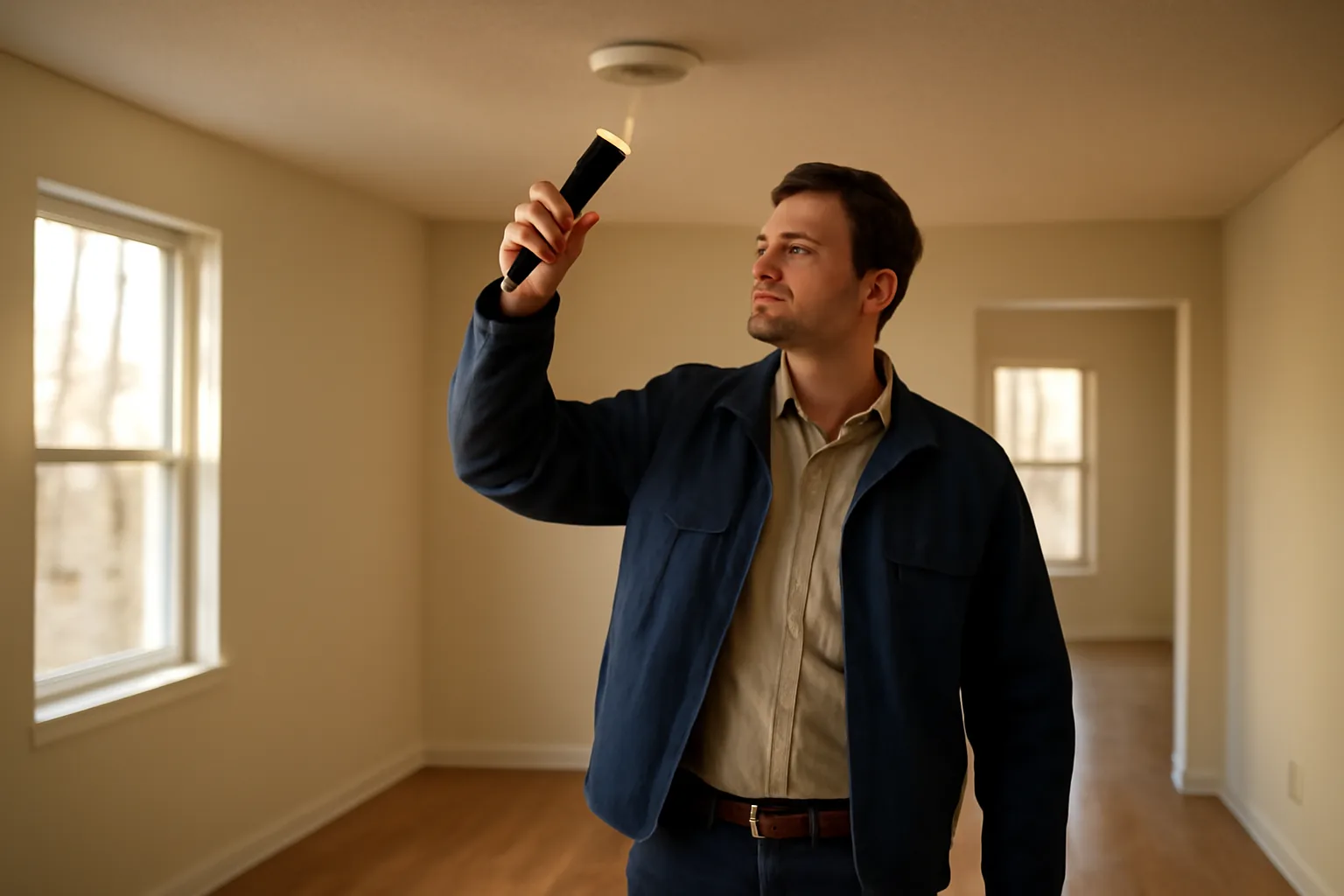
During a routine or city-mandated rental inspection, a landlord or code inspector can generally look at anything related to health, safety, and code compliance: smoke and carbon monoxide detectors, electrical outlets and panel condition, plumbing fixtures and water heater setup, egress windows, heating systems, visible mold or pest issues, and general structural condition of walls, ceilings, and floors. What they typically cannot do is search through a tenant's personal belongings, closets, or drawers unrelated to a maintenance issue, or use the inspection as a pretext to look for lease violations unrelated to habitability (like counting how many people are staying there, unless that's specifically the stated purpose with proper notice). The inspection has to relate to the legitimate purpose stated in the entry notice. For city-run rental licensing inspections specifically, the inspector is checking code compliance, not tenant behavior. A typical checklist includes: working smoke alarms in every bedroom and common hallway (often required to be interconnected or at minimum present per unit under state fire code adoption of NFPA 72 or similar), carbon monoxide detectors near sleeping areas where fuel-burning appliances or attached garages exist, GFCI outlets in kitchens and bathrooms, proper handrails on stairs with more than a few steps, secure and lockable exterior doors, and no obvious signs of active water intrusion or pest infestation. If you're getting ready for one of these inspections, walking the unit yourself first with the same checklist the city uses (usually published on the rental licensing office's own site) catches most of the easy failures, dead smoke detector batteries, missing GFCI outlets, a water heater with no pressure relief discharge tube, before the inspector does. Building a room-by-room prep list against your specific city's actual checklist, not a generic one, is exactly the kind of prep work that turns a first-time inspection into a pass instead of a re-inspection fee. That's the gap the $79 City Rental License & Inspection Prep Packet is built to close: pulling your city's actual checklist items into one prep document before the inspector shows up.
what a landlord cannot do in ohio
Ohio landlord-tenant law is set out in Ohio Revised Code Chapter 5321, and it draws clear lines around what a landlord cannot do, most of which track standard tenant-protection law found across most states. A landlord cannot shut off utilities, change the locks, remove doors or windows, or otherwise use "self-help" to force a tenant out, even if the tenant is behind on rent. Ohio Revised Code 5321.15 specifically prohibits a landlord from causing, directly or indirectly, the interruption or termination of utility services, and from removing doors, windows, or locks except for good faith repair . Eviction has to go through the court process (a forcible entry and detainer action), not self-help. A landlord cannot enter the rental unit without giving reasonable notice, which Ohio Revised Code 5321.04 sets at 24 hours in most circumstances, except in genuine emergencies . Repeated unauthorized entry can itself become a basis for a tenant to seek damages or terminate the lease. A landlord cannot retaliate against a tenant for exercising legal rights, like reporting a code violation to a building inspector or joining a tenant organization. Ohio Revised Code 5321.02 specifically bars retaliatory conduct such as increasing rent, decreasing services, or threatening eviction in response to a tenant's good faith complaint . A landlord also cannot ignore the state's habitability duty. Ohio Revised Code 5321.04 requires landlords to keep the premises in a fit and habitable condition, comply with building and housing codes, and maintain electrical, plumbing, heating, and sanitary systems in good working order . Failing on any of those isn't just a lease dispute; it's a statutory violation a tenant can raise directly.
how landlord licensing fits with state and city rules together
None of this exists in isolation. A single rental property sits under at least two, sometimes three, layers of law at once: state landlord-tenant statute (deposits, notices, habitability, eviction procedure), city or county rental licensing/registration ordinance (fees, inspections, renewal cycles), and sometimes a state or local building/housing code enforced through that same licensing program. Getting one right doesn't cover the other. You can be perfectly compliant with your state's security deposit statute and still get fined for an expired rental license, or pass a city inspection and still violate a state notice requirement on an eviction. Landlords new to a market, especially ones self-managing a handful of units, tend to research the state law (because it's the thing lawyers and tenant groups talk about) and miss the city licensing requirement entirely (because it's buried in a municipal code section nobody links to). The fastest way to find out if your city has one: search your city's actual .gov or .us domain for "rental registration" or "rental license" rather than relying on aggregator sites, since fee schedules and renewal cycles change almost every budget cycle in active programs like Los Angeles's SCEP and Chicago's registration ordinance [1][2][4]. If your city sends a notice, an inspection date, or a violation letter, treat it as the trigger to go read the actual ordinance text, more than a summary, before you respond. If you want more on general landlord responsibilities and how they play out day to day, see our guide on landlord landlords and tenant rights basics, and if you're dealing with a specific dispute, renters rights covers the tenant side of the same relationship.
Frequently asked questions
Do I need a business license to rent out one house?
It depends entirely on your city and county. Many cities require rental registration or a rental license for any rented dwelling, even a single-family home with one tenant, while some exempt owner-occupied duplexes or small properties. There is no national rule; you have to confirm with your specific city's rental licensing office.
Is a landlord license the same as a real estate license?
No. A real estate license, issued by a state real estate commission, is required to broker or sell property for others for a fee. A landlord business license or rental registration is a local requirement letting you legally rent out your own property in that city and has nothing to do with brokering.
How much does a rental license typically cost?
It varies widely by city, commonly anywhere from $20 to $250 or more per unit per year. Los Angeles charges roughly $86.55 per unit under its Rent Stabilization Ordinance registration [2], while other cities charge flat annual fees or scale by unit count. Confirm the current fee with your city rental licensing office since these adjust yearly.
What happens if I don't register my rental property?
Consequences vary by city but commonly include fines, back fees plus penalties once discovered, inability to file an eviction action until the property is registered (some cities condition eviction rights on active registration), and in repeat cases, liens or court action. Cities typically discover unregistered rentals through tenant complaints or code enforcement sweeps.
How often do rental properties get inspected?
It depends on the city's program. Los Angeles inspects units under its Systematic Code Enforcement Program at least once every four years [4]. Other cities inspect annually, biennially, or only upon renewal or complaint. Some cities with registration-only programs (no proactive inspection) only inspect if a tenant files a complaint.
Can a landlord require renters insurance as a lease condition?
Generally yes, in most states, as long as it's clearly stated in the lease and doesn't conflict with any local ordinance. It's a common risk-management practice because renters insurance, averaging roughly $15 to $30 per month according to the Insurance Information Institute [8], shifts liability for a tenant's belongings and personal liability off the landlord's policy.
What rights do month-to-month tenants have without a written lease?
They generally have the same core protections as tenants with a lease: habitability rights, required notice before entry, required notice before a rent increase, and required notice before ending the tenancy, all set by state law rather than the (missing) lease. What they lack is the specific terms a written lease would spell out, like pet policy or renewal terms.
Who is responsible for the rental inspection in California, the landlord or the tenant?
The landlord. Whether it's a city-run proactive rental inspection program or a pre-move-out deposit walkthrough under California Civil Code Section 1950.5(f) [5], the landlord (or their agent) is responsible for scheduling, arranging, and passing the inspection, though the tenant has the right to be present for the deposit walkthrough.
What can't a landlord do during a routine inspection?
A landlord or inspector generally cannot search personal belongings unrelated to habitability, use a maintenance inspection as a pretext to investigate unrelated lease terms, or enter without the notice required by state law (commonly 24 to 48 hours). The inspection has to stay tied to its stated legitimate purpose.
What's the difference between landlording and property management?
Landlording refers to the owner directly handling leasing, maintenance, rent collection, and compliance. Property management is when the owner hires a third party (a property manager or management company) to handle those same tasks for a fee, typically 8 to 12% of monthly rent, while the owner retains legal responsibility as the landlord of record.
How much notice does a landlord have to give before entering the unit?
It depends on the state. California presumes 24 hours' written notice is reasonable under Civil Code Section 1954 [9]. Many other states use a similar 24 to 48 hour standard, though some have no specific statutory number and rely on a general "reasonable notice" standard. Emergencies typically require no advance notice in any state.
What can't a landlord do in Ohio specifically?
Under Ohio Revised Code Chapter 5321, a landlord cannot shut off utilities or change locks to force a tenant out (5321.15) [11], cannot enter without 24 hours' notice except in emergencies (5321.04) [12], cannot retaliate against a tenant for a good faith code complaint (5321.02) [13], and cannot ignore the statutory duty to keep the unit fit and habitable.
How do I find out if my city requires a rental license?
Search your city's own .gov or .us website for "rental registration" or "rental license," or call the city's housing or code enforcement department directly. Third-party sites often list outdated fees. If you've already gotten a notice or fine, that notice itself usually names the correct office to call.
Sources
- Baltimore City Code, rental dwelling licensing: Baltimore requires a rental license for non-owner-occupied dwelling units, renewed on a set cycle with fees scaled by unit count
- California Civil Code Section 1950.5: Tenants have the right to request a pre-move-out inspection with 48 hours' written notice, under Civil Code 1950.5(f)
- New York General Obligations Law Section 7-103: New York requires landlords to hold tenant security deposits in a separate, designated account
- Green v. Superior Court, 10 Cal.3d 616 (1974): California's implied warranty of habitability applies to residential leases regardless of lease terms, established in Green v. Superior Court
- Insurance Information Institute, renters insurance facts and statistics: Average renters insurance policies cost roughly $15 to $30 per month depending on coverage and location
- California Civil Code Section 1954: California presumes 24 hours' written notice is reasonable for landlord entry to a rental unit
- California Civil Code Section 827: California requires 30 days' notice for rent increases under 10% and 90 days' notice for larger increases on month-to-month tenancies
- Ohio Revised Code Section 5321.15: Ohio law prohibits landlords from shutting off utilities or removing doors, windows, or locks to force a tenant out
- Ohio Revised Code Section 5321.04: Ohio requires landlords to give 24 hours' notice before entry (except emergencies) and to maintain the unit in a fit and habitable condition
- Ohio Revised Code Section 5321.02: Ohio law prohibits landlords from retaliating against tenants who make good faith complaints about code violations