Last updated 2026-07-25
TL;DR
Yes, it's normal and usually legal. Most states let landlords enter for inspections with 24 to 48 hours notice, tied to maintenance, safety, or lease compliance. What's not normal is entering without notice, entering constantly, or using inspections to snoop through belongings. Your lease and state landlord-tenant statute set the actual rules.
is it normal for landlords to do inspections?
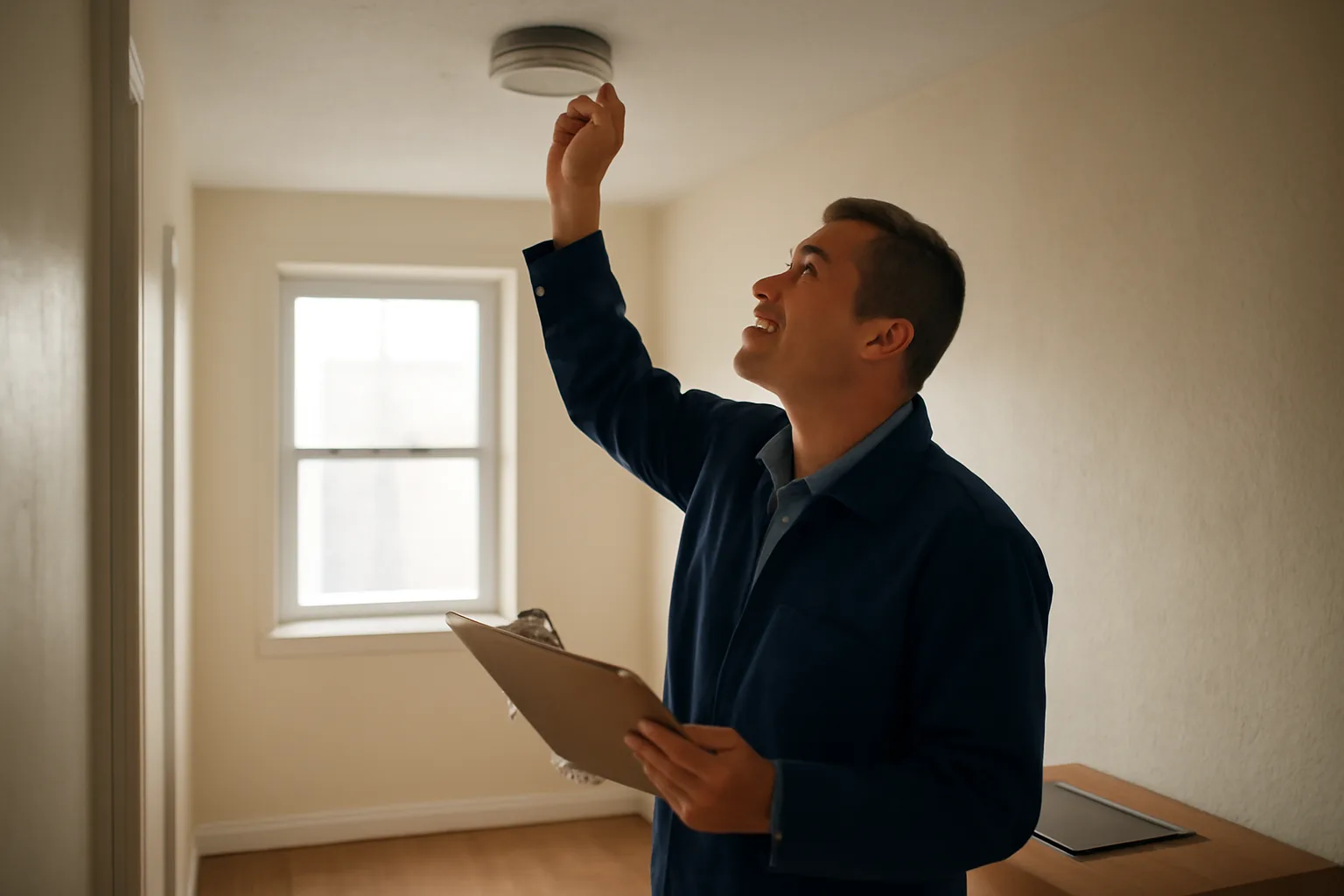
Yes. Periodic inspections are a standard part of managing rental property, not a red flag on their own. Landlords have a legal duty to keep units habitable (working plumbing, heat, smoke detectors, no serious pest or mold issues), and they can't fix what they don't know about. A once or twice a year walkthrough, plus inspections tied to maintenance requests, move-in/move-out, or a city rental license renewal, is routine in almost every state. What's not normal is a landlord showing up unannounced, entering daily or weekly "just to check," or using an inspection as cover to go through drawers and personal items. The line between reasonable oversight and harassment usually comes down to two things: notice and purpose. If the landlord gives proper notice (see below) and the visit relates to a legitimate reason (repairs, safety, showing the unit to a buyer or future tenant, checking smoke detector batteries, or a city-mandated rental inspection), it's normal. If it's frequent, unannounced, or feels like surveillance, that's a problem worth raising, in writing, with your landlord or a local tenant rights organization. In cities with mandatory rental licensing, inspections are often required by ordinance, not optional landlord preference. A city inspector, more than the landlord, may need to walk the unit before a license is issued or renewed. That's a separate process from a landlord's own periodic check-in, and tenants sometimes get notices for both in the same year.
what can a landlord look at during an inspection?
A landlord doing a maintenance or lease-compliance inspection can generally check things tied to the property's condition and the lease terms: smoke and carbon monoxide detectors, plumbing and appliance function, signs of water damage or pest activity, HVAC filters, window and door locks, and whether the unit matches what's allowed under the lease (unauthorized pets, unauthorized occupants, obvious property damage). This is about the unit as a rental asset, not about the tenant's belongings. What a landlord generally should not do is open closed drawers, closets, or cabinets to look through personal items, search for evidence of unrelated activity, or take photos of personal possessions beyond what's needed to document a maintenance issue or damage claim. Some leases spell out inspection scope explicitly; if yours doesn't, a reasonable standard is "what's needed to verify habitability and lease compliance," nothing more. If a city inspector is doing a licensing inspection, the scope is usually narrower and code-based: things like functioning smoke detectors, secondary means of egress, working locks, absence of exposed wiring, and general structural and sanitary conditions defined in the local housing code. Confirm with your city rental licensing office exactly what their inspection checklist covers, since it varies by city and is usually published as a form or checklist ahead of the visit.
how much notice does a landlord have to give before entering?
Most states require landlords to give some form of advance notice before entering an occupied unit for non-emergency reasons, though the exact number of hours and the method (written, verbal, posted) varies by state. California requires "reasonable notice," which state law presumes to be 24 hours in writing unless circumstances suggest otherwise, under California Civil Code Section 1954 [1]. Other states set 24 or 48 hour minimums by statute, and some states don't have a statewide notice statute at all, leaving the terms to the lease. Emergencies are the standard exception nearly everywhere: fire, flooding, gas leak, or an urgent safety issue lets a landlord enter without advance notice. Outside of emergencies, entering without proper notice, or entering repeatedly against the tenant's reasonable objections, can expose a landlord to a claim for violating the tenant's right to quiet enjoyment of the property. If your lease specifies a notice period longer than your state's statutory minimum, the lease terms generally control, since a lease can grant tenants more protection than the state floor, just not less. Read your lease's entry clause first; if it's silent, fall back to your state's statute.
who is responsible for a rental property walk-through inspection in california?
In California, both the landlord and tenant typically walk through the unit together at move-in and move-out, and the landlord is responsible for documenting the unit's condition to justify any security deposit deductions. Under California Civil Code Section 1950.5, a landlord who plans to withhold part of the deposit for repairs must give the tenant the option of an initial inspection before move-out, conducted no earlier than two weeks before the tenancy ends, so the tenant can fix issues themselves and avoid deductions [2]. The landlord must give at least 48 hours written notice before that initial move-out inspection unless the tenant waives the notice, and must provide an itemized statement of proposed repairs or cleaning after the walkthrough. This is distinct from a routine mid-lease maintenance inspection, which still requires the 24-hour reasonable notice standard under Civil Code Section 1954 [1]. So in practice: the landlord initiates and documents the inspection, but the tenant has a statutory right to be present and to a heads-up beforehand. If a landlord skips the pre-move-out inspection offer entirely, some tenants can challenge deposit deductions later on procedural grounds, though outcomes vary by county and small claims court.
what a landlord cannot do in ohio
Ohio law, under Ohio Revised Code Section 5321.04, requires landlords to give "reasonable notice" of at least 24 hours before entering a rental unit for inspection, repairs, or to show the property, except in emergencies [3]. A landlord who enters without that notice, or who enters at unreasonable hours, is generally violating the tenant's statutory rights under that section. Ohio landlords also cannot retaliate against a tenant for exercising rights under the landlord-tenant law, such as complaining to a building inspector or joining a tenant organization; Ohio Revised Code Section 5321.02 specifically bars retaliatory eviction, rent increases, or service cutoffs within a reasonable time after a tenant complaint [4]. And under Section 5321.15, a landlord cannot use "self-help" remedies like changing the locks, shutting off utilities, or removing a tenant's belongings to force them out; eviction has to go through the municipal or county court process [5]. So the short list for Ohio: no entry without 24 hours notice (barring emergency), no retaliation for a habitability complaint, and no lockouts or utility shutoffs instead of a formal eviction filing. These protections exist regardless of what a lease says, since a lease clause can't waive rights granted by state statute.
what is landlording, and what is a landlord?
A landlord is a person or entity that owns residential or commercial property and rents it to someone else (the tenant) in exchange for regular payment, usually monthly rent, under a lease or rental agreement. "Landlording" is the informal term for the day-to-day work of managing that arrangement: collecting rent, handling repairs, screening tenants, keeping the property compliant with local codes, and managing the legal side of the relationship (notices, lease renewals, security deposits, evictions when necessary). Being a landlord is part business owner, part property manager, part compliance officer. In cities with mandatory rental licensing or registration, it also means dealing with a city office directly: registering the unit, paying an annual or biennial fee, and passing a periodic inspection tied to local housing code. That layer is on top of the basic landlord-tenant relationship governed by state law. Most small landlords (1 to 10 units) do this alongside a full-time job, which is why the paperwork side (leases, notices, inspection prep, license renewals) tends to be the part that trips people up, not the physical maintenance work.
how to become a landlord: what do you actually need to do?
Becoming a landlord starts with owning or controlling a property you intend to rent out, then working through a short list of legal and practical steps before you hand over keys. There's no single national license to "become a landlord" in the U.S., but there are layers of requirements depending on where the property sits. At minimum, most new landlords need to: confirm local zoning allows rental use, register or license the rental with the city or county if required (this is common in cities with rental registration ordinances), get landlord liability insurance, set up a compliant lease that matches state landlord-tenant law, and screen tenants consistently with fair housing law in mind. The U.S. Department of Housing and Urban Development enforces the federal Fair Housing Act, which bars discrimination based on race, color, national origin, religion, sex, familial status, or disability in tenant screening and treatment [6]. Many cities also require a rental license or registration before you can legally rent the unit at all, sometimes with an inspection required before the first tenant moves in. If your city is one of them, [confirm with your city rental licensing office] what the application process, fee, and inspection timeline looks like, since these vary widely and change without much notice. A $79 one-time City Rental License & Inspection Prep Packet can help you organize the paperwork and walk-through checklist before that first inspection, though the packet doesn't replace confirming your specific city's current rules directly with their office.
how to be a landlord day to day: the ongoing responsibilities
Being a landlord day to day means staying on top of four things: rent collection, maintenance requests, legal notices, and compliance deadlines (lease renewals, insurance renewals, and if applicable, city rental license renewals and inspections). Maintenance is the one that generates the most disputes. Nearly every state has an implied warranty of habitability, meaning landlords must keep the unit safe and functional (working heat, plumbing, no serious structural or pest hazards) regardless of what the lease says. Responding quickly to repair requests, documenting them in writing, and doing periodic inspections to catch small problems before they become expensive ones is a big part of what separates landlords who avoid lawsuits from those who don't. The compliance side is easy to underestimate if you're new. Cities with rental registration or licensing programs often require annual or biennial renewal, proof of insurance, and a passed inspection, and missing a deadline can mean fines that stack up fast, sometimes hundreds of dollars per violation depending on the city's fee schedule. If you're managing a landlord role across multiple units, a simple calendar system for lease dates, insurance renewal, and city inspection deadlines saves a lot of stress later.
why do landlords require renters insurance?
Landlords require renters insurance mainly to shift liability and property-loss risk away from themselves and onto the tenant's own policy. A landlord's insurance covers the building itself, but it generally doesn't cover a tenant's personal belongings (furniture, electronics, clothing) if there's a fire, burst pipe, or theft. Renters insurance also typically includes liability coverage, which protects the tenant (and indirectly the landlord) if a guest is injured in the unit or the tenant accidentally causes damage, like a kitchen fire that spreads to a neighboring unit. For landlords, requiring renters insurance as a lease condition is a low-cost way to reduce the odds of an expensive uninsured loss turning into a lawsuit against the property owner. Typical renters insurance policies cost somewhere in the range of $15 to $30 a month depending on coverage amount and location, according to general industry cost surveys from insurers like the Insurance Information Institute, though exact pricing varies by state, coverage limits, and provider. Requiring it isn't universal, and it's not legally mandated in most states, but it's become common enough in the last decade that many standard lease templates include it as a condition of tenancy. If you require it, get proof of an active policy at move-in and set a reminder to check renewal each year, since policies can lapse without either party noticing until there's already a claim.
what rights do tenants have without a lease?
Tenants without a written lease, sometimes called month-to-month or at-will tenants, still have legal rights under state landlord-tenant law, they're just not locked into fixed terms. The core habitability, entry-notice, and eviction-process protections in state statutes generally apply whether or not there's a signed lease, because those rights come from statute, not from the lease document itself. Without a written lease, the tenancy is typically presumed month-to-month, and either party can usually end it by giving proper notice, commonly 30 days, though some states require more depending on how long the tenant has lived there or local rent control rules. The landlord still can't skip required entry notice, still can't retaliate against a tenant for complaints, and still has to go through the formal eviction process in court rather than change locks or shut off utilities, the same rules that apply under statutes like Ohio Revised Code Section 5321.15 [5] regardless of lease status. What a no-lease tenant loses is the certainty of fixed terms: no lease means no guaranteed rent amount for a set period and no protection against a 30-day notice to vacate for no stated reason (in most non-rent-controlled jurisdictions). If you're a tenant without a lease and unsure what applies in your state, your state attorney general's consumer protection page or a local tenant rights resource is the fastest way to check specifics.
how landlord inspections and city rental license inspections differ
| Who schedules it | Landlord or property manager | City rental licensing/inspection office | |
|---|---|---|---|
| Legal basis | Lease terms + state entry-notice statute | Local rental licensing ordinance | |
| Typical notice | 24-48 hours (state-dependent) | Set by city, often longer lead time | |
| What's checked | Maintenance, lease compliance, safety | Housing code items: smoke detectors, egress, wiring, sanitation | |
| Consequence of failing | Lease enforcement, repair requests | Violation notice, fines, license delay | If you're a landlord juggling both, keeping a single maintenance and inspection log for the unit (last landlord check, last city inspection, any open violations) makes renewal season much less chaotic than trying to reconstruct history from memory or scattered emails. |
A landlord's own periodic inspection and a city's mandatory rental license inspection are two different processes that sometimes get confused, especially when a tenant gets notices for both around the same time. A landlord inspection is initiated by the property owner or manager, usually tied to lease terms and state notice law (commonly 24 to 48 hours), and covers maintenance, safety, and lease compliance items the landlord chooses to check. A city rental license inspection is initiated by a local government office as a condition of the property's rental license or registration, follows a published housing code checklist, and is scheduled through the city's inspection department, not the landlord alone. Failing a city inspection can mean a formal violation notice, a reinspection fee, and a deadline to fix cited items before the license is renewed or issued, with specifics varying enormously by city. | | Landlord inspection | City license inspection |
Frequently asked questions
Is it normal for landlords to do inspections without notice?
No, not for routine or non-emergency reasons. Most states require advance notice, commonly 24 to 48 hours, before a landlord can enter for inspection. Unannounced entry is generally allowed only in a true emergency like fire, flooding, or a gas leak. If your landlord keeps entering without notice for non-emergencies, check your state's landlord-tenant statute and your lease's entry clause.
How often can a landlord legally inspect a rental unit?
There's usually no fixed statutory limit on how often, as long as each entry has a legitimate purpose and proper notice. Most landlords inspect once or twice a year for maintenance, plus as-needed visits for repair requests. Inspections frequent enough to disrupt normal living, or that seem designed to harass, can raise a quiet enjoyment claim under state law even without a hard numeric cap.
Can a landlord inspect a rental property whenever they want?
No. Landlords generally need a valid reason (repairs, safety check, showing the unit, lease compliance) and must give the notice period required by their state's statute or lease, commonly 24 to 48 hours. Entering "whenever" without notice or cause is typically a violation of the tenant's right to quiet enjoyment, even if the landlord owns the property.
What can a landlord look at during an inspection?
Smoke and CO detectors, plumbing and appliance function, signs of water damage or pests, HVAC condition, locks, and lease-compliance items like unauthorized pets or occupants. A landlord generally shouldn't open closed drawers or closets to look through personal belongings; the inspection should stay focused on the unit's condition and safety, not the tenant's possessions.
What a landlord cannot do in Ohio?
Ohio landlords can't enter without at least 24 hours reasonable notice except in emergencies (Ohio Revised Code 5321.04), can't retaliate against tenants for complaints (ORC 5321.02), and can't use self-help evictions like changing locks or shutting off utilities instead of filing a formal eviction in court (ORC 5321.15).
Who is responsible for a rental property walk-through inspection in California?
The landlord initiates and documents it, but tenants have a statutory right to participate. Under California Civil Code 1950.5, landlords must offer an initial move-out inspection at least two weeks before the tenancy ends, with 48 hours written notice, so tenants can fix issues before deposit deductions are made.
How much notice does a landlord have to give before an inspection?
It depends on the state and lease, but 24 to 48 hours is typical. California presumes 24 hours written notice is reasonable under Civil Code 1954. Ohio requires at least 24 hours under Revised Code 5321.04. Check your specific state statute and lease terms, since some states set longer minimums or none at all.
Why do landlords require renters insurance?
To shift the risk of tenant property loss and liability claims away from the landlord's own policy. A landlord's insurance covers the building, not a tenant's belongings, and renters insurance liability coverage protects against claims if a guest is hurt or a tenant accidentally causes damage. Typical policies cost roughly $15 to $30 a month.
What rights do tenants have without a lease?
Tenants without a written lease still have full state statutory protections: proper entry notice, no retaliation, no illegal lockouts, and formal court process for eviction. Without a lease, the tenancy is usually presumed month-to-month, and either side can typically end it with 30 days notice, though some states or local rent control rules require more.
What is landlording?
Landlording is the day-to-day work of owning and managing rental property: collecting rent, handling repairs and inspections, screening tenants, managing leases and legal notices, and keeping the property compliant with state landlord-tenant law and any local rental licensing requirements.
How to become a landlord?
Own or control a rental property, confirm zoning allows rental use, register or license it with your city if required, get landlord insurance, set up a lease compliant with your state's law, and screen tenants consistently under the federal Fair Housing Act. Check with your city rental licensing office for local registration and inspection steps.
Is a landlord inspection the same as a city rental license inspection?
No. A landlord inspection is initiated by the property owner under lease terms and state entry-notice law. A city rental license inspection is a separate, mandatory process run by the local government's housing or licensing office, following a published code checklist, with its own violation and fine process if items fail.
Sources
- California Legislative Information, Civil Code Section 1954: California presumes 24 hours written notice is reasonable notice for landlord entry
- California Legislative Information, Civil Code Section 1950.5: Landlords must offer an initial move-out inspection with 48 hours notice before withholding deposit for repairs
- Ohio Laws, Revised Code Section 5321.04: Ohio landlords must give at least 24 hours reasonable notice before entry except emergencies
- Ohio Laws, Revised Code Section 5321.02: Ohio law bars landlord retaliation against tenants for exercising legal rights
- Ohio Laws, Revised Code Section 5321.15: Ohio landlords cannot use self-help lockouts or utility shutoffs instead of formal eviction
- U.S. Department of Housing and Urban Development, Fair Housing Act overview: Federal Fair Housing Act bars discrimination in tenant screening based on protected classes