Last updated 2026-07-25
TL;DR
Landlording means owning and managing rental units for income, which requires following state landlord-tenant law, local rental licensing rules, and habitability codes. Inspections check safety systems and code compliance, not your housekeeping. Tenants without a lease still have rights under state law. Notice periods for entry and rent changes vary by state, typically 24 to 48 hours for entry.
what is landlording, exactly?
Landlording is the business of owning residential or commercial property and renting it to tenants in exchange for periodic payment, usually monthly rent. It sounds simple. It isn't, once you get past the first lease signing. A landlord (also called a lessor) is legally distinct from a property manager, though one person often does both jobs on a small scale. The landlord holds title to the property and bears legal responsibility for it: paying the mortgage and taxes, maintaining the structure, and complying with state landlord-tenant statutes and any local rental registration or licensing ordinance. A property manager, when hired, acts as an agent but the underlying legal duties (habitability, disclosures, security deposit handling) still trace back to the owner in almost every state. Landlording covers a wider range of tasks than most new owners expect: marketing units, screening applicants under Fair Housing Act rules (42 U.S.C. § 3601 et seq.), collecting and holding security deposits under state-specific limits, handling maintenance requests, following eviction procedure to the letter, and in a growing number of cities, registering or licensing every unit with a local rental inspection office. If you own 1 to 10 units, you are doing all of this yourself far more often than an owner of 200 units, who has staff for each function. That's the core tension of small-scale landlording: the legal exposure is the same size, but the resources to manage it are much smaller. The U.S. Census Bureau's Rental Housing Finance Survey found that individual investors own a majority of rental properties with fewer than 5 units, meaning most small landlords are doing this part-time, often alongside a full-time job [1].
how do you become a landlord?
Becoming a landlord starts before you own a rental unit at all: you need financing that supports investment property (usually a higher down payment, often 15 to 25 percent, and a different loan product than an owner-occupant mortgage), a decision on legal structure (personal name vs. LLC), and a working knowledge of your state's landlord-tenant code. Here is the realistic sequence, not the glossy version: 1. Buy or convert a property, and check zoning first. Some cities restrict rentals in single-family zones or cap the number of unrelated occupants. 2. Register the rental with your city or county if required. A large share of U.S. cities with 25,000+ population now run some form of mandatory rental registration, licensing, or inspection program, and the rules differ block by block in some metro areas, so confirm with your city rental licensing office before you list the unit. 3. Get landlord insurance (not a standard homeowner's policy) and consider requiring renters insurance from tenants. 4. Learn your state's rules on security deposit caps, notice periods, and habitability standards. These are statutory, not optional, and vary by state. 5. Screen tenants consistently and in writing, applying the same criteria to everyone to avoid Fair Housing Act violations. 6. Use a written lease. Oral leases are legal in most states but create real ambiguity about tenant obligations. 7. Budget for repairs, vacancy, and, if your city requires it, periodic rental inspections and license renewal fees. A lot of new landlords skip step 2 and find out about a rental licensing requirement only after a neighbor complaint or a notice in the mail. If that's you right now, you're not alone, and it's fixable: most cities have a path to register late, sometimes with a penalty fee, sometimes without. If you're dealing with a first notice or violation letter, our rental licensing guides and rental packet builder walk through what to gather before you call the inspection office.
what is a landlord? (legal definition and role)
A landlord is the owner of real property who grants a tenant the right to occupy that property under a lease or rental agreement, in exchange for rent. Legally, the landlord retains title and the underlying reversionary interest, while the tenant holds a leasehold interest for the term of the agreement. Most state landlord-tenant statutes define the landlord's core duties explicitly. California Civil Code Section 1941.1, for example, lists specific conditions a rental unit must meet to be considered "tenantable," including effective waterproofing, functioning plumbing and gas facilities, hot and cold running water, a working toilet, and smoke detectors [2]. Other states use similar implied-warranty-of-habitability language, though the specific list of required conditions differs. The landlord's role, cut down to essentials, is: provide a safe and habitable unit, maintain it during the tenancy, respect the tenant's right to quiet enjoyment, follow legal procedure for entry and eviction, and return the security deposit (minus lawful deductions) at move-out within the state's required timeframe. Everything else, from pet policies to late fees, is negotiable within the lease as long as it doesn't violate state or local law.
who is responsible for a rental walk-through inspection in California?
In California, the landlord is generally responsible for conducting or arranging a move-in and move-out walk-through inspection, but California Civil Code Section 1950.5 specifically gives the tenant the right to request an initial inspection before move-out, so both parties end up involved by design. Under Section 1950.5(f), a landlord who intends to withhold any part of a security deposit for repairs or cleaning must, if the tenant requests it, conduct an initial inspection no earlier than two weeks before the tenancy ends, and give the tenant an itemized statement of anything that needs fixing or cleaning to avoid a deduction [2]. The landlord must give at least 48 hours' written notice before that initial inspection unless the tenant waives the notice. This gives the tenant a chance to fix issues themselves before the final move-out inspection, when deposit deductions are finalized. The move-out inspection itself is technically the landlord's responsibility to document, since the landlord is the party who will make deductions and must justify them, in writing, within 21 calendar days of the tenant vacating under Section 1950.5(g). Practically, competent landlords do the walk-through with the tenant present, using photos and a written checklist. That protects both sides if the deposit gets disputed later, and it's simply good practice; California courts have sided with tenants when landlords couldn't document pre-existing condition [2].
what can a landlord look at during an inspection?
A landlord conducting a routine or move-in/move-out inspection can look at anything that affects the property's condition or the tenant's compliance with lease terms: general cleanliness, damage beyond normal wear and tear, working smoke and carbon monoxide detectors, signs of unauthorized occupants or pets, and unauthorized alterations to the unit. What a landlord generally cannot do is open closed containers, search through personal belongings, or use the inspection as a pretext to harass a tenant or retaliate for a complaint. Most states require the inspection to relate to a legitimate purpose: safety, maintenance, showing the unit to prospective buyers or tenants, or verifying lease compliance. A landlord cannot show up and rifle through drawers looking for evidence of a boyfriend living there; that goes well beyond "inspecting the unit." City-mandated rental inspections (the kind tied to a rental license or registration program) look at a narrower, more specific list: working smoke and carbon monoxide alarms, secure locks on doors and windows, functioning plumbing and no active leaks, adequate heat source, no exposed wiring, egress windows in bedrooms, handrails on stairs, and freedom from significant pest infestation or mold. These inspectors are typically city code enforcement staff or contracted inspectors, not the landlord personally, and they are checking code compliance, not judging your tenant's housekeeping. Many cities publish a checklist in advance; ask for it. If you're prepping for one of these city inspections rather than a private move-out walk-through, that's a different process entirely, closer to a mini building-code audit than a landlord-tenant matter.
what rights do tenants have without a lease?
A tenant without a written lease still has full legal rights under state landlord-tenant law; the absence of a written lease does not strip away legal protections. Most states treat an unwritten rental arrangement as a "tenancy at will" or month-to-month tenancy, governed by the same statutory framework as a written lease, just without the specific terms a lease would spell out. A tenant without a lease still generally has the right to: a habitable unit meeting the state's implied warranty of habitability, advance written notice before the landlord can raise rent or terminate the tenancy, protection from illegal lockouts and utility shutoffs (self-help eviction is illegal in every U.S. state), return of any security deposit collected, and protection under the Fair Housing Act from discrimination. What a tenant without a lease usually does not have is a fixed term of guaranteed occupancy. Without a lease specifying a one-year term, for example, the tenancy defaults to month-to-month, and either party can generally end it with proper notice, the length of which is set by state statute (commonly 30 days, sometimes tied to how long the tenant has lived there). The specific number varies quite a bit by state, so check your state's civil code before acting.
how much notice does a landlord have to give?
Notice requirements depend on what the landlord is doing (entering the unit, raising rent, or ending a tenancy) and on state law, which varies significantly. There is no single federal standard. For entry to the unit for repairs or inspection, many states require 24 to 48 hours' advance notice. California requires "reasonable notice," which Civil Code Section 1954 defines as presumptively 24 hours for entry to make repairs or show the unit, unless the tenant agrees to less [3]. Other states set their own numbers; some, like Florida, specify at least 12 hours' notice for certain entry purposes under Florida Statutes Section 83.53 [4]. For rent increases on a month-to-month tenancy, notice periods commonly run 30 days for smaller increases and up to 60 or 90 days for larger increases or in jurisdictions with rent stabilization ordinances. California's statewide rent cap law (Civil Code Section 1947.12, part of AB 1482) requires 30 days' notice for rent increases under 10 percent in a 12-month period and 90 days' notice for increases at or above 10 percent, for most covered properties [5]. For ending a tenancy, notice is typically 30 days for a month-to-month tenant who has lived there under a year, and can extend to 60 days or more in some states once the tenancy passes a certain length, or when a just-cause eviction ordinance applies. Because these numbers genuinely differ state to state and even city to city, don't rely on a rule of thumb; check your specific state's civil code section and any local just-cause ordinance before sending a notice.
why do landlords require renters insurance?
Landlords require renters insurance mainly to shift liability for a tenant's personal belongings and personal liability claims away from the landlord's own policy, and to reduce disputes after a fire, water damage, or theft event. A standard landlord (dwelling) insurance policy covers the physical structure and the landlord's own liability; it does not cover a tenant's furniture, electronics, or clothing, and it typically does not cover a tenant's liability if the tenant's negligence (an unattended stove, an overflowing bathtub) causes damage. Without renters insurance, a tenant who loses everything in a fire has no coverage of their own, and often looks to the landlord's policy or takes legal action, even when the landlord's policy was never meant to cover tenant property. Many landlords now require renters insurance as a standard lease condition, with proof of coverage (usually a modest policy, often with $100,000 or more in liability coverage) due at move-in and renewal. This isn't just a preference; in cities and states where it's legal to require it, it materially lowers the landlord's exposure in a dispute over who pays for water damage caused by a tenant's leaking aquarium or an unattended candle. It also gives the tenant a resource of their own instead of assuming the landlord will simply absorb the loss.
what can a landlord not do in ohio?
Ohio landlord-tenant law, codified mainly in Ohio Revised Code Chapter 5321, spells out specific prohibited actions. A landlord in Ohio cannot: shut off utilities to force a tenant out, change the locks without a court order (self-help eviction is illegal), enter the rental unit without reasonable notice except in an emergency, retaliate against a tenant for filing a complaint with a housing authority or joining a tenant union, or refuse to make repairs necessary to keep the unit fit and habitable. Ohio Revised Code Section 5321.04 requires landlords to comply with building and housing codes affecting health and safety, keep common areas safe, maintain electrical, plumbing, and heating systems in good working order, and provide running water and reasonable amounts of hot water [6]. Section 5321.15 explicitly bars landlords from removing doors, windows, locks, or the tenant's possessions, and from interrupting utility service, as a means of forcing a tenant out; a landlord who does this can be liable for the tenant's actual damages plus reasonable attorney fees [7]. A landlord in Ohio also cannot discriminate based on the protected classes under the Fair Housing Act (race, color, religion, sex, national origin, familial status, disability) plus any additional classes protected under Ohio Revised Code Chapter 4112, and cannot retaliate against a tenant for exercising a legal right, such as reporting a code violation to the city [8]. If a landlord violates Section 5321.15's prohibition on lockouts or utility shutoffs, Ohio courts have consistently allowed tenants to recover damages and, in some cases, terminate the lease outright.
industrial and commercial inspection vendors: what small landlords actually need
If you own a small residential rental building (1 to 10 units) rather than an industrial or commercial property, you generally do not need an "industrial inspection" vendor at all; that term applies to specialized equipment inspection in manufacturing, warehousing, and heavy commercial settings, not to a duplex or fourplex undergoing a city rental license inspection. What you do need, for a city rental licensing inspection, are a few specific, low-cost items and sometimes a licensed professional for narrow tasks: - A basic smoke detector and CO detector tester (under $20) or simply testing the button and checking battery/date.
- A GFCI outlet tester (under $15) for bathrooms, kitchens, and any outlet within 6 feet of a water source, since GFCI protection is a near-universal rental code item.
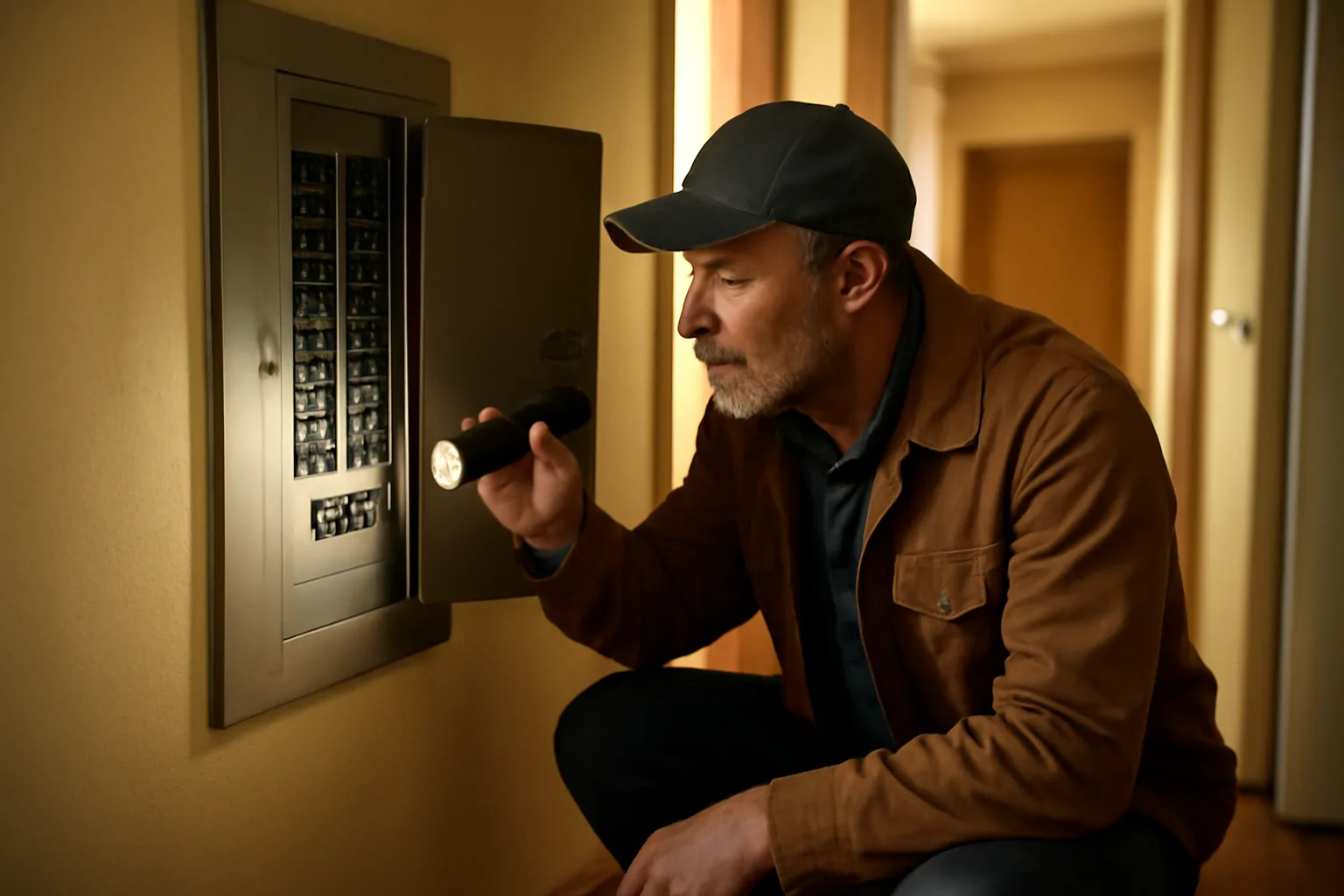
- A flashlight and a screwdriver, to check attic/crawlspace access and electrical panel labeling.
- A licensed electrician or plumber, hired for a specific fix, if the inspector flags knob-and-tube wiring, an undersized water heater, or a non-permitted addition. This is not a rental vendor relationship; it's a one-time contractor visit.
- Fire extinguishers rated for the space, if your city's code requires one per unit or per floor (many do, often ABC-rated, 2A:10B:C or similar). Some larger landlords with 20+ units do contract with property inspection companies or handyman services that come on-site periodically to pre-check units before the city inspector arrives. For a 1 to 10 unit portfolio, this is usually not worth the recurring cost; a landlord who reads the city's published checklist and walks the unit themselves, an hour before the appointment, catches the vast majority of common violations (dead batteries, missing GFCI outlets, blocked egress windows, unlabeled electrical panels) for free. If your city requires a fire marshal sign-off or a lead paint inspection (for pre-1978 housing under the federal Lead-Based Paint Disclosure Rule, 42 U.S.C. § 4852d), that's a specific, licensed inspection you schedule directly, not a general rental compliance vendor. Confirm with your city rental licensing office exactly which inspections are bundled into the rental license fee and which require a separate appointment and separate fee.
how do you prep for a city rental inspection without hiring anyone?
| Smoke detectors | One per bedroom, one per floor, tested and dated | $10 to $25 each | |
|---|---|---|---|
| CO detectors | Present if unit has gas appliances or attached garage | $20 to $35 each | |
| GFCI outlets | Kitchens, baths, outdoor, within 6 ft of water | $15 to $25 each | |
| Egress windows | Bedroom windows open fully, no security bars without release | Varies, sometimes $0 | |
| Handrails | Stairs with 4+ steps have a graspable rail | $50 to $150 | |
| Electrical panel | Labeled circuits, no exposed wiring, no double-tapped breakers | $0 to $300+ | |
| Water heater | TPR valve present, discharge pipe to floor or exterior | $50 to $200 | |
| Exterior | No peeling paint (especially pre-1978), secure railings | Varies widely | Fees for the license itself and for reinspection after a failed first attempt vary enormously by city; some charge a flat annual fee under $100 per unit, others charge more and add a reinspection fee if you fail the first visit. Confirm the specific numbers with your city rental licensing office, since this article can't responsibly guess at your city's fee schedule. Bringing your own documentation to the inspection (proof of last inspection, prior violation corrections, receipts for smoke detector replacements) speeds up the visit and gives you a paper trail if a violation is disputed. This is the exact gap a $79 City Rental License & Inspection Prep Packet is built to close: a structured way to organize what your city typically asks for before the inspector shows up, so you're not digging through email threads the morning of the appointment. |
Most first-time violations on city rental inspections trace back to a handful of repeat issues, not to hidden structural problems. Walking your own unit against the published checklist, a day or two before the inspector arrives, fixes most of them. Common items city inspectors check, based on typical municipal rental housing codes: | Item | What inspectors look for | Typical fix cost |
what happens if you fail a rental inspection or get a violation notice?
Failing a rental inspection almost never means immediate loss of your rental license. Nearly every municipal program gives you a correction period, commonly 30 to 60 days, to fix cited violations and request reinspection. The typical sequence: the inspector documents each violation on a written notice, specifying the code section violated and a deadline to correct it. You fix the item (or hire a licensed contractor for anything electrical, plumbing, or structural), then contact the city to schedule a reinspection, which sometimes carries its own fee. If you miss the correction deadline without requesting an extension, cities can escalate to a formal notice of violation, daily fines that accrue until corrected, or in serious or repeated cases, referral to a housing court or an order to vacate the unit as unsafe. Fine amounts vary by city and by severity, from double-digit dollar amounts per day for a first, minor violation up to four-figure amounts for serious safety hazards left uncorrected. Because these numbers are set by local ordinance and change over time, confirm the current fine schedule with your city rental licensing or code enforcement office rather than relying on a number from an old notice or a forum post. If you disagree with a citation, most cities have an appeal process, usually a written request within a set number of days, sometimes heard by a hearing officer or a housing board. Read the notice for the specific appeal deadline; missing it typically forfeits your right to contest the violation.
Frequently asked questions
how to become a landlord with no experience
Start by learning your state's landlord-tenant statute and your city's rental registration or licensing rules before you buy or rent out a property. Get landlord (not homeowner) insurance, use a written lease, screen tenants consistently under Fair Housing Act rules, and confirm with your city rental licensing office whether inspections or licensing apply to your unit.
who is responsible for a rental walk through inspection in California
The landlord is generally responsible for arranging it, but California Civil Code Section 1950.5 gives tenants the right to request an initial pre-move-out inspection, with at least 48 hours' written notice from the landlord, so both parties are involved by law, more than the landlord.
what is landlording
Landlording is the ongoing work of owning and managing rental property: collecting rent, maintaining habitability, following state landlord-tenant law, handling security deposits correctly, and complying with any local rental registration, licensing, or inspection ordinance that applies to your unit.
what is a landlord
A landlord is the property owner who leases a unit to a tenant for rent, retaining legal title while the tenant holds a temporary right to occupy under a lease. The landlord is responsible for habitability, lawful notice, and deposit handling under state law.
what rights do tenants have without a lease
A tenant without a written lease still has full rights under state law, typically as a month-to-month tenancy: a habitable unit, advance notice before rent increases or termination, protection from illegal lockouts, and Fair Housing Act protections. They just lack a fixed lease term.
how to be a landlord day to day
Day to day landlording means responding to maintenance requests promptly, documenting communications in writing, following your state's exact notice periods for entry and rent changes, keeping security deposits in whatever account or method your state requires, and renewing any local rental license or registration on time.
why do landlords require renters insurance
Renters insurance covers the tenant's own belongings and personal liability, things a landlord's dwelling policy does not cover. Requiring it reduces disputes and financial exposure for the landlord when a tenant's negligence (an overflowing tub, an unattended candle) causes damage.
how much notice does a landlord have to give before entering
Most states require 24 to 48 hours' advance notice for non-emergency entry. California presumes 24 hours reasonable under Civil Code Section 1954; Florida requires at least 12 hours for certain purposes under Florida Statutes Section 83.53. Check your specific state statute, since the number varies.
what can a landlord look at during an inspection
A landlord can check general condition, damage beyond normal wear, smoke/CO detectors, and lease compliance, but generally cannot search closed containers or personal belongings. City rental inspectors check a narrower list: detectors, GFCI outlets, egress windows, wiring, and heat, not personal property.
what a landlord cannot do in ohio
Under Ohio Revised Code Section 5321.15, a landlord cannot shut off utilities, change locks, or remove doors/windows to force a tenant out. Ohio landlords also cannot enter without reasonable notice (except emergencies), retaliate for complaints, or ignore repair duties under Ohio Revised Code Section 5321.04.
do I need an industrial inspection vendor for a small rental property
No. Industrial inspection vendors serve manufacturing and heavy commercial equipment, not residential rental units. For a 1 to 10 unit rental, you need basic testers (smoke/CO detector tester, GFCI tester) and, occasionally, a licensed electrician or plumber for a specific flagged repair.
how long do I have to fix a rental inspection violation
Most cities give 30 to 60 days to correct a cited violation before escalating to fines or further enforcement, though the exact window is set by local ordinance and varies. Check the specific deadline printed on your violation notice and confirm any reinspection fee with your city office.
can a landlord charge a reinspection fee after a failed rental inspection
Many cities do charge a reinspection fee if a unit fails its first rental license inspection, though the amount and whether it applies varies by municipality. Confirm the specific fee schedule with your city rental licensing or code enforcement office before budgeting for it.
Sources
- U.S. Census Bureau, Rental Housing Finance Survey: Individual investors own a majority of rental properties with fewer than 5 units
- California Civil Code Section 1941.1 and 1950.5: California habitability requirements and security deposit/inspection procedure, including the 21-day itemized statement and initial inspection right
- California Civil Code Section 1954: California presumes 24 hours advance written notice reasonable for landlord entry
- Florida Statutes Section 83.53: Florida requires at least 12 hours notice for certain landlord entry purposes
- California Civil Code Section 1947.12 (AB 1482): California statewide rent cap requires 30 days notice for increases under 10 percent and 90 days for increases at or above 10 percent
- Ohio Revised Code Section 5321.04: Ohio landlord duties to maintain habitability, comply with housing codes, and keep systems in good working order
- Ohio Revised Code Section 5321.15: Ohio prohibits landlords from utility shutoffs, lockouts, and self-help eviction, with tenant remedy of damages and attorney fees
- Ohio Revised Code Chapter 4112: Ohio state law prohibits housing discrimination based on protected classes beyond the federal Fair Housing Act list
- U.S. Department of Housing and Urban Development, Fair Housing Act overview: Federal Fair Housing Act protected classes governing tenant screening
- U.S. EPA, Lead-Based Paint Disclosure Rule: Federal disclosure requirement for lead-based paint hazards in pre-1978 housing