Last updated 2026-07-25
TL;DR
A solid rental furnishing checklist covers working smoke and CO detectors, secured window coverings, functioning locks, and a habitable kitchen and bath, since these overlap with what most city inspectors check. Add basic furniture only if you're renting furnished; otherwise focus on fixtures, safety equipment, and documentation before your first tenant or inspection.
What should be on a furnishing a rental property checklist?
| Safety | Smoke alarms, CO detectors, working locks, fire extinguisher (if required) | Same, plus extinguisher near stove | |
|---|---|---|---|
| Kitchen | Stove, refrigerator, sink with hot/cold water | Dishes, cookware, small appliances | |
| Bedroom | Closet, window with working lock | Bed frame, mattress, dresser | |
| Living space | Working outlets, window coverings | Sofa, table, lamps | |
| Bathroom | Toilet, tub or shower, ventilation | Shower curtain, bath mat | Don't skip the paper side either. Before your first tenant moves in, you'll want a signed move-in condition report with photos, a copy of your rental license or registration certificate if your city requires one, and your lead paint disclosure if the building predates 1978 (required nationwide under 40 CFR Part 745) [1]. |
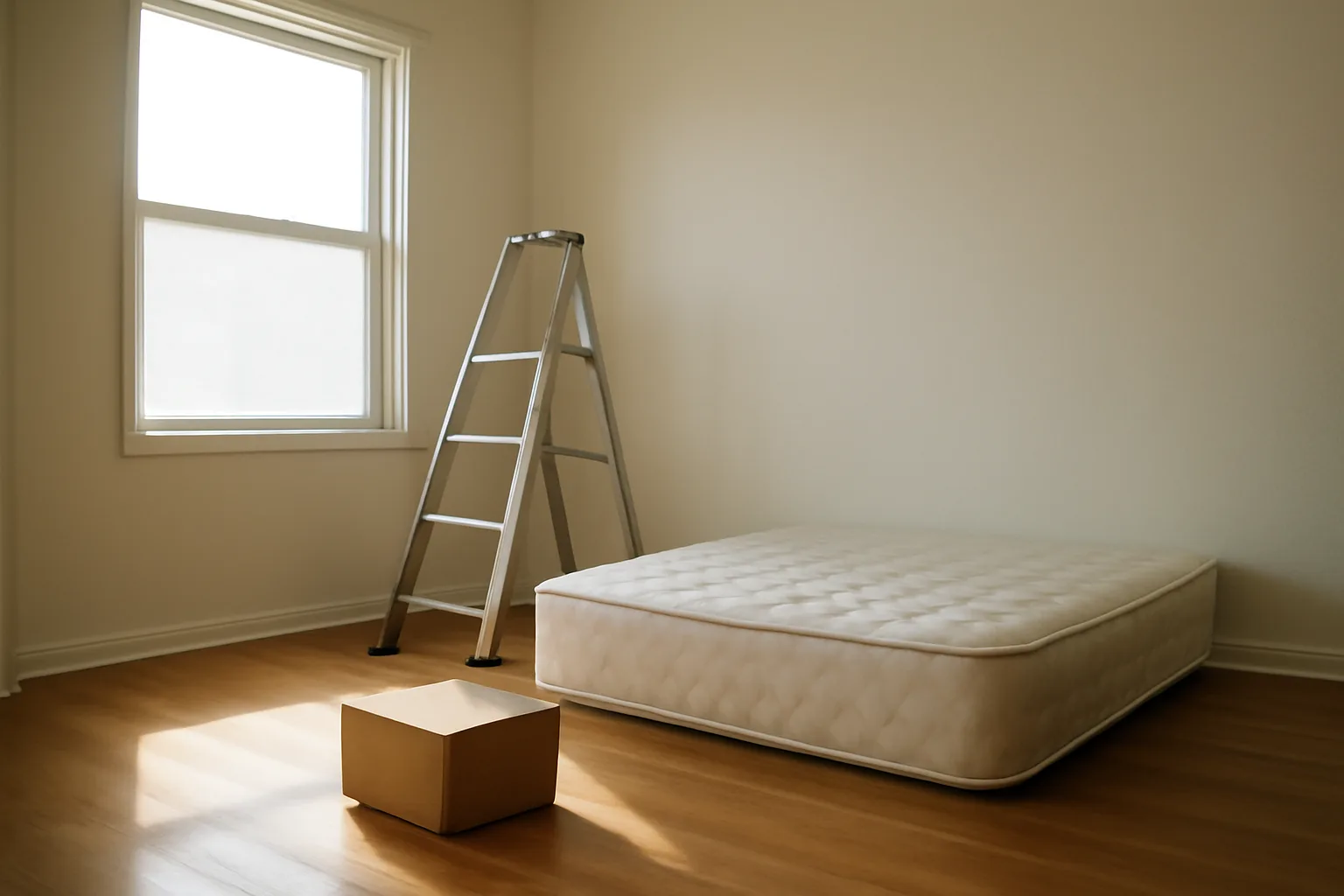
A furnishing checklist for a rental property needs to cover two different jobs: making the unit livable and making it inspection-ready. Most landlords lump these together and miss things. At minimum, a habitable rental needs working heat, hot water, a stove or range connection, a refrigerator (in many cities this is legally required, in others it's just expected), functioning locks on all exterior doors, smoke alarms, and carbon monoxide detectors where fuel-burning appliances or attached garages exist. That's the baseline whether you're renting furnished or unfurnished. If you're furnishing the unit itself (common with short-term or corporate rentals), add a bed frame and mattress per bedroom, a dining table with seating, a couch, window coverings in every room, kitchen basics (pots, pans, dishes for the stated occupancy), and a fire extinguisher in the kitchen. Some cities' fire codes specifically require a portable fire extinguisher in multi-unit buildings; check your local fire marshal's rules before skipping this. Here's a simple split to work from: | Category | Unfurnished rental (minimum) | Furnished rental (add) |
How to become a landlord (the practical steps before you furnish anything)
Becoming a landlord is mostly a licensing and compliance exercise before it's a furnishing exercise. You need to sort out ownership and legal status, check local licensing rules, and get the unit inspection-ready before you touch furniture. The rough order most first-time landlords follow: confirm you're allowed to rent the unit (check your mortgage terms, HOA rules, and zoning), register the property with your city or county if a rental license or registration program applies, get a certificate of occupancy or rental inspection if required, set up a separate bank account and basic bookkeeping, buy landlord insurance (different from a standard homeowner policy), and only then furnish and list the unit. Many cities require you to register a rental before you can legally collect rent. Miss that step and you can face fines that stack up monthly. In many jurisdictions, cities that require rental registration or licensing publish their own fee schedules and deadlines, so confirm with your city rental licensing office before assuming a number. One thing that trips people up: becoming a landlord doesn't require an LLC, though a lot of small landlords use one for liability separation. It's a legal and tax decision, not a furnishing one, and worth a conversation with an accountant or attorney rather than a guess.
What is landlording, exactly?
Landlording is the ongoing work of owning and managing rental property: screening tenants, collecting rent, handling repairs, keeping the unit compliant with local housing code, and managing the legal relationship defined by your lease and state landlord-tenant law. It's not a one-time setup job. Furnishing and licensing get you to day one. Landlording is everything after that: fielding a 2 a.m. no-heat call, tracking when the smoke alarm batteries need replacing, renewing your rental license before it lapses, and knowing what your state requires for entry notice or security deposit handling. Most states require landlords to keep the unit habitable throughout the tenancy, more than at move-in. That means the furnishing and safety checklist isn't a one-time task. Smoke alarms need testing, HVAC needs servicing, and any furniture you provide in a furnished unit needs to stay in usable condition or you risk a habitability complaint.
What is a landlord, legally?
A landlord is the party who owns or controls a rental property and leases it to a tenant in exchange for rent, taking on statutory duties like maintaining habitability and following legal procedures for entry, notice, and eviction. Legally, the landlord-tenant relationship is defined by state statute plus your written lease. Every state has its own landlord-tenant act, and most define minimum habitability standards, security deposit limits and return timelines, and required notice periods. A landlord isn't just "whoever owns the building." Property managers acting on an owner's behalf often carry landlord obligations too, and in a lot of states, an unlicensed or unregistered landlord still owes the tenant the same habitability duties even if they haven't complied with local licensing rules. Not being licensed doesn't get you out of the legal obligations, it usually just adds a fine on top of them.
What rights do tenants have without a lease?
Tenants without a written lease still have rights. In most states, an oral or implied agreement creates a month-to-month tenancy, and the tenant keeps the same habitability protections, notice-before-entry rules, and eviction procedures as someone with a signed lease. What changes without a written lease is proof. Rent amount, due date, and any special terms become harder to enforce if they were never written down. Most state landlord-tenant statutes still require the same statutory notice period to end a month-to-month tenancy (commonly 30 days, though some states use 60 or scale it by tenancy length) regardless of whether a lease was ever signed. A landlord also can't skip statutory protections just because there's no lease. Illegal lockouts, utility shutoffs to force a move-out, and entry without notice remain illegal in the vast majority of states whether or not paperwork exists. If you're renting out a furnished room or unit without a formal lease, put terms in writing anyway. It protects you as much as the tenant.
Who is responsible for a rental property walk-through inspection in California?
In California, the landlord is responsible for offering an initial move-out inspection if the tenant is vacating, and the landlord conducts the actual walk-through, though the tenant has the right to be present. Under California Civil Code Section 1950.5(f), a landlord must notify the tenant of the right to request an initial inspection before the tenant moves out, conducted no earlier than two weeks before the end of the tenancy [2]. The landlord (or their agent) does the inspection and gives the tenant an itemized statement of any deficiencies that could result in deductions from the security deposit, along with a reasonable opportunity to fix them before move-out. The move-in walk-through works differently and isn't mandated by the same statute, but is still standard practice: many landlords and California courts treat a documented move-in inspection (photos plus a signed condition report) as the best defense against later deposit disputes. If you're furnishing a unit before a California tenant moves in, photograph every furnished item's condition on the day of handoff. It's the cheapest insurance you'll buy all year.
What can a landlord look at during a rental inspection?
During a routine or move-in/move-out inspection, a landlord can generally check things tied to habitability, safety, and lease compliance: working smoke and CO detectors, plumbing and appliance function, signs of pest infestation, unauthorized alterations, cleanliness affecting habitability, and unauthorized occupants or pets if the lease restricts them. A landlord inspection is not a general search. Most states require the landlord to give advance notice (commonly 24 to 48 hours) and to conduct inspections at reasonable times, for a legitimate purpose like repairs, showing the unit, or verifying lease compliance. A landlord generally can't rifle through a tenant's personal belongings, drawers, or closets during a routine inspection just to look around. For city rental licensing inspections specifically, code enforcement officers typically check: smoke and CO detector placement and function, egress window operability in bedrooms, electrical panel labeling and GFCI outlets near water sources, water heater strapping and pressure relief valve, handrails on stairs with more than a few steps, and pest or mold evidence. If your city requires a rental license, the inspection checklist usually mirrors your local housing or building code, not a generic national standard, since building and housing codes are set at the state and municipal level. This is where a furnishing checklist and an inspection checklist genuinely overlap: a working smoke alarm and a secured window lock help you pass inspection and make the unit safe for whoever lives there. If you want a structured way to track city-specific inspection items alongside your furnishing to-do list, the City Rental License & Inspection Prep Packet is built around that overlap: a $79 one-time packet meant to help you organize both lists before your first inspection, not a substitute for your city's own checklist.
Why do landlords require renters insurance?
Landlords require renters insurance mainly to shift liability risk. A tenant's own renters insurance policy covers their personal belongings and often includes liability coverage if the tenant accidentally causes damage (a kitchen fire, a bathtub overflow) that a landlord's own property insurance won't fully absorb. A landlord's property insurance covers the building and the landlord's own furnishings if the unit is rented furnished. It generally does not cover a tenant's personal belongings, and many landlord policies have liability limits that don't extend to a tenant's negligence claim against a third party or vice versa. Requiring renters insurance, often with the landlord named as an interested party or additional insured, closes that gap. There's also a practical claims reason: if a fire starts because of a tenant's space heater and destroys their laptop and clothes, a landlord without a renters insurance requirement often ends up fielding the tenant's demand for reimbursement directly, since the tenant has no policy of their own to file against. Requiring renters insurance is legal in most states as a lease condition, though a few jurisdictions regulate how landlords can require or bundle insurance costs, so it's worth checking your state's landlord-tenant statute or a local tenant rights resource, like this overview of tenants rights, before writing the requirement into a lease.
How much notice does a landlord have to give before entering or ending a tenancy?
| Entry for repairs/showings | 24-48 hours | Some states just say "reasonable" | |
|---|---|---|---|
| End month-to-month tenancy | 30 days | Some states scale to 60+ days by tenancy length | |
| Nonpayment of rent | 3-14 days | Varies significantly by state | |
| Emergency entry | None required | Fire, flood, imminent danger | Because these numbers vary so much by state and sometimes by city, don't rely on a generic number. Check your specific state's landlord-tenant statute before serving any notice. |
Notice requirements split into two very different categories: notice to enter the unit, and notice to end a tenancy. States set both, and the numbers vary a lot. For entry notice, most states require 24 hours, though some allow 24-48 hours or simply require "reasonable notice" without a fixed number. California, for example, presumes 24 hours' written notice is reasonable under Civil Code Section 1954 [3]. Emergency entry (fire, flooding, a burst pipe) typically doesn't require advance notice in any state. For ending a month-to-month tenancy, 30 days' notice is the most common baseline nationally, though several states scale it: some require 60 days if the tenant has lived there over a year, and others allow shorter notice in specific situations like nonpayment of rent, where notice periods often drop to 3-14 days depending on the state. | Notice type | Typical range | Notes |
What can't a landlord do in Ohio?
Ohio landlords cannot shut off utilities, change the locks, or remove a tenant's belongings to force them out, a practice generally banned as "self-help eviction" under Ohio law. A landlord also cannot retaliate against a tenant for reporting code violations or exercising a legal right, and cannot enter the unit without reasonable notice except in an emergency. Ohio Revised Code Section 5321.04 lays out landlord obligations directly, including the duty to "comply with the requirements of all applicable building, housing, health, and safety codes" and to "keep all common areas of the premises in a safe and sanitary condition" [4]. A landlord who ignores these duties can face a tenant lawsuit for damages or a rent escrow action under Ohio Revised Code Section 5321.07, where the tenant deposits rent with the court instead of paying the landlord directly until repairs happen [5]. Ohio Revised Code Section 5321.05 also protects tenants from retaliatory conduct, meaning a landlord generally cannot raise rent, cut services, or start eviction proceedings specifically because a tenant complained to a housing authority or joined a tenant organization [6]. Ohio's entry notice rule is less specific in statute than some states', but courts and most lease templates treat 24 hours as the reasonable standard, consistent with the "reasonable notice" language many Ohio courts have applied. If you're a landlord in Ohio or expanding into it, read Chapter 5321 in full before drafting any notice or entry policy. It's short and covers most of what actually gets landlords sued.
How to be a landlord who stays out of trouble (a practical short list)
Being a landlord long-term comes down to a handful of habits more than any single checklist item. Keep a calendar for license renewals, inspection deadlines, and lease renewal dates. Miss a renewal deadline in a licensing city and the fine often accrues per month, not per incident. Document everything. Move-in and move-out condition reports with photos, every repair request and when you responded, every notice you served and how (certified mail, posted notice, hand-delivered). If a dispute ever goes to a housing court or rent escrow proceeding, the landlord with a paper trail wins more often than the one without. Budget for turnover. Between paint, cleaning, minor repairs, and any furnishing replacement (a broken bed frame, a stained sofa if the unit is furnished), turnover between tenants routinely costs landlords real money even without major damage. Build it into your rent pricing rather than treating it as a surprise. Learn your specific city's rental licensing rules before you need to. Requirements for registration, inspection frequency, and fees differ by municipality and change over time, so treat any number you read online, including here, as a starting point to confirm with your city rental licensing office, not a final answer.
Furnishing checklist: room-by-room breakdown
If you're furnishing the unit (more than leaving it empty for the tenant's own furniture), work room by room so nothing gets missed at move-in. Living room: sofa or seating for the stated occupancy, coffee or side table, window coverings, at least one working lamp if overhead lighting is weak, smoke alarm within the required distance of the room. Kitchen: stove/range, refrigerator, sink with functioning hot and cold water, basic cookware and dishware if furnished, fire extinguisher rated for kitchen use, working exhaust fan or window ventilation. Bedroom(s): bed frame and mattress if furnished, dresser or closet space, window with a functioning lock, a second means of egress if code requires it for that room type, CO detector nearby if there's an attached garage or fuel-burning appliance on that floor. Bathroom: toilet, tub or shower, exhaust fan or operable window, GFCI outlet near the sink, shower curtain or door if furnished. Safety and compliance layer (applies regardless of furnished status): smoke alarms in every bedroom and on every level, CO detectors per your state or city code, fire extinguisher if required, working locks on every exterior door, and a copy of your rental registration or license posted or available if your city requires it. This is also where new landlords should look at landlord landlords resources and renters rights guides side by side. Furnishing decisions and tenant rights overlap more than people expect, especially around what a landlord can require, remove, or charge for at move-out.
Frequently asked questions
Do I have to furnish a rental unit before renting it out?
No. Most rentals are unfurnished, meaning the tenant brings their own furniture. What you must provide, furnished or not, are working fixtures and appliances the local housing code requires: usually a stove, refrigerator, working plumbing, heat, and smoke/CO detectors. Furnishing with actual furniture is only required if you're marketing the unit as a furnished rental, often for short-term or corporate tenants.
What's the difference between a rental license and a rental registration?
Registration typically just means telling your city a rental unit exists, often for a small annual fee. A rental license usually requires passing an inspection and paying a higher fee before you're legally allowed to rent. Requirements and terminology vary by city, so confirm with your city rental licensing office which one (or both) applies to your property.
How often do rental inspections happen once I'm licensed?
It depends entirely on your city's program. Some cities inspect annually, others every 2-3 years, and some only inspect on complaint or at tenant turnover. There's no national standard since rental licensing programs are set at the municipal level, so check your specific city's ordinance for the inspection cycle.
Can a landlord require a security deposit in addition to renters insurance?
Yes, in most states a landlord can require both a security deposit and proof of renters insurance, since they cover different risks. The deposit covers damage beyond normal wear and unpaid rent; renters insurance covers the tenant's belongings and adds liability coverage. Some states cap deposit amounts (often 1-2 months' rent), so check your state's specific limit.
What happens if I skip furnishing basics and fail a rental inspection?
Consequences vary by city but commonly include a formal notice of violation with a correction deadline, followed by fines if uncorrected, often assessed per violation or per month until fixed. Repeated failures can lead to a suspended or revoked rental license in some cities, meaning you legally cannot rent the unit until you pass re-inspection.
Is a refrigerator legally required in a rental unit?
It depends on your state and city. Some jurisdictions' housing codes explicitly require a refrigerator as part of habitability; others only require gas or electric hookups and leave the appliance itself to the landlord's discretion or lease terms. Check your local housing code rather than assuming either way.
Do I need a fire extinguisher in every rental unit?
Requirements vary by state and municipal fire code. Many multi-unit buildings require portable fire extinguishers in common areas or kitchens under local fire code, while single-family rentals sometimes have no such mandate. Check with your local fire marshal's office or your city's fire code chapter for the specific rule that applies to your property type.
How much notice does a landlord need to give before a routine inspection?
Most states require 24 to 48 hours' written notice before a non-emergency entry, including routine inspections. A handful of states just require "reasonable notice" without a fixed number. Emergency situations, like a suspected gas leak or active flooding, generally don't require advance notice in any state.
Can a tenant refuse to let the landlord in for an inspection?
Generally, no, if the landlord has given proper notice and the entry is for a legitimate purpose (repairs, showings, code-required inspection) at a reasonable time. Repeated unreasonable refusal can be treated as a lease violation in most states. That said, a landlord still can't force entry; the remedy is usually a legal notice or, in persistent cases, eviction proceedings.
What should I photograph during a move-in walk-through?
Photograph every wall, floor, and ceiling in each room, all appliances (inside and out), all furniture if the unit is furnished, smoke/CO detector locations, existing damage no matter how minor, and the exterior including any yard or parking area covered by the lease. Date-stamp the photos and have the tenant sign off on the condition report the same day.
Are landlords required to provide window coverings?
It varies. Most housing codes require windows to have functioning locks and weatherproofing, but curtains or blinds aren't universally mandated. Many landlords add basic blinds anyway for privacy compliance and to protect the property from tenant-installed hardware damage. Check your local housing code and factor it into your furnishing budget either way.
What's the fastest way to get organized before my first rental license inspection?
Pull your city's specific inspection checklist first, since it's the actual document an inspector will use. Then work through it room by room, fixing safety items (alarms, locks, egress) before cosmetic ones. Some landlords use a structured prep resource, like the $79 City Rental License & Inspection Prep Packet, to organize the checklist and documentation together rather than tracking it in scattered notes.
Sources
- EPA, Disclosure of Known Lead-Based Paint Hazards: Lead paint disclosure is required nationwide for pre-1978 rental housing under 40 CFR Part 745
- California Legislative Information, Civil Code Section 1950.5: California landlords must offer an initial move-out inspection and provide an itemized statement of deficiencies before deducting from a security deposit
- California Legislative Information, Civil Code Section 1954: California presumes 24 hours' written notice before landlord entry is reasonable
- Ohio Laws, Revised Code Section 5321.04: Ohio landlords must comply with applicable housing and safety codes and keep common areas safe and sanitary
- Ohio Laws, Revised Code Section 5321.07: Ohio tenants can deposit rent with the court in a rent escrow action if the landlord fails to make repairs
- Ohio Laws, Revised Code Section 5321.05: Ohio law protects tenants from retaliatory conduct for exercising legal rights or reporting code violations