Last updated 2026-07-26
TL;DR
A drain inspection camera rental typically costs $75 to $200 per day at national tool rental chains, with weekly rates often $200-$350. It's worth renting when you need to document a recurring drain problem before a plumber visit or a city rental inspection, but a licensed plumber's camera inspection ($150-$500) usually gives you a better read plus a professional opinion on what's actually wrong.
what is a drain inspection camera and why would a landlord rent one
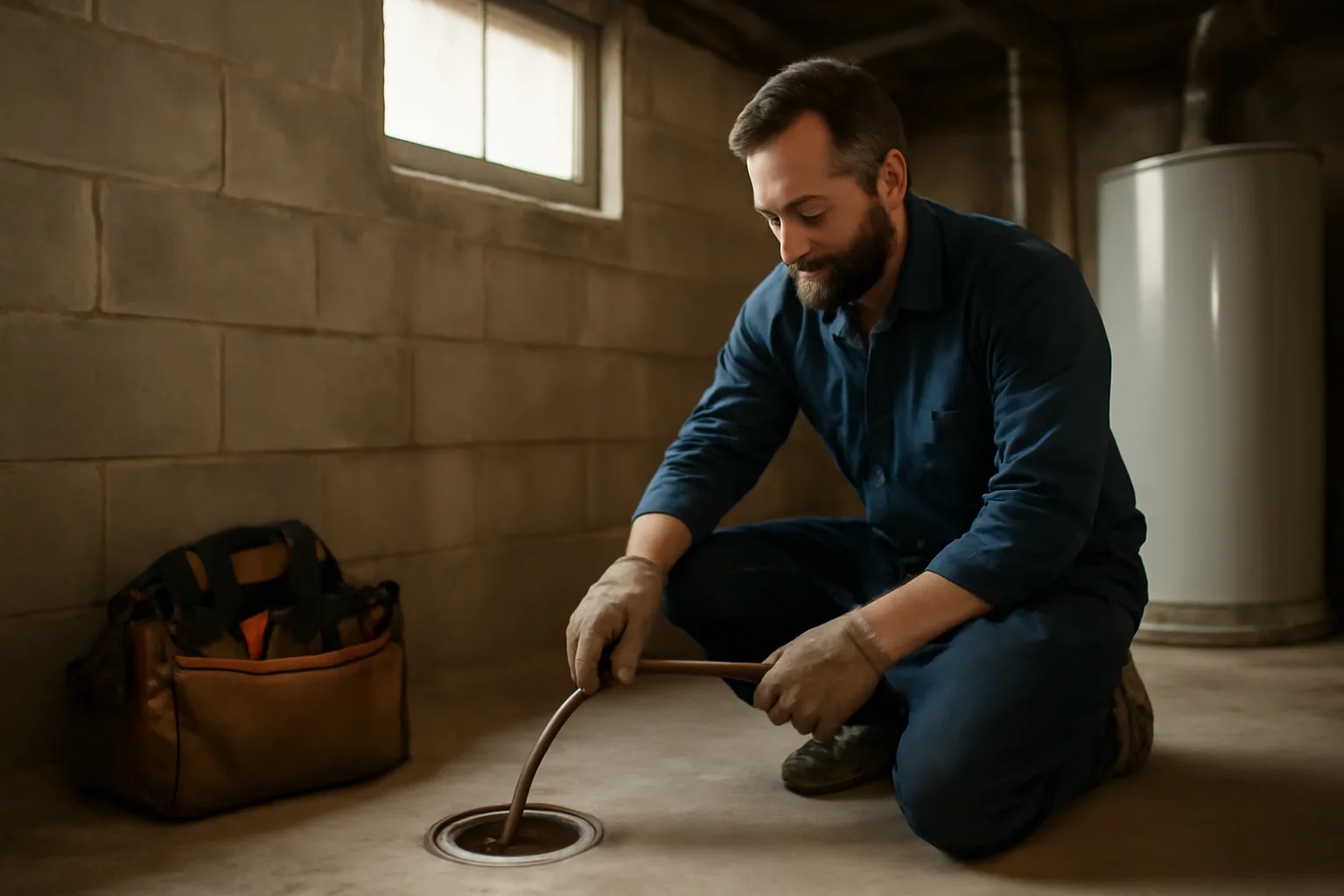
A drain inspection camera (also called a sewer camera or pipe camera) is a waterproof camera head on a flexible cable that you feed into a drain, toilet line, or sewer lateral. It streams video back to a small monitor so you can see clogs, roots, cracks, bellies (sags in the pipe), or offset joints without digging up a yard or ripping out a wall. Landlords usually reach for this tool in one of three situations: a tenant reports recurring slow drains or backups and you want to know what you're dealing with before calling a plumber, you're buying a property and want to check the sewer lateral before closing, or you got a notice from your city's rental inspection program flagging a plumbing issue and you want to document the current condition before or after repair work. It is not a required tool for most rental license inspections. City rental inspectors generally check that drains function, fixtures don't leak, and there's no active sewage backup, not that you've run a camera through every pipe. But if a tenant complaint or a prior violation notice specifically calls out drainage, having your own video documentation can support your case if you dispute a finding or need to show a repair actually fixed the problem.
where can i rent a drain inspection camera near me
Home improvement chains are the most common source. Home Depot and The Home Depot's tool rental program (branded through its rental centers) and Sunbelt Rentals both carry sewer/drain camera units in most metro markets, though availability varies by store and you generally need to call ahead to confirm one's in stock locally. Independent tool rental yards in most cities also carry them, often listed under "sewer camera" or "pipe inspection camera" in their equipment catalogs. United Rentals, one of the largest equipment rental companies in North America, lists sewer/drain inspection cameras in its plumbing tools category, with self-leveling color camera heads and cable lengths up to 200 feet common in commercial-grade units [1]. These are built for contractors, so they're more capable (and more expensive) than the consumer-grade cameras sold at hardware stores. For a one-off residential drain check, a small business tool rental shop or a local plumbing supply house renting to the public is often the cheaper and simpler route than a big commercial equipment company, since you don't need a 200-foot commercial cable to check a single unit's drain line. Call two or three local rental yards and ask specifically what cable length and camera head size they stock; a 100-foot cable with a 1-inch camera head covers most residential drain lines just fine.
how much does it cost to rent a drain inspection camera
| Daily tool rental | $75-$200/day | Camera + monitor, you operate it, no diagnosis | |
|---|---|---|---|
| Weekly tool rental | $200-$350/week | Same equipment, longer window | |
| Buy consumer unit | $200-$600 one-time | Reusable, no rental trips | |
| Licensed plumber inspection | $150-$500 | Professional operation + diagnosis + repair quote | If you've never operated a drain camera before, budget extra time. Reading footage of a pipe interior takes some practice; a crack, a root intrusion, and a normal pipe joint can look confusingly similar on a small monitor to an untrained eye. |
Expect to pay somewhere between $75 and $200 for a daily rental of a consumer-to-mid-grade drain camera at a typical tool rental counter, with weekly rates often landing in the $200 to $350 range depending on the market and the unit's cable length and features (self-leveling head, locator/sonde for finding the camera's position underground, DVR recording). These are ballpark figures pulled from typical tool rental pricing patterns; your local shop's actual rate is the only number that matters, so call and ask. Buying a basic drain camera outright is also an option if you own multiple properties and expect to use it more than once or twice a year. Consumer-grade units with a monitor and 50 to 100 feet of cable commonly sell for $200 to $600 at hardware and home improvement retailers, which means owning one can pay for itself after two or three rental cycles if you're a repeat user. Compare that to hiring a licensed plumber to run the camera for you: a professional sewer camera inspection typically runs $150 to $500 depending on your market and pipe length, and that price usually includes a trained read of what the footage shows plus a written or verbal diagnosis, more than raw video you have to interpret yourself. | Option | Typical cost | What you get |
should i rent a camera myself or just hire a plumber
For most landlords with one or two rental units, hiring a plumber to run the camera is the better call, even though it costs more per visit. You're paying for interpretation, more than footage. A plumber who does this daily can tell the difference between a root intrusion that needs jetting, a belly that needs excavation, and a joint offset that's cosmetic but not urgent. That judgment call is worth the price difference for most owners who don't do this often. Renting makes more sense in a narrower set of cases: you own several properties and expect to use a camera three or more times a year, you want a second look before paying for an expensive excavation a plumber recommended, or you're documenting a pre-existing condition (say, before a tenant moves in or before you buy a property) and don't need a repair quote, just a video record. One practical middle ground: some plumbing companies will do a diagnostic-only camera inspection for a flat fee, separate from any repair work, specifically so you get professional footage and a verbal read without committing to a repair contract on the spot. Ask if that's an option before assuming you have to choose between a full plumber visit and DIY equipment rental.
does a drain camera inspection satisfy a city rental inspection requirement
Almost never on its own. City rental inspection programs check plumbing fixtures for function and safety (working drains, no active leaks, proper venting, water heater condition) as part of a broader habitability checklist, not specifically for underground pipe condition via camera. Confirm with your city rental licensing office what their plumbing checklist actually covers, because this varies a lot by jurisdiction and by inspector. Where a drain camera does help: if your city inspector cited a specific drainage problem (chronic backup, slow drain, sewage odor) as a violation, running a camera and getting it fixed, then documenting the fix with before-and-after footage, can support your reinspection request and your case if you need to show the city you addressed the root cause and more than a symptom. If you're prepping for a first-time rental license inspection or a renewal and you're not sure what your city's plumbing checklist covers, our $79 City Rental License & Inspection Prep Packet walks through what inspectors commonly check unit by unit, so you're not guessing which systems actually get tested.
how to become a landlord
Becoming a landlord legally starts well before you rent out a room or a house. At minimum you need to check your city and county for rental registration or licensing requirements (many mandatory-licensing cities require this before you advertise the unit, not after you find a tenant), confirm your property meets local habitability and safety codes, and understand your state's landlord-tenant law on security deposits, notice periods, and eviction procedure. Practically, the sequence most new landlords follow is: buy or designate the property, check zoning (some cities restrict rentals in certain zones or cap the number of unrelated occupants), register or license the rental with your city if required, get any mandated pre-rental inspection done, set up a separate bank account for security deposits if your state requires it, and only then start marketing the unit. Many states also require a written lease disclosure of specific things: lead paint disclosure for pre-1978 housing is a federal requirement under 42 U.S.C. § 4852d, regardless of what state you're in [2]. Skipping that disclosure isn't a paperwork technicality; it carries federal civil penalties. See our related guides on landlord basics and tenant rights for the fuller checklist by state and city.
what is landlording and what is a landlord
A landlord is the owner (or an authorized agent of the owner) of real property who rents that property to a tenant in exchange for regular payment, under a lease or rental agreement. "Landlording" is the informal term for the ongoing work of managing that relationship and the property: collecting rent, handling maintenance requests, doing periodic inspections, following notice rules before entry, and staying current on local licensing and code requirements. It's a legal role with real obligations attached, more than a label. Most states define the landlord's duties around habitability (keeping the unit livable, structurally sound, and free of code violations) through their landlord-tenant statutes, and cities with rental licensing programs add another layer of registration, inspection, and fee requirements on top of state law.
who is responsible for rental property walk-through inspection in california
Under California law, either the landlord or the tenant can request an initial move-out walk-through inspection, and the landlord must give at least 48 hours' written notice before that inspection unless the tenant waives the notice in writing. California Civil Code Section 1950.5(f) sets this out specifically for the purpose of letting the tenant fix deficiencies before the final move-out inspection that determines security deposit deductions [3]. The landlord (or their agent, like a property manager) is the one who actually conducts the walk-through and prepares the itemized statement of proposed deductions, but the tenant has the right to be present. California law also requires the landlord to give the tenant an itemized statement of deductions from the security deposit within 21 days after the tenant moves out, per the same statute [3]. This is separate from any city-level rental inspection program some California cities run for licensing purposes; those are inspector-conducted, not landlord-conducted, and follow whatever notice rules that specific city's ordinance sets. Confirm with your city rental licensing office whether a city inspector or the landlord handles the walk-through for licensing purposes, since it differs from the state's security-deposit walk-through rule.
what rights do tenants have without a lease
A tenant without a written lease, sometimes called a month-to-month tenant or a tenant-at-will depending on the state, still has legal protections. Nearly every state treats an oral or implied rental agreement as legally binding once rent has been accepted, and the tenant retains the same basic rights to habitability, privacy, and proper notice before eviction that a tenant with a written lease has. What changes without a written lease is mostly the terms: rent amount and due date default to whatever was orally agreed or established by the pattern of payment, and either party can typically end a month-to-month tenancy by giving the state-required notice period (commonly 30 days, sometimes longer depending on the state and how long the tenant has lived there). The landlord still cannot change locks, shut off utilities, or remove a tenant's belongings without going through the formal eviction process in almost every state; "self-help" evictions are illegal even against a tenant with no lease. See tenants rights and renters rights for more on what protections apply regardless of lease status.
how to be a landlord day to day
Day-to-day landlording comes down to a handful of recurring tasks: collecting rent and tracking late payments consistently, responding to maintenance requests within a reasonable time (some states set specific deadlines for urgent repairs like no heat or no water), keeping records of every repair and communication, and following your state's and city's rules for entry notice, inspections, and lease renewals or terminations. The landlords who avoid the most trouble tend to do a few things consistently: they put everything in writing (even a text message trail is better than a verbal-only agreement), they do a documented move-in and move-out inspection with photos or video every time, and they don't let small maintenance issues sit unaddressed, because a small plumbing or electrical issue today is often the violation notice on next year's rental inspection. If your city requires a rental license or registration, renewing on time matters more than most landlords expect. Missed renewal deadlines are one of the most common sources of late fees and fines in mandatory-licensing cities; confirm with your city rental licensing office what your specific renewal cycle and fee schedule looks like, since these details vary widely and change without much notice.
why do landlords require renters insurance
Landlords require renters insurance mainly to shift liability and reduce their own exposure, not to protect the tenant's belongings out of generosity (though that's a real side benefit for the tenant). A standard landlord insurance policy covers the building itself, not the tenant's personal property, and it typically doesn't cover a tenant's liability if the tenant accidentally causes damage, like a kitchen fire or a bathtub overflow that floods the unit below. Requiring renters insurance, usually with a modest liability minimum like $100,000, pushes that risk onto a policy the tenant pays for instead of leaving the landlord's own insurance (or the landlord directly) on the hook for tenant-caused damage. It also tends to reduce disputes over who pays for what after an incident, since the tenant's insurer handles their portion and the landlord's insurer handles the building. Whether a landlord can legally require renters insurance as a lease condition varies by state; most states allow it as a standard lease term, but a few have specific rules about how it can be enforced or what happens if a tenant lets the policy lapse. Check your state's landlord-tenant statute or a local housing attorney before making renters insurance a strict lease violation trigger.
how much notice does a landlord have to give before entry or termination
Notice requirements split into two different categories that landlords often mix up: notice to enter the unit for inspection or repairs, and notice to terminate a tenancy. Both vary by state, and there's no single national number. For entry notice, many states set 24 hours as the standard for non-emergency entry (California's Civil Code Section 1954 uses 24 hours as a presumption of reasonable notice for entry to make repairs or show the unit [4]), though some states use 48 hours or don't specify an exact number at all, just "reasonable notice." Emergencies (fire, flooding, gas leak) generally don't require advance notice in any state. For ending a month-to-month tenancy, 30 days' notice is the most common baseline across states, though some states scale it up based on how long the tenant has lived there (California, for example, requires 60 days' notice instead of 30 if the tenant has lived in the unit a year or more, under Civil Code Section 1946.1) [5]. Fixed-term leases typically end on their own stated end date without a separate notice requirement, unless the lease itself specifies one. Always check your specific state statute before entering a unit or serving a termination notice; these numbers change by state and sometimes by city ordinance on top of the state baseline.
what can a landlord look at during an inspection
During a routine or move-out inspection, a landlord can generally check the general condition and cleanliness of the unit, the function of installed systems (plumbing, electrical, HVAC, smoke and carbon monoxide detectors), evidence of damage beyond normal wear and tear, and compliance with lease terms like unauthorized pets or occupants. The inspection is about the property's condition, not the tenant's personal belongings. A landlord conducting an inspection generally cannot search through a tenant's personal property, open closed containers, or go through drawers and personal items; the inspection is limited to what's visible and relevant to the property's condition and systems. Some states' statutes explicitly limit inspections to specific purposes: repairs, showing the unit to prospective tenants or buyers, or verifying the tenant hasn't abandoned the property. City rental inspection programs (separate from a landlord's own inspections) typically check a different, more code-focused list: working smoke and CO detectors, no active leaks or pest infestations, functioning heat, proper egress from bedrooms, and no obvious electrical hazards like exposed wiring. Confirm with your city rental licensing office exactly what their inspector's checklist covers, since it's usually published as part of the licensing ordinance or application packet.
what a landlord cannot do in ohio
Ohio law, under Ohio Revised Code Section 5321.04, spells out several things a landlord cannot do to a tenant, and a few of the more commonly misunderstood ones are worth naming directly. A landlord in Ohio cannot shut off a tenant's utilities, change the locks, or remove the tenant's belongings as a way to force them out; that's an illegal "self-help" eviction, and Ohio law requires landlords to go through the court eviction process (forcible entry and detainer action) instead [6]. Ohio Revised Code Section 5321.05 also requires landlords to maintain the unit in a fit and habitable condition, keep common areas safe, and maintain electrical, plumbing, heating, and other systems supplied by the landlord in good working order [7]. A landlord who fails to do this can face a tenant's claim for rent escrow or repair-and-deduct remedies under the same chapter. On entry, Ohio Revised Code Section 5321.04 requires landlords to give "reasonable notice" of intent to enter, and Ohio courts and the statute's guidance generally treat 24 hours as reasonable for non-emergency entry, though the statute itself doesn't specify an exact hour count, just "reasonable" [6]. As with every state, an actual emergency doesn't require advance notice.
Frequently asked questions
How much does it cost to rent a drain inspection camera near me?
Expect $75-$200 per day or $200-$350 per week at most tool rental chains and independent rental yards, though your local shop's rate is the only number that matters since pricing varies by market and equipment grade. Call ahead to confirm the camera is in stock; not every location carries one.
Can I use a rented drain camera to pass a city rental inspection?
Not directly. City inspectors check that drains function and there's no active leak or backup, not underground pipe condition via video. A camera helps you document that you fixed a cited drainage problem, which can support a reinspection request, but confirm with your city rental licensing office what their plumbing checklist actually requires.
How to become a landlord legally?
Check your city and county for rental registration or licensing requirements before advertising the unit, confirm the property meets local habitability codes, understand your state's security deposit and notice rules, and complete required federal disclosures like lead paint disclosure under 42 U.S.C. § 4852d for pre-1978 housing. Requirements vary heavily by city and state.
Who is responsible for the rental property walk-through inspection in California?
Either party can request an initial move-out walk-through under California Civil Code Section 1950.5(f), but the landlord (or their agent) conducts it and must give at least 48 hours' written notice unless the tenant waives that notice in writing. The landlord also prepares the itemized deduction statement afterward.
What is landlording?
Landlording is the ongoing work of owning and managing a rental property: collecting rent, handling repairs, doing inspections, following legal notice requirements, and keeping up with city licensing or registration rules. It's the practical, day-to-day side of being a landlord, distinct from the legal definition of the role itself.
What is a landlord?
A landlord is the owner or an authorized agent of the owner of real property who rents that property to a tenant under a lease or rental agreement in exchange for regular payment. The role carries legal duties around habitability, notice, and (in many cities) registration or licensing.
What rights do tenants have without a lease?
Tenants without a written lease still have the same core protections as tenants with one: habitability, privacy, and required notice before eviction. Nearly every state treats an oral or implied agreement as binding once rent is accepted, and landlords still cannot change locks or shut off utilities to force out a tenant, lease or not.
Why do landlords require renters insurance?
Mainly to shift liability for tenant-caused damage (like an accidental fire or flood) off the landlord's own policy and onto insurance the tenant pays for. It also covers the tenant's personal belongings, which the landlord's building policy never does, and it tends to reduce disputes after an incident.
How much notice does a landlord have to give before entering a unit?
Most states use 24 hours as the standard for non-emergency entry; California's Civil Code Section 1954 treats 24 hours as presumptively reasonable. Some states require 48 hours or just say "reasonable notice" without a set number. Emergencies never require advance notice.
What can a landlord look at during an inspection?
A landlord can check the unit's general condition, system function (plumbing, electrical, HVAC, detectors), and evidence of damage or lease violations. A landlord generally cannot search personal belongings, open drawers, or go through containers; the inspection is limited to the property's condition, not the tenant's possessions.
What can a landlord not do in Ohio?
Under Ohio Revised Code Section 5321.04, a landlord cannot shut off utilities, change locks, or remove belongings to force a tenant out without going through the court eviction process. Ohio Revised Code Section 5321.05 also requires landlords to keep the unit habitable and maintain supplied systems in working order.
Is it cheaper to buy a drain camera instead of renting one repeatedly?
If you expect to use one more than two or three times a year, buying can pay off. Consumer-grade units with 50-100 feet of cable and a monitor typically run $200-$600, which matches roughly two to three rental cycles at $75-$200 per day. Occasional users are usually better off renting or just hiring a plumber.
Do I need a plumbing license to rent or operate a drain inspection camera?
No. Drain cameras are rented to the general public at home improvement and tool rental chains with no license required to operate one. What you're paying extra for with a licensed plumber is trained interpretation of the footage and a repair recommendation, not legal permission to run the equipment.
Sources
- United Rentals, Plumbing Tools & Equipment category page: Commercial equipment rental companies carry sewer/drain inspection cameras with cable lengths up to 200 feet for contractor use
- 42 U.S.C. § 4852d, Cornell Legal Information Institute: Federal law requires lead paint disclosure for housing built before 1978
- California Civil Code Section 1950.5: California requires 48 hours' written notice for an initial move-out walk-through inspection and an itemized deduction statement within 21 days of move-out
- California Civil Code Section 1954: California treats 24 hours as presumptively reasonable notice for landlord entry to make repairs or show a unit
- California Civil Code Section 1946.1: California requires 60 days' notice to terminate a month-to-month tenancy where the tenant has lived in the unit a year or more, versus 30 days otherwise
- Ohio Revised Code Section 5321.04: Ohio landlords cannot shut off utilities, change locks, or remove belongings to force out a tenant and must give reasonable notice before entry
- Ohio Revised Code Section 5321.05: Ohio landlords must maintain the rental unit in a fit and habitable condition and keep supplied systems in good working order