Last updated 2026-07-25
TL;DR
There is no US-wide landlord license. Anyone can rent out property they own. But hundreds of cities and some states require you to register, license, or pass inspection before renting, with fees, deadlines, and fines if you skip it. Check your specific city and county rules before you list a unit.
Do you need a license to become a landlord?
No federal law requires a license to become a landlord, and most states don't require one either. If you own real property, you generally have the legal right to rent it out. There's no national exam, no federal landlord certification, and no federal agency that issues "landlord licenses." That said, the honest answer has a big asterisk. A large and growing number of cities and counties require rental property owners to register their units, get a rental license or permit, or pass a habitability inspection before renting, and sometimes annually or at tenant turnover after that. These are local ordinances, not state or federal law, so the requirement, the fee, and the penalty for skipping it are entirely local. Some states also layer on their own rules. New Jersey, for example, requires most rental units to be inspected and registered with the municipal clerk under the state's Hotel and Multiple Dwelling Law and related registration statutes, and landlords who don't comply can be barred from collecting rent or evicting a tenant for nonpayment until they register [1]. So the real question isn't "is landlording a licensed profession" (it isn't), it's "does my city or county require registration or licensing for rentals" (a lot of them do now). If you got an ordinance notice, an inspection deadline, or a fine in the mail, that's your city telling you the answer for your address is yes. Ignoring it rarely makes it go away and often makes the fine bigger.
What is landlording, exactly?
Landlording is the business of owning residential or commercial property and renting it to tenants in exchange for regular payment, usually monthly rent. It covers everything from finding and screening tenants, to collecting rent, to maintaining the property, to handling repairs, notices, and eventually move-outs or evictions. It's a legal relationship, more than a financial one. Once you sign a lease with a tenant, you take on obligations under your state's landlord-tenant law, things like maintaining a habitable unit, giving proper notice before entry, and following specific rules for security deposits and eviction. Landlording also means you're now a small business operator for tax purposes: rental income is reported on Schedule E of your federal tax return, and the IRS treats most rental activity as a passive activity with its own rules on deductions and losses [2]. Many self-managed landlords with 1-10 units think of it as passive income. In practice it's closer to running a small service business with unpredictable hours: maintenance calls at 9pm, a lease renewal that needs handling, a city inspection notice that lands in your mailbox with a 30-day deadline attached.
What is a landlord, legally speaking?
A landlord is the party who owns or controls a rental property and leases it to a tenant in exchange for rent, taking on legal responsibilities for habitability, repairs, and following state and local landlord-tenant statutes. Every state defines the landlord-tenant relationship a little differently, but the core elements are consistent: you grant someone the right to possess and use your property for a defined period, they pay you for that right, and both sides have obligations enforceable in court. Most states' landlord-tenant statutes spell out the landlord's core duties: keep the property in a condition fit for habitation, make necessary repairs within a reasonable time, and comply with building and housing codes that materially affect health and safety. California's version, for example, sits in the Civil Code's habitability provisions, which require landlords to maintain effective waterproofing, working plumbing, heat, and electrical systems, among other things [3]. Being a landlord isn't a license or credential status by itself. It's a legal role you occupy the moment you rent out property, whether that's a single spare bedroom or a ten-unit building. The license question only shows up when your local government decides landlords in its jurisdiction need to register or get inspected before they're allowed to operate.
How do you become a landlord, step by step?
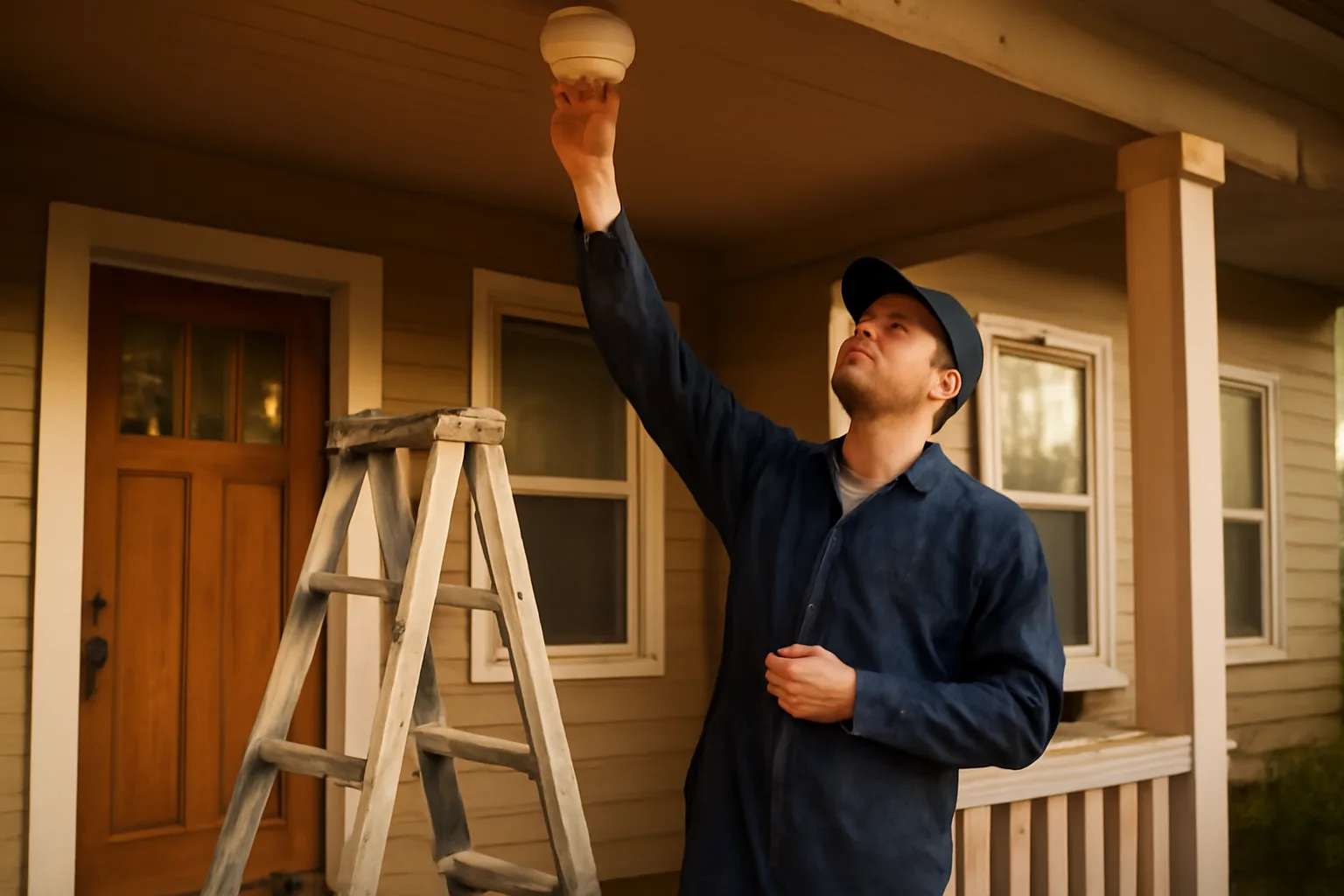
Becoming a landlord is mostly a business and compliance process, not a licensing one. Here's the realistic sequence most new landlords go through: 1. Confirm you can legally rent the property. Check your mortgage for owner-occupancy clauses, check your HOA bylaws if there are any, and check zoning if you're converting a single-family home to a rental or adding units. 2. Check city and county rental registration or licensing rules. This is the step people skip and regret. Search "[your city] rental registration" or "[your city] rental license" directly on the city's own.gov or.us website, since third-party sites often have outdated fees. 3. Get the property inspection-ready if your city requires one. Working smoke and carbon monoxide detectors, functioning heat, no obvious code violations, are the common failure points inspectors report. 4. Set your rent and screening criteria, consistent with fair housing law. The federal Fair Housing Act bars discrimination based on race, color, national origin, religion, sex, familial status, and disability [4]. 5. Get landlord insurance (a dwelling fire or landlord policy, not a standard homeowners policy) and decide whether you'll require tenant renters insurance. 6. Draft or buy a compliant lease for your state. Security deposit limits, notice periods, and required disclosures (lead paint for pre-1978 housing, for example) vary by state. 7. Register or license the property with your city if required, and keep proof of registration on file since some cities require you to show it before you can even file an eviction. Most of this is administrative, not exam-based. There's no test to pass. The friction is almost entirely paperwork and deadlines, which is exactly the kind of thing landlords miss when they own one or two units and don't have a management company tracking it for them.
Who is responsible for a rental property walk-through inspection in California?
In California, the landlord is responsible for arranging and completing an initial move-in walk-through inspection if the tenant requests one, and for conducting a pre-move-out inspection if the tenant requests that too, under California Civil Code Section 1950.5 [3]. The tenant has the right to request the pre-move-out inspection; the landlord has the duty to schedule it, give at least 48 hours' written notice of the date and time, and provide an itemized list of deficiencies the tenant could fix to avoid deductions from the security deposit. Separately from that Civil Code inspection, some California cities (Los Angeles, Oakland, and others under local rent stabilization or habitability programs) run their own municipal rental inspection programs, and in those, city inspectors, not the landlord and tenant, do the walk-through, checking for code violations tied to the local ordinance. Los Angeles's Systematic Code Enforcement Program (SCEP), for instance, requires periodic inspections of most rental units in the city and charges an annual per-unit fee that funds the inspections [5]. So the answer depends on which "inspection" you mean: the security-deposit-related walk-through is a landlord-tenant matter under state law, while a municipal code inspection is run by the city itself, usually through its housing or building department.
What rights do tenants have without a lease?
Tenants without a written lease, often called month-to-month or at-will tenants, still have real legal rights under state law, including the right to proper notice before eviction, the right to a habitable unit, and protection from illegal lockouts or utility shutoffs. An oral or implied agreement to pay rent regularly creates a tenancy, and most state landlord-tenant statutes treat these tenancies as month-to-month by default. The landlord generally can't just tell a tenant to leave tomorrow. Most states require written notice before ending a month-to-month tenancy, commonly 30 days, though some states and cities require more (see the notice section below). The tenant also keeps habitability protections: the landlord still has to maintain heat, water, electrical, and structural safety regardless of whether anything is in writing. What a no-lease tenant doesn't get is certainty about lease terms. Without a written lease, rent amount, due date, and rules can be harder to prove in a dispute, which is exactly why housing counselors and legal aid groups recommend getting terms in writing even for informal or family rental arrangements.
How much notice does a landlord have to give?
| End month-to-month tenancy | 30 to 60 days | CA: 30 days (under 1 yr), 60 days (1+ yr) [5] |
|---|---|---|
| Entry for repairs/showing | 24 to 48 hours | CA: 24 hours [6] |
| Rent increase (no rent control) | 30 to 90 days, varies by state | Confirm with your state statute |
| Pre-move-out inspection notice | 48 hours | CA Civil Code 1950.5 [3] |
Notice requirements depend on what's happening: ending a tenancy, raising rent, or entering the unit, and they vary sharply by state and sometimes by city. There's no single national number, but here's the general shape. For ending a month-to-month tenancy, most states require 30 days' written notice from the landlord, though some states scale this with how long the tenant has lived there. California, for instance, requires 60 days' notice if the tenant has occupied the unit for a year or more, and 30 days if less than a year, under Civil Code Section 1946.1 [5]. For entering an occupied unit, most states set a reasonable-notice standard, commonly 24 hours, for non-emergency entry to make repairs or show the unit. California specifically sets this at 24 hours' written notice under normal circumstances [6]. For rent increases, notice requirements are separate from eviction notice, and rent-controlled cities often have their own caps and notice periods layered on top of state law. If your unit is in a city with rent stabilization, always check the local rent board rules before sending a rent increase notice, since state law is usually the floor, not the ceiling. | Notice type | Common range | Example |
What can a landlord look at during an inspection?
During a lawful entry or move-out inspection, a landlord (or their agent, or a city inspector) can generally check for habitability and lease-compliance issues: working smoke and carbon monoxide detectors, signs of unauthorized pets, unreported damage, unauthorized subletting or occupants, health and safety hazards, and, near move-out, general cleanliness and condition compared to move-in photos or the initial checklist. What a landlord generally can't do is search personal belongings, closets, or drawers beyond what's needed to check the condition of the unit itself, and can't use inspection access as a pretext for harassment or retaliation. California's Civil Code 1954 requires landlords to enter only for specific reasons (repairs, showing to prospective tenants or buyers, emergency, or by court order) and only during normal business hours except in emergencies [7]. City code inspections are narrower in a different way. A municipal inspector under a rental licensing program is typically checking for code compliance items: working egress windows, functioning heat, no exposed wiring, no mold or moisture intrusion, proper handrails on stairs, and working smoke detectors. They aren't there to evaluate cleanliness or tenant behavior. Programs like Los Angeles's SCEP publish inspection checklists so both landlords and tenants know what's being checked and can prepare in advance [5]. If you're getting ready for a city inspection specifically, most notices list the exact code sections the inspector will check, and that list is worth reading line by line rather than guessing.
Why do landlords require renters insurance?
Landlords require renters insurance mainly to cover the tenant's personal belongings and liability, since a standard landlord insurance policy does not cover a tenant's furniture, electronics, or clothing, and typically doesn't cover a tenant's liability if they cause a fire or injury on the premises. If a pipe bursts or a fire starts, the landlord's policy generally pays to repair the building; it does not reimburse the tenant for their ruined couch or laptop. Requiring renters insurance also shifts liability exposure. If a tenant's negligence causes damage (an unattended candle, a bathtub overflow that damages the unit below), a renters insurance policy's liability coverage can pay for that damage instead of the landlord's policy absorbing the claim or suing the tenant directly. The Insurance Information Institute notes renters insurance typically covers personal property, liability, and additional living expenses if the unit becomes uninhabitable [8], and average renters insurance premiums have historically run in the range of roughly $15 to $30 per month depending on coverage limits and location, though this varies by state and insurer. There's no federal or state law requiring landlords to mandate renters insurance in most places, but plenty of leases include it as a condition, and some cities and states (parts of Oklahoma and Virginia public housing programs, for instance) have specific renters insurance requirements written into certain housing statutes. Check your own state's landlord-tenant law and your lease template before assuming it's enforceable as written.
What can't a landlord do in Ohio?
Under Ohio Revised Code Chapter 5321, a landlord cannot shut off utilities, change the locks, or remove a tenant's belongings to force them out (a "self-help eviction"); cannot retaliate against a tenant for reporting code violations or joining a tenant union; and cannot enter the rental unit without reasonable notice except in an emergency . Ohio law specifically requires landlords to give "reasonable notice" of intent to enter, which Ohio courts and practitioners generally treat as 24 hours in most non-emergency situations, though the statute itself doesn't set an exact hour count the way California's does. Ohio Revised Code 5321.04 lays out the landlord's core duties: comply with building and housing codes materially affecting health and safety, keep common areas safe, and maintain electrical, plumbing, and heating systems in working order . Ohio also bars landlords from retaliatory conduct under 5321.02: raising rent, decreasing services, or threatening eviction because a tenant complained to a government agency about a code violation, or because the tenant joined a tenant organization . If an Ohio landlord tries any of the classic "self-help" moves, shutting off water, changing locks, dumping belongings on the curb, that's not a gray area; it's a statutory violation a tenant can sue over, including for actual damages.
Does your city require a rental license, registration, or inspection?
This is the part that actually determines whether you need something like a license. Hundreds of US cities now run rental registration, licensing, or inspection programs, and they aren't standardized: fee amounts, renewal cycles, and inspection triggers differ from one city to the next, even within the same state. Some patterns worth knowing: Some cities require registration only (a database entry and a fee, no physical inspection) unless a complaint or turnover triggers one. Others require a full pre-occupancy or periodic inspection cycle, often every 2 to 4 years, sometimes annually for buildings with prior violations. Fees commonly run somewhere between $20 and $300 per unit per year in cities that charge them, though larger cities with inspection-heavy programs can charge more, and some scale fees by number of units or building age. Because these numbers change yearly and vary block to block in some states, don't rely on a blog post (including this one) for your exact fee: confirm with your city rental licensing office directly. Penalties for skipping registration or licensing range from modest late fees to real legal exposure. New Jersey's registration law, for example, ties registration compliance to a landlord's ability to collect rent through eviction court for nonpayment, meaning an unregistered landlord can find themselves unable to enforce rent collection through the courts until they fix the paperwork [1]. If you own in a city you know has one of these programs, or you just got a notice, the fastest path is usually: find your city's housing or building department page directly, search their fee schedule, and calendar your renewal or inspection date immediately so you're not caught by a fine later. Building a paper trail (photos, checklists, registration confirmations) matters more than most landlords expect until they're standing in front of an inspector without one. That's the exact gap our $79 City Rental License & Inspection Prep Packet is built to close: a structured way to track deadlines, fees, and inspection checklist items so a notice in the mail doesn't turn into a missed deadline and a fine.
What happens if you skip your city's rental license or registration?
Skipping a required rental license or registration typically leads to escalating fines, and in some cities, real legal consequences like being blocked from filing an eviction for nonpayment of rent until you register. The exact penalty structure is entirely local, so the honest range is wide: some cities start with a warning notice and a modest fine (often $50 to $500 for a first violation), while others escalate quickly with daily fines for continued noncompliance. Beyond fines, unregistered or unlicensed rental status can also affect insurance claims (some policies require proof of legal operation), affect your ability to collect rent in states like New Jersey where registration ties directly to eviction rights [1], and create problems at sale time, since title companies and buyers sometimes ask for proof of rental compliance history. The practical move if you got a violation notice: don't ignore it, and don't guess at the fix. Call the office listed on the notice (usually a city housing, code enforcement, or building department), ask exactly what's needed to cure the violation, and get the cure deadline in writing. Cities generally have far more patience with a landlord actively fixing the problem than one who goes silent.
Where to check your city's specific rental license rules
There is no single national database that lists every city's rental licensing rules, fees, and deadlines in one place, mostly because thousands of cities and counties each run their own program independently. The most reliable path is going straight to the source. Start with your city's own website, searching directly for "rental registration," "rental license," or "rental housing inspection program" alongside your city's name, and look specifically for a.gov or.us domain rather than a third-party aggregator, since fee schedules change yearly and old third-party posts are a common source of wrong numbers. Your county assessor's office can also confirm whether your property is zoned or classified in a way that triggers rental registration requirements. If you manage property in more than one city, keep a simple running log: property address, city program name, renewal date, fee amount, and inspection cycle. It sounds basic, but missed renewal dates are one of the most common (and most avoidable) ways small landlords end up with a fine that could've been a $0 problem.
Frequently asked questions
How to become a landlord with no experience?
Start by confirming you can legally rent the property (mortgage terms, HOA rules, zoning), then check your city's rental registration or licensing rules directly on its .gov site. Get landlord insurance, use a state-compliant lease, screen tenants consistently under fair housing law, and register with your city before you list the unit if your city requires it.
Who is responsible for a rental property walk-through inspection in California?
The landlord is responsible for scheduling and conducting the move-in and pre-move-out walk-through inspections under California Civil Code 1950.5, giving at least 48 hours' notice for the pre-move-out inspection. Separate city code inspections (in Los Angeles, Oakland, and similar programs) are run by city inspectors, not the landlord.
What is landlording?
Landlording is the business of owning residential or commercial property and renting it out for regular payment, covering tenant screening, rent collection, maintenance, and legal compliance with state and local landlord-tenant law. It's a legal relationship with real obligations, more than passive income, and rental income is reported on IRS Schedule E.
What is a landlord?
A landlord is the person or entity that owns or controls a property and leases it to a tenant for rent, taking on legal duties like maintaining habitability, giving proper notice before entry, and following state eviction procedures. Anyone who owns rental property and collects rent from a tenant is legally a landlord, licensed or not.
What rights do tenants have without a lease?
Tenants without a written lease still have month-to-month tenancy rights under state law: proper written notice before eviction (commonly 30 days), habitability protections like working heat and plumbing, and protection from illegal lockouts or utility shutoffs. What they lack is written proof of specific terms like rent amount or rules, which can complicate disputes.
How to be a landlord day to day?
Day-to-day landlording means collecting rent, responding to maintenance requests promptly, keeping the unit compliant with local health and safety codes, giving proper notice before entering, and keeping records: lease copies, inspection reports, repair receipts, and registration or license renewal dates for your city.
Why do landlords require renters insurance?
Landlords require renters insurance because their own landlord policy covers the building, not the tenant's belongings or personal liability. If a tenant causes a fire or a flood, renters insurance liability coverage can pay for the resulting damage instead of the landlord's policy or a lawsuit covering it.
How much notice does a landlord have to give before entering?
Most states require reasonable notice for non-emergency entry, commonly 24 hours. California sets this specifically at 24 hours' written notice under Civil Code 1954. Check your own state statute since the exact number varies, and emergencies (fire, flooding, gas leak) don't require advance notice at all.
How much notice does a landlord have to give to end a tenancy?
Most states require 30 days' written notice to end a month-to-month tenancy, though some scale it with tenancy length. California requires 60 days if the tenant has lived there a year or more, and 30 days if less, under Civil Code 1946.1. Fixed-term leases generally end automatically at term without separate notice, unless the lease says otherwise.
What can a landlord look at during an inspection?
A landlord or inspector can generally check for habitability and lease compliance: smoke and carbon monoxide detectors, unauthorized pets or occupants, damage, and health or safety hazards. City code inspectors check specific code items like heat, wiring, and egress windows. Neither can search personal belongings beyond what's needed to assess the unit's condition.
What can't a landlord do in Ohio?
Under Ohio Revised Code 5321, a landlord can't do a self-help eviction (shutting off utilities, changing locks, removing belongings), can't retaliate against a tenant for reporting code violations, and can't enter without reasonable notice except in an emergency. Landlords also must keep the unit compliant with health and safety codes under ORC 5321.04.
Do you need a license to rent out a room in your own house?
There's no federal or state license requirement just for renting out a room, but some cities require registration for any rented unit, including a room in an owner-occupied home, especially if it's advertised short-term. Check your city's rental registration rules and any HOA restrictions before listing a room.
Is landlord licensing the same as a business license?
No. A rental license from a city housing department covers code compliance and habitability for that specific property. A general business license, required by some cities for any income-generating activity, is separate and may be required in addition to, not instead of, a rental license.
What happens if I never register my rental property with my city?
Consequences vary by city, but commonly include escalating fines, and in states like New Jersey, an inability to evict a tenant for nonpayment of rent until you register. Some cities also flag unregistered properties during sale or refinance. Check with your city's housing or code enforcement office directly rather than assuming a small fine is the only risk.
Sources
- IRS, Publication 527 (Residential Rental Property): Rental income is reported on Schedule E and subject to passive activity rules
- California Civil Code Section 1950.5: Landlord duties for move-in/move-out inspections and 48-hour notice for pre-move-out inspection
- U.S. Department of Housing and Urban Development, Fair Housing Act overview: Federal Fair Housing Act protected classes for rental screening
- California Civil Code Section 1946.1: 60-day notice required to end tenancy of one year or more, 30 days for under one year
- California Civil Code Section 1954: Landlord must give 24 hours notice and enter only for specified reasons during normal business hours
- Insurance Information Institute, Renters Insurance: Renters insurance covers personal property, liability, and additional living expenses
- Ohio Revised Code Section 5321.04: Ohio landlord duties: comply with codes, maintain systems, and reasonable notice for entry
- Ohio Revised Code Section 5321.02: Ohio bars retaliatory conduct against tenants who report code violations or join tenant organizations