Last updated 2026-07-25
TL;DR
Becoming a landlord means registering with your city (if required), passing a rental inspection, screening tenants legally, and giving proper notice for entry or rent changes. Rules vary by city and state, so check your local rental licensing office before you list a unit. Most mandatory-licensing cities charge a per-unit fee and require inspection before or shortly after your first tenant moves in.
how do you become a landlord?
You become a landlord the moment you rent out a property you own, whether that's a spare bedroom, a single-family house, or a duplex. There's no license required by most states just to own rental property, but a growing number of cities require you to register or license the rental unit itself before you can legally lease it. The practical steps look like this: buy or convert a property, check whether your city has a rental registration or licensing ordinance, register the unit and pay any fee, schedule and pass a habitability inspection if one is required, get a lease in writing, screen tenants under fair housing law, and collect rent and a security deposit under your state's limits. Some cities (think Los Angeles's Rent Stabilization Ordinance registration, or Minneapolis's rental license program) fold licensing into the rent-control system too, so you may owe an annual fee even if your city doesn't inspect every year [1]. If you're managing 1 to 10 units yourself, the biggest early mistake is treating it like a side hustle with no paperwork. Cities that catch unregistered rentals through utility records, code complaints, or tenant reports can fine you well after the fact, sometimes retroactive to when you started renting. Confirm with your city rental licensing office before you sign your first lease, not after.
what is landlording, exactly?
Landlording is the ongoing work of owning and operating a rental property: setting rent, screening and selecting tenants, maintaining the unit, handling repairs, collecting rent, and following your city and state's rules on notice, entry, and eviction. It's distinct from just owning real estate, because a landlord has an active legal relationship with a tenant defined by a lease and by state landlord-tenant statutes. Most states have a landlord-tenant act that spells out the baseline duties: habitability standards, security deposit handling, notice periods, and eviction procedure. California's is the Civil Code sections on landlord-tenant relations (Cal. Civ. Code §1940 et seq.), Ohio's is the Ohio Landlords and Tenants Act (Ohio Rev. Code Chapter 5321) [2]. Landlording well means knowing which of these apply to you and building simple habits (a maintenance log, a documented move-in inspection, a rent ledger) so you have proof if a dispute ever lands in court.
what is a landlord, legally speaking?
A landlord is the person or entity that owns rental property and leases it to a tenant in exchange for rent, taking on legal duties to keep the unit habitable and to follow state and local notice and eviction rules. If you own the property and someone else pays you to live in it, you're the landlord under the law, regardless of whether you call yourself one. This matters for licensing because cities generally define "landlord" or "owner" broadly enough to include people renting out a single room, an accessory dwelling unit, or a basement apartment. Ohio Rev. Code §5321.01 defines "landlord" as the owner, lessor, or sublessor of residential premises, which covers small individual owners just as much as large management companies [3]. Don't assume a small operation exempts you from city licensing rules; check the ordinance's unit-count thresholds directly.
who is responsible for a rental property walk-through inspection in california?
In California, the landlord is responsible for arranging and often paying for required inspections, whether that's a city rental inspection program, a Rent Stabilization Ordinance unit registration inspection, or the move-in/move-out walk-through with the tenant. Under Cal. Civ. Code §1950.5(f), the landlord must give the tenant the opportunity to be present at an initial move-out inspection if the tenant requests one, and must provide an itemized list of proposed deductions afterward [4]. For city-mandated proactive rental inspection programs (common in cities like Los Angeles, Oakland, and Sacramento), the city's housing or code enforcement department schedules and conducts the inspection, but the landlord is the one who must register the property, pay the inspection fee, and be present or provide access. Tenants generally can't be forced to be there, but landlords typically can't refuse city access to a registered rental unit either. Confirm with your specific city's rental housing or code enforcement department for the exact process and fee, since Los Angeles, Oakland, and San Diego each run separate programs with different cycles.
what can a landlord look at during an inspection?
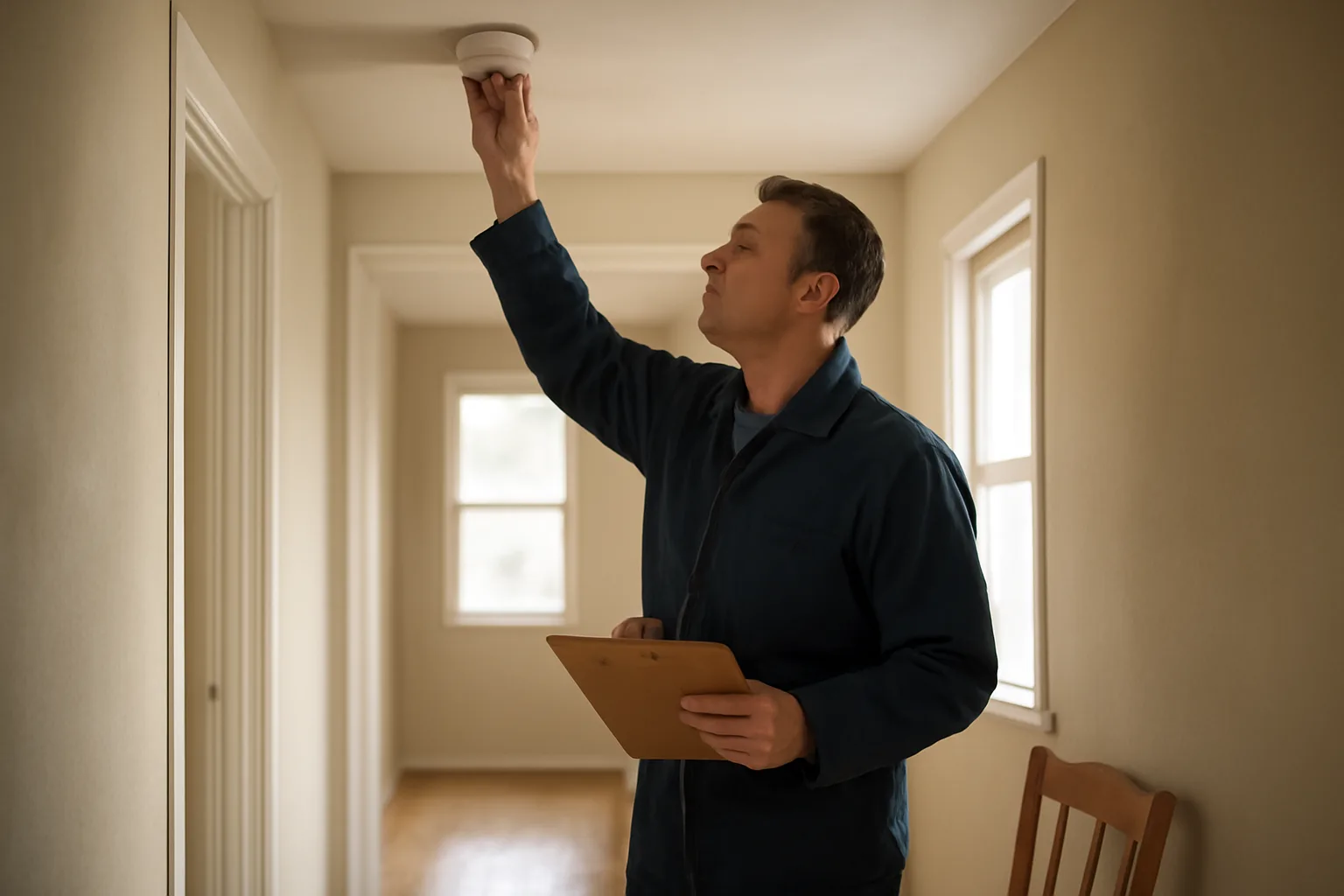
During a habitability or code-compliance inspection, an inspector (whether that's a city code officer or the landlord doing a routine walk-through) generally checks smoke and carbon monoxide detectors, electrical outlets and panels, plumbing and water heater condition, heating systems, window and door locks, signs of mold or pest infestation, and structural issues like broken stairs or railings. This is the core of most state and local habitability codes, echoed in HUD's Housing Quality Standards used for Section 8 inspections, which cover similar categories: sanitary facilities, food preparation areas, heating, and structural safety [5]. What a landlord generally can't do during a routine inspection is search personal belongings, closets, or areas unrelated to habitability and safety, and can't use the inspection as a pretext to harass a tenant or retaliate for a complaint. Most states require advance written notice for entry, and the inspection has to be for a legitimate purpose (repairs, safety check, showing the unit to a prospective buyer or tenant), more than to check up on the tenant's lifestyle. If your city runs a mandatory rental inspection program, the inspector's checklist is usually public. Pulling it before your appointment and walking your own unit against it first catches the cheap fixes (a missing smoke detector battery, a loose handrail) before they turn into a failed inspection and a reinspection fee.
how much notice does a landlord have to give before entering or inspecting?
Notice requirements vary by state, but 24 hours is the most common standard for routine entry, including for repairs and inspections. California requires "reasonable notice," which state law presumes to be 24 hours unless circumstances suggest otherwise, under Cal. Civ. Code §1954 [6]. Some states require 48 hours, and Florida's residential landlord-tenant statute specifies at least 12 hours' notice for entry to make repairs [7]. Emergency entry (fire, flooding, a gas leak) doesn't require advance notice in any state. Routine city rental inspections still typically require landlords to give tenants notice before the appointment, since the tenant's home is being entered even though the city, not the tenant, requested access. If you're not sure what your state requires, check your state's residential landlord-tenant statute directly rather than assuming the 24-hour rule applies everywhere, because a few states set it differently or leave it to "reasonable" without a fixed number.
what rights do tenants have without a lease?
A tenant without a written lease, often called a month-to-month or at-will tenant, still has the same basic legal protections as a tenant with a lease: the right to a habitable unit, protection from illegal lockouts or utility shutoffs, and the right to proper notice before eviction or a rent increase. What they lose is the fixed-term certainty; a landlord can generally end a month-to-month tenancy with proper notice (commonly 30 days, sometimes more depending on tenancy length and local rent control rules) without needing "cause" in states that don't require just-cause eviction. An oral lease is still a legally binding lease in most states as long as rent is being paid and accepted regularly; it's just harder to prove specific terms in a dispute. HUD's tenant rights overview and most state attorney general tenant guides confirm that habitability and non-discrimination protections apply regardless of whether the lease is written [8]. If you're renting without paperwork on either side, both landlord and tenant are exposed; a written lease, even a simple one, is one of the cheapest risk-reduction moves either party can make. For a broader look at what protections apply state to state, see tenants rights and tenant rights.
why do landlords require renters insurance?
Landlords require renters insurance mainly to shift liability for the tenant's personal property and personal liability claims away from the landlord's own policy. A landlord's property insurance covers the building and the landlord's own liability; it generally does not cover a tenant's furniture, electronics, or clothing if there's a fire, burst pipe, or theft, and it doesn't cover a tenant being sued if their dog bites a visitor in the unit. According to the Insurance Information Institute, the average renters insurance policy costs around $15 to $20 a month, or roughly $148 to $174 a year, based on III's national data on renters insurance costs . That's a small ask relative to the protection it gives both sides: it reduces the odds a tenant tries to hold the landlord liable for their own property loss, and it can cover accidental damage the tenant causes that exceeds the security deposit. Many landlords write a renters insurance requirement directly into the lease and ask for proof of a policy naming the landlord as an "interested party" for cancellation notices.
what a landlord cannot do in ohio
Ohio landlords cannot shut off utilities, change the locks, or remove a tenant's belongings to force them out; this is illegal "self-help eviction" and Ohio law requires landlords to go through the court eviction process instead. Under Ohio Rev. Code §5321.15, a landlord may not use self-help remedies like changing locks or removing doors, and using force to recover possession outside of a court order is prohibited . Ohio landlords also cannot retaliate against a tenant for complaining to a health or safety agency, cannot discriminate based on protected classes under state and federal fair housing law, and cannot enter without reasonable notice except in an emergency. Ohio Rev. Code §5321.04 sets out the landlord's duties, including maintaining the unit in a fit and habitable condition and keeping common areas safe . If you're operating in Ohio, read Chapter 5321 directly rather than relying on general landlord advice, since Ohio's notice and entry rules differ in some details from neighboring states.
how do rental licensing and inspection rules tie into all this?
If your city runs a mandatory rental licensing program, becoming a landlord there means an extra layer on top of the state-level landlord-tenant rules above: you register the unit, pay a per-unit or per-property fee (commonly somewhere in the $30 to $300 range annually depending on the city, though this varies widely, so confirm with your city rental licensing office), and schedule an inspection on the city's cycle, which might be annual, biennial, or complaint-based. Cities differ enormously on what triggers a re-inspection, what the violation fine schedule looks like, and whether the license has to be renewed even if nothing changed. Missing a licensing deadline is one of the most common ways small landlords end up with a fine before they've done anything wrong with the unit itself; it's a paperwork violation, not a habitability one, but the fine is real either way. Getting organized before your city's inspection date, not after the notice arrives, is the difference between a routine pass and a scramble. If you want a structured way to walk through what your city's inspection checklist likely covers and get your registration paperwork in order, the $79 one-time City Rental License & Inspection Prep Packet is built for exactly that gap between "I got a notice" and "I know what to do about it."
what happens if you skip registration or fail an inspection?
Consequences for skipping mandatory rental registration or licensing range from a warning letter on first contact up to daily accruing fines, a stop-rent order, or in some cities a lien on the property, and the exact schedule is set city by city, not by state law. Failing an inspection typically triggers a reinspection window (often 30 to 60 days) to fix cited violations before a fine or license denial kicks in; the specific timeline and fee always comes from your city's ordinance, so confirm with your city rental licensing office for the number that applies to you. The pattern across cities that do publish enforcement data is consistent even where the dollar figures differ: unregistered rentals get caught more often through tenant complaints, utility account mismatches, or routine code sweeps than through proactive city audits, and the fine for being unregistered is frequently higher than the registration fee itself would have been. That's the core financial argument for registering before you're asked to, not after.
Frequently asked questions
How do I become a landlord if I've never rented out a property before?
Check your city's rental registration or licensing rules first, then get your property inspection-ready, draft a compliant lease, and screen tenants under fair housing law. If your city requires licensing, register and pay the fee before you sign a lease, not after. Confirm your city's specific process with its rental licensing or code enforcement office.
Who is responsible for a rental property walk-through inspection in California?
The landlord is responsible for scheduling and typically paying for required inspections, whether it's a city-mandated program or the move-in/move-out walk-through. Under Cal. Civ. Code §1950.5(f), landlords must offer tenants an initial move-out inspection if requested and give an itemized deduction list afterward.
What is landlording?
Landlording is the ongoing work of owning and operating rental property: setting rent, screening tenants, maintaining the unit, and following state and local rules on notice, entry, and eviction. It's an active legal relationship defined by lease terms and by your state's landlord-tenant statute, more than property ownership.
What legally makes someone a landlord?
You're a landlord if you own residential property and lease it to someone else for rent, regardless of whether you use that title. Ohio Rev. Code §5321.01, for example, defines landlord broadly enough to cover the owner, lessor, or sublessor of any residential unit, including small individual owners.
What rights do tenants have without a signed lease?
Tenants without a written lease still get habitability protection, protection from illegal lockouts, and required notice before eviction or rent increases in most states. What changes is that the tenancy is usually month-to-month, meaning either side can end it with proper notice rather than being locked into a fixed term.
How to be a landlord without breaking state law?
Read your state's landlord-tenant statute (like California Civil Code §1940 et seq. or Ohio Revised Code Chapter 5321), follow its notice, deposit, and habitability rules exactly, and check whether your city layers on registration or licensing requirements. Document everything: move-in condition, repairs, and notices given.
Why do landlords require renters insurance?
Renters insurance covers the tenant's own belongings and personal liability, which the landlord's property policy doesn't cover. It costs roughly $148 to $174 a year on average per the Insurance Information Institute, and reduces disputes over who pays when a tenant's property is damaged or a guest is injured.
How much notice does a landlord have to give before entering a unit?
Most states require 24 hours notice for routine, non-emergency entry; California presumes 24 hours is reasonable under Civil Code §1954. Some states specify 48 hours or a different minimum. Emergencies (fire, flooding, gas leak) don't require advance notice anywhere.
What can a landlord look at during a rental inspection?
Inspectors typically check smoke and carbon monoxide detectors, electrical and plumbing systems, heating, structural safety, and signs of pest or mold problems, similar to categories in HUD's Housing Quality Standards. A landlord generally can't search personal belongings or use an inspection as a pretext to harass a tenant.
What is a landlord not allowed to do in Ohio?
Ohio landlords cannot change locks, shut off utilities, or remove belongings to force a tenant out; only a court eviction order allows regaining possession. This self-help eviction ban comes from Ohio Rev. Code §5321.15. Retaliation and discrimination against tenants are also prohibited.
Does every city require a rental license?
No. Rental licensing and registration requirements are set city by city (and sometimes county by county), not universally. Many cities have no program at all, while others, like Minneapolis or Los Angeles, run mandatory licensing or registration systems with fees and inspection cycles. Always confirm with your specific city's housing or code enforcement office.
What happens if I rent out a unit without registering it with the city?
Penalties vary by city but often include fines that accrue daily, a stop-rent order, or in some cities a lien against the property. Enforcement is frequently triggered by tenant complaints or utility record mismatches rather than proactive audits, so unregistered rentals often get caught eventually.
Can a landlord do a walk-through inspection whenever they want?
No. Landlords generally must give advance notice (commonly 24 to 48 hours depending on the state) before entering an occupied unit for a routine inspection, and the entry has to be for a legitimate purpose. Emergency situations are the main exception to the notice requirement.
Sources
- Ohio Revised Code Chapter 5321: Ohio's Landlords and Tenants Act sets baseline landlord-tenant duties
- Ohio Revised Code §5321.01: Ohio law defines landlord as the owner, lessor, or sublessor of residential premises
- California Civil Code §1950.5: Landlords must offer tenants an initial move-out inspection and itemized deduction list
- California Civil Code §1954: California presumes 24 hours notice is reasonable for landlord entry
- Florida Statutes §83.53: Florida sets specific notice minimums for landlord entry
- HUD, Tenant Rights Overview: Habitability and non-discrimination protections apply regardless of whether a lease is written
- Ohio Revised Code §5321.15: Ohio law bans landlord self-help eviction including lockouts and utility shutoffs
- Ohio Revised Code §5321.04: Ohio law sets landlord duties to maintain fit and habitable premises