Last updated 2026-07-26
TL;DR
Denver requires a rental license for most residential rentals, and licensing includes a self-certification checklist covering smoke/CO alarms, egress windows, heat source, electrical, plumbing, and structural condition. Some units also get a physical inspection by Denver's Department of Excise and Licenses. Fix the basics first: working alarms, no exposed wiring, functioning heat, and clear exits.
What does Denver's rental inspection actually check?
Denver's rental licensing program runs through the Department of Excise and Licenses, and it requires most landlords renting out residential property to get a license before leasing to tenants [1]. As part of that process, the city uses a minimum housing standards checklist that covers structural, mechanical, and life-safety items in the unit. The checklist generally hits these categories: smoke alarms and carbon monoxide detectors, a working heat source capable of maintaining a minimum indoor temperature, safe electrical wiring with no exposed conductors, functioning plumbing with hot and cold water, secure locks on exterior doors, unobstructed egress (a legal way out in an emergency), and no significant structural hazards like rotted flooring or collapsing ceilings. Denver's licensing structure includes both a self-certification path, where the owner attests the property meets the minimum housing standards, and a city-conducted inspection path required for certain license types or triggered by complaints. Which path applies to you depends on your property type and whether Excise and Licenses flags the unit for a physical inspection. Confirm with your city rental licensing office which track your property falls under, because the rules have shifted since the program launched in 2021 [1]. Don't assume 'self-certify' means 'nobody checks.' Denver can still audit properties, and tenants can file complaints that trigger an inspection regardless of which licensing track you used.
What is Denver's minimum housing standard, in plain terms?
Denver's minimum housing standards are the baseline habitability rules every licensed rental has to meet, covering things like heat, water, structural safety, and pest control. They come from Denver's Building and Fire Code and the city's residential rental licensing rules [1][2]. The short version: the unit needs working heat that can hit a minimum indoor temperature during cold months, hot and cold running water, a bathroom with a working toilet and sink, safe and unobstructed exits, no active rodent or insect infestation, and structurally sound floors, walls, ceilings, stairs, and railings. Denver's municipal code lays out specific habitability requirements under its housing code provisions, and violations can result in the city denying or revoking a rental license until the owner corrects the problem [2]. This isn't a suggestion list. If your unit fails a core item like heat or egress, Denver can refuse to issue or renew your license. One thing landlords miss: minimum housing standards aren't just about the unit itself. Common areas in multi-unit buildings (hallways, shared stairwells, laundry rooms) get evaluated too if you're licensing more than one door.
What can a landlord look at during an inspection?
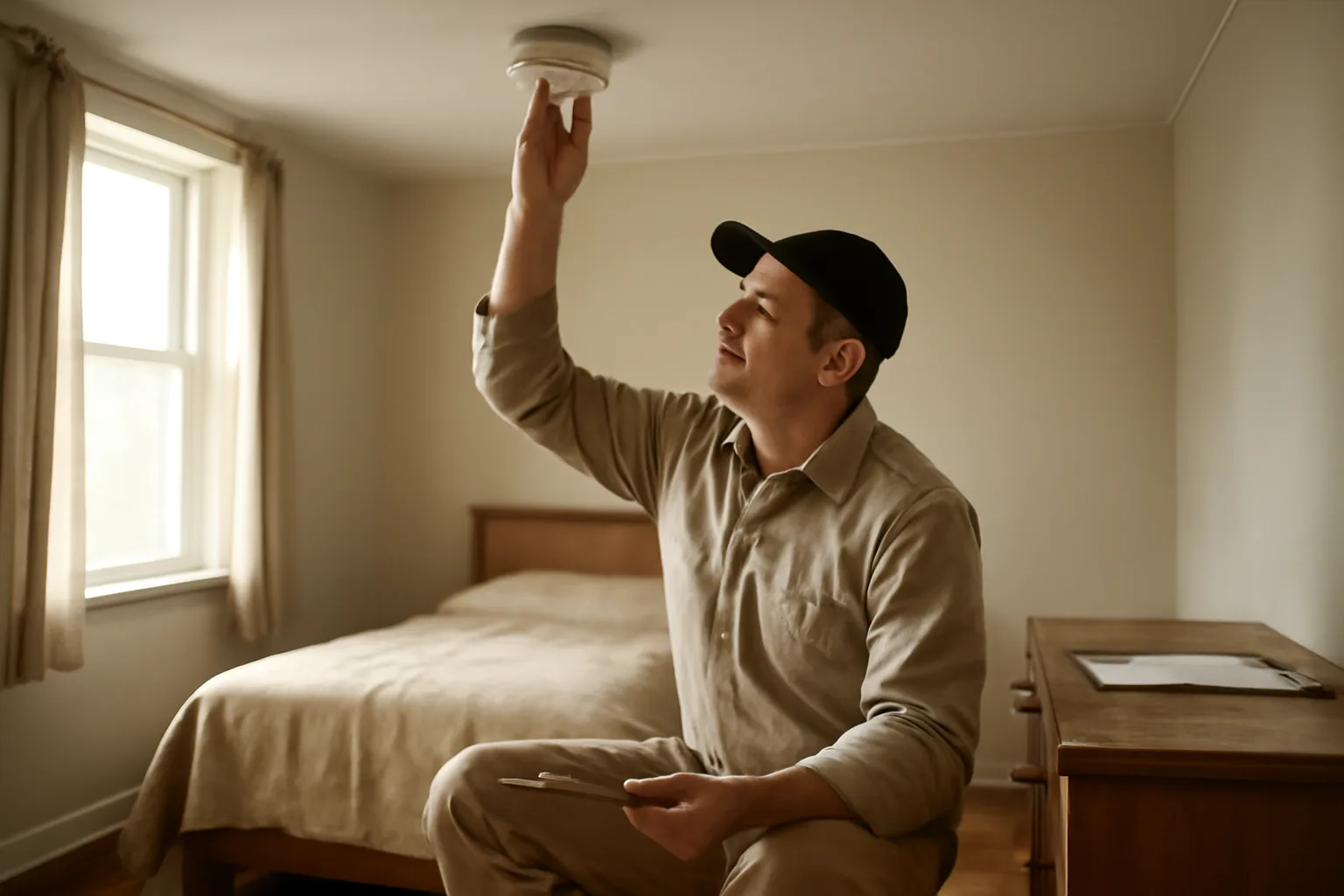
During a rental inspection, whether it's a city inspector or you doing a walkthrough before a tenant moves in or out, the inspection covers the condition and safety of the property, not the tenant's personal belongings or unrelated areas of their life. Inspectors and landlords can check smoke and CO alarm function, HVAC operation, plumbing fixtures for leaks, electrical outlets and panels, window and door locks, signs of pest activity, mold or moisture damage, and general wear versus damage. What a landlord (or inspector) generally should not do is search through personal belongings, closets full of personal items, or private storage unrelated to a maintenance issue, without a specific reason tied to habitability or safety. Routine inspections are about the condition of the structure and systems, not an excuse to go through drawers. For Denver specifically, a self-certification inspection means you (the owner) are checking your own unit against the city's checklist and attesting it's accurate. A city inspection means an Excise and Licenses inspector walks through and checks the same categories, but with authority to issue a notice of violation if something fails [1]. Either way, walk the unit yourself first. Check every smoke alarm with a test button, run every faucet, flush every toilet, open every window that's supposed to open, and look under sinks for water stains. Most failed inspections come from small, fixable things landlords didn't catch because they didn't physically test each item.
How much notice does a landlord have to give before an inspection?
Colorado law doesn't set one statewide notice number for routine landlord entry, but the general legal standard across most states, including how Colorado courts and lease norms treat it, is 24 hours' written or verbal notice before entering an occupied unit for non-emergency purposes [3]. Many Denver-area leases specify 24 or 48 hours in writing, so check your lease first since it can set a longer notice period than the informal norm. For city-conducted rental license inspections in Denver, Excise and Licenses typically schedules an appointment window with the property owner or manager in advance, since access to the unit is required and tenants have to be notified too. If you're the one arranging a city inspection, you're responsible for getting the tenant proper notice consistent with your lease and Colorado's entry rules, more than showing up with the inspector. Emergencies are the one exception nationwide: a burst pipe, a gas leak, or immediate danger to the property lets a landlord enter without advance notice. That exception doesn't apply to a scheduled licensing inspection, so build in lead time. Two weeks' notice to tenants isn't overkill when a city inspection is involved. Tenants get nervous about inspections, and giving them real lead time reduces access disputes on the actual day.
What happens if my Denver rental fails inspection?
If a Denver rental inspection turns up a violation, the city typically issues a notice listing the specific defect and a deadline to correct it before the license is approved, renewed, or before enforcement escalates. Timeframes and reinspection fees vary by violation type and severity, so confirm current deadlines and any reinspection fee with Denver's Department of Excise and Licenses directly, since these numbers get updated. Common failure points, based on the categories Denver's checklist covers, include missing or non-functioning smoke alarms, blocked or painted-shut egress windows, exposed electrical wiring (often from a swapped-out light fixture or missing outlet cover), inadequate heat source or a broken furnace, and active leaks under sinks or around water heaters. Operating a rental without a valid license, or continuing to operate after a license is denied or revoked, exposes a landlord to civil penalties under Denver's licensing enforcement provisions [1][2]. These aren't small nuisance fines in a lot of cities with mandatory rental licensing; enforcement can include daily penalties until the property comes into compliance. Confirm current fine amounts with Denver's Excise and Licenses office, since ordinance penalty schedules get revised. The fastest way to avoid this whole mess is pre-inspecting your own unit against the same checklist categories the city uses, before you ever schedule the official one. That's exactly the kind of prep work our $79 City Rental License & Inspection Prep Packet is built around: a walkthrough checklist mapped to what cities like Denver actually check, so you're not guessing.
What is landlording, and what is a landlord, really?
A landlord is the owner (or an authorized agent of the owner) of residential or commercial property who leases that property to a tenant in exchange for rent. Landlording is the ongoing work of managing that relationship and that property: collecting rent, maintaining habitability, handling repairs, following local licensing rules, and managing the legal relationship with tenants under state landlord-tenant law. It's not passive income in the way a lot of new landlords expect. Colorado's landlord-tenant statutes require landlords to maintain the premises in a habitable condition, covering things like functioning plumbing, heat, electrical systems, and structural safety, under the Colorado Warranty of Habitability statute [4]. On top of state law, cities like Denver layer on their own licensing and inspection requirements, which means landlording in a mandatory-licensing city is really two jobs: property manager and compliance manager. If you're a small landlord with one to ten units, which describes most people dealing with a Denver licensing notice, the compliance side often takes more of your time than the actual leasing side, at least the first year you're navigating it. Budget real hours for reading your city's ordinance and lining up an inspection, more than fixing the unit.
How do you become a landlord in the first place?
Becoming a landlord starts with owning or controlling residential property you intend to rent out, then meeting whatever state and local requirements apply before you can legally lease it. There's no license required to just own property, but there is one required to rent it out in mandatory-licensing cities like Denver. The practical steps look like this: confirm your property is zoned for rental use (some single-family zones restrict rentals or require conditional use permits), get a rental license from your city if one is required, screen and select a tenant under fair housing law, draft a lease that complies with your state's landlord-tenant statute, collect a security deposit within your state's legal limits, and set up a system for maintenance requests and rent collection. Beyond the paperwork, the practical skills that matter are responsiveness to repair requests, understanding your state's notice-to-enter rules, knowing your eviction process (which varies enormously by state and by county court), and keeping records of every inspection and repair. Landlord-tenant disputes often come down to who has records, so keep everything: photos, dated maintenance logs, and copies of every notice you send. If you're renting in a city with mandatory licensing, do the license application before you list the unit, not after you've got a signed lease. Trying to get licensed with a tenant already in place adds pressure and timeline risk you don't need.
Who is responsible for a rental property walk-through inspection in California?
In California, the landlord is generally responsible for initiating and documenting the move-in and move-out walk-through inspection, though the tenant has a legal right to participate. California Civil Code Section 1950.5 gives tenants the right to request an initial inspection before move-out, specifically so they can fix any deficiencies themselves and avoid deposit deductions [5]. Under that statute, the landlord must notify the tenant of their right to request this initial inspection, and if the tenant requests it, the landlord has to give at least 48 hours' written notice of the date and time before conducting it [5]. After that initial inspection, the landlord provides an itemized list of deficiencies with an opportunity for the tenant to remedy them before the final move-out inspection. This is specific to California and doesn't transfer directly to Denver's rules, but the core idea, that landlords own the documentation responsibility while tenants get a right to observe or participate, shows up in some form in a lot of states' security deposit statutes. If you own property in more than one state, don't assume the walk-through rules are identical. Check the actual civil code or statute for each state you operate in.
Why do landlords require renters insurance?
Landlords require renters insurance mainly to shift liability and personal property risk away from the landlord's own policy. A landlord's dwelling insurance covers the physical structure, not the tenant's belongings and not most tenant-caused liability, so renters insurance fills that gap. Specifically, renters insurance typically covers the tenant's personal property against fire, theft, and certain water damage, plus liability coverage if the tenant accidentally causes damage or someone gets injured in the unit. Without it, a tenant who causes a kitchen fire or a bathtub overflow that damages the unit below has no coverage of their own, and the dispute over who pays often lands on the landlord's insurer or the landlord directly. Requiring renters insurance is legal in most states as a lease condition, and a lot of landlords require proof of an active policy (often with the landlord named as an 'interested party' for notification purposes) as a condition of move-in and lease renewal. It's a smart, low-cost requirement. Renters insurance policies commonly run in the range of $15 to $30 a month depending on coverage limits and location, which is cheap insurance for the landlord's own peace of mind about liability exposure. This isn't a Denver-specific rule, it's just common landlord practice nationally, and it has nothing to do with your rental license inspection. But if you're updating your lease around a licensing renewal anyway, it's worth checking whether your renters insurance requirement is still in the lease and still being enforced at renewal.
What rights do tenants have without a lease?
A tenant without a written lease still has legal rights, because verbal or implied rental agreements are recognized under state landlord-tenant law in most states, including Colorado. Without a written lease, the tenancy is usually treated as month-to-month, and the tenant still gets the state's default protections: the right to habitable housing, the right to proper notice before eviction, and the right to a lawful security deposit return process. In Colorado, a residential tenancy without a written lease is generally treated as a periodic (month-to-month) tenancy, and termination requires statutory notice, commonly at least 21 days for a month-to-month tenancy under Colorado's revised landlord-tenant notice provisions [6]. Confirm current notice periods with Colorado's official statute text or your city's tenant rights office, since these periods have been amended in recent years and vary by tenancy length. What a landlord can't do just because there's no written lease: skip habitability obligations, evict without proper notice, or withhold a security deposit without an itemized reason. No lease doesn't mean no rules, it means the state's default statute becomes the lease. For deeper detail on tenant protections generally, see our guides on tenant rights and renters rights.
What can a landlord not do in Ohio?
Ohio landlords are bound by the Ohio Landlord Tenant Act, which spells out specific things a landlord cannot do regardless of what the lease says. Under Ohio Revised Code 5321.04, a landlord must maintain the premises in a fit and habitable condition, keep common areas safe, and maintain electrical, plumbing, sanitary, heating, and appliance systems in good working order [7]. Ohio law also prohibits landlords from shutting off utilities, changing locks, or removing a tenant's belongings as a way to force them out, this is generally referred to as a 'self-help eviction' and it's illegal in Ohio (and in most states). A landlord has to go through the formal eviction process in court, not lock a tenant out or cut off power. Ohio law under R.C. 5321.02 also restricts landlords from retaliating against a tenant who complains to a government agency about a code violation or exercises a legal right, such as requesting repairs . Retaliatory rent increases or eviction notices tied to a tenant's complaint can be challenged in Ohio courts. This is Ohio-specific and doesn't govern Denver rentals, but the same self-help eviction ban and anti-retaliation logic shows up in Colorado law too, just under different statute numbers. If you own in both states, don't assume the rules line up exactly, check each state's landlord-tenant act directly.
How do I prep a Denver rental for inspection before the deadline?
Start with the life-safety basics, since these are the items most likely to cause an outright fail: install and test smoke alarms in every bedroom and on every level, install carbon monoxide detectors near sleeping areas if you have any fuel-burning appliance or attached garage, and confirm every window designed as an emergency exit actually opens without a key or tool. Next, walk the mechanical systems. Turn the furnace on and confirm it heats, even if it's summer. Check every outlet with a simple plug-in tester for reverse polarity or open ground. Run every faucet for both hot and cold, flush every toilet, and check under every sink and around the water heater for active leaks or old water stains that suggest a slow leak. Then do a structural pass: look at flooring for soft spots, check handrails on any stairs for looseness, check exterior doors for solid locks, and look at ceilings for water stains that suggest a roof or plumbing problem above. Finally, get your paperwork in order. Denver's license application and self-certification process requires documentation, and if a city inspector shows up, having your maintenance records and prior inspection history on hand makes the whole visit faster [1]. If you'd rather not build this checklist from scratch, our $79 City Rental License & Inspection Prep Packet walks through exactly these categories, city by city, so you know what you're checking before the inspector does.
Frequently asked questions
Does Denver require a rental license for a single-family home I rent out?
Generally yes. Denver's rental licensing ordinance applies to most residential rental units, including single-family homes, condos, and multi-unit buildings, with limited exemptions. Confirm your specific property's status with Denver's Department of Excise and Licenses, since exemptions and thresholds can change [1].
How often does Denver require rental license renewal and reinspection?
Denver rental licenses are issued on a renewal cycle set by the Department of Excise and Licenses, and renewal generally requires updated self-certification or reinspection depending on your license type. Confirm the current renewal period and reinspection triggers with Denver's Excise and Licenses office directly, since cycle length has been adjusted since the program started [1].
What is landlording as a full-time job versus a side income?
Landlording ranges from a side activity managing one rental unit to a full-time property management operation with dozens of units. Regardless of scale, it legally requires maintaining habitability, following state landlord-tenant statutes, and in cities like Denver, holding a valid rental license before leasing the unit [1][4].
What can a landlord look at during a move-in or move-out inspection?
A landlord can document the condition of walls, floors, appliances, fixtures, and systems relevant to habitability and damage, typically with photos and a written checklist. Landlords generally should not search personal belongings or private storage unrelated to the property's condition during a routine walk-through.
How much notice does a landlord have to give before entering for an inspection?
Most leases and state norms require at least 24 hours' notice for non-emergency entry, though your specific lease may require more, such as 48 hours. Emergencies (active leaks, gas smell, fire risk) are an exception that allows entry without advance notice [3].
Why do landlords require renters insurance if they already have their own policy?
A landlord's dwelling policy covers the building structure, not the tenant's personal belongings or the tenant's liability for damage they cause. Renters insurance, often $15 to $30 a month, covers that gap and reduces disputes over who pays after a tenant-caused incident like a kitchen fire or overflow.
What rights do tenants have without a signed lease?
Tenants without a written lease still get state law protections, typically treated as a month-to-month tenancy. That includes the right to a habitable unit, a lawful eviction process with proper notice, and a legal process for security deposit return, even though no written lease exists.
What can a landlord not do in Ohio specifically?
Ohio landlords cannot shut off utilities, change locks, or remove belongings to force a tenant out (illegal 'self-help eviction'), and cannot retaliate against a tenant for reporting code violations, under Ohio Revised Code 5321.04 and 5321.02 [7][8]. They must also keep the unit's essential systems in working order.
Who is responsible for a rental walk-through inspection in California?
The landlord is responsible for offering and documenting the walk-through, and under California Civil Code 1950.5, tenants have the right to request an initial pre-move-out inspection with at least 48 hours' written notice, so they can fix issues before the final deposit deduction decision [5].
What happens if my Denver rental fails the licensing inspection?
The city issues a notice of the specific violation and a correction deadline before the license is approved or renewed. Continuing to operate without a valid license after denial or revocation can lead to civil penalties under Denver's licensing enforcement rules; confirm current fine amounts with Excise and Licenses [1][2].
How to be a landlord if I only own one rental unit?
Owning one unit still requires meeting your city and state's licensing and habitability rules in full. Screen tenants fairly, use a compliant lease, maintain the property to your state's habitability standard, and if your city requires rental licensing, get licensed before you advertise the unit.
What's the difference between a rental inspection and a routine maintenance walk-through?
A rental licensing inspection checks compliance with a city's minimum housing code (smoke alarms, egress, heat, electrical, structural safety) and can affect your license status. A routine maintenance walk-through is informal, done by the landlord to catch repair needs, and carries no licensing consequence on its own.
Sources
- City and County of Denver, Denver Revised Municipal Code Chapter 27 (Housing): Denver's minimum housing standards cover heat, structural safety, and habitability, with license denial/revocation for violations
- American Bar Association, general landlord entry notice norm summary (state law resources): 24 hours' notice is a common standard for non-emergency landlord entry across many states
- Colorado Revised Statutes Section 38-12-503, Warranty of Habitability: Colorado law requires landlords to maintain rental premises in a habitable condition covering plumbing, heat, and electrical systems
- California Civil Code Section 1950.5: California tenants have the right to request an initial move-out inspection with 48 hours' written notice before final deposit deductions
- Colorado Revised Statutes Section 13-40-107, Notice to quit: Colorado month-to-month tenancies without a written lease require statutory notice periods before termination
- Ohio Revised Code 5321.04, Landlord obligations: Ohio landlords must maintain premises in a fit and habitable condition and keep systems in good working order
- Ohio Revised Code 5321.02, Retaliation prohibited: Ohio law prohibits landlord retaliation against tenants who report code violations or exercise legal rights