Last updated 2026-07-26
TL;DR
A car rental inspection form documents a vehicle's condition at pickup and return for a rental car company. It has nothing to do with rental property housing inspections. If you landed here searching for landlord walk-through or rental licensing inspection info, the terms overlap in name only, and this guide covers both so you don't waste time on the wrong one.
is a car rental inspection form the same as a rental property inspection?
No, and this mix-up happens constantly because both use the word "rental" and both use the word "inspection." A car rental inspection form is a document you fill out with a rental car company (Hertz, Enterprise, Avis, and so on) noting scratches, dents, mileage, and fuel level at pickup and return. It protects you from being charged for damage you didn't cause. A rental property inspection is a completely different animal. It's when a landlord, a city inspector, or both walk through a residential unit to check things like smoke detectors, plumbing, electrical safety, and general habitability. Some cities require these inspections before a landlord can get or renew a rental license. If you searched "car rental inspection form" and you're actually a landlord dealing with a city notice, an inspection deadline, or a violation letter, you're in the right place, just the wrong doc type. The rest of this article covers the landlord side: what these inspections check, what tenants and landlords can and can't do, and how licensing inspections work city to city. If you genuinely need a vehicle rental checklist, your rental car company's counter agent will hand you one at pickup, and you should photograph the car's exterior on your phone before you drive off regardless of what the form says.
what is landlording, and what does a landlord actually do?
Landlording is the business of owning residential property and renting it out to tenants in exchange for regular payment, usually monthly rent. A landlord (sometimes called a lessor) is the person or entity that owns the property and holds legal responsibility for it, including maintaining habitability, following state and local landlord-tenant law, and honoring the lease terms. In practice, landlording means a mix of tasks: screening tenants, drafting or signing leases, collecting rent, handling repairs, responding to complaints, and in mandatory-licensing cities, registering the property and passing periodic inspections. Landlords with 1 to 10 units (the range most readers of this site fall into) usually do most of this work themselves rather than hiring a property management company, which changes the calculus on time and risk. The legal definition of "landlord" varies slightly by state, but most state statutes define it functionally: the owner, lessor, or agent of the owner of a dwelling unit that is rented to a tenant [1]. If you're an LLC owner renting out a duplex, you're still the landlord under most state codes even though a corporate entity technically holds title. One thing worth saying plainly: landlording is a regulated business, not a passive investment. Cities with rental licensing programs treat you as a regulated operator, similar to a restaurant or a daycare, because housing quality affects public health and safety. That framing matters when you're deciding how much time to budget for compliance paperwork each year.
how do you become a landlord?
Becoming a landlord starts with buying or inheriting residential property, but the legal and financial steps that follow are what separate people who do it well from people who end up with fines. Here's the realistic sequence: 1. Buy the property (or convert your current home into a rental). Get landlord-specific insurance, not a standard homeowner's policy, because standard policies typically exclude tenant-occupied damage and liability. 2. Check local rules before you list the unit. Many cities require you to register the rental, get a license, or pass an initial inspection before you can legally rent it out. Skipping this step is the single most common way new landlords end up with a fine notice in year one. 3. Set up a compliant lease. This should spell out rent amount, due date, security deposit terms (many states cap deposits and set return deadlines), and maintenance responsibilities. 4. Screen tenants consistently. Run credit and background checks the same way for every applicant to avoid fair housing complaints. The Fair Housing Act prohibits discrimination based on race, color, national origin, religion, sex, familial status, or disability in any housing transaction [2]. 5. Budget for ongoing compliance. Rental license renewals, re-inspections, and registration fees are recurring costs, not one-time hurdles. If you're new to a mandatory-licensing city, our landlord basics guide walks through the first-year checklist in more detail. Nobody becomes a landlord by accident, but plenty of people become licensed landlords by accident, meaning they didn't know their city required registration until a neighbor complaint or a routine city sweep triggered a notice. Confirm with your city rental licensing office before you sign your first lease, not after.
who is responsible for a rental property walk-through inspection in California?
In California, the landlord is generally responsible for coordinating the walk-through inspection, but California Civil Code section 1950.5 specifically gives tenants the right to request an initial inspection before move-out, separate from any final move-out inspection. The landlord must notify the tenant in writing of the right to request this pre-move-out inspection [3]. Here's how it actually works: at least two weeks before the tenancy ends, the landlord must notify the tenant of the right to an initial inspection. If the tenant requests one, the landlord must inspect within a reasonable time before the end of the tenancy and give the tenant an itemized list of deficiencies that could lead to deposit deductions, along with a chance to fix them [3]. This process exists specifically so tenants aren't surprised by deposit deductions after they've already moved out. Separately, some California cities (Los Angeles, Oakland, San Francisco, and others) run their own rental inspection programs tied to code enforcement or the Rent Registry, and those are run by city inspectors, not the landlord. Those inspections check for habitability issues under the state's implied warranty of habitability and local housing codes, not tenant damage. So the honest answer has two layers: for security deposit disputes, the landlord runs the walk-through per Civil Code 1950.5. For municipal rental registration or licensing inspections, a city inspector runs it, and the landlord's job is to show up, provide access, and fix anything flagged. Confirm with your specific city's rental housing or code enforcement office which program applies to your property, since requirements differ by jurisdiction even within California.
what can a landlord look at during an inspection?
During a routine or move-out inspection, a landlord can generally check the physical condition of the unit: walls, floors, ceilings, appliances, plumbing fixtures, windows, doors, smoke and carbon monoxide detectors, and evidence of pest infestation or unauthorized alterations. The inspection is about property condition and code compliance, not about the tenant's personal belongings or lifestyle. What's typically fair game:
- Structural and cosmetic damage beyond normal wear and tear
- Working smoke detectors and CO detectors (required in most states)
- Signs of unauthorized pets, smoking, or subletting if the lease prohibits them
- Plumbing leaks, electrical hazards, mold, or pest issues
- HVAC filters and general maintenance items What's generally off-limits or requires more care:
- Opening drawers, closets, or containers holding personal property without cause
- Photographing personal items unrelated to property condition
- Inspecting without proper notice (see the notice section below)
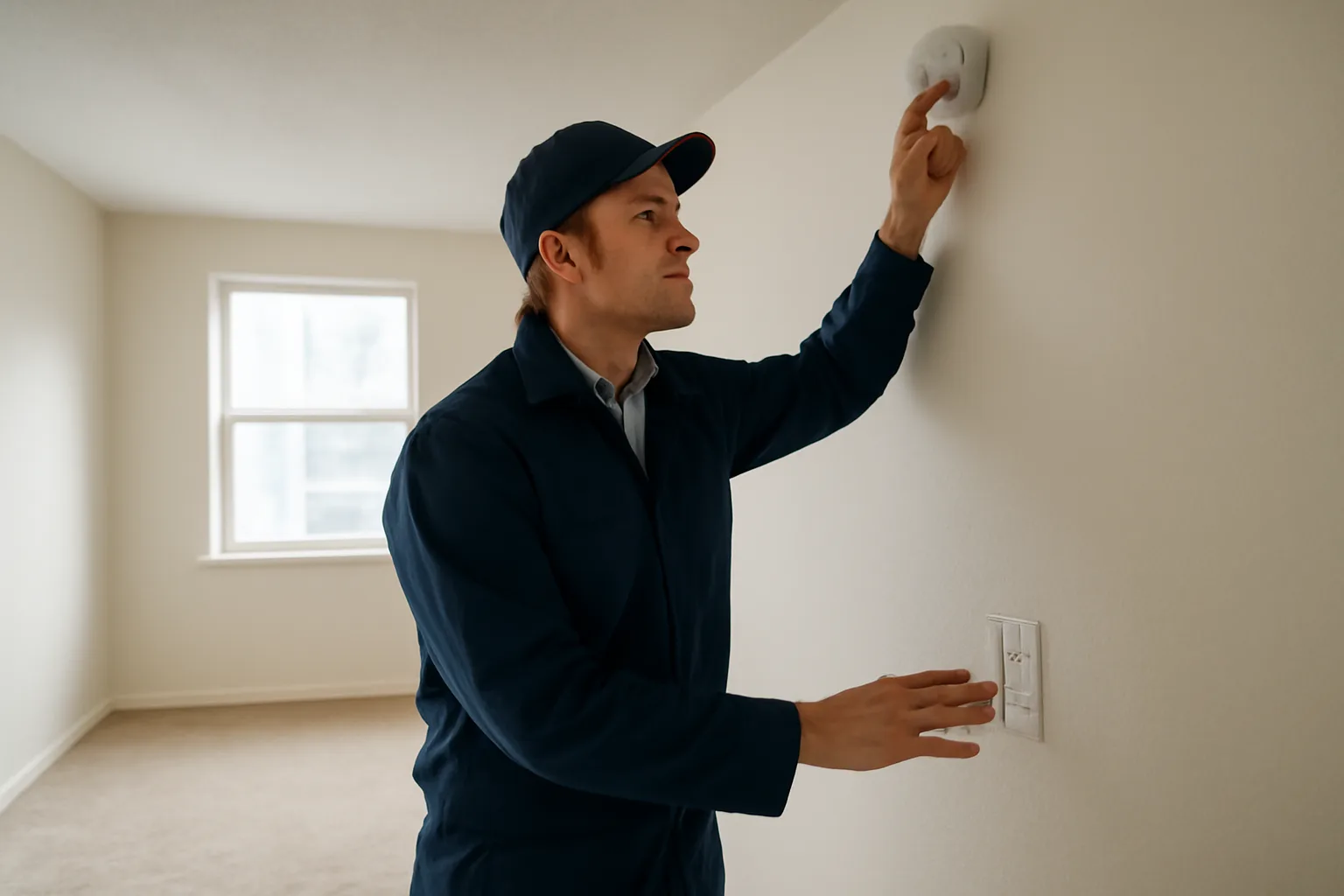
- Using the inspection as a pretext to harass or intimidate a tenant For city rental licensing inspections, the inspector's checklist usually focuses on life-safety items: smoke and CO detector placement, egress windows in bedrooms, electrical panel condition, water heater strapping or pressure relief valves, exterior stairs and railings, and pest or mold evidence. Many cities publish their actual inspection checklist online, and pulling that up before your appointment is the single best way to avoid a failed inspection on something fixable, like a missing detector battery or an unlabeled electrical panel. If you're prepping for a first-time city inspection, our tenant rights overview covers what tenants can expect during the process too, which helps you set expectations with them ahead of the visit.
how much notice does a landlord have to give before an inspection?
Most states require landlords to give at least 24 hours' notice before entering an occupied rental unit for a non-emergency inspection or repair, but the exact number varies. California requires "reasonable notice," which the Civil Code presumes to be 24 hours unless circumstances make that unreasonable [4]. Some states, like Florida, also use a 12-hour standard for certain repair-related entries under specific lease terms [5]. The notice generally has to state the date, approximate time, and purpose of entry, and entry must happen during normal business hours (not late at night, not before 8am, generally). Emergencies (a burst pipe, a gas leak, fire) are the standard exception where landlords can enter without advance notice, because delaying to give notice could cause more damage or danger. City rental license inspections work differently. If a city inspector is coming for a licensing or code compliance inspection, notice requirements usually come from the city's municipal code or the inspection appointment letter itself, not from state landlord-tenant law. Some cities require the landlord to notify the tenant separately, and some inspectors will not enter without tenant consent or a warrant if the tenant refuses access. If a tenant refuses entry for a city inspection, that becomes a landlord headache, not a tenant law violation, because it's usually the landlord's license or renewal at stake. Our best practical advice: give more notice than legally required whenever you can. A 48 to 72 hour heads-up for a licensing inspection gives tenants time to plan around it and reduces the odds of a no-show or a hostile reaction at the door.
what rights do tenants have without a lease?
Tenants without a written lease still have legal rights, because most states recognize an oral or implied lease as legally binding, typically defaulting to a month-to-month tenancy. The lack of a written lease doesn't strip a tenant of protections like the right to habitable housing, protection from illegal lockouts, or the right to proper notice before eviction. Without a written lease, courts generally look at the pattern of rent payment to determine tenancy terms. If rent is paid monthly, most states treat the arrangement as a month-to-month tenancy, which usually requires 30 days' written notice to terminate (some states require more for longer-term tenants; California, for example, requires 60 days' notice if the tenant has lived there a year or more [6]). Tenants without a lease still retain:
- The right to a habitable unit, under the implied warranty of habitability recognized in most states
- Protection from retaliatory or discriminatory eviction
- The right to proper notice before eviction (self-help evictions, like changing locks or shutting off utilities, are illegal almost everywhere)
- The right to the return of a security deposit under state deposit law, if one was collected What tenants without a lease do NOT automatically get is certainty on rent amount or increase timing, since without written terms, the landlord generally has more flexibility to change rent with proper notice going forward (rent control jurisdictions are the major exception). If you're a landlord operating without written leases across multiple units, that's a risk exposure worth fixing regardless of what your city's licensing program requires; verbal agreements are hard to enforce and harder to defend in a dispute. See our renters rights piece for more on tenant protections that apply regardless of lease status.
why do landlords require renters insurance?
Landlords require renters insurance mainly to shift liability risk away from themselves and to make sure tenants can cover their own belongings and any damage they cause, since a landlord's own property insurance policy typically does not cover a tenant's personal property or a tenant's liability for causing damage. A standard landlord (dwelling) insurance policy covers the physical structure and the landlord's own liability, but it generally excludes the tenant's furniture, electronics, and clothing, and it may not cover situations where the tenant's negligence (an unattended stove, an overflowing bathtub) causes damage to a neighboring unit. Renters insurance closes that gap. It typically costs tenants somewhere in the range of $15 to $30 per month depending on coverage amount and location, though exact pricing depends on the insurer and the state. Requiring it also protects the landlord indirectly: if a tenant's negligence causes a fire that damages three units in a building, the landlord's insurer may pay out and then subrogate (seek reimbursement) against the negligent tenant. If that tenant has renters insurance with liability coverage, the landlord's insurer has someone to collect from instead of absorbing the loss or suing a tenant with no assets. Most states allow landlords to require renters insurance as a lease condition as long as it's disclosed clearly and applied consistently to all tenants, though a handful of jurisdictions restrict how it can be enforced. If you require it, check that your lease specifies minimum liability coverage (commonly $100,000) and that you're added as an "interested party" so you get notified if the policy lapses.
what can't a landlord do in Ohio?
Ohio landlords cannot enter a rental unit without reasonable notice (Ohio law generally treats 24 hours as reasonable), cannot shut off utilities or change locks to force a tenant out ("self-help" eviction is illegal), and cannot retaliate against a tenant for making a good-faith complaint about habitability, under Ohio Revised Code Chapter 5321, the Ohio Landlords and Tenants Act. Specifically, Ohio Revised Code 5321.04 requires landlords to keep the premises in a fit and habitable condition, comply with building and housing codes affecting health and safety, keep common areas safe and clean, maintain electrical, plumbing, and HVAC systems, and provide running water, hot water, and reasonable heat [7]. A landlord who fails these duties can face a tenant lawsuit or a rent escrow action. Ohio Revised Code 5321.02 also prohibits retaliation: a landlord cannot terminate a tenancy, refuse to renew, or increase rent specifically because a tenant complained to a government agency about a building, housing, health, or safety code violation, or because the tenant joined a tenant union [8]. If a landlord takes one of those actions within a certain window after a complaint, Ohio law presumes it's retaliatory, and the burden shifts to the landlord to prove otherwise. Ohio landlords also cannot keep a security deposit without an itemized, written list of deductions, and they generally must return the deposit or the itemized statement within 30 days of the tenant vacating, per Ohio Revised Code 5321.16 . Failing to comply can expose the landlord to damages equal to the amount wrongfully withheld, plus reasonable attorney fees, under the same statute. None of this is legal advice, and Ohio landlord-tenant law has more detail than fits in one section, so if you're dealing with an active dispute, talk to a local landlord-tenant attorney or your city's tenant-landlord mediation program if one exists.
how does a rental license inspection differ from a routine landlord inspection?
A rental license inspection is run by a city or county code enforcement office and checks compliance with the local housing code, usually as a condition of getting or renewing a rental license. A routine landlord inspection is something the landlord does on their own schedule to check on the unit's condition, unrelated to any government licensing requirement. City rental license inspections typically follow a fixed checklist covering things like smoke and CO detector placement, electrical panel labeling, egress window size in bedrooms, water heater safety, exterior structural issues, and pest evidence. Cities like Minneapolis, Sacramento, and many others require these inspections on a cycle, commonly every 1 to 3 years depending on the property's compliance history, though exact cycles vary by city; confirm with your city rental licensing office for your property's specific schedule. A failed rental license inspection usually triggers a re-inspection deadline (commonly 30 to 60 days to fix violations) and, in some cities, a daily fine for unresolved violations past the deadline. A routine landlord inspection has no such enforcement mechanism attached; if the landlord doesn't like what they see, their only real tools are lease enforcement or eventually non-renewal. If you're a landlord in a mandatory-licensing city and you just got a notice, the smartest first move is pulling your city's actual inspection checklist (most publish a PDF) and walking your unit against it before the inspector shows up. Our landlord basics guide has a broader rundown of how these programs generally work if you're new to one.
Frequently asked questions
How to become a landlord?
Buy or convert a residential property, get landlord insurance (not a homeowner's policy), check whether your city requires rental registration or licensing before you rent it out, draft a compliant written lease, and screen tenants consistently under fair housing law. Budget for recurring compliance costs like license renewals and re-inspections, more than the upfront purchase.
Who is responsible for a rental property walk-through inspection in California?
The landlord coordinates the walk-through and must notify tenants in writing of their right to request a pre-move-out inspection under California Civil Code 1950.5. Separately, some California cities run their own municipal rental inspection programs handled by city inspectors, which is a different process from the deposit-related walk-through.
What is landlording?
Landlording is the business of owning residential property and renting it to tenants for regular payment. It includes screening tenants, maintaining habitability, following state and local landlord-tenant law, collecting rent, and in many cities, registering the property and passing periodic government inspections.
What is a landlord?
A landlord is the owner (or the owner's agent) of a residential property who rents that property to a tenant under a lease. Most state statutes define the term functionally, covering the person or entity holding legal responsibility for the unit, whether that's an individual or an LLC.
What rights do tenants have without a lease?
Tenants without a written lease still get habitability protections, protection from illegal lockouts, and the right to proper written notice before eviction (commonly 30 days for month-to-month tenancies, longer in some states). Courts typically treat regular rent payment as creating an oral month-to-month tenancy with these baseline protections.
How to be a landlord day to day?
Day to day, being a landlord means responding to maintenance requests promptly, documenting communication with tenants, keeping rent records, budgeting for repairs and license renewals, and staying current on your city's rental registration or inspection requirements so a routine notice doesn't turn into a fine.
Why do landlords require renters insurance?
Landlords require renters insurance because their own dwelling policy doesn't cover a tenant's belongings or a tenant's liability for damage they cause. Renters insurance typically costs $15 to $30 a month and gives the landlord's insurer someone to collect from if tenant negligence causes a loss.
How much notice does a landlord have to give before entering?
Most states set 24 hours as the standard for reasonable notice before non-emergency entry, though the exact rule varies by state statute. California presumes 24 hours is reasonable under Civil Code 1954. Emergencies like a gas leak or burst pipe are the main exception allowing entry without advance notice.
What can a landlord look at during an inspection?
A landlord can check property condition items: walls, appliances, plumbing, smoke and CO detectors, pest evidence, and signs of unauthorized pets or lease violations. A landlord generally should not open drawers or containers holding personal belongings without specific cause related to the inspection's purpose.
What can't a landlord do in Ohio?
Ohio landlords can't enter without reasonable notice, can't force a tenant out by shutting off utilities or changing locks, can't retaliate against a tenant for a good-faith code complaint (Ohio Revised Code 5321.02), and can't withhold a security deposit without an itemized list within 30 days of move-out.
Is a car rental inspection form the same as a landlord inspection form?
No. A car rental inspection form documents a vehicle's condition for a rental car company at pickup and return. A landlord or rental property inspection form documents a residential unit's condition, either for a security deposit dispute or for a city rental licensing requirement. They're unrelated documents that happen to share similar names.
What happens if a tenant refuses to allow a city rental license inspection?
It depends on the city's ordinance, but commonly the landlord's license renewal gets held up or denied until the inspection happens. Some cities allow the landlord to document the refusal and request an extension; a few allow the city to seek an administrative warrant. Confirm the specific process with your city's rental licensing office.
How often do rental properties get inspected for licensing?
It varies widely by city, commonly every 1 to 3 years, sometimes tied to the property's compliance history (properties with past violations may get inspected more often). There's no national standard; confirm the exact cycle with your specific city's rental licensing or code enforcement office.
Sources
- HUD, Fair Housing Act overview: Fair Housing Act prohibits discrimination based on race, color, national origin, religion, sex, familial status, or disability
- California Legislative Information, Civil Code Section 1950.5: landlord must notify tenant in writing of right to request initial inspection before move-out
- California Legislative Information, Civil Code Section 1954: California presumes 24 hours is reasonable notice before landlord entry
- Florida Senate, Florida Statutes Section 83.53: Florida law sets specific notice standards for landlord entry
- California Legislative Information, Civil Code Section 1946.1: California requires 60 days notice to terminate tenancy for tenants who have lived in the unit a year or more
- Ohio Legislative Service Commission, Ohio Revised Code 5321.04: Ohio law requires landlords to maintain habitability, comply with codes, and provide heat and water
- Ohio Legislative Service Commission, Ohio Revised Code 5321.02: Ohio law prohibits retaliatory eviction or rent increase after a tenant complaint
- Ohio Legislative Service Commission, Ohio Revised Code 5321.16: Ohio landlords must return security deposits or itemized deduction lists within 30 days