Last updated 2026-07-26
TL;DR
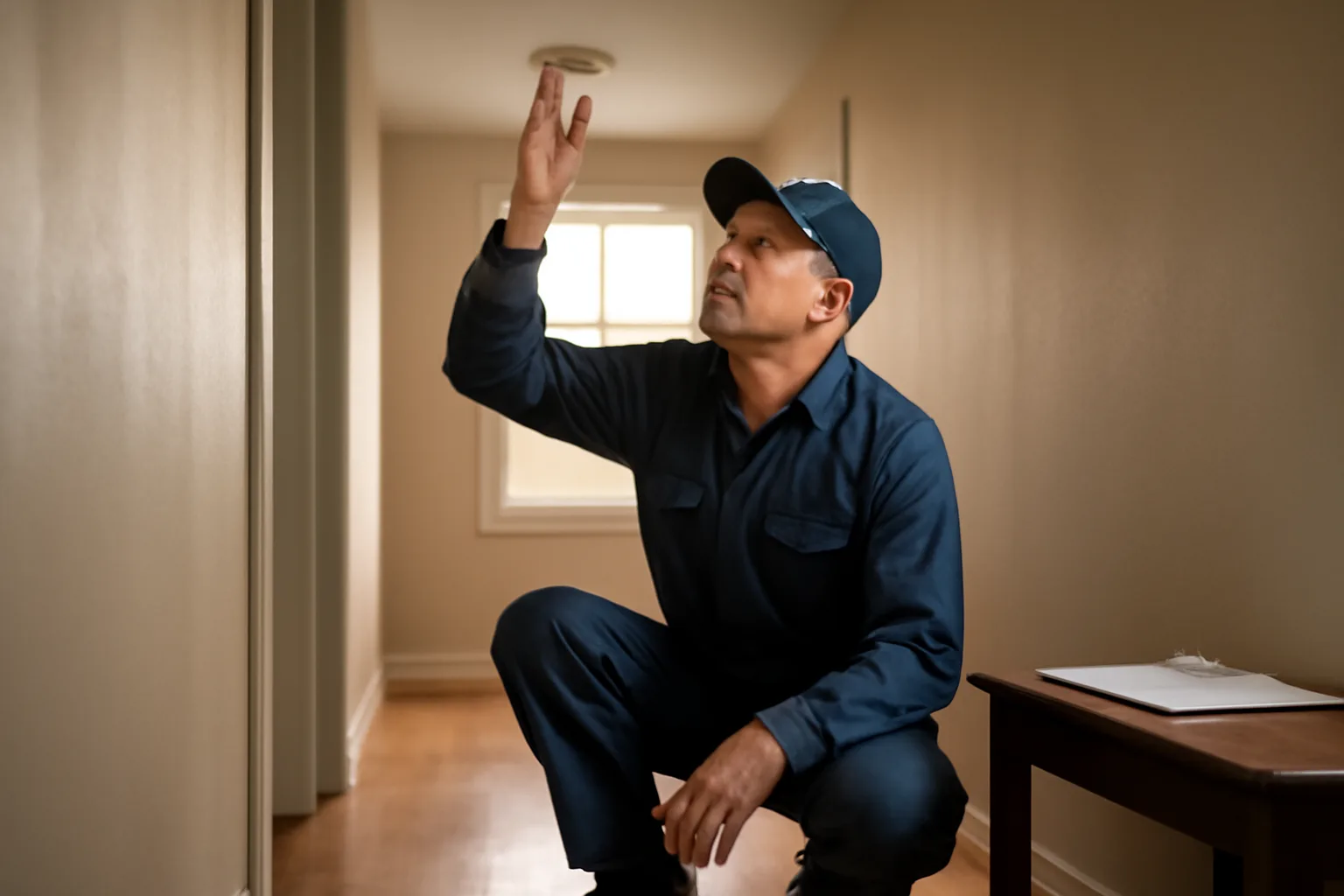
A rental inspection checklist covers the unit's structural, mechanical, safety, and health items: roof, plumbing, electrical, smoke and CO detectors, egress windows, and pest issues. Landlords generally must give 24 to 48 hours notice (varies by state) and can only inspect for reasons tied to safety, maintenance, or lease compliance, not to harass a tenant or search personal items.
What is a landlord and what does landlording actually involve?
A landlord is the owner of a property (or someone with legal authority to manage it) who rents that property to someone else, called a tenant, in exchange for regular payment. That's the whole legal definition. Everything else people mean when they say "landlord" is really about the job, not the title. "Landlording" is the informal term for the actual work: finding and screening tenants, writing or signing leases, collecting rent, handling repairs, keeping the property compliant with local codes, and dealing with move-outs, disputes, and (occasionally) evictions. It's part real estate, part small business ownership, part customer service, part building maintenance. Landlord-tenant law is mostly state law, so what's required of you in Ohio is not what's required of you in California or New York. Every state has its own landlord-tenant statute, and a lot of cities layer their own rental licensing, registration, or inspection rules on top of that state law. If you're managing 1 to 10 units, you're doing all of this yourself in most cases. No property management company buffer. No legal department. That's exactly why inspection checklists, notice rules, and lease basics matter so much: a missed step can turn into a fine, a failed inspection, or a legal fight you didn't need to have.
How to become a landlord (the practical steps, more than buying a house)
Becoming a landlord is less about the purchase and more about the compliance stack you build around it. Here's the realistic order of operations: 1. Buy or already own a property you plan to rent out, and check zoning. Some residential zones restrict rentals or cap the number of unrelated occupants. 2. Check whether your city requires a rental license, registration, or inspection before you can legally rent. Many cities do. Fees, forms, and inspection timing vary by city, so confirm with your city rental licensing office before you list the unit. 3. Get landlord insurance (a landlord/rental dwelling policy), more than a standard homeowner's policy, since most homeowner policies exclude rental activity. 4. Screen tenants consistently and legally. The Fair Housing Act bars discrimination based on race, color, national origin, religion, sex, familial status, or disability in any housing transaction [1]. 5. Write or use a lease that meets your state's landlord-tenant law minimums (security deposit limits, disclosure requirements, habitability standards). 6. Set up rent collection, a maintenance request process, and a system for tracking inspection and license renewal deadlines. 7. Learn your local notice requirements for entry, and your state's eviction process, before you ever need either one. Most first-time landlords underestimate step 2. A rental license application in a mandatory-licensing city often triggers a mandatory inspection within a set window (commonly 30 to 90 days of application, though this varies widely by city), and failing that first inspection is common enough that cities publish reinspection fee schedules for it. Confirm your city's specific timeline and fee schedule directly, since these change year to year.
What is a landlord (legally) versus what tenants think a landlord is
Legally, a landlord is simply the party granting the right to occupy real property under a lease or rental agreement, in exchange for rent. State statutes usually define it plainly. Ohio's landlord-tenant act, for example, defines "landlord" as "the owner, lessor, or sublessor of the residential premises... but does not include a person occupying a dwelling unit as a residential premises" [2]. Tenants often experience "landlord" as something bigger: the person responsible for heat working, water running, locks functioning, and the building meeting basic safety code. That's not wrong. It's just the practical side of the same legal relationship. A landlord's core legal duties in most states include keeping the unit habitable, making requested repairs within a reasonable time, and following the state's rules for entry, notice, and security deposit handling. Where landlords and tenants disagree most is scope: how far habitability duties extend, how much notice counts as "reasonable," and what counts as an emergency that allows entry without notice. Those specifics live in state statute, not in a universal national rule.
What can a landlord look at during an inspection?
| Life safety | Smoke detectors, CO detectors, fire extinguisher (if required), clear exits | |
|---|---|---|
| Electrical | GFCI outlets near water, no exposed wiring, panel access, no overloaded circuits | |
| Plumbing | No active leaks, working water heater, functioning shutoffs, proper drainage | |
| Structural | Foundation cracks, roof condition, stairs and railings secure | |
| Windows/doors | Locks function, screens present, egress windows unobstructed in bedrooms | |
| Pest/mold | Visible infestation, moisture damage, mold on walls or ceilings | |
| Exterior | Address visible, walkways safe, trash/debris, exterior lighting | City licensing inspections usually follow a locally adopted version of the International Property Maintenance Code (IPMC) or a similar model code, but each city adds or drops items. Confirm the exact checklist with your city rental licensing office; it's usually published as a PDF alongside the license application. |
A landlord (or a city inspector, for licensing inspections) can generally look at anything tied to safety, structural condition, code compliance, or lease compliance. That means: smoke and carbon monoxide detectors, electrical panels and outlets, plumbing fixtures and visible pipes, HVAC function, window and door locks, egress windows in bedrooms, visible mold or pest evidence, and general wear that could become a hazard (loose railings, exposed wiring, blocked exits). What a landlord typically cannot do: search through drawers, closets, or personal belongings that have nothing to do with the inspection's purpose; go through the tenant's mail or personal papers; or use an inspection as a pretext to harass a tenant or retaliate against one who filed a complaint. Fair housing law also limits what a landlord can ask about or document regarding a tenant's disability, family composition, or other protected characteristics found incidentally during a walk-through [1]. Here's a practical checklist most rental inspections (whether it's your own routine check or a city licensing inspection) will cover: | Category | Typical items checked |
Who is responsible for a rental property walk-through inspection in California?
In California, the landlord (or their authorized agent) is responsible for conducting move-in and move-out walk-through inspections, and state law gives tenants specific rights around that process. California Civil Code Section 1950.5 requires that if a landlord intends to withhold any part of a security deposit at move-out, the landlord must, upon the tenant's request, conduct an initial inspection before the tenant vacates and give the tenant an itemized statement of deficiencies with enough time to fix them [3]. The law also requires landlords to give tenants written notice of their right to request that initial inspection, and to specify a time within a reasonable period before the end of the tenancy [3]. The tenant can be present but isn't required to be. If deductions are later made from the deposit, California law requires an itemized statement and, in most cases, receipts for repairs or cleaning over $125, delivered within 21 days of the tenant moving out [3]. Separately, some California cities with their own rental inspection or licensing programs (for example, programs tied to substandard housing enforcement) assign the walk-through to a city code inspector rather than the landlord alone. Whether that applies to you depends entirely on your city, so check with your local building or housing department before assuming state law is the only layer involved.
How much notice does a landlord have to give before entering or inspecting?
| California | 24 hours (presumed reasonable) | Cal. Civ. Code § 1954 [4] | |
|---|---|---|---|
| Florida | 12 hours for repairs (reasonable notice standard) | Fla. Stat. § 83.53 [5] | |
| Ohio | 24 hours | Ohio Rev. Code § 5321.04 [2] | If your city also requires periodic licensing inspections, the notice for those is usually set by city ordinance, separate from the state's landlord-entry statute, and can run anywhere from a few days to a few weeks. That's another one to confirm locally rather than assume. |
Most states require 24 hours notice for a landlord to enter for non-emergency reasons, including routine inspections, but the exact number and the allowed reasons vary by state, and a few states don't set a statutory number at all. California requires "reasonable notice," which state law presumes to be 24 hours in writing, delivered by mail, personal delivery, or posting, unless the tenant agrees to less [4]. Florida statute similarly allows entry "upon reasonable notice to the tenant and at a reasonable time," specifying that 12 hours notice for repairs is presumed reasonable [5]. Emergency situations (fire, flooding, gas leak, a tenant safety threat) are the standard exception nearly everywhere: landlords can enter without any advance notice when there's an immediate risk to life or property. Outside of emergencies, notice requirements typically apply to repairs, showings to prospective tenants or buyers, and routine inspections alike. A short reference table (confirm your own state, since legislatures amend these regularly): | State | Typical notice for non-emergency entry | Source |
What can't a landlord do in Ohio?
Ohio Revised Code Chapter 5321 lays out landlord obligations and several explicit restrictions. A landlord in Ohio cannot enter the rental unit without giving reasonable notice (the statute names 24 hours as the standard) except in an emergency, and cannot use entry rights to harass a tenant [2]. The statute states a landlord "shall not abuse the right of access" and must give the tenant "reasonable notice of his intent to enter and enter only at reasonable times," with 24 hours presumed reasonable [2]. Ohio landlords also cannot retaliate against a tenant for exercising a legal right, such as complaining to a health or building authority about code violations, joining a tenant union, or asserting rights under the landlord-tenant statute. Ohio Rev. Code § 5321.02 specifically bars a landlord from terminating a tenancy, increasing rent, decreasing services, or bringing eviction action in retaliation for such complaints [6]. Ohio landlords cannot shut off utilities, change locks, or remove a tenant's belongings to force them out, a practice sometimes called "self-help eviction." Only a court-ordered eviction (through the municipal or county court, following proper filing and a hearing) can legally remove a tenant. Ohio law also prohibits a landlord from including a lease clause waiving the tenant's rights under Chapter 5321, meaning even a signed lease can't legally strip away these statutory protections [2].
What rights do tenants have without a lease?
A tenant without a written lease still has real legal protections in every state. Living somewhere and paying rent regularly (even under a verbal agreement) generally creates a month-to-month tenancy, which state landlord-tenant law covers the same way it covers written leases, just with different notice periods for ending the tenancy. A tenant without a lease still has the right to: a habitable unit (working plumbing, heat, structural safety), proper notice before entry (the same statutory notice rules apply regardless of a written lease), proper notice before the tenancy is terminated (commonly 30 days for month-to-month, though this varies by state and sometimes by how long the tenant has lived there), and protection from retaliatory or discriminatory treatment under the Fair Housing Act and state equivalents [1]. What a no-lease tenant does not have is the same certainty a written lease provides. No fixed term. Often less clarity on things like who pays for what repairs, pet policies, or subletting rules. A landlord can typically end a month-to-month tenancy with proper notice and without stating a reason (outside jurisdictions with just-cause eviction ordinances), which is one reason many landlords still prefer a written lease even for tenants they trust.
Why do landlords require renters insurance?
Landlords require renters insurance mainly to shift liability and personal property risk away from their own policy. A landlord's dwelling insurance covers the building itself, not the tenant's belongings, and often doesn't cover a tenant's liability if, say, the tenant's dog bites a neighbor or the tenant accidentally starts a small kitchen fire that damages the unit. Renters insurance typically covers the tenant's personal property, provides liability coverage if the tenant is found responsible for damage or injury, and often includes loss-of-use coverage if the tenant has to live elsewhere temporarily after a covered event. For landlords, requiring it reduces the odds they end up in a dispute (or a lawsuit) over who pays when a tenant's actions cause damage. It's a lease clause landlords can generally require as a condition of tenancy in most states, as long as it's applied consistently and disclosed in the lease. Requiring it doesn't replace the landlord's own insurance. It's a supplement, and a cheap one: renters insurance commonly runs in the range of $15 to $30 a month depending on coverage and location, though rates vary by insurer and state, so treat that as a general range rather than a quote.
How to be a landlord day-to-day (beyond the paperwork)
The paperwork gets you licensed. Staying a landlord tenants don't dread and cities don't fine is a different skill set, built mostly on responsiveness and documentation. Respond to repair requests fast, and put the response in writing (text or email works) so there's a timestamp if a dispute ever comes up. Most state habitability laws expect "reasonable time," not "immediately," but reasonable time for something like no heat in winter is measured in days, not weeks. Keep a simple file per unit: lease, move-in inspection with photos, any notices sent, repair requests and responses, and license/inspection paperwork. When a city inspection notice or violation letter shows up, having that file organized already saves real time. This is the part of the job rentalpermitpath.com's $79 City Rental License & Inspection Prep Packet is built around: a structured way to pull together the inspection checklist, notice documentation, and application paperwork most cities ask for, without paying a property manager's monthly cut just to stay organized. Finally, learn your state's eviction process before you need it, and don't attempt a self-help eviction (lockouts, utility shutoffs, removing belongings) under any circumstance. Every state treats that as illegal, and it usually turns a fixable problem into an expensive one.
How does a routine landlord inspection differ from a city licensing inspection?
A routine landlord inspection is one you schedule yourself, usually once or twice a year, to catch maintenance issues before they become emergencies. You control the checklist, the frequency, and the documentation. It still requires the same notice rules as any other non-emergency entry (commonly 24 hours, per state statute) [2] [4]. A city licensing inspection is required by local ordinance in mandatory rental-registration cities, and it's not optional if you want to legally rent the unit. A city inspector, not you, decides what fails and what passes, usually against a locally adopted property maintenance code. These inspections often happen on a set cycle (annually, every two years, or on tenant turnover, depending on the city) and typically carry their own fee, plus a reinspection fee if you fail the first time. The practical overlap: everything you'd check in your own routine walk-through (smoke detectors, plumbing, electrical, egress windows, pest issues) is close to what a city inspector checks too. Running your own inspection using the same checklist before the city's scheduled visit is the single best way to avoid a failed inspection and a reinspection fee. Confirm your specific city's checklist, fee, and cycle with your city rental licensing office, since none of that is standardized nationally.
Frequently asked questions
How to become a landlord if I only have one property?
Owning one rental unit makes you a landlord under state law the moment you rent it out for payment, regardless of unit count. Check your city for rental licensing or registration requirements first, get landlord insurance, use a lease that meets your state's minimum requirements, and screen tenants consistently under Fair Housing Act rules [1].
Who is responsible for a rental property walk-through inspection in California?
The landlord is responsible for the walk-through, but California Civil Code § 1950.5 gives tenants the right to request an initial inspection before move-out, with an itemized list of deficiencies and time to fix them before final deductions from the deposit [3]. Some cities add their own code-inspector walk-throughs on top of this.
What is landlording as a term?
Landlording is the informal, common term for the work of owning and managing rental property: screening tenants, collecting rent, handling repairs, complying with local licensing and inspection rules, and managing lease and eviction processes when needed. It's not a legal term, just industry shorthand for the job.
What is a landlord under the law?
A landlord is the owner or authorized agent who rents residential property to a tenant in exchange for payment. Ohio's statute, for example, defines a landlord as "the owner, lessor, or sublessor of the residential premises," excluding anyone who occupies the unit as their own residence [2].
What rights do tenants have without a lease?
Tenants without a written lease still have a month-to-month tenancy under state law, with rights to a habitable unit, standard entry notice (commonly 24 hours), proper termination notice (often 30 days), and protection from discrimination or retaliation, same as tenants with a written lease [1] [2].
How to be a landlord without hiring a property manager?
Set up a simple system: written lease, documented move-in inspection with photos, a fast repair-request process, a tracker for license renewal and inspection dates, and consistent tenant screening. Most 1-10 unit landlords self-manage successfully by staying organized and responsive, not by handling everything perfectly.
Why do landlords require renters insurance?
Renters insurance covers the tenant's belongings and personal liability, which a landlord's own dwelling policy typically doesn't cover. It reduces disputes over who pays when a tenant causes damage or an accident happens in the unit, and it commonly costs $15 to $30 a month, a small ask relative to the protection it gives both parties.
How much notice does a landlord have to give before an inspection?
Most states presume 24 hours notice is reasonable for non-emergency entry, including inspections, though exact rules vary. California and Ohio both use 24 hours as the standard [4] [2]; Florida uses 12 hours for repair-related entry specifically [5]. Always check your own state statute, since numbers and allowed reasons differ.
What can a landlord look at during an inspection?
A landlord can inspect anything tied to safety or lease compliance: smoke and CO detectors, plumbing, electrical systems, egress windows, structural condition, and pest or mold issues. A landlord generally cannot search personal belongings, drawers, or private papers that aren't relevant to a safety or maintenance concern.
What can't a landlord do in Ohio specifically?
Ohio landlords can't enter without 24 hours notice except in an emergency, can't retaliate against tenants who file code complaints, can't perform self-help evictions like lockouts or utility shutoffs, and can't include lease clauses that waive tenant rights under Ohio Rev. Code Chapter 5321 [2] [6].
Do I need a city rental license even if my state doesn't require one?
Yes, potentially. Rental licensing, registration, and inspection requirements are usually set at the city or county level, separate from state landlord-tenant law. Many cities require a license or registration even in states with no statewide rental licensing law, so check with your specific city's rental licensing or building department.
What happens if I fail a rental licensing inspection?
Cities typically give you a written list of violations and a deadline (commonly 30 to 60 days, though this varies) to fix them, followed by a reinspection, which usually carries its own fee. Repeated failures or unresolved violations can lead to fines or, in some cities, denial or revocation of the rental license. Confirm your city's specific reinspection process and fee.
Sources
- HUD, Fair Housing Act overview: Fair Housing Act bars discrimination based on race, color, national origin, religion, sex, familial status, or disability in housing
- Ohio Revised Code § 5321.04, Landlord obligations: Ohio landlord definition, 24-hour entry notice standard, and prohibition on abuse of entry rights
- California Civil Code § 1950.5, Security deposits: California landlord duty to offer initial move-out inspection and itemized deficiency statement, and 21-day/$125 receipt rule
- California Civil Code § 1954, Landlord right of entry: California presumes 24 hours written notice reasonable for landlord entry
- Florida Statutes § 83.53, Landlord's access to dwelling unit: Florida requires reasonable notice for entry, with 12 hours presumed reasonable for repairs
- Ohio Revised Code § 5321.02, Retaliation prohibited: Ohio bars landlords from retaliating against tenants who report code violations or exercise legal rights