Last updated 2026-07-25
TL;DR
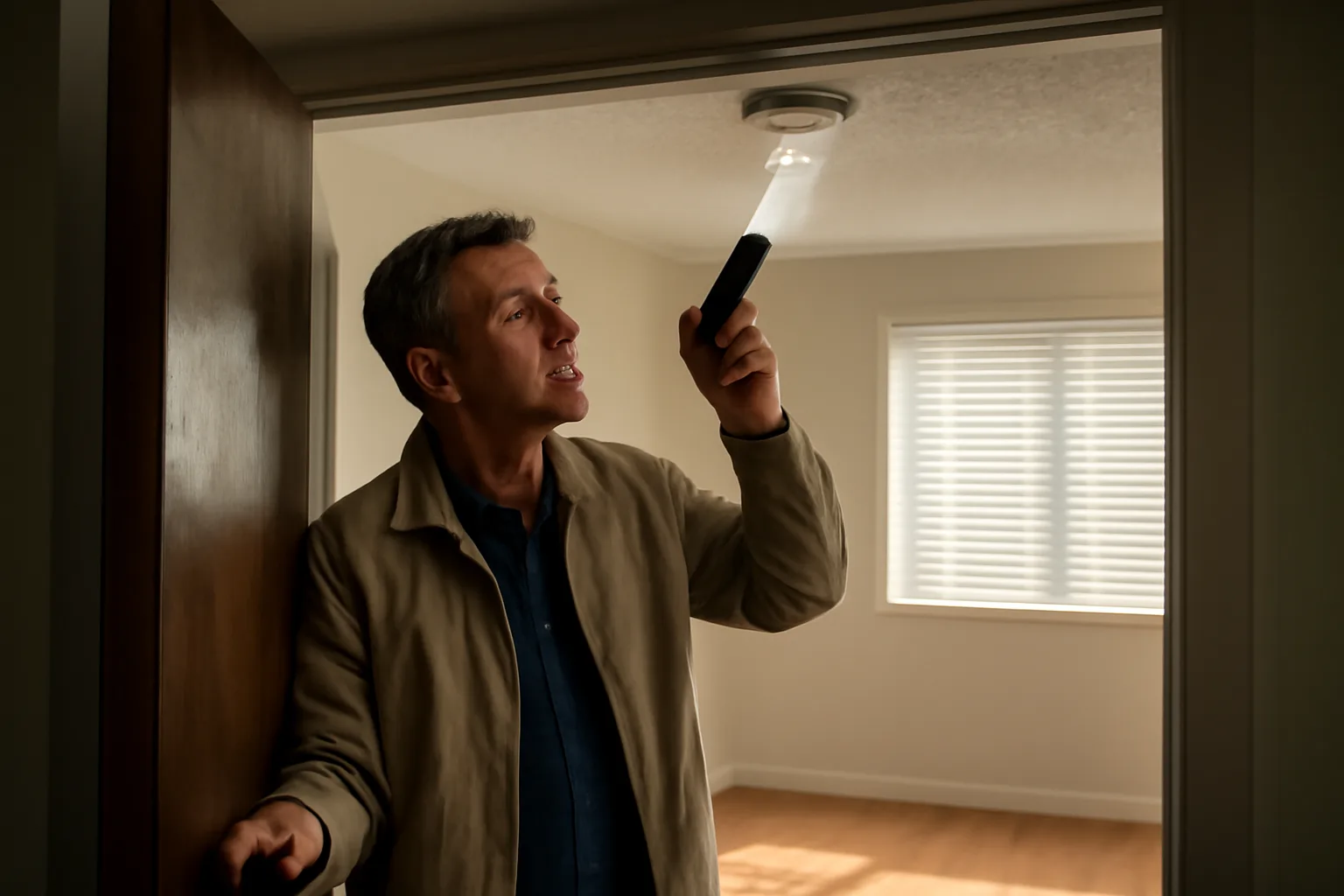
Yes, a landlord can inspect a rented apartment, but in most states they need a legitimate reason (repairs, safety, showing the unit) and must give advance notice, commonly 24 to 48 hours. Emergencies are the main exception. Local rental licensing programs add a separate layer: government inspectors can require access for code compliance, usually with their own notice rules set by city ordinance.
can a landlord inspect your apartment without notice?
In almost every state, no. Landlords generally need to give advance notice before entering an occupied rental unit for a non-emergency inspection, and the notice period is usually spelled out in state landlord-tenant law, not left up to the lease. California requires "reasonable notice," which the statute defines as 24 hours in most circumstances, and that notice must state the date, approximate time, and purpose of entry [1]. Many other states use 24 hours as a baseline too, though a chunk of them (including Arizona and Florida) set the floor at 24 hours minimum while a few, like Massachusetts, don't set a fixed statutory number at all and instead lean on "reasonable" notice case by case [2]. The real exception is emergencies. Fire, flooding, a burst pipe, a gas leak, anything that threatens life or property, a landlord (or their agent) can enter without any notice at all. That's true almost everywhere, including under California Civil Code 1954, which allows entry without notice "in case of emergency" [1]. Outside emergencies, walking in unannounced to "check on things" is not a routine inspection right most states give landlords. It's closer to a lease violation and, depending on the state, can expose the landlord to a claim for breach of the covenant of quiet enjoyment or even trespass.
who is responsible for a rental property walk-through inspection in california?
In California, the landlord (or their property manager) is responsible for scheduling and conducting move-in and move-out walk-through inspections, but the tenant has a right to participate. California Civil Code 1950.5(f) gives tenants the right to request an initial move-out inspection before they vacate, so the landlord can identify repair items the tenant could fix themselves to avoid deductions from the security deposit [1]. The landlord must give at least 48 hours' written notice of that initial inspection and, after it, provide an itemized statement of anything that still needs fixing [1]. For mid-tenancy inspections tied to a city's rental inspection program (common in places with proactive rental licensing), it's usually the city's code enforcement or housing department that schedules and performs the inspection, with the landlord responsible for arranging tenant access. The landlord doesn't get to skip that responsibility just because the tenant is difficult to reach; missing a scheduled municipal inspection can itself trigger a notice or fine from the city, separate from anything in the lease. Bottom line for California landlords: normal entry for repairs or showings needs 24 hours' notice under Civil Code 1954, the move-out walk-through needs 48 hours' notice under Civil Code 1950.5, and any city-mandated rental inspection follows whatever notice window that specific ordinance sets. Those are three different clocks, and mixing them up is a common landlord mistake.
what can a landlord look at during an inspection?
A landlord (or a city inspector, on a rental license inspection) can generally look at anything related to the condition and safety of the unit: working smoke and carbon monoxide detectors, plumbing and water heater condition, electrical outlets and panels, signs of pest infestation, mold or moisture damage, window and door locks, and general habitability items like heat and hot water function. Many mandatory-licensing cities publish a checklist tied to their local housing code, and it's worth pulling that document directly from the city rental licensing office rather than guessing. What a landlord or inspector is not touring the unit to do is search through personal belongings, open closets or drawers unrelated to a stated repair issue, or use the visit as a pretext to look for lease violations unrelated to the reason given in the notice. The notice itself usually has to state a purpose, and the inspection should reasonably match that purpose. If the notice says "repair leaking faucet in kitchen," wandering into the bedroom to check the closet organization isn't part of that visit. For city code inspections tied to a rental license, the scope is usually broader and codified: inspectors check for compliance with the applicable housing or property maintenance code, sometimes the International Property Maintenance Code adopted locally, and they document violations with photos and a written notice, more than a verbal warning. A few things nearly every jurisdiction agrees an inspection is not for: rummaging through personal papers, opening a locked box, or inventorying a tenant's possessions. If a landlord or an agent does that, it goes beyond an inspection and into a privacy problem.
how much notice does a landlord have to give before entering?
| California | 24 hours (reasonable notice), 48 hours for move-out inspection | Cal. Civ. Code 1954, 1950.5 [1] | |
|---|---|---|---|
| Arizona | 2 days (48 hours) | Ariz. Rev. Stat. 33-1343 [3] | |
| Florida | 12 hours | Fla. Stat. 83.53 [4] | |
| Massachusetts | No fixed hours; "reasonable" notice under case law | Mass. Gen. Laws ch. 186 | |
| Hawaii | 2 days | Haw. Rev. Stat. 521-53 [5] | Florida is the outlier low end, with a statutory floor of just 12 hours' notice for non-emergency entry under Florida Statutes 83.53 [4]. That's roughly half what California, Arizona, and Hawaii require. If a landlord operates in more than one state, that gap is exactly the kind of detail that trips people up: what's legal notice in Tampa can be too short in Sacramento. On top of state landlord-tenant law, a city with mandatory rental licensing may impose its own notice period for the government inspection itself, separate from the landlord's private right of entry. That's usually spelled out in the local ordinance or on the city's rental licensing program page, and it's worth confirming directly with your city rental licensing office because these vary widely and change without much notice. |
Most states with a statutory notice requirement land somewhere between 24 and 48 hours, but the exact number, and what counts as an acceptable method of delivering that notice, varies by state and sometimes by city ordinance layered on top. | State (example) | Statutory notice for entry | Citation |
what a landlord cannot do in ohio (and states like it)
Ohio's landlord-tenant law, in Ohio Revised Code 5321.04, requires landlords to give tenants "reasonable notice" of intent to enter and to enter "only at reasonable times," with the statute pointing to 24 hours as presumptively reasonable notice in practice [6]. Ohio law also spells out that a landlord cannot enter "in a manner that would harass the tenant" and cannot abuse the right of entry, which courts have read as a limit on repeated or pretextual visits [6]. Specifically, a landlord in Ohio cannot: enter without notice for routine, non-emergency purposes; change the locks or shut off utilities to force a tenant out (that's a self-help eviction, barred under Ohio law); or retaliate against a tenant who has complained to a code enforcement agency or asserted a legal right, which Ohio Revised Code 5321.02 addresses directly by prohibiting retaliatory conduct like eviction or utility shutoff within specific circumstances [7]. These three rules (notice before entry, no lockouts, no retaliation) show up in some form in nearly every state's landlord-tenant code, more than Ohio's. If you're a landlord and you're not sure your state's exact language, the fastest place to check is your state legislature's website, searching for "landlord tenant act" plus your state name, or your state attorney general's consumer protection pages, several of which publish plain-language landlord-tenant guides.
why do landlords require renters insurance?
Landlords require renters insurance mainly to shift liability for tenant-caused damage and injuries away from the landlord's own policy. A landlord's insurance (sometimes called a dwelling or DP-3 policy) typically covers the building structure and the landlord's own liability, but it usually doesn't cover a tenant's personal belongings or liability for something the tenant caused, like a kitchen fire or a bathtub overflow that damages the unit below. Renters insurance is genuinely inexpensive relative to what it covers. National average costs run in the range of roughly $15 to $30 a month depending on coverage limits and location, according to insurance industry data compilations, though your reader should confirm current pricing with an actual insurer quote rather than relying on any single number as gospel, since rates shift by state and carrier. Requiring it also gives a landlord a paper trail: if a tenant's negligence causes damage, the renters insurance liability coverage (commonly $100,000 or more) is often the first payer, before the landlord's own claim or the tenant's security deposit gets touched. Most states allow landlords to require renters insurance as a lease condition, as long as the requirement is disclosed in the lease and applied consistently, though a handful of jurisdictions (some rent-stabilized cities) restrict how aggressively a landlord can enforce it. Check your specific city and state rules before adding this as a hard lease requirement.
what rights do tenants have without a lease?
A tenant without a written lease, sometimes called a tenant-at-will or a month-to-month tenant by operation of law, still has real rights. Nearly every state treats an oral or implied rental agreement (someone pays rent, the landlord accepts it, they occupy the unit) as a valid tenancy, usually month-to-month, governed by the same state landlord-tenant statute that would apply if there were a written lease. That means a tenant without a lease still generally has: the right to advance notice before the landlord enters (the same 24 to 48 hour rules discussed above apply regardless of whether there's paper), the right to a habitable unit under the implied warranty of habitability that most states read into every residential tenancy, and the right to a formal eviction process rather than a lockout, meaning the landlord still has to go to court and get a judgment before removing the tenant, even without a signed lease. What a no-lease tenant typically does NOT have is a fixed term. Without a lease specifying a start and end date, the tenancy is usually terminable by either side with proper notice, often 30 days for a month-to-month arrangement, though some states require more for a longer-term informal tenancy. If a tenant has lived somewhere for years without ever signing anything, they don't lose rights because of that; the informal nature of the arrangement doesn't waive statutory protections.
what is landlording, and what is a landlord?
A landlord is the owner (or an authorized agent of the owner) of a residential or commercial property who rents that property to another person, the tenant, in exchange for rent. Landlording is the informal term for the actual work of doing that: screening tenants, collecting rent, handling repairs, following notice and entry laws, keeping the unit compliant with local housing and safety codes, and managing the legal side of the relationship, including lease terms, security deposits, and eviction procedures when needed. Landlording isn't passive. Cities with mandatory rental licensing (a growing list, since many municipalities have adopted proactive rental inspection programs modeled partly on frameworks like the U.S. Department of Housing and Urban Development's guidance on code enforcement) expect landlords to register the property, pay a periodic license or registration fee, and pass a scheduled inspection, sometimes annually, sometimes on a multi-year cycle depending on the property's compliance history. Someone who owns a single rental unit and someone who owns fifty are both "landlords" in the legal sense, but landlording at scale usually means more systems: a maintenance request process, insurance verification, lease renewal tracking, and a calendar for every city's separate license renewal and inspection date. If you own units in more than one city, each one likely has its own rental licensing office, its own fee schedule, and its own inspection cadence, and none of them talk to each other.
how to become a landlord (the practical steps)
Becoming a landlord legally involves more than buying a property and finding a tenant. The core steps, roughly in order: confirm the property is legally zoned and permitted for rental use, register the rental with your city or county if local law requires it (many cities do; some don't), obtain a rental license or certificate of occupancy if your municipality mandates one, get landlord liability insurance, and draft (or have reviewed) a lease that complies with your state's landlord-tenant statute. A meaningful number of first-time landlords skip step two, registration, simply because they don't know their city requires it. Rental registration and licensing ordinances are local, not federal or usually even statewide, so there's no single national database to check. The right move is to search your specific city name plus "rental license" or "rental registration" and check directly with that city's housing or code enforcement department, since fees, deadlines, and inspection requirements are set locally and change without much notice. After registration, most mandatory-licensing cities schedule an initial inspection before issuing the license, covering basic safety items: smoke detectors, egress windows, working plumbing and electrical systems, and general code compliance. Failing that first inspection is common and usually just means a re-inspection after fixes, not an automatic fine, though repeat violations or ignored notices can escalate into real penalties depending on the city's ordinance. If you're staring down a first inspection date and don't know what to expect, a tenant rights overview from the tenant side can help you understand what your own tenants may already know to expect from the process, and our $79 City Rental License & Inspection Prep Packet walks through the common checklist items city inspectors look for before your scheduled date.
how to be a landlord day to day (staying compliant)
Being a landlord day to day is mostly about following the notice, entry, and habitability rules consistently, more than at move-in. That means: always giving proper written notice before entry (24 to 48 hours depending on your state, as covered above), responding to repair requests within a reasonable time (many states set specific deadlines, like 14 days for non-emergency repairs after written notice, though the exact number is state-specific), keeping the unit compliant with local housing code between inspections, more than for the scheduled one, and renewing the rental license or registration before it lapses. A lapsed rental license is a surprisingly common and avoidable violation. Cities often set the renewal cycle at one or two years, and a landlord who forgets the date can end up facing a fine or a stop-rent order even if the property itself is in fine physical condition. Setting a calendar reminder tied to your specific city's renewal date, not a generic annual reminder, is the cheap fix here. Day-to-day landlording also means keeping records: dated notices of entry, repair request logs, inspection reports, and license renewal receipts. If a tenant ever disputes an entry or a code enforcement inspector asks for proof of a repair timeline, a paper trail (even just a dated email) is the difference between a five-minute conversation and a drawn-out dispute.
Frequently asked questions
can a landlord inspect your apartment whenever they want?
No. Outside a genuine emergency, landlords in nearly every state must give advance written notice, typically 24 to 48 hours, and usually must state a legitimate purpose like a repair or a scheduled showing. Entering repeatedly without notice or using inspections as pretext for harassment is a legal violation in most states, including under Ohio Revised Code 5321.04 [6].
does a landlord need a reason to inspect the apartment?
Most states require some legitimate purpose stated in the notice, such as repairs, a safety check, or showing the unit to prospective tenants or buyers. A landlord generally can't inspect purely to snoop or to search for unrelated lease violations. City-mandated rental license inspections are different; those exist specifically to check code compliance and don't need a separate tenant-specific reason.
can I refuse to let my landlord inspect my apartment?
You can object if the notice is improper (too short, no stated reason, unreasonable time), but you generally can't refuse a properly noticed, lawful inspection indefinitely. Repeated refusal can become a lease violation. If a city rental license inspection is involved, refusing access can also delay or block the landlord's license, which is a separate problem from the private entry issue.
how much notice does a landlord have to give before entering my apartment?
It depends on your state. California requires 24 hours' reasonable notice for standard entry and 48 hours for a move-out walk-through inspection [1]. Arizona and Hawaii require 2 days [3][5]. Florida's floor is 12 hours [4]. Massachusetts uses a flexible "reasonable notice" standard without a fixed number. Check your specific state's landlord-tenant statute for the exact figure.
what can a landlord check during a rental inspection?
A landlord or city inspector can generally check safety and habitability items: smoke and carbon monoxide detectors, plumbing, electrical systems, signs of pests or mold, window and door locks, and heating/hot water function. They typically cannot search personal belongings, open drawers or closets unrelated to the stated purpose, or use the visit to inventory a tenant's possessions.
who is responsible for scheduling a rental walk-through inspection in California?
The landlord is responsible for scheduling both the standard entry notices and the move-out walk-through, but the tenant has the right to request an initial move-out inspection under California Civil Code 1950.5(f), which requires at least 48 hours' written notice before that specific inspection [1].
what rights does a tenant have without a signed lease?
A tenant without a written lease still generally gets the same core protections as one with a lease: advance notice before entry, an implied right to a habitable unit, and a formal court eviction process rather than a lockout. The tenancy is usually treated as month-to-month, terminable by either party with proper notice under state law.
why do landlords require renters insurance?
Mainly to shift liability. A landlord's own policy usually doesn't cover a tenant's belongings or damage the tenant causes to the unit or a neighboring unit. Renters insurance, often $15 to $30 a month, gives the landlord a payer of first resort (typically $100,000+ in liability coverage) before the landlord's insurance or the tenant's deposit is touched.
what is landlording?
Landlording is the practical work of owning and operating a rental property: screening tenants, collecting rent, handling repairs, following state entry and notice laws, keeping the unit compliant with local housing codes, and managing licensing, insurance, and lease administration. It applies whether someone owns one unit or fifty, though the systems needed scale with portfolio size.
what can't a landlord do in Ohio?
Under Ohio Revised Code 5321.04 and 5321.02, a landlord cannot enter without reasonable notice for non-emergency purposes, cannot use entry to harass a tenant, cannot force a tenant out by changing locks or shutting off utilities (a self-help eviction), and cannot retaliate against a tenant who has filed a code complaint or asserted a legal right [6][7].
how do I become a landlord legally?
Confirm your property is properly zoned for rental use, register with your city or county if local law requires it, get any required rental license or certificate of occupancy, secure landlord liability insurance, and use a lease that complies with your state's landlord-tenant statute. Rental registration rules are set locally, so check directly with your specific city's housing department.
can a landlord inspect an apartment without the tenant present?
Usually yes, as long as proper notice was given; the tenant doesn't have to be home for a lawful, noticed entry. Some states or city ordinances give tenants the right to be present for certain inspections, like a move-out walk-through, but for routine repair or safety entries, tenant presence generally isn't legally required.
Sources
- California Civil Code Section 1954 and 1950.5: California requires 24 hours reasonable notice for entry and 48 hours for move-out inspection, and allows entry without notice in emergencies
- Massachusetts General Laws Chapter 186: Massachusetts does not set a fixed statutory notice period and relies on a reasonable notice standard
- Arizona Revised Statutes 33-1343: Arizona requires at least two days notice before landlord entry
- Florida Statutes Section 83.53: Florida sets a 12-hour notice floor for landlord entry
- Hawaii Revised Statutes Section 521-53: Hawaii requires two days notice before landlord entry
- Ohio Revised Code Section 5321.04: Ohio landlords must give reasonable notice, enter at reasonable times, and cannot use entry to harass a tenant
- Ohio Revised Code Section 5321.02: Ohio law prohibits landlord retaliation against tenants who exercise legal rights or file code complaints