Last updated 2026-07-26
TL;DR
Baltimore County requires most rental dwellings to get a rental license and pass inspection through the county's Department of Permits, Approvals and Inspections. Inspections check smoke alarms, egress, electrical, plumbing, and general habitability. Confirm current fees and cycle length with Baltimore County's rental licensing office, since amounts change and vary by unit count.
Does Baltimore County require a rental license and inspection?
Yes. Baltimore County requires owners of most rental dwelling units to register and get a rental license before renting the unit out, and the license process includes a habitability inspection. This comes out of the county's rental licensing law, which the county created to make sure rental housing meets basic safety and maintenance standards. The county's Department of Permits, Approvals and Inspections (PAI) handles licensing and inspections [1]. The rule applies whether you own one rental house or a ten-unit building. Baltimore County doesn't carve out a broad exemption for small landlords the way some jurisdictions do, though there are some exemptions (owner-occupied duplexes in some cases, for example). If you're not sure whether your specific property is covered, call PAI directly and ask. Misreading an exemption is one of the most common ways landlords end up with a violation notice they didn't see coming. If you got a notice in the mail about registering a rental or scheduling an inspection, that's the county's licensing system catching up with a property that either changed hands, changed use, or was never registered in the first place. Ignoring it doesn't make it go away. It usually turns into a fine.
How do I get a rental license in Baltimore County?
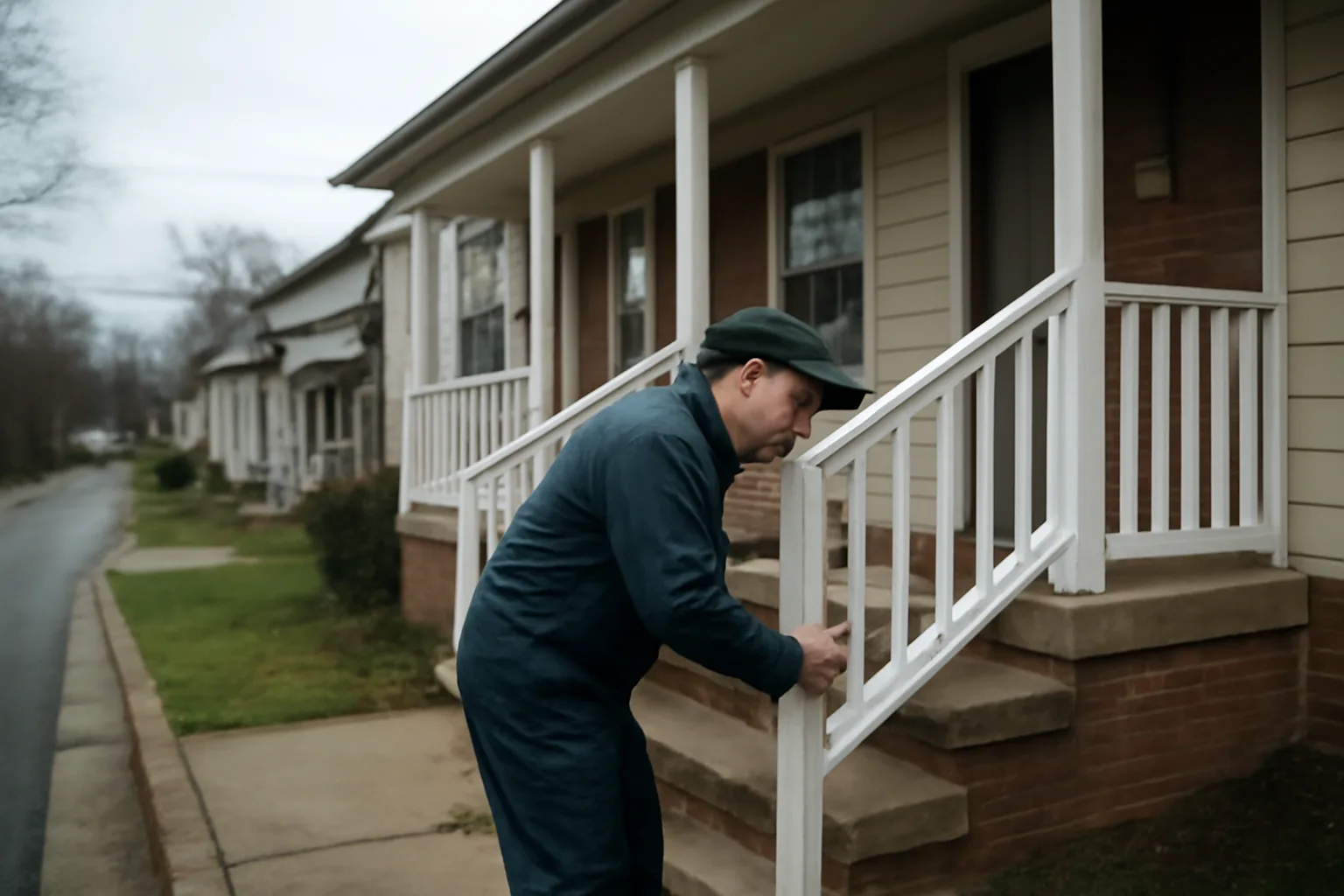
You apply through Baltimore County's rental licensing program, submit the required application and fee, and then the county schedules (or you schedule) an inspection of the unit before the license is issued or renewed. The exact application steps and current fee schedule live on the county's PAI rental licensing pages. Confirm current fees and forms with Baltimore County's rental licensing office directly, since fee amounts are set by county code and get updated periodically [1]. A rough sequence looks like this: register the property and ownership information, pay the application fee, get on the inspection schedule, pass (or fix and re-schedule), then receive your license, which is valid for a set period before renewal. Baltimore County has historically run rental licenses on a multi-year renewal cycle rather than requiring annual reinspection for every property, but confirm the current cycle length for your property type with PAI, since cycle length can depend on compliance history and unit type. If you own multiple units, expect to register each one separately even if they're in the same building or on the same lot. The county tracks compliance per unit, not per owner. One thing worth doing before you even file paperwork: walk the property yourself with a basic habitability checklist. Fixing a missing smoke alarm or a loose handrail before the inspector shows up is a lot cheaper than a re-inspection fee and a delayed license.
What can a landlord look at during an inspection?
| Smoke and CO alarms | Tenant's furniture or decor | |
|---|---|---|
| Egress windows/doors | Cosmetic paint color choices | |
| Electrical safety | Tenant's personal cleanliness habits | |
| Plumbing leaks and function | Non-safety related clutter | |
| Structural soundness (stairs, railings) | Lease terms or rent amount | |
| Working heat | Tenant's guests or lifestyle | This question comes up a lot for landlords outside Maryland too, and the answer is largely the same across states: inspectors check the physical unit against a housing or building code, not the tenant's lifestyle. If you're managing a portfolio in a different market, our city guides hub breaks down local variations. |
A rental inspector in Baltimore County (and generally, under most county and state housing codes) checks for basic life-safety and habitability items: working smoke alarms in required locations, carbon monoxide alarms where fuel-burning appliances or attached garages are present, secure egress windows and doors, functioning heating systems, no active plumbing leaks, safe electrical wiring without exposed wires or overloaded circuits, and general structural soundness (no rotted stairs, no broken railings, no holes in walls or ceilings that let in pests or weather). Inspectors are generally looking at the condition of the unit and common areas, not your tenant's belongings or how they keep house. A rental inspection is a code compliance check, not a tenant behavior review. That said, if trash, pest infestation, or hoarding conditions are creating a habitability or fire hazard, that can become part of the inspection findings, because it affects safety, not because the inspector is grading cleanliness. Here's a comparison of what's typically in scope versus out of scope for a habitability inspection: | In scope | Usually out of scope |
Who is responsible for a rental property walk-through inspection in California?
This question gets asked a lot alongside Baltimore County searches because California has its own separate framework, and the rules genuinely differ. In California, move-in and move-out walk-through inspections are primarily the landlord's responsibility to conduct and document, and state law (Civil Code Section 1950.5) gives tenants the right to request an initial move-out inspection before the lease ends specifically so they have a chance to fix issues before final deductions from the security deposit [2]. That's a different animal from Baltimore County's licensing inspection. California's walk-through is about documenting condition for security deposit purposes between landlord and tenant. Baltimore County's rental inspection is a government safety compliance inspection done by a county official as a condition of holding a rental license. Don't confuse the two if you own property in both places, because the paperwork, timing, and legal consequences are completely different. If you're a landlord operating in multiple states, keep a simple internal reference for which inspections are government-mandated licensing checks and which are landlord-tenant condition documentation. Mixing them up is an easy way to miss a deadline in one jurisdiction while over-preparing for the wrong kind of inspection in another.
What happens if I fail or skip a Baltimore County rental inspection?
If your unit fails, you get a list of violations (a notice of defects or similar) and a timeframe to fix them, then you schedule a re-inspection. If you skip the inspection entirely, or rent out a unit without ever registering it for a license, Baltimore County can issue citations and fines under the county code, and in serious or repeated cases, unlicensed rental operation can result in escalating penalties or referral for code enforcement action [1]. Most violations found in a first inspection are fixable and cheap: a missing smoke alarm, a loose stair rail, a leaking faucet. The expensive ones are structural or electrical problems that got ignored for years, and those cost real money to fix on an inspector's timeline instead of your own. Here's the practical move if you got a violation notice. Read the specific code section cited, more than the plain-English summary. Fix the item. Take dated photos. Call PAI to confirm what documentation they want for re-inspection or self-certification. Some jurisdictions allow photo or contractor-certification in lieu of a full re-inspection visit for minor items; confirm whether Baltimore County offers that option for your violation type. If you're staring down a fine or a compliance deadline right now, getting organized fast matters more than getting it perfect. That's the exact situation our $79 City Rental License & Inspection Prep Packet is built for: a structured way to pull together what a city inspector or licensing office typically wants to see, so you're not improvising the week of your inspection.
What is landlording, and what does the job actually involve?
Landlording is the ongoing work of owning and managing a rental property: screening tenants, collecting rent, maintaining the unit, complying with local housing codes, handling repairs, and managing the legal relationship between owner and tenant under state landlord-tenant law. It's part maintenance job, part bookkeeping, part legal compliance, and part customer service, whether you like all four parts or not. Most first-time landlords underestimate the compliance side. It's easy to think of landlording as just collecting rent and fixing the occasional broken appliance. In a licensing jurisdiction like Baltimore County, it also means tracking license renewal dates, inspection cycles, and any local registration requirements, on top of state-level landlord-tenant law around security deposits, notices, and habitability. Maryland's landlord-tenant law (Real Property Article, Title 8) sets the state floor for things like security deposit handling, notice requirements, and habitability, and county rules like Baltimore County's licensing ordinance add a local compliance layer on top of that [3]. A landlord in a mandatory-licensing county is doing two jobs at once: state landlord-tenant compliance and local rental housing compliance.
What is a landlord, legally speaking?
A landlord is the party who owns or controls a rental property and leases it to a tenant in exchange for rent, taking on legal obligations around habitability, repairs, and following state and local landlord-tenant statutes. The legal definition matters because it determines who's on the hook when something goes wrong: code violations, injury claims, security deposit disputes, and unpaid utility issues generally attach to whoever is legally the landlord, not necessarily whoever manages day-to-day. If you use a property manager, you're still the landlord for licensing purposes in most jurisdictions, including Baltimore County. The license is typically tied to property ownership, and the owner is usually the one on the hook for renewal deadlines and violation notices even if a manager handles the tenant relationship day to day. Confirm this with Baltimore County's licensing office if you use a third-party manager, since the paperwork sometimes lists a managing agent separately.
How do I become a landlord, step by step?
Becoming a landlord means buying or converting a property into a rental, understanding your state's landlord-tenant law, registering with any local rental licensing program your city or county requires, and setting up a lease, screening process, and maintenance plan before you accept your first tenant. In a licensing jurisdiction, the order of operations matters: figure out the licensing requirement before you list the unit, not after. A reasonable checklist looks like this: confirm the property is zoned and legally allowed to be a rental, register with your county or city's rental licensing office (Baltimore County's PAI, for example), schedule and pass the required inspection, get your license, then screen tenants and sign a lease that complies with Maryland's Title 8 landlord-tenant provisions [3]. Only after the license is active should you actually move a tenant in, because renting an unlicensed unit in a mandatory-licensing jurisdiction can expose you to fines and can sometimes affect your ability to collect rent or pursue an eviction in court. Many counties, Baltimore County included, have provisions that limit a landlord's ability to recover rent or pursue certain legal remedies while a required rental license is lapsed or was never obtained. That's a strong incentive to get licensed before day one of the tenancy, not after a tenant complaint prompts a county inspector to show up. For related state-level differences in landlord basics, see our landlord and landlord landlords guides.
What rights do tenants have without a lease?
A tenant without a written lease, often called a tenant at will or month-to-month tenant depending on the state, still has legal rights: the right to a habitable unit, protection from illegal lockouts or self-help eviction, and the right to proper notice before the tenancy ends. The absence of a written lease doesn't strip away state landlord-tenant protections; it just changes some of the specifics, like notice periods and how the tenancy can be terminated. In Maryland, tenants without a written lease are generally treated as periodic tenants, and landlords must still follow the state's notice-to-vacate and eviction procedures rather than removing a tenant themselves, changing locks, or shutting off utilities. Maryland's landlord-tenant statute governs these notice and eviction procedures regardless of whether a written lease exists [3]. Self-help eviction (changing locks, removing belongings, shutting off power to force someone out) is illegal in Maryland and in most states. If you're renting month to month without paperwork, you still owe the tenant a habitable unit under the same standards a licensing inspection checks: working utilities, no dangerous conditions, functioning smoke alarms. Baltimore County's inspection requirement doesn't disappear just because there's no signed lease on file.
How much notice does a landlord have to give before entering, inspecting, or ending a tenancy?
Notice requirements vary by purpose and by state, but as a general pattern: most states require reasonable advance notice, commonly 24 to 48 hours, before a landlord enters an occupied rental unit for non-emergency reasons like maintenance or inspection, and separately, most states require written notice ranging from a few days to a full rental period before ending or not renewing a month-to-month tenancy. Maryland doesn't have a single statewide statute dictating a specific number of hours' notice for routine landlord entry the way some states do (California, for example, generally requires 24 hours' written notice for non-emergency entry under Civil Code Section 1954) [2]. Because of that gap, many Maryland leases spell out the entry notice period contractually, and local jurisdictions or standard lease language often default to 24 to 48 hours as a practical norm. Confirm your specific notice obligations with your lease terms and Maryland's Title 8 landlord-tenant provisions, and don't assume a different state's specific hour requirement applies in Maryland [3]. For rental licensing inspections specifically, Baltimore County's PAI typically schedules inspection appointments directly with the property owner or occupant in advance, which functions as your notice for that particular visit. This is separate from the routine maintenance-entry notice question above.
Why do landlords require renters insurance?
Landlords require renters insurance mainly to shift liability for a tenant's personal belongings and personal liability incidents away from the landlord's own policy, and to reduce disputes over who pays when a tenant's water leak, cooking fire, or guest injury causes damage. A landlord's own property insurance typically covers the building structure, not a tenant's furniture, electronics, or clothing, and it often doesn't fully cover liability claims that originate from a tenant's actions. Requiring renters insurance (often with a modest liability minimum, commonly $100,000, sometimes with the landlord named as an additional interested party) is a common risk-management practice, not a legal requirement in most states, though some cities and states allow landlords to mandate it as a lease condition. It's cheap for tenants, typically in the range of $15 to $30 a month depending on coverage and location, and it closes a real financial gap for both sides when something goes wrong. This isn't specific to Baltimore County. But a licensed, inspected rental unit that passes code can still have a tenant-caused incident (a grease fire, an overflowing bathtub) that has nothing to do with the building's condition and everything to do with who's covered when it happens.
What can't a landlord do (in Ohio and generally)?
Ohio landlords, like landlords in most states, cannot shut off utilities to force a tenant out, cannot change the locks without a court order, cannot remove a tenant's belongings without legal process, and cannot retaliate against a tenant for reporting a code violation or exercising a legal right. Ohio's landlord-tenant law (Ohio Revised Code Chapter 5321) specifically prohibits self-help eviction and requires landlords to maintain units in a fit and habitable condition [4]. Ohio Revised Code 5321.15 states that a landlord may not seize a tenant's property or exclude the tenant from the premises except through proper legal process, and violating that section can expose a landlord to the tenant's actual damages plus reasonable attorney's fees [4]. That's a strong deterrent, and it mirrors similar self-help eviction bans found in most states, including Maryland. The broader pattern across states, Ohio and Maryland both included, is this: landlords generally cannot discriminate based on protected classes under the Fair Housing Act, cannot retaliate against tenants who report code violations, cannot enter without proper notice except in emergencies, and cannot skip the formal eviction process no matter how much rent is owed [5]. If you're renting in a licensing jurisdiction like Baltimore County, add one more item to that list: you generally cannot legally rent an unlicensed unit, and doing so can limit your ability to enforce the lease in court.
How does Baltimore County compare to other Maryland rental licensing jurisdictions?
| Licensing authority | County office vs. city office vs. both | |
|---|---|---|
| Inspection cycle | Annual, biennial, or multi-year | |
| Fee structure | Per unit, per building, or tiered by unit count | |
| Exemptions | Owner-occupied units, family transfers, short-term rentals | |
| Renewal trigger | Calendar date vs. ownership change vs. complaint-triggered | The safest approach is to treat every jurisdiction as its own system and confirm current fees, cycle length, and exemption rules directly with that county or city's rental licensing office rather than assuming consistency across county lines. |
Baltimore County isn't the only Maryland jurisdiction requiring rental licensing. Baltimore City has its own separate rental licensing program, and other Maryland counties and municipalities have adopted their own versions with different fees, inspection cycles, and exemptions. If you own property in more than one Maryland jurisdiction, don't assume the rules are identical between Baltimore County and Baltimore City, or between the county and any city inside it that runs its own program. Here's a general comparison structure to use when you're checking your own obligations across jurisdictions: | Factor | What to confirm |
What should I do right now if I got a Baltimore County rental inspection notice?
First, read the notice carefully and note the specific deadline and the specific code sections or violation types listed, if any. A general inspection scheduling notice is different from a violation notice with cited defects, and they call for different responses. Second, call Baltimore County's rental licensing office (through PAI) and confirm exactly what's required: is this a first-time license inspection, a renewal inspection, or a complaint-triggered inspection? That distinction changes what you should prepare and how urgent the timeline is. Third, walk the unit yourself before the county does. Check smoke alarms, test outlets, check for leaks, check handrails and steps, and confirm the heating system works. Fixing obvious problems before the inspection is almost always cheaper and faster than fixing them after a failed inspection and a re-inspection fee. Fourth, get your paperwork together: proof of ownership, any prior inspection reports, lease documentation if requested, and your license application or renewal materials. If you'd rather not build this checklist from scratch under deadline pressure, our $79 City Rental License & Inspection Prep Packet walks through the common documentation and habitability items cities ask for, so you can walk into (or schedule) your inspection already organized instead of guessing what an inspector wants to see. For broader tenant-side context that affects how you prepare, see our tenants rights and tenant rights guides.
Frequently asked questions
Does every rental unit in Baltimore County need to pass an inspection?
Most rental dwelling units in Baltimore County need to register for a rental license and pass a habitability inspection, with some exemptions for certain owner-occupied situations. Confirm your specific property's status with Baltimore County's rental licensing office, since exemption rules are narrow and easy to misread.
How often does Baltimore County reinspect rental properties?
Baltimore County's rental license is generally valid for a multi-year period before renewal and reinspection, though the exact cycle can depend on unit type and compliance history. Confirm your property's specific renewal cycle and next inspection date directly with the county's rental licensing office.
What happens if I rent out a unit in Baltimore County without a license?
Renting an unlicensed unit in Baltimore County can expose you to citations and fines under county code, and it can also limit your ability to enforce lease terms or pursue eviction in court while the property is unlicensed. Getting licensed before you rent the unit avoids this risk entirely.
What is landlording?
Landlording is the ongoing practice of owning and managing rental property: screening tenants, maintaining the unit, complying with housing codes and licensing rules, and managing the legal landlord-tenant relationship under state law. In licensing jurisdictions, it also includes tracking registration and inspection deadlines.
What is a landlord, in simple terms?
A landlord is the person or entity that owns or legally controls a rental property and leases it to a tenant for rent, taking on responsibilities for habitability, repairs, and following state and local landlord-tenant law, including any local rental licensing requirements.
Who handles the move-in/move-out walk-through inspection in California?
In California, the landlord is generally responsible for conducting move-in and move-out walk-through inspections, and tenants have a right under Civil Code Section 1950.5 to request an initial move-out inspection before lease end so they can fix issues before final deposit deductions.
What rights does a tenant have without a signed lease?
A tenant without a written lease still has the right to a habitable unit, protection against illegal lockouts or utility shutoffs, and the right to proper legal notice before the tenancy ends. Most states treat undocumented tenancies as periodic (month-to-month) arrangements under existing landlord-tenant law.
How much notice must a landlord give before entering a rental unit?
Notice requirements vary by state; many states require 24 to 48 hours' notice for non-emergency entry (California requires 24 hours under Civil Code Section 1954). Maryland doesn't set one specific statewide hour requirement, so check your lease terms and confirm with Maryland's Title 8 landlord-tenant provisions.
Why do landlords require tenants to carry renters insurance?
Landlords require renters insurance to cover a tenant's personal belongings and personal liability, since the landlord's own building insurance usually doesn't cover tenant property or tenant-caused liability incidents. It typically costs a tenant $15 to $30 a month and reduces disputes after fires, leaks, or accidents.
What can't a landlord do under Ohio law?
Under Ohio Revised Code Chapter 5321, landlords cannot shut off utilities, change locks, or remove a tenant's belongings to force them out without going through the courts, and they cannot retaliate against a tenant for reporting a code violation. Ohio law also requires landlords to keep units fit and habitable.
What does a Baltimore County rental inspector actually check?
Inspectors generally check smoke and carbon monoxide alarms, safe egress, working heat, electrical safety, plumbing function, and structural condition like stairs and railings. They're checking the unit against code, not judging the tenant's housekeeping, though hazardous clutter or infestation can factor into a safety-based finding.
Can I fix violations myself before a Baltimore County re-inspection?
Yes, in most cases you fix cited violations yourself or hire a contractor, then schedule a re-inspection through the county. Some minor items may allow photo or contractor-certification documentation instead of a full re-inspection visit; confirm this option with Baltimore County's rental licensing office for your specific violation type.
Does Baltimore City have the same rental licensing rules as Baltimore County?
No. Baltimore City runs its own separate rental licensing program with its own fees, forms, and inspection process, distinct from Baltimore County's system. If you own property in both jurisdictions, confirm requirements separately with each office rather than assuming the rules match.
Sources
- Baltimore County Government, Department of Permits, Approvals and Inspections: Baltimore County requires rental dwelling licensing and inspection through its Department of Permits, Approvals and Inspections
- California Legislative Information, Civil Code Section 1950.5: California tenants have the right to request an initial move-out inspection before lease end under Civil Code 1950.5
- California Legislative Information, Civil Code Section 1954: California generally requires 24 hours' written notice for non-emergency landlord entry
- Maryland General Assembly, Real Property Article Title 8: Maryland's Real Property Article Title 8 governs landlord-tenant obligations including notice and habitability
- Ohio Revised Code Section 5321.15: Ohio law prohibits landlords from seizing tenant property or excluding tenants except through proper legal process
- U.S. Department of Housing and Urban Development, Fair Housing Act overview: Federal Fair Housing Act prohibits discrimination based on protected classes in rental housing